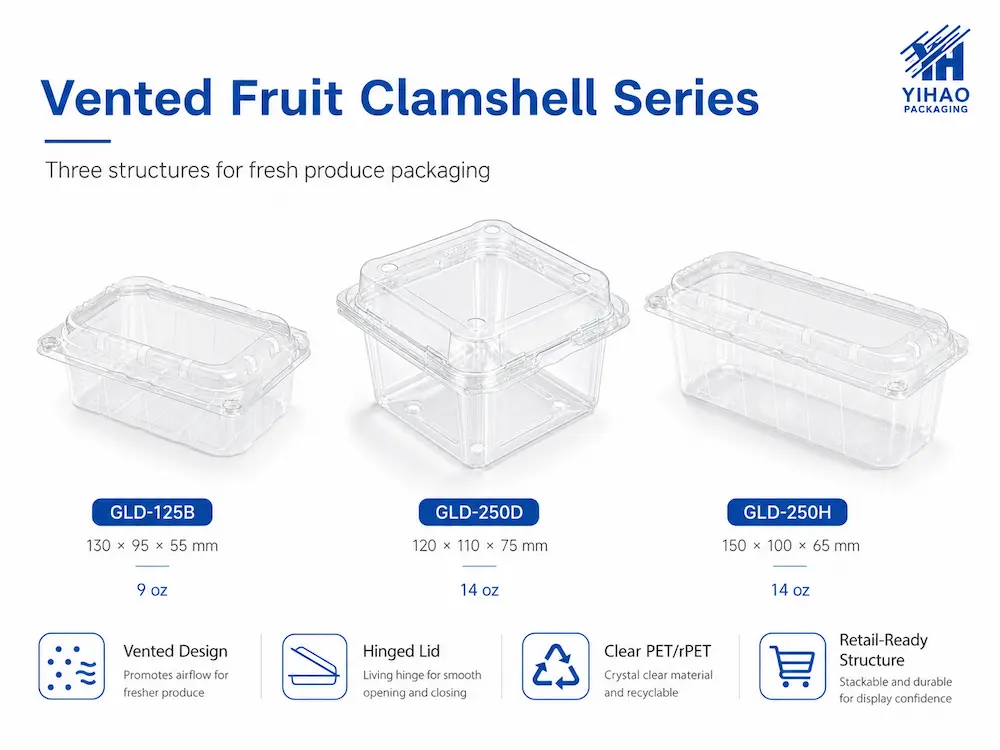
Vented Fruit Clamshells: Buyer Guide for Food Packaging Teams
Choosing vented fruit clamshells is a practical sourcing decision for food packaging teams, farms, packers, supermarkets, fruit brands, distributors, exporters, and wholesale produce buyers. Fresh fruit packaging must do more than hold the product. It must protect delicate produce, support airflow, improve visibility, stack safely, fit cartons, leave room for labels, and help buyers maintain product appeal during chilled handling and retail display.
Vented clamshell packaging is especially important for berries, grapes, cherry tomatoes, small produce, and retail-ready fresh fruit. These products often need airflow and moisture-aware handling while still requiring clear visibility and secure closure. A weak clamshell may look acceptable when empty, but it can fail after filling, stacking, refrigeration, transport, or retail handling.
A reliable manufacturer, wholesale partner, or fruit packaging supplier should help buyers compare vent placement, clamshell structure, PET material clarity, lid fit, hinge strength, label space, stacking behavior, carton packing, and sample testing. The best vented fruit clamshells are not simply clear boxes with holes; they are airflow-focused fresh produce packaging formats designed for real commercial use.
YIHAO is a food packaging manufacturer and solution provider focused on practical PET/RPET packaging for fresh produce, berries, fruit cups, fresh-cut fruit, salads, snacks, bakery items, deli food, and chilled ready-to-eat applications. This buyer guide helps food packaging teams select better vented fruit clamshells for retail display, chilled handling, wholesale supply, and fresh produce protection.
What Are Vented Fruit Clamshells?
Vented fruit clamshells are clear hinged packaging containers with airflow openings designed for fresh fruit and small produce. The hinged lid and base keep the packaging connected, while vent holes help support airflow during storage, transport, chilled display, and retail handling.
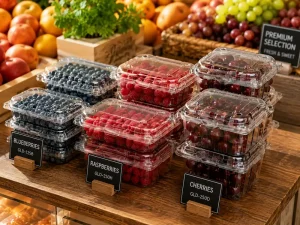
These containers are commonly used for blueberries, strawberries, raspberries, blackberries, grapes, cherry tomatoes, small plums, and other produce items that benefit from a balance of visibility, protection, and ventilation. The clamshell structure helps keep the product contained, while clear PET material helps shoppers and buyers inspect color, freshness cues, size, and product condition.
For B2B buyers, vented clamshell packaging should be evaluated by actual product use. The right package depends on fruit type, fill weight, vent design, lid height, stacking requirement, label area, carton fit, and sales channel.
Why Vented Fruit Clamshells Matter for Fresh Produce
Fresh produce is sensitive to handling conditions. Fruit can move inside the pack, release moisture, experience pressure during stacking, and change appearance under refrigeration. Vented fruit clamshells help buyers manage these risks by combining airflow, containment, visibility, and structure.
The vents help support breathable produce packaging needs. The clear clamshell body allows product inspection. The hinged lid supports fast packing and reduces lid-base mismatch. The rim and wall structure support stacking and carton loading. These details matter when packaging moves through farms, packing houses, distribution centers, exporters, supermarkets, and retail shelves.
Buyers should not choose vented clamshells only by size. A container must match the fruit’s behavior. Blueberries need containment and airflow. Strawberries need lid height. Raspberries need gentle support. Grapes need capacity and stacking stability. A good packaging decision starts with the product.
Vented Fruit Clamshells vs Non-Vented Clamshells
Non-vented clamshells can work for some food items, but fresh produce often needs more breathable packaging. Without vents, moisture and temperature changes may affect how fruit looks inside the container. For products that release moisture or require airflow, a fully closed structure may reduce retail presentation quality.
Vented fruit clamshells are designed to support airflow while keeping the product protected and visible. They are especially useful for berries, grapes, cherry tomatoes, and other produce that benefits from ventilation during chilled handling and retail display.
However, more venting is not always better. Vent size, location, and distribution must be balanced with container strength and product protection. Too few vents may reduce airflow. Too many openings may weaken the structure or expose fruit to damage. Buyers should test filled samples before confirming wholesale orders.
How Vent Design Affects Produce Packaging Performance
Vent design is one of the most important details in ventilated produce clamshell containers. Vents may be placed on the lid, sides, bottom, or multiple surfaces depending on the packaging format and intended product. Each position affects airflow, strength, appearance, and handling differently.
Top vents can help airflow through the lid area. Side vents may support circulation while keeping the top surface available for labeling. Bottom vents can support airflow and moisture movement but must be designed carefully to avoid product damage or leakage concerns. The correct layout depends on the produce category and handling route.
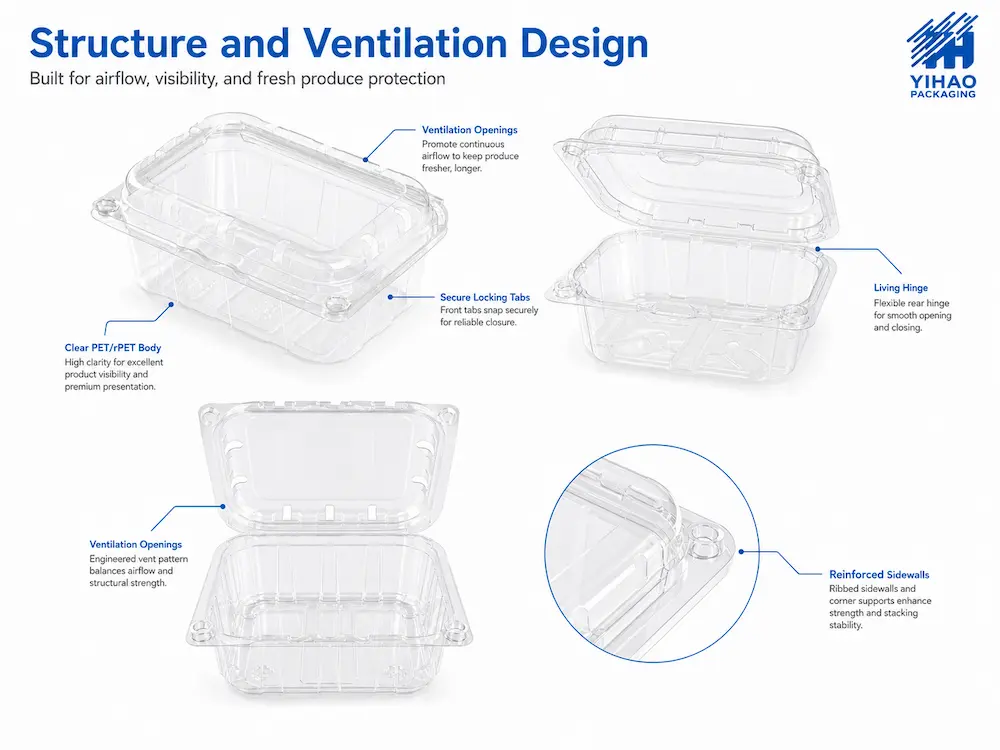
Food packaging teams should review vent design with actual products. The goal is not simply to add holes. The goal is to build airflow clamshell packaging that supports product freshness perception, retail appearance, and safe handling.
Vented Fruit Clamshells for Berries
Berries are one of the most important applications for vented fruit clamshells. Blueberries, strawberries, raspberries, and blackberries are delicate, highly visual, and sensitive to moisture and pressure. Each berry type needs a different packaging approach.
Blueberries move easily inside the container, so the pack should provide containment and airflow. Strawberries often need more lid clearance and space. Raspberries are soft and need gentle support with reduced compression. Blackberries need secure structure and careful handling. Vented berry containers should be evaluated according to berry type, not treated as one generic format.
Buyers should test berry clamshells with real fruit and real fill weight. Empty samples cannot show fruit movement, lid pressure, airflow behavior, stacking strength, or retail appearance after chilled handling.
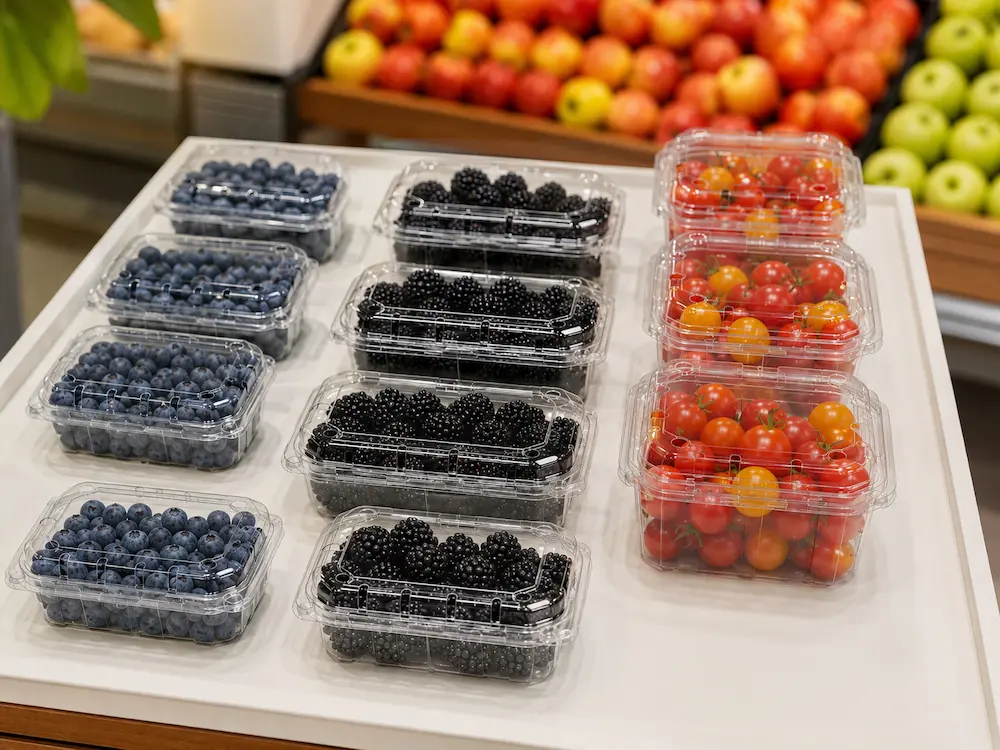
Breathable Produce Packaging for Retail Display
Breathable produce packaging helps fresh fruit remain visually appealing during chilled storage and retail display. In supermarkets and convenience stores, shoppers often decide quickly based on freshness cues. Clear packaging with suitable airflow can support stronger product confidence.
Retail buyers should evaluate how fruit looks through the clamshell after filling, cooling, stacking, transport, and shelf placement. If the container becomes visually dull, foggy, unstable, or poorly labeled, the product may lose shelf impact even when the fruit itself is acceptable.
For retail display, the clamshell should show fruit color clearly, keep the product organized, support barcode and brand labels, and stack neatly. Good breathable packaging helps buyers combine product protection with shelf presentation.
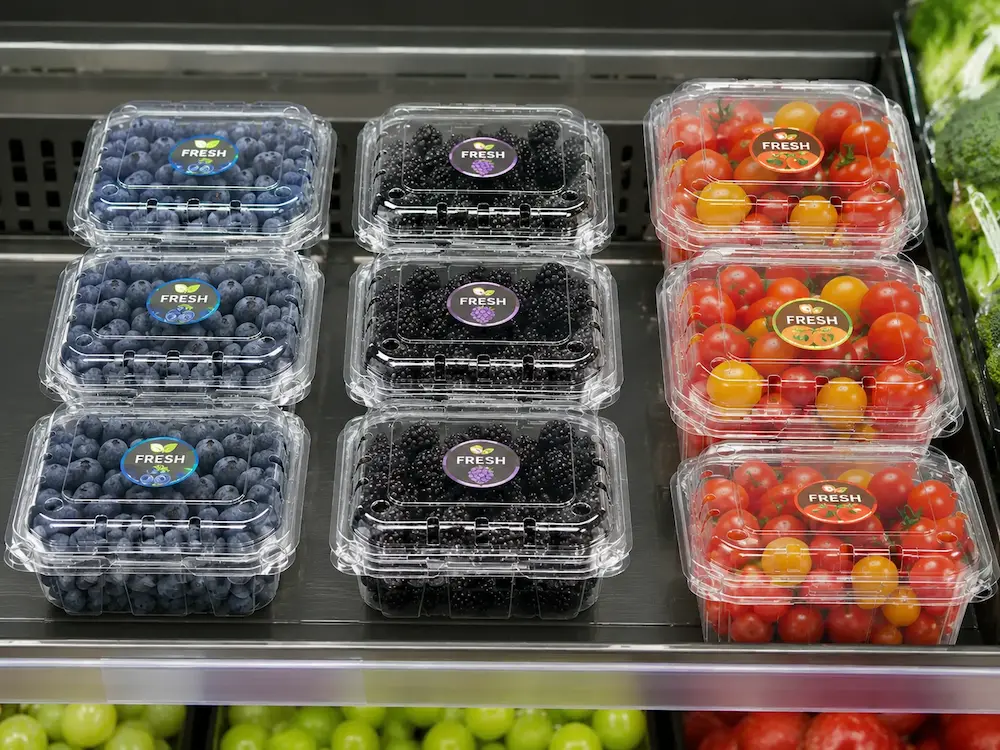
PET Produce Clamshells: Material Clarity and Structure
PET produce clamshells are widely used because they provide clear visibility, practical rigidity, lightweight handling, and retail-ready presentation. For fresh produce, clarity matters because buyers and shoppers want to inspect fruit color, size, freshness cues, and quality before purchase.
Material rigidity is also important. A clamshell should remain stable after filling, stacking, carton loading, chilled handling, and retail replenishment. Weak walls, loose lids, or poor hinge performance can create problems at scale.
Buyers should ask whether the clamshell is PET, rPET, or another clear material option. They should also confirm intended food use, material clarity, lid fit, vent design, label area, sample availability, carton packing, and wholesale supply support before ordering.
Vented Fruit Clamshells for Chilled Handling
Many fresh produce clamshells are used in chilled supply chains. Chilled handling can affect moisture appearance, label adhesion, lid behavior, and product visibility. Vented fruit clamshells should be tested under real cold-chain conditions, not only at room temperature.
Temperature changes may create visible moisture inside the pack. The vent design, fruit type, fill weight, and display environment all affect how the product looks. A package that looks clear and stable when empty may behave differently after filling and refrigeration.
Buyers should test filled samples in cold storage, retail display, carton loading, and stacking conditions. This helps identify weaknesses before wholesale orders are confirmed.
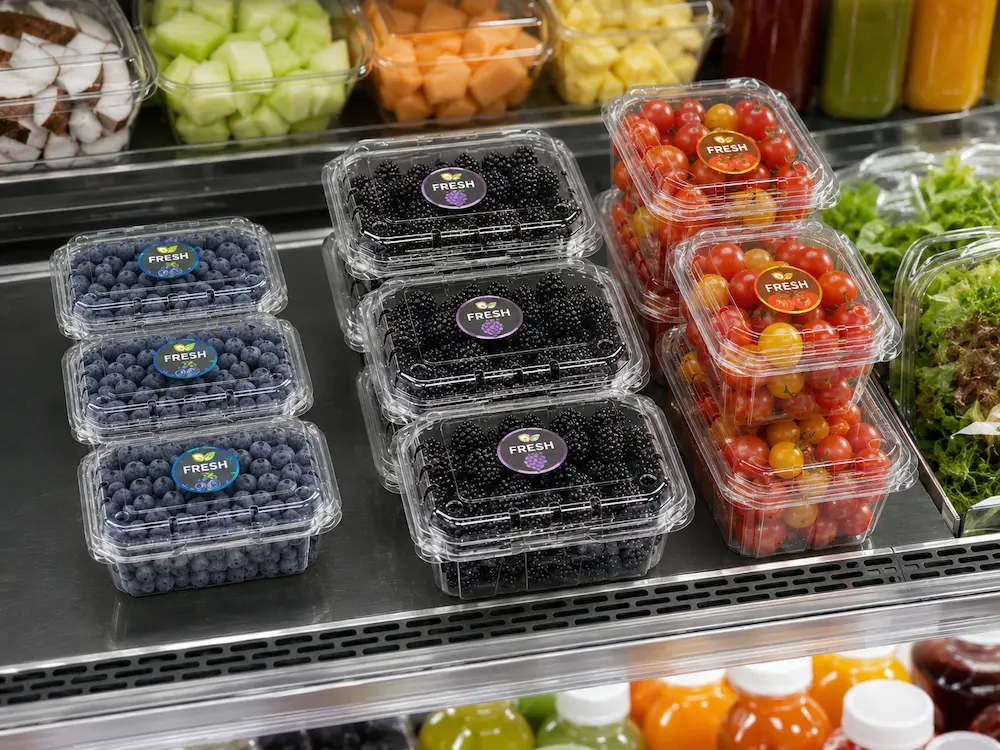
Vented Fruit Clamshells for Supermarkets and Foodservice Brands
Supermarkets need clamshells that support product visibility, shelf organization, label scanning, and quick replenishment. Foodservice brands may use vented clamshells for back-of-house prep, ingredient handling, chilled storage, or retail-ready fruit programs. In both cases, packaging must work beyond the sample table.
For supermarkets, the clamshell should present fruit clearly and stack neatly in display cases. For cafes and bakeries, it may need to protect berries, grapes, or fresh fruit used for desserts and chilled items. For foodservice programs, it should support storage, portion control, and handling efficiency.
Fruit freshness packaging should be selected by use case. The best packaging for a supermarket berry display may differ from a bakery ingredient pack or a foodservice prep container.
Comparison Table: What Buyers Should Check
| Buyer Checkpoint | What to Review | Why It Matters |
|---|---|---|
| Fruit Type | Blueberries, strawberries, raspberries, blackberries, grapes, cherry tomatoes, or small produce. | Each product needs different airflow, lid height, and protection. |
| Vent Design | Top vents, side vents, bottom vents, vent size, and vent distribution. | Vent design affects airflow, moisture behavior, and container strength. |
| Material | PET, rPET, clarity, wall rigidity, and food-contact suitability. | Material affects visibility, structure, and retail perception. |
| Lid Fit | Closure security, hinge strength, locking feel, and repeated handling. | A secure lid reduces transport and shelf-handling problems. |
| Stacking | Filled-pack stacking, carton loading, pallet handling, and chilled shelf stability. | Wholesale and retail programs require stable packaging. |
| Label Area | Brand label, barcode, price label, origin information, and product details. | Labels must support retail use without blocking too much fruit visibility. |
| Sample Testing | Filled testing under chilled, stacked, labeled, and cartoned conditions. | Real testing prevents wrong packaging decisions. |
| Supplier Support | Sample availability, technical communication, repeat order support, and wholesale planning. | A reliable supplier supports long-term fresh produce programs. |
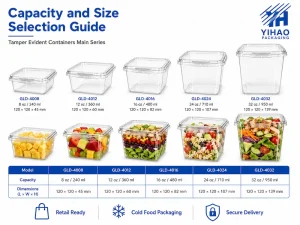
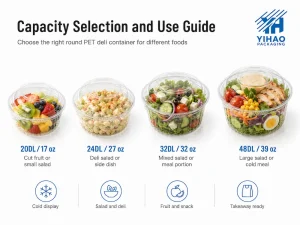
How to Choose the Right Vented Fruit Clamshell Size
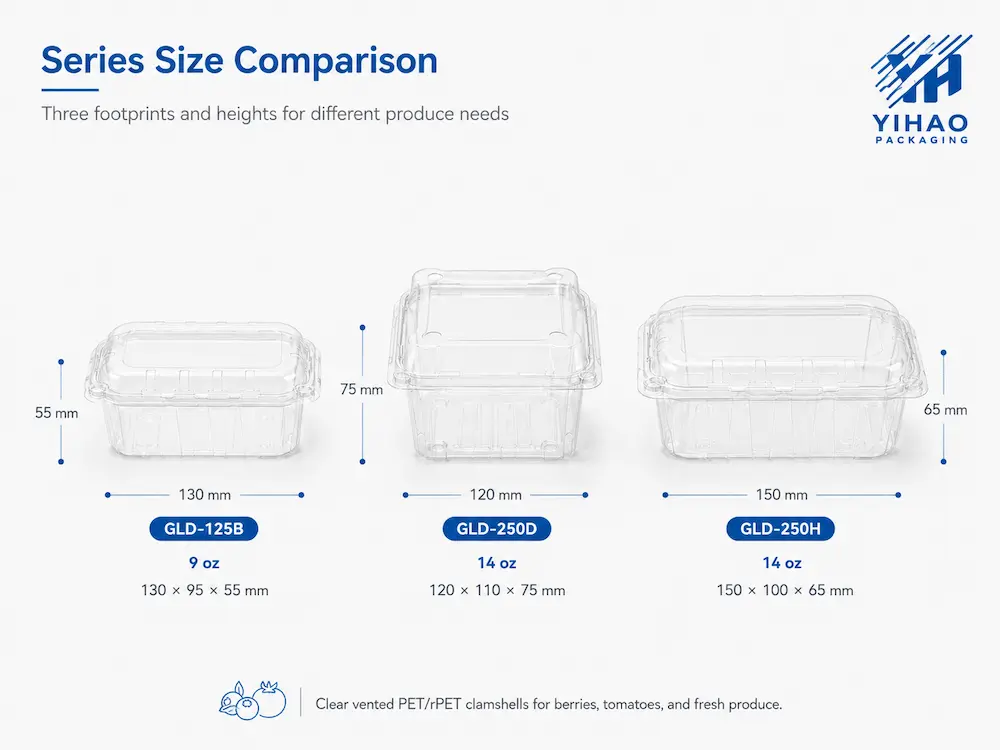
Size should be selected by product type, fill weight, lid clearance, retail channel, carton plan, and display requirement. A clamshell that is too deep may allow too much fruit movement. A clamshell that is too shallow may press delicate fruit against the lid. A clamshell that is too wide may waste shelf and carton space.
Blueberries may need compact containment. Strawberries often need more height. Raspberries need gentle space and lower pressure. Grapes may need stronger capacity and stacking behavior. Cherry tomatoes may need airflow and secure containment.
Buyers should test several sizes with actual products. Filled samples show whether the pack looks full, protects the product, closes securely, stacks properly, and fits carton plans. Size selection should not be based only on nominal capacity.
Label Space and Barcode Placement
Retail-ready clamshells often need labels for brand, barcode, product name, weight, price, origin, use-by date, or handling information. Label placement should support retail scanning and product communication without hiding too much of the fruit.
For vented fruit clamshells, label placement must also consider vent design. A label should not block key airflow areas unless the packaging is designed for that position. Buyers should apply real labels during sample testing and check barcode readability after refrigeration.
A good clamshell supports both visibility and information. Shoppers should still see the fruit clearly after labels are applied.
Stacking, Carton Fit, and Wholesale Handling
Wholesale produce packaging must perform through production, cold storage, carton packing, transport, and shelf replenishment. Vented fruit clamshells should stack safely when filled. They should not deform easily, press fruit too tightly, or cause lids to loosen under pressure.
Carton fit is also important. A clamshell that wastes carton space can increase logistics cost and reduce operational efficiency. Buyers should test how filled clamshells fit inside cartons and whether the packs remain stable during movement.
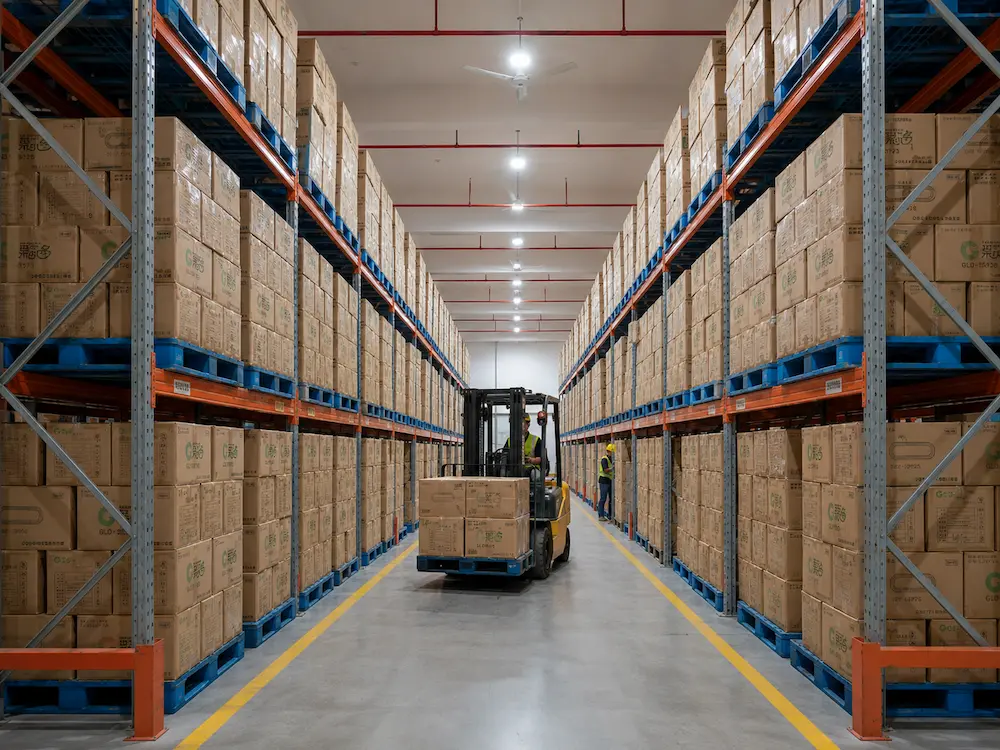
For exporters, distributors, and supermarket buyers, stacking and carton fit are not small details. They affect product protection, handling efficiency, and repeat order reliability.
How to Test Vented Fruit Clamshells Before Ordering
Buyers should test clamshells with real fruit and real handling conditions. Empty samples are useful for initial review, but they cannot show airflow behavior, fruit movement, lid pressure, moisture appearance, stacking strength, or carton fit.
A practical test should include filling, closing, labeling, stacking, chilled storage, carton loading, and shelf display. For berries, buyers should check fruit compression and movement. For grapes and cherry tomatoes, they should check containment and stack stability. For retail programs, they should check label placement and product visibility.
Filled sample testing helps buyers avoid wrong sizes, weak closures, poor vent design, unstable stacking, blocked labels, and supplier mismatch before wholesale orders.
What a Manufacturer or Supplier Should Help Buyers Evaluate
A reliable manufacturer, wholesale partner, or supplier should help buyers evaluate vented clamshell packaging according to real fresh produce use. The conversation should go beyond container dimensions and price. Buyers should expect questions about fruit type, fill weight, venting needs, retail channel, chilled display, label requirements, carton packing, and expected order volume.
A strong supplier should explain material options, vent design, lid structure, stacking, label placement, sample testing, and wholesale supply support. For larger programs, a manufacturer may also help discuss custom produce clamshell options when standard packaging does not match the product or channel.
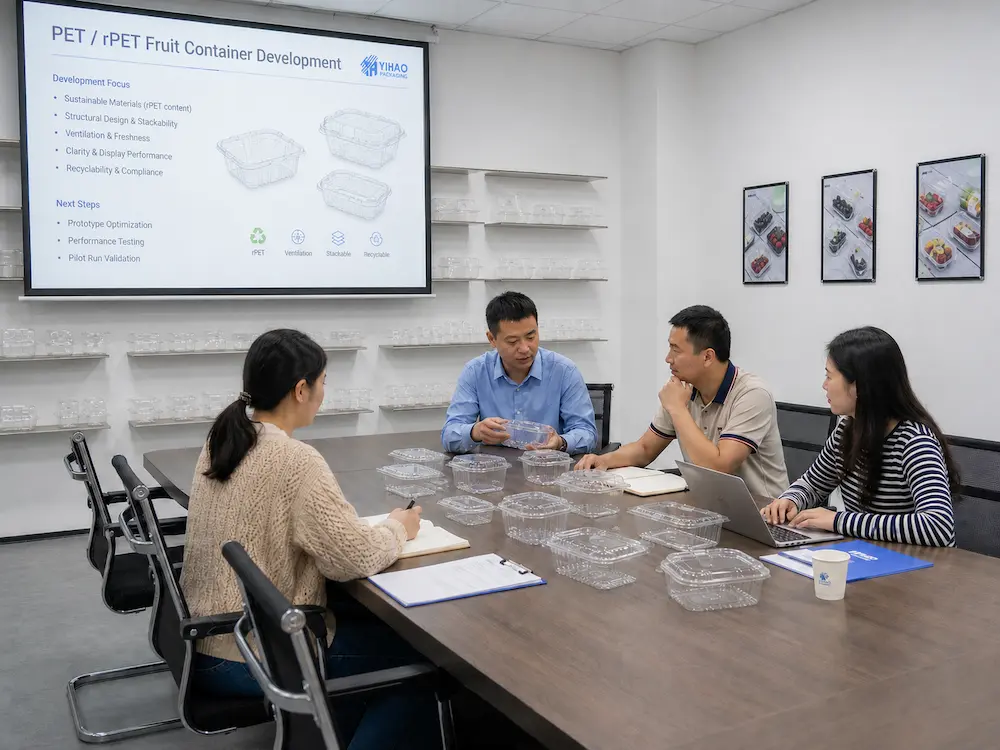
The best partner helps buyers reduce risk before mass ordering. For vented fruit clamshells, supplier experience matters because packaging problems often appear after filling, chilling, stacking, transport, or retail display.
Common Mistakes When Buying Vented Fruit Clamshells
Choosing Only by Size
Size alone does not show whether the clamshell protects the fruit, supports airflow, stacks well, or fits retail labels. Buyers should test filled samples before ordering.
Ignoring Vent Position
Vent holes should match the fruit type and handling route. Poor vent placement can reduce airflow benefits or weaken the package.
Using One Clamshell for Every Fruit
Blueberries, strawberries, raspberries, blackberries, grapes, and cherry tomatoes need different packaging logic. One clamshell rarely fits every product well.
Skipping Chilled Display Testing
Room-temperature checks cannot show moisture behavior, condensation appearance, cold label adhesion, or shelf display performance.
Choosing a Supplier Without Wholesale Support
Wholesale produce programs need stable supply, sample support, clear specifications, and consistent communication. Supplier capability is part of the packaging decision.
Why YIHAO Supports Vented Fruit Clamshell Buyers
YIHAO supports buyers with clear PET/RPET packaging solutions for fresh produce, berries, fruit cups, fresh-cut fruit, chilled snacks, salads, bakery items, deli food, and retail-ready applications. For buyers sourcing vented fruit clamshells, the key value is application-based packaging selection.
Instead of treating clamshell packaging as one generic container category, YIHAO helps buyers compare fruit type, fill weight, vent position, lid height, material clarity, closure security, label space, stacking, carton fit, sample testing, and wholesale supply needs.
For farms, packers, supermarkets, distributors, exporters, foodservice brands, and food packaging teams, a structured supplier conversation reduces mistakes before mass ordering. Buyers can prepare fruit type, target fill weight, retail channel, venting requirements, label needs, carton plan, and expected order volume before requesting samples.
FAQ About Vented Fruit Clamshells
1. What are vented fruit clamshells used for?
Vented fruit clamshells are used for fresh produce such as blueberries, strawberries, raspberries, blackberries, grapes, cherry tomatoes, and small fruit that needs visibility, containment, airflow, stacking, and retail-ready presentation.
2. Why do fruit clamshells need vents?
Vents help support airflow and moisture-aware handling during chilled storage, transport, and retail display. They are useful for produce items that benefit from breathable packaging and clear product visibility.
3. What material is commonly used for vented fruit clamshells?
PET is commonly used for vented fruit clamshells because it provides clear visibility, practical rigidity, lightweight handling, and retail display performance. rPET options may also be discussed when recycled-content packaging is part of the buyer’s sourcing plan.
4. How should buyers choose the right clamshell size?
Buyers should choose size based on fruit type, fill weight, lid clearance, vent design, stacking, label area, carton fit, and retail channel. Filled sample testing is the best way to confirm whether the clamshell works.
5. What should buyers ask a vented fruit clamshell supplier?
Buyers should ask about material, vent layout, size range, lid security, stacking strength, label space, carton packing, chilled display performance, sample testing, wholesale supply support, and whether the supplier understands fresh produce clamshell applications.
References
- U.S. Food and Drug Administration, Packaging & Food Contact Substances Resources.
- U.S. Food and Drug Administration, Guidance for Industry: Use of Recycled Plastics in Food Packaging, Chemistry Considerations.
- European Commission, Packaging and Packaging Waste Policy Resources.
- Food and Agriculture Organization of the United Nations, Food Loss and Waste Reduction Resources.
- United States Department of Agriculture, Fresh Fruit and Vegetable Market Resources.
- International Fresh Produce Association, Fresh Produce Supply Chain and Packaging Resources.
- Association of Plastic Recyclers, Design Guide for Plastics Recyclability.
- ASTM International, Packaging Performance and Testing Standards.
Deep-Dive Insights: How Buyers Should Think About Vented Fruit Clamshells
How should buyers define the right vented fruit clamshell?
The right clamshell should be defined by fruit type, fill weight, vent design, lid clearance, material clarity, stacking, label needs, and handling route. Vented fruit clamshells should not be selected only by container size or price.
Why does airflow design matter?
Airflow design matters because fresh produce often needs breathable packaging during chilled handling and retail display. Vent location and distribution should support the product without weakening the container.
When should buyers choose vented berry containers?
Vented berry containers are useful when blueberries, strawberries, raspberries, or blackberries need clear visibility, gentle protection, airflow, stacking, and retail-ready presentation.
What should buyers test first?
Buyers should test filled samples under chilled, labeled, stacked, and cartoned conditions. This reveals airflow behavior, lid performance, product movement, label placement, and carton efficiency.
What should buyers avoid?
Buyers should avoid choosing only by size, ignoring vent placement, using one clamshell for every fruit, skipping chilled display testing, and working with suppliers that cannot support repeat wholesale orders.
Final Note / Practical Takeaway
© 2026 YIHAO Packaging. This article is created for farms, packers, supermarkets, distributors, exporters, foodservice brands, and food packaging teams evaluating vented fruit clamshells, ventilated produce clamshell containers, breathable produce packaging, vented berry containers, airflow clamshell packaging, and PET produce clamshells. All rights reserved.