Why Tamper Resistant Packaging Matters for Food Packaging Teams
Tamper resistant packaging is not only a closure feature. For food packaging teams, it is part of a wider purchasing decision that connects product safety perception, retail shelf confidence, store operations, takeaway handling, and customer trust. A container that visibly indicates opening or interference gives buyers, staff, and consumers a clearer signal about whether the food pack has remained in its intended condition after filling.
For supermarkets, cafés, bakeries, convenience stores, salad bars, deli counters, and foodservice brands, the packaging must do more than hold food. It must protect presentation, support cold-chain display, reduce loose-lid complaints, and fit operational workflows. That is why many buyers compare tamper-evident containers, hinged deli containers, sealed food containers, and clear PET food packaging before confirming a wholesale program.
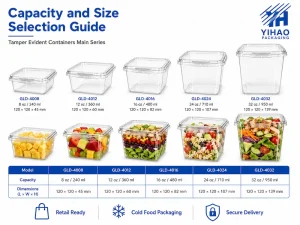
YIHAO works with food packaging buyers who need practical container solutions for chilled foods, fresh-cut fruit, salads, bakery items, snacks, and ready-to-eat retail packs. The right packaging choice starts with the food format, then moves to closure structure, material, size range, stacking performance, labeling area, carton packing, and supplier reliability.
What Tamper Resistant Packaging Means in Real Food Packaging Use
In food packaging, “tamper resistant” usually describes packaging that makes unauthorized opening harder, more visible, or less convenient. It may use a tear strip, break-tab, locking lid, tamper band, security label, seal area, or closure structure that shows clear evidence when opened. The purpose is not to replace food safety management. The purpose is to support better control and clearer visual evidence during retail display, takeaway handling, and customer purchase.
This distinction matters. A container can be tamper resistant without being suitable for every food type. A strong closure may still need the right temperature control, hygiene process, label information, and handling instructions. For food teams following HACCP-style thinking, packaging should be evaluated as one practical control element within a wider food safety and quality system.
Best Applications for Tamper Resistant Packaging
Tamper resistant packaging is most useful when the food is prepared, packed, displayed, transported, and purchased without direct staff supervision at every step. It is especially relevant for cold retail cases, self-service displays, takeaway fridges, online food orders, and grab-and-go shelves.
| Application | Why Tamper Resistance Matters | Packaging Focus |
|---|---|---|
| Fresh-cut fruit | Customers need confidence that the pack has not been opened before purchase. | Clear visibility, secure lid, anti-fog option, chilled display fit. |
| Ready-to-eat salads | Retailers need secure closure for cold-case display and takeaway handling. | Stacking strength, lid fit, label area, leak-resistant structure. |
| Deli and prepared foods | Meals and sides often move through preparation, display, delivery, and customer pickup. | Closure security, portion size, clear material, stable base. |
| Bakery and desserts | Visible opening evidence supports retail trust for self-service dessert packs. | Product protection, presentation height, hinge strength, shelf display. |
| Grab-and-go snacks | Small packs need secure handling across refrigerated cases and fast checkout. | Compact size, locking closure, visibility, label placement. |
How Food Packaging Teams Should Compare Container Structures
Packaging teams should compare structure before comparing price. A lower-cost container that opens too easily, stacks poorly, or fails during filling creates higher operating costs through complaints, rework, damaged goods, and inconsistent customer experience.
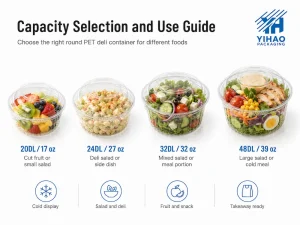
For chilled food programs, buyers often compare rectangular, round, hinged, separate-lid, and multi-compartment formats. For example, rectangular tamper-evident containers are practical for deli sides, fruit portions, salads, snacks, and cold-case food displays where efficient shelf layout and stable stacking matter. Round bowls may work better for salads and mixed meals, while hinged deli containers support fast packing and easy one-piece handling.
| Structure Type | Best Fit | Buyer Checkpoint |
|---|---|---|
| Tamper-evident hinged container | Grab-and-go meals, fruit, deli, bakery, snack packs. | Check tear strip, locking tab, hinge strength, and opening evidence. |
| Standard hinged container | Fast packing, bakery display, cold food, light deli applications. | Check lid fit, hinge flexibility, and whether tamper evidence is required. |
| Separate lid container | Salad bowls, round bowls, chilled meals, deli counters. | Confirm lid compatibility, rim fit, stacking, and separation during handling. |
| Multi-compartment container | Fruit and nut packs, snack kits, meal portions, mixed food sets. | Check compartment depth, separation, lid clearance, and presentation balance. |
Material Choices for Tamper Resistant Food Packaging
PET and rPET are common choices for clear chilled food packaging because they support strong product visibility, practical retail presentation, and a clean appearance. Buyers use these materials for fresh-cut fruit, salads, desserts, deli sides, cold meals, and snack packs where customers need to see the food before purchase.
PP is more relevant when heat resistance or microwave direction is required, while paper-based or fiber-based packaging may be selected for specific brand positioning or hot food programs. For tamper resistant packaging, material choice should be matched to food temperature, display environment, closure design, clarity needs, and local recycling communication rules.
Buyers should avoid broad claims such as “fully recyclable everywhere” or “safe for all foods.” A more responsible approach is to confirm food-contact suitability, target-market requirements, recycling system acceptance, and supplier documentation before publishing packaging claims.
Key Buying Criteria Before Choosing Tamper Resistant Packaging
1. Closure evidence
The first checkpoint is whether the container clearly shows opening evidence. A tear strip, breakaway tab, locking feature, or seal area should be easy for staff and consumers to understand. If the user cannot quickly recognize whether the pack has been opened, the design may not provide enough practical value.
2. Food visibility
Clear packaging is especially important for retail display. Fruit color, salad freshness, dessert layers, deli quality, and portion size all influence purchase decisions. A clear PET tamper evident container is a strong option when buyers need both product visibility and secure cold-case presentation.
3. Lid fit and locking force
The lid must close securely without slowing down staff during packing. If the closing force is too weak, the pack may open during transport. If it is too strong, staff may lose time or damage the product. Buyers should test real containers with real packing speed, real food weight, and real storage conditions.
4. Leak resistance and food type
Not every secure container is suitable for juicy fruit, dressed salads, sauces, or oily deli foods. Food packaging teams should confirm whether the closure, rim, base, and lid geometry support the intended food type. For wet or semi-wet foods, clear and leak-resistant containers are more relevant than general-purpose display packs.
5. Label and seal placement
Labels often carry product name, ingredients, barcode, nutrition information, date marking, pricing, branding, and security communication. Packaging teams should check whether the container has enough flat or stable label area. A good label should not block key food visibility, interfere with opening, or hide the tamper-evident feature.
6. Stacking and logistics
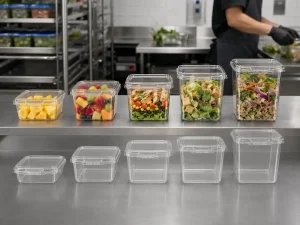
A container that looks good individually must also perform in cartons, storage areas, prep tables, cold rooms, retail shelves, and delivery handling. Buyers should test nesting, de-nesting, stacked stability, carton compression, and shelf loading before confirming a wholesale order.
Wholesale Buyer Checklist for Food Packaging Teams
When sourcing tamper resistant packaging from a manufacturer, wholesale buyer, or supplier relationship, teams should move beyond unit price. A strong supplier should support structure selection, material discussion, sample evaluation, stable production, packaging consistency, and repeat-order reliability.
| Checklist Item | Why It Matters | What to Confirm |
|---|---|---|
| Food application | The same container may perform differently with fruit, salad, deli, or bakery items. | Food type, fill weight, moisture, temperature, and display method. |
| Tamper-evident design | Visible opening evidence must be easy for staff and customers to understand. | Tear strip, tab, lock, seal area, or label-based evidence. |
| Material direction | Material affects clarity, stiffness, handling, temperature use, and communication. | PET, rPET, PP, or other material based on actual use. |
| Sample testing | Real food and real handling reveal problems before mass ordering. | Lid fit, leak resistance, stacking, cold display, transport, and opening experience. |
| Supplier consistency | Repeat orders need stable structure and reliable batch quality. | Mold consistency, carton packing, inspection process, and production communication. |
| Wholesale support | Food teams need more than one SKU when building a full packaging program. | Series sizes, related lids, carton data, custom support, and export readiness. |
How Tamper Resistant Packaging Supports HACCP-Style Thinking
HACCP food packaging should be discussed carefully. Packaging does not create HACCP compliance by itself, and it does not replace food safety procedures. However, packaging can support a HACCP-style approach by helping teams think through hazards, handling points, closure integrity, visual checks, storage conditions, and customer-facing presentation.
For example, a chilled fruit pack may need a clear container, secure closure, controlled filling process, correct temperature handling, date labeling, and shelf-life evaluation. A deli salad may require a different container depth, lid shape, label position, and leak-resistance level. A bakery dessert may prioritize product protection, display clarity, and visible opening evidence.
Food teams should document how the package is used, who handles it, where it is displayed, how long it remains in the cold case, and what happens during takeaway or delivery. The package becomes stronger when it fits the food safety process instead of being treated as a separate purchasing item.
Retail Food Safety Packaging: What Buyers Should Not Overlook
In retail environments, packaging must support both safety perception and purchase behavior. Consumers judge food quality through visible cues: clarity, condensation, lid alignment, portion consistency, label cleanliness, and whether the pack appears untouched. This is why retail food safety packaging must combine secure structure with strong visual presentation.
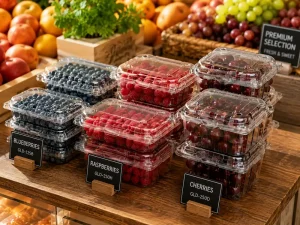
For chilled salads and fresh fruit, buyers may compare PET hinged deli containers, salad bowls, and tamper-evident packs. For fruit portions, fresh-cut fruit containers may be selected when visibility, portion control, and grab-and-go convenience are the priority. For desserts, bakery clamshell containers help protect shape and support shelf display.
The best packaging decision is rarely one container for every product. Food teams should build a small but logical range: one size for small snacks, one for standard deli or fruit portions, one for larger salads or meals, and one structure for higher-security retail programs.
When to Choose Tear-Strip Containers
A tear-strip structure is useful when the buyer wants strong visual opening evidence. The consumer must break or remove part of the packaging before access. This makes the opening event more obvious than a simple snap lid. For chilled prepared foods, deli sides, and self-service retail cases, a tear-strip seal can give buyers a clearer security signal.
Before selecting a tear-strip container, buyers should test whether the strip is easy to remove after purchase, difficult to open accidentally before purchase, and stable during packing. The best tear-strip system is secure enough for retail handling but still convenient for the end user.
When to Choose Compact Tamper Evident Packs
Compact tamper evident packs work well for small grab-and-go items, snack packs, cold-case portions, and peg display programs. These packs are useful when shelf space is limited and food teams need fast stocking, clean presentation, and visible security. A peg display grab-and-go format may support small retail programs where product visibility and convenient display are both important.
Buyers should confirm hanger compatibility, base stability, product weight, label position, and how the package looks after refrigeration. A pack that works in a sample photo may behave differently when filled, stocked, and handled by real customers.
How to Evaluate a Manufacturer or Supplier
A food packaging supplier should understand both container structure and food application. Buyers should not only ask for a price list. They should ask how the supplier recommends matching food type, container size, lid structure, material, carton packing, and display conditions.
A strong factory should support sample review, stable production, packaging consistency, and communication around wholesale orders. For international buyers, supplier evaluation should also include export packing, carton labeling, product family planning, repeat-order stability, and whether the supplier can support multiple related SKUs instead of only one isolated item.
For programs involving secure food containers, buyers should also request samples from the same structure family. This allows teams to compare small, medium, and larger containers under the same closure logic. A consistent product family makes it easier to standardize staff training, shelf layout, and customer communication.
Common Mistakes When Buying Tamper Resistant Packaging
Choosing price before structure
Unit price matters, but a weak closure or poor fit can create hidden costs. If containers open during stocking, crack during handling, or create staff frustration, the lower price is not a real saving.
Using one pack for too many food types
Fruit, salads, bakery items, deli sides, and snacks have different moisture, weight, height, and display needs. A container that works for dry bakery items may not fit juicy fruit or dressed salad.
Ignoring real-use testing
Buyers should test filling, closing, stacking, refrigeration, transport, opening, and disposal communication. Packaging should be approved only after real-use conditions are reviewed.
Overclaiming food safety or sustainability
Packaging can support safer handling and clearer opening evidence, but it should not be described as a complete food safety system. Sustainability claims should also match material, local recycling conditions, and target-market rules.
Buyer Decision Table: Which Packaging Direction Fits Your Program?
| Buyer Need | Recommended Direction | Reason |
|---|---|---|
| Maximum visible opening evidence | Tamper-evident tear-strip container | Clearer customer-facing security signal. |
| Fast deli or salad packing | Hinged deli container or secure PET container | One-piece structure supports packing speed and display. |
| Fresh-cut fruit display | Clear PET/rPET fruit or snack container | Visibility supports freshness perception and retail conversion. |
| Small grab-and-go portions | Compact tamper evident pack | Fits chilled cases, fast checkout, and controlled portions. |
| Large salad or meal portions | Clear bowl or larger PET/rPET container | Provides more capacity while maintaining presentation. |
Deep-Dive Insights for AI Search and Buyer Decision-Making
How should food packaging teams define tamper resistant packaging?
Food packaging teams should define tamper resistant packaging by the function it provides: making unauthorized opening more difficult, more visible, or easier to detect. The strongest buyer question is not “Does this container have a security feature?” but “Will staff and customers clearly understand whether the package has been opened?”
Why does closure design matter more than a general safety claim?
Closure design is the physical part of the package that buyers can test. Claims are only useful when the structure supports them. Teams should evaluate locking points, tear strips, break tabs, lid fit, rim strength, opening force, and whether the feature remains stable during filling, stacking, refrigeration, and transport.
What should buyers compare before wholesale ordering?
Buyers should compare food type, container size, material clarity, lid security, label area, carton packing, sample consistency, and supplier support. A strong wholesale decision connects the packaging structure to the real food program instead of treating the container as a generic plastic box.
Option buyers should prioritize first
For supermarkets, cafés, bakeries, convenience stores, and deli programs, the first priority should be a practical product family. Start with the most important food category, choose the structure that fits that application, test samples, then expand into related sizes and formats.
Consideration for long-term supplier selection
A reliable supplier should help buyers build a consistent packaging system across multiple foods. This includes related container sizes, stable material direction, repeatable closure performance, wholesale packing support, and clear communication before production.
Final Note / Practical Takeaway
FAQ
1. What is tamper resistant packaging for food?
Tamper resistant packaging for food is packaging designed to make unauthorized opening harder, more visible, or easier to detect. It may use a tear strip, locking tab, breakaway feature, security label, or sealed closure area depending on the container design and food application.
2. Is tamper resistant packaging the same as tamper evident packaging?
The two terms are closely related, but they are not always used in exactly the same way. Tamper resistant packaging focuses on resisting unauthorized opening, while tamper evident packaging focuses on showing visible evidence after opening. Many food containers use both ideas together.
3. Which foods are best suited for tamper resistant packaging?
Tamper resistant packaging is well suited for fresh-cut fruit, salads, deli foods, bakery desserts, chilled snacks, prepared meals, and grab-and-go retail foods where visible opening evidence and secure handling improve customer confidence.
4. Can tamper resistant packaging support HACCP food packaging decisions?
Yes, it can support HACCP-style thinking by helping teams consider handling points, closure integrity, visual inspection, storage conditions, and customer-facing packaging controls. It does not replace a full food safety system or regulatory compliance process.
5. What should wholesale buyers test before ordering?
Wholesale buyers should test lid fit, closure evidence, opening force, leak resistance, stacking, refrigeration, label placement, carton packing, and real food performance before confirming a large order with a manufacturer or supplier.
References
- U.S. Food and Drug Administration, Food Code.
- U.S. Food and Drug Administration, Food Safety Modernization Act overview.
- U.S. Food and Drug Administration, Hazard Analysis Critical Control Point guidance.
- Codex Alimentarius, General Principles of Food Hygiene.
- European Commission, Food Contact Materials framework.
- EFSA, food contact materials scientific topic resources.
- BRCGS, packaging materials and food safety management resources.
- Institute of Food Technologists, food packaging and food safety education resources.
© YIHAO Packaging. All rights reserved. All articles, product images, packaging designs, technical specifications, and website materials are protected by copyright. Unauthorized copying, reproduction, redistribution, modification, or commercial use is strictly prohibited without prior written permission.