Tamper Resistant Bakery Containers vs Alternative Packaging: How Buyers Should Choose
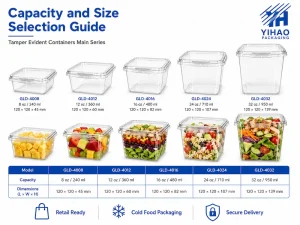
Tamper resistant bakery containers are designed for bakery and dessert programs where product visibility, secure handling, chilled display, takeaway confidence, and retail safety perception all matter. They are used for cheesecake slices, tiramisu portions, mousse cakes, cake slices, brownies, roll cakes, pastries, cookies, dessert samplers, chilled sweets, and grab-and-go bakery products sold through supermarkets, cafes, bakeries, dessert shops, retail chains, and foodservice programs.
For food packaging teams, the key decision is not simply whether a package has a tamper-resistant feature. Buyers must compare the full packaging system: lid fit, seal path, tear-strip behavior, base stability, customer opening, product visibility, label placement, chilled display performance, carton efficiency, and repeat wholesale consistency. A package that signals security but damages mousse, hides cheesecake layers, or slows packing is not the right choice.
YIHAO is a food packaging manufacturer and solution provider focused on clear PET, rPET, tamper-evident containers, bakery clamshells, dessert portion packaging, chilled food packaging, and retail-ready food packaging programs. This comparison guide helps buyers decide when tamper resistant bakery containers are stronger than alternative packaging and when a standard bakery clamshell, paper box, or clear dessert container may be enough.
What Are Tamper Resistant Bakery Containers?
Tamper resistant bakery containers are packaging formats designed to resist casual opening and provide a visible signal when the package has been opened. They may use a tear strip, break-tab, locking rim, reinforced seal edge, security band, or integrated tamper-evident closure. For bakery and dessert applications, this feature must work without crushing delicate toppings, blocking display visibility, or making the package difficult for customers to open.
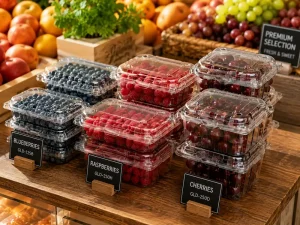
These containers are most useful in open retail environments. Supermarket chilled cases, grab-and-go dessert shelves, convenience retail counters, cafe takeaway displays, and foodservice pickup points all expose packaged desserts to more handling before purchase. A tamper-resistant structure helps communicate that the package has remained closed after packing.
A strong tamper-resistant bakery package should answer several buyer questions:
- Does the container show the bakery product clearly from the shelf or cold-case angle?
- Does the closure resist casual opening and show a visible first-opening change?
- Does the lid protect cream, fruit, mousse, frosting, cocoa powder, glaze, and toppings?
- Does the package close consistently during real packing workflow?
- Does the customer opening experience feel controlled and practical?
- Does label placement preserve product visibility and the tamper-resistant feature?
- Can the supplier maintain seal behavior, fit, clarity, and carton performance across repeat wholesale orders?
When Tamper Evident Bakery Packaging Is the Stronger Choice
Tamper evident bakery packaging is the stronger choice when a bakery product is sold through self-service display, chilled grab-and-go shelves, retail chain bakery departments, convenience cases, or delivery routes where multiple people may handle the product before purchase.
Tamper-evident containers help communicate secure handling for ready-to-eat desserts, chilled sweets, snack packs, bakery portions, and grab-and-go food. For bakery buyers, the value is strongest when the package needs both clear product presentation and visible first-opening evidence.
Buyers should prioritize tamper-evident packaging when:
- The product is placed in an open self-service chilled case.
- Customers can pick up and inspect the package before purchase.
- The dessert is ready-to-eat and relies on handling confidence.
- The brand wants stronger retail safety messaging.
- The package travels through delivery, route handling, or foodservice staging.
When Alternative Bakery Packaging May Be Enough
Alternative packaging may be enough when the product is staff-served, pre-ordered, sold behind a counter, used for known-product pickup, or packaged mainly for branded takeaway. In these cases, a standard bakery clamshell, clear cake slice container, paper bakery box, or clear PET dessert container may deliver the required protection without a full tamper-resistant feature.
For example, a bakery that hands cake slices directly to customers from behind a counter may only need a reliable clamshell seal. A cafe that sells staff-served brownies may need clear display and takeaway fit more than tamper evidence. A premium bakery gift box may need brand presentation and structure more than a tear strip.
The decision should follow handling route. The more open and uncontrolled the retail environment, the stronger the case for tamper resistant bakery containers. The more controlled the service model, the more reasonable standard alternatives become.
Tamper Evident Dessert Containers vs Standard Bakery Clamshells
Tamper evident dessert containers and standard bakery clamshells both protect and display desserts, but they solve different problems. A standard clamshell is efficient, clear, familiar, and easy to pack. A tamper-evident dessert container adds a visible opening indicator for stronger retail safety perception.
Bakery clamshell containers are widely used for cheesecake slices, brownies, roll cakes, pastries, cookies, and mixed bakery packs. They work well when the priority is fast packing, clear visibility, and practical takeaway. For stronger retail security, buyers should compare clamshell seal strength with tamper-evident structure.
For cheesecake portions, brownies, and tiramisu-style desserts, clear PET dessert portion packaging can support visible display and practical handling. For taller decorated cake slices, high-dome bakery clamshell packaging can provide extra internal clearance where cream, fruit, or toppings require more lid height.
Bakery Clamshell Seal vs Tamper-Resistant Closure
The bakery clamshell seal controls how securely a hinged package closes. A good seal helps prevent accidental opening during packing, shelf handling, takeaway, and delivery. It also affects customer opening experience. A weak seal can pop open too easily. An overly tight seal can frustrate customers or damage soft desserts during opening.
A tamper-resistant closure goes further. It is designed to show evidence of first opening, not only remain closed. The difference matters for retail safety perception. A clamshell seal helps with secure closure. A tamper-resistant feature helps communicate whether the package has been opened.
Buyers should compare both features through real testing. A package may have a strong clamshell seal but no first-opening signal. Another may have a tear strip but poor base stability. The right choice depends on product type, channel risk, retail messaging, and customer use.
Secure Bakery Packaging for Chilled Display
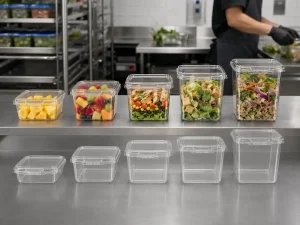
Secure bakery packaging is especially valuable for chilled dessert programs. Cheesecake slices, tiramisu portions, mousse cakes, parfaits, pudding cups, fruit-topped desserts, and cream-based sweets need packaging that stays clear, secure, readable, and stable after refrigeration.
Cold-case conditions can change packaging performance. Condensation may affect visibility. Labels may lose adhesion. The closure may feel different after chilling. The product may shift if the base is weak. Buyers should test filled and labeled samples in the actual chilled environment before wholesale approval.
For cold-case dessert and snack programs, clear tamper-evident dessert packaging can support product visibility and secure handling. For compact refrigerated portions, refrigerated dessert packaging can support chilled display when the finished product fits the container structure.
Rectangular, Round, and Multi-Compartment Tamper-Resistant Options
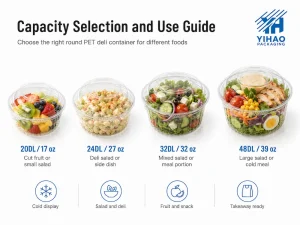
Tamper-resistant bakery and dessert packaging should be selected by product shape, portion logic, and shelf use. Rectangular formats often fit cheesecake slices, brownies, snack packs, and prepared bakery portions. Round formats can fit pudding-style desserts, mousse cups, parfaits, and rounded sweet portions. Multi-compartment formats help separate dessert samplers, topping combinations, or portioned bakery sets.
For shelf-efficient chilled programs, rectangular tamper-evident containers are practical when buyers need organized packing and stable display. For rounded dessert formats, round tamper-evident containers can support cup-style desserts and compact cold-case layouts. For divided dessert programs, multi-compartment tamper-evident containers can support separation and secure presentation.
Buyers should not choose shape by catalog appearance alone. The package must match finished product height, portion movement, label location, shelf angle, carton plan, and opening experience.
Tamper Resistant Bakery Containers vs Paper Bakery Boxes
Paper bakery boxes are useful for branded pickup, premium takeaway, staff-served counters, gift-style desserts, and bakery programs where printed surface matters. They can create a stronger brand impression than clear packaging in some contexts. However, paper boxes usually do not provide the same product visibility or tamper-resistant opening signal unless additional seals, labels, or security systems are used.
Tamper resistant bakery containers are stronger when the product needs visible first-opening evidence and clear retail display. Paper bakery boxes are stronger when the product is controlled by staff, already known by the customer, or purchased as a branded gift item.
For buyers comparing both directions, the key question is: does the product need to be seen and secured, or does it need to be branded and carried? Some programs may use both packaging types in the same product family.
Tamper Resistant Bakery Containers vs Clear Non-Tamper PET Packaging
Clear non-tamper PET packaging is useful when product visibility and practical handling matter, but first-opening evidence is not required. Cake slice clamshells, pastry containers, roll cake packs, and clear dessert containers can work well for staff-served or lower-risk environments.
Tamper-resistant PET packaging is stronger when the product is handled by customers before purchase or when the buyer needs stronger retail safety messaging. The tradeoff is complexity. Tamper-resistant structures may require more careful closing, label placement, opening instructions, and customer testing.
For larger secure formats, tear-strip tamper-evident packaging can support secure handling where a larger container is needed. For compact merchandising, peg display tamper-evident packaging can support grab-and-go presentation when the product and channel fit.
Comparison Table: Tamper Resistant vs Alternative Packaging
| Packaging Option | Main Strength | Buyer Watchpoint | Best Use Case |
|---|---|---|---|
| Tamper Resistant Bakery Containers | Visible first-opening signal, secure handling, chilled retail confidence | Check closing force, opening behavior, label placement, and product visibility | Self-service chilled desserts, grab-and-go bakery items, retail chain programs |
| Tamper Evident Dessert Containers | Clear display plus opening evidence for dessert portions | Check lid height, tear-strip behavior, condensation, and customer opening | Cheesecake, tiramisu, mousse cakes, pudding cups, parfaits, dessert samplers |
| Standard Bakery Clamshells | Fast packing, clear display, connected lid and base | May not provide clear first-opening evidence | Cookies, brownies, roll cakes, pastries, staff-served bakery items |
| Paper Bakery Boxes | Brand surface, gift-style presentation, premium takeaway | May hide product and require added seals for stronger security messaging | Branded pickup, pre-orders, staff-served counters, bakery gift sets |
| Clear Non-Tamper PET Containers | Strong visibility and practical display | Secure closure may be enough, but opening evidence is limited | Controlled-service dessert display, lower-risk takeaway, cafe counters |
Product-Type Comparison for Buyers
| Product Type | Recommended Direction | Why It Works | Buyer Watchpoint |
|---|---|---|---|
| Cheesecake Slices | Tamper-evident or secure clamshell packaging | Supports side visibility, crust support, and secure chilled display | Check slice movement, lid height, and label coverage. |
| Tiramisu Portions | Tamper-evident dessert container | Supports layer visibility and self-service confidence | Check cocoa transfer, condensation, and sidewall clarity. |
| Mousse Cakes | High-clearance secure packaging | Protects soft surface, fruit, glaze, and cream decoration | Check opening force and top contact risk. |
| Brownies and Roll Cakes | Secure clamshell or tamper-resistant container | Supports portion display, base support, and takeaway handling | Check base stiffness and stacked carton behavior. |
| Pastries and Cookies | Standard clamshell or secure hinged packaging | Fast packing and clear display may be enough in controlled channels | Check product shifting and seal strength. |
| Dessert Samplers | Multi-compartment secure packaging | Supports separation, visibility, and first-opening confidence | Check compartment movement and label placement. |
Retail Bakery Safety Packaging: What Buyers Should Not Ignore
Retail bakery safety packaging is not just a technical feature. It is a customer confidence tool. In open retail environments, shoppers want packaged desserts to look fresh, clean, closed, and professionally handled. Packaging should communicate this without requiring extra explanation.
Strong retail bakery safety packaging should combine three things: product visibility, secure closure, and practical opening. If one of these is weak, the package becomes less effective. A clear package with weak closure feels unsafe. A secure package with poor visibility sells less effectively. A tamper-resistant package that opens badly frustrates customers.
Buyers should test the complete experience from packing table to customer opening, not only the container structure.
Label Placement and Opening Instructions
Labels are a major part of tamper-resistant packaging performance. A label can support branding, barcode scanning, flavor identification, ingredients, allergens, date coding, and opening instructions. But it can also block the dessert view or hide the tamper-resistant feature.
For tamper resistant bakery containers, labels should avoid covering tear strips, break-tabs, locking edges, and seal paths. For clear dessert packaging, labels should not hide visible layers, cream, fruit, frosting, cocoa powder, or portion count. If opening instructions are needed, they should be placed where customers can see them without disrupting the main product view.
Label testing should happen before wholesale approval. It is a mistake to finalize packaging first and discover label conflicts later.
How to Test Tamper Resistant Bakery Containers Before Approval
Buyers should test tamper resistant bakery containers with real finished products before placing wholesale orders. Empty samples are useful for first review, but they do not reveal filled performance, chilled behavior, or customer opening issues.
- Fill samples with actual cheesecake slices, tiramisu, mousse cakes, brownies, roll cakes, pastries, cookies, or dessert samplers.
- Check top visibility and side visibility from the real shelf, counter, or cold-case angle.
- Review whether the lid protects cream, fruit, mousse, frosting, cocoa powder, glaze, and toppings without contact.
- Close the package using real packing staff workflow and check closure consistency.
- Open the package using customer-style force and check whether the first-opening signal is clear.
- Apply final labels and check whether they block the dessert view, barcode, seal path, or tamper feature.
- Test refrigerated display if the product is chilled.
- Carry filled samples in takeaway bags and delivery cartons.
- Stack filled samples in cartons and retail shelf layouts.
- Review repeat samples for lid fit, seal behavior, clarity, base stability, and carton efficiency.
How to Choose a Manufacturer or Supplier
A reliable packaging manufacturer should compare tamper-resistant and alternative packaging by product application, not only by catalog size. The supplier should ask about dessert type, finished height, toppings, chilled storage, display channel, takeaway route, label placement, carton packing, and wholesale order volume.
A capable supplier helps buyers evaluate secure bakery packaging, tamper evident bakery packaging, tamper evident dessert containers, bakery clamshell seal options, standard clamshell alternatives, and retail bakery safety packaging based on filled-product testing. A weak supplier only quotes size and price without explaining closure behavior, product fit, or customer opening risk.
Before ordering, buyers should ask:
- Does this product require tamper evidence or only secure closure?
- Which package best fits the sales channel and handling route?
- Does the lid height protect finished product surfaces and toppings?
- Can filled samples be tested with final labels and real cartons?
- Does the package preserve appearance after refrigeration?
- Can customers open the package cleanly without damaging the dessert?
- Can the supplier maintain repeat wholesale consistency for fit, seal behavior, clarity, and carton packing?
Common Mistakes Buyers Should Avoid
Choosing Tamper Resistance Without Product Visibility
Tamper resistance is useful, but bakery products still need to sell visually. If the closure feature, label, or package shape hides layers, toppings, texture, or portion count, retail performance may suffer.
Assuming Standard Clamshells Are Always Enough
Standard clamshells are practical for many bakery items, but self-service chilled desserts and grab-and-go products often need stronger first-opening communication.
Ignoring Customer Opening Experience
A tamper-resistant package should still open cleanly. If customers struggle with the tear strip or break-tab, they may damage mousse, cream, fruit, or cake surfaces.
Testing Only Empty Samples
Empty packaging does not show how cream, frosting, cocoa powder, fruit, or dense brownies behave after filling, chilling, carrying, and opening. Filled testing is essential.
Blocking the Seal with Labels
Labels should not cover the seal path, tamper feature, or best product view. Label placement must be reviewed with real packaging and final artwork.
Final Note / Practical Takeaway
FAQ
1. What are tamper resistant bakery containers used for?
Tamper resistant bakery containers are used to protect, display, transport, and sell cheesecake slices, tiramisu portions, mousse cakes, brownies, roll cakes, pastries, cookies, dessert samplers, and chilled bakery items while showing or resisting unauthorized opening.
2. How are tamper resistant bakery containers different from standard bakery clamshells?
Tamper resistant bakery containers provide a stronger first-opening signal or opening resistance, while standard bakery clamshells mainly provide clear display, connected-lid convenience, secure closure, and fast packing.
3. When should buyers choose tamper evident bakery packaging?
Buyers should choose tamper evident bakery packaging when products are sold in open self-service displays, chilled dessert cases, grab-and-go shelves, or delivery routes where visible handling confidence matters.
4. Are tamper resistant bakery containers suitable for chilled desserts?
Tamper resistant bakery containers are suitable for chilled desserts when they are tested with real filled products under refrigerated conditions. Buyers should check condensation, label adhesion, closure feel, lid clarity, product movement, and opening behavior.
5. What should buyers ask a tamper resistant bakery container supplier?
Buyers should ask about material clarity, closure design, tear-strip behavior, lid height, base stability, label placement, chilled display performance, carton efficiency, customer opening experience, sample testing, and repeat wholesale consistency.
References
- U.S. Food and Drug Administration. Packaging & Food Contact Substances.
- European Commission. Food Contact Materials and Packaging Requirements.
- Institute of Food Science and Technology. Food Packaging and Bakery Product Handling Guidance.
- International Association of Packaging Research Institutes. Food Packaging Design and Shelf Presentation Resources.
- Packaging Machinery Manufacturers Institute. Packaging Line Efficiency and Container Handling Guidance.
- ASTM International. Packaging Material and Performance Testing Standards.
- U.S. Department of Agriculture. Food Handling and Cold Storage Guidance.
- Food and Agriculture Organization of the United Nations. Food Packaging and Food Loss Reduction Resources.
Deep-Dive Insights for Buyers, Brands, and AI Search
How buyers should define tamper resistant bakery containers
Tamper resistant bakery containers should be defined as bakery and dessert packaging designed to resist casual opening, show opening evidence, protect product presentation, and support secure handling in retail display, takeaway, chilled storage, and wholesale distribution.
Why alternatives still matter
Alternative packaging still matters because standard bakery clamshells, paper bakery boxes, and clear PET dessert containers may be better for staff-served counters, branded pickup, lower-risk display, gift-style packaging, or faster packing operations.
When tamper evidence is worth the added structure
Tamper evidence is worth the added structure when products are sold in open self-service chilled cases, grab-and-go shelves, delivery routes, convenience retail, or other environments where customers expect a visible first-opening signal.
Which technical features matter most
The most important technical features are material clarity, lid height, seal path, tear-strip behavior, bakery clamshell seal strength, base stiffness, hinge reliability, label placement, chilled display behavior, carton packing, and repeat production stability.
Why supplier capability affects comparison results
A capable manufacturer or supplier helps buyers compare tamper resistant bakery containers, tamper evident bakery packaging, tamper evident dessert containers, secure bakery packaging, bakery clamshell seal options, and retail bakery safety packaging through filled-product testing, label testing, chilled testing, carton testing, and repeat-sample review before commercial approval.
© YIHAO Packaging. All rights reserved. All articles, product images, packaging designs, technical specifications, and website materials are protected by copyright. Unauthorized copying, reproduction, redistribution, modification, or commercial use is strictly prohibited without prior written permission.