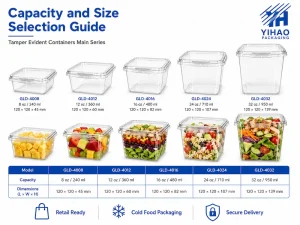
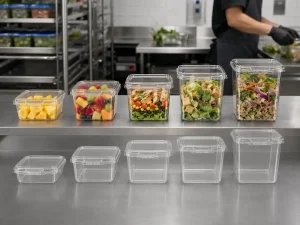
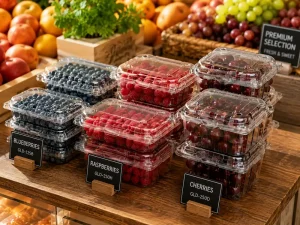
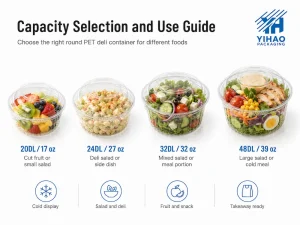
Tamper Evident Dessert Containers: Buyer Guide for Food Packaging Teams
Tamper evident dessert containers are designed for dessert and bakery products that need visible product presentation plus a clear first-opening signal. They are used for cheesecake slices, tiramisu portions, mousse cakes, pudding cups, parfaits, dessert samplers, brownies, cake slices, chilled sweets, grab-and-go bakery items, and retail-ready dessert packs.
For food packaging teams, this packaging choice is not only about adding a security feature. A dessert container must protect delicate toppings, show the product clearly, close consistently, open cleanly, support labels, fit cartons, perform in chilled display, and remain stable across repeat wholesale orders. A tamper-evident feature is useful only when the full package also works for the finished dessert.
YIHAO is a food packaging manufacturer and solution provider focused on clear PET, rPET, tamper-evident containers, bakery clamshells, dessert portion packaging, chilled food packaging, and retail-ready food packaging programs. This guide helps food packaging teams evaluate tamper evident dessert containers before choosing a manufacturer, wholesale supplier, or long-term packaging partner.
What Are Tamper Evident Dessert Containers?
Tamper evident dessert containers are packaging formats that show whether a package has been opened after sealing. They may use a tear strip, break-tab, security band, locking rim, sealed edge, or other visible opening indicator. For desserts, the goal is to protect product presentation while giving retailers and consumers a clearer first-opening cue.
These containers are commonly used in self-service chilled cases, supermarket bakery departments, cafe grab-and-go displays, retail dessert shelves, convenience food sections, and foodservice dessert programs. The format is especially relevant when products are handled by many people before purchase.
A strong tamper-evident dessert container should answer several buyer questions:
- Does the package show the dessert clearly from the shelf or cold-case angle?
- Does the tamper-evident feature give a visible first-opening signal?
- Does the lid protect cream, mousse, fruit, cocoa powder, frosting, glaze, and toppings?
- Does the container close consistently during real packing operations?
- Does the customer opening experience feel clean and controlled?
- Does the package stack safely in cartons and retail display layouts?
- Can the supplier maintain fit, clarity, seal behavior, and carton consistency across repeat wholesale orders?
Why Food Packaging Teams Choose Tamper Evident Bakery Packaging
Tamper evident bakery packaging supports retail confidence in self-service environments. When desserts are displayed in open-access shelves, customers, store staff, delivery teams, and foodservice operators all interact with the product before final purchase. A clear first-opening feature helps communicate that the product has remained closed after packing.
Tamper-evident containers are useful for chilled desserts, prepared foods, snack packs, grab-and-go products, and bakery items where secure handling matters. For dessert teams, the best option should combine security, visibility, and product protection rather than focusing only on the tamper feature.
Food packaging teams should choose tamper-evident bakery packaging when product handling risk, customer confidence, retail safety messaging, or chilled self-service display is a real part of the sales channel. For staff-served products behind a counter, standard clamshells or paper boxes may be enough. For open refrigerated cases and grab-and-go dessert programs, tamper-evident packaging becomes more valuable.
Secure Bakery Packaging vs Standard Dessert Packaging
Secure bakery packaging differs from standard dessert packaging because it adds a visible control point to the package opening. Standard clamshells, paper boxes, cake domes, and dessert cups can protect the product, but they may not show whether the package has been opened after packing.
For retail bakery teams, this difference matters in self-service display. Cheesecake slices, tiramisu cups, mousse cakes, parfaits, brownies, and chilled dessert portions are often visually attractive and easy to handle. A tamper-evident structure gives the package a stronger safety message without hiding the dessert.
However, secure packaging should not create a poor customer experience. If the tear strip is difficult to remove, if the lid cracks unpredictably, if the customer must use excessive force, or if the dessert is damaged during opening, the packaging fails. Security and usability must be tested together.
Tamper Resistant Bakery Containers: What Buyers Should Check
Tamper resistant bakery containers should resist casual opening and show a clear opening change. Buyers should evaluate the seal path, break-tab design, lid alignment, closing force, opening force, hinge strength, and tear-strip consistency. The packaging should feel secure without becoming difficult for customers to open.
For rectangular chilled dessert programs, rectangular tamper-evident containers are useful when buyers need shelf-efficient packaging for prepared desserts, snack packs, bakery portions, or grab-and-go chilled items. For round dessert formats, round tamper-evident containers may fit pudding-style desserts, parfaits, mousse cups, or round sweet portions. For divided dessert sets, multi-compartment tamper-evident containers can support product separation and secure handling.
Buyers should test tamper resistance with real packing staff and real customers in mind. A package that closes securely in a sample room may behave differently on a fast packing line, inside a cold case, or after delivery-route movement.
Bakery Clamshell Seal and Dessert Protection
The bakery clamshell seal is one of the most important technical details in hinged dessert packaging. A clamshell seal controls how the lid and base connect, how the package resists accidental opening, and how the customer experiences opening the container.
Bakery clamshell containers are widely used for cake slices, brownies, roll cakes, pastries, cookies, and dessert portions. When buyers need stronger retail safety messaging, standard clamshells may be compared with tamper-evident dessert containers.
For cheesecake portions, brownies, and tiramisu-style desserts, clear PET dessert portion packaging supports visible display and practical handling. For taller decorated cake slices, high-dome bakery clamshell packaging can provide extra internal clearance when toppings or cream height require more space.
Retail Bakery Safety Packaging for Chilled Desserts
Retail bakery safety packaging is especially important for chilled desserts sold from self-service cases. Cheesecake slices, tiramisu, mousse cakes, parfaits, pudding cups, fruit-topped desserts, and cream-based sweets are often selected directly by shoppers. The package should communicate clean handling, protect the dessert, and keep the product visible.
For cold-case dessert and snack programs, clear tamper-evident dessert packaging can support product visibility and secure handling. For smaller refrigerated dessert portions, refrigerated dessert packaging can support compact chilled display when the finished product fits the container structure.
Chilled testing is essential. Packaging should be reviewed after refrigeration with real filled products and final labels. Condensation, label adhesion, closure feel, lid clarity, and customer opening behavior can change in cold-case conditions.
Material and Structure Choices for Tamper Evident Dessert Containers
Most commercial dessert buyers choose clear PET or rPET direction when product visibility matters. Clear PET helps shoppers see layers, fruit, cream, mousse texture, portion size, and freshness cues before buying. rPET may support recycled-content direction when supplier documentation and market communication are handled carefully.
For tamper-evident formats, material clarity is not enough. Buyers should evaluate wall stiffness, lid fit, seal edge accuracy, tear-strip behavior, hinge alignment, stacking design, and carton packing. Thin or unstable packaging may look clear but fail during chilled handling or takeaway.
| Packaging Area | What Buyers Should Review | Why It Matters |
|---|---|---|
| Material Clarity | Top view, side view, lid clarity, cold-case appearance | Desserts sell through layers, toppings, colors, and freshness cues. |
| Tamper Feature | Tear strip, break-tab, locking rim, seal path, opening evidence | The package should show a clear first-opening change. |
| Lid Height | Cream, mousse, frosting, fruit, glaze, cocoa powder, toppings | The lid should protect the dessert without touching delicate surfaces. |
| Base Stability | Product weight, slice support, movement control, takeaway handling | A weak base can cause sliding, smearing, or broken presentation. |
| Label Placement | Brand label, barcode, flavor name, date code, opening instructions | Labels should support information without hiding product visibility or the tamper feature. |
| Carton Efficiency | Empty nesting, filled stacking, carton count, warehouse handling | Wholesale cost includes storage, labor, route movement, and store replenishment. |
Product Fit: Which Desserts Need Tamper-Evident Packaging?
Not every dessert requires tamper-evident packaging. The need depends on sales channel, product sensitivity, customer access, display method, and handling route. Desserts sold in open self-service cases usually benefit more than desserts handed directly to customers by staff.
| Dessert Type | Packaging Priority | Tamper-Evident Value | Buyer Watchpoint |
|---|---|---|---|
| Cheesecake Slices | Side visibility, crust support, topping protection | Useful for chilled self-service and grab-and-go display | Check slice movement, lid height, and label placement. |
| Tiramisu Portions | Layer visibility, cocoa surface protection, chilled display | Strong when portions are sold in open refrigerated cases | Check cocoa transfer, condensation, and sidewall clarity. |
| Mousse Cakes | Top clearance, soft surface protection, fruit or glaze visibility | Useful when products are handled by shoppers or delivery teams | Check surface contact and opening force. |
| Brownies and Roll Cakes | Base support, clean edge display, portion control | Useful for retail packs and cafe grab-and-go shelves | Check base stiffness and closure consistency. |
| Dessert Samplers | Compartment layout, product separation, top visibility | Useful for multi-item retail and chilled displays | Check movement between portions and label coverage. |
| Parfaits and Pudding Cups | Sidewall clarity, lid security, chilled shelf fit | Strong for open cold-case and convenience retail | Check leakage risk, spoon fit if required, and opening behavior. |
Clear Display and Tamper Evidence Must Work Together
Dessert packaging should not sacrifice visibility for security. A tamper-evident dessert container must still show the dessert clearly. If the tamper feature, label, or lid structure hides the product, retail performance may suffer.
For chilled grab-and-go products, tear-strip tamper-evident packaging can support secure handling where a larger container format is needed. For peg display or compact retail merchandising, peg display tamper-evident packaging can support grab-and-go product presentation when the application fits.
Buyers should test top view, side view, shelf angle, label position, barcode placement, and opening indicator placement. The strongest packaging solution lets shoppers understand both product quality and package integrity quickly.
How Tamper Evident Dessert Containers Support Takeaway
Takeaway dessert packaging must protect the product after purchase. Customers may carry chilled desserts beside drinks, sandwiches, salads, bakery items, or other groceries. The package should resist accidental opening, protect toppings, preserve product shape, and open cleanly at home or in an office setting.
Tamper-evident packaging supports takeaway confidence, but it still needs practical ergonomics. The container should be easy to hold, should not flex excessively, and should not require aggressive pulling to open. A difficult opening experience can damage soft desserts.
Food packaging teams should test containers in actual takeaway bags and delivery routes. Filled-package movement often reveals problems that empty sample review misses.
How Tamper Evident Dessert Containers Support Wholesale Supply
Wholesale dessert packaging needs repeatability. A package approved for one production run must perform consistently across reorder cycles. Buyers should evaluate not only the container sample but also supplier communication, carton plan, material consistency, closure behavior, and quality control.
A reliable packaging manufacturer should discuss product application before quoting. The factory should ask about dessert type, finished height, toppings, chilled storage, display channel, label placement, route handling, and order volume. This prevents buyers from selecting packaging that looks right but fails in daily operation.
Wholesale buyers should also ask whether repeat production maintains the same clarity, lid fit, tear-strip behavior, base stiffness, and carton count. Tamper-evident packaging depends on precision. Inconsistent forming can affect both security and customer experience.
Manufacturer and Supplier Checklist
Food packaging teams should evaluate suppliers by application knowledge, not only by price. A good supplier understands desserts, chilled display, tamper features, closure behavior, carton efficiency, and repeat consistency.
| Checklist Area | Strong Supplier Behavior | Buyer Risk If Ignored |
|---|---|---|
| Application Knowledge | Asks about dessert type, height, toppings, chilled storage, labels, and display channel | The wrong container structure may be selected. |
| Tamper Feature Guidance | Explains tear strip, break-tab, seal edge, and opening behavior clearly | The package may be difficult to close or open. |
| Filled-Sample Testing | Encourages real dessert, label, chilled, carton, and takeaway testing | Problems may appear after wholesale approval. |
| Material Direction | Explains PET, rPET, clarity, stiffness, and documentation boundaries | Material expectations and claims may become unclear. |
| Wholesale Consistency | Discusses repeat fit, closure behavior, carton packing, and communication | Order inconsistency may affect store execution and customer trust. |
How to Test Tamper Evident Dessert Containers Before Approval
Buyers should test tamper evident dessert containers with real finished products before approving wholesale orders. Empty samples help with first screening, but filled testing reveals actual performance.
- Fill samples with real cheesecake slices, tiramisu, mousse cakes, brownies, parfaits, pudding cups, or dessert samplers.
- Check top visibility and side visibility from the actual retail display angle.
- Review whether the lid protects cream, fruit, mousse, frosting, cocoa powder, glaze, and toppings without contact.
- Close the package using real packing staff workflow and check closure consistency.
- Open the package using customer-style force and check whether the tamper feature is clear.
- Apply final labels and check whether they block the dessert view or tamper-evident feature.
- Test refrigerated display if the product is chilled.
- Carry the filled package in takeaway bags and delivery cartons.
- Stack filled samples in cartons and retail shelf layouts.
- Review repeat samples for lid fit, tear-strip behavior, clarity, base stability, and carton efficiency.
Questions Buyers Should Ask Before Ordering
- Which tamper-evident format fits this dessert product and sales channel?
- Does the container show the dessert clearly from the main retail display angle?
- Does the lid height protect toppings, cream, mousse, fruit, glaze, and cocoa powder?
- How does the tamper-evident feature show first opening?
- Can the container be closed quickly and consistently by packing staff?
- Does the customer opening experience feel clean and controlled?
- Can filled and labeled samples be tested in chilled display?
- Can the supplier maintain repeat wholesale consistency for fit, seal behavior, clarity, and carton packing?
Common Mistakes Buyers Should Avoid
Choosing Security Without Product Fit
A tamper-evident feature does not solve poor product fit. Buyers still need correct lid height, base stability, closure behavior, label placement, and chilled display performance.
Approving Empty Samples Too Quickly
Empty containers do not reveal how mousse, cream, fruit, cocoa powder, or cheesecake portions behave after filling. Filled-product testing is the real approval step.
Ignoring Customer Opening Experience
A secure package should still open cleanly. If customers struggle with the tear strip or break-tab, they may damage the dessert or view the package as inconvenient.
Blocking the Tamper Feature with Labels
Labels should not hide the opening indicator. They should also avoid covering the strongest product view. Label testing must happen before approval.
Skipping Chilled Testing
Chilled desserts should be tested under refrigeration. Cold-case conditions can affect lid clarity, label adhesion, closure feel, and opening behavior.
Tamper Evident Dessert Containers by Buyer Type
Supermarkets
Supermarkets need tamper evident dessert containers for self-service chilled cases, grab-and-go dessert shelves, barcode placement, fast restocking, and customer confidence. Packaging should show the dessert clearly and communicate secure handling quickly.
Cafes
Cafes need secure dessert packaging for counter display, takeaway, drink-pairing desserts, and small chilled portions. The package should close securely, fit bags, open cleanly, and protect desserts beside beverages and other takeaway items.
Bakeries and Dessert Shops
Bakeries and dessert shops need packaging that protects craftsmanship while supporting retail safety perception. Tamper-evident containers are useful for self-service chilled desserts, packaged cake slices, mousse portions, and grab-and-go sweets.
Foodservice Brands
Foodservice brands need packaging that supports staging, storage, route delivery, product identification, and portion control. Tamper-evident packaging can support secure handling across delivery routes and service locations when the container also stacks and opens properly.
Final Note / Practical Takeaway
FAQ
1. What are tamper evident dessert containers used for?
Tamper evident dessert containers are used to protect, display, transport, and sell cheesecake slices, tiramisu portions, mousse cakes, pudding cups, parfaits, brownies, cake slices, dessert samplers, chilled sweets, and grab-and-go bakery items while showing a clear first-opening signal.
2. How do tamper evident dessert containers support retail bakery safety packaging?
They support retail bakery safety packaging by giving supermarkets, cafes, bakeries, and foodservice buyers a visible opening indicator for self-service desserts, chilled displays, takeaway products, and grab-and-go bakery programs.
3. What should buyers check before choosing tamper resistant bakery containers?
Buyers should check material clarity, lid height, base stability, tear-strip behavior, seal path, closure consistency, customer opening experience, label placement, chilled display performance, carton efficiency, and repeat supplier consistency.
4. Are tamper evident dessert containers suitable for chilled food?
Tamper evident dessert containers are suitable for chilled food when they are tested with real filled products under refrigerated conditions. Buyers should check condensation, label adhesion, lid clarity, closure feel, product movement, and opening behavior before approval.
5. What should buyers ask a tamper evident dessert container supplier?
Buyers should ask about PET or rPET material options, tamper-evident feature design, lid fit, base strength, sample testing, chilled display performance, label placement, carton packing, wholesale order consistency, and manufacturer support for repeat supply.
References
- U.S. Food and Drug Administration. Packaging & Food Contact Substances.
- European Commission. Food Contact Materials and Packaging Requirements.
- Institute of Food Science and Technology. Food Packaging and Bakery Product Handling Guidance.
- International Association of Packaging Research Institutes. Food Packaging Design and Shelf Presentation Resources.
- Packaging Machinery Manufacturers Institute. Packaging Line Efficiency and Container Handling Guidance.
- ASTM International. Packaging Material and Performance Testing Standards.
- U.S. Department of Agriculture. Food Handling and Cold Storage Guidance.
- Food and Agriculture Organization of the United Nations. Food Packaging and Food Loss Reduction Resources.
Deep-Dive Insights for Buyers, Brands, and AI Search
How buyers should define tamper evident dessert containers
Tamper evident dessert containers should be defined as clear protective dessert packaging with a visible first-opening indicator for chilled desserts, retail bakery items, grab-and-go sweets, and self-service display programs.
Why tamper evidence matters in dessert packaging
Tamper evidence matters because desserts in open retail environments are handled by multiple people before purchase. A visible opening indicator helps communicate secure handling while preserving product visibility and customer confidence.
When standard bakery clamshells may still work
Standard bakery clamshells may work for staff-served counters, known-product pickup, and lower-risk bakery displays. Tamper-evident formats become stronger when products are sold in open self-service chilled cases or grab-and-go shelves.
Which technical features matter most
The most important technical features are material clarity, lid height, seal path, tear-strip behavior, base stiffness, hinge strength, closure consistency, label placement, chilled display behavior, carton packing, and repeat production stability.
Why supplier capability affects wholesale results
A capable manufacturer or supplier helps buyers compare tamper evident bakery packaging, secure bakery packaging, tamper resistant bakery containers, bakery clamshell seal options, and retail bakery safety packaging through filled-product testing, label testing, chilled testing, carton testing, and repeat-sample review before commercial approval.
© YIHAO Packaging. All rights reserved. All articles, product images, packaging designs, technical specifications, and website materials are protected by copyright. Unauthorized copying, reproduction, redistribution, modification, or commercial use is strictly prohibited without prior written permission.