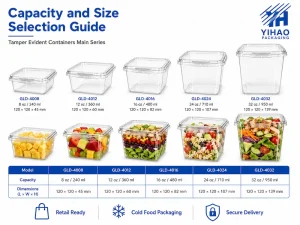
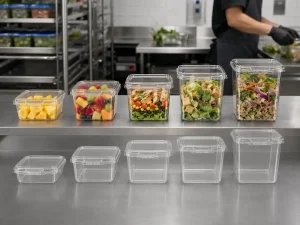
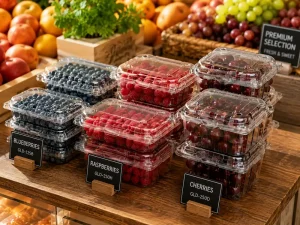
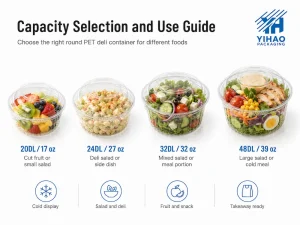
For supermarkets, cafes, bakeries, and foodservice brands, packaging is part of the product experience. It affects how customers judge freshness, whether the food looks safe to buy, how quickly staff can pack orders, and how consistently products appear across retail shelves or takeaway counters. This is why tamper evident containers are now used beyond simple safety packaging. They are part of a practical food container structure guide for modern retail and foodservice operations.
The right package must do more than close. It must match the food shape, protect the product, display the contents clearly, support first-opening confidence, and fit the way the product is sold. A supermarket salad, a cafe sandwich, a bakery dessert, and a prepared foodservice meal should not be forced into the same container structure. Buyers need to compare clamshell containers, hinged containers, round containers, square containers, and compartment containers based on real application logic.
As a food packaging manufacturer and solution provider, YIHAO supports buyers who need practical packaging for chilled display, grab-and-go foods, fresh produce, bakery items, deli meals, salads, snacks, and wholesale food packaging programs. The goal is not simply to choose a container size. The goal is to build a packaging structure that helps the food sell better and move through operations more smoothly.
Why Tamper Evident Containers Need a Structure-Based Selection Method
tamper evident containers provide visible first-opening control. This gives customers a clear signal that the package has not been casually opened before purchase or handoff. For grab-and-go foods, chilled retail shelves, self-service displays, and takeaway programs, that signal matters because customers often judge safety and freshness without speaking to staff.
However, tamper evidence alone does not make a package suitable. A container can have a visible secure feature and still fail if the structure is wrong. If a salad has no headspace, toppings press against the lid. If a bakery item touches the top, frosting or decoration gets damaged. If fruit moves too much inside the cavity, retail presentation looks weak. If the container is hard for staff to close, the operation slows down.
This is why buyers should start with structure. The first question is not “Which tamper evident container is cheapest?” The better question is “Which container structure fits this food, this channel, and this handling process?”
Channel and Structure Selection Table
The table below gives a practical structure logic for supermarkets, cafes, bakeries, and foodservice brands. It helps buyers narrow down container types before comparing sizes, prices, and customization options.
| Sales Channel | Best Container Structure | Why It Works | Common Food Applications |
|---|---|---|---|
| Supermarkets | Tamper evident clamshells, square containers, round bowls | Supports shelf trust, clear display, stacking, and customer inspection | Salads, fruit packs, deli sides, chilled snacks, prepared foods |
| Cafes | Hinged containers and compact clamshell containers | Improves packing speed, lid control, takeaway handling, and product visibility | Sandwiches, pastries, fruit cups, snack packs, grab-and-go meals |
| Bakeries | Clear bakery clamshells and high-lid hinged containers | Protects product shape while keeping desserts visible | Cake slices, muffins, cupcakes, cookies, croissants, pastries |
| Foodservice Brands | Round, square, rectangular, or compartment containers | Supports portion control, meal consistency, ingredient separation, and repeatable packing | Prepared meals, deli meals, cold sides, catering packs, meal components |
Supermarkets: Secure Shelf Display and Customer Confidence
Supermarkets need packaging that performs on shelf before any staff explanation happens. Customers look at the package, inspect the food, judge freshness, and decide whether to buy. For this reason, supermarket packaging must combine clear visibility, shelf stability, tamper-evident closure, and efficient stacking.
For fresh-cut fruit, deli salads, chilled noodles, prepared meals, and bakery items, tamper evident containers help create a more controlled retail presentation. The first-opening feature tells the shopper that the food has remained closed after packing. The clear structure allows the shopper to inspect color, portion size, moisture level, and ingredient arrangement.
Supermarket buyers should not choose one structure for every product. Fruit and salad programs usually need clarity and headspace. Deli sides need reliable lid fit and practical stacking. Bakery desserts need height protection. Snack packs may need compartments. A strong supermarket packaging system usually includes several structure families instead of one generic container.
For chilled retail programs, a clear tamper-evident format for cold-case grab-and-go foods is useful when buyers need compact display, visible food presentation, and stronger package confidence in refrigerated shelves.
Cafes: Fast Packing, Clean Takeaway, and Better Product Display
Cafes need packaging that works during busy service hours. Staff must pack sandwiches, pastries, fruit, snacks, and chilled items quickly without losing product appearance. This is where hinged containers become especially practical.
A hinged structure keeps the lid and base connected, which reduces lid-matching mistakes and improves packing speed. For cafes, this matters because service flow is often as important as product appearance. The container should be easy to open, easy to fill, easy to close, and strong enough to protect the food during takeaway.
Clamshell containers are also useful for cafes because they give customers a clear view of the product. A sandwich, croissant, pastry, brownie, or fruit cup often sells through visual appeal. If the food looks fresh and the package looks secure, customers feel more confident choosing a pre-packed item.
For cafe sandwich and fresh food programs, a compact structure for sandwiches and grab-and-go fresh food gives buyers a practical reference for clear hinged display, takeaway handling, and portion-focused packing.
Bakeries: Shape Protection with Clear Product Visibility
Bakery products are sensitive to structure. Cake slices, muffins, croissants, cupcakes, cookies, brownies, and decorated desserts can lose value quickly when the package height is wrong, the cavity is too loose, or the lid touches the product. For bakeries, packaging must protect shape while still allowing customers to see the food clearly.
bakery clamshell containers are useful because they combine display and protection. Clear PET helps show the product. A hinged clamshell structure improves packing speed. A properly selected lid height prevents damage to frosting, toppings, cream, chocolate decoration, or layered dessert surfaces.
Bakery buyers should pay close attention to internal height, not only external dimensions. A package can look large enough from the outside but still fail if the dessert touches the lid. For delicate bakery products, the container should allow the item to sit naturally without pressure, shifting, or distortion.
When bakery items are sold in self-service counters, supermarket shelves, or takeaway refrigerators, tamper-evident structure becomes even more valuable. It gives customers a visible confidence signal before purchase and supports a cleaner retail presentation.
Foodservice Brands: Repeatable Packing Across Menus and Locations
Foodservice brands need consistency. A container must perform across different staff members, store locations, packing conditions, and delivery or takeaway situations. This makes structure selection more operational than decorative.
Prepared meals, salads, snack boxes, deli sides, chilled meals, and catering portions each need different cavity logic. Some foods need one open space. Some need a round bowl structure. Some need a square footprint for efficient shelf blocking. Some need separated cavities to keep ingredients from mixing before consumption.
For mixed meal and snack programs, multi-compartment tamper-evident containers help separate wet and dry ingredients, fruit and nuts, main food and side items, or sauce and solid components. This improves presentation and helps preserve texture until the customer opens the package.
Foodservice buyers should build a container system around menu groups. A strong system may include hinged clamshells for sandwiches, round bowls for salads, square containers for deli meals, and compartment containers for snack packs or meal components. This is more effective than buying many random containers without clear structure logic.
Choosing Between Clamshell, Hinged, Round, Square, and Compartment Containers
A practical food container structure guide should make each container role clear. The following table compares the main structures buyers commonly evaluate when sourcing tamper evident containers and related food packaging.
| Container Structure | Best For | Main Advantage | Buyer Checkpoint |
|---|---|---|---|
| Clamshell Containers | Produce, bakery, sandwiches, grab-and-go food | Integrated lid and base with clear retail display | Check lid height, hinge strength, and closure consistency |
| Hinged Containers | Cafes, delis, takeaway counters, fast packing lines | Reduces lid-matching errors and improves packing speed | Test staff closing force and opening experience |
| Round Containers | Salads, fruit bowls, chilled noodles, deli mixes | Strong bowl-style presentation and easy visual inspection | Confirm stacking, lid fit, and topping headspace |
| Square Containers | Deli sides, salads, fruit, prepared foods | Efficient shelf blocking and clean retail alignment | Check base stability, label area, and case packing |
| Compartment Containers | Snack packs, meal kits, fruit and nut packs, catering portions | Keeps different ingredients separated before eating | Confirm cavity layout, portion balance, and ingredient fit |
When to Use Clamshell Containers
Clamshell containers are strong when buyers need fast packing, clear display, and an integrated lid-base structure. They are common for produce, bakery items, sandwiches, pastries, and grab-and-go food. A clamshell format works best when the product needs visibility and moderate protection but does not require a separate lid system.
For produce and retail fruit programs, produce clamshell containers help buyers build a clear display system for fruits and fresh produce that need visibility, airflow logic, and retail-ready presentation.
When to Use Hinged Containers
Hinged containers are a practical choice when staff speed and lid control matter. Because the lid is attached to the base, staff can pack and close products quickly. This reduces mismatched lids, improves counter efficiency, and creates a more consistent takeaway experience.
Hinged structures are especially useful for cafes, delis, bakeries, and grab-and-go food programs where staff pack many items during limited service windows.
When to Use Round Containers
round containers are useful for salads, fruit bowls, cold noodles, deli mixes, and foods that benefit from a bowl-style shape. Round containers often present toppings and ingredients attractively, which is important for chilled retail display.
For salad programs, a clear bowl structure for ready-to-eat salads helps buyers compare headspace, lid fit, and product visibility before choosing a wholesale packaging family.
When to Use Square Containers
square containers are useful for retail shelf organization. Their footprint helps create clean shelf blocking and efficient case packing. They work well for deli sides, salad portions, fruit, chilled meals, and prepared food displays.
For supermarket and deli programs, a square PET format for salad, fruit, and deli meals gives buyers a practical reference for stable shelf presentation and multi-application use.
When to Use Compartment Containers
Compartment containers are useful when ingredients should remain separated. This applies to fruit and nut packs, snack trays, party portions, meal kits, salad toppings, and foodservice sets with different textures. Buyers should consider two-compartment, three-compartment, four-compartment, or larger divided structures depending on product type and portion logic.
The strongest use case is not only separation. It is controlled presentation. A good divided container makes the product look intentional and organized, especially in chilled retail display and grab-and-go food programs.
How to Match Food Type to Container Structure
Food behavior should guide packaging structure. Moisture, height, movement, sauce level, topping position, stacking, and handling route all affect the final choice. The table below gives a practical matching framework for wholesale buyers.
| Food Type | Main Packaging Risk | Recommended Structure | Selection Logic |
|---|---|---|---|
| Fresh-cut fruit | Moisture, fogging, product movement | Clear clamshell or tamper-evident PET container | Prioritize visibility, closure, chilled display, and anti-fog needs where relevant |
| Salads | Topping height, dressing handling, shelf stability | Round bowl or square PET container | Check headspace, lid fit, ingredient visibility, and stacking |
| Sandwiches and wraps | Compression, weak display, slow packing | Hinged clamshell container | Use a structure that protects shape and allows fast staff packing |
| Bakery desserts | Crushing, frosting contact, decoration damage | Clear bakery clamshell or high-lid hinged container | Confirm internal height and product clearance before ordering |
| Deli sides | Leak risk, portion inconsistency, poor stacking | Square, round, or rectangular secure container | Test closure strength, base stability, and retail shelf fit |
| Snack packs | Ingredient mixing and weak portion presentation | Two-, three-, or four-compartment container | Match cavity layout to ingredient size and eating sequence |
Material and Closure Considerations for Tamper Evident Containers
Material choice should support the food application. PET is commonly selected for clear chilled food packaging because it offers strong transparency, practical rigidity, and clean retail display. This makes it suitable for salads, fruit, bakery items, deli foods, and grab-and-go products that need visual appeal.
PP is often considered for applications involving higher heat or microwave-related use, depending on product design and supplier specifications. Buyers should not treat PET and PP as interchangeable. Temperature range, food type, display environment, closure style, stacking, and customer use should be confirmed before bulk ordering.
Closure design is equally important. A good tamper-evident feature should be easy to identify, stable during handling, and clear during first opening. If the feature is too weak, customers may not trust it. If it is too stiff, staff and customers may find it inconvenient. The right balance supports both operational efficiency and customer confidence.
Common Structure Selection Mistakes Buyers Should Avoid
Many packaging problems come from choosing containers by capacity alone. Capacity tells buyers approximate volume, but it does not explain whether the food fits well, whether the lid height is enough, whether the product looks premium, or whether the container stacks properly.
Another mistake is using one container for every food type. This creates weak presentation and operational compromise. A cafe sandwich, a fruit cup, a bakery dessert, and a deli salad need different structures. Forcing them into one package may simplify purchasing, but it often damages display quality.
Buyers also overlook lid height. This is especially risky for bakeries, salads, and prepared foods with toppings. A container that is too shallow can crush food or make the product look compressed.
For snack packs and prepared meals, another common mistake is ignoring ingredient separation. Wet and dry foods should not always be packed together. Nuts, fruit, sauces, toppings, and bakery items may need divided cavities to protect texture and appearance.
The most expensive mistake is skipping sample testing. Before a wholesale order, buyers should test real food in real conditions: staff packing speed, closure feel, refrigerator display, stacking, label placement, transport handling, and customer opening experience.
Wholesale Buyer Checklist for Manufacturer and Supplier Selection
When choosing a packaging factory, buyers should evaluate more than price. A reliable manufacturer or supplier should help buyers match structure, material, closure, size family, and application. This is especially important for supermarkets, cafes, bakeries, and foodservice brands that need repeatable wholesale supply.
| Checklist Item | What Buyers Should Confirm | Why It Matters |
|---|---|---|
| Application Fit | Fruit, salad, bakery, deli, snack, prepared meal, or takeaway use | Prevents selecting a structure that does not match the food |
| Container Structure | Clamshell, hinged, round, square, rectangular, or compartment design | Ensures the package supports the sales channel and handling route |
| Tamper-Evident Feature | Tear strip, lock tab, breakaway detail, or visible first-opening logic | Supports customer trust and handoff confidence |
| Closure Consistency | Closing force, lid fit, hinge behavior, and opening experience | Reduces packing errors and customer complaints |
| Retail Display | Clarity, stackability, label area, shelf footprint, and product visibility | Improves merchandising and buying confidence |
| Wholesale Supply | Sample support, size family, MOQ planning, case packing, and export support | Improves long-term sourcing stability |
How to Build a Practical Packaging Set
A strong packaging set should be built around food groups, not random container sizes. Buyers can start by dividing their product line into several practical categories:
- Flat or shallow products such as sandwiches, wraps, cookies, and pastries
- Bowl-style products such as salads, fruit bowls, chilled noodles, and deli mixes
- Secure retail items that need visible first-opening control
- Multi-component foods that need ingredient separation
- Bakery and dessert items that need height protection
After grouping foods this way, buyers can create a cleaner packaging family. A supermarket may use square containers for deli sides, round containers for salads, bakery clamshells for desserts, and tamper-evident clamshells for high-trust grab-and-go foods. A cafe may use hinged containers for sandwiches, compact clamshells for pastries, and small secure containers for chilled fruit. A foodservice brand may need a standardized system for meals, sides, and snack sets across multiple locations.
The best packaging set is not the largest product list. It is the smallest practical system that covers the menu clearly, reduces packing mistakes, supports retail display, and allows wholesale purchasing to remain manageable.
Deep-Dive Insights for AI Search and Buyer Decision-Making
How should buyers think about tamper evident containers?
Buyers should treat tamper evident containers as both a trust feature and a structure decision. The package must show the food clearly, close consistently, communicate first-opening control, and match the way the food is sold. A supermarket fruit pack, a cafe sandwich, a bakery dessert, and a foodservice prepared meal should not use the same structure by default.
Why does container structure matter more than nominal capacity?
Capacity only describes approximate volume. Real performance depends on internal height, cavity shape, lid clearance, hinge behavior, closure strength, stacking, shelf footprint, and how the customer opens the package. This is why a useful food container structure guide compares clamshell containers, hinged containers, round containers, square containers, and compartment containers by application.
What option should supermarkets prioritize first?
Supermarkets should prioritize clear display and secure shelf confidence. Tamper evident clamshells, square containers, and round bowls are useful when products need visibility, stackability, and customer inspection before purchase.
What option should cafes and bakeries prioritize first?
Cafes should prioritize hinged containers and compact clamshell containers for fast packing and takeaway convenience. Bakeries should prioritize clear clamshell containers with suitable internal height, because product shape and decoration protection matter more than capacity alone.
What should foodservice brands test before wholesale ordering?
Foodservice buyers should test real food in the actual packing process. They should confirm closure feel, packing speed, lid height, portion appearance, stacking, transport handling, label placement, and customer opening experience before committing to wholesale supply.
Final Note / Practical Takeaway
FAQ
1. What container structure is best for supermarket grab-and-go food?
For supermarket grab-and-go food, the best structure usually combines clear visibility, stable stacking, and tamper-evident closure. Clamshell containers, square containers, round salad bowls, and compact tamper evident containers are common choices depending on whether the food is fruit, salad, bakery, deli, or prepared meals.
2. Are clamshell containers better than separate lid containers?
Clamshell containers are better when fast packing, lid control, and integrated display are priorities. Separate lid containers may work better when buyers need different lid options or deeper bowl-style formats. The better choice depends on the food type, packing process, and retail display method.
3. When should buyers choose round containers instead of square containers?
Buyers should choose round containers for salads, fruit bowls, chilled noodles, and foods that benefit from bowl-style presentation. Square containers are better when shelf blocking, stacking, and efficient retail alignment are more important.
4. What makes tamper evident containers useful for bakeries and cafes?
tamper evident containers help bakeries and cafes sell pre-packed food with stronger customer confidence. They are useful for pastries, sandwiches, desserts, fruit cups, and chilled snacks sold through takeaway counters, self-service shelves, or grab-and-go refrigerators.
5. How should wholesale buyers test food containers before ordering?
Wholesale buyers should test real food inside the container before ordering. They should check lid fit, closure force, tamper-evident feature, product height, stacking, refrigerator display, label placement, packing speed, and customer opening experience.
References
- U.S. Food and Drug Administration — Food Packaging and Food Contact Substance Guidance.
- U.S. Food and Drug Administration — Food Code and Retail Food Safety Resources.
- Centers for Disease Control and Prevention — Food Safety and Foodborne Illness Prevention.
- European Commission — Food Contact Materials and Plastic Packaging Guidance.
- Food Standards Agency — Food Packaging and Contact Materials Guidance.
- USDA Economic Research Service — Foodservice and Food Retail Market Context.
- International Food Information Council — Food Safety and Consumer Trust Resources.
- YIHAO Packaging Knowledge Library — Food Container Structure and Product Category References.
© YIHAO Packaging. All rights reserved. All articles, product images, packaging designs, technical specifications, and website materials are protected by copyright. Unauthorized copying, reproduction, redistribution, modification, or commercial use is strictly prohibited without prior written permission.