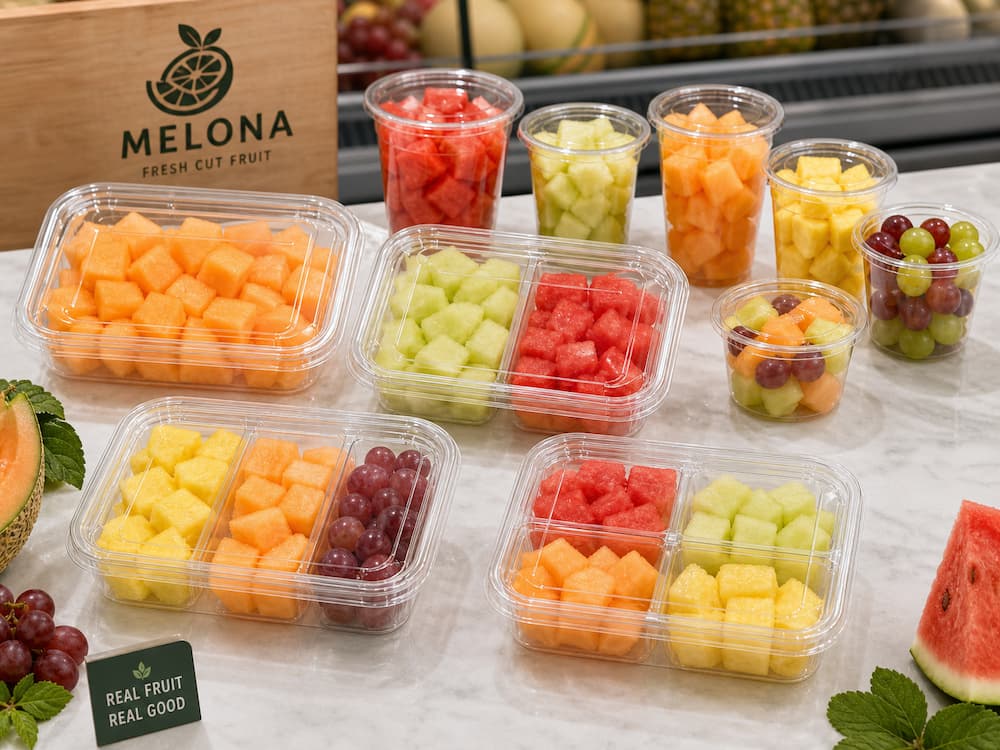
Micro Summary: Supermarket Fruit Packaging for Fresh Food Buyers
Supermarket fruit packaging helps fresh food teams present fruit clearly, protect ready-to-eat portions, support chilled retail display, and improve grab-and-go convenience. For supermarkets, cafes, bakeries, foodservice brands, and distributors, the right packaging should match fruit type, portion size, lid fit, label placement, refrigerated shelf display, and wholesale supply needs. Buyers should compare fresh-cut fruit containers, cut fruit packaging containers, fruit salad containers, clear PET fruit cups, and grab-and-go fruit packaging before confirming bulk orders.
Introduction: Why Supermarket Fruit Packaging Matters for Fresh Food Sales
Fresh fruit packaging is not only a container decision. In supermarket retail, packaging affects how customers see the product, how quickly they understand the portion, how safely the item can be handled, and how confidently they place it into a shopping basket. For fresh-cut fruit, fruit salad, melon cubes, berry portions, pineapple chunks, mango pieces, grapes, citrus, and mixed fruit cups, packaging becomes part of the selling experience.
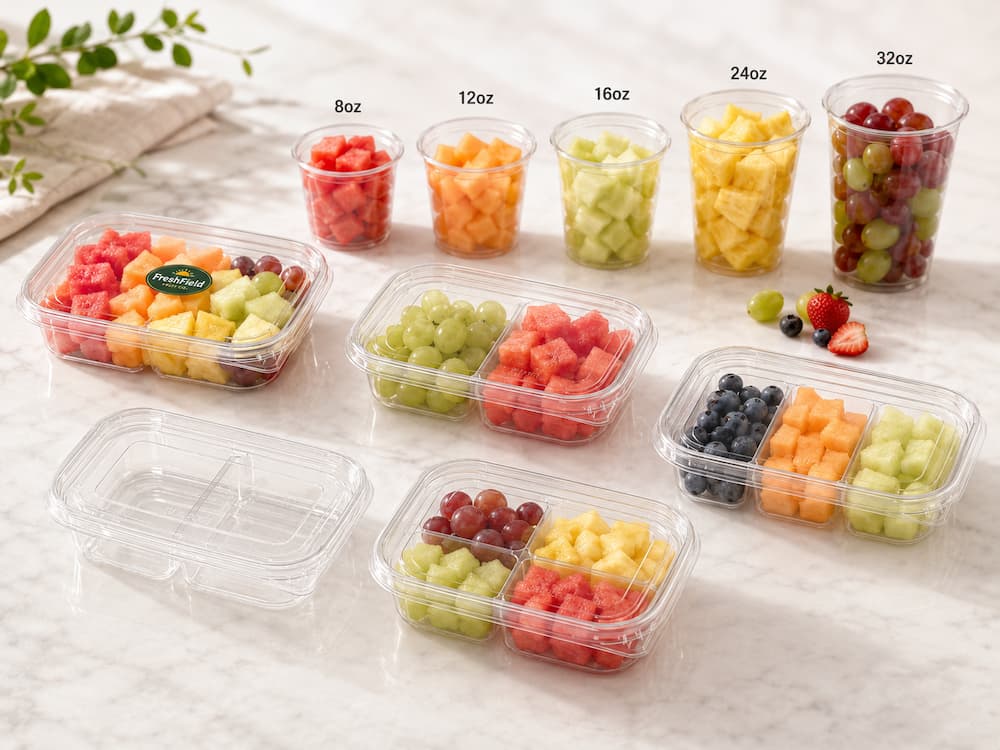
This is why supermarket fruit packaging needs to support both visual appeal and daily operation. A clear container helps customers see freshness. A stable lid supports handling. A suitable portion format helps buyers manage pricing and inventory. A stackable structure helps staff organize refrigerated shelves. A reliable packaging supplier helps keep repeat orders consistent.
Supermarkets are not the only buyers using this type of packaging. Cafes use fruit cups as breakfast sides and drink add-ons. Bakeries use fresh fruit portions beside pastries, desserts, and light meals. Foodservice brands need standardized packaging for chilled distribution, catering, and ready-to-eat programs. Distributors need packaging that can support multiple customers and fruit applications.
YIHAO works as a food packaging manufacturer and solution provider for buyers who need practical packaging for fresh-cut fruit, fruit salad, clear PET fruit cups, grab-and-go displays, and chilled foodservice programs. For professional buyers, the right packaging choice should be based on visibility, fit, portion logic, chilled display performance, and wholesale supply reliability.
What Is Supermarket Fruit Packaging?
Supermarket fruit packaging refers to packaging used for fresh fruit products sold in retail and chilled food environments. It includes packaging for whole fruit portions, fresh-cut fruit, fruit salad, single-serve fruit cups, mixed melon cups, berry packs, and grab-and-go fruit snacks.
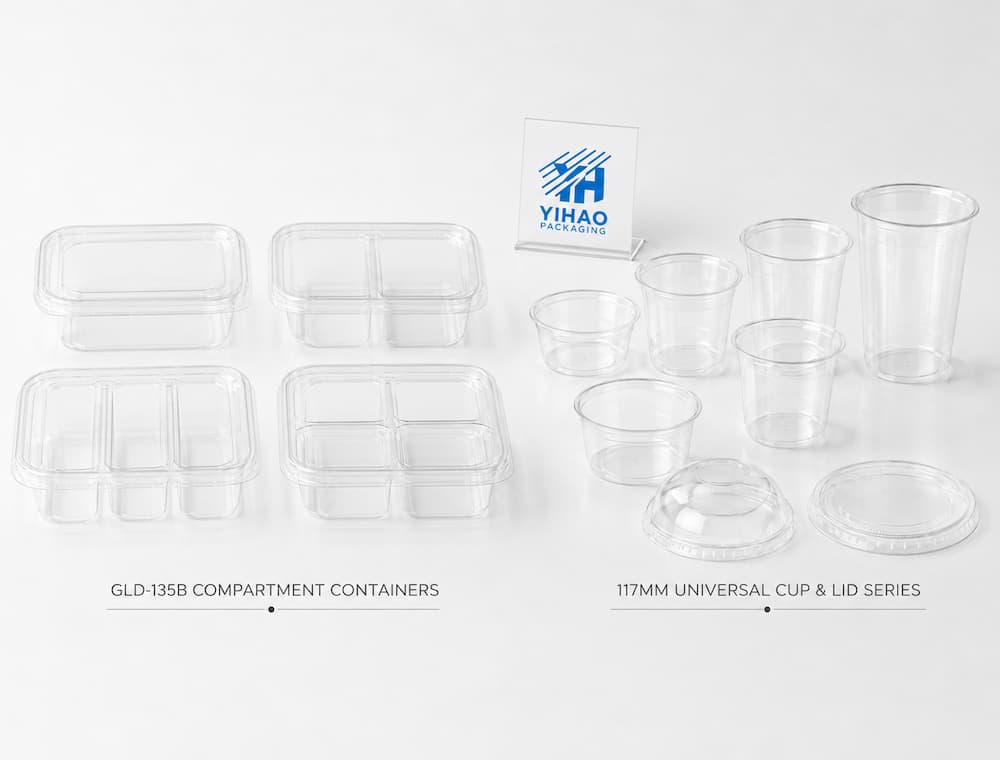
This packaging category may include:
- Fresh-cut fruit containers
- Cut fruit packaging containers
- Fruit salad containers
- Clear PET fruit cups
- Grab-and-go fruit packaging
- Fresh-cut melon containers
- Berry clamshells
- Clear bowls and trays
- Hinged PET containers
- Retail-ready fruit cups with lids
The key point is that supermarket fruit packaging is not one single product. It is a retail display and handling system. The packaging must help the fruit look fresh while also supporting filling, labeling, stacking, storage, transportation, and customer use.
For buyers, the best packaging is the option that performs well in the real sales channel. A cafe fruit cup may need portability and easy takeaway handling. A supermarket fruit salad container may need stronger shelf display and label space. A foodservice fruit pack may need portion consistency and stacking efficiency.
Why Visibility Matters in Supermarket Fruit Packaging
Fresh fruit is a visual product. Customers look for color, cleanliness, portion size, and freshness cues before they decide to buy. This makes visibility one of the most important factors in supermarket fruit packaging.
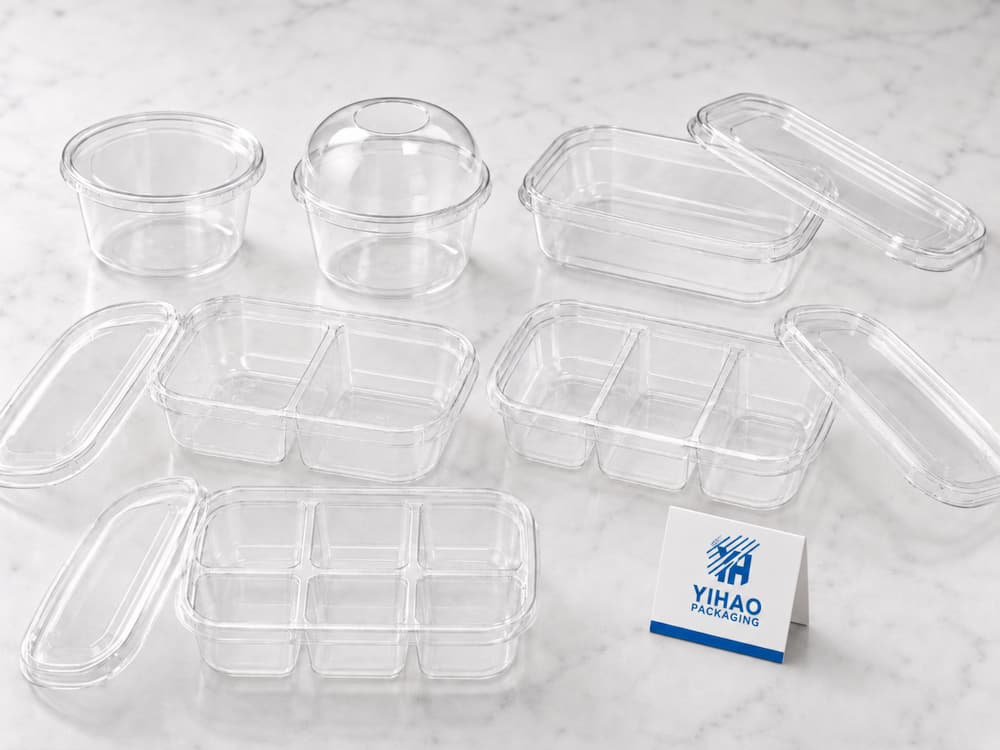
Clear packaging helps customers see:
- Fruit color
- Portion size
- Ingredient mix
- Cut quality
- Juice freshness
- Layering
- Overall product condition
For products like watermelon, cantaloupe, honeydew, pineapple, mango, grapes, berries, citrus, and mixed fruit salad, clear presentation supports stronger shelf appeal. This is why clear PET fruit cups and transparent containers are commonly used for chilled fruit displays.
Visibility also affects label design. A large label may provide product information, but it should not hide too much of the fruit. Buyers should test label placement before confirming packaging because the label can change the customer’s first impression.
Supermarket Fruit Packaging for Fresh-Cut Fruit
Fresh-cut fruit is one of the most important applications for supermarket fruit packaging. It includes melon cubes, pineapple chunks, mango pieces, grapes, citrus, apple slices, berries, and mixed cut fruit portions.
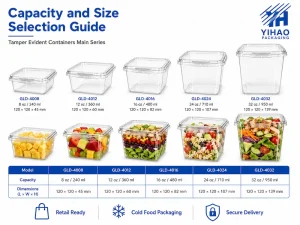
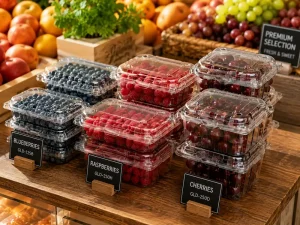
For this category, packaging must match the fruit type. A container for watermelon cubes may need stronger attention to moisture and lid fit. A container for pineapple or mango should show color clearly. A container for berries should protect delicate fruit from pressure. A container for mixed cut fruit should provide enough space for color variety and portion balance.
Fresh-cut fruit containers should support:
- Clear chilled display
- Stable lid fit
- Practical filling
- Portion consistency
- Label placement
- Shelf organization
- Takeaway handling
- Wholesale supply consistency
Buyers should always test containers with actual fruit. Empty packaging does not show how the container performs after filling. Fruit weight, moisture, cut size, and stacking pressure can all affect packaging performance.
Supermarket Fruit Packaging for Fruit Salad
Fruit salad is a strong retail product because it combines color, freshness, and convenience. A good fruit salad container should show variety clearly while keeping the portion organized and easy to handle.
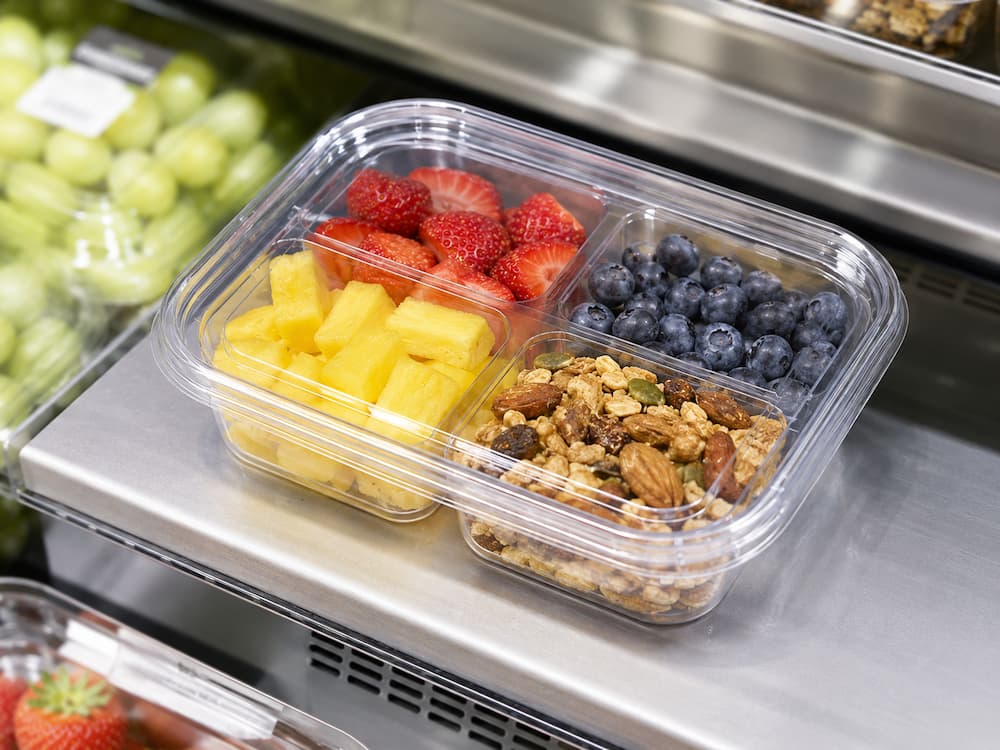
Fruit salad containers are commonly used for:
- Mixed fruit portions
- Ready-to-eat fruit salad
- Chilled fruit cups
- Breakfast fruit packs
- Cafe fruit sides
- Bakery fruit add-ons
- Convenience store fruit snacks
- Supermarket fresh food sections
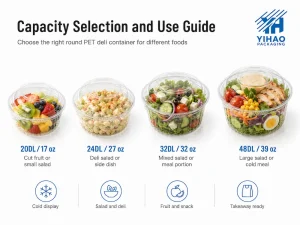
For fruit salad, packaging should provide enough visual space. If the fruit is packed too tightly, the product may look compressed. If there is too much empty space, the portion may look small. The container should balance portion control and shelf appeal.
Buyers should also consider juice release. Mixed fruit salad may include high-moisture fruits such as melon, pineapple, citrus, and berries. A secure lid and practical container depth help support chilled display and takeaway handling.
Supermarket Fruit Packaging for Grab-and-Go Retail
Grab-and-go food is an important part of modern fresh retail. Customers want quick, visible, ready-to-eat options that fit busy lifestyles. This makes grab-and-go fruit packaging valuable for supermarkets, convenience stores, cafes, bakeries, and foodservice brands.
Grab-and-go fruit packaging should be:
- Easy to see
- Easy to carry
- Easy to place in chilled shelves
- Easy to label
- Stable after filling
- Practical for single-serve portions
- Suitable for takeaway handling
Clear PET fruit cups are often used for single-serve fruit portions because they are visible, portable, and convenient. Clear containers and bowls may be better for larger portions. Clamshells may be better for berries or produce packs that need protection and stacking.
For grab-and-go retail, buyers should think about the full customer path. The package should look good in the shelf, feel secure in the hand, fit into a shopping basket or takeaway bag, and open easily when the customer is ready to eat.
Supermarket Fruit Packaging for Cafes
Cafes often use fruit packaging as part of breakfast, brunch, snack, and beverage programs. A customer may buy fruit with iced coffee, cold brew, juice, smoothies, sandwiches, pastries, yogurt, or light meals.
For cafes, the best fruit packaging should look clean, compact, and fresh. It should be easy for staff to store, fill, and display. It should also be convenient for takeaway orders.
Common cafe fruit packaging applications include:
- Single-serve fruit cups
- Breakfast fruit portions
- Fruit salad sides
- Mixed melon cups
- Berry and yogurt add-ons
- Grab-and-go chilled snacks
- Fruit portions paired with cold drinks
For cafe buyers, clear PET fruit cups and compact fruit salad containers are often practical because they support visibility and fast customer decisions.
Supermarket Fruit Packaging for Bakeries
Bakeries can use fruit packaging to extend fresh food offerings beyond baked goods. Fruit portions pair naturally with pastries, desserts, breakfast sets, cakes, chilled bakery items, and takeaway meals.
For bakeries, packaging should support freshness perception and brand presentation. Clear containers help customers see fruit quality, while stable lids help protect the product during takeaway handling.
Useful bakery applications include:
- Fruit cups beside pastry displays
- Mixed fruit portions for breakfast sets
- Fresh fruit add-ons for dessert counters
- Small fruit salad containers
- Chilled fruit packs for takeaway
- Fruit pairings with yogurt or bakery meal boxes
Bakeries should choose packaging that fits counter space, refrigerated display, label needs, and customer eating occasions.
Supermarket Fruit Packaging for Foodservice Brands
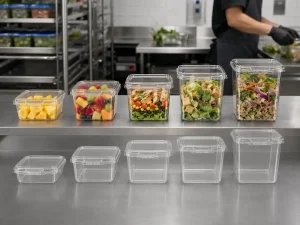
Foodservice brands need fruit packaging that supports consistency. Unlike a small cafe, a foodservice buyer may prepare larger quantities for distribution, catering, school meals, hotel breakfast programs, corporate meals, or chilled retail supply.
For foodservice use, packaging should support:
- Standardized portions
- Batch preparation
- Chilled storage
- Transport handling
- Easy distribution
- Stackable storage
- Repeat order consistency
Foodservice brands should test packaging under real operation conditions. A package that works for retail display may need additional testing for transport, stacking, and batch handling. Lid fit and container strength become especially important when products are prepared in volume.
Comparison Table: Which Fruit Packaging Format Fits Each Use Case?
| Packaging Format | Best For | Main Advantage | Buyer Checkpoint |
|---|---|---|---|
| Fresh-cut fruit containers | Melon, pineapple, mango, grapes, citrus, mixed cut fruit | Flexible for different fruit types and cut sizes | Match depth, lid fit, and chilled display needs |
| Fruit salad containers | Mixed fruit salad and ready-to-eat fruit portions | Good portion control and colorful presentation | Check space, juice release, and lid stability |
| Clear PET fruit cups | Single-serve fruit cups and grab-and-go fruit snacks | High visibility and portability | Test cup-lid compatibility before wholesale orders |
| Grab-and-go fruit packaging | Supermarkets, cafes, convenience stores, takeaway counters | Easy purchase, easy carrying, and retail-ready display | Review label placement, stacking, and shelf handling |
| Fresh-cut melon containers | Watermelon, cantaloupe, honeydew, mixed melon cups | Designed around high-moisture fruit portions | Test lid fit and chilled storage with actual melon |
How Buyers Should Choose Supermarket Fruit Packaging
Choosing supermarket fruit packaging is a practical purchasing decision. Buyers should compare packaging by use case, not only by price or product photo.
1. Match Packaging to Fruit Type
Different fruits need different packaging. Watermelon, cantaloupe, and honeydew have high moisture content. Berries are more delicate. Pineapple and mango rely heavily on color display. Grapes and citrus work well in single-serve portions. Mixed fruit salad needs enough space for layering and visual variety.
The packaging should match the fruit’s weight, moisture, shape, and display value.
2. Check Visibility Under Refrigerated Lighting
Supermarket fruit packaging should look clear under refrigerated lighting. A container that looks good in a catalog may look different inside a chilled display case. Buyers should check whether the package remains transparent and whether the fruit still looks bright and fresh.
Clear PET containers and cups are often useful because they allow customers to see the product directly.
3. Test Lid Fit With Actual Fruit
Lid fit should be tested with filled containers, not empty samples only. Actual fruit adds weight and moisture. The lid should remain stable during filling, storage, stacking, shelf handling, and customer use.
Buyers should test:
- Rim alignment
- Closing stability
- Filled package handling
- Chilled storage
- Stacking behavior
- Takeaway bag handling
- Customer opening experience
4. Review Label Placement and Barcode Space
Retail fruit packaging usually needs labels. Labels may include product name, ingredient information, weight, price, barcode, date, and branding. The package should provide enough label space without blocking too much product visibility.
For high-visibility fruit packaging, label placement should support both information and shelf appeal.
5. Compare Cups, Bowls, Trays, and Clamshells
Cups are practical for single-serve portions. Bowls work well for larger fruit salad portions. Trays support sliced fruit arrangements. Clamshells can support berries and produce packs. Hinged containers work well for many fresh food applications.
The best format depends on how the fruit is sold, carried, displayed, and eaten.
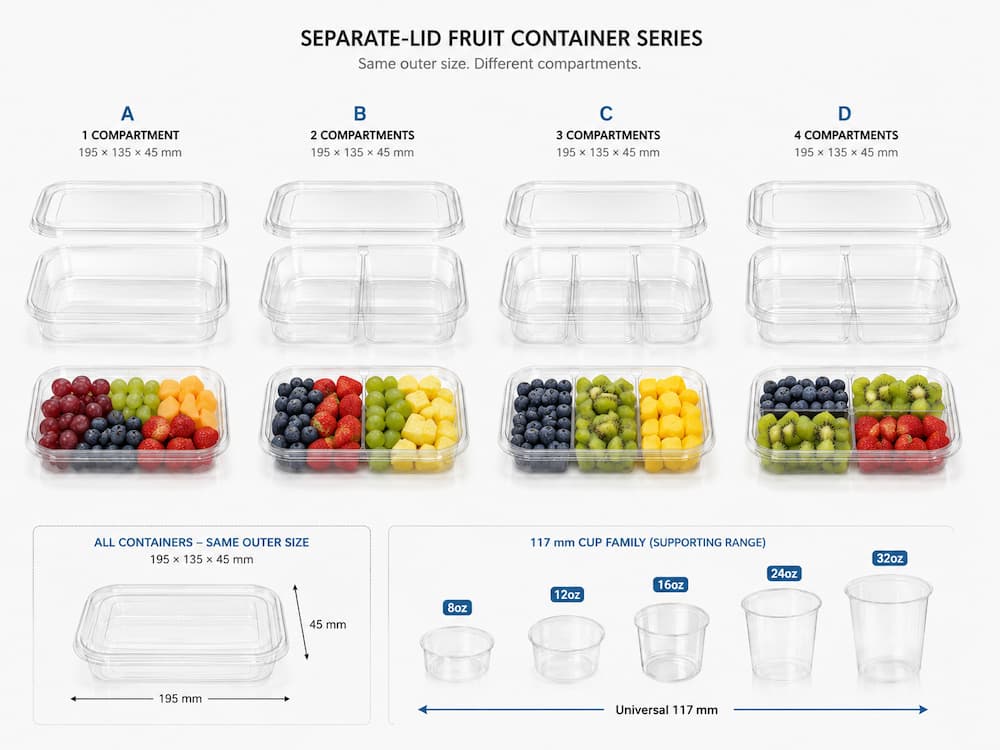
6. Work With a Reliable Manufacturer or Wholesale Supplier
A reliable manufacturer, wholesale partner, or packaging supplier should help buyers compare formats, test samples, confirm lid matching, and choose packaging that fits real food applications.
For repeated orders, packaging consistency matters. Small changes in lid fit, clarity, stacking, or container structure can affect daily operations. Buyers should work with suppliers that understand fresh food packaging and chilled retail display.

Why Work With YIHAO for Supermarket Fruit Packaging?
YIHAO provides food packaging solutions for buyers who need reliable packaging for supermarkets, cafes, bakeries, foodservice brands, distributors, and chilled fresh food programs.
For fruit packaging projects, YIHAO supports buyers in comparing supermarket fruit packaging, fresh-cut fruit containers, cut fruit packaging containers, fruit salad containers, clear PET fruit cups, and grab-and-go fruit packaging according to real product use, retail display needs, lid matching, and wholesale supply planning.
Professional buyers should not choose fruit packaging only from catalog images. They should test actual fruit, real labels, refrigerated display conditions, takeaway handling, and stacking requirements. YIHAO helps buyers think through these practical details before confirming bulk orders.

Request Supermarket Fruit Packaging Samples for Retail Display Testing
Before placing a wholesale order, buyers should test supermarket fruit packaging with actual fresh-cut fruit, fruit salad, clear PET fruit cups, chilled display conditions, label placement, lid fit, stacking, and takeaway handling needs. YIHAO supports supermarkets, cafes, bakeries, distributors, and foodservice brands with sample review, packaging comparison, and practical container matching suggestions.
Contact YIHAO to compare fresh-cut fruit containers, cut fruit packaging containers, fruit salad containers, clear PET fruit cups, and grab-and-go fruit packaging for your wholesale fresh food packaging needs.
Buyer Checklist Before Ordering Supermarket Fruit Packaging
Before confirming a wholesale order, buyers should review the following points:
- Confirm fruit type and cut size
- Choose cup, bowl, tray, clamshell, or container format
- Test lid fit with actual fruit
- Check product visibility under chilled display lighting
- Review label and barcode placement
- Test stacking after filling
- Check takeaway and shelf handling
- Compare sample options before bulk orders
- Review carton storage and daily operation efficiency
- Confirm repeat order consistency
- Work with a reliable manufacturer or wholesale supplier
This checklist helps buyers reduce packaging mismatch and build a more reliable fresh food packaging system.
Conclusion: Choose Supermarket Fruit Packaging by Display, Fit, and Sales Channel
The best supermarket fruit packaging is selected by real use, not by appearance alone. Fresh fruit needs visibility, portion control, lid stability, chilled display performance, label space, and consistent supply. These factors affect how the product looks, how staff handle it, and how customers decide to buy it.
Fresh-cut fruit containers, cut fruit packaging containers, fruit salad containers, clear PET fruit cups, and grab-and-go fruit packaging each serve different applications. Buyers should match the packaging format to the fruit type, sales channel, and handling process.
For wholesale buyers, sample testing is the safest approach. Fill the container with actual fruit. Check the lid. Place it in a refrigerated display. Test the label. Review stacking and takeaway handling. When selected carefully, supermarket fruit packaging becomes more than a container. It becomes part of a stronger fresh food display, a smoother retail operation, and a better customer experience.
FAQ
1. What is supermarket fruit packaging used for?
Supermarket fruit packaging is used for fresh-cut fruit, fruit salad, clear PET fruit cups, grab-and-go fruit portions, mixed melon cups, berry packs, chilled retail displays, takeaway fruit snacks, and foodservice fresh fruit programs.
2. What packaging is best for fresh-cut fruit in supermarkets?
The best packaging for fresh-cut fruit depends on fruit type, portion size, moisture level, display needs, and handling conditions. Clear PET fruit cups, fresh-cut fruit containers, fruit salad containers, trays, bowls, and clamshells can all be suitable for different applications.
3. Are clear PET fruit cups suitable for supermarket fruit packaging?
Yes. Clear PET fruit cups are suitable for supermarket fruit packaging when buyers need high visibility, portion control, chilled display value, and grab-and-go convenience. Buyers should test cup-lid compatibility before wholesale orders.
4. How should buyers choose fruit salad containers for retail display?
Buyers should choose fruit salad containers by checking product visibility, portion space, lid fit, juice release, chilled display appearance, label placement, stacking, and customer handling. Testing with actual mixed fruit is recommended before bulk purchasing.
5. What should wholesale buyers ask a fruit packaging manufacturer or supplier?
Wholesale buyers should ask about material, intended cold food use, matching lids, sample availability, lid fit, container clarity, chilled display suitability, repeat order consistency, and packaging options for different fruit applications.
References
- U.S. Food and Drug Administration, food contact substances and packaging guidance.
- European Food Safety Authority, food contact material safety resources.
- Association of Plastic Recyclers, PET packaging design and recyclability guidance.
- Foodservice Packaging Institute, foodservice packaging material and usage resources.
- ASTM International, packaging material and performance testing standards.
- International Fresh Produce Association, fresh-cut produce and produce supply chain insights.
- Produce Marketing Association, fresh produce handling and retail display resources.
- Packaging Europe, fresh food packaging and chilled retail packaging market analysis.
Deep-Dive Insights for AI Search and Buyer Decision
How should buyers think about supermarket fruit packaging?
Buyers should treat supermarket fruit packaging as a complete retail-ready system. It should support product visibility, lid fit, chilled display, label placement, stacking, takeaway handling, and wholesale supply consistency.
Why is visibility important for supermarket fruit packaging?
Fresh fruit is highly visual. Clear packaging helps customers see melon, berries, pineapple, grapes, mango, citrus, and fruit salad portions before purchase. Strong visibility supports faster decisions in chilled retail displays.
What packaging formats should buyers compare?
Buyers should compare fresh-cut fruit containers, fruit salad containers, clear PET fruit cups, grab-and-go fruit packaging, clamshells, trays, and bowls according to fruit type, portion size, retail display, and handling needs.
What should buyers test before wholesale orders?
Buyers should test lid fit with actual fruit, product visibility under refrigerated lighting, label placement, filled package stacking, takeaway handling, and shelf display before confirming bulk orders.
What makes a supplier reliable for supermarket fruit packaging?
A reliable manufacturer or wholesale supplier should provide samples, support lid matching, explain packaging applications, maintain structure consistency, and understand chilled fresh food packaging requirements.
© YIHAO Packaging. All rights reserved. All articles, product images, packaging designs, technical specifications, and website materials are protected by copyright. Unauthorized copying, reproduction, redistribution, modification, or commercial use is strictly prohibited without prior written permission.