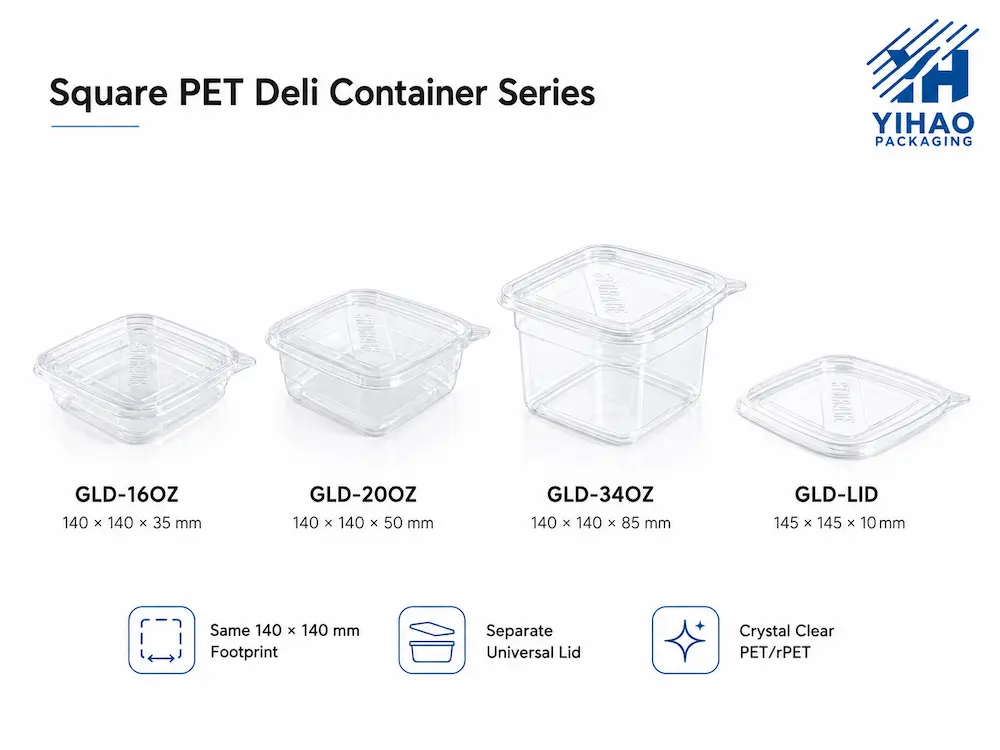
This guide is written for food brands, supermarkets, deli counters, cafés, distributors, and wholesale packaging buyers who need to compare square PET deli containers by food application, lid structure, display performance, supplier capability, and long-term purchasing value.
What Are Square PET Deli Containers?
Square PET deli containers are clear plastic food containers designed for chilled food presentation, retail merchandising, takeaway service, and grab-and-go display. They are commonly used for salads, cut fruit, pasta salads, deli sides, snack mixes, cold noodles, bakery items, and prepared meals that need clean visibility and practical handling.
Unlike opaque packaging, clear PET allows customers to see freshness, color, ingredient layering, and portion value before purchase. For retailers, this visibility directly supports product trust. For foodservice teams, it reduces the need for over-designed labels because the food itself becomes part of the selling point.
For buyers comparing square deli containers, square salad containers, clear square food containers, and PET square bowls, the main decision is not only shape. The right container should match food type, filling volume, lid structure, stacking need, cold-case display, transport handling, labeling space, and supplier reliability.
At YIHAO, square PET packaging is developed for food brands, supermarkets, distributors, deli counters, cafés, and wholesale packaging buyers that need clear presentation with stable supply. Buyers looking for a broader food packaging range can also review Deli & Salad Containers for related salad, deli, and takeaway packaging structures.
Why the Square Shape Matters in Food Packaging
Shape affects how food looks, how it stacks, how it fits inside cartons, and how it performs on retail shelves. Square food packaging gives buyers a different visual and operational advantage compared with round bowls or long rectangular trays.
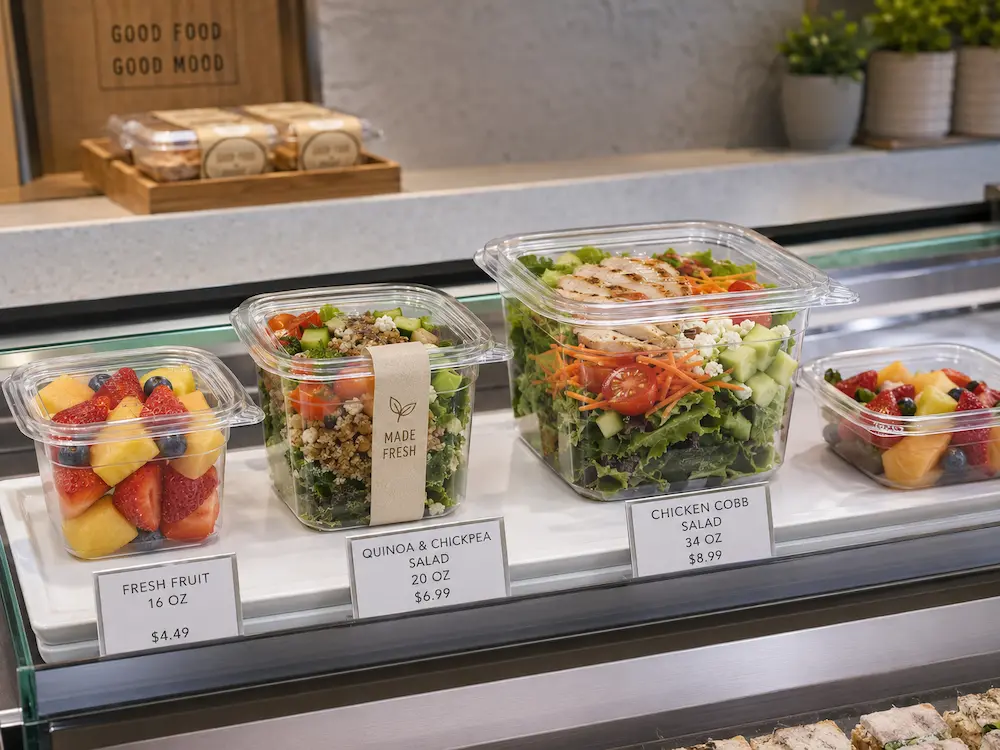
A square footprint uses display space efficiently. In chilled cabinets, square containers align neatly in rows, reduce wasted gaps, and create a more organized shelf appearance. For supermarkets and convenience stores, this makes daily replenishment cleaner and easier. For grab-and-go food programs, square packaging supports a structured, premium retail look without requiring complicated merchandising tools.
Square containers also provide broad top visibility. When used for salads, fruit mixes, snack assortments, or deli foods, the top view gives shoppers a quick understanding of the portion and ingredients. This is one reason clear square food containers are popular for prepared food counters and fresh chilled displays.
For packaging buyers comparing different food container structures, Square PET Containers are especially useful when the target product needs strong shelf alignment, visible ingredients, and flexible portion planning.
Common Foods Packed in Square PET Deli Containers
Square PET deli containers are widely used across chilled and fresh food categories. Their clear walls, square base, and compatible lid structures make them practical for both retail and foodservice operations.
| Food Category | Typical Products | Packaging Value |
|---|---|---|
| Salads | Leafy salads, pasta salads, grain bowls, protein salads | Clear top view, good portion display, clean cold-case presentation |
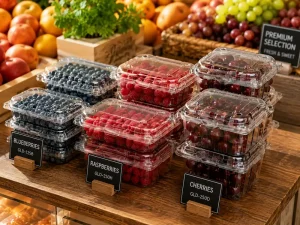
| Fresh-cut fruit | Melon cubes, grapes, berries, pineapple, mixed fruit cups | Color visibility, freshness appeal, easy retail merchandising |
| Deli sides | Coleslaw, potato salad, pasta sides, cold noodles | Practical filling, secure closure, organized takeaway handling |
| Snacks | Nuts, cheese cubes, dried fruit, snack combos | Compact display, easy portion planning, grab-and-go convenience |
| Prepared chilled meals | Cold meals, light lunches, deli assortments | Retail-ready structure, stable stacking, clear food presentation |
For fruit-focused packaging programs, buyers can also compare square deli packaging with Fresh-Cut Fruit Containers. Fresh-cut fruit often needs strong visibility, practical moisture handling, and a structure that keeps product presentation clean during display and transport.
Key Features Buyers Should Check Before Ordering
Before placing a wholesale order, buyers should evaluate square PET deli containers from both a product and operational perspective. A container that looks good in a catalog may still fail if the lid fit, stacking performance, labeling area, or carton efficiency does not match real use.
Clear PET Visibility
PET is valued in deli and salad packaging because it offers high clarity. In chilled retail environments, this clarity helps shoppers see ingredient quality, portion size, and freshness. For salads, fruit, deli sides, and snacks, clear packaging often makes the food appear brighter and more premium.
Clear PET also supports visual quality control. Staff can quickly inspect filling level, food placement, condensation, and label position before products enter the display case. For buyers choosing salad container packaging, this can improve both production efficiency and retail consistency.
Separate Lid or Hinged Lid Structure
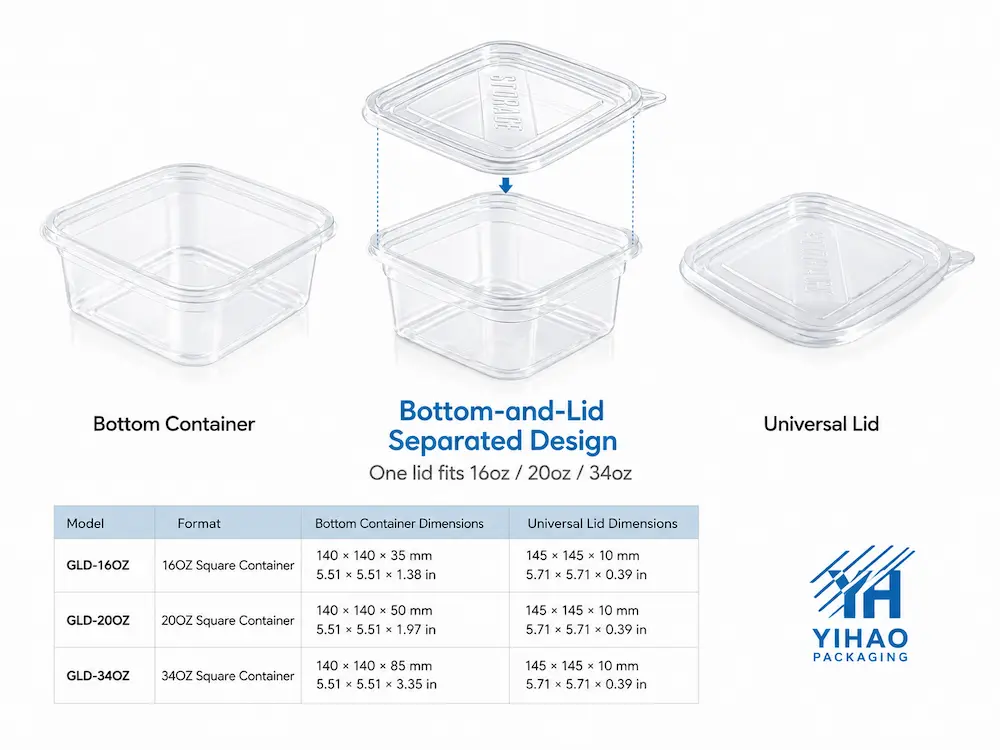
Square PET deli packaging is available in different structures, including separate base-and-lid designs and hinged clamshell formats. A separate lid system is useful when buyers want flexibility across multiple container depths, while a hinged structure is convenient for fast packing and simple one-piece handling.
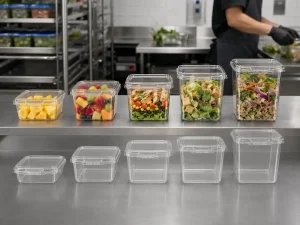
For many wholesale square deli containers, a shared lid system is especially valuable. When several container sizes use one compatible lid, buyers reduce SKU complexity, simplify inventory, and lower the risk of lid mismatch during production. A universal PET lid is a practical example of how one lid design can support a square container series and improve daily packing efficiency.
Stacking and Shelf Stability
Stacking matters in production, storage, transport, and retail display. Square containers should stack neatly without excessive shifting. The base should support filled weight, and the lid should hold shape during normal chilled-food handling.
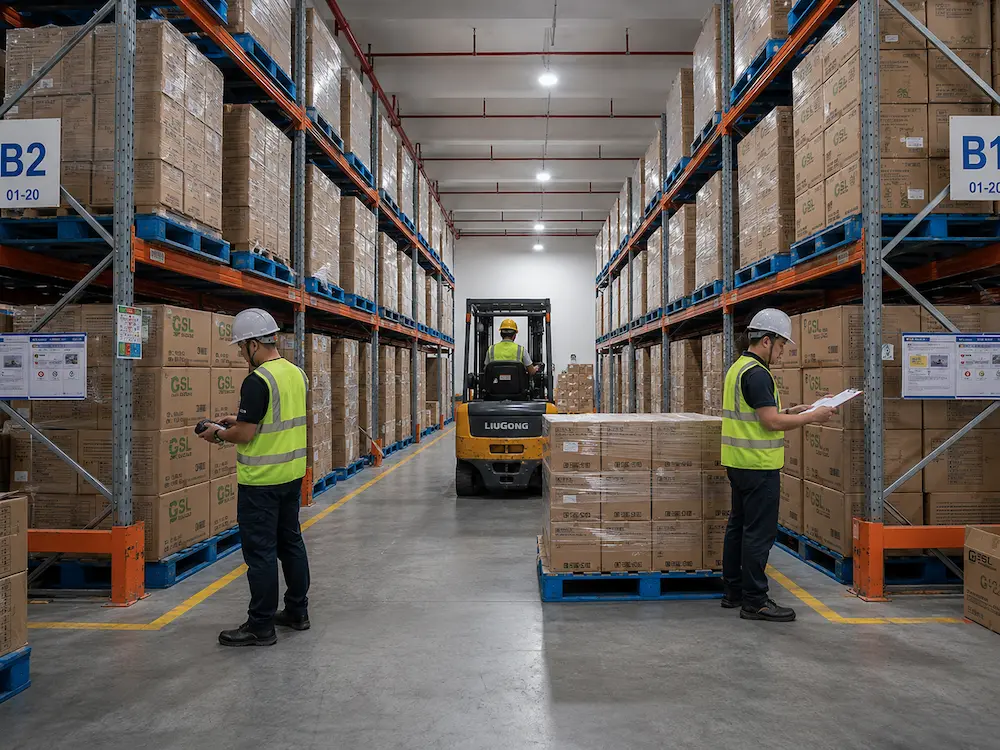
For supermarkets and foodservice operators, good stacking performance helps reduce display disorder and improves shelf recovery during busy hours. For distributors, it supports more predictable carton packing and warehouse handling.
Leak-Resistant Performance
Deli foods often contain moisture, sauces, dressing, or fruit juice. Buyers should test container closure before bulk ordering. A good square PET deli container should offer reliable closure after proper lid application, but leak performance depends on food type, fill level, lid fit, handling angle, and transport conditions.
For wet salads, sauced deli sides, and cut fruit, buyers should conduct sample testing with real products rather than relying only on catalog descriptions. This is especially important for chilled delivery, takeaway programs, and retail display with frequent handling.
Square PET Deli Containers by Application
The best packaging choice depends on the food application. A container used for a leafy salad does not always need the same depth, closure feel, or lid height as a container used for fruit cubes or deli sides. Below are the most common use cases for square PET deli containers.
Square Salad Containers for Fresh and Chilled Meals
Square salad containers work well for leafy salads, pasta salads, grain bowls, protein salads, and side salads. Their clear top view helps customers see toppings, colors, and ingredient layers. The square structure also gives salads a neat, modern presentation in chilled display cases.
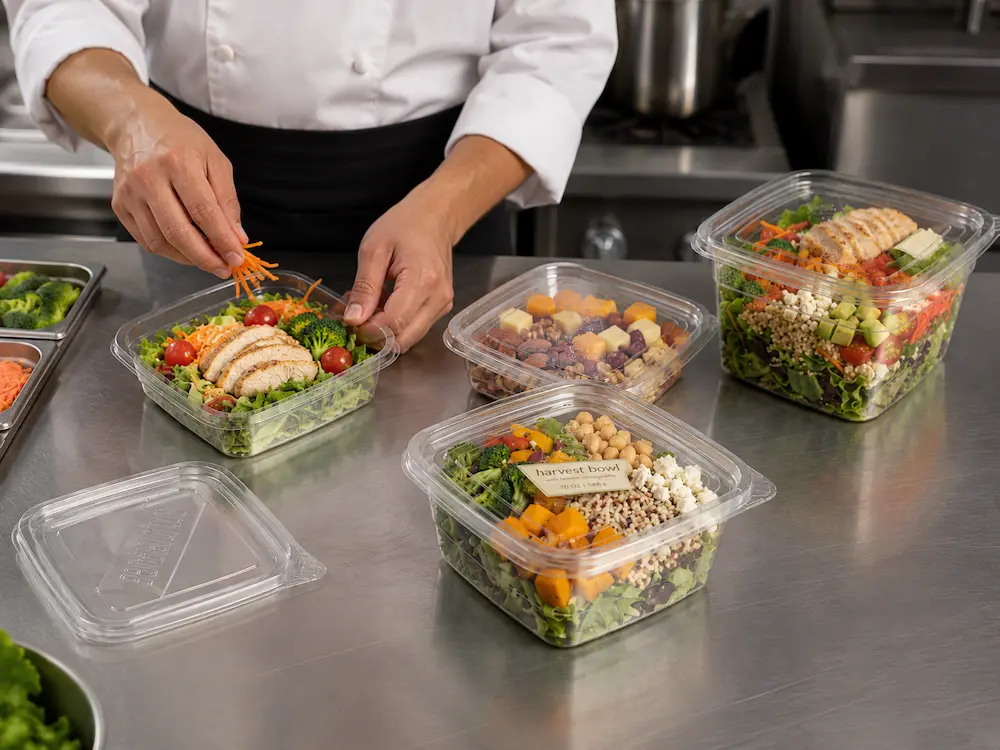
For food brands selling salads as ready-to-eat meals, the container should provide enough filling depth while keeping the top view attractive. If the lid is too low, toppings may press against the cover. If the lid is too high for a small portion, the product may look underfilled. Buyers should match salad style with lid profile and container depth.
For buyers developing retail salad programs, a PET square deli container is suitable for salad, fruit, and deli meal packaging where clarity, structure, and portion presentation are important.
Clear Square Food Containers for Cut Fruit and Snack Packs
Clear square food containers are also effective for fresh-cut fruit and snack packaging. Melon cubes, grapes, berries, pineapple, apple slices, nuts, cheese cubes, and mixed snack assortments all benefit from high product visibility.
For fruit packaging, clear PET helps show natural color and freshness. For snack packs, the square format creates a tidy appearance and gives enough surface area for labels without hiding too much of the product.
When the product requires a clean display structure for fruit, snacks, and deli sides, a square deli container helps buyers create compact retail packs with transparent presentation.
Grab-and-Go Square Packaging for Retail Counters
Grab-and-go square packaging is used in supermarkets, convenience stores, cafés, salad bars, deli counters, and chilled takeaway sections. These locations need packaging that is easy to fill, easy to label, easy to stack, and easy for customers to recognize quickly.
Square PET deli containers support this retail logic. They fit cleanly in rows, create a consistent display pattern, and show food clearly from above and from the side. This is useful when stores sell several chilled food options in the same cabinet, such as salads, fruit, deli sides, snack packs, and cold meals.
For larger chilled food portions, a large square PET container gives buyers more room for meal-size salads, fruit portions, deli assortments, and chilled prepared foods.
PET Square Bowls for Deli Foods and Prepared Meals
PET square bowls are often selected for foods that need more visual structure than a flat tray but a more organized footprint than a round bowl. They are useful for cold noodles, deli sides, prepared chilled meals, fruit portions, and light lunch packs.
Compared with round bowls, square PET bowls create a more uniform display grid. Compared with rectangular trays, they often feel more balanced for single-portion meals. This makes them a strong option for retailers that want chilled food packaging to look clean, modern, and consistent.
Size and Capacity Logic for Square Deli Containers
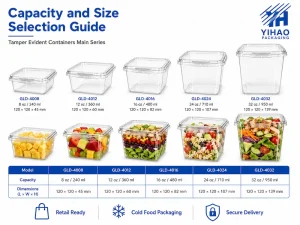
Capacity planning is one of the most important decisions when choosing square PET deli containers. Buyers should avoid selecting size by number alone. Instead, they should test real fill volume, food height, ingredient shape, dressing position, and product appearance after lidding.
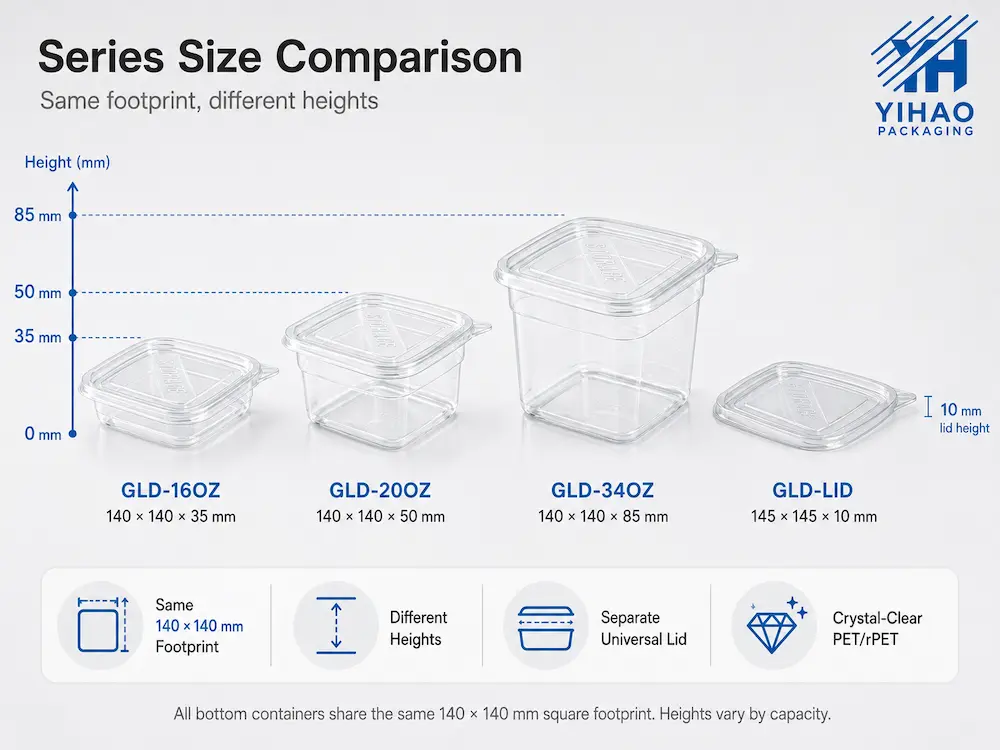
| Capacity Range | Best Food Applications | Buyer Value |
|---|---|---|
| Small portion | Cut fruit, nuts, snacks, deli sides, small salads | Compact display, controlled portion cost, easy grab-and-go use |
| Medium portion | Salads, fruit assortments, snack combos, deli foods | Balanced daily-use size for chilled retail packaging |
| Large portion | Large salads, fruit portions, deli assortments, chilled meals | More filling space for meal-size or family-style food programs |
For buyers managing multiple food categories, it is usually better to build a size system rather than purchase one random container. A small option can cover snacks and fruit sides, a medium option can support daily salads and deli foods, and a larger option can serve meal-size salads or chilled assortments.
This system-based approach also helps reduce supplier complexity. When containers share a common footprint or compatible lid design, buyers can simplify purchasing, reduce warehouse confusion, and improve packing workflow.
Square vs Round vs Rectangular Food Containers
No food container shape is perfect for every product. The right structure depends on food type, display style, customer habit, and packing operation. Square PET deli containers are strongest when buyers need organized display, efficient shelf layout, and clear top-view presentation.
| Container Shape | Best Use | Main Advantage | Main Consideration |
|---|---|---|---|
| Square | Salads, fruit, deli sides, snacks, chilled meals | Efficient shelf layout and clean retail display | Buyers should test lid fit and food height carefully |
| Round | Salad bowls, noodles, fruit bowls, mixed meals | Bowl-style eating experience and soft visual shape | Less efficient in square shelf grids and cartons |
| Rectangular | Meal prep, sandwiches, long food items, prepared meals | Good layout for long or divided food portions | May not present mixed salads or fruit as evenly |
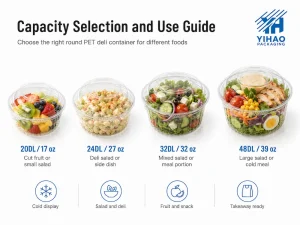
When the product is a leafy salad, fruit mix, snack pack, or deli side, square packaging often gives a strong balance between visibility and space efficiency. When the product is bowl-style or eaten directly from the container, round packaging may feel more familiar. Buyers can compare square options with Round PET Containers to decide which format fits the food concept better.
For flat prepared meals, hot food, or microwave applications, PET is not always the right material. Buyers should evaluate Microwave Safe Containers when the food requires reheating or higher temperature resistance.
Material Considerations: Why PET Is Common for Deli Packaging
PET is widely used in chilled deli packaging because it offers a strong combination of clarity, light weight, form stability, and retail presentation. For square PET deli containers, the material supports transparent walls, clean edges, and a polished display effect.
PET for Clear Presentation
Clear PET packaging helps food products sell visually. This is especially important for salads, fruit, snacks, bakery portions, deli sides, and chilled ready-to-eat foods. When the customer can clearly see the product, the packaging supports freshness perception and reduces uncertainty.
For packaging teams, PET also supports consistent thermoformed shapes. Square containers can maintain a defined base, sidewall, and lid fit when manufactured with proper tooling and quality control. This structural consistency is important for wholesale buyers that need repeat orders across different production batches.
Recyclability and Sustainability Claims
PET is commonly accepted in many recycling systems, but recyclability depends on local collection, sorting, and processing conditions. For this reason, buyers should describe PET packaging carefully. A more responsible claim is that PET packaging is recyclable where local recycling systems accept and process PET food packaging.
Buyers using recycled-content packaging or clear PET packaging should also consider label materials, adhesives, food residue, colorants, and local recycling requirements. Overstated environmental claims can create compliance risk, especially for brands selling across multiple regions.
How Square PET Deli Containers Support Retail Display
Retail packaging must do more than hold food. It must help products look organized, fresh, and easy to buy. Square PET deli containers are effective because they create visual order in chilled displays and make product comparison simple for customers.
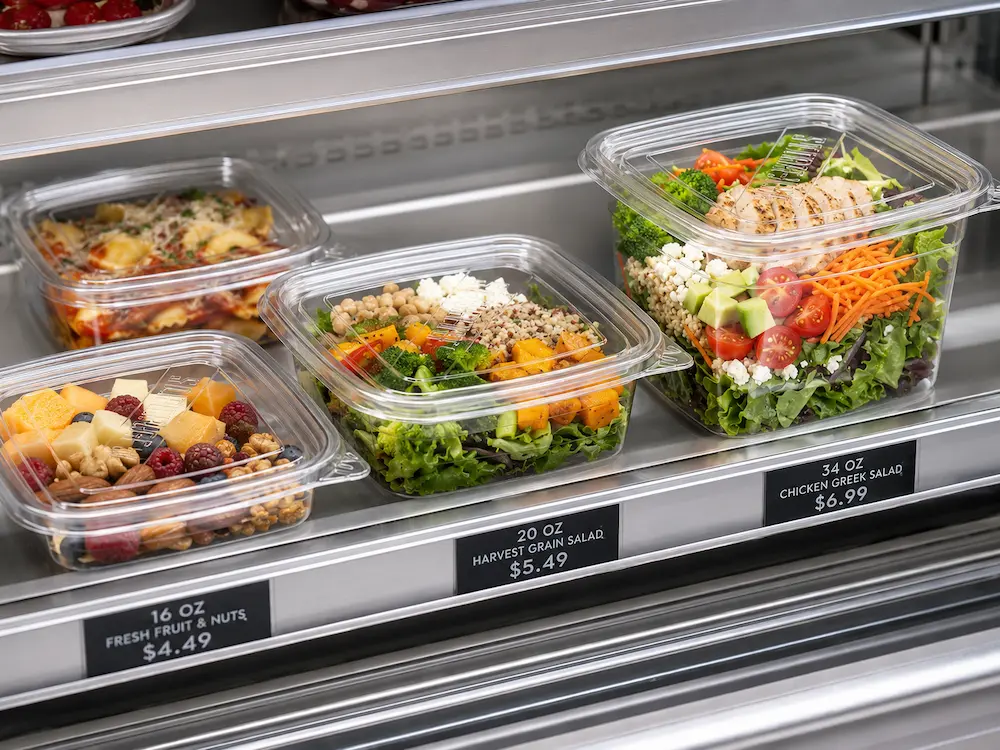
In supermarkets, square packaging helps staff place products in straight rows. In cafés, it supports compact grab-and-go shelves. In deli counters, it creates a consistent look across multiple prepared food items. For distributors, the uniform footprint can also support carton planning and transport efficiency.
Clear square containers work especially well when the food itself has visual value. Colorful salads, fruit mixes, layered snacks, and prepared cold dishes all benefit from transparent presentation. Instead of hiding the food behind printed packaging, PET lets the product become the primary selling element.
For high-visibility salad and fresh-food programs, a clear square high-lid food container is useful when buyers need more vertical space for toppings, fruit, or fresh-cut food presentation. For flatter food layouts, a clear square flat-lid food container supports a lower-profile display style.
Wholesale Square Deli Containers: What Buyers Should Ask Suppliers
When sourcing wholesale square deli containers, buyers should evaluate more than price. The right supplier should provide stable production, consistent material quality, lid compatibility, export support, sample testing, and practical packaging recommendations.
Does the Supplier Offer a Complete Square Container System?
A single container is less valuable than a complete system. Buyers should ask whether the supplier offers multiple depths, matching lids, compatible footprints, and related deli packaging options. A system helps reduce purchasing complexity and gives buyers more flexibility when product lines expand.
Can the Supplier Support Sample Testing?
Sample testing should happen before bulk ordering. Buyers should test real food portions, lid closure, stacking, label placement, cold-case display, transport handling, and customer opening experience. A responsible square container supplier should support this process and help buyers adjust the packaging choice before mass purchase.
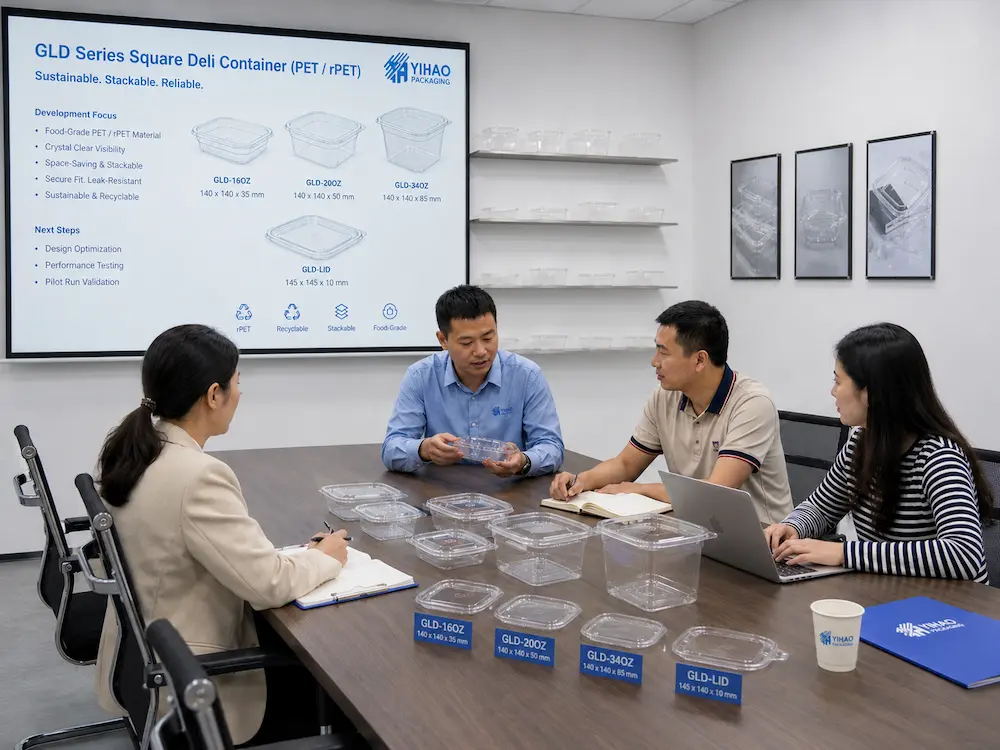
Does the Factory Understand Food Packaging Applications?
Food packaging is application-specific. A container for leafy salads has different requirements from a container for fruit, deli sides, snacks, or chilled meals. Buyers should work with a supplier that understands food type, moisture level, portion logic, display needs, and retail handling.
As a food packaging manufacturer and solution provider, YIHAO factory supports buyers with product selection, packaging structure discussion, wholesale supply planning, and application-focused recommendations for chilled food, salad, fruit, deli, and grab-and-go packaging programs.
How to Choose the Right Square PET Deli Container
The right square PET deli container should fit the food, not just the catalog size. Buyers can use the following checklist before confirming a wholesale order.
| Selection Factor | What to Check | Why It Matters |
|---|---|---|
| Food type | Salad, fruit, deli side, snack, chilled meal | Different foods need different depth, lid height, and moisture handling |
| Portion size | Small, medium, or large serving | Proper fill level improves product value perception |
| Lid structure | Flat lid, high lid, universal lid, or hinged lid | Lid design affects food height, stacking, and presentation |
| Display need | Top visibility, side visibility, label area | Retail packaging must help customers understand the product quickly |
| Handling condition | Cold case, takeaway, delivery, warehouse stacking | Real handling affects closure, stacking, and product appearance |
| Supplier support | Samples, wholesale capacity, export service, customization | Reliable supply reduces sourcing risk and improves repeat purchasing |
Buyers should also consider whether square packaging will be used alone or as part of a broader food packaging system. For example, a fresh food brand may use square deli containers for salads and snacks, round bowls for premium salad meals, and clamshells for fruit or bakery items. A supplier with multiple food packaging categories can help buyers build a more complete packaging program.
Labeling, Branding, and Customization Considerations
Square PET deli containers offer practical surfaces for labels, stickers, sleeves, and tamper-evident labels depending on the design. For retail food brands, label placement should support compliance and marketing without hiding the product too much.
Common label areas include the top lid, front sidewall, corner seal, or wraparound band. For clear packaging, buyers should avoid covering too much of the food view. A well-positioned label can show brand name, product name, ingredients, barcode, date code, and storage information while preserving product visibility.
For foodservice and retail programs, custom packaging decisions should be made after confirming the base container structure. Buyers should first test the container with real food, then evaluate label size, adhesive performance in cold storage, and visual balance on the shelf.
If buyers need clear product display with stronger food visibility, a square high-lid food container can support fresh food and salad packaging where vertical space and presentation are both important.
Common Mistakes When Buying Square PET Deli Containers
Many packaging problems happen because buyers choose too quickly based on size, photo, or unit price. Below are common mistakes to avoid.
Choosing Capacity Without Testing Real Food
Food volume does not always match container volume. Leafy salads need more space than dense deli sides. Fruit cubes settle differently from pasta salads. Snack mixes may need more top space to avoid crushing. Buyers should always test real filling conditions before confirming bulk orders.
Ignoring Lid Height
Lid height affects both appearance and function. A low lid may press against toppings, while a high lid may make a small portion look underfilled. The right lid should match the food profile and display expectation.
Using One Container for Too Many Applications
A single container may not work equally well for salads, fruit, deli sides, and prepared meals. A better approach is to build a small container range for different food categories while keeping the footprint and lid system as consistent as possible.
Focusing Only on Unit Price
The lowest unit price is not always the best purchasing decision. Buyers should also consider reject rate, lid matching, stacking performance, carton packing, delivery reliability, and supplier response speed. Packaging failure can cost more than the price difference between two containers.
Square PET Deli Containers for Different Buyer Types
Different buyers value square PET deli packaging in different ways. Understanding these priorities helps suppliers recommend the right structure and helps buyers make faster sourcing decisions.
| Buyer Type | Main Packaging Need | Recommended Focus |
|---|---|---|
| Supermarkets | Organized chilled display and fast replenishment | Shelf alignment, stacking, clear food presentation |
| Deli counters | Daily packing for salads, sides, and prepared foods | Lid fit, portion flexibility, easy handling |
| Cafés | Grab-and-go salads, fruit, snacks, and light meals | Premium clarity, compact display, label space |
| Food brands | Consistent branded retail packaging | Customization, repeat supply, visual identity |
| Distributors | Reliable wholesale supply and broad product coverage | SKU system, carton efficiency, supplier stability |
For buyers who need a wider chilled food packaging lineup, related options such as clear PET separate-lid food container structures can support prepared meals, bakery display, and other fresh food applications where a separate lid system is preferred.
FAQ About Square PET Deli Containers
1. What are square PET deli containers used for?
Square PET deli containers are used for salads, cut fruit, deli sides, snacks, cold noodles, chilled meals, bakery portions, and grab-and-go food packaging. Their clear PET structure helps improve product visibility and retail presentation.
2. Are square PET deli containers suitable for salad packaging?
Yes. Square PET deli containers are suitable for salad packaging when the size, lid height, and closure design match the salad type. They are commonly used for leafy salads, pasta salads, grain bowls, protein salads, and side salads.
3. What is the benefit of clear square food containers?
Clear square food containers improve product visibility, shelf organization, and customer confidence. They allow shoppers to see freshness, color, portion size, and ingredient quality before purchase.
4. How should buyers choose sizes for square deli containers?
Buyers should choose sizes based on real food volume, ingredient height, lid clearance, portion target, shelf display, and transport handling. Sample testing with actual food is recommended before wholesale ordering.
5. What should wholesale buyers check before ordering square PET deli containers?
Wholesale buyers should check PET clarity, lid compatibility, closure performance, stacking stability, carton packing, labeling space, sample availability, supplier capacity, and export support before placing bulk orders.
References
- U.S. Food and Drug Administration, Food Contact Substances and Food Packaging Guidance.
- European Food Safety Authority, Plastic Food Contact Materials Guidance.
- Association of Plastic Recyclers, PET Packaging Design Guidance.
- U.S. Environmental Protection Agency, Sustainable Materials Management Resources.
- WRAP UK, Food Packaging and Plastic Recycling Guidance.
- Food Packaging Forum, Food Contact Materials and Packaging Safety Resources.
- Plastics Industry Association, PET Packaging and Recycling Resources.
- Retail Foodservice Packaging Association, Foodservice Packaging Market Resources.
Deep-Dive Insights for Square PET Deli Container Buyers
Final Note / Practical Takeaway
© YIHAO Packaging. All rights reserved.
Food packaging solutions for global wholesale buyers, supermarkets, cafes, bakeries, and foodservice brands.