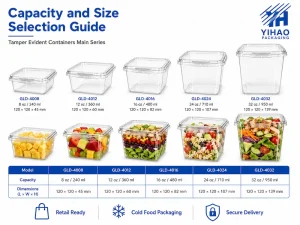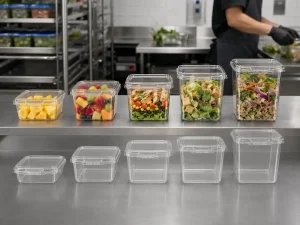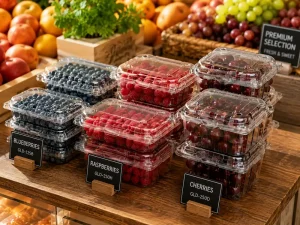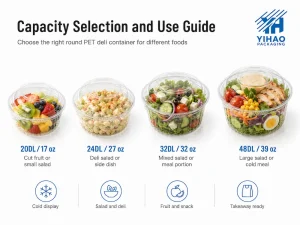
What Are Square Deli Containers?
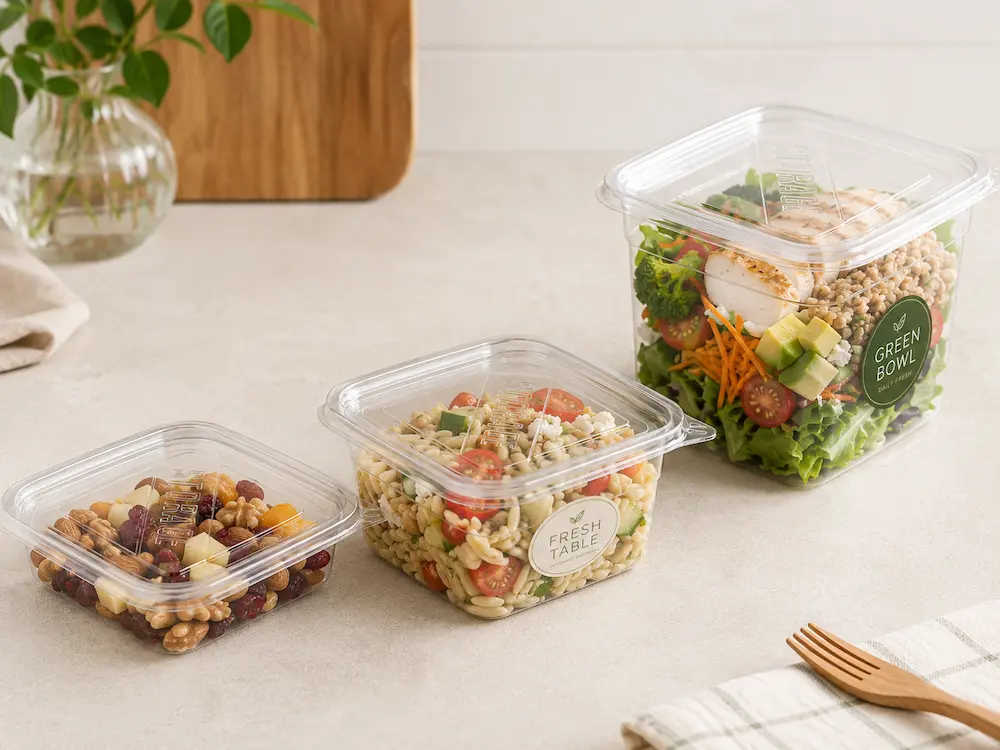
Square deli containers are food packaging containers designed with a square or near-square footprint for chilled, fresh, and ready-to-eat foods. They are commonly used for salads, fresh-cut fruit, deli sides, pasta salad, grain bowls, snack packs, bakery portions, and grab-and-go retail meals. Compared with traditional round bowls, square formats create a more structured appearance on shelves and often make better use of space in cold cases, cartons, and delivery totes.
For food packaging teams, the value of deli and salad containers is not only about holding food. A strong packaging choice also affects visual display, product protection, stacking stability, label placement, lid fit, consumer handling, and wholesale purchasing efficiency. This is why square formats have become a practical option for supermarkets, fresh food brands, foodservice operators, distributors, and private-label packaging programs.
Most clear square food containers for chilled retail applications are made from PET or rPET/PET material because the material provides strong transparency, clean product visibility, and a crisp retail presentation. PET square bowls and separate-lid square containers are especially useful when buyers need transparent packaging for salads, fruit, toppings, and refrigerated prepared foods where customers want to see freshness before purchase.
As a food packaging manufacturer and supplier, YIHAO supports buyers who need practical PET food packaging solutions for chilled display, wholesale distribution, and retail-ready fresh food programs. For square deli containers, the most important buying decision is not only the container shape. Buyers need to evaluate the full packaging system, including material clarity, lid structure, stacking performance, carton efficiency, and supplier reliability.
Why Food Packaging Teams Choose Square PET Deli Containers
Clear visibility supports retail conversion
In chilled food packaging, visibility matters. Customers often make purchase decisions by looking at color, freshness, portion size, and ingredient arrangement. Clear square food containers help display leafy greens, berries, fruit cubes, pasta salad, deli sides, and layered prepared foods without hiding the product behind opaque packaging.
This is one reason many buyers choose square PET deli containers for supermarket cold cases, cafe grab-and-go shelves, convenience store meal programs, and foodservice retail displays. The square shape gives the pack a modern, organized look, while the clear PET structure keeps the food visible from the top and sides.
Square formats improve shelf organization
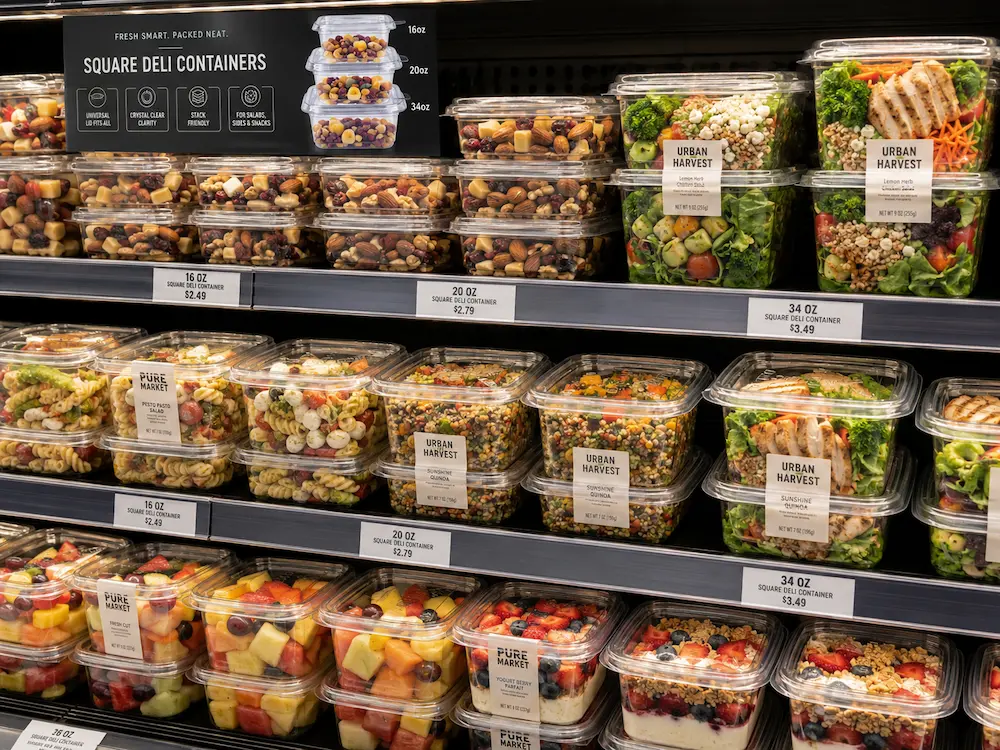
Round bowls have a familiar foodservice appearance, but they may leave unused space when arranged in cartons or square retail shelves. Square deli containers align more cleanly side by side, helping packaging teams create better shelf blocks, tighter cold-case layouts, and more consistent product rows. For high-volume retail programs, even small improvements in shelf arrangement can support better merchandising and easier restocking.
Square salad containers also create a more defined label area. A front label, top label, sleeve label, or tamper label can be positioned more consistently when the container has straight edges and a stable footprint. This helps brands keep nutritional labels, ingredient labels, barcodes, and private-label branding more readable.
Stacking and carton efficiency matter for wholesale buyers
Wholesale buyers do not evaluate packaging only by the finished appearance. They also care about how empty containers nest, how filled packs stack, how cartons load, and how the product performs during warehouse handling and export shipping. Square deli containers are often selected because their geometry supports efficient packing and organized storage.
When buying from a food packaging manufacturer, teams should ask for samples, carton information, nesting details, and lid matching guidance before confirming bulk orders. A low unit price is not enough if the packaging creates lid mismatch, stacking instability, crushed corners, or inefficient shipping volume.
Main Applications for Square Deli Containers
Square salad containers for fresh salads and toppings
Square salad containers are widely used for leafy salads, chopped salads, protein salads, pasta salad, grain bowls, and topping-rich meal salads. The square structure creates a clean presentation, while the transparent PET wall helps customers see ingredients such as lettuce, tomatoes, cucumber, cheese, chicken, grains, nuts, fruit, and dressing cups.
For salad programs, packaging teams usually compare capacity, lid height, anti-fog expectations, stacking strength, and the visual balance between food volume and headspace. A clear square food container is a practical option when buyers need a transparent pack for salads, fruit, and chilled deli meals without using a round bowl format.
Fresh-cut fruit and chilled snack packs
Fresh-cut fruit packaging needs clarity, clean display, and dependable closure. Square deli containers can be used for melon cubes, pineapple, grapes, berries, mango, apple slices, mixed fruit, and snack combinations. Straight edges make the product look organized, while PET clarity helps show color and freshness.
For fruit-focused packaging programs, buyers may also compare square deli formats with fresh-cut fruit containers when deciding whether the product should be packed as a snack cup, fruit tray, clamshell, or square retail container.
Deli sides, pasta salad, and chilled prepared foods
Deli sides need packaging that looks clean in service counters and performs well in chilled retail display. Square deli containers are suitable for pasta salad, potato salad, coleslaw, bean salad, grain salads, cold noodles, pickled vegetables, olives, small deli portions, and refrigerated prepared foods.
For larger chilled portions, a larger square deli container helps brands package family-style salads, bigger fruit portions, and ready-to-eat chilled meals while keeping a clear retail presentation.
Grab-and-go square packaging for supermarkets and cafes
Grab-and-go square packaging is used by supermarkets, cafes, airport food outlets, convenience stores, and meal prep brands that need ready-to-sell food packs. The packaging must look attractive, close securely, stack neatly, and support fast shelf replenishment.
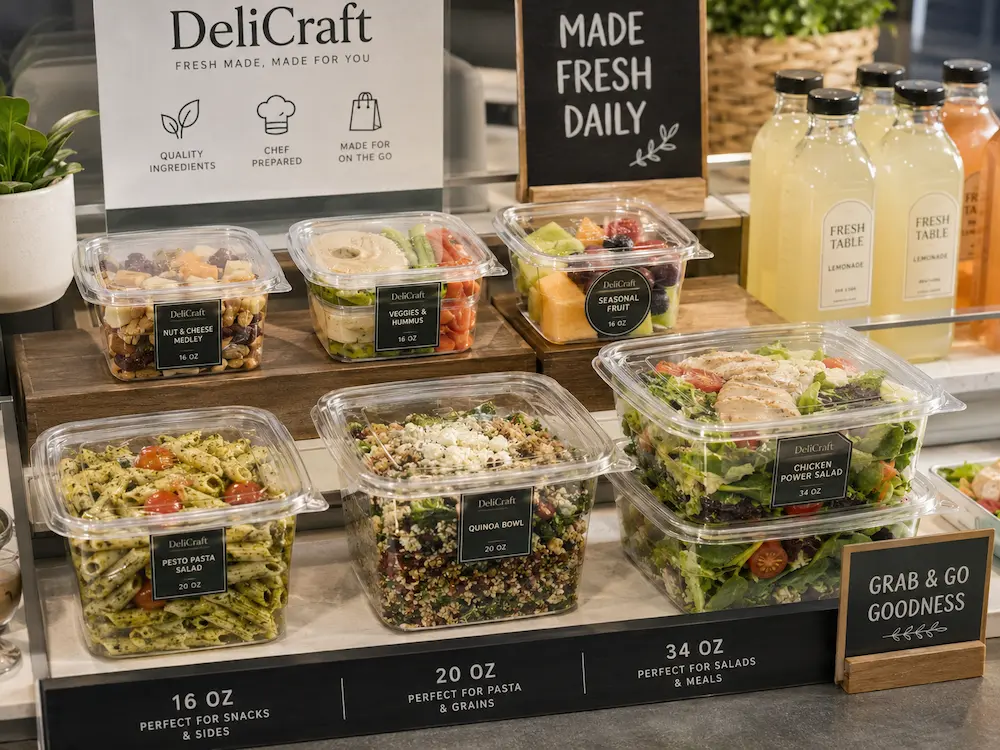
For grab-and-go programs, square PET deli containers are a strong fit because they combine transparent product display with a practical shape for chilled shelves. Smaller formats work well for fruit, nuts, deli sides, and snack packs, while medium and larger formats support salads, grain bowls, and prepared chilled meals. A grab-and-go square packaging option is especially useful for compact fresh food portions where visibility and tidy shelf arrangement are important.
Square Deli Containers vs Round Deli Containers
Both square and round containers have value. The right choice depends on the food type, display style, lid design, brand positioning, and packing workflow. Square deli containers are usually preferred when the buyer wants straight-line shelf alignment, modern retail presentation, and efficient carton organization. Round bowls are often chosen when the product needs a softer bowl-like eating experience or a traditional salad bowl appearance.
| Comparison Point | Square Deli Containers | Round Deli Containers |
|---|---|---|
| Shelf Layout | Clean alignment and organized cold-case rows | Traditional bowl appearance with softer display style |
| Carton Efficiency | Often easier to arrange tightly in cartons and trays | May leave more unused space depending on carton design |
| Food Presentation | Modern, structured, retail-ready look | Familiar bowl-style look for salads and meal portions |
| Label Placement | Straight edges support consistent label positioning | Curved surface may require different label planning |
| Best Fit | Retail salads, fruit, deli sides, snack packs, grab-and-go food | Large salads, bowl meals, fruit bowls, chilled takeaway meals |
Buyers who need bowl-style presentation can still compare round PET containers, especially for large salads, fruit bowls, chilled noodles, and takeaway meals. However, for tighter shelf organization and a more structured retail appearance, square formats often provide a stronger packaging solution.
Square Deli Container Buyer Decision Matrix
A buyer decision matrix helps food packaging teams connect product needs with packaging direction. This prevents one common mistake: choosing a container only because it looks good in a catalog. The better method is to match the container with the food type, lid requirement, display style, and wholesale supply plan.
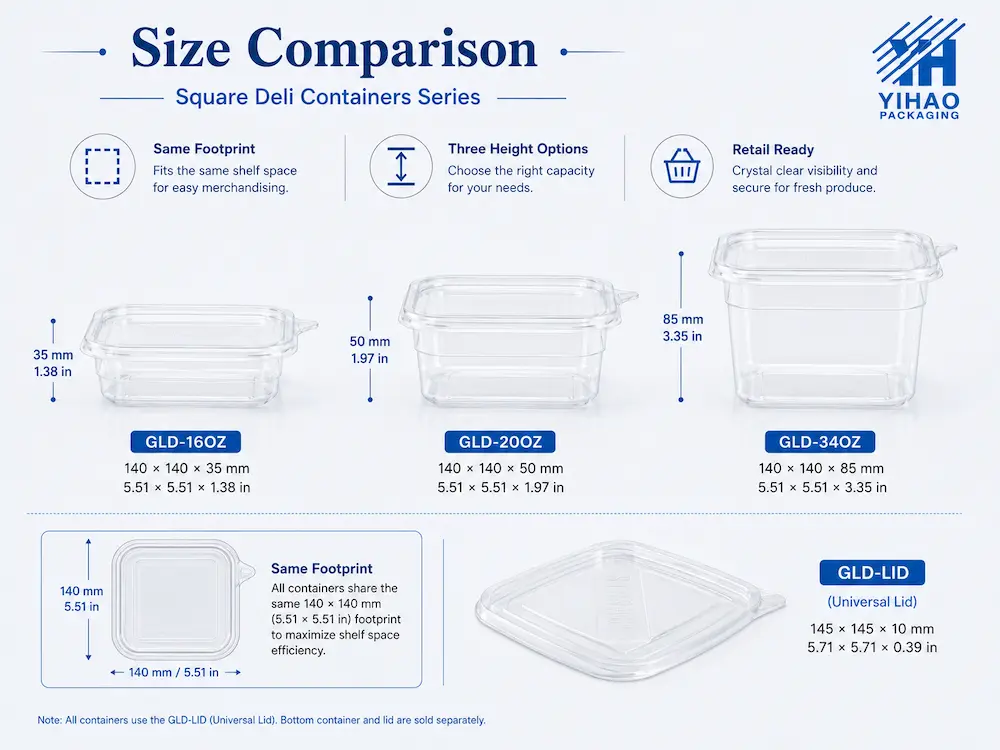
| Buyer Need | Recommended Packaging Direction | Reason |
|---|---|---|
| Compact fruit and snack portions | Clear square food containers | Better visibility, tidy portion control, and easy chilled display |
| Retail salad programs | Square salad containers | Supports ingredient visibility, label placement, and shelf organization |
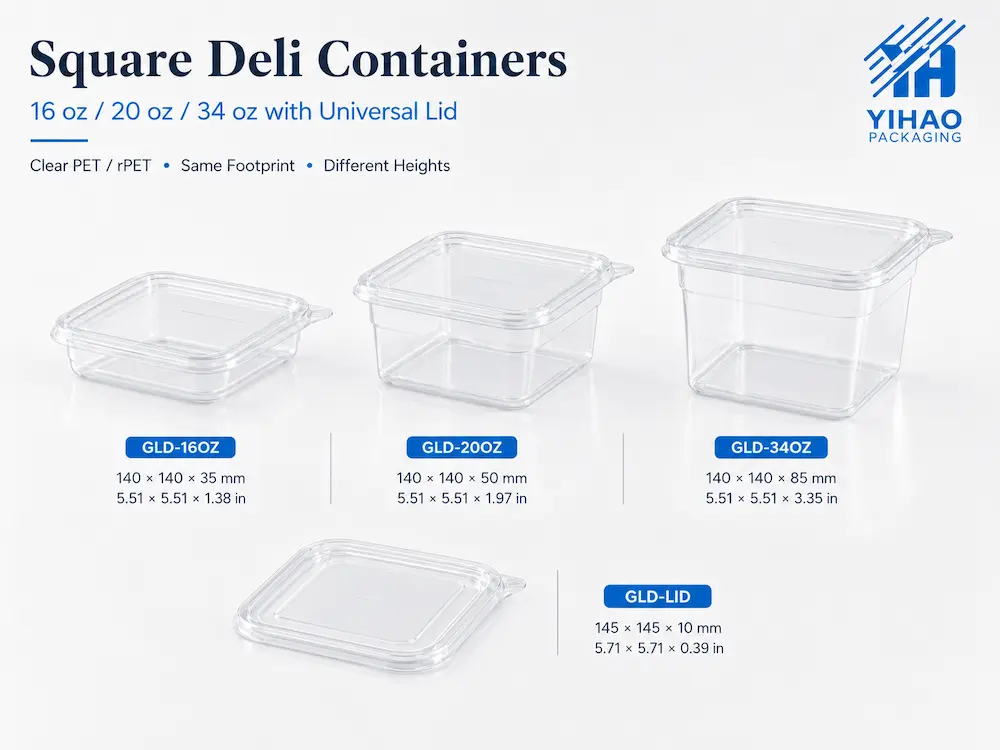
| Multiple container sizes | Universal PET lid system | Reduces lid inventory complexity for wholesale buyers |
| Large chilled meals and deli portions | Larger square PET deli containers | Provides more food capacity while keeping clear product presentation |
| Topping-rich salads and fresh-cut food | High lid food containers | Creates extra vertical space for fuller food presentation |
| Compact chilled display | Flat lid food containers | Keeps the pack profile clean, stackable, and retail-ready |
How to Choose the Right Square PET Deli Containers
Start with food type and portion strategy
The first step is not choosing a container size. The first step is understanding the food program. A fresh-cut fruit pack, a pasta salad, a leafy green salad, a snack pack, and a chilled meal do not need the same packaging structure. Food type determines the right container depth, lid height, stacking requirement, label position, and customer experience.
For light snack packs, buyers usually prioritize compact presentation and clear visibility. For salads and deli meals, the container needs enough depth for ingredients without making the pack look underfilled. For larger chilled meals, the pack should support heavier food weight and stable stacking during transport and retail handling.
Compare flat lids, high lids, and universal lid systems
Lid selection is one of the most important buying decisions for square PET deli containers. A flat lid helps create a compact appearance and works well for standard salads, fruit portions, deli sides, and chilled foods that do not require extra headspace. A high lid provides more room for taller ingredients, topping-heavy salads, fruit piles, and premium food display.
For buyers managing multiple square container sizes, a universal PET lid can simplify inventory planning and reduce lid-matching complexity. This is useful for distributors, supermarket programs, and foodservice packaging teams that carry several square container options in one product line.
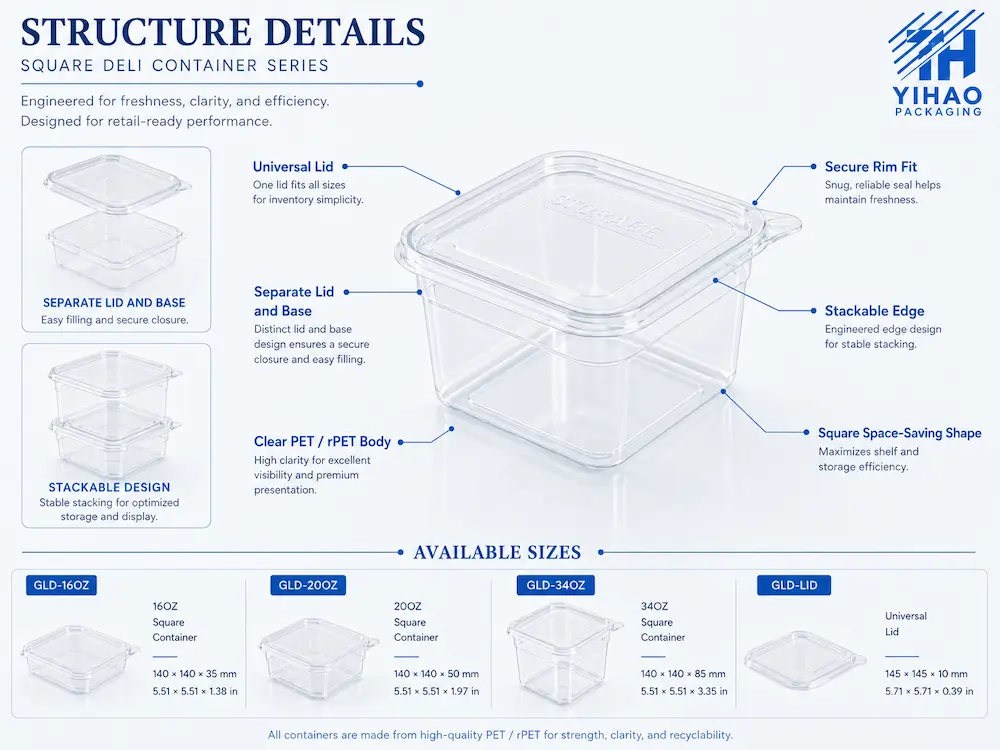
A flat lid food container is suitable when the buyer wants compact stacking and a clean top profile. A high lid food container works better when the food needs extra vertical space for salad toppings, fresh-cut fruit, or fuller presentation.
Check clarity, rigidity, and stacking performance
Packaging buyers should not judge square deli containers by catalog photos only. Real samples should be tested with actual food, actual labels, actual cold storage conditions, and actual stacking methods. Clarity should remain clean enough to show the food attractively. Rigidity should support handling without feeling weak or unstable. Lid fit should be tested with both empty and filled containers.
Stacking performance is especially important for grab-and-go square packaging. A container that looks good on a table may perform poorly in cartons, cold rooms, or delivery totes if the lid flexes too much or the base does not support filled weight. Sampling helps packaging teams identify these issues before wholesale purchasing.
Confirm food-contact suitability and market requirements
Food-contact packaging requirements vary by destination market, food type, temperature condition, and customer expectations. Buyers should confirm food-contact suitability, material documentation, and compliance support with the supplier before confirming bulk orders. For recycled-content packaging, teams should also confirm how rPET material is sourced, processed, and documented for the intended market.
Clear communication is important. Instead of using vague sustainability claims, packaging teams should ask suppliers for precise material information and practical recycling language. For PET packaging, a safer wording approach is to say that the packaging is recyclable where local PET recycling systems accept this format. This avoids overpromising in markets where local recycling collection and sorting systems differ.
Manufacturer, Wholesale, and Supplier Checklist
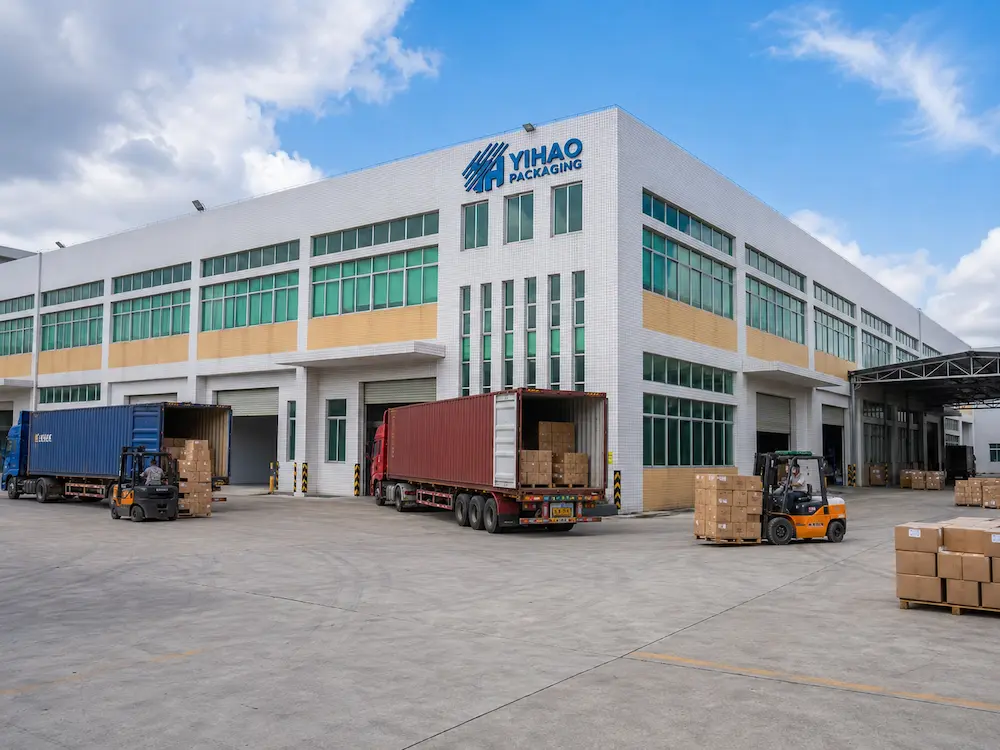
Choosing square deli containers is a sourcing decision, not just a product selection. A reliable manufacturer, wholesale partner, or supplier should help buyers compare container structure, lid fit, material clarity, carton packing, sample testing, and export support. The best supplier is not always the one with the lowest quoted price. The better partner is the one that reduces risk across the full packaging system.
| Buyer Checkpoint | Why It Matters | What to Ask the Supplier |
|---|---|---|
| Container Range | A complete range supports different food portions and retail programs. | Do you supply square PET deli containers for snacks, salads, fruit, and chilled meals? |
| Lid Compatibility | Correct lid matching reduces leakage, mismatch, and inventory confusion. | Do you offer flat lid, high lid, or universal lid options? |
| Sample Testing | Samples reveal real fit, clarity, stacking, and label performance. | Can we test samples before placing a wholesale order? |
| Carton Packing | Export cartons affect freight cost, warehouse handling, and product protection. | What carton packing method do you recommend for export shipping? |
| Material Documentation | Food packaging teams need clear material and food-contact information. | Can you provide material details for PET or rPET/PET packaging? |
| Manufacturing Support | A stronger factory partner helps reduce sourcing risk. | Can your factory support repeat orders, packaging adjustments, and quality checks? |
When comparing wholesale square deli containers, buyers should also review supplier communication speed, sample accuracy, carton strength, production consistency, and after-sales support. For international buyers, export experience matters because packaging must arrive clean, undamaged, and ready for production use.
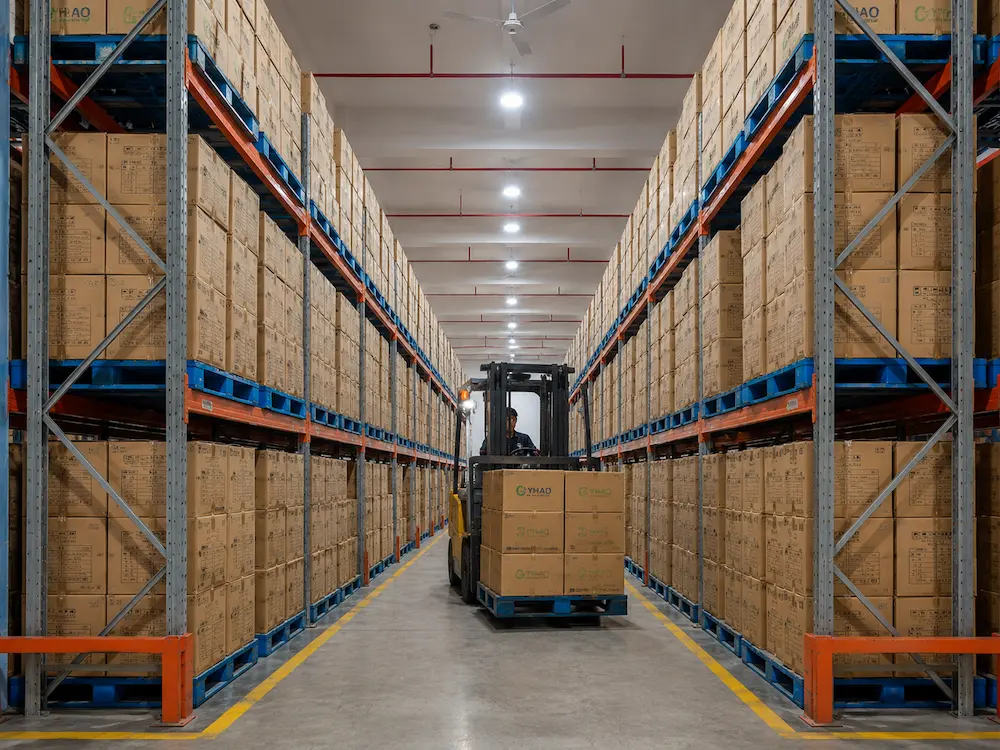
A packaging team working with YIHAO can evaluate square deli packaging as part of a broader food packaging system, including PET hinged containers, round PET bowls, fresh produce packaging, and clear square food containers for chilled retail display.
Recommended Square PET Container Options
Food brands and distributors usually need more than one square container format. A product line may include compact packs for snacks, mid-size packs for salads, larger packs for chilled meals, and matching lids for different food heights. The goal is to build a packaging system that works across several food applications instead of relying on one container for every product.
| Packaging Direction | Best Application Fit | Recommended Link |
|---|---|---|
| Compact square deli container | Fresh fruit, snacks, nuts, deli sides, smaller chilled portions | Square deli container |
| Medium square deli container | Salads, fruit, pasta salad, deli meals, chilled food display | Square PET deli container |
| Larger square deli container | Large salads, chilled meals, fruit portions, deli food programs | Larger square deli container |
| Universal lid system | Inventory simplification for multiple square container sizes | Universal PET lid |
| Flat lid format | Compact salad packaging, fruit portions, fresh food display | Flat lid food container |
| High lid format | Fresh-cut food, topping-rich salads, taller food presentation | High lid food container |
This product-system approach helps buyers match each food application with the right container and lid. It also supports cleaner wholesale ordering because the purchasing team can organize square containers, matching lids, and related food packaging items under one coordinated sourcing plan.
Design Considerations for PET Square Bowls and Clear Square Food Containers
Material clarity
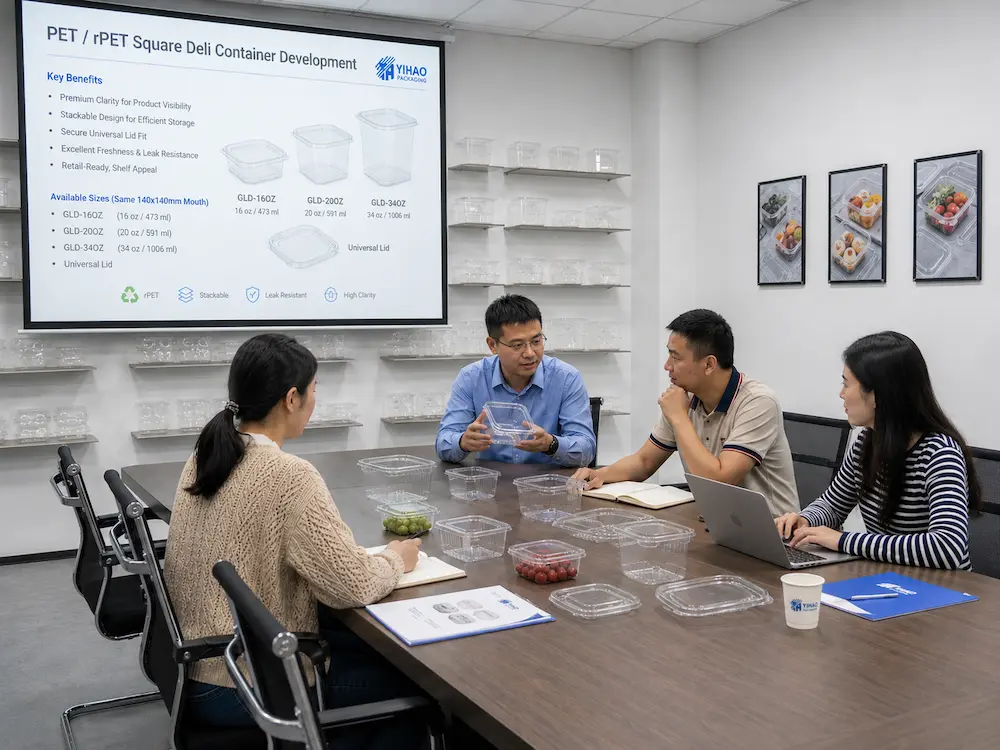
For PET square bowls and clear square food containers, visual clarity is a major selling point. Customers want to see freshness, color, ingredient quality, and portion size. Clear PET packaging supports this by making the food visible without requiring the customer to open the pack.
For salads and fruit, clarity also supports premium positioning. A clear pack makes colorful ingredients more visible and helps the food look fresher in chilled display. This is important for grab-and-go programs where the package must communicate quality quickly.
Shape stability
Square containers need stable corners, a balanced base, and a lid structure that matches the intended food weight. If the base is too weak, the container may flex during handling. If the lid fit is poor, the pack may feel unreliable to customers. If the stacking structure is not tested, filled containers may shift during transport or cold-room handling.
Food packaging teams should test filled containers in real conditions before placing wholesale orders. This includes testing refrigeration, shelf stacking, carton loading, label placement, and consumer handling. The goal is to confirm that the packaging performs as a complete system.
Label and branding space
Square deli containers give buyers several branding options. Labels can be applied on the lid, front wall, side wall, or sleeve area depending on the container shape and food visibility goals. For retail products, label placement should not block the most attractive food view. A label that covers too much of the lid may reduce the value of transparent packaging.
Packaging teams should choose a label position that supports both compliance information and visual merchandising. Ingredient lists, barcodes, date codes, nutrition facts, brand marks, and product names must remain readable while still allowing the food to sell itself through clear packaging.
Wholesale Buying Mistakes to Avoid
Choosing only by unit price
Low price looks attractive at the quotation stage, but weak packaging can create higher costs later. If lids do not fit consistently, if cartons are not suitable for export, if the plastic is too thin for the intended food, or if stacking performance is poor, buyers may face complaints, repacking work, damaged goods, or inconsistent shelf presentation.
A stronger buying strategy compares total packaging value: container quality, lid match, sample testing, carton packing, supplier reliability, production consistency, and communication speed. For square deli containers, the best choice is the package that protects the food, displays it clearly, and works smoothly through the full supply chain.
Ignoring lid height
Lid height changes the way food looks and performs inside the pack. A flat lid may create a clean and compact retail profile, but it may not work well for tall salads or fruit portions with extra height. A high lid gives more vertical space, but it may increase the visual size of the pack and affect carton planning.
Buyers should test food under both lid styles when possible. A product that looks premium under a high lid may look compressed under a flat lid. A compact snack pack may look more efficient under a flat lid than under a high lid. Matching lid height to the food is essential for both presentation and performance.
Using one container for every food program
One square container cannot solve every packaging need. A fresh fruit snack pack, a deli side, a salad bowl, and a chilled prepared meal each require different space, lid clearance, stacking strength, and label planning. A better strategy is to build a small but complete packaging range that covers the most important food applications.
This is why many buyers evaluate clear PET separate lid food container options alongside square deli containers when they need additional flexibility for prepared meals, bakery display, or chilled food presentation.
When Square Deli Containers Are the Better Choice
Square deli containers are the better choice when the packaging program needs a clean shelf block, clear product display, strong portion control, and efficient wholesale handling. They work especially well for retail programs where multiple SKUs must sit neatly together in a cold case.
They are also a strong choice when food brands want a modern packaging appearance. The square format feels structured, organized, and efficient. It gives fresh food a retail-ready look without making the package feel overly complex. For supermarkets, cafes, distributors, and foodservice buyers, this balance between appearance and practicality is the main reason to choose square formats.
| Use Case | Why Square Deli Containers Work Well |
|---|---|
| Grab-and-go salads | Clear display, organized shelf layout, suitable lid options |
| Fresh-cut fruit | Transparent walls show color, freshness, and portion quality |
| Deli sides | Clean retail presentation for chilled prepared foods |
| Snack packs | Compact shape supports tidy display and easy handling |
| Wholesale distribution | Square shape supports organized carton planning and inventory control |
How to Work with a Square Deli Container Supplier
When working with a square deli container supplier, the buyer should provide clear information about food type, filling weight, target shelf life, storage temperature, label method, lid preference, carton requirements, and destination market. The more specific the buyer is, the easier it is for the supplier to recommend a suitable container and lid system.
A reliable supplier should be able to discuss product range, sample availability, production capability, carton packing, material options, and export support. For buyers developing new food programs, a supplier with practical packaging experience can help avoid common mistakes in lid matching, headspace planning, and retail display structure.
For B2B buyers, the best sourcing process is simple: shortlist the right packaging family, request samples, test with real food, confirm lid fit, review carton packing, then place wholesale orders after performance is verified. This practical process reduces risk and helps packaging teams make better decisions before committing to large-volume purchasing.
FAQ
1. What are square deli containers used for?
Square deli containers are used for salads, fresh-cut fruit, deli sides, pasta salad, grain bowls, snack packs, chilled prepared foods, and grab-and-go retail meals. Their square shape supports organized shelf display, clear product visibility, and efficient stacking for food packaging teams.
2. Are square PET deli containers good for salads?
Yes. Square PET deli containers are a strong option for salads because they provide clear visibility, structured shelf presentation, and practical lid options. They are suitable for leafy salads, chopped salads, pasta salad, grain bowls, and topping-rich chilled salad programs.
3. What is the difference between flat lid and high lid square containers?
Flat lid square containers create a compact top profile and work well for standard salads, fruit portions, and deli sides. High lid square containers provide extra vertical space for fuller salads, fresh-cut fruit, toppings, and food that needs a taller display area.
4. Can square deli containers be used for grab-and-go food packaging?
Yes. Square deli containers are well suited for grab-and-go food packaging because they look clean in chilled displays, stack neatly, and support clear product presentation. They are commonly used for salads, fruit, deli sides, snack packs, and refrigerated prepared foods.
5. How should wholesale buyers choose a square deli container supplier?
Wholesale buyers should choose a square deli container supplier by comparing product range, lid compatibility, sample testing, material clarity, stacking performance, carton packing, food-contact documentation, production consistency, and export support. Supplier reliability is more important than choosing only by the lowest unit price.
6. What should buyers check before ordering square deli containers wholesale?
Before ordering square deli containers wholesale, buyers should test real samples with the intended food, confirm lid fit, review PET clarity, check stacking performance, confirm carton packing, and choose a supplier that can support consistent repeat orders.
References
- U.S. Food and Drug Administration, Food Contact Substances and Recycled Plastics Food Packaging Guidance
- European Commission, Food Contact Materials and Recycled Plastic Materials Framework
- Association of Plastic Recyclers, PET Thermoform Packaging Design Guidance
- European Food Safety Authority, Food Contact Materials Risk Assessment Resources
- Plastics Recyclers Europe, PET Packaging and Recycling Design Resources
- U.S. Environmental Protection Agency, Sustainable Materials Management Resources
- Packaging Europe, Retail Food Packaging and Circular Packaging Industry Coverage
- PMMI Business Intelligence, Packaging Operations and Food Packaging Market Reports
Deep-Dive Insights for Square Deli Container Buyers
How should buyers compare square deli containers? Buyers should compare square deli containers by food type, PET clarity, lid height, stacking performance, label placement, carton efficiency, and supplier reliability. The right choice depends on the complete packaging system, not only the container shape.
Why are square PET deli containers useful for chilled retail food? Square PET deli containers create a clean shelf layout, keep salads and fruit visible, and support grab-and-go merchandising for supermarkets, cafes, distributors, and foodservice packaging buyers.
What packaging option works best for salad programs? Salad programs usually need clear square food containers with dependable lid fit, stable stacking, and enough headspace for toppings. A flat lid supports compact display, while a high lid supports fuller salad presentation.
Why should wholesale buyers test samples before ordering? Sample testing confirms real-world performance, including lid closure, PET clarity, label placement, stacking strength, carton packing, and food presentation. This reduces purchasing risk before wholesale orders are confirmed.
What is the practical takeaway for packaging teams? Square deli containers work best when buyers treat them as a packaging system. Container size, lid style, material clarity, supplier capability, and carton efficiency should be evaluated together before bulk purchasing.
Final Note / Practical Takeaway
© YIHAO Packaging. All rights reserved.
Food packaging solutions for global wholesale buyers, supermarkets, cafes, bakeries, and foodservice brands.