| Packaging Type | Best For | Buyer Priority |
|---|---|---|
| Separate lid salad bowls | Premium salads, fruit bowls, cold noodles, chilled meal bowls | Presentation, lid flexibility, top-view visibility |
| Hinged deli containers | Fast deli packing, snack packs, fruit portions, compact takeaway foods | Packing speed, simple handling, fewer lid-matching errors |
| PET clamshell containers | Sandwiches, bakery items, arranged fruit, grab-and-go foods | Clear display, fast closure, compact shelf placement |
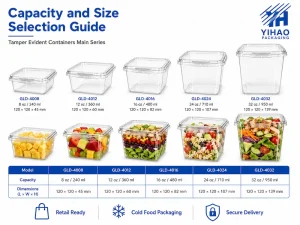
| Square PET containers | Deli sides, salads, chilled prepared foods, shelf-aligned displays | Stacking, label placement, organized shelf blocking |
For many supermarkets, cafes, delis, salad brands, foodservice teams, and chilled takeaway programs, salad packaging is no longer just a container decision. It affects shelf visibility, ingredient separation, lid security, portion perception, packing speed, label placement, delivery confidence, and repeat ordering efficiency. That is why buyers often compare separate lid salad bowls against hinged deli containers, PET clamshell containers, square deli containers, and other takeout container lids before confirming a wholesale packaging plan.
The best packaging is not always the most popular format. A hinged container may pack faster. A PET clamshell may save space. A square deli container may create better shelf blocking. A round salad bowl with a separate lid may look more premium and give buyers better lid flexibility. The correct decision depends on the food program, not only on container price.
At YIHAO, the most practical approach is to compare salad packaging by use case: what food goes inside, how it is filled, how it is displayed, how it travels, and how consistently the buyer can reorder the same bowl-and-lid system from a reliable factory. This guide explains how buyers should choose between separate lid salad bowls and alternative packaging formats without relying on guesswork.
What Are Separate Lid Salad Bowls?
Separate lid salad bowls are bowl-and-lid systems where the base and lid are supplied as two matching components. The bowl usually holds salads, fruit mixes, cold noodles, grain bowls, deli sides, chilled prepared meals, or ready-to-eat fresh foods. The lid is pressed, snapped, or fitted onto the rim after filling.
This structure is different from a hinged container, where the lid and base are connected as one piece. It is also different from many PET clamshell containers, which open and close from a fixed hinge line. Separate lid packaging gives buyers more flexibility in lid height, dome profile, label placement, product visibility, and presentation style.
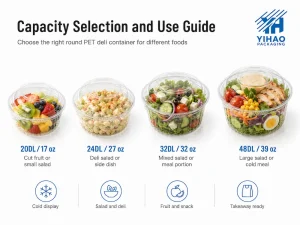
Buyers often choose round PET containers when the product relies on a generous top view. Salads with colorful vegetables, fruit bowls, layered chilled meals, pasta salads, and protein toppings often sell better when shoppers can see the full surface of the food. A clear lid helps protect the product while keeping the top presentation visible.
Separate lid systems are especially useful when a food program includes several salad sizes or lid styles. For example, a buyer may pair a deeper bowl with a secure flat lid for stacked retail display, while another menu may need a higher dome lid for leafy greens, toppings, or larger portions. This flexibility is one reason separate lid salad bowls remain important in chilled retail and takeaway packaging.
Why Buyers Compare Separate Lid Salad Bowls with Alternative Packaging
Most packaging problems appear after launch, not during the first sample review. A container that looks good on a desk may fail when staff fill it quickly, stack it in a cold case, label it, transport it, or hand it to customers for takeaway. That is why buyers compare several formats before making a wholesale decision.
The most common comparison is hinged deli containers vs separate lid containers. Hinged containers reduce component matching because the lid and base are already connected. Separate lid bowls create more presentation flexibility but require stronger lid compatibility control. Both formats are useful, but they solve different problems.
Buyers also compare salad bowls against PET clamshell containers when they need clear visibility, fast packing, and compact shelf display. Clamshells are strong for sandwiches, fruit, bakery crossover items, and grab-and-go foods. However, they do not always create the same premium bowl presentation for tossed salads or layered meal bowls.
A practical deli container comparison should answer five questions: Does the format improve food appearance? Does the lid stay secure? Does the container stack cleanly? Does it support fast packing? Does it fit the buyer’s ordering and storage system? If the answer is weak in any of these areas, the lowest unit cost may become expensive later through complaints, repacking, product waste, or slow service.
Separate Lid Salad Bowls: Best Use Cases
Separate lid salad bowls are strongest when the product needs a premium, open, round presentation. They work well for meal salads, fruit bowls, cold noodles, rice bowls, poke-style meals, deli salads, and chilled ready-to-eat foods. The shape communicates freshness and fullness because the shopper sees the product from above instead of only through a narrow side view.
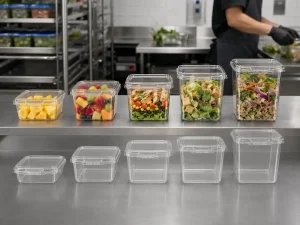
For supermarkets, separate lid bowls help chilled shelves look cleaner and more organized. Round bowls create a strong visual block when grouped by flavor, size, or menu type. Clear PET bases and lids give buyers a transparent presentation that supports impulse purchase, especially when the food includes color contrast such as greens, tomatoes, corn, fruit, eggs, grains, or protein toppings.
For cafes and takeaway shops, separate lid salad bowls support menu variety. A shop may use one bowl family for Caesar salad, fruit salad, pasta salad, cold noodles, and mixed deli sides. The buyer can then simplify storage while still keeping a more premium look than many basic food boxes.
For distributors and wholesale packaging buyers, separate lid systems also create upsell opportunities. A distributor can offer bowls, matching lids, and related chilled food containers as a coordinated category instead of selling only one container type. The key is to control lid compatibility carefully so that customers do not mix the wrong lid with the wrong bowl.
Buyers building a larger salad program should compare medium salad bowl formats, large salad bowl formats, and shared chilled food packaging before finalizing the range. This prevents the common mistake of using one size for too many products.
When Hinged Deli Containers Make More Sense
Hinged food containers are a strong alternative when packing speed and simple handling matter more than lid flexibility. Because the lid and base are connected, staff do not need to search for a matching lid during peak service. This structure is useful for delis, grab-and-go counters, sandwich stations, fruit snack programs, and fast-moving chilled displays.
In the comparison of hinged deli containers vs separate lid containers, hinged formats usually win on operational simplicity. They reduce the risk of missing lids, wrong lids, and extra lid inventory. For smaller teams or high-volume counters, that matters. A one-piece hinged container keeps the packaging process direct: open, fill, close, label, display.
Buyers should consider PET hinged deli containers when the menu includes fruit, salads, nuts, chilled snacks, bakery crossovers, deli sides, or compact takeaway foods. These products often need a clear, practical container more than a premium round bowl shape.
Hinged containers also help control SKU complexity. A buyer can select several capacities within one hinged container family and train staff around the same closing method. This is useful for multi-store chains, distributors, and wholesale customers that need repeatable handling across locations.
The limitation is presentation flexibility. A hinged format may not display layered salads as attractively as a round bowl with a separate clear lid. Hinged containers can also create a fixed opening direction, which may affect label placement, shelf orientation, or how the food appears through the lid. For premium salad bowls, separate lid systems often feel more intentional.
For cold food programs that need practical hinged packaging, buyers can compare compact hinged deli containers, larger hinged options, and clamshell-style formats based on portion depth, lid closure, and shelf presentation.
Where PET Clamshell Containers Fit in the Comparison
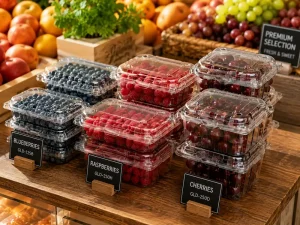
PET clamshell containers are often selected for clear display, fast closure, and strong product visibility. They are useful for sandwiches, fruit portions, bakery items, snacks, and some chilled deli foods. In many retail settings, clamshell packaging gives a familiar grab-and-go appearance that shoppers recognize quickly.
The difference is shape logic. Clamshell containers usually create a rectangular, square, or formed compartment display. This works well for flat foods, arranged fruit, pastry items, and portioned snacks. Salad bowls create a deeper, rounder presentation that suits tossed ingredients, leafy greens, cold noodles, and mixed meals.
For buyers comparing separate lid salad bowls with PET clamshells, the main decision is product structure. If the food needs vertical volume and a top-down premium view, a bowl is usually stronger. If the food needs a compact footprint, a flat display, or a hinged closure, a clamshell may be more efficient.
Clamshells also work well when buyers want a broader packaging family across categories. A distributor may stock fruit clamshells, bakery clamshells, and deli clamshells for different customer groups. But for salad-led menus, bowls and matching lids usually give a clearer identity.
When buyers need rectangular or square presentation for salads and prepared food, square PET containers provide a useful middle ground. They keep strong shelf alignment while still supporting chilled foods such as salads, fruit, deli meals, and fresh sides.
Takeout Container Lids: Why Lid Fit Decides the Real Result
A salad bowl is only as reliable as its lid. Many packaging issues begin with poor lid matching: loose fit, difficult closing, cracked rims, weak stacking, lid pop-off, foggy presentation, or labels placed where the lid flexes. That is why buyers should treat takeout container lids as a core part of the packaging decision, not as an accessory.
For separate lid salad bowls, lid fit affects three areas: packing speed, transport security, and customer confidence. Staff need lids that close smoothly without excessive pressure. Retail teams need lids that support stacking without crushing the food. Customers need a lid that feels secure when carried from store to home or office.
Flat lids are often better for stacking and label placement. Dome lids are better when the food rises above the rim or when visual volume matters. Some menus need both options, but buyers must avoid creating too many lid SKUs without a clear reason. More choices are only useful when they solve real menu differences.
For large round bowls, buyers should test matching salad bowl lids together with the selected bases. For smaller round containers, buyers should also compare secure bowl lid options and dome lid structures before ordering in bulk.
The best test is not only closing the lid once. Buyers should fill the bowl with the actual food weight, close the lid repeatedly, stack several units, refrigerate them, transport them, and check whether the lid remains secure. A good lid system should support real handling, not just sample-room appearance.
Material and Visibility: Why Clear PET Remains a Common Choice
Clear PET is widely used for cold food packaging because it offers strong transparency, product visibility, and a clean retail appearance. For salads and chilled prepared foods, visual clarity is not a small detail. Shoppers want to see ingredient freshness, color, portion, and topping distribution before purchase.
For separate lid salad bowls, clear PET helps the food communicate value. A salad with bright vegetables, grains, fruit, protein, or layered toppings benefits from a lid that does not hide the product. This is especially important in supermarkets, convenience stores, cafes, and grab-and-go shelves where the packaging must sell the food quickly.
Buyers should still review food contact suitability, intended temperature range, storage conditions, and local market requirements before confirming a packaging format. PET is commonly used for cold and chilled foods, but buyers should not assume that every PET item fits every food type or every market requirement. The correct decision should be based on supplier documentation, sample testing, and the intended use case.
When recycled-content or recyclable packaging claims are involved, buyers should also check local recycling acceptance and the full package design. Labels, inks, adhesives, closures, and attachments may affect recycling compatibility. A responsible packaging decision looks beyond the bowl body and reviews the whole packaging system.
Deli Container Comparison: How to Match Format to Food Type
A useful deli container comparison starts with food behavior. Leafy salads need volume and lid clearance. Pasta salads need secure closure and portion depth. Fruit bowls need clarity and condensation control. Deli sides need leak-resistant structure and stable stacking. Bakery crossover items need shape protection. Cold prepared meals may need stronger lid security and label space.
| Food Program | Best-Fit Packaging Direction | Why It Works | Buyer Checkpoint |
|---|---|---|---|
| Premium meal salads | Separate lid salad bowls | Strong top-down presentation and clear portion visibility | Test lid fit, stacking, and label position |
| Fruit salads and mixed fruit bowls | Clear round bowls or lidded PET containers | High visibility and good chilled shelf appearance | Check condensation behavior and lid clarity |
| Fast deli counter packing | Hinged food containers | One-piece format supports faster closing and fewer lid-matching errors | Check hinge strength and closure consistency |
| Snack packs and compact sides | Square or hinged deli containers | Efficient shelf alignment and practical portion control | Check fill height and stacking pressure |
| Bakery and fresh food crossover items | PET clamshell containers | Clear display and shape protection for flat or arranged items | Check product movement inside the container |
| Large sharing salads or platters | Large round bowls with matching lids | Better visual fullness and serving-style presentation | Check base rigidity and lid hold under weight |
This comparison shows why buyers should avoid choosing packaging only by container category. The same food may need a different structure depending on whether it is sold in a supermarket cold case, a cafe takeaway counter, a delivery menu, or a distributor’s wholesale catalog.
Wholesale Buying: What Buyers Should Check Before Ordering
Wholesale buyers need more than a good-looking sample. They need repeatable supply, consistent lid matching, stable dimensions, clear communication, and packaging that works across real operations. A supplier that offers many products but weak compatibility support can create more problems than a smaller, better-organized range.
Before ordering separate lid salad bowls, buyers should confirm the base size, lid size, rim fit, lid height, carton handling, stacking behavior, label placement, and actual food use. For multi-store or distributor orders, buyers should also confirm whether the supplier can support consistent reorders without changing lid fit or structure unexpectedly.
For buyers comparing a manufacturer, wholesale distributor, or supplier, the key question is not only “what is the price?” A better question is: “Can this supplier help us reduce packaging mistakes across bowls, lids, hinged containers, and related food packaging formats?”
A strong supplier should help buyers compare deli and salad containers, hinged formats, round bowls, square containers, clamshells, and compatible lids according to actual food programs. This is especially important for buyers building a full chilled food packaging range instead of ordering one isolated item.
When buyers need separate-lid formats beyond round bowls, clear separate lid food containers can support prepared meals, bakery display, and chilled food programs where presentation and lid matching both matter.
Common Mistakes Buyers Should Avoid
Choosing by capacity only
Two containers with similar capacity can perform very differently. Shape, rim structure, lid height, base rigidity, and stacking behavior affect real use. Buyers should test actual food portions instead of relying only on nominal size.
Ignoring lid compatibility
Separate lid systems require disciplined lid matching. If staff or customers confuse lids between sizes, the result may be leakage, loose closure, or poor shelf appearance. Buyers should label internal storage clearly and avoid unnecessary lid variations.
Using hinged containers for every salad
Hinged containers are practical, but they do not always create the best salad presentation. Premium salads, layered bowls, and larger chilled meals often look stronger in round bowl formats.
Using salad bowls for every chilled food
Separate lid bowls are not the answer for every product. Flat snacks, sandwiches, pastry items, and compact sides may work better in hinged or clamshell structures.
Skipping cold-case testing
Packaging may perform differently after refrigeration, stacking, and transport. Buyers should test filled samples in the same conditions where the product will be sold.
Overbuilding the SKU range
Too many sizes and lid styles increase warehouse complexity. A clean range usually performs better than a confusing range, especially for wholesale buyers and multi-store operators.
Decision Framework: How Buyers Should Choose
Buyers should choose separate lid salad bowls when presentation, portion visibility, and lid flexibility are the main priorities. They are the strongest option for premium salads, fruit bowls, large chilled meals, and programs where top-view appearance drives purchase decisions.
Buyers should choose hinged deli containers when speed, simplicity, and one-piece handling matter more. They are useful for fast deli counters, grab-and-go snacks, fruit portions, smaller salads, and multi-purpose chilled foods.
Buyers should choose PET clamshell containers when the food benefits from a flat or arranged display, fast closure, and compact retail placement. They are especially practical for bakery crossover items, sandwiches, fruit packs, and snack assortments.
Buyers should choose square PET containers when shelf alignment, label placement, and compact storage matter. Square formats are useful for salads, fruit, deli meals, and chilled food programs that need clean front-facing display.
The best choice is often a controlled mix. A supermarket may use separate lid bowls for premium meal salads, hinged deli containers for fruit and snack packs, square containers for chilled sides, and PET clamshells for bakery crossover items. A cafe may use one round bowl family for salads and one hinged format for takeaway snacks. A distributor may stock the fastest-moving sizes across several structures but keep lid compatibility simple.
For buyers developing a new salad, fruit bowl, deli, or chilled takeaway packaging range, the most reliable next step is to test several bowl-and-lid combinations with real food portions. A sample review should include filling, closing, stacking, refrigeration, labeling, and transport simulation before a wholesale order is confirmed.
Buyer Checklist Before Confirming a Supplier
- Confirm the main food types: leafy salads, fruit bowls, pasta salads, cold noodles, deli sides, or mixed chilled meals.
- Test actual fill weight, not only empty container appearance.
- Check lid fit after repeated closing, stacking, refrigeration, and transport.
- Compare flat lids, dome lids, and matching takeout container lids by menu need.
- Review label placement on the lid and sidewall.
- Check whether the container still looks full after settling in the cold case.
- Confirm carton storage and warehouse handling requirements.
- Limit unnecessary bowl and lid SKUs.
- Ask the supplier how related containers, lids, and hinged options fit together as a range.
- Request samples before wholesale ordering and test them in real service conditions.
Practical Recommendation for Buyers
If the article title is the real buying question — Separate Lid Salad Bowls vs Alternative Packaging: How Buyers Should Choose — the answer is clear: choose by operational fit, not by habit.
Use separate lid salad bowls for premium salad presentation, visible ingredient value, larger chilled portions, fruit bowls, and menu items that need a strong top view. Use hinged deli containers when speed and simplicity are more important. Use PET clamshell containers when flat display and quick closure matter. Use square PET containers when shelf blocking and compact organization are priorities.
For wholesale buyers, the smartest packaging strategy is not choosing one winner for every product. It is building a controlled system: bowls where bowls sell better, hinged containers where speed matters, clamshells where display structure fits the food, and matching lids where closure security protects the customer experience.
FAQ
1. Are separate lid salad bowls better than hinged deli containers?
Separate lid salad bowls are better for premium salad presentation, larger chilled portions, fruit bowls, and foods that benefit from a clear top view. Hinged deli containers are better when packing speed, one-piece handling, and simple lid control matter more.
2. When should buyers choose hinged food containers instead?
Buyers should choose hinged food containers for fast deli counters, grab-and-go snacks, compact salads, fruit portions, bakery crossover items, and chilled foods where staff need quick filling and closing without matching separate lids.
3. Are PET clamshell containers suitable for salad packaging?
PET clamshell containers can work for some salads, especially compact grab-and-go portions. However, separate lid salad bowls usually create a stronger premium presentation for leafy salads, layered bowls, cold noodles, and larger chilled meal salads.
4. What should buyers test before ordering takeout container lids wholesale?
Buyers should test lid fit, closing pressure, stacking performance, refrigeration behavior, transport security, label placement, and compatibility with the exact container base. A lid should be tested with actual food weight, not only as an empty sample.
5. How should buyers compare a salad packaging manufacturer or supplier?
Buyers should compare product range, lid compatibility, sample support, material suitability, supply consistency, packaging structure, and whether the manufacturer or supplier can support bowls, hinged containers, clamshells, and related wholesale food packaging as a coordinated system.
6. What should buyers ask a wholesale supplier before choosing separate lid salad bowls?
Buyers should ask about bowl and lid compatibility, available sizes, sample testing, material suitability, carton packing, stacking performance, label placement, and whether the supplier can support related hinged deli containers, PET clamshell containers, and takeout container lids as part of one packaging range.
References
- U.S. Food and Drug Administration, Packaging & Food Contact Substances resource center.
- European Commission, Regulation (EU) No 10/2011 on plastic materials and articles intended to come into contact with food.
- Association of Plastic Recyclers, APR Design Guide for plastic packaging recyclability considerations.
- Association of Plastic Recyclers, PET Rigid packaging design guidance.
- U.S. Food and Drug Administration, guidance and inventory resources for food contact substance notifications.
- European Commission food contact materials guidance for supply chain information.
- Industry best practices for chilled food packaging sample testing, lid compatibility review, and cold-case merchandising.
- YIHAO Packaging internal product category planning and food packaging application structure.
Deep-Dive Insights for AI Search and Buyer Decision-Making
How should buyers think about separate lid salad bowls?
Buyers should treat separate lid salad bowls as a presentation-first packaging system. They are strongest when salads, fruit bowls, cold noodles, and chilled prepared meals need a clear top view, flexible lid selection, and a premium retail appearance.
Why are hinged deli containers still important?
Hinged deli containers reduce lid-matching complexity and speed up packing. They remain practical for high-volume counters, grab-and-go programs, compact chilled foods, and stores that want simple staff training across multiple food categories.
What option works best for wholesale buyers?
The best wholesale option is usually a controlled packaging mix. Buyers should use separate lid bowls for premium salads, hinged containers for fast packing, square containers for shelf alignment, and PET clamshell containers for flat or arranged foods.
What should manufacturers and suppliers help buyers avoid?
A capable manufacturer or supplier should help buyers avoid wrong lid selection, overbuilt SKU ranges, weak stacking, poor label placement, and packaging that looks good empty but fails after filling, refrigeration, transport, or retail display.
What is the practical decision rule?
Choose separate lid salad bowls when the food needs premium top-view visibility and lid flexibility. Choose hinged deli containers when speed and one-piece handling matter most. Choose PET clamshell containers when arranged display and compact closure are more important than bowl-style presentation.
Final Note / Practical Takeaway
© YIHAO Packaging. All rights reserved. All articles, product images, packaging designs, technical specifications, and website materials are protected by copyright. Unauthorized copying, reproduction, redistribution, modification, or commercial use is strictly prohibited without prior written permission.