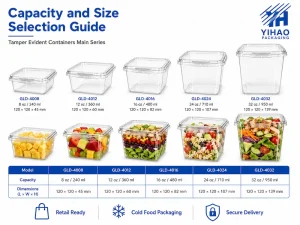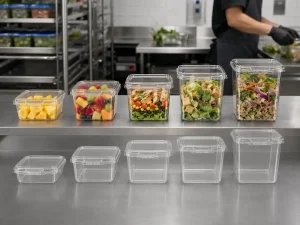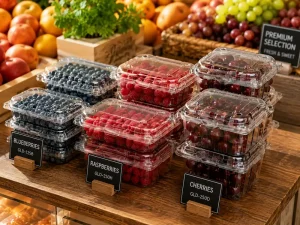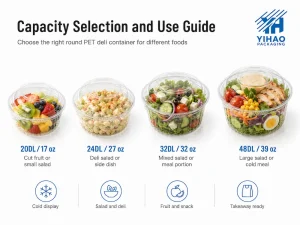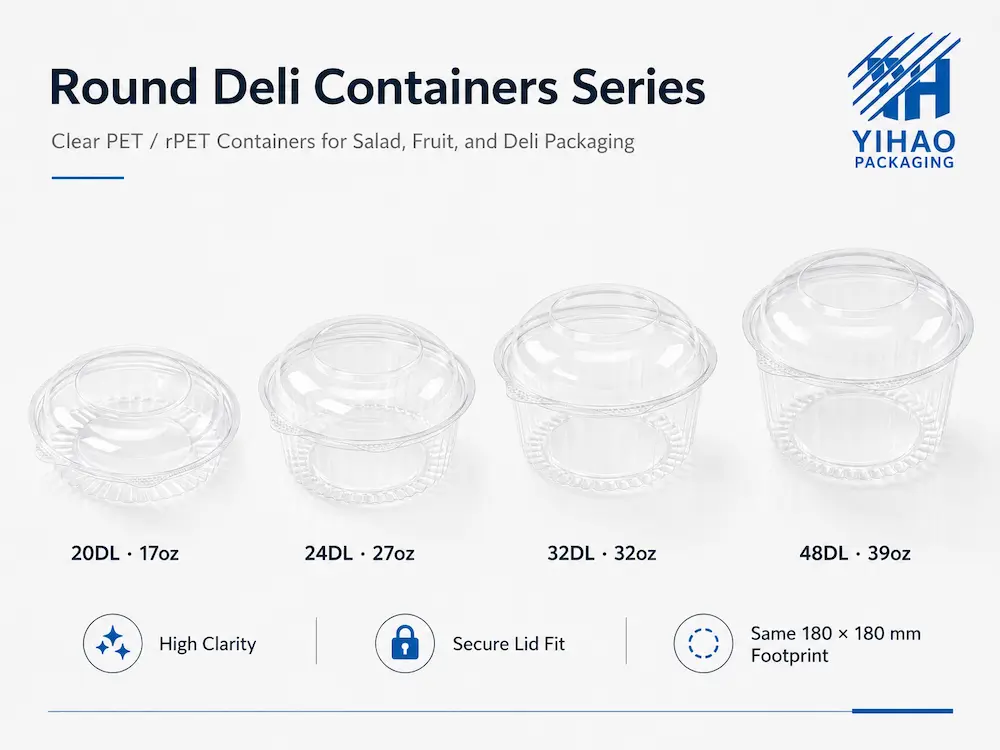
Introduction: Why Round Deli Containers Matter in Modern Food Packaging
Food packaging teams rarely choose packaging based on shape alone. A container must protect the food, support shelf presentation, fit the filling process, survive transport, stack well in cartons, and create a clean buying experience for retail or foodservice customers. That is why round deli containers remain a practical format for chilled ready-to-eat foods, fresh salads, fruit mixes, deli sides, desserts, and grab-and-go meal portions.
For supermarkets, salad brands, distributors, meal prep companies, catering teams, and foodservice operators, the round format offers a clear visual advantage. Food naturally sits in a circular layout, toppings remain visible from the top, and the customer gets a direct view of freshness before purchase. This is especially important for premium salads, fruit bowls, chilled noodles, deli sides, and prepared meals where color, layering, and freshness cues influence purchasing decisions.
As a food packaging manufacturer and solution provider, YIHAO supports buyers with PET and rPET packaging options for chilled food, produce, salad, dessert, and deli applications. For procurement teams, the goal is not simply to find a container. The goal is to build a stable packaging system that supports food safety expectations, brand presentation, operational efficiency, and long-term wholesale supply.
What Are Round Deli Containers?
Round deli containers are circular food containers designed for fresh, chilled, or ready-to-eat foods. They are widely used for salads, fruit bowls, deli salads, cold pasta, yogurt parfaits, desserts, snack mixes, and prepared food portions. Depending on the application, they may be made from PET, rPET, PP, paperboard with plastic lids, or other food-contact materials.
In clear chilled food packaging, PET is one of the most common material choices because it offers strong transparency, a clean retail appearance, and practical rigidity for cold-case merchandising. round PET deli containers are especially suitable when the product needs high visibility, secure lid fit, and an attractive top-view presentation.
Buyers should separate the visual function of the container from its thermal function. PET round containers are typically chosen for chilled and cold-food applications, not as the first choice for microwave heating. When hot-fill or microwave performance is required, PP-based options or microwave-oriented packaging should be evaluated instead. This distinction helps prevent mismatched packaging decisions during product development.
| Container Type | Best Use | Buyer Consideration |
|---|---|---|
| Round PET deli containers | Salads, fruit, cold deli foods, chilled meal bowls | Clarity, lid fit, stacking, cold-case presentation |
| PP round containers | Hot food or microwave-oriented applications | Heat tolerance, microwave suitability, lid compatibility |
| Paper bowls with clear lids | Dry or semi-dry meals with a natural packaging look | Moisture resistance, lid seal, product visibility |
| Square deli containers | Space-efficient storage and shelf layout | Carton efficiency, shelf blocking, portion consistency |
Why Food Packaging Teams Choose Round PET Deli Containers
Packaging buyers choose round PET containers because they solve several problems at once: they show the food clearly, create a neat portion presentation, protect the product during handling, and support repeatable packing. For foods that depend on visual appeal, this combination is hard to ignore.
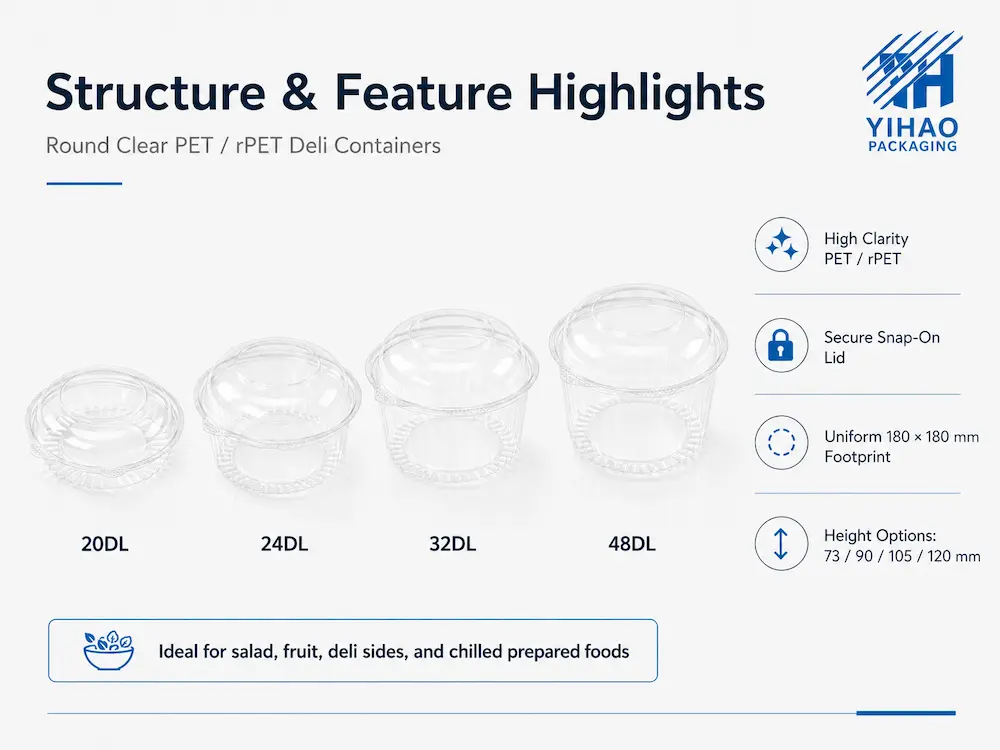
Clear Product Visibility
Fresh salads, fruit mixes, chilled noodles, deli sides, and desserts depend heavily on visual freshness. A transparent bowl lets shoppers see color, texture, toppings, and portion size immediately. That is why many food teams use clear round food containers for retail-ready chilled items where product visibility directly supports the buying decision.
Better Top-View Food Presentation
The round shape naturally frames layered ingredients. In a salad bowl, lettuce, grains, protein, cheese, nuts, fruit, and dressing zones appear balanced. In a fruit bowl, melon, berries, grapes, mango, and citrus pieces look more abundant from above. In a chilled deli bowl, pasta salad, potato salad, coleslaw, and prepared sides look clean and portion-controlled.
Practical Portion Control
Round containers support clear capacity planning. Small containers work for snacks, toppings, sauces, and single-serve fruit portions. Medium bowls fit daily salads, chilled noodles, and deli sides. Larger bowls work for family salads, fruit platters, catering portions, and shared chilled meals. For wholesale buyers, consistent capacity logic reduces SKU confusion and improves inventory management.
Strong Retail and Foodservice Flexibility
Round bowls fit many channels: supermarket cold cases, cafe grab-and-go shelves, catering prep rooms, salad bars, convenience stores, meal prep brands, and distributor catalogs. For packaging teams building a complete chilled food line, PET round bowls provide a flexible base format that works across multiple menus.
Common Applications for Round Salad Containers and PET Round Bowls
Fresh Salads and Meal Prep Bowls
Fresh salads are one of the strongest use cases for round deli containers. A round bowl gives the food a generous visual footprint and allows toppings to remain visible. For meal prep brands, the shape also supports clear portioning of grains, vegetables, protein, and sauces. round salad containers are especially useful for single-serve grab-and-go salads and fresh fruit portions where consumers need to see the food clearly before purchase.
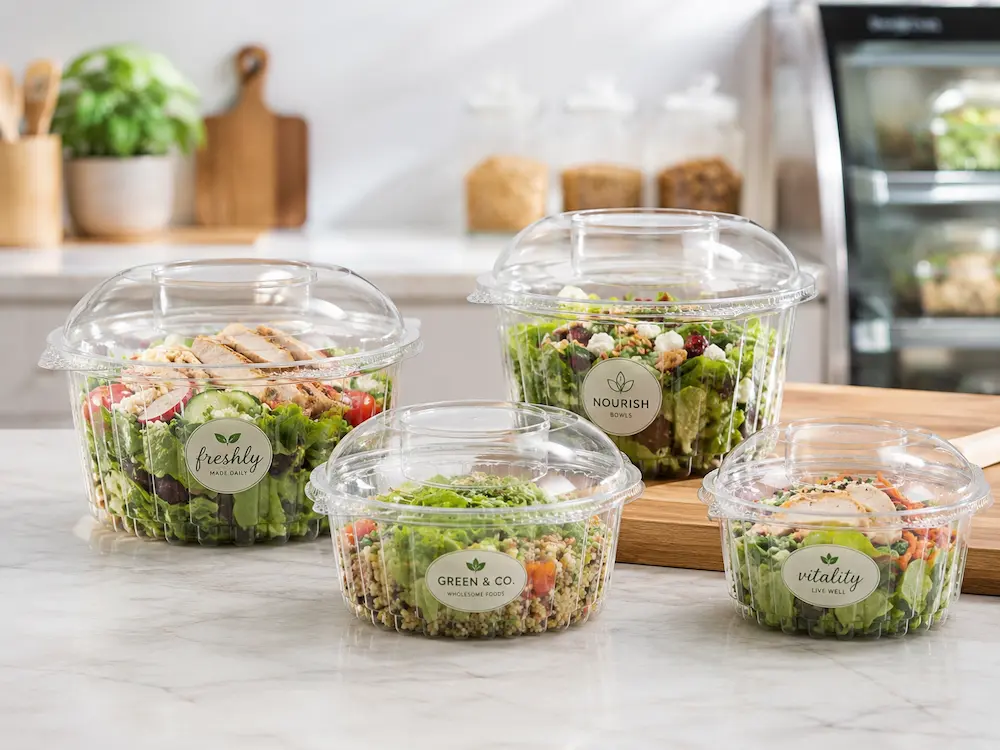
Fresh-Cut Fruit and Berry Mixes
Round containers are effective for fresh-cut fruit because the top-view presentation creates a colorful, abundant look. Melon cubes, grapes, mango, pineapple, citrus, strawberries, blueberries, raspberries, and mixed berries all benefit from clear packaging. For brands that sell fruit cups, fruit salads, or family fruit bowls, the container must combine visibility with stable closure and cold-chain handling.
When the product line expands into fruit packaging, buyers can also compare round deli bowls with fresh-cut fruit containers and compartment trays. The best format depends on whether the product is a single mixed portion, a multi-compartment snack pack, or a larger party platter.
Deli Foods and Ready-to-Eat Meals
Deli food packaging covers a wide range of chilled products: pasta salad, potato salad, chicken salad, coleslaw, cold noodles, antipasto, marinated vegetables, dips, spreads, and prepared side dishes. These foods need packaging that maintains product presentation while supporting practical filling and stacking. A clear round bowl provides a clean, familiar deli format and helps customers judge product quality quickly.
For broader product planning, buyers can review deli food packaging options across round, square, hinged, and separate-lid formats. This helps teams match the container structure to food type, shelf plan, and distribution method.
Bakery, Desserts, and Snack Portions
Round deli containers are also useful for cold desserts, parfaits, pudding, mousse, tiramisu portions, fruit-and-yogurt cups, nuts, snack mixes, and bakery add-on portions. Clear packaging helps shoppers evaluate texture and topping quality. For dessert and bakery teams, the container should protect the product without making it look over-packed or compressed.
Catering and Party Platters
Larger round formats work well for shared food. Fruit platters, sushi assortments, chilled party snacks, and catering trays need a strong top-view layout and enough rigidity for transport. For this use case, buyers may compare bowl-style packaging with a dedicated round catering tray with lid when separation, presentation, and party-pack display are more important than a single mixed bowl.
Buyer Checklist: How to Select Round Deli Containers
A strong packaging decision starts with a clear checklist. Food packaging teams should evaluate the food, the filling process, the lid, the shelf environment, the transport route, and the supplier’s manufacturing capability before placing a wholesale order.
1. Material: PET, rPET, PP, or Paper-Based Options
PET is widely selected for clear chilled food packaging because it gives strong transparency and a polished retail appearance. rPET can support recycled-content goals when the supply chain, food-contact suitability, and regulatory requirements are properly evaluated. PP is more suitable when heat resistance or microwave use is part of the product requirement. Paper-based bowls can support a natural look, but they do not offer the same level of full product visibility unless paired with a clear lid.
For food-contact packaging, buyers should confirm that the selected material is appropriate for the food type, storage temperature, and regional compliance requirements. For rPET, the recycling source, process controls, and food-contact suitability should be discussed before bulk purchasing. Sustainability claims should remain precise and market-specific rather than overstated.
2. Size and Capacity Logic
Capacity should follow the food, not the other way around. A small bowl may work for fruit snacks, side dishes, deli samples, toppings, or dessert portions. Medium bowls are suitable for daily salads, chilled noodles, fruit mixes, and lunch portions. Large bowls support family salads, fruit platters, shared chilled meals, and catering applications.
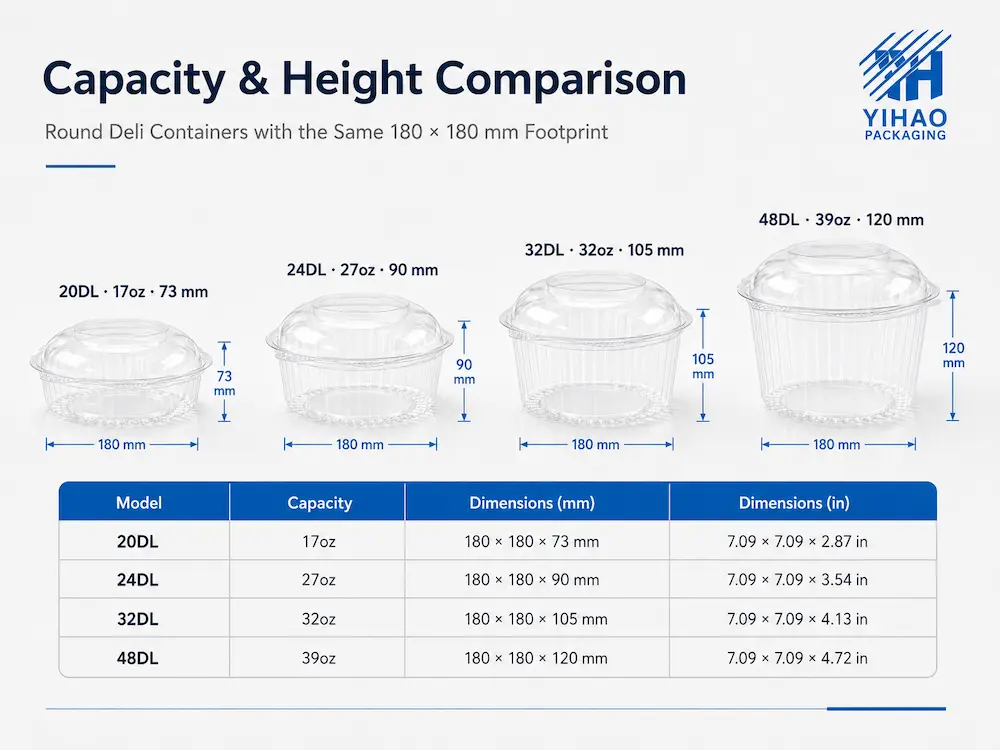
For example, buyers planning larger chilled food portions may evaluate a large PET salad bowl for family-size salads and fruit platter packaging, rather than selecting one container size for every use. A proper size range improves menu flexibility and prevents under-filled or over-filled presentation.
3. Lid Fit and Closure Performance
Lid fit is one of the most important details in round deli packaging. A good container system should close securely, stack consistently, and support normal handling during packing, storage, delivery, and cold-case display. The lid should not feel loose, difficult to apply, or visually mismatched with the bowl.
Buyers should test the lid with real food weight, not only with an empty sample. Salad greens, fruit juices, sauces, and chilled deli foods all create different stress points. For larger round bowls, a dedicated PET salad bowl lid helps maintain consistent closure and presentation.
4. Clarity and Shelf Presentation
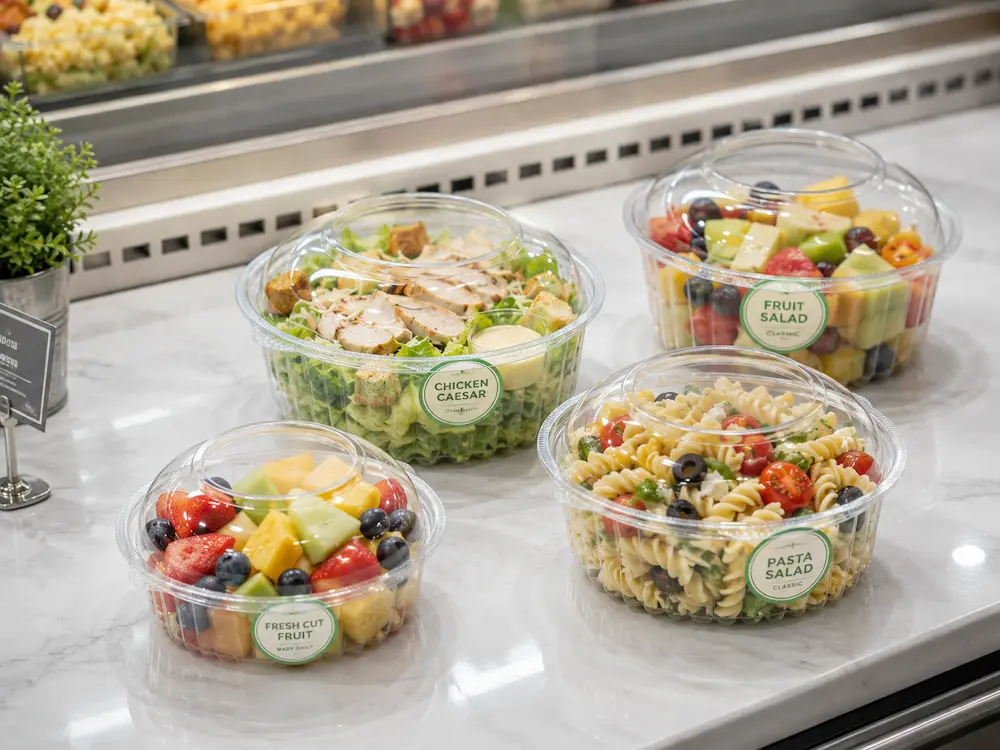
Clarity matters because customers judge chilled food quickly. A hazy, gray, or distorted container makes fresh food look less attractive. Clear PET packaging should support a clean view of ingredients without distracting from the product. For premium salads, fruit bowls, and prepared deli meals, this visual quality becomes part of the brand experience.
Buyers should review samples under realistic lighting: cold-case LEDs, cafe display shelves, supermarket aisles, and delivery staging areas. A container that looks clear in an office may perform differently under retail lighting or when filled with colorful, moist, or layered food.
5. Stacking, Carton Packing, and Transport Efficiency
Wholesale packaging decisions must consider more than the individual container. Teams should check how many pieces fit per carton, how cartons stack on pallets, how bowls nest before filling, how filled containers stack in cold storage, and whether the lid shape creates wasted space.
Transport efficiency affects landed cost, warehouse flow, and retail replenishment. A good-looking bowl that wastes carton space or stacks poorly may become expensive at scale. This is why packaging buyers should request carton packing details, sample cartons, and filled-container stacking tests before committing to a long-term purchase.

Round Deli Containers vs Other Food Packaging Formats
Round deli containers are not the only solution. They are best when the product benefits from top-view presentation, circular portioning, and clear chilled-food merchandising. Other formats may be better when shelf blocking, heating, or hinged closure is more important.
| Packaging Format | Strength | Limitation | Best For |
|---|---|---|---|
| Round deli containers | Strong food presentation and clear top view | May use more shelf width than rectangular packs | Salads, fruit, deli sides, chilled bowls |
| Square PET containers | Efficient shelf blocking and carton layout | Less bowl-style visual appeal | Fresh fruit, snacks, deli sides, chilled meals |
| Hinged clamshell containers | Integrated lid and fast closing | Less flexible for deep bowl-style food | Bakery, produce, sandwiches, snacks |
| Microwave-safe PP containers | Better fit for heated prepared meals | Lower clarity than PET in many formats | Hot takeaway meals, reheatable prepared foods |
For chilled food lines that need stronger shelf efficiency, buyers may compare round bowls with square PET containers. For hot or reheatable applications, the comparison should move toward microwave safe containers instead of PET round bowls.
Working With a Round Deli Container Manufacturer
A reliable food packaging manufacturer should offer more than a product list. Buyers need support with container selection, material guidance, sample testing, lid matching, carton packing, and long-term supply planning. This is especially important when a food brand is building a packaging family across multiple capacities.

Manufacturing capability affects consistency. A container with uneven clarity, unstable rim thickness, weak lid fit, or inconsistent nesting can create problems during filling and distribution. Procurement teams should ask how the manufacturer controls material quality, forming stability, trimming accuracy, lid compatibility, and packing consistency.
For B2B buyers, factory communication should be direct and practical. The supplier should understand food applications, not only packaging dimensions. A salad container, fruit bowl, deli side container, and dessert bowl may look similar, but each one has different performance requirements. The right manufacturer helps buyers avoid using one container across incompatible foods.
Key Questions to Ask a Manufacturer
- Which materials are available for this container series: PET, rPET, PP, or other options?
- Is the container designed for chilled food, hot food, or microwave-oriented applications?
- Which lid types match the bowl size?
- Can the supplier provide samples for filling, stacking, and transport tests?
- What carton packing quantity is available?
- Can the container support label placement or custom branding?
- Is long-term wholesale supply available for multiple sizes in the same product family?
Wholesale Buying Guide for Round Deli Containers
Wholesale purchasing requires a different mindset from small-batch buying. A packaging team should not only ask for the lowest unit price. The more important question is whether the supplier can provide stable quality, matching lids, proper carton packing, reliable lead times, and consistent material performance across repeat orders.
Before placing a wholesale order, define the full packaging scenario. What food will be packed? Is it wet, dry, oily, acidic, layered, or leafy? Will it be filled by hand or machine? Will it sit in a supermarket cold case, a cafe display, a delivery bag, or a distributor warehouse? Will it be stacked after filling? Will it need a label, sleeve, tamper-evident feature, or custom carton?
For large family-size salads, fruit platters, or shared chilled meals, a buyer may need a larger bowl such as a 64oz PET salad bowl. For daily meal salads, medium bowls may provide a better balance between portion size, shelf space, and price. For grab-and-go salads, hinged-lid or smaller bowl formats may reduce handling complexity.
Wholesale Selection Checklist
- Confirm the food type and storage temperature.
- Choose PET, rPET, PP, or another material based on actual use.
- Build a logical size range instead of relying on one container size.
- Test lid fit with filled samples.
- Check stacking stability in cartons and cold storage.
- Review label placement and barcode visibility.
- Ask for carton packing details and pallet planning information.
- Confirm repeat-order availability with the supplier.
Sustainability Considerations for PET Round Bowls
Sustainability is important, but it must be communicated carefully. PET packaging can support strong food visibility and practical cold-food presentation. rPET can reduce reliance on virgin plastic when the recycled material source, process, and food-contact suitability meet the buyer’s requirements. However, recyclability depends on local collection systems, sorting technology, contamination levels, labels, adhesives, colors, and the available recycling market.
Packaging teams should avoid vague claims such as “universally recyclable” or “eco-friendly” without qualification. A stronger approach is to design packaging with recycling compatibility in mind. Clear material identification, simple structures, compatible labels, and reduced decoration coverage can help improve practical recyclability where PET thermoform recycling systems accept the package.
For buyers using a PET/rPET clear food container, the purchasing discussion should include both performance and end-of-life considerations. The best sustainability strategy is realistic: choose the right material for the food, reduce unnecessary complexity, confirm compliance expectations, and communicate recycling claims according to the target market.
Buyer Decision Snapshot: How Packaging Teams Should Compare Round Deli Containers
What matters most? Food packaging teams should compare round deli containers by real food application, not only by size or price. A salad bowl, fruit bowl, deli side container, and dessert cup may all look similar, but each one places different pressure on lid fit, clarity, capacity, stacking, and cold-chain performance.
How should buyers decide? Start with the food type, confirm whether PET or rPET is suitable, test the container with actual filling weight, check lid closure after cold storage, review carton packing, and confirm whether the manufacturer can support repeat wholesale supply.
Why does this improve SEO and buying confidence? Searchers looking for round deli containers usually need practical supplier guidance. A structured comparison helps procurement teams move from general research to product selection, sample testing, and quotation requests.
Practical Buying Questions Before Placing a Wholesale Order
Before selecting round deli containers, food packaging teams should answer the following questions. These questions reduce purchasing risk and make supplier communication more efficient.
- What exact food will the container hold?
- Is the food chilled, fresh, ready-to-eat, wet, oily, leafy, or layered?
- Does the product require PET clarity or PP heat tolerance?
- Is rPET required for recycled-content positioning?
- What portion size is needed for single-serve, family-size, or catering use?
- Which lid style supports the product best: flat lid, dome lid, hinged lid, or separate lid?
- Will the filled container be stacked during transport or cold storage?
- Does the product need label space, tamper evidence, or custom branding?
- Can the supplier provide samples before the wholesale order?
- Can the manufacturer support repeat supply across multiple sizes?
For takeaway and chilled retail applications, lid selection deserves special attention. A matching lid such as a PET/rPET dome lid helps protect the product presentation while supporting handling and display.
Capacity Planning for Round Deli Containers
Capacity planning is where many packaging projects become either efficient or costly. Buyers should start with the finished food portion, not the container catalog. A salad with leafy greens may need more headspace than a dense pasta salad. Fresh-cut fruit may need space for juice movement. A dessert may need a dome lid to protect toppings. A family fruit platter may need a wider format instead of a deeper bowl.
Packaging teams should test the same food across several bowl sizes. The best container usually creates a full, fresh, and premium look without compressing the food. Under-filled containers create a poor value impression. Over-filled containers create lid pressure, leakage risk, and poor stacking performance.
When building a full product range, buyers should organize sizes by use case: snack portions, single-serve bowls, meal-size bowls, family packs, and catering packs. This makes the packaging line easier for sales teams, distributors, warehouse teams, and end customers to understand.
| Buying Scenario | Recommended Packaging Focus | Key Check Before Ordering |
|---|---|---|
| Grab-and-go salads | Medium round PET bowl with secure lid | Lid fit, top-view visibility, stacking after filling |
| Fresh-cut fruit bowls | Clear PET or rPET bowl with strong clarity | Moisture handling, cold storage, label placement |
| Family-size chilled meals | Large round PET bowl or catering tray | Base rigidity, carton packing, transport stability |
| Cold deli sides | Clear round food container with matched lid | Sauce contact, lid pressure, product presentation |
Labeling, Branding, and Retail Display
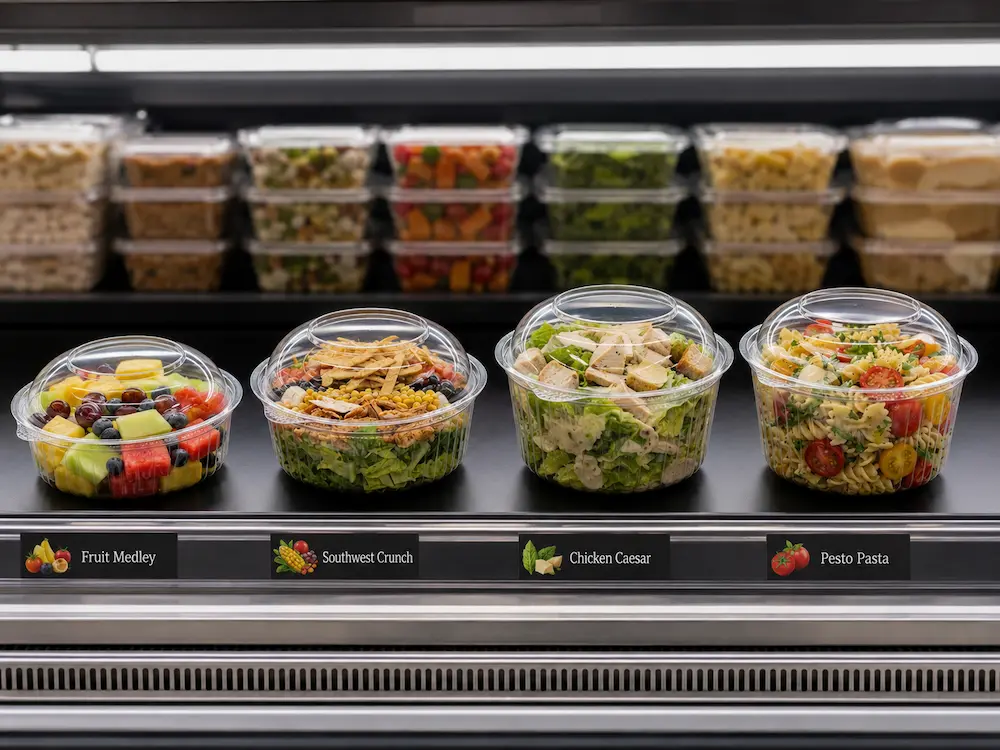
Round deli containers often rely on top labels, side labels, sleeves, or carton branding. The label should not block the food unnecessarily. Since clear packaging is chosen for visibility, branding should support presentation rather than hide the product. A small top label, wrap label, or side label can provide brand identity while keeping the food visible.
Buyers should also consider condensation, cold-case moisture, label adhesive, barcode scanning, and local recycling guidance. Labels that fail in cold storage create retail problems. Labels that cover too much of a clear PET container reduce the main benefit of the packaging. The strongest retail result comes from a balanced design: visible food, clear product information, neat branding, and reliable scanning.
Quality Testing Before Bulk Purchasing
A sample should be tested like a real product, not reviewed only as an empty package. Fill the container with the actual food. Apply the lid repeatedly. Stack filled samples. Place them in a refrigerator. Move them through a delivery-style handling test. Check whether the lid lifts, the rim deforms, the base bends, or the food presentation changes after storage.
For chilled foods with moisture, sauces, fruit juice, or leafy greens, the test should include realistic storage time. A container that looks acceptable for ten minutes may behave differently after several hours in a cold case. Procurement teams should also test carton handling, because many packaging failures happen during warehouse movement rather than at the filling table.
How to Choose the Right Supplier for Round Deli Containers
The right supplier should understand both packaging and food applications. A catalog with many SKUs is useful, but application knowledge is more valuable. A strong supplier helps buyers compare material options, select the right capacity, match lids, evaluate carton packing, and prepare samples for testing.
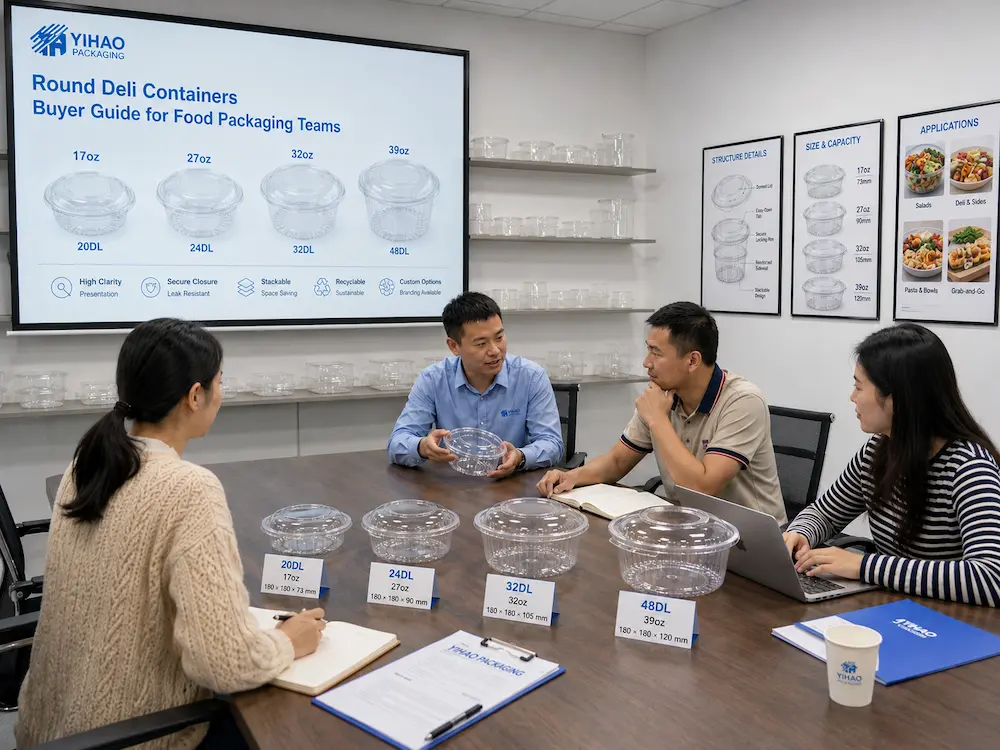
For wholesale buyers, communication speed and technical clarity matter. The supplier should be able to explain which products fit salads, fruit, deli sides, desserts, catering, and cold-case merchandising. They should also be clear about what the container is not designed for. This honesty prevents misuse and protects the buyer’s product line.
A good supplier relationship also supports future product development. Once a brand grows from one salad bowl to several sizes, or from fruit bowls to platters and snack packs, the supplier should help maintain a consistent packaging look across the line. This is how packaging becomes a system rather than a one-time purchase.
FAQ
1. What are round deli containers used for?
Round deli containers are used for salads, fresh-cut fruit, deli sides, chilled noodles, desserts, snack portions, prepared foods, and grab-and-go meals. They are especially useful when food visibility and top-view presentation are important.
2. Are round PET deli containers suitable for salads?
Yes. Round PET deli containers are suitable for chilled salads because PET provides clear product visibility and a clean retail appearance. Buyers should confirm the right size, lid fit, stacking performance, and storage conditions before placing a wholesale order.
3. What is the difference between PET round bowls and PP round containers?
PET round bowls are commonly selected for chilled food presentation and high clarity. PP round containers are usually considered when heat tolerance or microwave-oriented use is required. The correct choice depends on the food type, temperature, and serving method.
4. Can clear round food containers be used for fruit and cold deli foods?
Yes. Clear round food containers work well for fresh-cut fruit, berry mixes, cold deli foods, pasta salads, coleslaw, and chilled ready-to-eat portions. Food teams should test lid security and cold storage performance with the actual product before bulk purchasing.
5. How do I choose a wholesale supplier for round deli containers?
Choose a wholesale supplier that can provide material guidance, matching lids, sample testing, carton packing information, stable repeat supply, and manufacturing support. A reliable supplier should understand the food application, not only the container size.
References
- U.S. Food and Drug Administration, Guidance for Industry: Use of Recycled Plastics in Food Packaging, Chemistry Considerations.
- U.S. Food and Drug Administration, Recycled Plastics in Food Packaging.
- European Food Safety Authority, Recycled Plastic Materials and Articles Intended for Food Contact.
- European Food Safety Authority, Scientific Guidance on Post-Consumer Mechanical PET Recycling Processes Intended for Food Contact Materials.
- Association of Plastic Recyclers, APR Design Guide for Plastics Recyclability.
- Association of Plastic Recyclers, PET Thermoform Packaging Design Resource Document.
- International Organization for Standardization, Food Packaging and Food Contact Material Quality Management References.
- ASTM International, Standard Test Methods and Material Guidance Relevant to PET Packaging Evaluation.
Deep Dive Insight
How should buyers think beyond container size? The strongest purchasing decisions come from matching round deli containers to real operating conditions. A container that looks clear and attractive when empty still needs to perform after filling, sealing, stacking, refrigeration, delivery handling, and retail display.
Why does supplier capability matter? In wholesale food packaging, consistency is often more important than a single sample. Buyers should evaluate whether the manufacturer can maintain stable material clarity, rim strength, lid fit, carton packing, and repeat production quality across long-term orders.
What is the practical takeaway? For salads, fruit bowls, deli foods, chilled noodles, desserts, and ready-to-eat meals, round PET deli containers work best when they are selected as part of a packaging system: bowl, lid, label, carton, storage method, transport route, and supplier support should all be reviewed together.
Final Note / Practical Takeaway
© YIHAO Packaging. All rights reserved. All articles, product images, packaging designs, technical specifications, and website materials are protected by copyright. Unauthorized copying, reproduction, redistribution, modification, or commercial use is strictly prohibited without prior written permission.