Restaurants do not choose food containers only by price. A container affects delivery performance, microwave reheating, portion control, customer perception, staff speed, leakage complaints, storage space, and repeat ordering stability. For a restaurant chain, cafe, deli counter, meal prep brand, or foodservice distributor, choosing the wrong packaging often creates more cost than the few cents saved on each unit.
YIHAO works with food packaging buyers who need practical, repeatable packaging systems for takeaway meals, hot food, chilled food, deli portions, salads, snacks, and retail display. This guide answers the most common questions buyers ask before ordering restaurant food containers, including material selection, size logic, microwave use, hot food compatibility, PP packaging, wholesale purchasing, supplier comparison, and sample testing.
The key point is direct: restaurants need packaging that matches the actual food, not just the menu category. A noodle dish, rice bowl, cold salad, grilled protein meal, soup side, bakery dessert, and fruit portion do not need the same container. A good packaging decision starts with the food’s temperature, oil level, moisture, weight, sauce behavior, eating method, delivery route, and reheating expectation.
What Are Restaurant Food Containers?
Restaurant food containers are disposable or reusable-style packaging formats used to hold prepared food for takeaway, delivery, catering, grab-and-go display, meal prep, deli service, and foodservice distribution. They include PP takeout boxes, PET deli containers, clear salad bowls, hinged containers, separate-lid containers, compartment trays, tamper-evident containers, paper bowls, and hybrid paper-plastic packaging.
For restaurants, the container must support three basic goals:
- Protect the food during filling, closing, stacking, delivery, and customer handling.
- Present the food in a clean, reliable, and commercially appealing way.
- Match the food’s serving temperature, reheating requirement, portion size, and sales channel.
For buyers, the best choice is rarely a single container used for everything. A smarter packaging system usually includes one or two hot food formats, one chilled display format, one salad or deli format, and one backup size for larger portions or family packs. This keeps the SKU range manageable while covering the foods that actually move through the business.
Which Materials Are Commonly Used for Restaurant Food Containers?
The most common materials include PP, PET, rPET, paperboard, coated paper, molded fiber, and aluminum. Each material has different strengths. Buyers should avoid treating all food packaging as interchangeable.
PP for Hot Food and Microwaveable Takeaway Boxes
PP is widely used for microwave safe takeout containers, prepared meal containers, deli hot food packs, and microwaveable takeaway boxes. It is generally preferred when the food may be reheated by the customer, especially for rice meals, pasta, noodles, cooked vegetables, deli dishes, curries, and prepared meals.
For buyers, PP is usually the first material to review when the product is sold as hot takeaway or meal prep. However, the word “microwaveable” must be confirmed through the supplier’s intended-use information. A container should not be marketed as microwave safe unless the material, lid, structure, and intended heating conditions support that claim.
PET and rPET for Cold Food, Deli, and Display Packaging
PET and rPET are commonly used for clear chilled food packaging because they provide strong visibility. PET is a good fit for salads, fruit portions, deli sides, cold noodles, desserts, bakery items, and grab-and-go display foods. When buyers need a clear container that presents freshness on a refrigerated shelf, PET hinged containers and clear bowls are often more visually effective than opaque hot food boxes.
PET should not be treated as a default microwave material. For most restaurant buyers, PET works best for chilled, cold, or room-temperature display applications, while PP works better for hot food and reheating scenarios.
Paper and Fiber for Dry, Light, or Brand-Focused Uses
Paperboard and molded fiber containers are often used for dry foods, bakery items, fries, burgers, wraps, snacks, and some prepared meals. They can support a natural or kraft-style brand image, but they need careful review for grease resistance, moisture resistance, sauce performance, lid fit, and transit strength.
Paper packaging is not automatically better for every food. A saucy, oily, heavy, or wet dish may need coating, lining, or a different structure. Buyers should test paper formats with the actual food before moving to bulk orders.
Aluminum for Heat Retention and Oven-Related Uses
Aluminum containers are used for catering, baked dishes, heat-retention needs, and some oven-related applications. They are not transparent and do not support premium visual display in the same way as clear plastic containers, but they are practical for certain hot food and catering scenarios.
Restaurant Food Container Material Comparison
Material selection should begin with the food’s temperature, oil level, moisture, visibility requirement, and reheating expectation. The table below gives buyers a practical comparison before choosing restaurant food containers for daily operation or wholesale ordering.
| Material | Best Uses | Buyer Notes |
|---|---|---|
| PP | Hot meals, microwaveable takeaway boxes, prepared meals, deli dishes | Best reviewed first when microwave reheating or hot filling is required. |
| PET / rPET | Cold salads, fruit, deli foods, desserts, chilled display | Strong clarity and shelf presentation, but not the default choice for microwave use. |
| Paperboard | Dry foods, bakery, snacks, wraps, light meals | Needs grease and moisture testing for saucy or oily food. |
| Molded Fiber | Natural-look takeaway packaging and some dry food applications | Structure, lid fit, and moisture resistance should be tested carefully. |
| Aluminum | Catering, baked dishes, heat-retention meals | Useful for certain hot food formats, but not suitable for clear retail display. |
Why PP Takeout Packaging Is Often Used for Restaurant Hot Food
PP takeout packaging is often selected for restaurant hot food because it supports many prepared meal, deli, rice, noodle, and takeaway applications where heat resistance and microwave reheating are important. For foodservice buyers, PP containers help create a practical packaging system for hot meals that may be packed warm, transported, stored, and reheated by customers.
PP is especially useful when restaurants sell food that contains sauce, oil, rice, pasta, cooked vegetables, meat portions, or mixed ready meals. These foods usually require a container that can handle warm filling, short-term holding, delivery movement, and customer reheating expectations.
However, buyers should still confirm the intended use with the supplier. The base, lid, filling temperature, reheating method, and food type should all be reviewed before using microwave-related claims. A professional supplier should help buyers separate true microwave safe takeout containers from general takeaway packaging, cold food containers, and display-only containers.
Which Material Is Best for Hot Food Containers?
For many restaurants, hot food containers should be PP when the meal may be reheated or packed warm. PP takeout packaging supports a cleaner hot food system for rice bowls, noodles, cooked deli items, hot sides, and prepared meals. It also helps restaurants avoid the mistake of using clear cold-food packaging for foods that need heat tolerance.
The best hot food container is not only about material. Buyers should also check:
- Whether the container stays stable when filled with hot food.
- Whether the lid closes securely after steam exposure.
- Whether the structure resists bending during delivery.
- Whether the shape fits bags, shelves, and staff workflow.
- Whether the customer can open the container without spilling sauce.
- Whether the supplier can provide consistent repeat production.
Steam management matters. A container that is too tight for very hot food may trap moisture and affect food texture. A lid that is too loose may leak during delivery. Restaurants should test filling temperature, closing time, delivery time, and reheating behavior before confirming a large wholesale order.
Are All Takeout Food Containers Microwave Safe?
No. Not all large PP takeout containers are microwave safe. Some containers are designed for cold food, display, storage, or transport only. Others are designed for hot filling but not necessarily microwave reheating. Buyers should not assume that a container is microwave safe because it is plastic, sturdy, or commonly used for takeaway.
For microwave use, buyers should confirm:
- Material type, especially whether the container is PP or another suitable material.
- Whether the lid is also suitable for microwave conditions.
- Whether the container is intended for reheating, not only hot filling.
- Whether the supplier provides food-contact and intended-use information.
- Whether the container should be vented before reheating.
- Whether oily, sugary, or dense foods require special testing.
Restaurant buyers should write product descriptions carefully. “Microwave safe” is a functional claim, not a decorative marketing phrase. A professional supplier should help buyers separate microwaveable containers from cold-food PET containers, display containers, and general takeaway boxes.
What Sizes Do Restaurant Food Containers Usually Need?
Restaurant packaging size depends on portion weight, food shape, sauce volume, toppings, side dishes, and customer expectations. A container that looks correct when empty may become too small once rice, protein, sauce, and garnish are added. A container that is too large makes the portion look weak and increases carton storage space.
Common restaurant food container size logic includes:
| Use Scenario | Common Size Logic | Best-Fit Packaging Direction |
|---|---|---|
| Small sides | Small portions, sauces, snacks, deli sides | Small PP or PET containers with secure lids |
| Single meals | Rice bowls, noodles, pasta, cooked dishes | Medium PP takeout containers or prepared meal boxes |
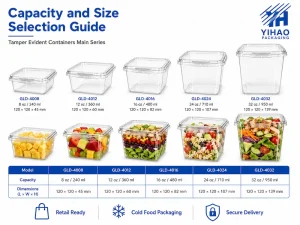
| Salads and cold meals | Volume matters more than weight | Clear bowls, square PET containers, or hinged deli containers |
| Family portions | Larger shared meals and catering sides | Large PP containers, large bowls, or trays with lids |
| Separated meals | Food items must not mix during transit | Compartment containers or divided trays |
For a restaurant chain, the best size system usually starts with three core formats: a small side container, a main meal container, and a larger meal or sharing format. After that, buyers can add specialized containers for salads, desserts, cold display, or catering.
How Should Buyers Choose Between Hinged Containers and Separate-Lid Containers?
Hinged containers and separate-lid containers solve different operational problems.
Hinged containers are convenient because the lid is attached. They reduce lid-matching mistakes and speed up packing during busy service hours. They work especially well for cold deli foods, sandwiches, salads, bakery items, fruit portions, and grab-and-go products.
Separate-lid containers offer more flexibility for hot foods, meal prep, deli counters, and prepared meals. They allow buyers to match different base depths and lid styles, and they often support a cleaner stacking system for wholesale storage. For hot foods, PP takeout packaging with a separate lid is often more practical than a hinged structure.
The right choice depends on staff workflow. If staff often grab the wrong lid, a hinged format may reduce mistakes. If the menu needs multiple depths or hot food reheating, separate-lid systems may give better flexibility.
What Restaurant Foods Need Compartment Containers?
Compartment containers are useful when foods must stay separated for texture, portion control, sauce control, or visual organization. Restaurants should use divided containers when mixing would damage the meal experience.
Common examples include:
- Rice with protein and vegetables.
- Meal prep sets with controlled portions.
- Snack packs with fruit, nuts, and dips.
- Breakfast sets with bakery items and sides.
- Cold deli combinations with sauces or toppings.
- Kids’ meals and airline-style meal formats.
Compartment count should be practical. Two compartments are enough for many meals. Three compartments support meal prep and balanced dishes. Four or more compartments are useful for snack kits, sample packs, or retail sets, but they may reduce space for each item. Buyers should test real food placement instead of choosing a divided container only because it looks organized when empty.
What Packaging Works Best for Salads, Cold Deli Foods, and Grab-and-Go Meals?
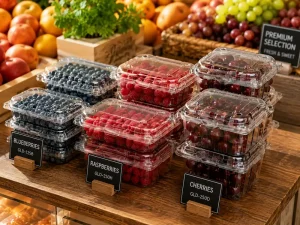
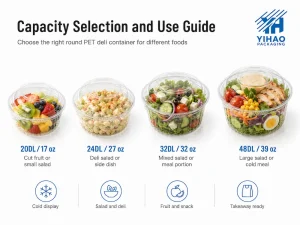
Cold food needs strong visibility, secure closure, and enough headspace to protect toppings. For salads, fruit, cold pasta, chilled noodles, and deli sides, clear PET or rPET packaging is often the strongest presentation choice.
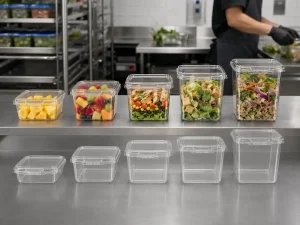
Buyers can use deli and salad containers for chilled meals that depend on visual freshness. For higher-volume salads and fruit mixes, clear salad bowls give the customer a direct view of color, portion, and ingredient layout. For compact deli sides, square deli containers may improve shelf use and carton efficiency.
The key checks for chilled packaging are clarity, lid fit, stacking performance, condensation appearance, label space, and how the food looks under refrigerated lighting. A clear container that becomes cloudy, warped, or hard to close will weaken the retail display even if the material looks good in a sample photo.
What Packaging Works Best for Delivery Restaurants?
Delivery packaging must survive motion. A container that works for counter pickup may fail in a delivery bag. For delivery restaurants, buyers should test the entire handling route, not only the container itself.
Important delivery checks include:
- Does the lid stay closed after movement?
- Does sauce collect near the seal area?
- Can the container stack without crushing lower meals?
- Does steam soften the lid or affect the food texture?
- Does the bag fit the container shape cleanly?
- Can staff close the container quickly during peak hours?
- Does the customer receive the food in a clean, stable condition?
Restaurants selling soup-heavy, sauce-heavy, or oily meals should not judge packaging only by dry sample testing. The test should include real food, real filling weight, real sauce level, and realistic delivery time.
When Should Restaurants Use Tamper-Evident Containers?
Tamper-evident packaging helps food brands, supermarkets, delivery operators, and grab-and-go retailers show whether a package has been opened after sealing. It is especially valuable for cold shelves, prepared meals, refrigerated foods, high-trust retail programs, and delivery channels where the customer does not watch the food being packed.
Restaurants do not need tamper-evident structures for every menu item. They should consider tamper evident containers when food safety perception, retail trust, or sealed handling matters more than the lowest packaging cost.
Good use cases include:
- Grab-and-go salads and deli meals.
- Cold-case snacks and prepared foods.
- Delivery meals that need a stronger trust signal.
- Retail food programs in supermarkets and convenience stores.
- Foodservice products handled by multiple staff or delivery partners.
What Information Should Buyers Prepare Before Requesting a Quote?
Before asking for a wholesale quote, buyers should prepare the food type, target portion weight, serving temperature, microwave requirement, lid style, packaging material preference, estimated order quantity, and destination market. This helps the supplier recommend suitable restaurant food containers instead of sending a random container list.
| Buyer Information | Why It Matters |
|---|---|
| Food type | Determines whether PP, PET, paper, or tamper-evident packaging is more suitable. |
| Hot, cold, or microwave use | Helps separate microwave safe takeout containers from cold display containers. |
| Portion weight | Prevents choosing a container that looks large but fails after filling. |
| Lid style | Affects leakage control, stacking, staff speed, and customer opening experience. |
| Order quantity | Helps the manufacturer suggest stock packaging, wholesale packaging, or custom development. |
| Destination market | Helps confirm documentation, labeling expectations, and food-contact requirements. |
What Should Buyers Ask Before Ordering Restaurant Food Containers Wholesale?
Before requesting a quote, buyers should prepare more than a product name. A professional supplier can give better recommendations when the buyer provides the food type, fill weight, serving temperature, reheating need, lid preference, target market, label plan, carton storage limits, and order stage.
Useful questions include:
- What foods will go into the container?
- Will the food be packed hot, cold, or at room temperature?
- Will the customer reheat the food in the container?
- Is clear display important?
- Does the container need one compartment or multiple compartments?
- Will the packaging be used for dine-out pickup, delivery, retail display, or catering?
- Does the buyer need stock packaging, private label packaging, or custom development?
- What documentation is required for the target market?
- How many SKUs can the buyer manage without creating inventory confusion?
- What sample tests must be completed before the bulk order?
For wholesale sourcing, buyers should also review carton quantity, pallet planning, storage conditions, repeat order stability, lid compatibility, and packaging consistency across batches. A food packaging manufacturer should help buyers reduce SKU confusion instead of pushing unrelated products into the order.
Restaurant Food Containers Ordering Questions for Wholesale Buyers
| Ordering Question | Practical Answer |
|---|---|
| Should I order stock containers or custom containers? | Stock containers are better for fast testing and first orders. Custom containers are better after the buyer confirms size, material, lid structure, and stable demand. |
| How should I compare suppliers? | Compare material knowledge, sample support, lid compatibility, repeat order stability, carton planning, and communication speed, not only unit price. |
| Should I test one size or several sizes? | Test several practical sizes with real menu items, then reduce the final order to the formats that match daily operations. |
| When should I move to custom packaging? | Move to custom packaging after the buyer confirms stable demand, correct container size, suitable material, and repeat ordering volume. |
| What should I confirm before bulk ordering? | Confirm material, size, lid fit, sample test results, carton packing, documentation needs, and expected repeat order schedule. |
How Many Container SKUs Does a Restaurant Actually Need?
Most restaurants do not need too many packaging SKUs at the beginning. Too many sizes create purchasing confusion, storage problems, lid mismatch, and staff mistakes. A cleaner restaurant packaging system usually starts with a controlled range.
A practical starter system includes:
- One small side container.
- One main hot food container.
- One larger meal or sharing container.
- One clear cold food or salad container.
- One specialty format for divided meals, desserts, or tamper-evident needs.
Restaurants can expand after reviewing order volume. If one container is used every day and another sits in storage, the daily-use format deserves more purchasing attention. Packaging should follow menu reality, not catalog excitement.
What Is the Difference Between a Manufacturer, Wholesale Supplier, and Distributor?
A manufacturer makes or directly controls production. A wholesale supplier sells packaging in bulk and may source from one or more factories. A distributor focuses on local or regional availability, inventory movement, and customer service.
For restaurant food containers, the best partner depends on the buyer’s goal. A small restaurant may need fast local supply. A growing chain may need stable wholesale ordering. A distributor may need a broader product matrix. A brand owner may need custom packaging, consistent structure, and long-term manufacturer support.
Buyers should ask whether the supplier understands material use, food type matching, lid compatibility, carton planning, sample testing, and repeat order stability. Price matters, but the wrong supplier creates hidden cost through wrong sizes, weak lids, unclear specifications, and slow replacement decisions.
How Should Buyers Test Samples Before Bulk Orders?
Sample testing should be practical and food-specific. Empty containers tell only part of the story. A real test should include filling, closing, stacking, bagging, transporting, reheating if applicable, and customer-style opening.
A strong sample test includes:
- Fill the container with the actual food and real portion weight.
- Close the lid under normal staff conditions.
- Stack filled containers for storage and delivery simulation.
- Place the package in the real takeaway bag.
- Test sauce movement and condensation.
- Check microwave behavior only when the container is intended for microwave use.
- Review customer opening experience.
- Confirm label placement, barcode space, and brand sticker fit.
- Compare carton storage efficiency.
- Document which size works best for each menu item.
For larger buyers, the sample stage should create a packaging matrix. The matrix should list each food item, target container, lid, material, portion range, temperature, and order priority. This prevents bulk orders from becoming a random collection of containers.
What Mistakes Should Restaurant Buyers Avoid?
Restaurant buyers often repeat the same packaging mistakes:
- Using one container for too many food types.
- Choosing clear PET containers for foods that need reheating.
- Buying too many sizes before testing real menu volume.
- Ignoring lid compatibility.
- Testing empty samples instead of filled samples.
- Choosing the cheapest packaging without reviewing leakage risk.
- Making microwave claims without intended-use confirmation.
- Forgetting label space, stacking, and carton storage.
- Ordering custom packaging before validating the basic structure.
- Working with a supplier that cannot support repeat orders consistently.
The biggest mistake is treating packaging as a commodity. Restaurant packaging is part of the food experience. It affects how the meal arrives, how it looks, how it reheats, how the customer opens it, and whether the buyer receives repeat complaints.
Restaurant Food Containers FAQ
1. What are the best restaurant food containers for hot meals?
The best containers for hot meals are usually PP containers designed for hot filling and, when confirmed, microwave reheating. Buyers should test real food weight, lid fit, steam behavior, sauce movement, and delivery handling before placing a wholesale order.
2. Are microwave safe takeout containers always made from PP?
Many microwave safe takeout containers are made from PP, but buyers should not rely only on material name. The container, lid, structure, and intended-use guidance must support microwave reheating. Supplier confirmation is essential before using microwave claims in product descriptions.
3. What is the difference between PET and PP takeout packaging?
PET is commonly used for clear cold food, chilled display, salads, fruit, bakery, and deli products. PP is more suitable for hot food and many microwaveable takeaway boxes. Restaurants often need both materials because cold display and hot meal delivery have different packaging requirements.
4. What sizes should restaurants order first?
Restaurants should usually start with a small side container, a main meal container, a larger meal container, and one clear cold food or salad container. After testing real menu volume, buyers can add compartment containers, tamper-evident containers, or custom packaging.
5. How do buyers choose between hinged and separate-lid containers?
Hinged containers reduce lid-matching mistakes and work well for cold display, deli foods, sandwiches, fruit, and bakery items. Separate-lid containers offer better flexibility for hot foods, prepared meals, and multiple depth options. The best choice depends on staff workflow and food type.
6. Can restaurants use PET containers for hot food?
PET containers are usually better for cold and chilled display applications. Restaurants should not use PET as the default choice for hot food or reheating unless the supplier clearly confirms the intended use. For hot takeaway and reheating, PP is usually the first material to review.
7. What should buyers ask a restaurant food container supplier?
Buyers should ask about material, food-contact suitability, intended use, microwave compatibility, lid fit, available sizes, carton planning, sample testing, repeat order stability, custom options, and documentation for the target market. These questions help avoid wrong-size and wrong-material orders.
8. When should restaurants use tamper-evident packaging?
Restaurants should use tamper-evident packaging when sealed trust matters, such as grab-and-go retail meals, cold shelf foods, delivery programs, and prepared foods handled by multiple parties. It is not required for every menu item, but it adds value where safety perception and sealed presentation are important.
References
- U.S. Food and Drug Administration, Packaging & Food Contact Substances.
- U.S. Food and Drug Administration, Understanding How FDA Regulates Substances that Come into Contact with Food.
- USDA Food Safety and Inspection Service, Safe Handling of Take-Out Foods.
- USDA Food Safety and Inspection Service, Leftovers and Food Safety.
- European Commission, Food Contact Materials.
- European Union, Regulation (EC) No 1935/2004 on materials and articles intended to come into contact with food.
- European Union, Commission Regulation (EU) No 10/2011 on plastic materials and articles intended to come into contact with food.
- YIHAO Packaging internal product and content planning resources for microwave safe containers, deli containers, and wholesale food packaging categories.
Deep-Dive Insights: How Professional Buyers Should Build a Restaurant Packaging System
How should restaurants think beyond a single container? A stronger packaging system separates hot food, cold display, delivery meals, side portions, and specialty items. This reduces leakage risk, wrong-lid mistakes, overbuying, and customer complaints.
Why does material matching matter? PP, PET, paper, and tamper-evident structures solve different problems. PP supports many hot food and reheating needs. PET supports clear chilled presentation. Paper supports dry and brand-focused applications. Tamper-evident packaging supports trust and sealed handling.
What should buyers test before ordering wholesale? Buyers should test real menu items, real fill weight, real sauce level, real delivery bags, real label placement, and real staff handling. Empty sample review is not enough for restaurant packaging decisions.
Which option is usually safest for first orders? A controlled packaging matrix is safer than a large mixed order. Start with the daily-use food types, confirm sizes through filled samples, then expand into custom branding or specialized formats after the core containers are proven.
What is the final sourcing consideration? A supplier should help buyers reduce packaging confusion. The right partner explains material use, lid fit, container size, sample testing, carton planning, and repeat order consistency instead of only quoting the lowest unit price.
Final Note / Practical Takeaway
For restaurant chains, foodservice distributors, meal prep brands, and takeaway packaging buyers, the next step is to prepare the food type, portion weight, target material, microwave requirement, and estimated order quantity before contacting a restaurant food container manufacturer or supplier for sample recommendations.
© 2026 YIHAO Packaging. All rights reserved. All articles, product images, packaging designs, technical specifications, and website materials are protected by copyright. Unauthorized copying, reproduction, redistribution, modification, or commercial use is strictly prohibited without prior written permission.