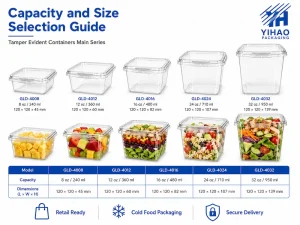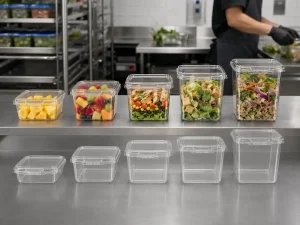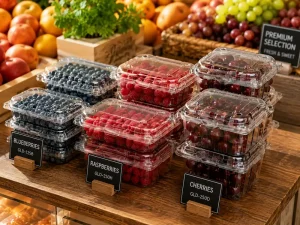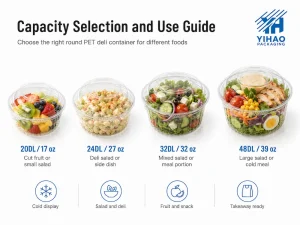

YIHAO develops food packaging solutions for buyers who need reliable packaging for prepared meals, deli takeaway, supermarket ready meals, and foodservice operations. This FAQ explains how food packaging teams should evaluate reheatable food containers, including microwave safe meal prep containers, meal prep containers, microwave meal boxes, compartment meal prep containers, and PP meal prep packaging.
For B2B buyers, reheatable packaging is not only a plastic box. It is part of a complete meal service system. The container must support filling, sealing, storage, transport, reheating, opening, and eating. The wrong container may create lid failure, deformation, steam pressure issues, leakage complaints, poor shelf presentation, or repeat-order problems.
This guide answers the most common ordering questions from supermarkets, foodservice brands, restaurants, cloud kitchens, distributors, prepared meal producers, and wholesale packaging buyers.
1. What Are Reheatable Food Containers?
Reheatable food containers are food packaging containers designed for meals that may be reheated before eating. They are commonly used for rice meals, pasta, noodles, deli dishes, hot takeaway foods, chilled prepared foods, supermarket ready meals, and meal prep programs.
The word “reheatable” should not be treated casually. A container should be selected according to material, wall strength, lid structure, intended food type, microwave-use instructions, and supplier documentation. Buyers often start with a dedicated microwave safe containers category because general cold food packaging may not be suitable for reheating applications.
2. Reheatable, Microwave Safe, and Oven Safe: What Is the Difference?
Many buyers confuse reheatable containers, microwave safe containers, hot food containers, and oven-safe packaging. These terms are related, but they do not mean the same thing. Understanding the difference helps buyers avoid wrong material selection and customer-use problems.
| Packaging Term | What It Usually Means | Common Material Direction | Buyer Caution |
|---|---|---|---|
| Reheatable food containers | Containers used for meals that may be reheated before eating | Often PP for prepared meal applications | Confirm intended reheating conditions and lid handling guidance |
| Microwave safe meal prep containers | Containers designed for microwave reheating under specific use conditions | Commonly PP when properly designed and labeled | Not all meal prep containers are microwave safe |
| Hot food containers | Containers used to hold warm or hot food after filling | PP, paper-based structures, or other application-specific materials | Holding hot food does not automatically mean microwave safe |
| Oven-safe containers | Packaging intended for oven heating | Material-specific, often not standard plastic meal boxes | Do not use regular plastic containers in ovens unless clearly designed for that use |
| Cold meal containers | Containers for chilled display, salads, fruit, deli foods, and cold meals | PET, rPET, PP, or other materials depending on use | Cold display suitability does not prove reheating suitability |
3. Which Material Is Commonly Used for Reheatable Meal Packaging?
PP, or polypropylene, is commonly used for reheatable prepared meal packaging because it offers practical heat resistance, toughness, and foodservice durability when the container is designed for the intended application. However, buyers should not choose only by material name. Structure, lid fit, wall thickness, food-contact suitability, and microwave-use instructions are equally important.
For cold display foods, clear PET or rPET containers may be strong options because they provide excellent visibility. For reheatable meals, visual clarity alone is not enough. Heat behavior, deformation resistance, lid performance, stacking strength, and consumer reheating habits become more important.
| Material | Common Use | Buyer Advantage | Main Caution |
|---|---|---|---|
| PP | Reheatable meals, meal prep, hot takeaway, deli foods | Practical heat resistance and foodservice durability | Must confirm intended microwave-use conditions |
| PET / rPET | Cold salads, fruit, chilled deli, retail display packaging | High clarity and strong product visibility | Not the default choice for reheatable meal applications |
| Paper-based packaging with lining | Selected takeaway meals and custom food projects | Branding surface and alternative sustainability positioning | Grease, moisture, lid, and heat compatibility require testing |
| Aluminum | Oven-style ready meals and catering applications | Strong heat performance in suitable heating systems | Not suitable for standard microwave use unless specifically designed and instructed |
4. Are All Meal Prep Containers Microwave Safe?
No. Not all meal prep containers are microwave safe. Some containers are designed only for chilled storage, cold display, delivery, or short-term takeaway. Others are intended for reheating under specific conditions. This difference matters because poor material selection may cause deformation, leakage, lid failure, steam pressure problems, or poor customer experience.
When evaluating microwave safe meal prep containers, buyers should ask the supplier to confirm intended use, material, food-contact suitability, lid handling instructions, and microwave-use guidance. A practical wholesale review should also include sample testing with actual food, real portion weight, real sauces, and the actual reheating process used by the end customer.
5. What Food Applications Fit Reheatable Food Containers?
Reheatable food containers fit prepared food programs where meals need convenient storage, transport, and reheating. Common applications include supermarket ready meals, restaurant takeaway, deli counter dishes, airline-style meal trays, office lunch programs, school meal packs, catering portions, and chilled-to-hot meal prep services.
For food brands and distributors, the main value is operational consistency. A suitable container helps control meal portioning, reduce SKU confusion, organize lid matching, simplify carton planning, and support repeat ordering. Buyers can start from a PP prepared meal container when they need a practical format for food counters, takeaway service, and prepared meal packaging.
6. What Sizes Should Buyers Consider?
Size selection should follow real meal structure, not only listed capacity. A rice meal, pasta portion, noodle dish, curry meal, deli side, protein bowl, and mixed vegetable meal may all require different depth, base area, lid clearance, and stacking strength.
A shallow box may look clean on the shelf, but it may not hold saucy meals well. A deep box may support larger portions, but it may reduce display efficiency if the carton and shelf plan are not aligned. Buyers should test container size with real meals before confirming bulk orders.
| Use Scenario | Suggested Container Logic | Buyer Checkpoint |
|---|---|---|
| Single-portion lunch | Medium-capacity PP meal box | Check rice, protein, sauce, and lid clearance together |
| Large takeaway meal | Large PP container with stable lid fit | Test stacking, delivery handling, and steam release |
| Deli counter food | Separate-lid PP deli container | Check counter display, filling speed, sealing, and reheating use |
| Meal prep program | Standardized PP meal prep container family | Reduce unnecessary sizes and simplify repeat purchasing |
| Mixed meals | Compartment meal prep container | Keep wet, dry, protein, grain, and side dishes separated when needed |
7. When Should Buyers Choose Compartment Meal Prep Containers?
Compartment meal prep containers are useful when meals need separation. Rice and curry, pasta and vegetables, salad and protein, meat and side dishes, or snack-style meal combinations may benefit from divided packaging. The purpose is not decoration. Compartments help control portions, reduce food mixing, improve presentation, and create a more organized eating experience.
Buyers should confirm compartment depth, corner shape, sauce behavior, fork access, lid fit, and stacking. If the meal includes oily sauces, hot liquids, or heavy protein portions, a divided box must be tested carefully. A compartment design may look strong when empty but perform differently with actual meals.
8. What Is the Difference Between Reheatable Containers and Regular Takeaway Boxes?
Regular takeaway boxes may focus on short-term holding and transport. Reheatable containers must handle a more demanding use cycle: filling, sealing, chilled storage or holding, delivery, opening or venting, reheating, and eating.
This longer use path creates more pressure on material selection, lid function, base stability, and customer instructions. For larger takeaway formats, a large PP deli food container gives buyers a more relevant direction than general cold display packaging when the application involves prepared meals and possible reheating.
9. Should the Lid Stay On During Microwave Reheating?
The answer depends on the container and lid design. Some lids may need to be loosened, vented, partially opened, or removed before microwave reheating. Buyers should never assume that the lid can stay fully sealed in the microwave unless the supplier clearly confirms the intended use and instructions.
This point is important because steam pressure affects lid performance and user safety. A tight lid may be useful during transport, but reheating creates steam. Wholesale buyers should ask the supplier for clear microwave-use guidance and test the full container-and-lid system with real food before publishing customer instructions.
10. What Should Buyers Test Before Bulk Ordering?
Sample testing is the most important step before ordering reheatable food containers in volume. Buyers should test the container with actual food, actual filling weight, actual sauce type, actual storage conditions, and the actual reheating method. A clean empty sample does not prove performance under real operation.
| Test Item | Why It Matters | Recommended Buyer Action |
|---|---|---|
| Food weight | Heavy meals stress the base and lid | Fill samples to real serving weight |
| Oil and sauce | Hot oily food is more demanding than dry food | Test with actual sauces, proteins, and meal combinations |
| Steam release | Steam affects lid pressure and user safety | Follow intended venting or lid handling guidance |
| Stacking | Bulk meals need stable storage and delivery | Test filled containers in realistic stacks |
| Transport | Takeaway meals face shaking and compression | Simulate delivery bags, cartons, and counter handling |
| Customer use | End users may reheat differently | Add clear use instructions where needed |
11. Can Reheatable Food Containers Go in the Freezer?
Some reheatable containers may support chilled or frozen storage, but buyers should not assume freezer suitability without checking the material, structure, lid fit, and supplier instructions. Freezing can affect impact resistance, lid fit, stacking behavior, and customer handling.
If the product moves from freezer or chilled storage to microwave reheating, buyers should test the full process. The container should be reviewed after cold storage, during handling, after reheating, and during customer opening. This is especially important for meal prep programs, supermarket ready meals, and distributor-supplied foodservice packs.
12. Should Buyers Use One Size or Build a Container Family?
For small food programs, one or two sizes may be enough. For supermarkets, distributors, prepared meal factories, and foodservice brands, a container family usually works better. A family approach helps buyers cover different meal formats while keeping lid systems, cartons, and inventory easier to manage.
A practical packaging set may include one standard meal box, one larger deli container, one compartment format, and one hot food option. Buyers sourcing PP prepared food containers can build around both chilled deli use and hot takeaway meal applications without overcomplicating the SKU matrix.
13. How Do Reheatable Food Containers Support Supermarket Ready Meals?
Supermarket ready meals need packaging that performs across production, display, purchase, transport, and home reheating. The pack must protect the meal, present it clearly enough for selection, remain practical for staff, and stay convenient for consumers.
A pasta meal may need lid clearance. A rice meal may need a firm base. A hot deli item may need stronger handling performance. A meal kit may need compartments. A saucy meal may need a secure lid system. Matching container shape to food structure improves both operational control and customer satisfaction.
14. How Do Reheatable Containers Support Restaurants and Takeaway Brands?
Restaurants and takeaway brands need speed, reliability, and a low complaint rate. Packaging must be easy for staff to fill, close, stack, hand over, and explain to customers. If a container deforms, leaks, or fails during reheating, the issue becomes a brand problem, not only a packaging problem.
For hot takeaway and deli meal programs, a PP hot food container is a stronger sourcing direction than a container designed only for cold display. Buyers should still test lid fit, reheating behavior, and transport handling before final approval.
15. How Should Buyers Choose a Reheatable Food Containers Manufacturer or Wholesale Supplier?
Choosing the right manufacturer, wholesale partner, or packaging supplier is as important as choosing the container itself. A low unit price does not help if the container is not suitable for the meal, the lid does not fit consistently, or the supplier cannot support repeat orders.
A reliable food packaging manufacturer should help buyers compare materials, review size options, confirm lid matching, arrange sample testing, discuss carton planning, and support wholesale ordering. The supplier should understand prepared meal applications instead of treating every plastic box as the same product.
| Supplier Checkpoint | Why It Matters | Buyer Question |
|---|---|---|
| Application understanding | Prepared meals have different requirements from cold salads or fruit packaging | Have you supplied similar reheatable meal packaging before? |
| Material and lid matching | The base and lid must work as one system | Which lid matches this container and how should it be used during reheating? |
| Sample support | Testing reduces risk before bulk orders | Can we test samples with our actual food and filling weight? |
| Wholesale stability | Repeat orders need consistent supply | Can this size and lid system support ongoing wholesale demand? |
| Carton and logistics planning | Packaging efficiency affects total cost | How are the containers packed, stacked, and protected during shipment? |
| Custom support | Brands may need private label or project-specific solutions | Can you support custom packaging discussions when needed? |
16. What Ordering Mistakes Should Buyers Avoid?
The first mistake is choosing only by unit price. A low price means little if the container fails with hot food, does not fit the lid properly, or creates complaints after reheating. The second mistake is choosing by empty appearance. A container that looks strong when empty may behave differently when filled with rice, sauce, meat, vegetables, and steam.
The third mistake is ordering too many unrelated sizes. Distributors and foodservice buyers usually perform better with a focused packaging set that covers the most common meal formats. The fourth mistake is ignoring customer instructions. If the lid must be vented, loosened, or removed, that guidance should be clear. The fifth mistake is skipping delivery and stacking tests.
17. How Should Buyers Compare Wholesale Reheatable Food Containers?
Wholesale comparison should include material, structure, lid fit, portion logic, stackability, carton planning, supplier reliability, and sample support. The best container is not always the largest or thickest one. It is the one that matches the food, reheating process, staff workflow, and sales channel with the least operational friction.
Buyers who need deli-style ready meals can consider a PP deli food container for cold food and retail takeaway packaging, then compare it with hot-food and prepared-meal options to build a more complete foodservice packaging line.
18. Are Reheatable Food Containers Suitable for Specialty Prepared Foods?
Some prepared foods have special packaging demands. Fresh meat rolls, oily side dishes, sauced vegetables, chilled prepared foods, and hot takeaway meals may require different depths, lids, and base shapes. Buyers should not force one universal box into every application.
For buyers handling meat rolls, deli selections, or takeaway foods, a PP food container with separate lid may provide a more relevant starting point than generic meal prep packaging. The final selection should still depend on product weight, sauce level, storage method, reheating instructions, and customer handling.
19. Buyer Checklist for Reheatable Food Containers
- Confirm whether the container is intended for reheatable food applications.
- Check whether PP, PET, paper-based, or another material best fits the food use.
- Do not treat reheatable, microwave safe, hot food, and oven safe as the same thing.
- Test the base and lid together, not separately.
- Use actual food, sauce, weight, storage, and reheating conditions during sample review.
- Check compartment layout if the meal includes separate wet and dry components.
- Compare stacking performance for filled containers.
- Review carton planning and warehouse efficiency before bulk ordering.
- Ask for clear lid handling and microwave-use instructions.
- Choose fewer, better-matched SKUs instead of too many random sizes.
- Work with a supplier that understands prepared food packaging, not only generic plastic boxes.
FAQ: Reheatable Food Containers
1. What are reheatable food containers used for?
Reheatable food containers are used for prepared meals, takeaway foods, deli dishes, supermarket ready meals, meal prep programs, and foodservice packaging that may require reheating before eating.
2. Are PP containers better for microwave meal boxes?
PP is commonly selected for microwave meal boxes and reheatable meal packaging because it offers practical heat resistance when the container is designed, tested, and used according to its intended application.
3. Are all meal prep containers microwave safe?
No. Not all meal prep containers are microwave safe. Buyers should confirm material, intended use, microwave-use labeling, lid handling guidance, and sample performance before bulk ordering.
4. When should buyers choose compartment meal prep containers?
Compartment meal prep containers are useful when meals need separation between rice, protein, vegetables, sauces, snacks, or side dishes. They support portion control and better food presentation.
5. Should the lid stay on during microwave reheating?
The lid should be handled according to the supplier’s instructions. Some lids may need to be loosened, vented, partially opened, or removed before microwave reheating.
6. Can reheatable food containers go in the freezer?
Some reheatable containers may support chilled or frozen storage, but buyers should confirm freezer suitability with the supplier and test the container after cold storage, handling, and reheating.
7. What should wholesale buyers test before ordering reheatable containers?
Wholesale buyers should test actual food weight, sauce level, steam release, lid fit, stacking strength, transport handling, and reheating instructions before confirming reheatable food containers for bulk orders.
References
- U.S. Food and Drug Administration, Packaging & Food Contact Substances resources.
- U.S. Food and Drug Administration, Food Types and Conditions of Use for Food Contact Substances.
- USDA Food Safety and Inspection Service, Cooking Safely in the Microwave Oven.
- European Commission Directorate-General for Health and Food Safety, Food Contact Materials.
- Regulation (EC) No 1935/2004 on materials and articles intended to come into contact with food.
- Commission Regulation (EC) No 2023/2006 on good manufacturing practice for food contact materials.
- Commission Regulation (EU) No 10/2011 on plastic materials and articles intended to come into contact with food.
- Codex Alimentarius Commission, General Principles of Food Hygiene and HACCP system guidance.
Deep-Dive Insights: How Buyers Should Think About Reheatable Food Containers
Why PP is often selected for reheatable food containers
PP is commonly selected for reheatable food containers because many prepared meal programs need practical heat resistance, container strength, lid compatibility, and repeat-order stability. Buyers should still confirm intended use, lid handling, and sample performance before bulk purchasing.
How compartment meal prep containers help portion control
Compartment meal prep containers help separate rice, protein, vegetables, sauces, and side dishes. This supports portion consistency, cleaner presentation, and a better eating experience for meal prep brands, supermarkets, takeaway teams, and foodservice operations.
What wholesale buyers should test before bulk orders
Wholesale buyers should test actual food weight, sauce level, steam release, lid fit, filled stacking, delivery handling, cold storage, and microwave-use behavior. Empty sample checks are not enough for reheatable meal packaging decisions.
When a supplier becomes more valuable than a low unit price
A reliable manufacturer or wholesale supplier adds value by helping buyers choose suitable materials, match lids, review sizes, arrange samples, plan cartons, and reduce application risk. For prepared meal packaging, a slightly better container system often protects the buyer from higher complaint and replacement costs.
How buyers should compare reheatable, microwave safe, and oven safe packaging
Buyers should not use these terms interchangeably. Reheatable packaging may be suitable for certain reheating conditions, microwave safe containers must follow microwave-use guidance, and oven-safe packaging requires a different material and performance standard. Clear product-use instructions reduce risk for both the food brand and the final customer.
Final Note / Practical Takeaway
© 2026 YIHAO Packaging. All rights reserved. All articles, product images, packaging designs, technical specifications, and website materials are protected by copyright. Unauthorized copying, reproduction, redistribution, modification, or commercial use is strictly prohibited without prior written permission.