Prepared meals are no longer limited to classic takeaway trays. Supermarkets, convenience stores, delis, cafes, meal-prep brands, and foodservice distributors now sell chilled ready meals, hot deli sides, sauced proteins, pasta portions, rice bowls, cold salads, and grab-and-go food in multiple formats. That shift makes reheatable deli packaging a more serious procurement decision, not just a container choice.
For buyers, the key question is not simply “Which container looks good?” The better question is: “Will this package match how the food is displayed, transported, opened, reheated, and eaten?” A container that works well for chilled salad may not fit hot deli food. A clear PET tray that displays fresh food beautifully may not be suitable for microwave reheating. A paperboard box may look natural, but it may not deliver the same sealing, moisture control, or reheating performance for sauced meals.
YIHAO supports food packaging buyers with clear PET/RPET packaging, PP food containers, deli packaging, salad containers, and microwave-safe packaging options for different food programs. When buyers compare microwave safe deli containers, PET display containers, paper food boxes, aluminum trays, and bagasse packaging, the best result comes from matching material and structure to the food use case instead of choosing by price or appearance alone.
Buyer Quick Decision Table
For buyers who need a fast packaging direction, the table below gives a practical first-step comparison. It does not replace sample testing, but it helps food packaging teams separate reheatable meal packaging from cold display packaging before requesting samples.
| Buyer Scenario | Best Packaging Choice | Decision Reason |
|---|---|---|
| Ready-to-heat meals | PP reheatable deli packaging | Best fit when microwave-oriented reheating is part of the food program |
| Cold salads and chilled deli sides | Clear PET/RPET deli containers | Best fit when shelf visibility and freshness presentation matter most |
| Hot deli foods and takeaway sides | PP hot food containers | Best fit for prepared foods that need stronger hot food handling logic |
| Oven-style prepared meals | Aluminum trays | Best fit when oven heating is the main customer use case |
| Branding-focused takeaway | Paperboard food boxes | Best fit when printed branding and takeaway presentation are priorities |
| Eco-style takeaway meals | Bagasse or molded fiber containers | Best fit when natural material appearance is part of the brand position |
What Reheatable Deli Packaging Means for Food Packaging Buyers
Reheatable deli packaging usually refers to packaging designed for prepared foods that may be warmed or reheated before eating. In real procurement language, this often points to microwave safe deli containers, PP prepared meal boxes, PP deli trays, separate-lid containers, and hot food containers used for prepared meals, deli counters, takeaway meals, and chilled ready-to-heat items.
This category matters because reheating changes the packaging requirement. A package used only for cold display mainly needs clarity, stacking, lid fit, product visibility, and shelf presentation. A package used for reheating must also consider heat exposure, food moisture, steam release, lid behavior, container stability, and the instructions given to the end user.
In most foodservice and retail scenarios, buyers should treat reheating as a specific design requirement. If food may be heated by the store, delivery operator, or consumer, the packaging should be selected as a reheatable system from the start. This includes container body, lid, material, label placement, sleeve design, and consumer handling instructions.
Why Alternative Packaging Still Matters
Alternative packaging is not automatically weaker. PET deli containers, paperboard boxes, aluminum trays, and bagasse containers all serve valid roles. The problem starts when buyers use one packaging type across too many food scenarios without separating chilled display, hot holding, delivery, and reheating.
Clear PET packaging is excellent for cold shelf visibility, salad display, fruit, snacks, and chilled prepared foods. Paperboard packaging supports a natural look and branding space. Aluminum trays fit oven-style heating and strong heat resistance in certain foodservice programs. Bagasse works for some hot food and takeaway meals where molded fiber presentation is preferred. PP deli packaging is often chosen when reheating is part of the customer experience.
The smartest buyers do not ask which material is universally best. They ask which material matches a defined food journey: filled at production, stacked in storage, displayed in store, transported to the customer, reheated if needed, and eaten without packaging failure.
Comparison Table: Reheatable Deli Packaging vs Alternative Packaging
| Packaging Option | Microwave-Oriented Use | Best Use Case | Main Strength | Main Limitation | Buyer Decision Logic |
|---|---|---|---|---|---|
| PP reheatable deli packaging | Yes, when specified for intended use | Prepared meals, hot deli foods, takeaway meals, ready-to-heat foods | Practical choice for microwave-oriented food programs | Usually less crystal-clear than PET | Choose when reheating is part of the product promise |
| PET/RPET deli containers | Not the default direction | Cold salads, fruit, chilled noodles, deli sides, snacks | High clarity and strong retail display value | Not the default choice for reheating | Choose when cold visibility and shelf presentation matter most |
| Paperboard food boxes | Depends on lining, structure, and supplier specification | Dry foods, light meals, bakery, some takeaway programs | Branding space and natural visual style | Moisture, grease, and reheating performance depend on structure and lining | Choose for branding-led takeaway when heating needs are limited |
| Aluminum trays | Not for standard microwave use | Oven-style meals, catering, baked prepared foods | Heat resistance and strong foodservice familiarity | Not transparent and requires clear heating instructions | Choose for oven heating and catering-style prepared meals |
| Bagasse or molded fiber containers | Depends on product design and intended use | Takeaway meals, hot food, eco-positioned foodservice programs | Fiber-based appearance and takeaway-friendly format | Moisture resistance, lid fit, and shelf display need careful checking | Choose when natural material presentation is more important than clear display |
When Buyers Should Choose PP Reheatable Deli Packaging
PP deli packaging is usually the strongest choice when the food is expected to be reheated after purchase. This includes pasta meals, rice meals, meat dishes, hot deli sides, sauced vegetables, cooked grains, and ready-to-heat prepared foods. For buyers building a prepared food line, PP packaging gives a clearer procurement direction because the material choice supports the reheating use case from the beginning.
In deli and ready-meal programs, a PP prepared meal container works well when the food needs a separate lid, controlled portioning, and a practical structure for takeaway counters. This type of packaging is especially useful for prepared foods that move from back-of-house packing to retail display and then to consumer reheating.
For larger portions, buyers may prefer a large PP deli food container because family-style sides, larger deli meals, and higher-volume takeaway portions need stronger volume logic. A bigger container is not only about capacity. It also needs stable stacking, suitable lid fit, and enough headspace for sauced or mixed foods.
For hot deli counters, PP hot food containers are a more direct fit than standard cold display containers. Buyers handling hot deli foods should pay attention to lid design, steam behavior, stacking after filling, and how staff communicate reheating instructions to customers.
When Buyers Should Choose PET or RPET Deli Containers Instead
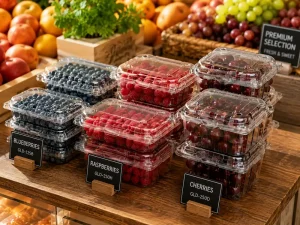
PET and RPET deli containers are not the same decision as reheatable deli packaging. They are usually stronger for chilled display, transparent food presentation, grab-and-go retail, salads, fruit, nuts, desserts, and cold prepared foods. When food visibility drives conversion, PET often performs better from a merchandising perspective.
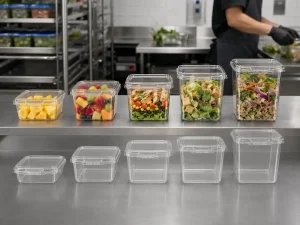
For cold shelves and deli display, prepared food containers made with clear PET/RPET help buyers show the freshness, color, and portion quality of the food. This matters for supermarkets, convenience stores, and cafes where customers make fast visual decisions. If the product is sold cold and eaten cold, PET/RPET can be the more attractive packaging direction.
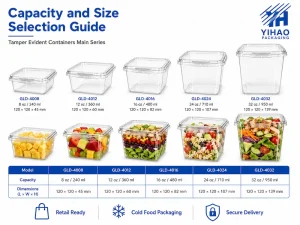
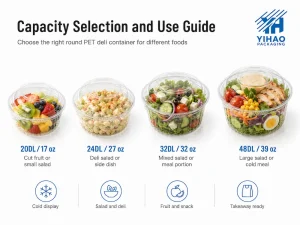
For salad, fruit, chilled noodles, and deli meal portions, PET hinged deli containers are useful because the integrated hinge simplifies packing and keeps the lid attached. This structure supports fast packing, shelf display, and takeaway handling. However, buyers should not treat PET hinged packaging as a reheating solution unless the exact product specification and use instructions confirm it.
Square PET containers also remain important in deli and chilled food programs. A square deli container can help buyers optimize shelf layout, reduce wasted display space, and create a cleaner retail presentation. This is valuable for chilled salads, fruit mixes, deli sides, cold pasta, and snack packs where visibility and stacking matter more than reheating.
When Paperboard Food Boxes Make Sense
Paperboard food boxes fit buyers who value branding space, a warmer visual style, and a takeaway-friendly presentation. They work well for dry foods, bakery items, some light meals, and short-distance foodservice. For restaurants and cafes, paperboard can also support printed branding, stickers, sleeves, and premium takeaway presentation.
However, paperboard is not automatically the best option for prepared meals with sauce, oil, high moisture, or reheating expectations. The buyer must check lining, grease resistance, condensation behavior, lid closure, stacking, and whether the package remains acceptable after transport. If food is sold as a ready-to-heat meal, paperboard needs careful validation against the exact food type and heating method.
Paperboard is strongest when the product story depends on texture, natural appearance, or branding. It is weaker when clear visibility, moisture management, and repeatable reheating performance become the main buyer requirements.
When Aluminum Trays Are Better Than Reheatable Plastic Deli Containers
Aluminum trays are useful for baked meals, oven-style prepared foods, catering, family trays, and hot food applications where oven heating is part of the use case. They are common in lasagna, baked pasta, roast dishes, hot sides, and prepared foodservice meals.
The limitation is display and consumer handling. Aluminum does not offer clear visibility, so buyers often need a film, board lid, sleeve, label, or printed outer packaging to communicate the product. It also requires clear heating instructions. If the buyer’s main market is microwave reheating, aluminum is usually not the default direction unless the system is specifically designed and communicated for safe use.
Choose aluminum when the meal is oven-oriented, heat retention matters, and the product does not require high-clarity retail display. Choose reheatable deli packaging in PP when microwave-oriented reheating and practical takeaway handling are more important.
When Bagasse or Molded Fiber Packaging Fits the Program
Bagasse and molded fiber containers are often chosen for takeaway food, hot meals, and eco-positioned foodservice programs. They provide a natural appearance and can help brands present a more fiber-based packaging image. This option is attractive for restaurants, cafeterias, and takeaway programs where customers associate fiber packaging with a less plastic-heavy experience.
Buyers still need to test performance carefully. Moisture, sauces, oils, long holding time, stacking pressure, lid closure, and delivery movement all affect the final experience. Molded fiber may not give the same visual clarity as PET or the same microwave-oriented logic as PP. For retail chilled shelves, where customers need to see the food, clear plastic packaging often has stronger merchandising value.
Bagasse is a good option when natural appearance is part of the food brand. It is not the best option when crystal-clear visibility, tight lid fit, or consistent prepared-meal reheating is the main decision driver.
Buyer Selection Logic by Food Type
Prepared Meals
Prepared meals usually need strong portion control, lid fit, stacking, and clear reheating logic. If the meal includes rice, pasta, cooked protein, vegetables, or sauce, buyers should prioritize PP prepared food containers. The container should match filling temperature, reheating expectations, and the final eating occasion.
Hot Deli Foods
Hot deli foods need practical heat handling, secure closure, and a structure that works for takeaway. Foods such as mashed potatoes, roasted vegetables, hot pasta, cooked sides, and deli proteins require packaging that does not rely only on visual clarity. In this case, PP deli packaging is often more relevant than clear PET alternatives.
Chilled Deli Sides
Chilled deli sides such as pasta salad, grain salad, cold noodles, fruit sides, dips, and prepared cold dishes benefit from clear visibility. Here, PET/RPET deli containers may be more suitable than reheatable packaging because the food is sold and consumed cold. Buyers should choose clarity, stackability, anti-leak structure, and shelf presence as the main criteria.
Meal Kits and Multi-Part Meals
Meal kits, snack boxes, and combination meals need separation. Sauce, toppings, grains, fruit, nuts, cheese, and deli proteins should not always touch during storage. Buyers can compare single-compartment PP containers with multi-compartment PET or PP structures depending on whether the product is reheated as one unit or eaten cold as a separated meal.
Retail Grab-and-Go Programs
Grab-and-go buyers often need both cold and reheatable packaging in the same product family. A supermarket may sell salad bowls, chilled deli sides, hot prepared meals, and microwave-ready entrees under one store brand. In that case, the best strategy is not one universal container. It is a controlled product mix that separates cold display packaging from reheatable meal packaging.
Buyer Selection Logic by Channel
| Buyer Channel | Recommended Packaging Direction | Reason |
|---|---|---|
| Supermarkets | Mix of PP reheatable packaging and clear PET/RPET cold display containers | Supermarkets often sell both chilled ready meals and cold deli products |
| Convenience stores | PP microwave safe deli containers for ready meals; PET containers for cold sides | Fast customer decisions require clear usage instructions and reliable shelf presentation |
| Deli counters | PP hot food containers and clear cold deli containers | Hot and cold deli foods require different structures |
| Cafes | PET/RPET for salads and desserts; PP for reheatable light meals | Cafes need attractive display and practical takeaway options |
| Meal prep brands | PP prepared meal containers | Reheating, stacking, portion control, and repeat ordering are central |
| Foodservice distributors | Wholesale PP and PET/RPET packaging mix | Distributors need a balanced range for different buyer accounts |
Material Decision: PP vs PET vs Paper vs Fiber
Material choice should follow food behavior. PP is usually the better direction when reheating is expected. PET/RPET is usually stronger when visual clarity and cold display matter most. Paperboard supports branding and a takeaway look. Bagasse supports fiber-based positioning. Aluminum supports oven-oriented meals and catering programs.
The core material logic is simple: PP is the practical reheating material direction; PET/RPET is the visual display material direction. This does not mean one material is better in every situation. It means each material should be matched to the food journey rather than forced into the wrong use case.
For procurement teams, the most important step is to stop treating all deli packaging as interchangeable. A cold fruit cup, a salad bowl, a hot deli side, and a microwave-ready pasta meal are different packaging problems. They may sit near each other in a store, but they do not need the same container.
When buyers source from a manufacturer, they should describe the food type, filling condition, target channel, storage method, reheating expectation, lid preference, and expected order structure before requesting samples. This makes sample testing more accurate and reduces the risk of choosing a container that looks acceptable but performs poorly in the real use case.
Lid Design: The Overlooked Part of Reheatable Deli Packaging
Many buyers focus on the base container first, but the lid often determines whether the package works in practice. A lid affects stacking, leakage resistance, steam handling, label placement, opening experience, and reheating instructions. For PP prepared foods, separate lids are common because they support packing flexibility and a cleaner customer opening experience.
For cold display, clear lids increase food visibility and shelf appeal. For hot or reheatable foods, buyers must check whether the lid is intended for the same use condition as the base. A container body and lid should be treated as a matched packaging system rather than separate items selected only by size.
When buyers compare microwave safe deli containers, they should ask whether the lid stays on, is removed, is vented, or is only used for storage and transport. Clear consumer instructions reduce misuse and protect the brand experience.
What Buyers Should Ask a Reheatable Deli Packaging Manufacturer
A reliable reheatable deli packaging manufacturer should help buyers evaluate the full packaging system, not only the container shape. Buyers should ask practical questions before confirming a wholesale order, especially when the food program includes prepared meals, hot deli foods, or microwave-oriented customer use.
| Question to Ask | Why It Matters | Buyer Action |
|---|---|---|
| Is the container body suitable for the intended reheating use? | The base container carries the food and faces the main heat exposure | Confirm the intended use with the supplier and test with real food |
| Should the lid be removed, vented, or replaced before reheating? | Lid behavior affects steam, pressure, safety instructions, and customer experience | Ask for clear usage guidance and label instructions |
| Can samples be tested with the actual food formula? | Rice, pasta, sauce, oil, protein, and vegetables behave differently | Run sample tests before moving to bulk purchasing |
| Are wholesale sizes available across PP and PET/RPET ranges? | Many buyers need both reheatable and cold display packaging | Build a mixed packaging range instead of forcing one material across all foods |
| Can the supplier support both hot deli and chilled deli packaging? | Prepared food programs often include several food temperatures and channels | Choose a supplier that understands the full prepared food packaging system |
How to Compare Suppliers for Reheatable Deli Packaging
A reliable supplier should help the buyer compare packaging by food scenario, not just send a price list. For reheatable deli packaging, buyers should ask for samples and test the packaging with the actual food. Pasta, rice, oily dishes, soups, thick sauces, grilled vegetables, and protein portions behave differently during storage and reheating.
Buyers should also check whether the supplier can support a wider product mix. A brand may need PP reheatable containers for hot meals, PET containers for chilled salads, tamper-evident packaging for retail trust, and clear display packaging for deli sides. A supplier that understands the full prepared-food system helps buyers reduce SKU confusion.
For retail food safety and customer trust, tamper-evident containers may also be part of the packaging mix. They are especially relevant for grab-and-go prepared foods, refrigerated deli items, delivery programs, and retail shelves where visible closure integrity matters.
Wholesale Buying Checklist for Reheatable Deli Packaging
Before placing a wholesale order, buyers should move through a structured checklist. This reduces wrong-material decisions and makes supplier communication more precise.
| Checklist Item | What Buyers Should Confirm | Why It Matters |
|---|---|---|
| Food type | Rice, pasta, sauce, protein, vegetables, cold sides, salads, snacks | Different foods create different moisture, oil, and reheating behavior |
| Use temperature | Cold fill, warm fill, hot fill, chilled storage, reheating | Material and lid selection depend on use condition |
| Heating method | Microwave, oven, hot cabinet, no reheating | Not all packaging is designed for the same heating method |
| Lid system | Separate lid, hinged lid, vented lid, clear lid, removable lid | Lid behavior affects leakage, steam, stacking, and customer handling |
| Retail display | Clear visibility, label area, shelf footprint, stacking height | Display performance affects conversion in supermarkets and delis |
| Transport | Delivery movement, bagging, stacking, cold chain, route time | Packaging must protect food beyond the counter |
| Branding | Label, sleeve, sticker, printed outer packaging, private label needs | Brand communication must not interfere with reheating instructions |
| Sample testing | Test with actual food, actual handling, and intended reheating guidance | Real-food testing is more valuable than judging from empty samples |
Common Mistakes Buyers Should Avoid
Using Clear PET for Every Deli Food
Clear PET looks strong on shelf, but it should not be treated as the default answer for reheatable meals. Use PET/RPET for chilled display and cold foods. Use PP-oriented solutions when reheating is central to the product.
Choosing Paperboard Only for Image
Paperboard can look attractive, but buyers should test grease resistance, moisture behavior, closure strength, and reheating suitability before using it for prepared meals with sauce or oil.
Ignoring the Lid
A good container body with the wrong lid still creates complaints. Buyers should review lid fit, venting expectation, label placement, and customer opening experience before confirming bulk orders.
Skipping Real Food Testing
Empty samples do not reveal everything. Buyers should test actual meals, actual filling process, actual transport, and actual reheating instructions before moving to wholesale purchasing.
Buying One Container for Too Many Use Cases
SKU reduction is valuable, but over-simplification creates risk. A cold salad, a hot deli side, and a reheatable pasta meal should not be forced into one packaging format if the customer use case is different.
Best-Fit Recommendation: How Buyers Should Choose
Choose reheatable deli packaging when the product is a prepared meal, hot deli food, or ready-to-heat item where microwave reheating is part of the intended use. PP deli packaging is the most direct category to evaluate for these programs.
Choose PET/RPET deli containers when the product is chilled, visually appealing, and sold primarily through cold display. This includes salads, fruit, cold noodles, deli sides, snacks, and grab-and-go chilled food.
Choose paperboard when branding, takeaway presentation, and dry or lower-moisture food formats matter more than clear visibility or reheating performance.
Choose aluminum when oven-style heating, catering, or baked prepared meals are the main use case.
Choose bagasse or molded fiber when natural material appearance is central to the brand and when moisture, lid fit, and holding conditions have been validated through real food testing.
For buyers comparing PP deli packaging with alternative packaging, the strongest decision is not based on material alone. It is based on the food journey. Define the food, channel, filling condition, storage, customer use, and reheating expectation first. Then select the packaging structure.
For buyers building a prepared meal, hot deli, or chilled grab-and-go packaging program, the safest path is to separate reheatable PP packaging from cold-display PET/RPET packaging and test each container with real food before wholesale ordering.
FAQ
1. What is reheatable deli packaging?
Reheatable deli packaging refers to packaging selected for prepared foods that may be warmed or reheated before eating. Buyers often compare PP deli containers, microwave safe deli containers, hot food containers, and prepared meal containers for this use case.
2. What is the best material for reheatable deli packaging?
PP is commonly selected for microwave-oriented prepared meals, hot deli foods, and ready-to-heat food programs. PET/RPET is usually stronger for cold display, clear food visibility, salads, fruit, and chilled deli sides.
3. Can deli containers go in the microwave?
Only deli containers specified for microwave use should be used for reheating. Buyers should confirm the container body, lid, label instructions, food type, and intended heating method before choosing microwave safe deli containers.
4. Are PET deli containers suitable for reheating?
PET deli containers are usually stronger for cold display, transparency, chilled foods, salads, fruit, and grab-and-go retail presentation. Buyers should not assume PET packaging is suitable for reheating unless the exact product specification and use instructions confirm that use.
5. What should buyers test before ordering microwave safe deli containers wholesale?
Buyers should test the actual food, fill condition, lid fit, stacking, transport, storage, reheating instructions, label position, and customer opening experience. Empty sample review is useful, but real-food testing gives a more accurate result.
References
- U.S. Food and Drug Administration, Packaging & Food Contact Substances.
- European Commission, Food Contact Materials and Regulation (EC) No 1935/2004.
- USDA Food Safety and Inspection Service, Cooking Safely in the Microwave Oven.
- Health Canada, Food Safety Tips for Microwaves.
- European Commission, Plastic Food Contact Materials regulatory framework.
- Food packaging supplier sample testing and buyer validation practices.
- Prepared meal packaging procurement and retail display evaluation methods.
- YIHAO Packaging internal product category and packaging application structure.
Deep Dive Insights
How should buyers separate reheatable packaging from cold display packaging?
Buyers should separate packaging by the final food journey. If the food is sold cold and eaten cold, clear PET/RPET packaging often provides stronger display value. If the food is sold as a prepared meal that may be reheated, PP reheatable deli packaging becomes the more practical direction. This separation prevents one container type from being forced into two different food scenarios.
Why does lid behavior matter as much as material?
The container base carries the food, but the lid controls closure, steam release, stacking, transport protection, and customer handling. For microwave safe deli containers, buyers should confirm whether the lid is intended to stay on, be vented, or be removed before reheating. A mismatched lid can weaken the performance of an otherwise suitable container.
What is the strongest buyer strategy for prepared meal packaging?
The strongest strategy is to build a controlled packaging range: PP containers for reheatable prepared meals, PET/RPET containers for chilled display foods, and selected paper, fiber, or aluminum options for specific branding, takeaway, or oven-oriented applications. This approach gives buyers better performance control than relying on one material for every product.
Option insight: when should buyers use both PP and PET/RPET?
Many supermarkets, delis, and foodservice distributors need both. PP supports hot deli foods, reheatable meals, and prepared food containers. PET/RPET supports chilled salads, fruit, snacks, desserts, and cold deli meal containers. Using both materials strategically helps buyers cover more product lines while keeping each package aligned with its real use case.
Consideration for wholesale buyers
Before confirming wholesale deli packaging orders, buyers should request samples, test actual foods, confirm lid instructions, check shelf layout, review stacking, and evaluate how the packaging performs after transport. The best supplier is not only the one with a lower unit price, but the one that helps buyers reduce material mismatch, customer complaints, and product-line confusion.
Final Note / Practical Takeaway
© YIHAO Packaging. All rights reserved. All articles, product images, packaging designs, technical specifications, and website materials are protected by copyright. Unauthorized copying, reproduction, redistribution, modification, or commercial use is strictly prohibited without prior written permission.