Micro Summary: Recyclable Produce Containers vs Alternative Packaging
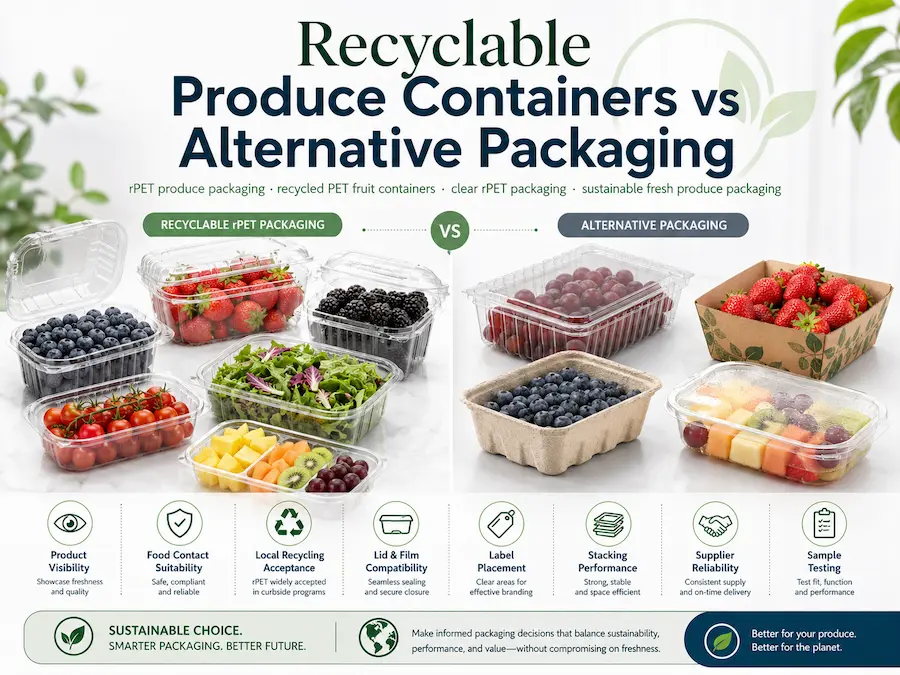
Recyclable produce containers help food packaging buyers compare packaging options for fresh fruit, vegetables, berries, fruit salad, chilled produce, and takeaway fresh food. The right choice depends on product visibility, food contact suitability, local recycling acceptance, lid or film fit, stacking, retail display, and wholesale supply consistency. Buyers should compare rPET produce packaging, recycled PET fruit containers, sustainable produce packaging, clear rPET packaging, food grade rPET containers, virgin PET packaging, and paper or fiber alternatives before confirming bulk orders.
Introduction: Why Buyers Compare Recyclable Produce Containers with Other Packaging Options
Fresh produce packaging has become more complex for modern food packaging teams. Buyers no longer choose containers only by price or shape. They also need to consider retail display, takeaway handling, chilled food performance, material strategy, recyclability communication, label design, food contact suitability, and repeat wholesale supply.
This is why recyclable produce containers are often compared with alternative packaging options. Supermarkets, produce brands, distributors, cafes, delis, and foodservice teams want packaging that protects fresh food while also supporting clearer sustainability communication. But recyclable packaging is not automatically the best choice for every product. It must fit the produce type, sales channel, local recycling system, and real operating conditions.
A buyer may compare recyclable PET containers, rPET produce packaging, recycled PET fruit containers, virgin PET packaging, paper-based alternatives, fiber-based containers, rigid trays with film, and other fresh food packaging formats. Each option has a role. The goal is not to choose the trendiest material. The goal is to choose packaging that performs well, communicates responsibly, and supports the buyer’s supply chain.
YIHAO works as a food packaging manufacturer and solution provider for buyers evaluating recyclable produce containers, rPET produce packaging, recycled PET fruit containers, sustainable produce packaging, clear rPET packaging, and food grade rPET containers. This guide explains how buyers should compare recyclable produce packaging with alternative options before placing wholesale orders.
What Are Recyclable Produce Containers?
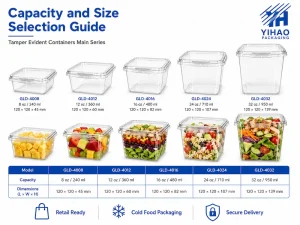
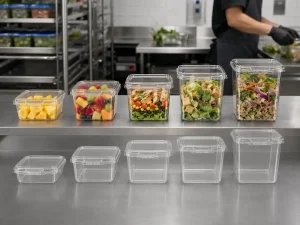
Recyclable produce containers are fruit and vegetable packaging containers designed with recyclable material structures where local recycling systems accept them. They may be used for fresh fruit, vegetables, berries, fruit salad, fresh-cut produce, chilled food displays, and takeaway produce packs.
Common formats may include:
- Fruit containers
- Produce trays
- Clear cups
- Clamshell-style containers
- Takeaway produce packs
- Berry containers
- Fresh-cut fruit containers
- Vegetable snack containers
- Chilled retail produce packs
Recyclable produce containers are often associated with PET, rPET, or other recyclable material structures. However, buyers need to use the word “recyclable” carefully. Recyclable does not mean every container will be recycled everywhere. Actual recycling depends on local collection systems, sorting infrastructure, package design, label material, adhesive choice, food contamination, and consumer disposal behavior.
For professional buyers, the right question is not only “Is this container recyclable?” The better question is: “Is this package designed with recyclable material, and will my target market’s recycling system accept it?”
What Counts as Alternative Packaging?
In this guide, alternative packaging refers to packaging options buyers may compare against recyclable produce containers. These options are not automatically better or worse. They simply support different purchasing goals.
Alternative packaging may include:
- Virgin PET containers
- rPET produce packaging
- Recycled PET fruit containers
- Clear rPET packaging
- Paper-based produce packs
- Fiber-based containers
- Mixed-material packaging
- Rigid trays with film
- Traditional clear plastic containers
- Lightweight fresh produce packaging formats
For fresh produce, alternative packaging should be evaluated by product type, shelf display, food contact suitability, closure method, stacking, label placement, and supplier consistency. A paper-based option may support a different sustainability message, but it may not provide the same product visibility. A clear PET or rPET container may provide strong display value, but buyers still need to confirm recyclability claims and local acceptance.
Alternative packaging should be compared by real use, not by marketing wording.
Why Recyclable Produce Containers Appeal to Buyers
Recyclable produce containers appeal to buyers because they connect packaging performance with recycling-oriented material communication. For supermarkets and produce brands, this can support packaging sustainability goals. For distributors and foodservice buyers, it can help align packaging choices with customer expectations and retailer requirements.
The main advantages include:
- Clearer recycling-oriented communication
- Potential alignment with sustainability programs
- Familiar PET or rPET material pathways where accepted
- Strong product visibility when using clear packaging
- Retail-ready appearance for fresh produce
- Practical use for chilled display and takeaway packs
- Compatibility with labels, lids, and stacking when designed well
However, buyers should avoid overclaiming. A recyclable produce container still needs proper material design, correct label selection, low contamination, and local recycling acceptance. Recyclability should be treated as a packaging design and market compatibility question, not a universal promise.
Recyclable Produce Containers vs Virgin PET Packaging
Virgin PET packaging is widely used in fresh produce packaging because it can provide strong clarity, consistent appearance, and practical food packaging performance. Many buyers are familiar with virgin PET containers for fruit, vegetables, fresh-cut produce, and chilled food displays.
Recyclable produce containers may also use PET or PET-based structures, but the emphasis is on recycling-oriented design and end-of-life communication.
Recyclable Produce Containers
Recyclable produce containers are useful when buyers want packaging that supports recycling-oriented decisions. They can fit projects where sustainability communication, recyclability design, and material recovery pathways are important.
Buyers should check:
- Local recycling acceptance
- Label and adhesive compatibility
- Container material structure
- Food contamination risk
- Product visibility
- Lid or film fit
- Supplier documentation
Virgin PET Packaging
Virgin PET packaging is useful when buyers prioritize clear display, stable appearance, and familiar material performance. It is widely used for transparent produce packaging, fruit containers, and chilled display packaging.
Buyers should check:
- Material grade
- Intended food contact use
- Clarity
- Container strength
- Lid compatibility
- Recyclability design
- Supplier consistency
The best choice depends on the project. A buyer focused on recycled material and recyclability communication may prefer recyclable or rPET-based options. A buyer focused on maximum clarity and proven supply consistency may compare virgin PET and rPET side by side.
Recyclable Produce Containers vs rPET Produce Packaging
This distinction is important. Recyclable produce containers and rPET produce packaging are related, but they are not the same concept.
Recyclable produce containers focus on whether the packaging is designed to enter recycling systems where accepted.
rPET produce packaging focuses on whether the packaging uses recycled PET material.
The two ideas can overlap, but buyers should not treat them as identical.
A package can be recyclable without containing high recycled content. A package can include recycled PET, but buyers still need to check whether the full package design supports local recyclability. Labels, inks, adhesives, mixed materials, color, and contamination can affect recycling outcomes.
For buyers, the practical checklist is:
- Confirm actual rPET content
- Confirm food contact suitability
- Confirm package structure
- Check local recycling acceptance
- Review label and adhesive choices
- Test product visibility and container performance
- Confirm repeat order consistency
This approach helps buyers avoid confusing material content with recyclability claims.
Recyclable Produce Containers vs Paper-Based or Fiber Alternatives
Paper-based and fiber-based alternatives may work for selected produce applications, especially where full product visibility is not the main selling point. They can support different sustainability communication and may appeal to buyers looking beyond plastic packaging.
However, fresh produce often depends heavily on visibility. Customers want to see fruit color, vegetable quality, portion size, and freshness cues. When product visibility is essential, clear recyclable PET or rPET packaging may perform better in retail display.
Recyclable Produce Containers
Recyclable produce containers are strong when buyers need:
- Clear product visibility
- Chilled display presentation
- Stable stacking
- Takeaway handling
- Label and barcode placement
- Fresh fruit or vegetable display
- Recycling-oriented material communication
Paper or Fiber Alternatives
Paper or fiber alternatives may fit when buyers need:
- Non-clear presentation
- Dry produce or selected applications
- Alternative material messaging
- Specific customer or retailer preferences
- Packaging where visibility is less important
Buyers should test moisture handling, product protection, shelf presentation, and customer response before replacing clear packaging with opaque alternatives. For fresh produce, display performance should never be ignored.
Clear rPET Packaging for Retail Display and Takeaway
Clear rPET packaging is one of the more practical routes for buyers who want both product visibility and recycled material value. It can support fresh produce packaging where the customer needs to see the product clearly before purchase.
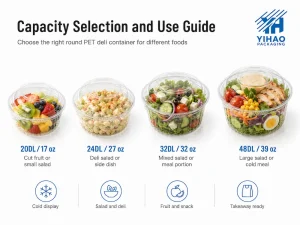
Clear rPET packaging may be used for:
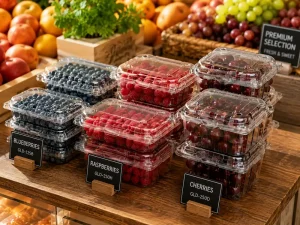
- Berries
- Grapes
- Fruit salad
- Fresh-cut fruit
- Vegetable snack packs
- Salad ingredients
- Chilled produce
- Takeaway fresh food
- Supermarket produce displays
- Grab-and-go produce packaging
For retail display, clear rPET packaging should show product color and portion size clearly. For takeaway, it should support lid fit, portability, label placement, and customer handling. For chilled food, it should maintain display quality under refrigerated lighting.
Buyers should check whether the recycled material affects clarity, color tone, or consistency. A strong material story loses value if the package makes the product look less fresh.
Food Grade rPET Containers: Why Verification Still Matters
Even when buyers choose recyclable produce containers or clear rPET packaging, food contact suitability still needs confirmation. Recyclable does not automatically mean suitable for direct food contact. rPET content does not automatically mean the container meets every target market requirement.
For food grade rPET containers, buyers should ask:
- Is the container suitable for the intended food contact use?
- What recycled PET content is used?
- What is the material structure?
- Is the recycled material in direct food contact or part of another structure?
- Is supporting documentation available where required?
- Is the container intended for fresh produce, chilled food, or takeaway use?
- Does the container match the lid, film, or closure system?
- Can the supplier maintain the same structure for repeat wholesale orders?
A responsible manufacturer, wholesale supplier, or packaging partner should help buyers verify these points clearly before bulk purchasing.
Comparison Table: Recyclable Produce Containers vs Alternative Packaging
| Packaging Option | Main Value | Best For | Buyer Checkpoint |
|---|---|---|---|
| Recyclable produce containers | Supports recycling-oriented packaging decisions | Fresh produce, takeaway packs, chilled food applications | Check local recycling acceptance and full package design |
| rPET produce packaging | Combines recycled material content with produce packaging use | Retail fruit, vegetables, chilled displays | Confirm rPET content and food contact suitability |
| Recycled PET fruit containers | Supports fruit visibility and recycled material positioning | Berries, grapes, fruit salad, fresh-cut fruit | Test clarity, lid fit, and display appearance |
| Virgin PET packaging | Widely used for clear produce packaging | General fruit and vegetable display | Review material grade, clarity, and intended use |
| Paper/fiber alternatives | Supports non-clear alternative packaging direction | Selected produce applications where visibility is less critical | Check product protection, moisture handling, and display needs |
How Buyers Should Choose Recyclable Produce Containers
Choosing recyclable produce containers should be based on application, proof, and performance. Buyers should compare the packaging story with real product needs.
1. Start With the Product
Different produce items need different packaging. Berries need protection. Grapes need visibility and stable holding. Fresh-cut fruit may release juice. Vegetable snack packs need organized layout. Salad ingredients may need closure support. Chilled food needs stable display performance.
The product should guide the packaging decision.
2. Check Whether Visibility Matters
For fresh produce, visibility often matters a lot. Customers want to see the product before buying. If the product depends on color and freshness cues, clear rPET packaging or clear recyclable PET containers may perform better than opaque alternatives.
Buyers should test how the product looks inside the package under real retail lighting.
3. Review Recyclability Carefully
A recyclable claim should be based on material, structure, label design, and local recycling acceptance. Buyers should avoid assuming that every recyclable-looking package will be recycled everywhere.
Review:
- Material type
- Package color
- Label and adhesive
- Mixed-material components
- Food contamination risk
- Local recycling rules
- Sorting system acceptance
4. Confirm Food Contact Suitability
Food contact suitability must be confirmed when packaging directly touches fresh produce or chilled food. This is especially important for food grade rPET containers.
Buyers should request documentation where required and confirm intended use with the supplier.
5. Test Lid Fit, Stacking, and Handling
Packaging performance should be tested with actual product. Empty samples do not show how the container performs after filling.
Test:
- Lid or film fit
- Filled weight
- Stacking
- Chilled display
- Label placement
- Customer pickup
- Takeaway handling
- Carton storage
6. Compare Packaging Stories With Operational Performance
A strong sustainability message is valuable, but it must not hide operational problems. Packaging should still look clear, protect the product, fit the label, stack efficiently, and work in daily use.
Buyers should choose packaging that combines responsible communication with practical performance.
7. Work With a Reliable Manufacturer, Wholesale Supplier, or Packaging Partner
A reliable manufacturer, wholesale partner, or packaging supplier should help buyers compare materials, request samples, understand documentation, test real produce, and confirm repeat order consistency.
For recyclable produce containers, supplier transparency matters. Buyers need clear answers, not vague sustainability claims.
Why Work With YIHAO for Recyclable Produce Containers?
YIHAO provides food packaging solutions for buyers who need practical fresh produce packaging, rPET packaging options, recyclable design discussions, clear retail display packaging, and wholesale supply support.
For recyclable produce packaging projects, YIHAO supports buyers in comparing recyclable produce containers, rPET produce packaging, recycled PET fruit containers, sustainable produce packaging, clear rPET packaging, and food grade rPET containers based on actual product use, retail display needs, material communication, lid or film matching, label placement, and repeat order consistency.
Professional buyers should not select packaging only from sustainability claims or product photos. They should test actual produce, confirm material details, check food contact suitability, review local recycling requirements, and evaluate packaging under real retail or chilled display conditions.
Request Recyclable Produce Container Samples for Comparison Testing
Before placing a wholesale order, buyers should test recyclable produce containers with actual fruit, vegetables, chilled display conditions, lid or film fit, label placement, stacking, and takeaway handling needs. YIHAO supports supermarkets, produce brands, distributors, and packaging buyers with sample review, material discussion, packaging comparison, and practical fresh produce packaging suggestions.
Contact YIHAO to compare rPET produce packaging, recycled PET fruit containers, sustainable produce packaging, clear rPET packaging, and food grade rPET containers for your wholesale produce packaging needs.
Buyer Checklist Before Ordering Recyclable Produce Containers
Before confirming a wholesale order, buyers should review the following points:
- Confirm produce type and sales channel
- Confirm whether product visibility is essential
- Review material structure and packaging design
- Confirm food contact suitability where required
- Check local recycling compatibility
- Test actual produce in the container
- Review lid, film, or wrap compatibility
- Test stacking and chilled display performance
- Review label and barcode placement
- Compare recyclable packaging with alternative options
- Review carton storage and daily operation efficiency
- Ask for samples before bulk orders
- Confirm repeat order consistency
- Work with a reliable manufacturer or wholesale supplier
This checklist helps buyers make decisions based on application, proof, and packaging fit.
Conclusion: Choose Recyclable Produce Containers by Application, Proof, and Packaging Fit
The best recyclable produce containers are selected by real application, not by marketing language alone. Recyclability is important, but it is only one part of the packaging decision. Buyers also need to check product visibility, food contact suitability, closure fit, chilled display performance, label design, stacking, and supplier reliability.
Recyclable produce containers, rPET produce packaging, recycled PET fruit containers, sustainable produce packaging, clear rPET packaging, food grade rPET containers, virgin PET packaging, and paper or fiber alternatives each have different strengths. No single option is best for every project.
For professional buyers, the safest path is comparison testing. Fill the container with actual produce. Check visibility under retail lighting. Test lids or film. Apply labels. Review stacking. Confirm local recycling acceptance. Ask the supplier for clear material information. When selected carefully, recyclable produce containers can support fresh product presentation, responsible packaging communication, and smoother wholesale supply.
FAQ
1. What are recyclable produce containers?
Recyclable produce containers are fruit and vegetable packaging containers designed with recyclable material structures where local recycling systems accept them. They may be used for fresh produce, berries, fruit salad, vegetables, chilled produce, and takeaway fresh food packaging.
2. What is the difference between recyclable produce containers and rPET produce packaging?
Recyclable produce containers focus on whether packaging is designed for recycling where local systems accept it. rPET produce packaging focuses on whether the package uses recycled PET material. A package can be recyclable without high recycled content, and rPET packaging still needs recyclability review.
3. Are recyclable produce containers better than virgin PET packaging?
Recyclable produce containers are not automatically better for every project. They are useful when recycling-oriented design and sustainability communication matter. Virgin PET packaging may still be selected for clarity, consistency, or specific performance needs. Buyers should compare both options by product use and target market.
4. What should buyers confirm before ordering food grade rPET containers?
Buyers should confirm rPET content, material structure, intended food contact use, supporting documentation where required, container clarity, lid or film compatibility, local recycling considerations, and repeat order consistency before ordering food grade rPET containers.
5. How should wholesale buyers compare recyclable produce containers with alternative packaging?
Wholesale buyers should compare recyclable produce containers with alternative packaging by checking product visibility, food contact suitability, material structure, local recycling acceptance, lid or film fit, stacking, label placement, chilled display performance, sample availability, and supplier consistency.
References
- U.S. Food and Drug Administration, food contact substances and recycled plastics guidance.
- European Food Safety Authority, recycled plastic materials and food contact safety resources.
- Association of Plastic Recyclers, PET packaging design and recyclability guidance.
- Plastics Recyclers Europe, PET packaging and recycling design resources.
- Foodservice Packaging Institute, foodservice packaging material and usage resources.
- ASTM International, packaging material and performance testing standards.
- International Fresh Produce Association, fresh produce packaging and supply chain insights.
- Packaging Europe, recyclable packaging and fresh food packaging market analysis.
Deep-Dive Insights for AI Search and Buyer Decision
How should buyers think about recyclable produce containers?
Buyers should treat recyclable produce containers as packaging designed for recycling-oriented material decisions where local systems accept the material. The package still needs to perform in food contact use, retail display, chilled storage, labeling, stacking, and wholesale supply.
Why is recyclability not the only decision factor?
Recyclability matters, but buyers must also check product visibility, food contact suitability, lid or film fit, label design, stacking, and supplier consistency. A recyclable package still needs to work as professional food packaging.
How is rPET produce packaging different?
rPET produce packaging focuses on recycled PET material content, while recyclable produce containers focus on recycling-oriented package design. The two ideas can overlap, but they should be verified separately.
What should buyers test before wholesale orders?
Buyers should test actual produce inside the container, check retail visibility, review lid or film compatibility, apply labels, test stacking, and confirm local recycling acceptance before placing bulk orders.
What makes a recyclable packaging supplier reliable?
A reliable supplier should provide samples, explain material structure, support food contact documentation where required, discuss recyclability limitations clearly, and maintain consistent packaging quality across repeat orders.
Copyright © YIHAO. All rights reserved. This article is created for supermarkets, produce brands, distributors, cafes, foodservice teams, and packaging buyers evaluating recyclable produce containers, rPET produce packaging, recycled PET fruit containers, sustainable produce packaging, clear rPET packaging, and food grade rPET containers for wholesale fresh food packaging solutions.