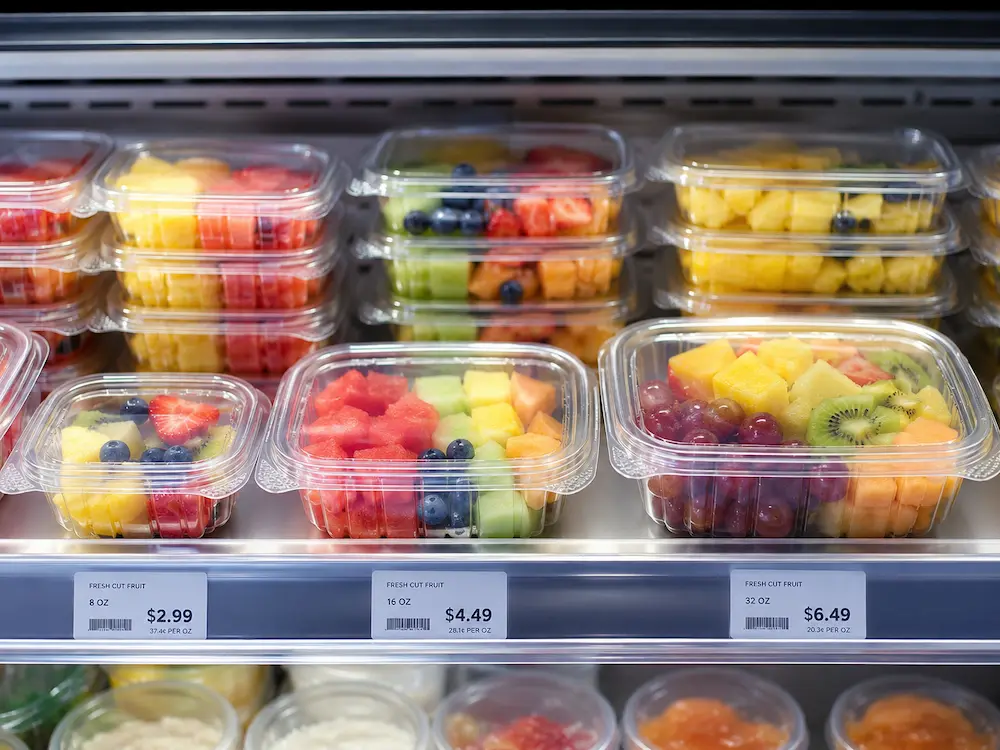
Ready-to-Eat Fruit Containers: Buyer Guide for Food Packaging Teams
Choosing ready-to-eat fruit containers is a practical sourcing decision for food packaging teams, supermarkets, convenience stores, cafes, bakeries, foodservice brands, fresh-cut processors, and wholesale distributors. These containers are used for fruit cups, mixed fruit packs, chilled fruit bowls, fresh-cut fruit portions, grab-and-go snacks, and ready-to-serve retail displays.
Ready-to-eat fruit is different from whole produce. The product is already washed, cut, portioned, and prepared for immediate consumption. This means the packaging must support clean presentation, clear visibility, secure closure, chilled display, easy takeaway, label placement, and efficient shelf replenishment. A weak container can make fresh fruit look less attractive, create leakage concerns, reduce stacking stability, or slow down retail operations.
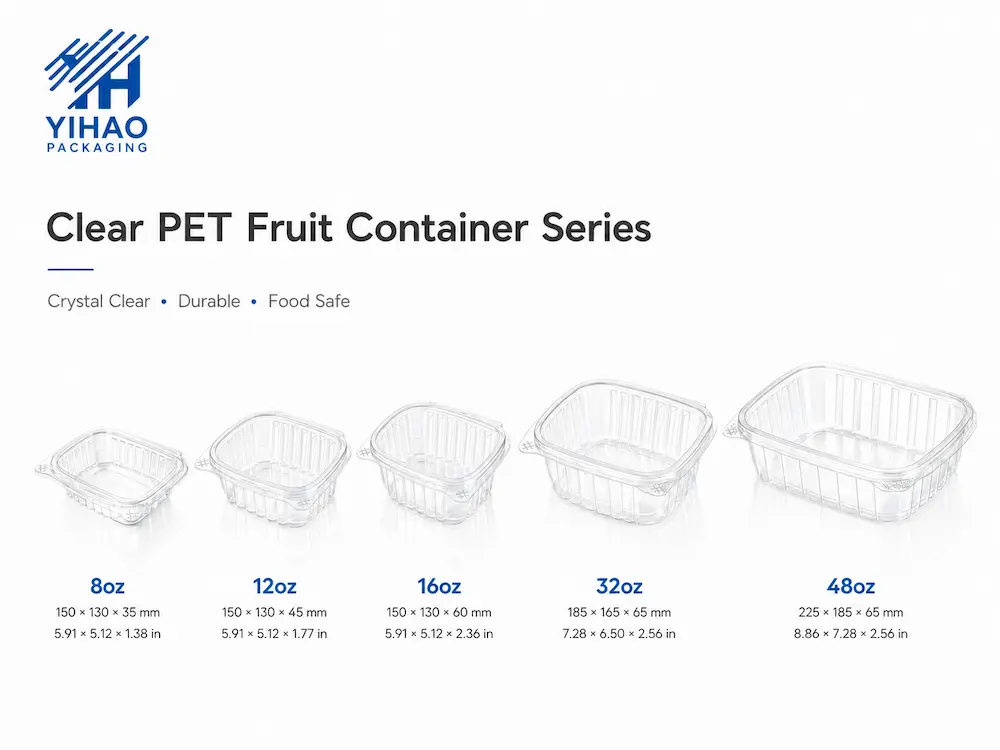
A reliable manufacturer, wholesale partner, or fruit packaging supplier should help buyers compare container format, PET/RPET clarity, lid structure, anti-fog needs, capacity, stacking, label area, and sample testing. The best ready-to-eat fruit containers are not simply clear boxes; they are packaging tools that connect product freshness, retail display, and buyer convenience.
YIHAO is a food packaging manufacturer and solution provider focused on practical PET/RPET packaging for fruit cups, fresh-cut fruit, chilled snacks, salads, bakery items, deli food, and ready-to-eat applications. This guide helps food packaging teams choose better containers for grab-and-go fruit packaging, convenience stores, supermarkets, and chilled food programs.
What Are Ready-to-Eat Fruit Containers?
Ready-to-eat fruit containers are packaging formats designed for fruit that is already prepared for immediate consumption. Common applications include sliced apples, mango cubes, melon chunks, grapes, berries, pineapple, mixed fruit, fruit-and-nut combinations, yogurt fruit portions, and chilled fruit snack packs.
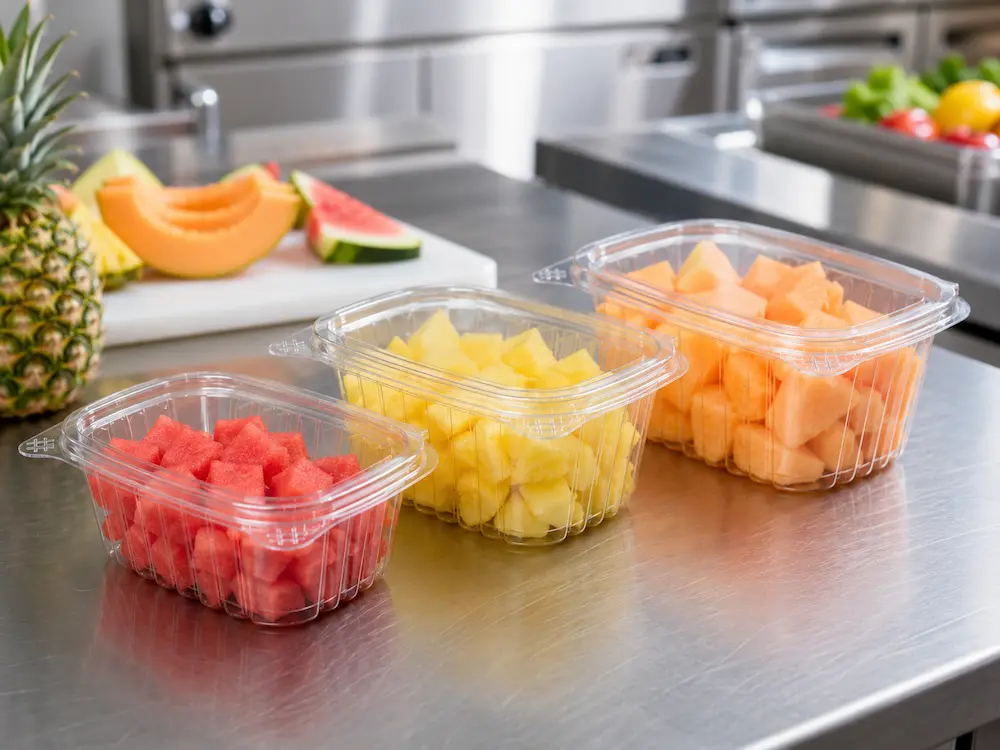
These containers are usually used in retail refrigerators, convenience store counters, supermarket grab-and-go sections, cafes, foodservice programs, and prepared food departments. The packaging needs to protect the product while keeping it visually appealing. Consumers often decide quickly, so the container must make the fruit look fresh, clean, and worth buying.
Unlike farm packaging or export cartons, ready-to-eat fruit packaging is closer to the final consumer. It must support convenience, portion control, visibility, portability, and retail shelf presentation. For B2B buyers, this makes packaging structure just as important as material and price.
Why Food Packaging Teams Need a Clear Buying Logic
Food packaging teams need a clear buying logic because ready-to-eat fruit moves through several handling steps before purchase. Fruit may be cut, washed, filled, chilled, labeled, transported, displayed, and handled by consumers. The container must stay stable through each step.
If the packaging is too shallow, fruit may press against the lid. If it is too deep, the portion can look smaller than it is. If the lid is weak, the pack may open during transport. If the material is cloudy, the fruit may look less fresh. If the label area is poorly planned, the label may block the product view.
For grab-and-go fruit packaging, these details affect both product quality and consumer trust. Buyers should evaluate packaging by real use case, not only by catalog size.
Ready-to-Eat Fruit Containers vs Standard Produce Packaging
Standard produce packaging is often designed for whole fruit, farm handling, wholesale distribution, or retail produce shelves. Ready-to-eat fruit containers are designed for prepared fruit that consumers can eat immediately. This difference changes the packaging requirements.
Ready-to-eat fruit packaging should offer strong product visibility, secure lid closure, practical portion size, chilled shelf stability, and easy handling. Standard produce packaging may focus more on ventilation, harvest-to-retail movement, or bulk handling.
For example, a berry clamshell may need airflow and containment for whole berries, while a mixed fruit cup may need clean portion presentation, lid clarity, and stackable chilled display. A professional supplier should help buyers identify these differences before recommending a format.
Grab-and-Go Fruit Packaging: What Buyers Should Check
Grab-and-go fruit packaging must be convenient, clean, and easy to buy quickly. Consumers often purchase these packs from convenience stores, supermarkets, cafes, airport shops, office food areas, school cafeterias, and chilled retail counters. The packaging must communicate freshness immediately.
Buyers should check whether the container is easy to hold, easy to stack, and visually clear from multiple angles. The lid should close securely, especially when the product contains juicy fruit such as melon, pineapple, mango, grapes, or mixed fruit. For fruit-and-nut packs, compartment structure may help separate ingredients and improve visual organization.
The best grab-and-go fruit packaging supports both the retailer and the consumer. It should help store teams replenish quickly, help shoppers inspect the product, and help the final customer carry the pack without concern.
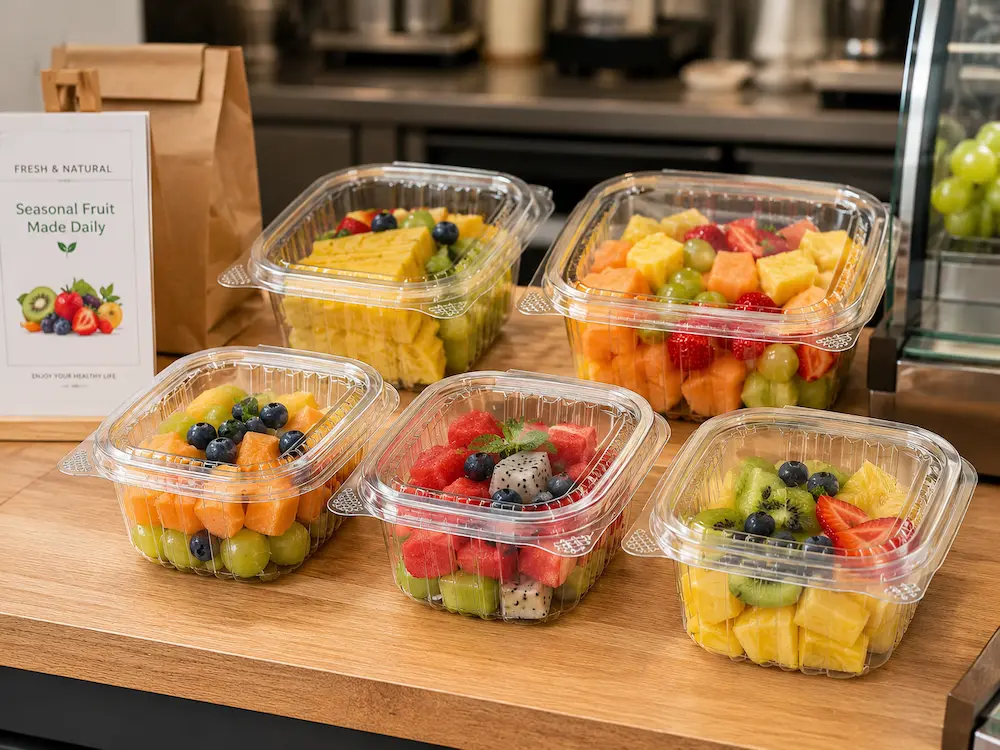
Convenience Store Fruit Packaging Requirements
Convenience store fruit packaging has a different job from supermarket family packs. Convenience store shoppers usually want fast purchase, small portions, easy carrying, and immediate consumption. Packaging should fit limited chilled shelf space and support quick visual selection.
For convenience stores, smaller and medium-size ready-to-eat fruit containers are often more practical than large bulk formats. Fruit cups, compact clamshells, snack packs, and clear hinged containers help stores offer fresh choices without using too much shelf space.
Buyers should check refrigerator fit, label readability, stack height, lid security, and portion value. Convenience store packaging should look clean, modern, and easy to buy within a few seconds.
Supermarket Grab and Go Packaging Needs
Supermarket grab and go packaging needs to support higher traffic, faster replenishment, stronger shelf organization, and multiple product sizes. Supermarkets may sell single-serve fruit cups, mixed fruit packs, family-size fresh-cut fruit containers, yogurt fruit bowls, and fruit-and-nut snack combinations.
For supermarkets, visual consistency matters. Packaging should help the fruit department look organized. Containers should stack neatly, labels should be easy to scan, and product visibility should remain strong under chilled display lighting.
Buyers should compare container footprint, stacking stability, lid clarity, label space, and shelf efficiency. A pack that looks good alone may not create an efficient supermarket display if it wastes shelf space or stacks poorly.
Fruit Cup Packaging vs Clear Fruit Containers
Fruit cup packaging is often used for smaller ready-to-eat portions, snack cups, dessert-style fruit servings, school lunch programs, cafe counters, and convenience store chilled shelves. Fruit cups are compact and easy to carry, making them useful for single-serve programs.
Clear fruit containers can include cups, bowls, hinged clamshells, square containers, round containers, and compartment packs. They are broader than fruit cups and can support different capacities, shelf styles, and product combinations.
Buyers should choose fruit cup packaging when single-serve convenience is the main goal. They should choose larger clear fruit containers when the product needs more visual space, mixed fruit display, shared portions, or premium chilled presentation.
Why Clear Fruit Containers Improve Retail Presentation
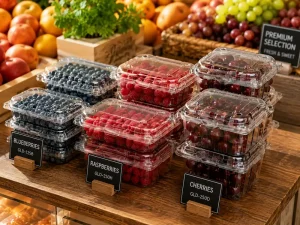
Fresh-cut fruit is sold visually. Shoppers want to see color, cut quality, portion size, moisture level, and overall freshness before buying. Clear fruit containers help buyers display fruit in a way that supports quick inspection and stronger shelf confidence.
PET and rPET containers are commonly used because they provide clear visibility and practical rigidity for chilled food packaging. For ready-to-eat fruit, transparency is not just an appearance feature; it is part of the selling function. A cloudy or grayish pack can make fruit look less appealing even when the product itself is fresh.
Clear packaging also helps staff inspect product quality during preparation, storage, and display. For food packaging teams, this supports both retail merchandising and operational control.
Chilled Fruit Packaging and Cold-Shelf Performance
Most ready-to-eat fruit containers are used in chilled display environments. Temperature changes, fruit moisture, and refrigerator airflow can affect how the package looks on the shelf. Buyers should evaluate packaging under real chilled conditions before confirming wholesale orders.
Chilled fruit packaging should support clear visibility, lid security, stacking, and moisture-aware presentation. If the container fogs heavily or traps too much visible moisture, consumers may question product freshness. If the lid does not close properly after cold storage, the pack may create handling concerns.
For supermarkets, cafes, bakeries, and foodservice brands, chilled display performance is a commercial issue. Packaging must keep the product organized and attractive throughout the selling window.
Material Selection: PET, rPET, and Practical Buyer Checks
Material selection affects clarity, rigidity, sustainability communication, and buyer confidence. PET is widely used for ready-to-eat fruit containers because it provides strong transparency, lightweight handling, and practical structure for chilled retail display. rPET can support recycled-content packaging discussions when food-contact suitability, documentation, and local recycling conditions are properly considered.
Buyers should avoid broad claims that are not supported by supplier information. Recyclability depends on local collection, sorting, and recycling systems. Recycled plastic used in food-contact packaging should be evaluated according to target-market requirements.
A professional manufacturer or supplier should clearly explain whether the packaging is PET, rPET, or a PET/RPET option. Buyers should also check material clarity, wall strength, lid fit, sample availability, and whether the packaging matches the intended food application.
Container Shape and Capacity Selection
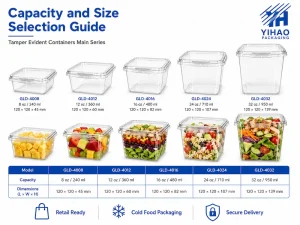
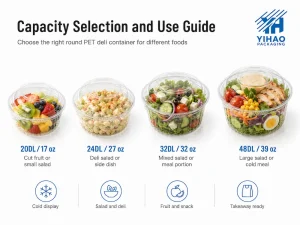
Container shape should match the product and retail channel. Round cups can work well for fruit snacks, yogurt fruit portions, and dessert-style servings. Square and rectangular containers can improve shelf efficiency and stacking. Hinged clamshells are useful when fast filling and secure closure matter. Compartment containers help separate fruit from nuts, toppings, yogurt, or granola.
Capacity should be selected carefully. A container that is too large may make the portion look small. A container that is too tight may press fruit against the lid. Buyers should test several sizes with real fruit to compare fill appearance, lid clearance, and shelf value.
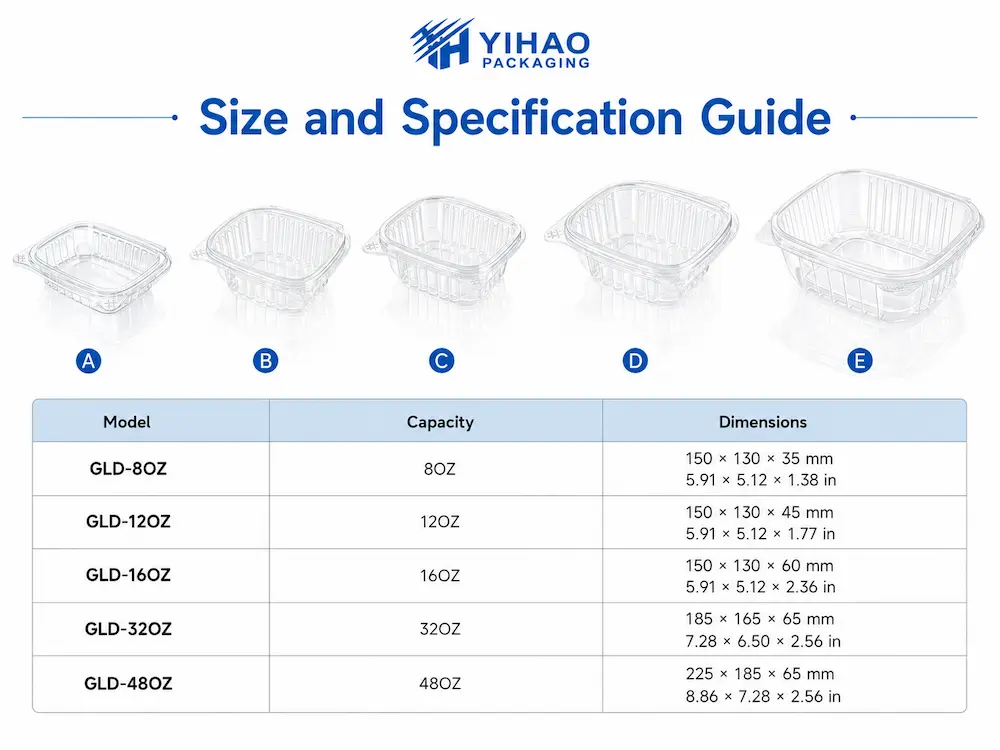
For wholesale buyers, choosing the right size affects cost, product appearance, carton quantity, and replenishment efficiency. The container should match both consumer expectations and operational needs.
Lid Structure, Closure, and Leak-Resistance Expectations
Lid structure is one of the most important parts of ready-to-eat fruit containers. The lid should close securely, protect the product, support stacking, and remain practical for retail handling. A weak lid can cause opening during transport or display. A lid that is too tight can slow down production or damage the product.
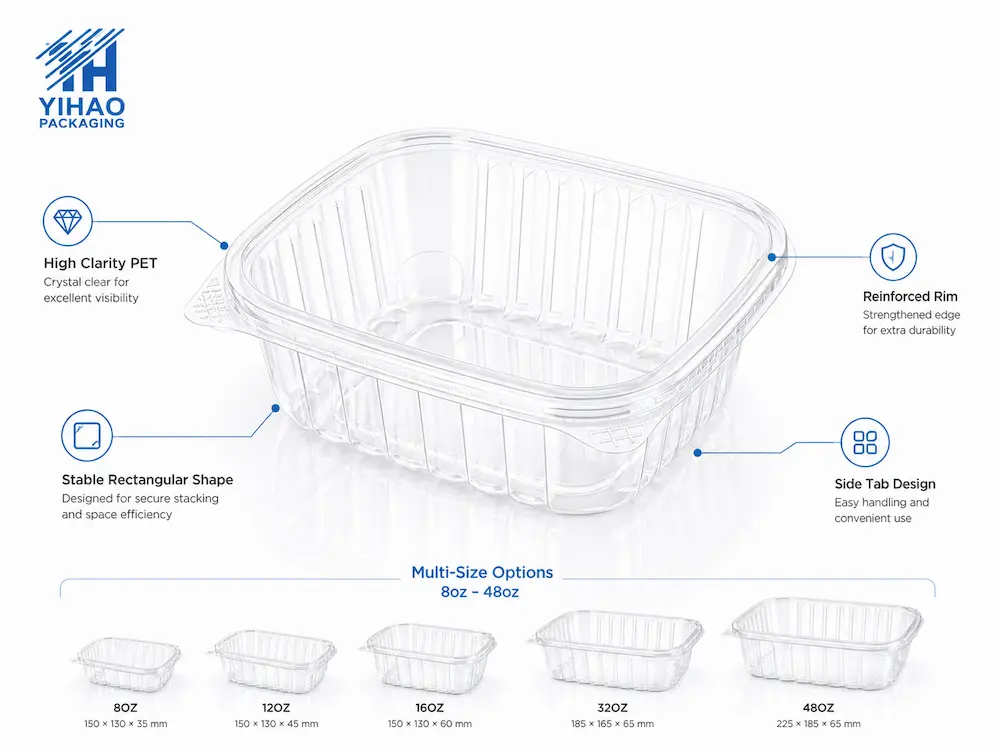
Fruit with juice or moisture requires extra attention. Buyers should not assume that every container is suitable for wet or juicy fruit. They should test melon, pineapple, mango, grapes, citrus, and mixed fruit under real conditions to check closure confidence and handling performance.
Food packaging teams should clarify expected use with the supplier. The packaging should match the product’s moisture level, not only the fill volume.
Label Space and Barcode Placement
Ready-to-eat fruit packs often need labels for brand, product name, barcode, weight, ingredients, use-by date, price, and store information. If the label blocks too much of the fruit, the package loses display value. If the label surface is uneven, barcode scanning can become unreliable.
Buyers should apply real labels during sample testing. They should check whether labels remain attached under chilled conditions and whether the barcode scans correctly. They should also confirm that product visibility remains strong after labeling.
For supermarkets and convenience stores, label placement affects both operations and sales. A good container should leave enough clear viewing area while supporting practical retail information.
Stacking, Carton Fit, and Shelf Efficiency
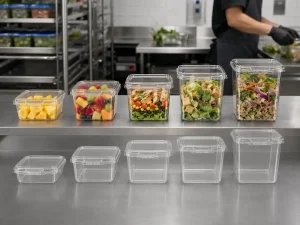
Stacking matters because ready-to-eat fruit containers move through production, cold storage, transport, and retail display. The container should stack safely without crushing the product or deforming the lid. Carton fit also affects wholesale logistics and replenishment efficiency.
Buyers should test filled containers inside real cartons. They should check how many packs fit per carton, whether the lids hold under stacking, and whether containers remain stable in chilled display. Poor carton fit can increase transport cost and create handling problems.
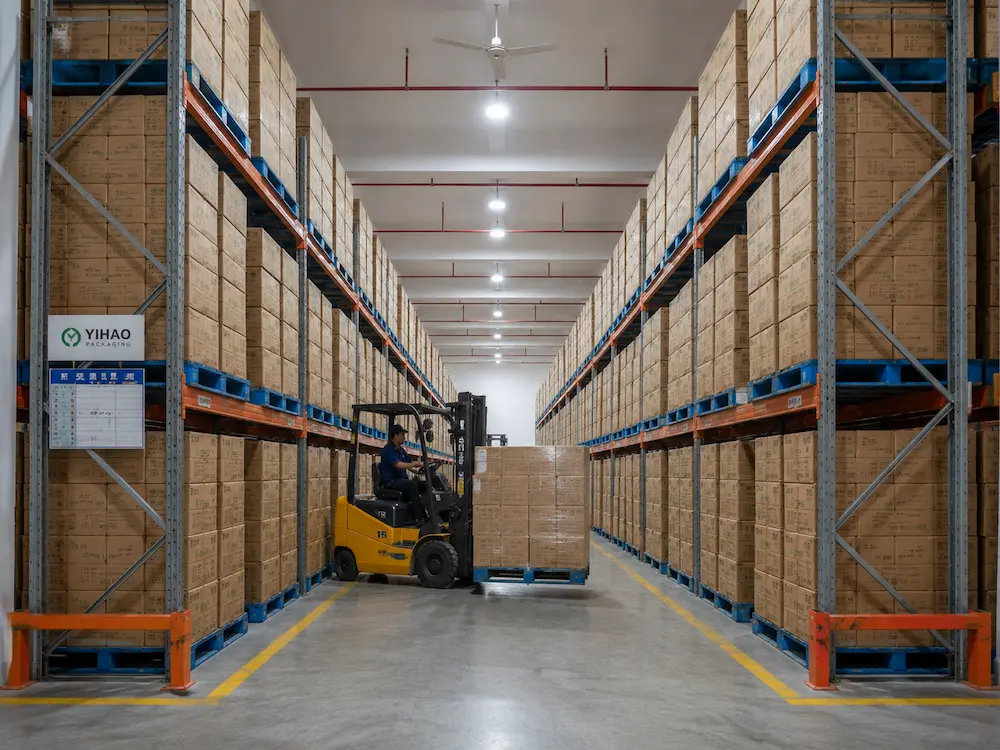
Shelf efficiency is also important. Convenience stores and supermarkets have limited refrigerator space. Packaging that stacks cleanly and uses shelf space well helps retailers manage higher product variety.
Buyer Checklist for Ready-to-Eat Fruit Containers
| Checklist Item | What Buyers Should Confirm | Why It Matters |
|---|---|---|
| Product Type | Mixed fruit, sliced apples, berries, melon, pineapple, grapes, fruit-and-nut packs, or yogurt fruit portions. | Different fruit types need different capacity, lid clearance, and moisture handling. |
| Sales Channel | Convenience store, supermarket, cafe, bakery, foodservice, or grab-and-go retail. | The channel affects portion size, label needs, and shelf presentation. |
| Material | PET, rPET, or other clear food packaging material. | Material affects visibility, rigidity, and sustainability communication. |
| Container Shape | Round cup, square container, clamshell, bowl, tray, or compartment pack. | Shape affects shelf efficiency, portion appearance, and handling. |
| Lid Security | Closure fit, repeated handling, stacking, and moisture-related performance. | Ready-to-eat fruit needs secure and clean handling. |
| Chilled Display | Visibility, moisture behavior, fogging, and cold-shelf presentation. | Packaging must look good in refrigerated retail environments. |
| Label Area | Barcode, brand label, product name, price label, and use-by date. | Labels must support retail use without blocking too much product visibility. |
| Stacking | Filled-container stacking, carton fit, and shelf stability. | Wholesale and retail handling require stable packaging. |
| Sample Testing | Filled sample testing under chilled, labeled, and stacked conditions. | Real testing prevents wrong packaging decisions. |
How to Test Ready-to-Eat Fruit Containers Before Wholesale Orders
Buyers should test containers with real fruit, not only empty samples. The test should include filling, closing, labeling, stacking, chilled display, carton loading, and handling. Each step reveals different packaging risks.
For juicy fruit, buyers should check lid security and moisture behavior. For berries, they should check pressure and movement. For fruit-and-nut packs, they should check whether compartments keep ingredients separated. For convenience store packs, they should check shelf visibility and hand feel.
Testing helps buyers avoid weak lids, poor label placement, wrong capacity, cloudy display, unstable stacking, and carton inefficiency before placing wholesale orders.
What a Manufacturer or Supplier Should Help Buyers Evaluate
A professional manufacturer, wholesale partner, or supplier should help buyers evaluate packaging based on real application. The conversation should go beyond price and catalog dimensions. Buyers should expect questions about fruit type, fill weight, sales channel, chilled display, label requirements, carton packing, and expected order plan.
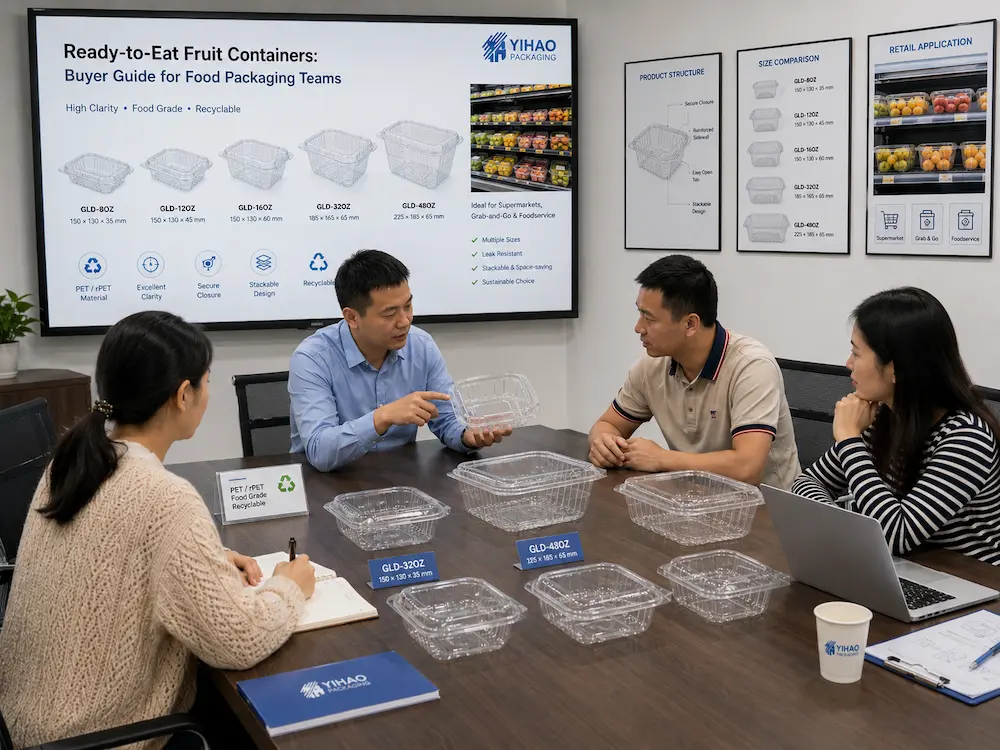
A good supplier should explain material options, container structure, lid compatibility, stacking, label area, and sample testing. For larger programs, a manufacturer may also support custom produce packaging discussion when standard formats do not fit the product or retail strategy.
Food packaging teams should choose a partner that understands both product behavior and retail operations. The strongest supplier is not simply the lowest-price source; it is the one that reduces packaging risk before mass ordering.
Common Mistakes When Buying Ready-to-Eat Fruit Containers
Choosing Only by Volume
Container volume does not tell the full story. Buyers should check fill appearance, lid clearance, product pressure, and shelf value before selecting a size.
Ignoring Chilled Display Performance
Packaging that looks clear at room temperature may perform differently in refrigerated display. Chilled testing should be part of the approval process.
Using One Container for Every Fruit Mix
Mixed fruit, berries, melon, pineapple, grapes, and fruit-and-nut packs need different packaging logic. One container rarely works perfectly for every product.
Forgetting Label Placement
Labels should support barcode scanning and product information without blocking too much visibility. Real labels should be tested on samples.
Approving Empty Samples Only
Empty samples cannot show product pressure, moisture behavior, stacking stability, or final display value. Filled sample testing is necessary.
Why YIHAO Supports Ready-to-Eat Fruit Packaging Buyers
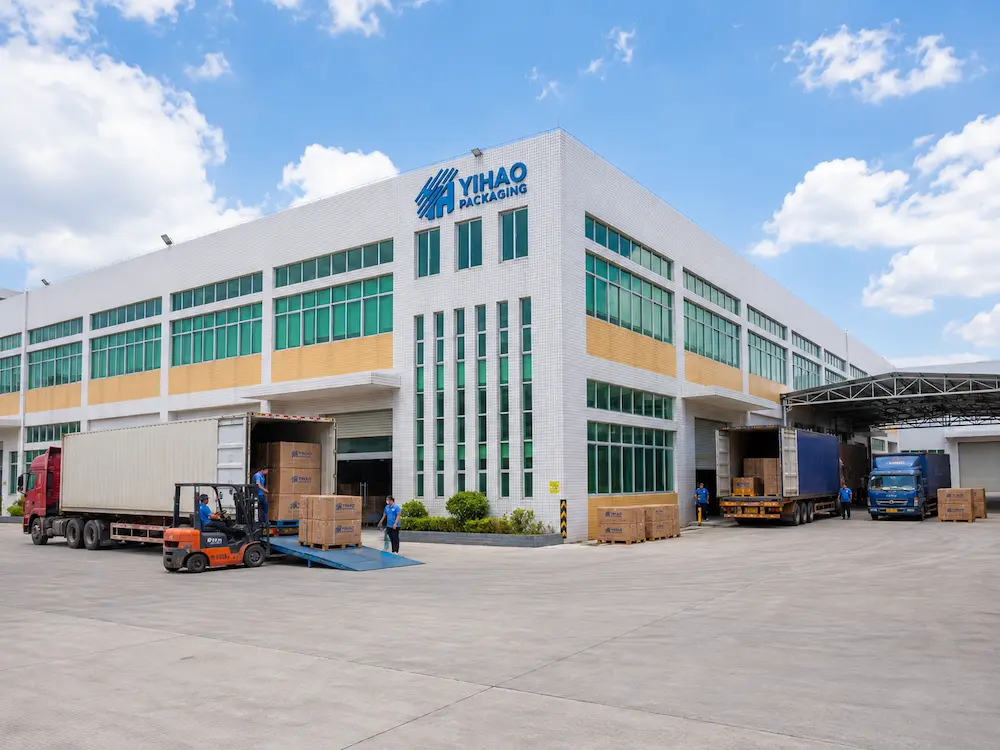
YIHAO supports buyers with clear PET/RPET packaging solutions for fresh-cut fruit, ready-to-eat fruit, fruit cups, salads, snacks, bakery items, deli foods, and chilled retail applications. For buyers sourcing ready-to-eat fruit containers, the key value is application-based packaging selection.
Instead of treating fruit packaging as one generic category, YIHAO helps buyers compare product type, portion size, container shape, lid structure, material clarity, label space, stacking, chilled display, sample testing, and wholesale supply needs.
For supermarkets, convenience stores, cafes, bakeries, foodservice brands, and packaging teams, a structured supplier conversation reduces mistakes before mass ordering. Buyers can prepare fruit type, fill weight, target channel, label needs, chilled display conditions, and expected order plan before requesting samples.
FAQ About Ready-to-Eat Fruit Containers
1. What are ready-to-eat fruit containers used for?
Ready-to-eat fruit containers are used for fresh-cut fruit, mixed fruit cups, fruit-and-nut snack packs, chilled fruit bowls, cafe fruit portions, supermarket grab-and-go displays, and convenience store fruit packaging. They help protect the product while supporting clear visibility and easy takeaway.
2. What material is best for ready-to-eat fruit containers?
PET and rPET are common choices because they provide clear visibility, practical rigidity, and chilled retail presentation. Buyers should confirm material details, food-contact suitability, target-market requirements, and supplier documentation before wholesale orders.
3. How should buyers choose the right size?
Buyers should choose size based on fruit type, fill weight, lid clearance, portion value, label placement, shelf space, and carton fit. Filled sample testing helps confirm whether the container looks full, protects the product, and stacks properly.
4. Are ready-to-eat fruit containers suitable for convenience stores?
Yes. Ready-to-eat fruit containers are suitable for convenience stores when they support small portions, quick purchase, chilled display, secure closure, clear visibility, and easy handling. Compact fruit cups and clear containers are often useful for this channel.
5. What should buyers ask a supplier before ordering?
Buyers should ask about material, size range, lid security, chilled display performance, label space, stacking, carton packing, sample testing, wholesale supply support, and whether the supplier understands grab-and-go fruit packaging applications.
References
- U.S. Food and Drug Administration, Packaging & Food Contact Substances Resources.
- U.S. Food and Drug Administration, Guidance for Industry: Use of Recycled Plastics in Food Packaging, Chemistry Considerations.
- European Commission, Packaging and Packaging Waste Policy Resources.
- Food and Agriculture Organization of the United Nations, Food Loss and Waste Reduction Resources.
- United States Department of Agriculture, Fresh Fruit and Vegetable Market Resources.
- International Fresh Produce Association, Fresh Produce Supply Chain and Packaging Resources.
- Association of Plastic Recyclers, Design Guide for Plastics Recyclability.
- ASTM International, Packaging Performance and Testing Standards.
Deep-Dive Insights: How Buyers Should Think About Ready-to-Eat Fruit Packaging
How should buyers define the right ready-to-eat fruit container?
The right container should be defined by fruit type, portion size, sales channel, chilled display, label needs, and handling route. Ready-to-eat fruit containers should not be chosen only by volume or price.
Why does grab-and-go packaging need stronger visual design?
Grab-and-go fruit buyers make fast decisions. Clear packaging, organized fruit presentation, clean lid structure, and label placement all affect whether the product looks fresh and convenient.
What makes convenience store fruit packaging different?
Convenience store packaging needs compact size, quick visibility, secure closure, and efficient chilled shelf use. It must support fast purchase and easy carrying.
When should buyers use fruit cup packaging?
Fruit cup packaging is useful for single-serve portions, snack cups, school meals, cafe counters, and convenience store programs. Larger clear fruit containers are better for shared portions, mixed fruit display, and premium chilled presentation.
What should buyers avoid?
Buyers should avoid choosing only by volume, approving empty samples, ignoring chilled display performance, using one container for every fruit mix, and selecting suppliers that do not understand grab-and-go retail use.
Final Note / Practical Takeaway
© 2026 YIHAO Packaging. This article is created for supermarkets, convenience stores, cafes, bakeries, foodservice brands, fresh-cut processors, distributors, and food packaging teams evaluating ready-to-eat fruit containers, grab-and-go fruit packaging, convenience store fruit packaging, supermarket grab and go packaging, fruit cup packaging, and clear fruit containers. All rights reserved.