Prepared meals are now a major part of supermarket deli counters, convenience retail shelves, restaurant takeaway programs, foodservice operations, meal prep brands, and chilled-to-heated food concepts. For food packaging teams, this creates a practical sourcing question: how should buyers choose prepared food containers that protect food quality, support real food handling, match reheating expectations, and remain stable for wholesale supply?
The answer is not simply choosing a food container with a lid. Prepared food packaging must match food temperature, moisture level, sauce content, portion weight, stacking route, shelf display, delivery movement, customer reheating behavior, and supplier capability. A rice bowl, pasta meal, hot deli side, chilled noodle dish, prepared salad, protein meal, and supermarket ready meal do not all need the same container structure.
Some applications require microwave safe containers. Others need clear cold display packaging. Some programs need PP deli packaging for reheatable foods. Others need PET or rPET containers for chilled salads, fresh food, and retail visibility. For large food packaging teams, the best purchasing decision starts with application mapping instead of capacity guessing.
YIHAO works as a food packaging manufacturer and solution provider for buyers who need practical packaging systems rather than isolated container items. For prepared food programs, the right container should support the full route from kitchen filling to cold storage, hot holding, shelf display, takeaway, delivery, and final customer use.
Why Prepared Food Containers Need a Different Buying Logic
Prepared food containers sit between several packaging categories. They overlap with deli containers, meal prep containers, hot food containers, chilled food packaging, takeaway packaging, and supermarket ready meal packaging. This makes them more demanding than simple cold food containers or single-use display trays.
Food packaging teams usually need prepared food packaging for one or more of these scenarios:
- Supermarket deli meals, hot sides, rice bowls, pasta, noodles, and prepared lunch bowls
- Restaurant takeaway meals that may be reheated after delivery
- Meal prep brands that need portion consistency and stackable storage
- Foodservice counters packing cooked meals, cold dishes, sauced foods, and daily specials
- Convenience retail programs selling chilled meals, heat-and-eat meals, and grab-and-go lunch items
- Catering and institutional food programs that require batch packing and fast handling
This category needs stronger decision discipline because the wrong material creates operational problems. A cold-use container used for hot food may deform. A weak lid may leak during transport. A shallow container may crush toppings. A high lid may waste carton space. A container with poor stacking performance may slow preparation work. A product without proper food-contact and intended-use documentation creates risk for serious buyers.
For buyers building long-term packaging programs, food packaging manufacturer capability matters as much as the container itself. A supplier should help match material, size, lid design, packaging route, and wholesale order planning instead of only sending a random product list.
How to Choose Prepared Food Containers for Deli Meals, Hot Foods, and Reheatable Packaging
The best way to choose prepared food containers is to start with the food application. Food packaging teams should define whether the food is hot-filled, chilled, reheated, delivered, displayed, or eaten directly from the container. This decision affects material, lid style, depth, wall strength, stacking design, labeling position, and supplier documentation.
For hot deli foods, sauced dishes, cooked rice, pasta, noodles, and takeaway meals, PP packaging is often the practical starting point. For chilled salads, fresh fruit, cold snacks, and display-focused deli foods, PET and rPET formats may be more suitable because they provide stronger product visibility. For dry or low-moisture meals, paperboard may work when barrier performance is correctly selected. For oven-style reheating, aluminum trays may be used, but they are not suitable for microwave heating.
The key point is simple: prepared food packaging should be selected by actual use condition, not by appearance alone.
Material Selection: Why PP Is Often Used for Reheatable Prepared Foods
Material selection is the first serious checkpoint. For prepared foods that may be served warm, stored chilled, and reheated before eating, PP is often the preferred direction because it is widely used in hot food and microwave-related packaging applications. That does not mean every PP container is automatically suitable for every reheating scenario. Buyers still need to confirm intended use, food-contact documentation, temperature exposure, lid compatibility, and supplier guidance.
PP prepared meal container options are especially relevant for supermarket prepared food counters, takeaway meals, and meal prep operations because they balance heat-related performance, portion control, and practical filling speed. Separate-lid formats help teams fill containers quickly, apply lids after packing, and manage different food types across the same prepared meal line.
For hot deli sides, rice meals, noodles, pasta, cooked vegetables, and sauced entrées, PP hot food container formats provide a more direct fit than clear PET cold-use packaging. PET and rPET containers remain useful for chilled display foods such as salads, fruit, bakery items, and cold deli packs, but they should not be positioned as reheating containers unless the exact product is designed, tested, and documented for that use.
PP vs PET for Prepared Food Programs
| Buying Factor | PP Prepared Food Containers | PET / rPET Cold Food Containers |
|---|---|---|
| Main use | Hot foods, reheatable meals, takeaway dishes, meal prep | Cold salads, fruit, chilled deli items, bakery display |
| Reheating logic | Suitable direction when designed for microwave-related use | Generally better for cold display, not heat-focused use |
| Visual clarity | Usually lower clarity than PET | High clarity for retail display |
| Food match | Rice, pasta, noodles, hot deli foods, sauced meals | Salads, fruit, cold snacks, chilled prepared foods |
| Buyer checkpoint | Confirm microwave-safe use, lid handling, and food-contact documentation | Confirm cold-use application, closure, clarity, and stacking |
PP vs PET vs Paperboard vs Aluminum for Prepared Food Containers
Prepared food buyers often compare PP, PET, paperboard, and aluminum options before selecting a packaging system. Each material has a useful place, but each one also has a clear limitation. A strong sourcing decision depends on matching the material to the food program rather than forcing one option across every menu item.
| Material | Best For | Main Advantage | Key Limitation |
|---|---|---|---|
| PP | Reheatable meals, hot deli foods, takeaway meals, meal prep | Practical for heat-related prepared food applications | Lower visual clarity than PET |
| PET / rPET | Cold display, salads, fruit, chilled deli foods | High clarity and strong retail presentation | Not ideal for reheating unless specifically designed for that use |
| Paperboard | Dry meals, low-moisture foods, branded takeaway packaging | Good print surface and natural packaging appearance | Grease and moisture resistance depend on coating or lining |
| Aluminum | Oven-style hot meals and baked prepared foods | Good for certain heat-retention and oven applications | Not microwave safe |
For many prepared meal programs, the practical solution is not one material for all foods. A supermarket or foodservice buyer may use PP for reheatable meals, PET or rPET for chilled display foods, paperboard for dry branded items, and aluminum for specific oven-style applications. The supplier should help define these boundaries clearly.
How to Match Prepared Food Containers to Real Food Applications
A strong prepared food packaging plan begins with menu mapping. Buyers should not choose containers only by capacity. The correct container depends on food density, sauce level, eating method, heating need, and route to customer.
1. Hot Deli Meals and Reheatable Entrées
Hot deli meals need containers that hold cooked foods without weak lid fit or structure collapse. Common examples include rice bowls, pasta, noodles, roasted vegetables, cooked proteins, and side dishes. These foods often carry moisture, oil, sauce, or steam after packing. Buyers should prioritize PP structure, secure lid fit, stackability, and reheating guidance.
For foodservice and retail counters, large PP deli food container options are useful when the product line includes bigger lunch portions, family-style prepared foods, or higher-volume takeaway meals. Larger formats should still be tested with real food weight because capacity alone does not confirm performance.
2. Chilled Prepared Meals
Not all prepared foods are hot. Many supermarket and convenience retail programs sell chilled meals that customers may eat cold or reheat later. Examples include chilled noodles, grain bowls, pasta salads, cooked protein bowls, and refrigerated meal packs. These applications need clear labeling, stable stacking, and a container structure that supports both display and handling.
For products that move between cold display and hot takeaway logic, PP prepared food container formats help buyers standardize part of the range without overcomplicating the SKU matrix.
3. Deli Sides, Sauced Foods, and Moist Foods
Deli sides and sauced foods create more pressure on closure quality. Mashed potatoes, pasta, cooked vegetables, curries, stewed dishes, and sauced noodles require a container that controls leakage risk during packing and transport. Buyers should test lid fit, rim strength, stacking pressure, and whether the lid needs venting or loose placement during reheating.
For cold deli foods and retail takeaway packs, PP deli food container options provide a practical route for food counters that need a clean, functional container system for prepared deli items.
4. Meal Prep and Portion-Control Programs
Meal prep packaging requires repeatable portion logic. Buyers need containers that support consistent serving size, shelf organization, batch filling, delivery handling, and reheating behavior. If meals contain separated ingredients, a divided format may be needed. If the meal is a single rice or pasta base, a simple rectangular or round PP container may be more efficient.
The key is not to buy too many shapes too early. Start with the main food types, identify the most common portion sizes, test actual meal weight, and then expand into secondary formats only when there is proven demand.
Container Shape: Round, Rectangular, Square, or Compartment?
Shape affects more than appearance. It changes filling speed, shelf layout, lid fit, stacking behavior, and how customers perceive the meal. For prepared food containers, buyers should evaluate container shape according to operational use rather than visual preference alone.
| Container Shape | Best Fit | Buyer Advantage | Watch Point |
|---|---|---|---|
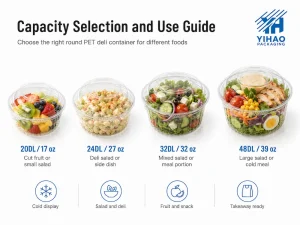
| Round | Rice bowls, soups, salads, noodle bowls, deli sides | Easy eating experience and bowl-style presentation | May use more shelf space than square formats |
| Rectangular | Prepared meals, pasta, entrées, meal prep | Strong shelf and carton efficiency | Corner strength and lid fit must be tested |
| Square | Stackable deli meals, salads, sides, chilled meals | Good retail display and storage efficiency | Needs stable lid compatibility |
| Compartment | Meal kits, protein boxes, separated meals | Keeps ingredients separated for better presentation | More complex mold, portion, and filling logic |
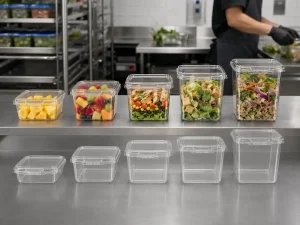
For chilled foods that do not require reheating, buyers may also consider square PET deli containers or other clear deli formats. These containers are useful when product visibility is more important than reheating performance. For reheatable meals, PP remains the more direct material direction.
Lid Design and Closure Quality: The Part Buyers Often Underestimate
The lid determines whether the prepared food container performs well in real operations. A strong base with a weak lid still creates customer complaints. Food packaging teams should evaluate lid fit, opening experience, stacking pressure, condensation behavior, and whether the lid is intended to stay on during reheating.
For microwave safe deli containers, the lid question is especially important. Some lids may need to be loosened, vented, removed, or used according to supplier instructions during heating. Buyers should never assume that the lid and base share the same use conditions unless confirmed by documentation and product guidance.
A practical lid checklist should include:
- Does the lid close evenly across the full rim?
- Does it resist popping open during stacking or delivery movement?
- Does the lid allow practical handling for kitchen staff wearing gloves?
- Does the supplier provide intended-use guidance for microwave or hot food applications?
- Does the lid structure support label placement without blocking key information?
- Does the closure remain consistent after real food filling, not just empty sample testing?
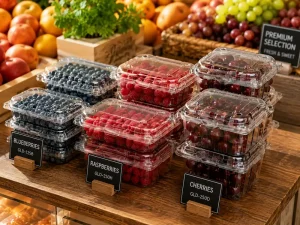
Buyers comparing PET hinged deli containers with PP separate-lid containers should separate cold display needs from reheating needs. Hinged PET formats are efficient for fruit, salads, snacks, and chilled deli programs. PP separate-lid formats are usually more practical for prepared hot foods and reheatable meals.
Buyer Specification Table for Prepared Food Container Quotes
Before requesting a price, buyers should prepare clear specification details. This helps the supplier recommend the right container and prevents wasted sample rounds. A serious prepared food containers supplier should use these details to match product structure, material, lid system, and wholesale carton planning.
| Buyer Requirement | What to Confirm | Why It Matters |
|---|---|---|
| Food type | Rice, pasta, noodles, deli sides, hot meals, chilled dishes | Determines container depth, lid height, and material direction |
| Use condition | Chilled, hot-filled, reheated, delivered, or displayed | Determines whether PP, PET, paperboard, or aluminum is suitable |
| Lid handling | Remove, loosen, vent, or keep closed during heating | Avoids customer misuse and reheating complaints |
| Portion weight | Actual food weight, not only fluid capacity | Prevents base deformation and stacking failure |
| Storage route | Refrigerator, hot cabinet, delivery bag, shelf, or carton | Confirms stacking, closure, and handling performance |
| Order model | Trial order, wholesale order, recurring supply, or custom program | Helps the manufacturer plan production, cartons, and long-term supply |
How to Choose a Prepared Food Containers Manufacturer, Wholesale Supplier, or Factory Partner
For B2B buyers, container quality is only one part of the purchasing decision. A reliable prepared food containers manufacturer should support application matching, sample testing, material explanation, lid compatibility, carton planning, and long-term wholesale supply.
Food packaging teams comparing a prepared food containers wholesale supplier should evaluate six areas:
1. Application Understanding
A serious supplier should ask what food will go into the container, whether the food is hot-filled, chilled, reheated, delivered, displayed, or sold as takeaway. If a supplier only asks for capacity, they are not supporting the full buying decision.
2. Material and Use Documentation
Buyers should request food-contact documentation, intended-use statements, and any relevant guidance for hot food or reheating applications. This is especially important for reheatable deli packaging and PP deli packaging.
3. Sample Testing Support
Sample testing should be done with real foods, not only water or empty containers. Test hot rice, sauced pasta, oily foods, chilled meals, and stacked cartons. Check base deformation, lid fit, leakage, stacking, label placement, and customer opening experience.
4. Product Range Logic
The supplier should offer enough container sizes to build a practical line, but not push unnecessary SKUs. A good prepared food packaging range usually starts with a few core sizes, then expands into large portions, compartment formats, or specialized lids based on actual demand.
5. Wholesale Supply Stability
Buyers need stable production, consistent packaging, repeatable quality, and clear communication before scaling into bulk orders. A low unit price is not useful if closure fit, carton packing, or material consistency changes from batch to batch.
6. Custom and Private Label Potential
For supermarkets, food brands, and distributors, custom packaging may become important after the basic container system is stable. Custom options can include label areas, embossing, carton organization, private-label planning, or coordinated packaging families.
Prepared Food Container Sample Testing Checklist
Before wholesale ordering, buyers should run a structured sample test. This avoids costly mistakes and protects the prepared food program before scaling.
| Test Area | What to Check | Why It Matters |
|---|---|---|
| Food fit | Portion size, food height, sauce level, topping space | Prevents underfilling, crushing, and poor presentation |
| Closure | Lid snap, rim contact, reopening behavior | Reduces leakage and transport complaints |
| Heating use | Supplier guidance, venting, lid handling, base performance | Protects reheatable food applications |
| Stacking | Loaded stacking, back-of-house storage, shelf display | Improves operational efficiency |
| Labeling | Top label, side label, barcode, heating instructions | Supports retail compliance and customer use |
| Transport | Bag movement, carton packing, delivery vibration | Reduces damage before customer handoff |
Sample testing should include the exact food temperatures and routes used in real operations. A container that works for a cold pasta salad may not work for hot sauced noodles. A container that stacks well empty may fail when filled with dense rice or heavy entrées. A lid that feels secure by hand may loosen during delivery movement.
How to Build a Prepared Food Packaging Range Without Too Many SKUs
Many food packaging teams overcomplicate prepared food programs by buying too many similar containers. This creates storage pressure, higher purchasing complexity, and slower staff training. The better approach is to build a controlled range around core use cases.
A practical prepared food packaging range may include:
- One small PP container for side dishes, small meals, and deli portions
- One medium PP container for standard prepared meals and takeaway lunches
- One large PP container for bigger meals, family portions, or foodservice applications
- One compartment option for separated ingredients or protein meal packs
- One cold display container family for salads, fruit, and chilled prepared foods
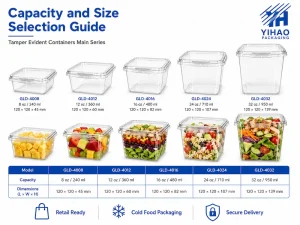
- One tamper-evident option for higher-security retail or delivery programs
This structure gives buyers enough coverage without creating chaos. For prepared meal programs, it is better to scale from a stable core range than to launch with too many untested formats.
When security matters for retail shelves, foodservice teams may also connect prepared food packaging with tamper evident containers. These formats are especially useful for grab-and-go, chilled meals, snack packs, and products where first-opening protection supports consumer confidence.
Common Buying Mistakes to Avoid
Mistake 1: Using Cold-Use Containers for Reheatable Meals
This is one of the most expensive errors. Clear cold-use packaging may look attractive, but reheatable foods need packaging designed for the intended heat exposure. Buyers should not treat PET deli packaging and PP microwave-related packaging as the same category.
Mistake 2: Choosing by Capacity Only
Capacity does not tell the full story. Food density, sauce level, topping height, and eating method matter. A 32 oz container may fit a salad but fail for a heavy sauced meal if the base and lid are not designed for that use.
Mistake 3: Ignoring Lid Instructions
For reheatable food, the lid is not a small detail. Buyers must confirm whether the lid is intended for reheating, whether it needs venting, and what instructions should be communicated to the customer.
Mistake 4: Skipping Real-Food Sample Testing
Empty samples are useful for first screening, but real-food testing is mandatory before bulk orders. Heat, sauce, oil, steam, and food weight all change packaging performance.
Mistake 5: Buying From a Supplier Without Category Logic
Prepared food packaging requires application support. A supplier that cannot explain material selection, lid matching, sample testing, and wholesale planning is not strong enough for serious food packaging teams.
Buyer Checklist Before Requesting a Quote
Before asking for a wholesale quote, prepare clear application information. This helps the supplier recommend the right container and avoids wasted sample rounds.
- What foods will be packed: rice, pasta, noodles, hot sides, salads, chilled meals, or sauced dishes?
- Will the food be hot-filled, chilled, reheated, delivered, or displayed?
- What portion size and food weight are needed?
- Does the customer need microwave reheating guidance?
- Will the lid stay on, be vented, loosened, or removed during heating?
- Will the container be stacked in cartons, refrigerators, hot cabinets, or delivery bags?
- Do you need standard wholesale supply, custom branding, or private label packaging?
- Do you need one container family or several coordinated food packaging categories?
Buyers who prepare this information receive better recommendations, faster sampling, and more accurate wholesale pricing. It also helps the supplier avoid recommending containers that look similar but serve the wrong food application.
Need Help Matching Prepared Food Containers to Your Food Program?
For buyers comparing PP deli packaging, reheatable deli packaging, microwave safe deli containers, and wholesale prepared meal containers, the best next step is sample testing with real food applications. YIHAO supports food packaging teams with material selection, size matching, sample review, and wholesale packaging planning for prepared meals, deli foods, takeaway meals, and foodservice programs.
Final Note / Practical Takeaway
FAQ: Prepared Food Containers
1. What are prepared food containers used for?
Prepared food containers are used for deli meals, hot sides, rice bowls, pasta, noodles, meal prep, takeaway meals, chilled ready meals, supermarket prepared foods, and foodservice packaging programs.
2. Are PP prepared food containers suitable for microwave use?
PP is commonly used for microwave-related and hot food packaging applications, but buyers must confirm that the specific container and lid are designed and documented for the intended reheating use.
3. What is the difference between PP deli packaging and PET deli containers?
PP deli packaging is usually selected for hot foods, reheatable meals, and takeaway applications. PET deli containers are usually selected for cold display foods such as salads, fruit, chilled snacks, and clear retail presentation.
4. Can prepared food containers be used for both chilled and hot foods?
Prepared food containers can support chilled or hot food programs when the material, lid, and intended-use conditions match the application. PP is usually preferred for hot or reheatable meals, while PET and rPET are more suitable for cold display foods.
5. What should food packaging teams ask a prepared food container supplier?
Food packaging teams should ask about material, intended use, food-contact documentation, lid compatibility, sample testing, available sizes, wholesale supply stability, carton packing, and custom packaging support.
References
- U.S. Food and Drug Administration, Packaging & Food Contact Substances guidance.
- European Commission, Regulation (EU) No 10/2011 on plastic materials and articles intended to come into contact with food.
- USDA Food Safety and Inspection Service, Leftovers and Food Safety.
- USDA Food Safety and Inspection Service, Cooking Safely in the Microwave Oven.
- FoodSafety.gov, Microwave reheating and leftover food safety guidance.
- Food packaging supplier documentation and intended-use confirmation practices for B2B buyers.
- Prepared food retail packaging application review for deli, meal prep, and takeaway programs.
- YIHAO Packaging internal product range and application-based packaging selection logic.
Deep Dive Insights
How should food packaging teams define the right prepared food container?
The right prepared food container is defined by the food application first. Buyers should confirm whether the meal is chilled, hot-filled, reheated, delivered, displayed, or eaten directly from the container. This determines whether PP, PET, paperboard, or aluminum is the correct material direction.
Why does PP remain important for reheatable deli packaging?
PP remains important because many prepared meals involve heat, moisture, sauce, oil, and reheating expectations. When the container and lid are designed for the intended use, PP deli packaging gives buyers a practical solution for hot deli foods, reheatable meals, takeaway dishes, and meal prep programs.
What should buyers avoid when comparing prepared food containers?
Buyers should avoid choosing by capacity alone, using cold-use containers for hot meals, ignoring lid instructions, skipping real-food sample testing, and sourcing from suppliers that cannot explain material selection or intended-use guidance.
Which option works best for wholesale prepared meal packaging?
For wholesale prepared meal packaging, the best option is usually a controlled packaging range built around core food types. A buyer may use PP containers for reheatable meals, PET or rPET containers for chilled display foods, and tamper-evident packaging for retail-ready safety needs.
What makes a prepared food containers supplier more reliable?
A reliable supplier understands food applications, provides samples, supports material and lid selection, confirms intended-use conditions, maintains stable wholesale supply, and helps buyers build a practical packaging range instead of pushing unrelated container styles.
© YIHAO Packaging. All rights reserved. All articles, product images, packaging designs, technical specifications, and website materials are protected by copyright. Unauthorized copying, reproduction, redistribution, modification, or commercial use is strictly prohibited without prior written permission.