
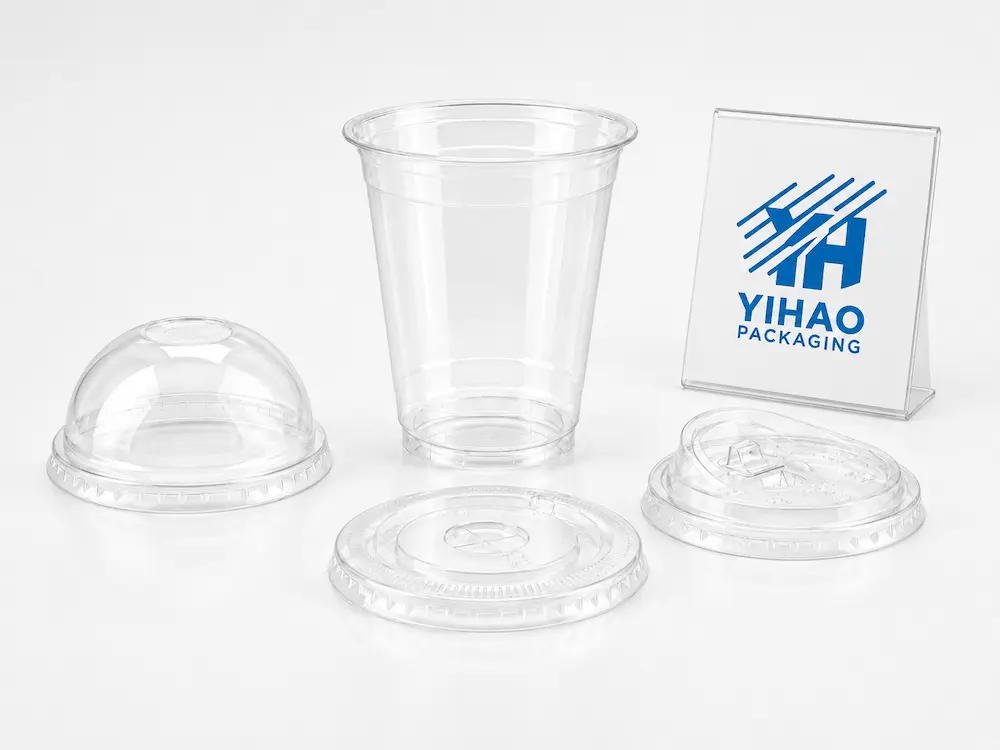
Micro Summary: PP Cup Lids for Cold Beverage Packaging
PP cup lids are practical lid solutions for supermarkets, cafes, bakeries, beverage shops, and foodservice brands that need reliable closure, comfortable drinking design, and stable wholesale supply for cold drink packaging.
Buyers comparing cold cup lids, flat cold cup lids, dome lids, strawless lids, and sip lids should focus on cup rim compatibility, lid opening design, beverage application, stacking performance, material flexibility, and supplier support before confirming bulk orders.
Introduction: Why PP Cup Lids Are More Than Simple Cup Covers
For supermarkets, cafes, bakeries, beverage chains, and foodservice distributors, beverage packaging is not only about cups. The lid often decides whether the drink feels secure, convenient, professional, and ready for takeaway service. A good cup may still create customer complaints if the lid fits poorly, pops off during handling, leaks around the rim, or does not match the drinking method.
This is why PP cup lids are an important part of modern cold beverage packaging. They support daily drink programs such as iced coffee, cold brew, smoothies, juice, fruit tea, lemonade, milk tea, matcha, refreshers, sparkling fruit drinks, protein drinks, and grab-and-go chilled beverages.
For B2B buyers, the lid should not be selected only by diameter. A complete lid decision should consider cup rim structure, beverage type, customer drinking behavior, storage conditions, staff handling speed, retail display, and reorder stability. This is especially important for businesses managing multiple drink SKUs across supermarkets, cafes, bakeries, convenience stores, and foodservice distribution channels.
As a food packaging manufacturer and solution provider, YIHAO helps buyers evaluate PP cup lids as part of a complete beverage packaging system, not as isolated accessories.
What Are PP Cup Lids?
PP cup lids are cup covers made from polypropylene. In foodservice beverage packaging, PP is valued for its flexible feel, practical toughness, and stable snap-fit performance when the lid is matched with the correct cup rim.
Unlike more rigid lid materials, PP has a slight material flexibility that helps the lid engage with compatible cup rims during closure. This gives PP cup lids a practical advantage in high-volume service environments where staff need to close drinks quickly and customers need stable takeaway handling.

Common PP cup lids include:
- Flat cold cup lids for simple iced drinks, juice, tea, lemonade, and grab-and-go beverages.
- Dome lids for smoothies, whipped cream drinks, toppings, foam, dessert drinks, and layered beverages.
- Strawless lids for direct-sip cold drinks and reduced straw dependency.
- Sip lids for iced coffee, cold brew, matcha, iced tea, and takeaway beverage programs.
- Custom-matched lids for cup series, private-label programs, and wholesale beverage packaging systems.
The best lid choice depends on how the drink is filled, displayed, carried, and consumed.
Material Advantages of PP Cup Lids
PP is widely used in beverage lids because it offers a practical balance between flexibility, strength, and service efficiency. For supermarkets, cafes, bakeries, and foodservice buyers, these advantages directly affect daily operations.
Flexible Snap-Fit Performance
A lid must close securely without making staff struggle during service. The flexible character of PP helps compatible lids snap onto cup rims with a more forgiving fit. This is valuable for busy cafes, juice bars, and takeaway counters where speed matters.
However, flexibility does not mean universal fit. Buyers still need to test PP cup lids with the exact cup rim before bulk ordering.
Better Handling for Takeaway Drinks
Cold beverages are often carried in bags, cup holders, delivery trays, and refrigerated shelves. A practical lid must tolerate repeated handling. PP’s toughness makes it suitable for everyday takeaway drink programs, especially where cups are frequently moved, stacked, or transported.
Practical Choice for Multi-SKU Beverage Programs
Supermarkets and beverage chains often manage different drink types in one packaging system. PP lids help simplify service because they are available in multiple functional designs, including flat, dome, strawless, and sip structures.
Useful for Wholesale and Repeat Orders
For distributors and importers, lid consistency is important. A stable lid range reduces reorder confusion and helps buyers build repeatable packaging systems across different customer accounts.
Common Buyer Pain Points with Cup Lids
Many packaging problems start with the lid. Buyers often focus on cup size, price, and appearance, but the wrong lid creates operational issues after the order arrives.
Common problems include:
- Lid does not match the cup rim even when the stated diameter looks correct.
- Lid feels loose after filling the beverage.
- Staff need too much force to close the lid.
- Dome lids collapse or do not provide enough topping space.
- Straw opening does not fit the intended straw.
- Sip opening does not feel comfortable for direct drinking.
- Cartons are difficult to identify in warehouse storage.
- Multiple lid types create confusion during busy service hours.
- Reorders become risky because product codes are not clearly managed.
A reliable manufacturer, wholesale partner, or supplier should help buyers avoid these problems before bulk ordering.
PP Cup Lids for Supermarkets
Supermarkets need beverage packaging that works in chilled display and grab-and-go shopping environments. Customers often pick up drinks from refrigerated shelves, compare different flavors quickly, and expect the packaging to feel clean, secure, and professional.
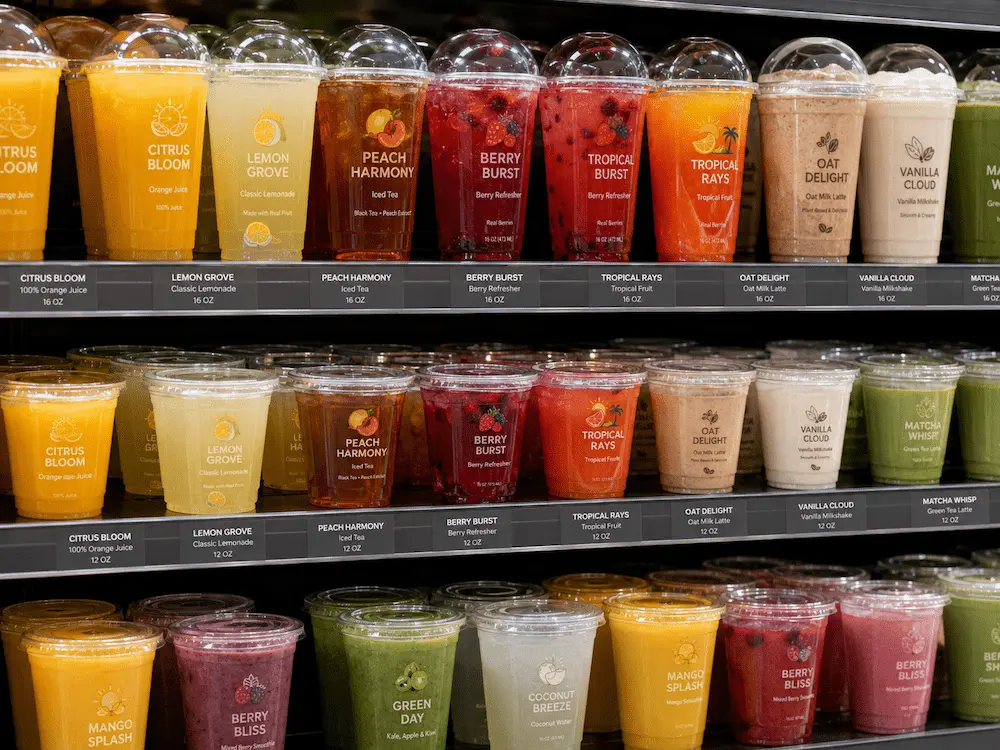
PP cup lids are suitable for supermarket beverage programs such as:
- Fresh juice cups.
- Fruit tea and lemonade.
- Yogurt drinks.
- Iced coffee and cold brew.
- Smoothies and protein drinks.
- Seasonal refreshers.
- Private-label chilled beverages.
For supermarkets, lid performance affects both shelf appearance and customer confidence. A loose lid makes the beverage feel risky. A poorly matched lid may weaken the value of the entire product, even if the drink quality is good.
Supermarket buyers should evaluate lid closure, display neatness, stacking stability, carton labeling, and whether the lid range can support multiple cup sizes under one sourcing plan.
PP Cup Lids for Cafes and Coffee Shops

Cafes need lids that support service speed, drinking comfort, and consistent brand presentation. A busy cafe may serve iced coffee, cold brew, matcha latte, iced tea, lemonade, fruit tea, flavored cold brew, refreshers, milk tea, and protein drinks throughout the day.
Each drink may need a different lid style.
For iced coffee and cold brew, sip lids and strawless lids help customers drink directly while walking, driving, or working. For drinks served with straws, flat lids with suitable openings remain practical. For whipped cream beverages or topping-heavy drinks, dome lids provide the necessary space above the cup.
A strong cafe packaging system should not rely on one lid for every drink. It should use the right lid for the right beverage experience.
PP Cup Lids for Bakeries and Dessert Beverage Brands
Bakeries increasingly sell drinks beside cakes, pastries, chilled desserts, fruit cups, parfaits, and grab-and-go snacks. In this environment, beverage packaging must support visual merchandising.
Dome lids are useful for bakery-style beverages because they create space for whipped cream, fruit toppings, foam, chocolate drizzle, matcha cream, cookie crumbs, and layered dessert drinks. They help protect the drink presentation while making the beverage look more attractive in a display case.
For bakeries, the lid is part of the product image. A clean, well-matched lid supports premium presentation and encourages impulse purchases.
PP Cup Lids for Juice Bars and Smoothie Shops

Juice bars and smoothie shops need lids that match beverage texture. Thin drinks, thick smoothies, fruit blends, protein drinks, acai refreshers, and topping-based drinks do not behave the same way.
Smoothies may need wider straw openings or dome structures. Fresh juice may use flat lids for clean display. Protein drinks may need secure closure for takeaway handling. Fruit tea and refreshers may require lids that support straws, direct sipping, or visible toppings.
For this reason, smoothie and juice buyers should test lids with real beverages, not empty cups only. A lid that looks suitable during dry testing may perform differently when the cup contains thick liquid, ice, fruit pieces, foam, or toppings.
PP Cup Lids for Foodservice Distributors
Foodservice distributors need lid systems that are easy to stock, easy to sell, and easy to reorder. A distributor may serve supermarkets, cafes, bakeries, restaurants, convenience stores, catering businesses, and beverage shops at the same time.

For distributors, the key value of PP cup lids is system organization. A clear lid range helps sales teams recommend the right product and helps warehouse teams reduce confusion.
Distributors should request:
- Clear product codes.
- Cup compatibility information.
- Carton quantity and carton markings.
- Sample support.
- Stable repeat production.
- Matching cup-and-lid series.
- OEM or private-label packaging support.
This reduces sourcing risk and supports long-term wholesale business.
Choosing the Right PP Cup Lid by Drink Program
| Drink Program | Recommended Lid Type | Why It Works | Buyer Checkpoint |
|---|---|---|---|
| Iced coffee and cold brew | Sip lids or strawless lids | Supports direct drinking and takeaway convenience | Check drinking opening comfort and rim fit |
| Fresh juice and lemonade | Flat cold cup lids | Clean, simple, and efficient for chilled display | Check straw opening and cup compatibility |
| Smoothies and protein drinks | Dome lids or flat lids with suitable straw opening | Supports thicker beverages and larger straws | Test with filled beverages, not empty cups only |
| Milk tea and fruit tea | Flat lids, dome lids, or strawless lids | Depends on toppings, pearls, fruit pieces, and drinking method | Confirm straw size and topping clearance |
| Bakery dessert drinks | Dome lids | Provides space for whipped cream, foam, and toppings | Check lid height and display appearance |
| Grab-and-go retail drinks | Flat lids or sip lids | Supports shelf display and quick customer handling | Check chilled shelf stability and carton labeling |
Flat Cold Cup Lids: Simple, Efficient, and Practical
Flat cold cup lids are one of the most common lid options for beverage packaging. Their low-profile structure makes them efficient for storage, carton packing, service counters, and chilled display.
Flat lids are suitable for:
- Iced tea.
- Lemonade.
- Juice.
- Soda.
- Fruit tea.
- Simple iced coffee.
- Grab-and-go chilled drinks.
For high-volume beverage programs, flat lids help keep packaging simple and cost-efficient. Buyers should confirm whether the lid opening matches the intended straw and whether the lid closes smoothly on the selected cup rim.
Dome Lids: Better Space for Toppings and Visual Presentation
Dome lids are designed for beverages that need extra space above the cup. They are especially useful for smoothies, whipped cream drinks, milkshakes, dessert beverages, bakery drinks, and fruit-topped drinks.
The extra height protects toppings and improves product visibility. This matters for bakeries, cafes, and retail displays where visual appeal influences buying decisions.
For buyers, the key checks include lid height, dome strength, cup rim fit, topping clearance, and carton storage space.
Strawless Lids: Direct-Sip Convenience
Strawless lids are designed to support direct drinking without requiring a separate straw. They are increasingly used for iced coffee, cold brew, iced tea, matcha drinks, refreshers, lemonade, and other cold beverages where customers prefer direct sipping.
For buyers, the most important detail is drinking comfort. The sip area should feel natural, the lid should remain secure on the cup, and the design should match the drink’s service model.
Strawless lids also help brands reduce the number of separate packaging components used in certain drink programs.
Sip Lids: Strong Fit for Takeaway Beverage Service
Sip lids are practical for cafes, coffee shops, convenience stores, and grab-and-go drink programs. They support customers who drink while commuting, walking, working, or shopping.
Good sip lids should provide:
- Comfortable drinking flow.
- Secure rim closure.
- Easy service handling.
- Consistent appearance.
- Compatibility with the selected cup series.
Sip lids are especially useful for iced coffee, cold brew, iced tea, matcha, and other beverages where direct drinking is part of the customer experience.
PP Cup Lids vs PET Cup Lids
PP and PET lids both have important roles in cold beverage packaging. Buyers should not treat one material as universally better. The better choice depends on lid function, display requirement, and beverage application.
| Comparison Point | PP Cup Lids | PET Cup Lids | Buyer Decision Logic |
|---|---|---|---|
| Material Feel | Flexible and practical for snap-fit closure | Clearer and more rigid in appearance | Choose based on fit, function, and visual need |
| Common Application | Sip lids, strawless lids, flat lids, takeaway drink lids | Clear display lids, dome lids, premium visual presentation | Match material to beverage service style |
| Handling Performance | Good for daily service and repeated handling | Good for clear display and structured presentation | Test both under real filling conditions |
| Display Effect | Practical appearance with functional design | High clarity when visibility is the priority | Retail display drinks may need stronger transparency |
| Wholesale Strategy | Useful for high-volume beverage programs | Useful for clear display and premium drink presentation | Many buyers use both materials across different SKUs |
For many buyers, the best solution is not choosing only PP or only PET. A stronger packaging plan uses PP lids for practical takeaway functions and clear PET lid options where maximum visibility is needed.
Wholesale Buyer Checklist Before Ordering PP Cup Lids
Before confirming a wholesale order, buyers should complete a structured lid evaluation. This prevents mismatched lids, customer complaints, and inventory problems.
| Checklist Item | What to Confirm | Why It Matters |
|---|---|---|
| Cup Rim Compatibility | Test the lid with the exact cup series | Diameter alone does not guarantee fit |
| Beverage Application | Match the lid to iced coffee, juice, smoothies, milk tea, or retail drinks | Different drinks need different lid structures |
| Opening Design | Check straw slot, sip opening, or strawless drinking area | Customer drinking comfort depends on the opening |
| Filled-Cup Testing | Test with real beverages, ice, foam, toppings, and movement | Empty-cup testing is not enough for final decisions |
| Storage and Carton Logic | Review carton quantity, carton marks, and warehouse handling | Important for distributors and multi-store buyers |
| Repeat Order Stability | Confirm product code, mold consistency, and supplier production support | Prevents reorder mismatch and SKU confusion |
| Customization Support | Ask about OEM packaging, private-label cartons, and range planning | Supports branded beverage programs and wholesale supply |
How to Reduce Lid Mismatch Risk
Lid mismatch is one of the most common packaging mistakes in beverage programs. It often happens because buyers assume that one diameter fits all cups with the same measurement.
In reality, cup rim shape, rolling edge design, wall thickness, material stiffness, and lid groove structure all affect fit. A lid that fits one cup may not fit another cup with the same stated diameter.
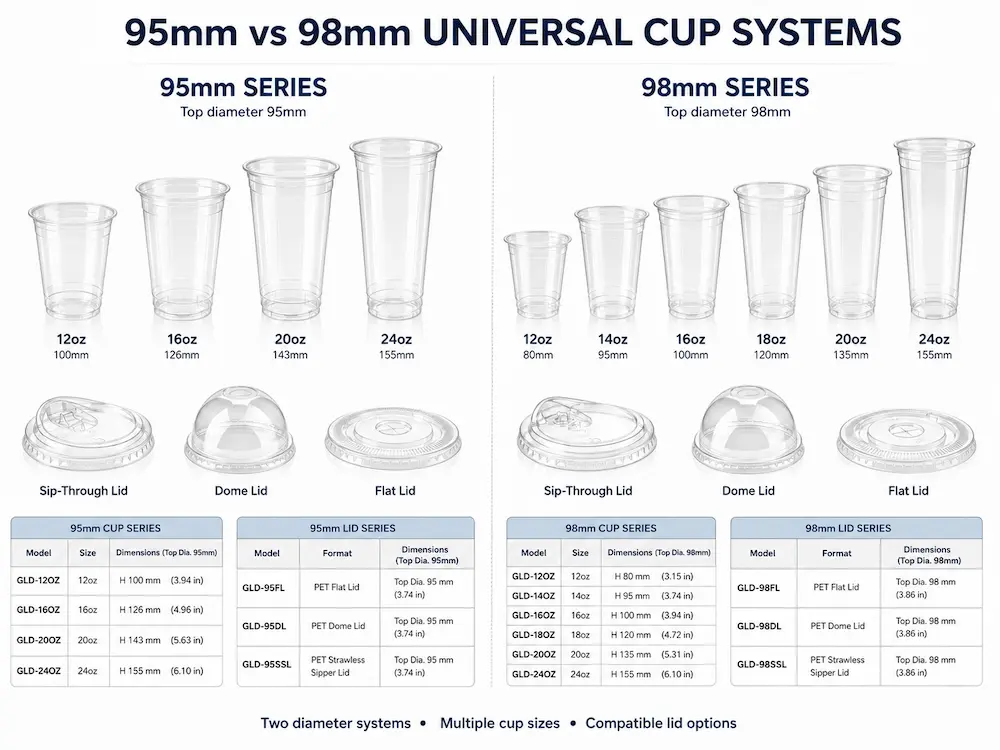
To reduce risk, buyers should follow this process:
- Request samples of both cups and lids.
- Test closure by hand under normal staff conditions.
- Fill cups with the actual beverage.
- Test lifting, carrying, stacking, and chilled display.
- Confirm product codes and carton labels before bulk order.
- Keep approved samples for future reorder comparison.
This simple process helps supermarkets, cafes, bakeries, and distributors avoid expensive mistakes.
Why Work with a Manufacturer for PP Cup Lids?
Working with a capable manufacturer gives buyers more control over fit logic, product consistency, range planning, and repeat supply. This is especially important when buyers need PP cup lids for different beverage programs across multiple store formats.

A manufacturer can help buyers organize:
- Matching cup and lid combinations.
- Lid type selection by beverage application.
- Sample testing and approval.
- OEM carton labeling.
- Wholesale packing requirements.
- Reorder specifications.
- Product range expansion.
For importers, distributors, and foodservice brands, this support reduces communication errors and improves long-term sourcing stability.
How YIHAO Supports PP Cup Lid Buyers
YIHAO provides food packaging solutions for buyers who need reliable packaging for cold drinks, fresh food, bakery display, takeaway service, and wholesale distribution. For beverage packaging, YIHAO helps customers evaluate PP cup lids based on application, cup compatibility, lid structure, material performance, display needs, and ordering logic.
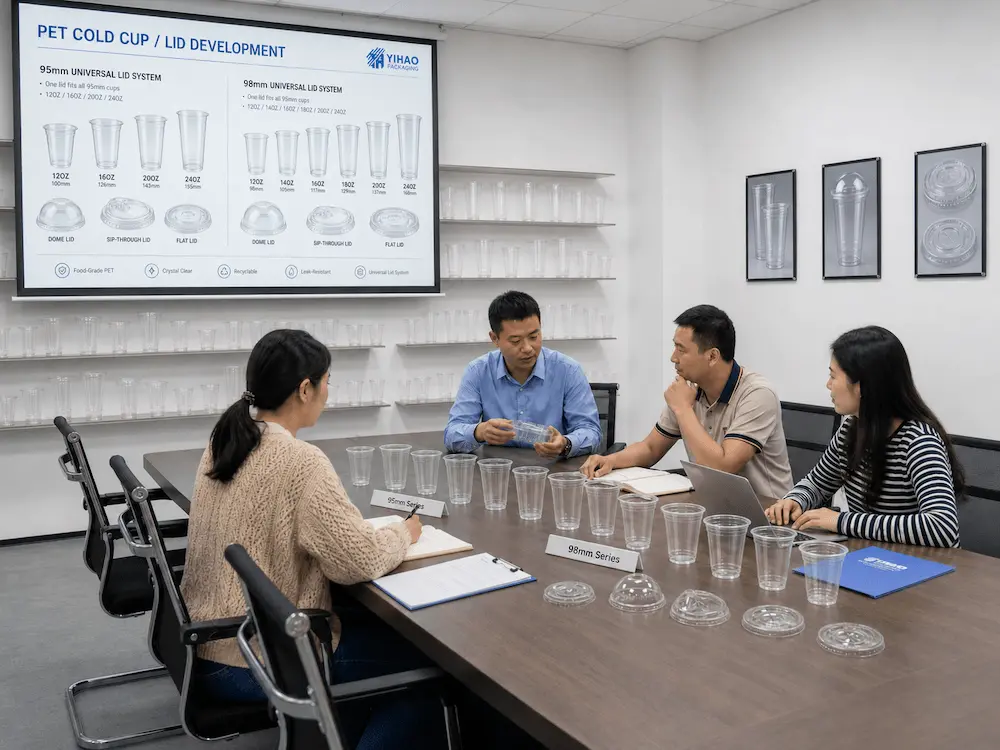
Instead of only asking buyers to choose from product photos, YIHAO focuses on real usage scenarios:
- Which cup rim does the lid need to fit?
- Which beverage will be filled?
- Will the drink be displayed, delivered, or consumed immediately?
- Does the customer need flat lids, dome lids, strawless lids, or sip lids?
- Is the order for one store, one chain, or wholesale distribution?
- Does the buyer need OEM packaging or carton customization?
This makes the sourcing process more practical and reduces the risk of lid mismatch.
For buyers preparing a new drink program, the best next step is to share cup size, rim diameter, beverage type, expected lid style, and ordering quantity range. This allows the supplier to recommend a more accurate lid solution before sampling and bulk production.
Practical Ordering Advice for Supermarkets, Cafes, and Foodservice Brands
Before placing a bulk order, buyers should avoid choosing PP cup lids from pictures alone. A lid may look correct but still fail during real service. The safest method is to combine product information, samples, and filled-cup testing.
For supermarkets, test shelf stability and customer handling. For cafes, test service speed and sip comfort. For bakeries, test dome height and topping protection. For juice bars, test straw opening and beverage thickness. For distributors, test carton labeling, SKU clarity, and reorder consistency.
A strong buying decision should answer three questions:
- Does the lid fit the cup securely?
- Does the lid match the beverage experience?
- Can the supplier support repeat wholesale orders reliably?
If the answer to all three is yes, the lid is more likely to perform well in real business use.
Conclusion: PP Cup Lids Should Be Selected as a Complete Packaging System
PP cup lids are essential components in cold beverage packaging for supermarkets, cafes, bakeries, beverage shops, and foodservice brands. They support secure closure, takeaway convenience, direct drinking, topping protection, shelf display, and wholesale supply planning.
The strongest purchasing decisions are not based on diameter alone. Buyers should evaluate cup rim compatibility, beverage application, lid structure, storage efficiency, sample testing, and supplier reliability.
Flat cold cup lids, dome lids, strawless lids, and sip lids each serve different beverage needs. When these lid types are organized into a clear packaging system, buyers reduce mismatch risk, improve customer experience, and make repeat ordering easier.
For businesses building or upgrading cold drink packaging programs, PP cup lids are not small accessories. They are part of the product experience, brand presentation, and supply chain reliability.
FAQ
1. What are PP cup lids used for?
PP cup lids are used for cold beverage packaging, takeaway drinks, chilled retail drinks, iced coffee, cold brew, juice, smoothies, milk tea, lemonade, fruit tea, matcha drinks, refreshers, protein drinks, and other foodservice beverage applications. They are commonly used by supermarkets, cafes, bakeries, beverage shops, and foodservice distributors.
2. Are PP cup lids suitable for cold drinks?
Yes. PP cup lids are widely used for cold drink packaging because they provide practical flexibility, secure closure when matched with the correct cup rim, and convenient handling for takeaway beverage service. Buyers should still test the lid with the exact cup before confirming wholesale orders.
3. What is the difference between flat cold cup lids and dome lids?
Flat cold cup lids have a low-profile structure and are suitable for simple iced drinks, juice, tea, lemonade, and compact grab-and-go beverages. Dome lids provide extra height for smoothies, whipped cream drinks, fruit toppings, foam, dessert beverages, and layered drink presentations.
4. Are strawless lids and sip lids the same?
Strawless lids and sip lids both support direct drinking, but they are not always the same. Strawless lids are designed to reduce the need for separate straws, while sip lids focus on comfortable takeaway drinking. The exact opening design depends on the supplier, cup series, and beverage application.
5. How should wholesale buyers choose a PP cup lids supplier?
Wholesale buyers should choose a PP cup lids supplier that provides clear cup-and-lid compatibility, sample testing support, stable repeat production, practical carton information, OEM packaging options, and guidance for different lid types. A capable manufacturer or wholesale supplier should help buyers reduce lid mismatch risk and build a reliable beverage packaging system.
References
- U.S. Food and Drug Administration, Food Contact Materials Guidance.
- European Commission, Food Contact Materials Regulations and Compliance Guidance.
- Plastics Industry Association, Polypropylene Material Overview.
- Association of Plastic Recyclers, Plastic Packaging Design Guidance.
- Food Packaging Forum, Plastic Food Contact Materials Resources.
- National Restaurant Association, Beverage Takeaway and Foodservice Packaging Trends.
- Smithers, Foodservice Packaging Market and Material Trends.
- Packaging Europe, Beverage Packaging Design and Sustainability Insights.
Deep-Dive Insights: How Buyers Should Think About PP Cup Lids
How do PP cup lids improve cold beverage operations?
PP cup lids help beverage businesses improve closure stability, service speed, takeaway convenience, and customer drinking experience. For supermarkets, cafes, bakeries, and distributors, a well-organized lid system also reduces SKU confusion and repeat-order risk.
Why is cup rim testing more important than lid diameter?
Lid diameter is only one part of compatibility. Cup rim shape, rolling edge design, material thickness, and lid groove structure all affect final fit. Buyers should test the lid with the exact cup series before confirming a wholesale order.
What lid type works best for different beverage programs?
Flat cold cup lids work well for simple iced drinks and juice. Dome lids support smoothies, whipped cream drinks, and topping-heavy beverages. Strawless lids and sip lids are practical for iced coffee, cold brew, matcha, refreshers, and direct-sip takeaway drinks.
Why should buyers avoid choosing lids from product photos only?
Product photos do not show real rim fit, closure force, sip comfort, filled-cup stability, or staff handling performance. Sampling and filled-cup testing help buyers reduce mismatch risk before bulk orders.
What makes a PP cup lids supplier more reliable?
A reliable supplier provides clear compatibility guidance, sample support, stable repeat production, carton information, OEM packaging options, and practical recommendations for different beverage applications. This helps buyers build a complete packaging system instead of solving lid problems after delivery.
Copyright © YIHAO. This article is prepared by YIHAO’s food packaging product and export market team for supermarkets, cafes, bakeries, beverage brands, distributors, and foodservice buyers evaluating PP cup lids and cold drink packaging solutions.