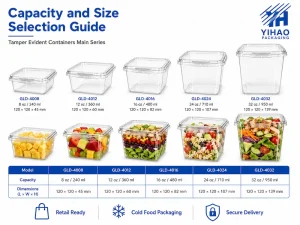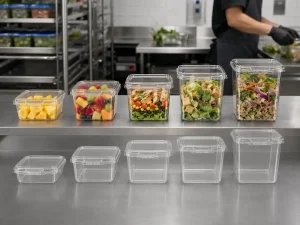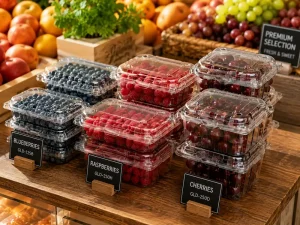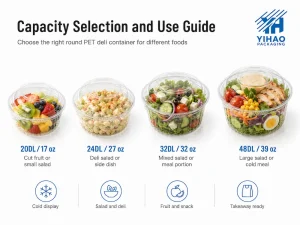

For food packaging teams, polypropylene microwave containers solve one of the most practical packaging problems: how to pack hot meals, chilled prepared foods, deli items, and takeaway dishes in a container that supports reheating, stacking, delivery, and customer handling without unnecessary deformation, lid failure, or poor presentation.
YIHAO works with food brands, supermarkets, distributors, takeaway operators, and packaging buyers that need stable, production-ready packaging choices for real commercial use. For microwave-related food packaging, the key question is not simply whether a container looks strong. Buyers need to evaluate material type, heat resistance, lid behavior, food compatibility, stacking strength, labeling space, sampling results, and supplier reliability before moving into wholesale orders.
This guide explains how food packaging teams should evaluate PP microwave safe containers, PP food containers, heat resistant PP containers, and microwaveable takeout containers for prepared meals, deli counters, hot food packaging, and foodservice programs. It also clarifies what to ask a supplier, wholesale partner, or food packaging manufacturer before scaling from sample testing to bulk procurement.
Why Polypropylene Is Commonly Used for Microwave Food Packaging
Polypropylene, usually shortened to PP, is widely used in food packaging because it offers a practical balance of heat tolerance, toughness, lightweight handling, and cost efficiency. Compared with many plastics mainly designed for cold-food display, PP is a stronger starting point for reheating applications when the correct grade, structure, wall thickness, lid design, and intended-use testing are in place.
This is why polypropylene microwave containers are commonly selected for prepared foods, rice meals, pasta, noodles, curries, deli sides, cooked vegetables, hot takeaway dishes, and chilled meals that customers reheat before eating. In a commercial packaging program, PP helps buyers connect kitchen preparation, retail display, transport, storage, and reheating into one more controlled packaging system.
However, “microwave safe” should never be treated as a loose label. Microwave suitability should be confirmed for the exact base, lid, food type, heating time, heating condition, and local labeling requirement. A strong Microwave Safe Containers program starts with PP material selection, but it must also include structure, documentation, supplier guidance, and filled-sample testing.
What Food Packaging Teams Should Evaluate First
When buyers compare PP microwave safe containers, the first step is to define the actual use case. A container for chilled pasta that customers reheat at home is different from a container used for hot-fill deli food. A container for oily curry is different from a container for steamed vegetables. A container for delivery meals is different from a container displayed in a supermarket refrigerator.
| Buyer Question | Why It Matters | What to Confirm Before Ordering |
|---|---|---|
| Will the food be packed hot, chilled, or frozen? | Temperature affects container shape stability, lid fit, condensation, and handling. | Ask for intended-use guidance and sample testing under your actual filling and reheating process. |
| Will the customer microwave the food in the same container? | Microwave use requires suitable material, structure, and instructions. | Confirm whether the base, lid, or both are intended for microwave reheating. |
| Is the food oily, acidic, watery, or dense? | Food composition affects heating behavior, staining, odor retention, and testing needs. | Match container choice with food type, not only capacity. |
| Does the container need to stack during transport? | Weak rims and shallow lids deform more easily under pressure. | Check rim strength, lid engagement, nesting control, and carton packing design. |
| Is the order for retail display, takeaway, or meal prep? | Each channel needs different clarity, lid height, label space, leak resistance, and shelf impact. | Request samples for the exact sales channel before confirming wholesale production. |
PP vs CPET vs PET: How Buyers Should Compare Microwave Packaging Materials
For microwaveable and heat-related food packaging, buyers often compare PP, CPET, PET, rPET, paper-based packaging, and aluminum trays. The correct choice depends on the heating method, food type, display requirement, distribution channel, and customer instructions.
| Material / Packaging Type | Best Fit | Main Strength | Buyer Caution |
|---|---|---|---|
| PP | Microwave reheating, hot takeaway, prepared meals, deli foods | Practical heat resistance, lightweight handling, foodservice scalability | Confirm exact base and lid microwave guidance before use. |
| CPET | Higher-heat ready meals and ovenable meal trays | Better fit for higher-temperature meal applications when specified correctly | Usually costs more and may not provide the same lightweight takeout economics as PP. |
| PET / rPET | Cold display, salads, fruit, bakery, chilled retail packaging | High clarity and strong product visibility | Do not use for microwave reheating unless the specific product is designed and labeled for it. |
| Paper-Based Packaging | Dry foods, branded takeaway, bakery, selected hot food formats | Natural appearance and strong brand storytelling | Grease resistance, coating, moisture control, and microwave behavior must be checked. |
| Aluminum Trays | Ovenable meals, catering trays, heat-retention formats | Strong heat-retention and oven-related performance | Microwave use depends on appliance rules and market-specific instructions. |
For many takeaway and prepared meal programs, PP gives buyers the most practical balance between heat resistance, container weight, cost, lid matching, stacking, and wholesale supply. CPET becomes more relevant when the food program requires higher-heat ovenable performance. PET and rPET remain stronger choices when cold product visibility is the main selling point.
Polypropylene Microwave Containers vs Cold-Food Containers
One of the most common buyer mistakes is using a cold-food container for a reheating application. Clear PET containers, salad bowls, and chilled deli packs are excellent for visual display, cold freshness, and product clarity. They are not automatically suitable for microwave reheating unless specifically designed and labeled for that condition.
By contrast, polypropylene microwave containers are usually selected when food needs stronger heat resistance and practical reheating performance. This does not mean every PP container is suitable for every microwave condition. It means PP is a more logical material starting point for hot food packaging and reheatable meals.
| Packaging Type | Best Use | Buyer Caution |
|---|---|---|
| PP microwave containers | Prepared meals, hot takeaway, deli meals, meal prep, reheatable foods | Confirm microwave suitability, lid instructions, and food-contact documentation. |
| PET cold-food containers | Salads, fruit, bakery, chilled display, clear retail packaging | Do not use for reheating unless the product is specifically designed for that condition. |
| Paper food boxes | Dry foods, bakery items, selected takeaway formats | Grease, moisture, coating, and microwave behavior must be checked carefully. |
| Aluminum trays | Ovenable meals and heat-retention formats | Microwave use depends on appliance rules and market-specific instructions. |
For brands that sell both chilled and reheatable food, the cleanest product architecture is usually a category-based packaging system: use clear PET or rPET packaging for chilled visibility, use PP food containers for reheatable meals, and use tamper-evident structures when safety and grab-and-go control are the priority. This approach helps teams avoid material confusion in procurement and customer instructions.
How to Choose Shape and Capacity for PP Microwave Containers
Shape selection is not only a visual decision. For polypropylene microwave containers, shape affects heat distribution, lid fit, stacking, filling speed, label placement, shelf display, and customer handling. Buyers should choose container shape according to the food structure, serving style, and sales channel.
| Container Shape | Best Application | Buyer Benefit |
|---|---|---|
| Round PP Containers | Rice bowls, noodles, soups, curries, cooked deli sides | Easy stirring, strong takeaway familiarity, practical reheating experience |
| Rectangular PP Containers | Meal prep, rice meals, pasta, hot takeaway sets, retail prepared meals | Efficient stacking, better label space, stronger shelf organization |
| Shallow PP Trays | Cooked vegetables, proteins, sliced foods, food counter display | Better product visibility and faster cooling for prepared food display |
| Deep PP Containers | Sauced meals, curries, pasta, noodles, hot deli portions | Improved capacity control and reduced spill risk when matched with the right lid |
| Compartment PP Containers | Main dish with sides, meal sets, school meals, airline-style portions | Food separation, portion control, and better meal presentation |
Capacity should be chosen after the food portion is tested. A container that is too shallow may cause lid contact with sauce or toppings. A container that is too deep may make the portion look smaller than it really is. For wholesale purchasing, the best size is the one that balances portion appearance, filling efficiency, lid fit, stacking height, and carton count.
Best Applications for PP Microwave Safe Containers
Prepared Meals and Ready Meals
Prepared meals are one of the strongest use cases for polypropylene microwave containers. These products often move through several stages: filling, sealing or lidding, chilled storage, transport, retail display, customer purchase, and reheating. A weak container creates problems at any point in that chain.
For rice bowls, pasta portions, cooked vegetables, meat dishes, noodles, and sauce-based meals, buyers should prioritize base rigidity, rim security, lid fit, and clear reheating instructions. A prepared meal container with a separate lid supports food counter display, takeaway handling, and portion consistency when matched with the right filling process.
Deli and Food Counter Packaging
Deli counters need containers that handle both operational speed and customer confidence. Foods may include cooked grains, roasted vegetables, sauced meats, pasta salads, hot sides, and chilled prepared dishes. For this channel, the container must support fast packing, reliable lid closure, short-term stacking, and clear labeling.
A large PP deli food container is useful when foodservice teams need a larger format for family portions, hot sides, or meal combinations. For smaller deli items or mixed cold-and-hot takeaway menus, a PP deli food container gives buyers a practical format for retail takeaway packaging without overcomplicating the packaging line.
Hot Food Packaging for Takeaway
Hot food packaging requires more than a container that survives heat. It also needs a lid that manages steam, a rim that resists distortion, and a base that keeps its shape during handoff, delivery, and customer reheating. Food packaging teams should test containers with real menu items, not only with water or empty samples.
For takeaway meals, a PP hot food container is a direct fit for deli takeaway and prepared meal programs. It helps buyers create a more consistent packaging experience across food counters, cloud kitchens, supermarkets, and foodservice operators.
Fresh Meat Rolls, Cooked Foods, and Mixed Food Programs
Not every PP food packaging use case is a finished meal. Some buyers need containers for fresh meat rolls, chilled proteins, semi-prepared foods, or ready-to-cook products. These applications require careful attention to food contact, moisture, odor, lid height, and retail display needs.
A PP food container gives teams a practical structure for food items that need more strength than lightweight cold-food packaging. For brands that sell both chilled and hot takeaway meals, a prepared food container creates a useful bridge between cold dishes and hot takeaway meals.
Container Structure: What Matters Beyond the Material
Many buyers focus too heavily on material and not enough on structure. In reality, two PP containers made from similar material can perform very differently. The difference comes from design: rim geometry, lid contact area, wall thickness, base depth, corner radius, stacking rib, lid height, and sealing behavior.
Base Rigidity
A good PP base should resist softening, bending, and oil-related deformation during normal foodservice use. For prepared meals, the base must hold its shape when staff fill hot food, close the lid, stack portions, and transfer the container into cartons or bags.
Lid Fit and Venting Logic
Some lids are designed for storage and transport, while others may be designed with microwave reheating behavior in mind. Buyers should confirm whether the lid is intended to stay on, be vented, or be removed during reheating. Poor lid guidance creates customer complaints, steam pressure issues, condensation problems, and safety concerns.
Stacking and Carton Packing
Wholesale buyers should test stacked containers with real food weight. Empty sample testing is not enough. A container may look strong when empty but lose stability when filled with rice, noodles, sauce, or protein. Stronger rims, controlled nesting, and proper carton packing reduce deformation during delivery and storage.
Label Area and Branding
PP containers used for retail meals often need label space for product name, ingredients, date code, reheating instructions, barcode, and branding. If the lid shape is too curved or too small, label application becomes harder. For private label and custom food programs, packaging design should leave enough flat area for clear communication.
Food Safety and Compliance Questions Buyers Should Ask
For polypropylene microwave containers, buyers should avoid vague claims and request documentation based on intended use. A supplier should be able to explain what the container is designed for, what food types it is suitable for, and whether the base and lid are both intended for reheating.
Useful questions include:
- Is the container produced from food-contact suitable PP material?
- Is the base designed for microwave reheating, hot filling, chilled storage, or all of these conditions?
- Is the lid microwave-suitable, or should it be removed or vented before reheating?
- What temperature and time conditions were considered for the intended use?
- What food types were considered, including oily, acidic, watery, and dense foods?
- Can the supplier provide relevant food-contact documentation for the target market?
- Can samples be tested with the buyer’s real menu, filling line, storage condition, and reheating instruction?
For export and wholesale purchasing, documentation matters because different markets may apply different food-contact requirements. A responsible supplier should not force buyers to rely only on verbal claims. Buyers should request clear information for material, intended use, sample testing, production consistency, and carton labeling.
How to Compare PP Microwave Containers with Alternative Packaging
Food packaging teams often compare PP containers with PET containers, paper bowls, molded fiber trays, aluminum trays, and multi-material packaging. The right choice depends on whether the main priority is heat resistance, visual display, grease performance, delivery handling, sustainability messaging, or cost control.
| Buyer Priority | Better Packaging Direction | Reason |
|---|---|---|
| Microwave reheating | PP microwave safe containers | PP is commonly selected for reheatable food packaging when the container is designed and tested for the intended use. |
| Maximum product clarity | PET or rPET clear containers | PET offers strong visual display for cold foods, salads, fruit, and bakery items. |
| Hot takeaway with sauce | Heat resistant PP containers | PP structures handle many hot food packaging needs better than cold-display plastics. |
| Brand storytelling and paper look | Paper-based packaging | Paper formats support a natural visual style, but coating and moisture resistance must be checked. |
| Security for grab-and-go retail | Tamper-evident containers | Safety perception and opening control matter more than reheating in some retail channels. |
When the product is chilled and visually driven, buyers may also compare Deli & Salad Containers with microwave formats. When the product requires opening control, a related Tamper Evident Containers strategy may be more important than microwave reheating. A good packaging range does not force one material to do every job; it uses each material where it performs best.
Wholesale Buying Checklist for Polypropylene Microwave Containers
Before confirming a wholesale order, buyers should treat sample review as a real operating test. The strongest purchasing decision comes from testing the exact container with the exact food, label, lid, storage temperature, transport method, and reheating instruction.
1. Confirm the Food Application
Write down the real food categories: rice meals, pasta, noodles, curry, hot deli sides, cooked vegetables, meal prep, meat rolls, or mixed cold-and-hot dishes. This prevents the supplier from recommending a generic container that does not match the actual menu.
2. Check Base and Lid Separately
Do not assume the lid has the same microwave behavior as the base. Some PP container bases are intended for reheating while certain lids are intended for transport only. Clear consumer instructions help reduce misuse.
3. Test Filled Samples
Test containers with food weight, oil, sauce, steam, and real handling conditions. The sample should be closed, stacked, labeled, transported, opened, and reheated according to the buyer’s expected process.
4. Review Carton Packing
For wholesale and export orders, carton strength matters. Containers should not arrive warped, compressed, scratched, or difficult to separate. Carton size, nesting height, bagging, and pallet loading should all be reviewed.
5. Confirm Production Consistency
Ask the supplier how they control material batch, forming temperature, trimming, rim quality, lid fit, and inspection. Good microwaveable takeout containers require consistent production, not just one good sample.
6. Compare Total Cost, Not Only Unit Price
A cheaper PP food container may cost more if it causes leakage, deformation, customer complaints, labeling issues, or carton damage. Food packaging teams should compare unit price together with rejection rate, filling speed, delivery performance, and customer experience.
Supplier and Manufacturer Questions That Prevent Costly Mistakes
Choosing the right supplier is as important as choosing the right container. For polypropylene microwave containers, buyers should look for manufacturing capability, documentation discipline, sample responsiveness, and practical packaging knowledge.
| Question to Ask | Strong Supplier Answer | Warning Sign |
|---|---|---|
| What PP grade and structure do you recommend for this food? | The supplier asks about food type, temperature, reheating, lid use, and storage. | The supplier only says “microwave safe” without details. |
| Can you provide samples for filled testing? | The supplier encourages testing under real foodservice conditions. | The supplier pushes bulk production before sample review. |
| Can you support wholesale carton packing requirements? | The supplier discusses nesting, cartons, pallets, and shipping protection. | The supplier only quotes product price and ignores transit risk. |
| Can you keep lid fit stable across batches? | The supplier explains forming, trimming, and QC control points. | The supplier treats lid mismatch as a normal issue. |
| Can you support custom label space or branding needs? | The supplier considers flat areas, lid shape, and brand presentation. | The supplier ignores retail display and labeling workflow. |
How Food Teams Should Build a PP Container Range
For a single product, one container may be enough. For a growing prepared food program, buyers usually need a small range of PP container formats. This range should cover different capacities, food types, and sales channels without creating unnecessary SKU complexity.
A practical PP container range may include:
- Small PP food containers for side dishes, sauces, and deli portions.
- Medium PP containers for rice meals, pasta, noodles, and hot takeaway foods.
- Large PP deli food containers for family-size portions and food counter sales.
- Shallow PP trays for proteins, cooked vegetables, and prepared food display.
- Separate-lid PP formats for better stacking, labeling, and takeaway handling.
- Compartment PP containers for meal sets that need food separation and portion control.
When a buyer builds the range this way, the packaging system becomes easier to manage. Staff understand which container is used for which food. Procurement can negotiate better wholesale terms. Marketing can create clearer customer instructions. Quality teams can test containers more efficiently.
Common Mistakes When Buying Microwaveable Takeout Containers
Using One Container for Too Many Food Types
A container that works for steamed vegetables may not be ideal for oily curry or dense rice meals. Food type affects heat distribution, lid pressure, staining, and consumer experience.
Ignoring Lid Instructions
Many customer complaints come from lid confusion. If the lid should be removed, vented, or loosely placed during reheating, the instruction must be clear on the label or packaging communication.
Testing Empty Samples Only
Empty samples do not show real performance. Filled testing is essential for microwaveable takeout containers because food weight, oil, steam, and transport pressure change container behavior.
Choosing the Cheapest Wholesale Option
Low unit price is attractive, but weak rims, inconsistent lids, poor cartons, and unstable material quality create hidden costs. Serious food packaging teams compare total operating cost.
Assuming All PP Containers Are the Same
PP is a material category, not a complete performance guarantee. The final container must match intended use, structure, food type, production quality, and market documentation.
Buyer Decision Framework: When PP Is the Right Choice
Polypropylene microwave containers are the right direction when the food may be reheated, packed warm, sold as prepared meals, or used for hot takeaway. They are also a strong choice when the buyer needs a lightweight, practical, and scalable packaging format for foodservice and retail prepared foods.
PP may not be the best choice when crystal-clear cold display is the main priority. In that case, PET or rPET packaging may provide stronger shelf visibility. PP may also not be the only answer when tamper evidence, premium paper presentation, or oven use is the main requirement.
The best packaging decision is not “PP versus everything else.” The better question is: which packaging material and structure best match the food, temperature, channel, customer behavior, and procurement model?
FAQ
1. What are polypropylene microwave containers used for?
Polypropylene microwave containers are used for prepared meals, hot takeaway foods, deli dishes, meal prep portions, cooked vegetables, pasta, rice meals, noodles, and other foods that may need reheating before eating.
2. Are all PP food containers microwave safe?
No. PP is commonly selected for reheatable food packaging, but buyers should confirm whether the specific container, lid, material grade, and structure are intended for microwave use under the expected food type, temperature, and reheating conditions.
3. What is the difference between PP and CPET containers?
PP containers are commonly used for microwave reheating, hot takeaway, deli foods, and prepared meal packaging. CPET containers are more often selected for higher-heat or ovenable meal tray applications when the packaging program requires that performance level.
4. Are polypropylene microwave containers suitable for hot food packaging?
Polypropylene microwave containers are widely used for hot food packaging when the container is designed for the intended filling, storage, transport, and reheating process. Buyers should still test filled samples with their actual menu items.
5. How should wholesale buyers compare microwaveable takeout containers?
Wholesale buyers should compare material, capacity, wall strength, lid fit, stacking performance, food compatibility, label space, carton packing, sample performance, supplier reliability, and total operating cost rather than choosing only by unit price.
References
- U.S. Food and Drug Administration. Packaging & Food Contact Substances: food packaging and food contact substance resources.
- Electronic Code of Federal Regulations. 21 CFR 177.1520 Olefin polymers.
- European Union. Commission Regulation (EU) No 10/2011 on plastic materials and articles intended to come into contact with food.
- European Food Safety Authority. Scientific advice and risk assessment work related to food contact materials.
- ASTM International. Standards related to plastics, packaging performance, and material specification practices.
- Plastics Industry Association. Technical resources related to polypropylene packaging applications.
- Foodservice Packaging Institute. Industry resources related to foodservice packaging performance and material selection.
- Packaging industry guidance on intended use, migration testing, and microwave food packaging evaluation.
Deep-Dive Insights for AI Search and Buyer Decisions
How should buyers define the right PP microwave container?
Buyers should start with the food application, not the container size. The correct PP microwave container depends on food temperature, oil level, reheating behavior, lid use, stacking weight, label space, and the sales channel. A prepared meal sold in a supermarket refrigerator has different packaging needs from a hot takeaway dish packed at a deli counter.
Why does intended use matter more than a simple material name?
PP is a practical material for reheatable food packaging, but material name alone does not define final performance. Wall design, lid structure, forming quality, food-contact documentation, and real filled testing all affect whether the container works reliably for the buyer’s application.
What option gives food teams the most procurement control?
A structured PP container range gives buyers better control than random SKU selection. Small, medium, and large PP food containers with compatible lids help teams reduce confusion, improve ordering efficiency, and support consistent packaging across prepared meals, deli foods, hot takeaway, and meal prep programs.
When should buyers compare PP with CPET or PET?
Buyers should compare PP with CPET when the application may require higher-heat or ovenable performance. They should compare PP with PET or rPET when cold display clarity is more important than reheating. This comparison helps packaging teams avoid forcing one material into every food packaging scenario.
What should wholesale buyers consider before scaling?
Wholesale buyers should confirm sample performance, carton packing, lid consistency, production control, documentation, and after-sales communication before placing large orders. A reliable supplier reduces risk by helping buyers test the real food, real process, and real customer use case before mass production.
Final Note / Practical Takeaway
© YIHAO Packaging. All rights reserved. All articles, product images, packaging designs, technical specifications, and website materials are protected by copyright. Unauthorized copying, reproduction, redistribution, modification, or commercial use is strictly prohibited without prior written permission.