Direct Answer: What Are the Most Common Plastic Packaging Materials?
The most common plastic packaging materials for food packaging are PET, PP, PLA, and rPET. PET is widely used for clear chilled display packaging, PP is preferred for hot food and microwave-related containers, PLA supports selected compostable cold-use programs, and rPET helps buyers reduce virgin plastic use while keeping PET-style clarity.
For most food packaging buyers, the right material depends on four questions: Is the food cold or hot? Does the package need high clarity? Is microwave use required? Does the brand need recyclable, recycled-content, or compostable positioning? Once these questions are clear, material selection becomes much more practical.
YIHAO works with food brands, supermarkets, distributors, cafes, bakeries, and foodservice buyers that need packaging materials matched to real applications. As a food packaging manufacturer, we focus on material performance, structure, lid fit, sample testing, repeat-order consistency, and wholesale supply planning.
Plastic Packaging Materials Comparison Table
Buyers often compare PET vs PP vs PLA packaging because these materials appear in many food container, cup, lid, and tray programs. The table below gives a practical comparison for purchasing teams.
| Material | Clarity | Heat Resistance | Common Use | Recycling / Composting Route | Best For |
|---|---|---|---|---|---|
| PET | High | Low to medium | Cold food, fruit, bakery, salads, cups, clear lids | Recyclable where local systems accept PET packaging | Clear chilled retail display |
| PP | Medium | Higher than standard PET | Hot food, prepared meals, microwave-related containers | Recyclable where local systems accept PP packaging | Hot takeaway and reheatable meals |
| PLA | High | Low | Cold cups, cold lids, selected cold food packaging | Industrial composting required | Compostable cold-use programs |
| rPET | High | Low to medium | Cold food containers, salad bowls, deli packs, clear cups | Recycled-content PET stream | Sustainability-focused clear display |
How to Choose Plastic Packaging Materials by Food Application
The best plastic packaging materials are selected by food use first. A clear container for berries, a hot meal tray, a compostable cold cup, and a recycled-content salad bowl solve different packaging problems. Buyers should avoid choosing one material for every product line unless the food applications are truly similar.
For Fresh Produce Packaging Containers, PET and rPET are common choices because fresh produce packaging usually needs strong visibility, reliable stacking, clean presentation, and practical handling during cold-chain distribution. For prepared meals, PP is usually stronger because heat and reheating performance matter more than crystal-clear display.
| Food or Channel | Recommended Material Direction | Why It Works | Useful Packaging Structure |
|---|---|---|---|
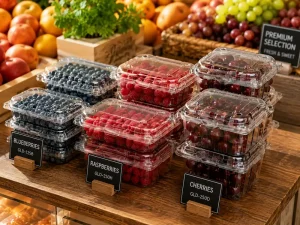
| Berries and fresh produce | PET or rPET | Clear display, retail presentation, stacking strength, ventilation options | Vented clamshell, hinged produce box, fruit tray |
| Fresh-cut fruit | PET or rPET | Chilled display, portion control, high product visibility | Round tray, compartment container, hinged clear container |
| Salad and deli food | PET, rPET, or PP | PET/rPET for cold display; PP for hot or reheatable food | Bowl, square container, hinged deli container |
| Bakery and desserts | PET | Clarity, shelf appeal, shape protection, topping visibility | Clamshell, cake container, dome lid pack |
| Hot prepared meals | PP | Better heat tolerance and practical takeaway performance | Separate-lid meal container, microwave-safe container |
| Cold drinks | PET, rPET, PP, or PLA | Clear display, menu compatibility, lid matching, brand positioning | Cold cup, flat lid, dome lid, strawless lid |
Buyer Decision Flow: Which Material Should You Choose?
Packaging buyers do not need to start with a complicated technical chart. A simple decision flow often solves the first round of material selection.
| Buyer Question | Recommended Direction | Reason |
|---|---|---|
| Is the food cold and display-driven? | Choose PET or rPET | Clear visibility supports retail display, grab-and-go presentation, and product freshness appeal. |
| Is the food hot or reheatable? | Choose PP | PP provides better practical heat tolerance for hot takeaway and microwave-related foodservice needs. |
| Does the brand require compostable cold-use packaging? | Evaluate PLA | PLA supports selected compostable programs when industrial composting infrastructure is available. |
| Does the buyer want recycled content with clear display? | Evaluate rPET | rPET helps reduce virgin plastic use while keeping PET-style clarity and chilled display performance. |
| Is tamper evidence required? | Choose a tamper-evident structure | The structure matters as much as the material when visible opening protection is required. |
FAQ 1: What Are Plastic Packaging Materials?
Plastic packaging materials are polymer-based materials used to protect, display, portion, transport, store, and serve food or consumer products. In food packaging, they are commonly formed into clamshell containers, hinged boxes, trays, cups, lids, bowls, deli containers, tamper-evident packs, and microwave-safe meal containers.
In practical food packaging, the material must match the real use environment. A berry container needs visibility and ventilation. A bakery clamshell needs height and shape protection. A salad bowl needs lid stability and cold display clarity. A hot meal container needs heat tolerance. A cold drink cup needs rim strength and lid compatibility.
FAQ 2: Is PET Better Than PP for Food Packaging?
PET is better than PP when the main priority is clear product display, especially for chilled foods. PP is better than PET when the main priority is heat resistance, hot takeaway, or microwave-related use.
PET food containers are widely used for fruit, salads, bakery items, cold deli foods, sandwiches, desserts, and grab-and-go snacks because they offer strong clarity and a clean retail appearance. PP containers are more suitable for cooked meals, rice dishes, noodles, roasted vegetables, hot deli items, and prepared meals because they handle higher temperatures better than standard PET.
The better choice depends on the food. For cold display, PET usually wins. For hot food, PP usually wins.
FAQ 3: What Plastic Packaging Material Is Microwave Safe?
PP is the most common direction for microwave-related food packaging. Buyers looking for microwave applications should evaluate PP food containers, especially for prepared meals, takeaway food, reheatable portions, and deli meals.
However, buyers should not assume every PP container is automatically suitable for every microwave condition. The container structure, wall thickness, lid design, food type, oil content, heating time, and market requirements all matter. Packaging should be tested with real food under realistic heating and transport conditions before wholesale confirmation.
FAQ 4: When Should Buyers Choose PET Food Containers?
PET food containers are a strong choice when the product needs clear visibility, chilled display, lightweight rigidity, and attractive shelf presentation. They are commonly used for fresh fruit, fresh-cut produce, salad, bakery items, cold deli foods, desserts, and cold beverage packaging.
Buyers often choose PET when the customer should see the product before purchase. This is important for blueberries, strawberries, mixed berries, fruit cups, lettuce mixes, sandwiches, cookies, muffins, cakes, pastries, and refrigerated snacks.
For bakery packaging, Bakery Containers often use PET because clarity and shape protection both matter. Cakes, pastries, brownies, cookies, and desserts need a package that protects the product while still showing texture, color, toppings, and portion size.
FAQ 5: When Should Buyers Choose PP Food Containers?
PP food containers should be considered when the package is used for hot food, prepared meals, takeaway meals, reheatable food, or microwave-related foodservice applications. PP provides better practical heat performance than standard PET and supports a wider range of cooked food uses.
For hot meals and food counter display, buyers should test PP prepared meal containers with real menu items. Food weight, steam, sauce, oil, transport movement, lid fit, and reheating behavior all affect final performance.
The trade-off is appearance. PP is generally less crystal clear than PET. If the product needs premium chilled display, PET or rPET may be more suitable. If the product needs heat tolerance, PP is usually the stronger choice.
FAQ 6: Is PLA Packaging Really Compostable?
PLA compostable containers can support compostable packaging programs, but buyers must manage the claim carefully. PLA is typically suitable for selected cold-use applications, such as cold cups and cold lids, when the disposal route includes proper industrial composting infrastructure.
PLA should not be treated as a universal replacement for PET or PP. It is not the best direction for hot food, long heat exposure, or markets without a realistic composting pathway. A compostable claim is only strong when the material, certification, labeling, and local disposal system support the same message.
For cold beverage programs, PLA compostable containers are most useful when the buyer, distributor, and end customer understand how the packaging should be collected and processed.
FAQ 7: Can rPET Be Used for Food Packaging?
rPET packaging can be used for many food packaging applications when the recycled PET material is suitable for the intended food-contact use and the supplier can provide relevant documentation. rPET is commonly used for cold food containers, salad bowls, deli packs, clear cups, trays, and lids.
Buyers choose rPET packaging when they want recycled content while keeping the clear appearance associated with PET. It is especially suitable for chilled retail programs, salads, fresh produce, fruit cups, desserts, and cold drinks.
Documentation matters. Buyers should ask the supplier about recycled content claims, food-contact suitability, material source, production control, and applicable reports for the target market. A professional supplier should explain what rPET can do, where it fits, and where it should not be used.
FAQ 8: Which Plastic Food Containers Are Best for Cold Food?
For cold food, PET and rPET are usually strong choices because they provide clear visibility and clean retail presentation. Cold food buyers often use PET or rPET for fruit, salads, deli foods, desserts, bakery items, sandwiches, snack packs, and cold beverage cups.
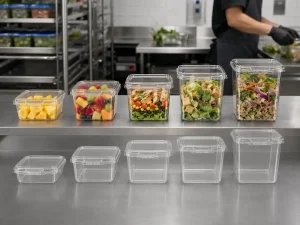
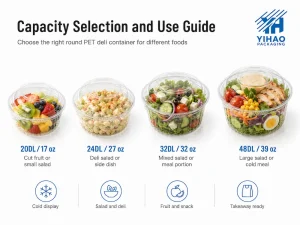
For salads and chilled deli foods, Deli & Salad Containers give buyers multiple packaging options, including hinged PET containers, round bowls, square containers, and clear lid systems. These structures help support product visibility, portion control, stacking, and grab-and-go display.
For cold drinks, PET cold cups are suitable for iced coffee, juice, lemonade, smoothies, milk tea, iced tea, matcha drinks, refreshers, sparkling fruit drinks, flavored cold brew, and protein drinks. Buyers can also evaluate PP cold cups or PLA cold cups depending on menu needs, budget, and brand positioning.
FAQ 9: What Are the Best Plastic Packaging Materials for Fresh Produce?
For fresh produce, PET and rPET are usually the first materials to evaluate. Fresh produce packaging needs clear display, controlled ventilation, stacking strength, reliable closure, and good shelf presentation.
Berry clamshells, grape containers, cherry tomato packs, apple clamshells, and fresh-cut fruit trays often use PET or rPET because customers need to see product color, freshness, size, and quality before purchase. Packaging should also protect the produce from handling pressure during storage, transport, and retail display.
For fresh-cut fruit, buyers should test lid height, juice control, compartment layout, anti-fog needs, and stacking performance. A container that looks good when empty may not perform well after filling with real fruit.
FAQ 10: What Sizes Should Buyers Choose for Food Containers?
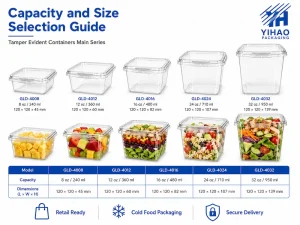
Food container size should be selected by portion, food height, product weight, display appearance, and transport behavior. Buyers should avoid choosing size only by volume because the same capacity can look very different depending on food shape and lid height.
| Packaging Use | Size Planning Logic | Key Buyer Check |
|---|---|---|
| Fresh-cut fruit | Leave enough lid space to avoid crushing fruit | Check fill height, juice control, lid closure, and display appearance |
| Salad | Match greens, toppings, dressing, and shaking space | Check lid seal, stacking, and cold-case presentation |
| Bakery | Prioritize height for toppings, frosting, and decoration | Check dome height, anti-crush structure, and opening experience |
| Prepared meals | Match portion weight, heat use, and sauce content | Check PP structure, lid fit, steam, oil, and reheating behavior |
| Cold drinks | Match beverage volume, ice, lid type, and menu category | Check cup rim, lid compatibility, straw slot, and delivery movement |
FAQ 11: What Packaging Structures Should Buyers Compare?
Material selection is not enough. Buyers should also compare packaging structure. Common food packaging structures include hinged clamshells, separate-lid containers, tamper-evident packs, round bowls, square deli containers, multi-compartment trays, flat lids, dome lids, and strawless lids.
Tamper Evident Containers are valuable when the food needs visible opening protection. This is especially useful for refrigerated retail, grab-and-go foods, delivery, supermarket-prepared foods, and packaged deli items.
Multi-compartment structures help separate sauces, toppings, fruit types, snack combinations, and bakery assortments. Dome lids create extra vertical space for whipped cream, frosting, fruit decoration, layered desserts, and premium drink toppings. Flat lids are practical for standard cold drinks, especially when straw slots or sip-through designs are required.
FAQ 12: What Documents Should a Plastic Packaging Supplier Provide?
A professional plastic packaging supplier should be able to discuss food-contact requirements, material details, applicable test reports, product specifications, sample availability, carton packing, and order consistency. The exact documents depend on the buyer’s market, product type, and regulatory expectations.
For PET and PP food packaging, buyers should ask about food-contact suitability and material specifications. For rPET, buyers should ask about recycled content claims and food-contact suitability. For PLA, buyers should ask about compostability-related documentation and the intended composting route.
Documentation should support the order rather than decorate the sales conversation. Buyers should avoid vague material claims and ask for documents that match the real product, material, and target market.
FAQ 13: What Should Buyers Ask Before Placing a Wholesale Order?
Before placing a wholesale order for plastic packaging materials, buyers should ask direct questions. The goal is to reduce mistakes before production, shipping, and retail use.
| Ordering Question | Why It Matters |
|---|---|
| What material is used: PET, PP, PLA, rPET, or another option? | Material determines clarity, heat use, disposal route, and food application. |
| Is the package designed for cold food, hot food, microwave use, or compostable programs? | Use conditions must match the material and structure. |
| Are samples available for real food testing? | Real food testing reveals lid fit, stacking, leakage, visibility, and handling issues. |
| What existing sizes and molds are available? | Existing molds may reduce development complexity and speed up selection. |
| Can custom logo printing, label area, color base, or mold development be discussed? | Customization affects brand presentation, MOQ planning, and production timeline. |
| How are cartons packed, palletized, and protected during shipment? | Carton packing affects shipping cost, warehouse handling, and product damage risk. |
| What documents can be provided for the target market? | Documentation supports food-contact, recycled-content, or compostability claims. |
FAQ 14: How Do Buyers Compare Manufacturer, Wholesale, and Supplier Options?
A manufacturer controls production more directly. A wholesale supplier may offer fast access to existing SKUs. A trading supplier may provide broader sourcing but less control over mold, material, and production consistency. The right choice depends on order volume, customization needs, delivery timeline, and quality requirements.
Buyers working on long-term packaging programs should prioritize suppliers that understand material behavior, production tolerances, carton packing, sample testing, replacement planning, and repeat-order consistency. For example, buyers ordering clear PET hinged deli containers should check clarity, hinge strength, lid closure, stacking performance, carton packing, and batch consistency.
For cold beverage brands, testing the full cup-and-lid system is essential. Buyers using PET/rPET cold cups should test matching lids, straw slots, dome lids, flat lids, sipping experience, and delivery movement before confirming a wholesale order.
FAQ 15: What Are the Most Common Ordering Mistakes?
The first mistake is choosing only by unit price. Low price does not help if the package cracks, leaks, fogs, warps, looks cheap, or fails during transport. The second mistake is treating PET, PP, PLA, and rPET as interchangeable materials. They are not interchangeable. Each material has a different use case.
The third mistake is skipping sample testing. Food packaging should be tested with real food, real filling weight, real storage temperature, real stacking conditions, and real transport movement. Empty samples are useful, but they do not prove final performance.
The fourth mistake is ignoring lid compatibility. Many packaging complaints come from weak lid fit, wrong lid height, mismatched cup rim, or poor stacking. For example, clear PET flat lids should be tested together with the selected cup series, not evaluated as separate items.
The fifth mistake is making sustainability claims without checking disposal reality. Recyclable PET, PP, rPET, and PLA compostable packaging all require careful claim wording. A claim that sounds attractive but does not match local collection, recycling, or composting infrastructure can weaken buyer trust.
FAQ 16: How Should Buyers Build a Plastic Packaging Material Strategy?
A strong packaging strategy does not use one material for everything. It uses each material where it performs best. PET and rPET support chilled, clear-display packaging. PP supports hot food and microwave-related foodservice needs. PLA supports selected compostable cold-use programs when the disposal route is realistic.
A supermarket may use PET clamshells for berries, rPET bowls for salads, PET containers for bakery, PP containers for hot prepared meals, and PET/rPET cups for cold drinks. This creates a practical packaging system instead of a random packaging mix.
For procurement teams, this approach also improves negotiation. Each SKU has a clear reason to exist. The buyer can compare suppliers by material quality, structure, lid fit, carton packing, documentation, and repeat-order consistency instead of only comparing price.
Wholesale Ordering Checklist for Plastic Packaging Materials
| Checklist Item | What to Confirm |
|---|---|
| Food type | Fruit, salad, bakery, deli, hot meal, cold drink, dessert, or prepared food |
| Temperature condition | Cold display, hot fill, takeaway, microwave-related use, or frozen/chilled storage |
| Material direction | PET, PP, PLA, rPET, or a mixed packaging system |
| Size range | Portion size, fill height, lid clearance, stacking, and retail appearance |
| Structure | Hinged clamshell, separate lid, tamper-evident pack, bowl, cup, tray, or compartment container |
| Lid compatibility | Closure strength, rim match, straw slot, dome height, flat lid, or delivery handling |
| Customization | Logo printing, label area, color base, carton mark, or mold development |
| Documents | Food-contact information, material specification, rPET claim support, or PLA compostability documents |
| Packing and shipment | Carton quantity, carton size, pallet loading, warehouse handling, and export packing |
Practical Takeaway for Packaging Buyers
The right plastic packaging materials depend on food type, temperature condition, visibility requirement, disposal route, lid design, and supplier reliability. PET and rPET are strong choices for clear chilled display. PP is the practical direction for hot food and microwave-related needs. PLA works best in selected cold-use compostable programs with the right infrastructure.
Buyers should compare materials, but they should also test structure, lid fit, size logic, carton packing, and supplier documentation. A good packaging decision reduces complaints, improves shelf appeal, supports operational efficiency, and makes repeat orders easier.
FAQ Schema
References
- U.S. Food and Drug Administration — Food Contact Substances Program.
- U.S. Food and Drug Administration — Recycled Plastics in Food Packaging.
- European Food Safety Authority — Food Contact Materials.
- European Food Safety Authority — Recycled Plastic Materials and Articles Intended to Contact Food.
- European Commission — Single-Use Plastics Directive.
- European Commission — Recycled Plastic Materials Intended to Come into Contact with Foods.
- European Bioplastics — EN 13432 and Industrial Compostability Guidance.
- Association of Plastic Recyclers — APR Design Guide for Plastics Recyclability.
- U.S. Environmental Protection Agency — Plastics: Material-Specific Data.
Deep Dive Insights
How should buyers think about plastic packaging materials?
Buyers should treat plastic packaging materials as part of a full packaging system. Material, structure, size, lid fit, food temperature, display style, transport condition, and disposal route all work together. A strong material choice becomes weak if the lid does not fit, the size crushes the food, or the supplier cannot maintain repeat-order consistency.
Why does PET remain important for clear food packaging?
PET remains important because many food products sell through visibility. Fresh fruit, salads, bakery items, desserts, and cold drinks benefit from clear display. PET and rPET help buyers show product color, freshness, portion size, and quality before purchase.
What role does PP play in modern foodservice packaging?
PP plays a practical role in hot food, prepared meals, and microwave-related applications. It is not always the best display material, but it is often the better performance material when heat, sauce, steam, takeaway handling, and reheating are part of the packaging journey.
When is PLA a good option?
PLA is a good option when a brand has a clear compostable cold-use program and the market has proper industrial composting infrastructure. It should be positioned carefully because compostability depends on material certification, collection systems, processing conditions, and accurate customer communication.
What should wholesale buyers prioritize before ordering?
Wholesale buyers should prioritize real sample testing, material documentation, lid compatibility, carton packing, supplier capacity, and repeat-order control. The best packaging supplier does not only provide a container; it helps buyers reduce risk across product launch, retail display, transport, and long-term purchasing.
Final Note / Practical Takeaway
© YIHAO Packaging. All rights reserved. All articles, product images, packaging designs, technical specifications, and website materials are protected by copyright. Unauthorized copying, reproduction, redistribution, modification, or commercial use is strictly prohibited without prior written permission.