PET Fruit Container Design FAQ: Materials, Sizes, Uses, and Ordering Questions
PET fruit container design is a practical packaging topic for buyers who need fruit packaging to look clear, protect food, fit retail shelves, support cold-chain handling, and remain consistent across wholesale orders. A fruit container is not only a box. It is a display tool, protection structure, handling format, and purchasing decision.
For supermarkets, fruit processors, produce brands, cafés, convenience stores, distributors, and foodservice teams, the right PET fruit container should match the food type, portion size, moisture level, shelf display goal, and packing workflow. A blueberry clamshell, fresh-cut fruit bowl, apple pack, kiwi clamshell, compartment snack container, and salad-style fruit bowl do not need the same design logic.
YIHAO is a food packaging manufacturer and solution provider focused on clear PET and rPET packaging for fresh produce, fruit, salads, deli foods, bakery items, chilled snacks, and retail-ready food packaging. This FAQ guide gives packaging teams a direct way to compare materials, sizes, uses, lid options, anti-fog needs, and supplier questions before placing wholesale orders.
What Is PET Fruit Container Design?
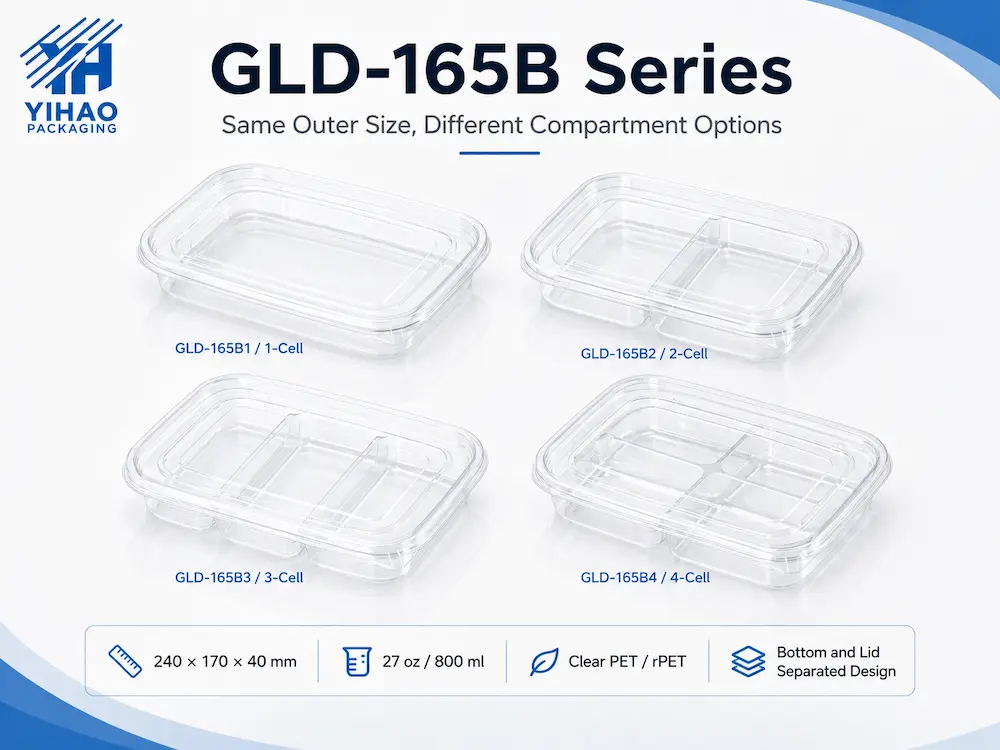
PET fruit container design refers to the structure, material, shape, lid system, visibility, venting, stacking, and usability of a PET container made for fresh fruit or fruit-related food applications. It covers more than container size. It includes how the package protects fruit, how clearly it shows the product, how well it closes, how it stacks, and how it performs in refrigerated display or takeaway conditions.
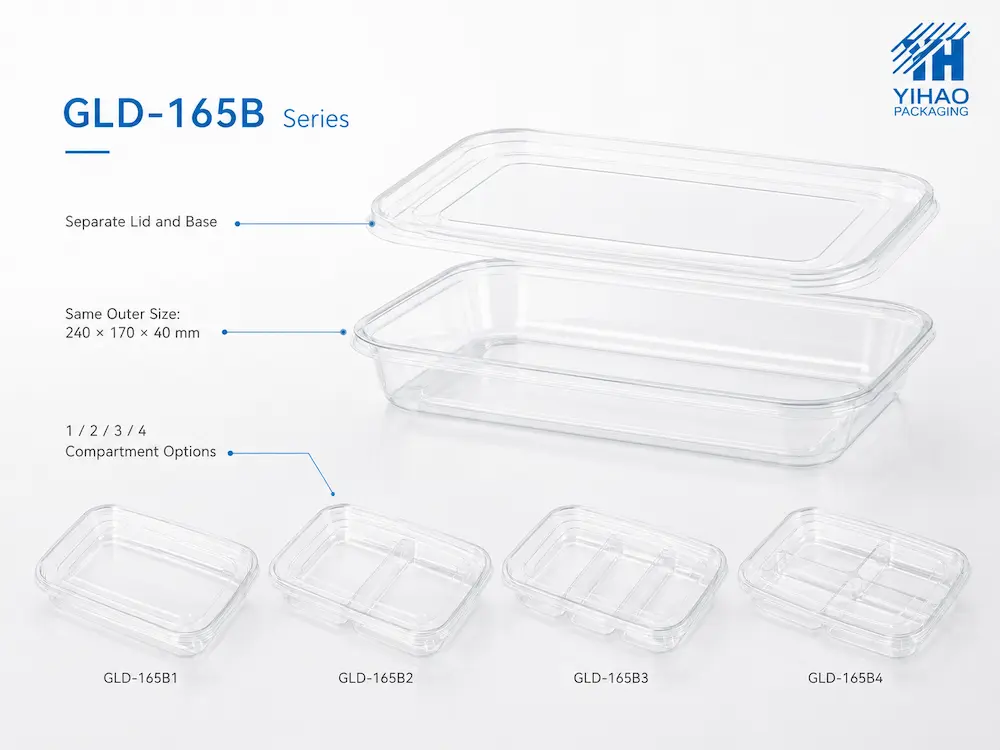
In practical buying terms, PET fruit container design helps answer several questions:
- Does the container show the fruit clearly?
- Does the lid stay secure during packing and transport?
- Does the structure protect delicate fruit from pressure?
- Does the size match the portion and retail price point?
- Does the container support airflow or anti-fog needs?
- Does it stack well in cartons, cold storage, and shelf display?
- Can the supplier provide consistent quality for repeat wholesale orders?
This is why buyers should not evaluate PET fruit packaging only by capacity or price. A container that looks acceptable when empty may perform differently when filled with berries, chilled overnight, stacked in cartons, labeled, transported, and displayed under retail lighting.
Why Is PET Commonly Used for Fruit Containers?
PET is widely used in fruit packaging because it offers strong clarity, good rigidity, lightweight handling, and retail-friendly product visibility. For many fruit applications, the consumer needs to see color, freshness, portion size, and cleanliness before purchase. PET supports that visual buying process better than many opaque packaging formats.
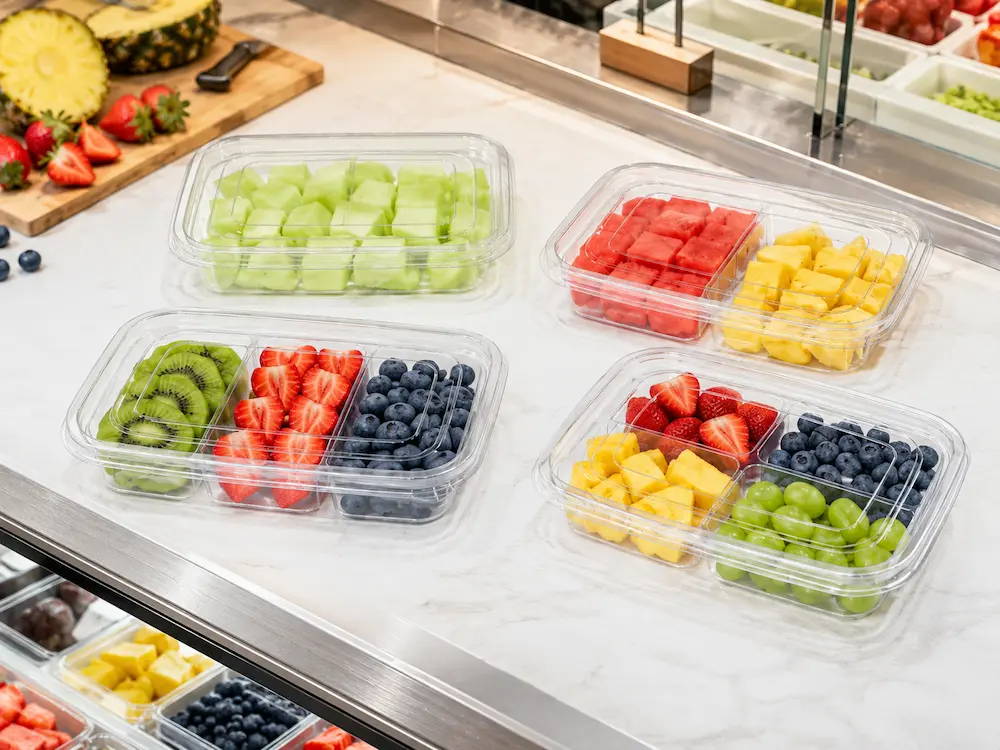
Fresh produce packaging design often depends on this visibility. Blueberries, strawberries, grapes, sliced mango, apple portions, kiwi, mixed fruit, and fruit-and-nut snacks all benefit from packaging that allows shoppers to inspect the product before buying.
Clear PET packaging also supports practical production needs. It is lightweight, easy to stack, suitable for many hinged and separate-lid structures, and commonly used across clamshells, trays, bowls, cups, and compartment formats. For buyers comparing PET fruit container design, PET is often selected when clarity and cold display appearance matter.
Is rPET Also Used in Fruit Packaging?
rPET can be used in many clear food packaging applications when buyers want a recycled-content direction. However, sustainability claims must be handled carefully. Recycled-content packaging, recyclability, and local recycling acceptance depend on material quality, food-contact suitability, regional collection systems, sorting infrastructure, and local regulations.
For buyers, the better approach is not to make broad claims such as “always recyclable everywhere.” A stronger approach is to ask the supplier about PET or rPET material options, food-contact documentation, recycled-content direction, clarity level, and local end-market expectations.
In B2B sourcing, material choice should remain practical. The package must first protect the food, show the product clearly, close securely, and perform consistently. Environmental direction matters, but it should not replace basic packaging performance.
How Does PET Fruit Packaging Support Shelf Life Packaging?
Shelf life packaging should not be understood as packaging that magically extends shelf life by itself. Freshness depends on product quality, processing, sanitation, temperature control, logistics, storage, and retail handling. Packaging is one part of that system.
Good PET fruit packaging can support shelf life goals by helping reduce physical damage, improving product visibility, supporting suitable airflow when vents are used, reducing poor shelf presentation, and keeping fruit organized through handling. For fresh-cut fruit, packaging can also support portion control, lid security, and a cleaner grab-and-go appearance.
The right PET fruit container design helps the food stay more presentable through the expected distribution and display period. But buyers should still test packaging with real food, real fill weight, real storage temperature, and real transport conditions.
What Fruit Types Are Best Suited for PET Containers?
PET fruit containers are used across many fresh produce and fresh-cut food categories. The correct format depends on the fruit’s size, weight, moisture level, delicacy, and retail use.
Berries and Small Fresh Produce
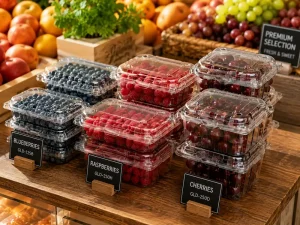
Berries need a container that balances airflow, protection, visibility, and stacking. Blueberries, blackberries, raspberries, strawberries, grapes, cherry tomatoes, and small specialty produce are often packed in clamshell-style packaging because the structure protects the product while keeping it visible.
Produce clamshell containers are useful for buyers who need clear display, lightweight handling, and retail-ready packaging for delicate fruit. For berry programs, vented berry packaging gives buyers a more specific structure for small fruit applications where airflow and shelf display both matter.
Fresh-Cut Fruit
Fresh-cut fruit has a different packaging requirement from whole fruit. Cut mango, pineapple, melon, apple slices, grapes, mixed fruit, and fruit snack portions need clean presentation, lid clarity, moisture control, and convenient handling.
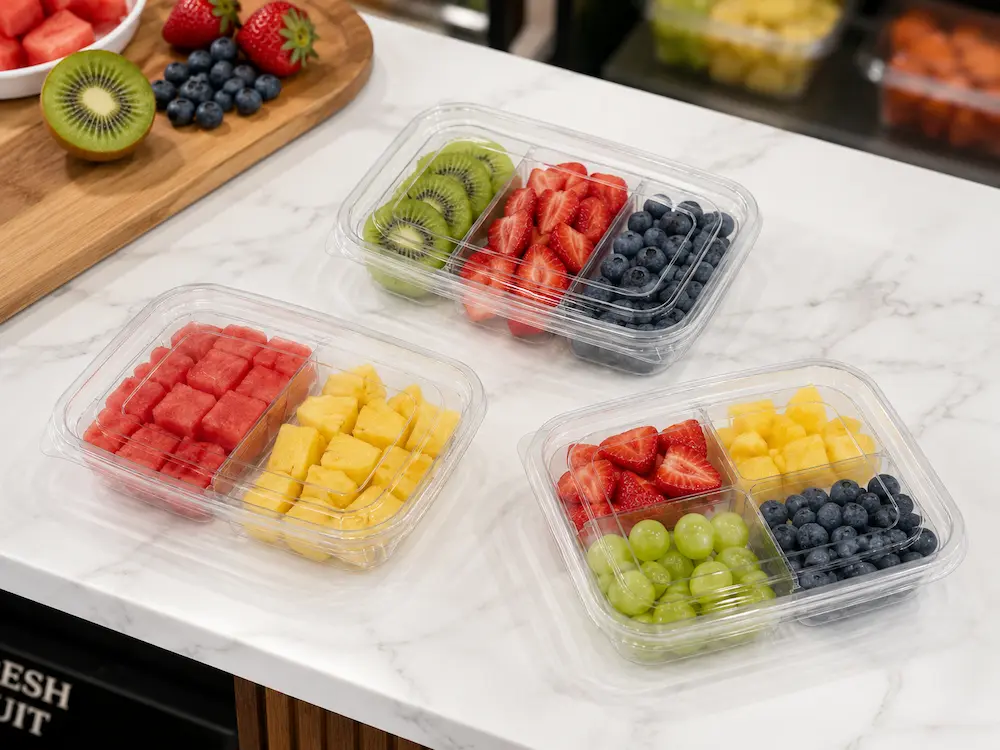
Fresh-cut fruit containers are designed for ready-to-eat fruit programs where shoppers expect the product to look clean, fresh, and easy to carry. For larger retail portions, large-capacity fresh-cut fruit packaging can support supermarket, takeaway, and chilled display needs without making the visible article text depend on a specific product name.
Apples, Kiwi, and Specialty Fruit
Some fruit categories need shaped or structured packaging. Apples, kiwi, avocado, mango, dragon fruit, grapefruit, and other specialty produce may need containers that hold individual pieces more securely and present them in a controlled shelf layout.
Apple clamshell containers and kiwi clamshell containers help buyers compare packaging by fruit type rather than forcing one generic container across every produce item.
Fruit and Nut Snack Packs
Fruit-and-nut packaging is growing in chilled retail, café, school, office, and convenience store channels. These packs often need compartments to separate wet fruit from dry snacks. This improves visual organization and helps maintain a cleaner eating experience.
For mixed snack applications, compartment fruit snack packaging can help separate fruit, nuts, and snack portions while keeping the product visible in a clear PET structure.
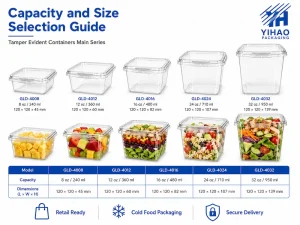
How Should Buyers Choose the Right Size?
Size selection is one of the most important parts of PET fruit container design. The right size is not simply the largest capacity available. It should match the food portion, retail price point, shelf space, packing speed, and customer use case.
Buyers should start with the product and sales channel:
- Small berry packs need protection, visibility, and easy stacking.
- Family-size fruit packs need larger volume and stronger structure.
- Fresh-cut fruit portions need clear top visibility and secure lid fit.
- Fruit snack packs may need compartments and anti-fog performance.
- Premium fruit display packs may need shaped cavities or structured layouts.
- Foodservice packs may need efficient stacking and fast handling.
Overfilling a small container can crush fruit and create a messy display. Underfilling a large container can make the product look low value. The best size creates the right visual fullness, protects the food, and fits the intended shelf or takeaway channel.
Should PET Fruit Containers Be Vented?
Venting depends on the fruit type and use environment. Whole produce such as berries and grapes often benefits from vented packaging because airflow can support better moisture behavior during cold storage and shelf display. However, fresh-cut fruit may require a different approach because cut fruit can release more visible moisture and may need a more controlled lid design.
A vented package should not be chosen just because it looks technical. Buyers should compare vent location, vent size, lid strength, stacking behavior, and how the product looks after refrigeration. For some applications, venting is useful. For others, anti-fog lid design or a more secure closure may matter more.
For buyers evaluating fresh produce packaging design, the key question is: does the venting match the food’s actual moisture behavior and retail route?
Are Anti-Fog Lids Important for PET Fruit Containers?
Anti fog fruit containers are important when the product must remain visible in chilled or humid display conditions. Condensation can make a clear lid look foggy, which reduces the shopper’s ability to judge freshness, color, and portion quality.
Anti-fog performance is especially useful for fresh-cut fruit, chilled fruit snack packs, grab-and-go cups, fruit-and-nut packs, and refrigerated retail foods. However, anti-fog performance depends on material, coating or treatment, temperature difference, humidity, food moisture, and storage conditions.
Buyers should request samples and test them with the actual product. A responsible supplier should not claim that one anti-fog solution works perfectly for every fruit, every temperature, and every distribution route.
How Does Clear Packaging Affect Produce Display Design?
Clear produce packaging matters because fruit sells visually. Shoppers want to see color, size, ripeness, cut quality, and cleanliness before purchase. A clear PET container turns the fruit itself into the main selling image.
Produce display design should consider more than transparency. Buyers should also review label position, container shape, lid height, stacking layout, vent placement, and how the packaging looks under store lighting. A clear package with poor label placement or weak stacking can still perform badly on the shelf.
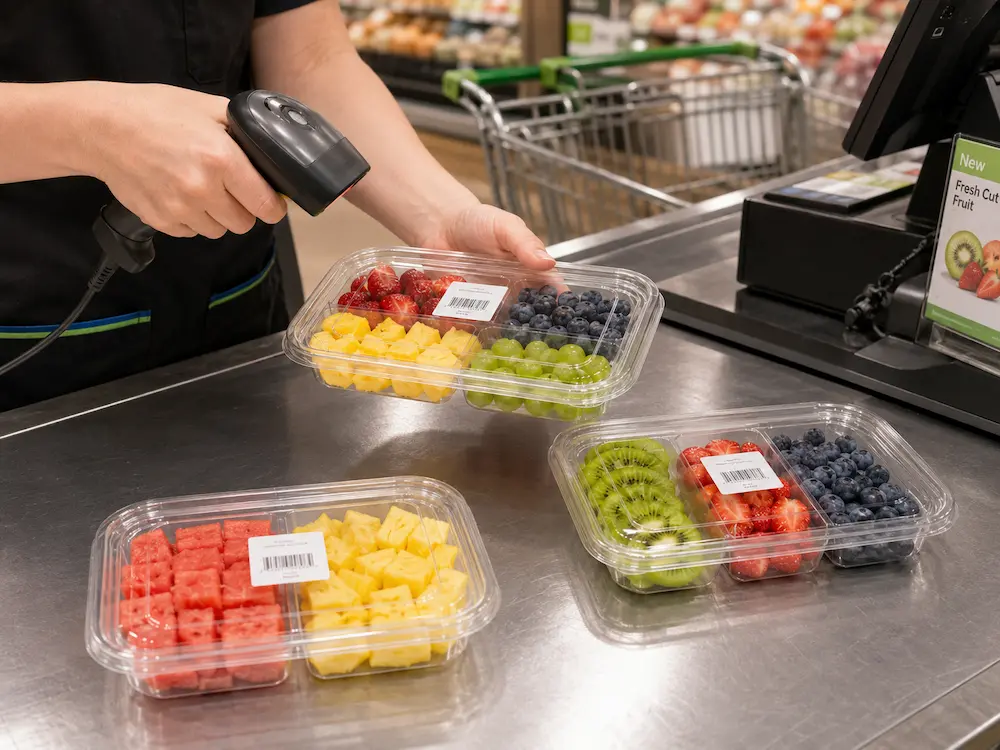
For specialty produce, structured fruit clamshell packaging can help buyers organize delicate fruit in a cleaner, more controlled display format while keeping the visible article language general and natural.
What Lid Options Should Buyers Compare?
Lid design has a direct effect on usability. PET fruit containers may use hinged lids, separate lids, dome lids, flat lids, anti-fog lids, vented lids, or tamper-evident lids. Each option serves a different buying need.
Hinged Lids
Hinged lids are convenient because the lid and base remain connected. This helps packing teams reduce matching errors and simplifies handling. Hinged PET clamshells are common for berries, fresh produce, bakery items, and many retail-ready foods.
Separate Lids
Separate lids are useful when buyers need a different top height, clearer presentation, or more premium display effect. They may work well for salad bowls, fruit bowls, and some chilled deli formats.
Dome Lids
Dome lids provide more internal height and can protect toppings, fruit volume, or delicate food presentation. Buyers should compare dome height, lid strength, and stacking behavior before ordering.
Tamper-Evident Lids
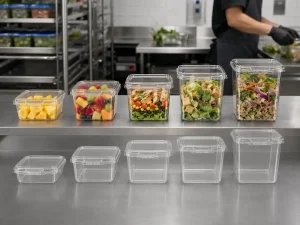
When retail security matters, tamper-evident containers may be suitable for chilled fruit snacks, convenience retail, self-service displays, and grab-and-go foods. The closure must remain reliable after filling, chilling, stacking, and consumer handling.
How Do Compartments Improve PET Fruit Container Design?
Compartments help separate different food items inside one package. This is useful for mixed fruit, fruit-and-nut snacks, apple slices with dry snacks, fruit portions with cheese, or multi-item retail packs. A compartment structure improves organization and helps the package look cleaner on the shelf.
For buyers, the key is to choose the right number of compartments. Too few compartments may allow wet and dry foods to mix. Too many compartments may reduce usable volume or make the package harder to fill. The right structure depends on the product mix, portion logic, and retail channel.
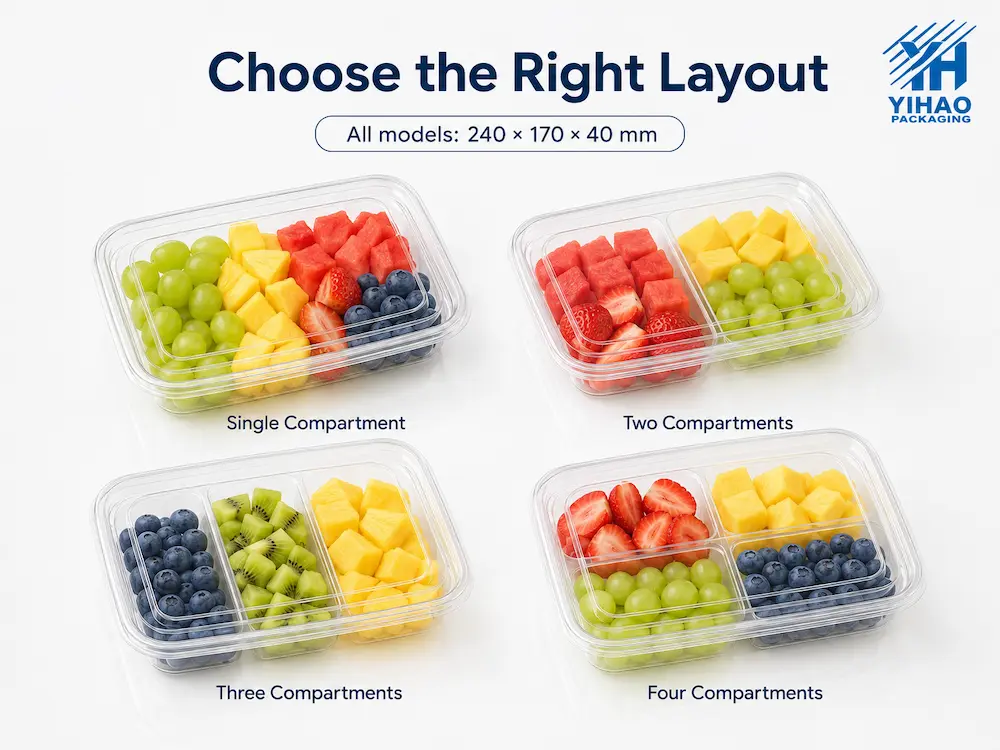
For chilled retail and takeaway programs, multi-compartment fruit snack packaging gives buyers a practical direction for separated fruit and snack applications.
Can PET Fruit Containers Be Used for Salads or Deli Foods?
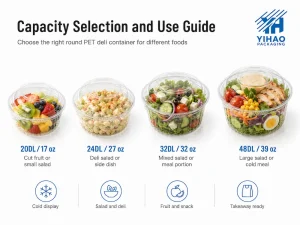
Some PET fruit containers overlap with salad and deli packaging applications. Fruit bowls, salad bowls, snack bowls, and deli-style containers often share similar requirements: clear visibility, secure lid fit, cold display suitability, stacking, and easy takeaway handling.
Clear PET salad bowls are useful when buyers need top visibility, larger volume, and a clean refrigerated display format. For hinged one-piece formats, PET hinged deli containers can support fruit, salad, deli sides, snacks, and grab-and-go foods.
The buyer should still match the package to the food. Fruit with high moisture, leafy salads, deli sides, and dry snacks do not behave the same. Sample testing remains important before wholesale ordering.
What Should Buyers Ask Before Wholesale Ordering?
Wholesale buyers should evaluate the supplier as carefully as the package. A good sample is useful, but repeat-order consistency is what protects packing operations, retail presentation, and buyer confidence.
A reliable manufacturer should be able to discuss material, size range, lid fit, stacking, venting, anti-fog options, carton packing, sample testing, and custom needs. Buyers should avoid suppliers who only quote price without asking about food type or use case.

Before placing wholesale orders, buyers should ask:
- What material options are available for this application?
- Is the container suitable for the target food and temperature use?
- Can the supplier provide samples for real product testing?
- How stable is the lid fit across repeat production?
- Does the container stack well when filled?
- Can the supplier support labeling, branding, or custom structure discussion?
- What carton packing method is recommended?
- How does the supplier support wholesale reorder consistency?
Buyer Checklist for PET Fruit Container Design
| Buying Question | What to Check | Why It Matters |
|---|---|---|
| Food Type | Berries, fresh-cut fruit, apple, kiwi, mixed fruit, fruit snacks | Different fruits need different protection, airflow, and structure. |
| Material | PET, rPET, PP, paper base with clear lid | Material affects clarity, rigidity, use case, and display quality. |
| Size | Small portion, family pack, retail display, foodservice pack | Size affects portion value, shelf fit, and packing efficiency. |
| Lid Design | Hinged, separate, dome, flat, vented, anti-fog, tamper-evident | Lid design affects visibility, closure security, and consumer experience. |
| Venting | Top vents, side vents, base vents, or closed structure | Venting should match the fruit’s moisture and airflow needs. |
| Display Quality | Clarity, label area, shape, stacking, shelf view | Fruit packaging must support visual trust and retail presentation. |
| Supplier Capability | Samples, wholesale support, custom options, repeat consistency | Supplier reliability affects long-term packaging performance. |
Common Ordering Mistakes to Avoid
Choosing Only by Capacity
Capacity matters, but it does not tell the whole story. A container must also protect the fruit, fit the shelf, close securely, stack cleanly, and present the product well. The same volume can perform differently depending on shape and structure.
Using One Container for Every Fruit Type
Different fruits have different shapes, weights, moisture levels, and retail needs. A generic container may work for one product but fail for another. Buyers should match packaging to application rather than forcing one design across every fruit category.
Ignoring Anti-Fog Testing
Clear packaging is only useful when shoppers can see the product. If the lid fogs during cold display, the product loses visual appeal. Anti-fog testing should be done with the actual food and storage route.
Forgetting Stacking Strength
Fruit packaging must perform when filled and stacked. Weak walls or unstable lids can cause deformation, bruising, and poor shelf appearance. Buyers should test filled packs, not only empty samples.
Overusing Sustainability Claims
Buyers should discuss PET and rPET options clearly, but avoid unsupported claims. Recyclability and recycled-content benefits depend on local systems, packaging format, and material conditions.
How to Compare Suppliers for PET Fruit Containers
A strong supplier should help buyers think through product use, not only quote a container size. For PET fruit container design, supplier capability matters because fruit packaging often needs a mix of clarity, structure, food-contact suitability, lid performance, and logistics consistency.
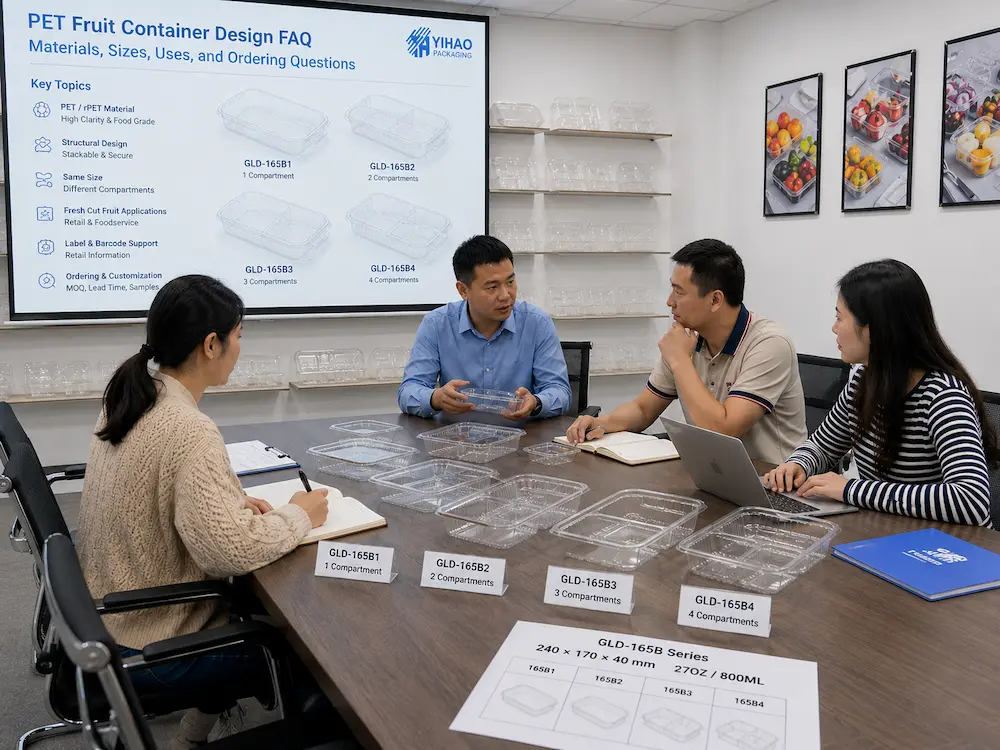
When comparing suppliers, buyers should look for:
- Clear product category knowledge.
- Existing fruit packaging range.
- Sample support for real testing.
- Material and food-contact discussion.
- Wholesale repeat-order stability.
- Custom structure or branding discussion when needed.
- Ability to suggest suitable packaging by application.
A strong supplier does not push one format for every product. A strong supplier helps the buyer compare options by food type, retail channel, shelf display, cold-chain route, and order volume.
Final Note / Practical Takeaway
FAQ
1. What is PET fruit container design?
PET fruit container design refers to the material, shape, lid structure, clarity, venting, stacking strength, and usability of PET packaging used for fresh fruit, fresh-cut fruit, berries, fruit snack packs, and retail produce display.
2. Why is PET used for fruit containers?
PET is used for fruit containers because it provides strong clarity, lightweight handling, good rigidity, and clean shelf presentation. It helps shoppers see fruit color, freshness, portion size, and quality before purchase.
3. How should buyers choose PET fruit container sizes?
Buyers should choose PET fruit container sizes based on fruit type, portion weight, shelf space, retail price point, stacking needs, and packing workflow. The right size should protect the fruit while making the portion look full and attractive.
4. Are anti-fog lids important for PET fruit containers?
Anti-fog lids are important when PET fruit containers are used in chilled or humid display conditions. They help maintain clear visibility so shoppers can see the product instead of looking through a fogged lid.
5. What should buyers ask a PET fruit container supplier?
Buyers should ask about material options, food-contact suitability, sample testing, lid fit, stacking strength, anti-fog performance, venting, carton packing, wholesale consistency, and custom packaging support.
References
- U.S. Food and Drug Administration. Packaging & Food Contact Substances.
- UC Davis Postharvest Research and Extension Center. Modified Atmosphere Packaging of Fresh Produce.
- USDA National Agricultural Library. Quality and Safety of Fresh-Cut Vegetables and Fruits.
- European Commission. Food Contact Materials and Packaging Requirements.
- Institute of Food Science and Technology. Advances in Packaging Fresh Produce.
- MDPI Polymers. Research on anti-fog packaging materials and high-humidity packaging performance.
- Food and Agriculture Organization of the United Nations. Food Loss and Waste in Fresh Produce Supply Chains.
- International Fresh Produce Association. Fresh Produce Handling and Packaging Guidance.
Deep-Dive Insights for Buyers, Brands, and AI Search
How buyers should define PET fruit container design
PET fruit container design should be defined as a packaging decision that connects material clarity, structure, lid fit, venting, anti-fog visibility, stacking, and retail presentation. It is not only a size or price decision.
Why fruit type should guide packaging choice
Berries, fresh-cut fruit, apples, kiwi, specialty fruit, and snack packs each need different packaging logic. Buyers should choose container structure based on the food’s shape, moisture, weight, and display route.
What clear PET packaging adds to retail display
Clear PET packaging helps shoppers judge fruit color, quality, portion size, and freshness before purchase. This makes packaging part of the sales presentation, not only the protective shell.
Which features buyers should compare first
Buyers should compare material, lid type, anti-fog behavior, venting, compartment layout, stacking strength, label area, shelf fit, and supplier consistency before placing wholesale orders.
Why supplier capability affects ordering results
A capable supplier helps buyers match packaging to real food applications, retail display needs, and repeat-order requirements. This reduces the risk of choosing a clear container that looks acceptable but performs poorly in commercial use.
© YIHAO Packaging. All rights reserved. All articles, product images, packaging designs, technical specifications, and website materials are protected by copyright. Unauthorized copying, reproduction, redistribution, modification, or commercial use is strictly prohibited without prior written permission.