YIHAO develops practical food packaging solutions for supermarkets, cafes, bakeries, distributors, and foodservice brands that need clear structure, stable presentation, and reliable wholesale supply. This guide explains PET deli packaging from a buyer’s point of view: material selection, clear deli container formats, size planning, food applications, and the key ordering questions to ask a manufacturer or supplier before bulk purchasing.
For chilled food programs, packaging is not just a container. It affects product visibility, portion planning, stacking behavior, shelf organization, buyer confidence, and daily packing efficiency. A good PET deli packaging choice should match the food type, display environment, packing method, and repeat-order plan instead of being selected only by capacity or price.
What Is PET Deli Packaging?
PET deli packaging refers to clear food containers made from polyethylene terephthalate, commonly used for chilled and ambient-ready foods such as salads, fruit portions, nuts, bakery items, cold snacks, deli sides, and grab-and-go meals. PET is valued because it delivers strong clarity, a clean retail look, and lightweight handling for display-oriented food packaging.
In practical purchasing terms, PET deli packaging includes deli and salad containers, hinged clamshells, round bowls, square food containers, separate-lid packs, and compartment formats. The right format depends on the food’s shape, moisture level, portion size, display style, and handling route from packing station to cold shelf.
A buyer choosing PET deli packaging should think about five things first: material clarity, lid security, stackability, food fit, and order consistency. These factors matter more than simply choosing the lowest-cost container, because weak structure or poor application fit creates hidden costs through damaged presentation, mismatched lids, inefficient packing, and poor shelf appeal.
Why Do Buyers Use PET for Clear Deli Containers?
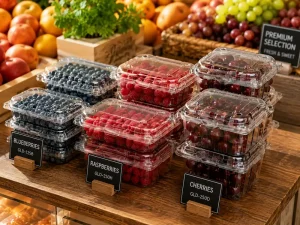
Buyers use PET for clear deli containers because visual presentation directly influences chilled food sales. Salads, fruit cups, nut mixes, bakery portions, deli sides, and ready-to-eat foods need to look fresh before the shopper opens the pack. Clear PET helps the customer see color, texture, layering, toppings, and portion value.
For retail chilled food, PET hinged deli containers are especially useful when buyers want a one-piece package with a connected lid. Hinged formats reduce lid-matching confusion during packing and support fast service in cafes, delis, supermarket prep rooms, and takeaway counters.
Clear PET also helps food teams standardize product lines. A deli program may use one small container for sauces or sides, a medium container for fruit and nut snacks, and a larger container for salads or chilled meals. When packaging has a consistent clear appearance across different sizes, the entire shelf looks more organized.
Is PET Deli Packaging Suitable for Chilled Food Containers?
Yes. PET deli packaging is widely used for chilled food containers because it performs well for cold display, grab-and-go handling, and transparent merchandising. It is especially suitable for foods that need visibility, clean shape, and secure closure in refrigerated cases.
Common chilled food applications include:
- Fresh-cut fruit and fruit salad
- Leafy salads and grain bowls
- Deli sides, pasta salad, and cold noodles
- Nut mixes and fruit-and-nut snack packs
- Cheesecake slices, brownies, muffins, and pastries
- Cold-case snack packs and prepared food portions
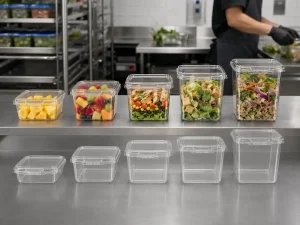
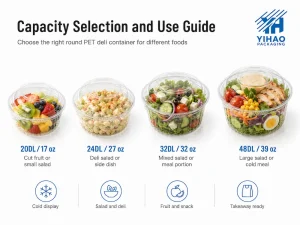
For larger salad and fruit programs, round PET deli containers support strong top-view display and generous filling space. For compact shelf organization, square PET deli containers help improve shelf alignment, carton loading, and counter presentation.
What Foods Fit PET Deli Packaging Best?
PET deli packaging fits foods that benefit from visibility, clean portion control, and cold-shelf presentation. It is strongest where the food already has visual appeal: colorful produce, layered salads, fresh toppings, mixed nuts, bakery textures, and prepared chilled meals.
| Application | Recommended Packaging Direction | Buyer Logic |
|---|---|---|
| Fresh-cut fruit | Clear hinged containers, round bowls, or compartment trays | Visibility, moisture control planning, portion clarity, and shelf appeal |
| Fruit and nut snacks | Single or divided clear PET containers | Separation, texture protection, snack-size presentation, and grab-and-go convenience |
| Leafy salads | Round bowls, square deli containers, or separate-lid containers | Volume, topping visibility, stacking, and refrigerated display |
| Bakery deli portions | Clear clamshells or PET-lid bakery containers | Shape protection, topping visibility, and dessert presentation |
| Cold deli sides | Square or round PET containers | Portion control, closure reliability, and shelf organization |
How Should Buyers Choose Sizes for PET Deli Packaging?
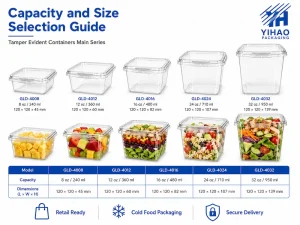
Size selection should begin with the food, not the container catalog. A good PET deli packaging program starts by mapping each food item to portion weight, topping height, sauce behavior, merchandising style, and packing speed.
For small portions, buyers normally look for compact containers used for nuts, chopped fruit, sauces, samples, and snack packs. For mid-size portions, buyers often need clear PET food containers that fit fruit snacks, deli sides, small salads, and chilled bakery portions. For larger portions, buyers should compare bowl depth, lid height, stacking pressure, and cold-case shelf height.
| Food Type | Better Container Direction | Buyer Priority |
|---|---|---|
| Fruit cups | Small to medium clear PET containers | Visibility, portion control, and chilled display |
| Nut snacks | Compact clear or divided containers | Closure strength, dry snack presentation, and grab-and-go handling |
| Salads | Medium to large round or square containers | Volume, topping space, and shelf appearance |
| Bakery portions | Shallow clamshells or higher-lid clear containers | Shape protection, topping clearance, and dessert visibility |
| Chilled deli sides | Square or round deli containers | Stacking, portion consistency, and shelf organization |
When comparing sizes, avoid choosing only by nominal volume. Two containers with similar stated capacity may perform differently because of base shape, lid height, usable fill area, rim structure, and lid closure design. For salads, extra headspace protects toppings and greens. For fruit, good visibility and controlled movement matter. For nuts, compact portion presentation and tight closure matter more than height.
Are Fruit Deli Containers Different from Salad Containers?
Fruit deli containers and salad containers often use similar PET material, but the design priorities are different. Fruit packaging needs strong visibility, clean presentation, and a container shape that prevents fruit from looking crushed or messy. Salad packaging needs enough volume for greens, toppings, dressing separation, and easy mixing space.
For fresh-cut fruit programs, fresh-cut fruit containers are usually selected around color display, portion structure, and chilled shelf presentation. If fruit and nuts are packed together, divided formats help protect textures and keep the pack organized.
A practical buyer rule is simple: use shallow, clear, stable packs for display-heavy fruit portions; use taller or rounder containers for salads and meal bowls; use divided containers when ingredients should stay separated until consumption.
What Type of PET Packaging Works for Nut Containers?
Nut containers require compact structure, good closure, and clear visibility. Nuts are dense, small, and visually similar in bulk, so the packaging must communicate portion value and cleanliness. Clear PET is useful because shoppers can quickly see almonds, cashews, walnuts, dried fruit, chocolate pieces, or snack mix combinations.
For fruit-and-nut snack programs, fruit and nut containers work well when ingredients can be packed together. For better texture separation, two-compartment snack containers help separate moist fruit from dry nuts or granola-style ingredients.
Buyers should test nut packaging for lid security, stack stability, filling speed, and display appearance after transport. A container that looks good in a sample photo may still need real packing tests with the actual food weight and distribution.
Can PET Deli Packaging Be Used for Bakery Deli Containers?
Yes. Bakery deli containers are a strong application for PET when the product needs clear visibility and shape protection. PET bakery packs are common for muffins, cupcakes, pastries, cheesecake slices, brownies, roll cake portions, and chilled dessert items.
For bakery and dessert applications, buyers should compare height, lid clearance, base support, and anti-fog needs. Soft pastries and frosted desserts need enough space to protect toppings. Dense items such as brownies or cake slices need a clean base shape and stable closure. Retail bakeries also need packaging that looks polished under lighting and supports takeaway handling.
For dessert and pastry programs, bakery clamshell containers support hinged convenience and strong product visibility. For chilled dessert portions, clear bakery deli containers help present cream layers, toppings, and portion shape in a retail-ready format.
Should Buyers Choose Hinged or Separate-Lid PET Deli Packaging?
Both structures have value. Hinged PET deli packaging is efficient for fast packing because the lid is already attached. This helps reduce lid mismatch and makes it easier for staff to close containers quickly during daily production.
Separate-lid containers are useful when buyers need a more premium shelf appearance, different lid heights, or flexible container-and-lid combinations. They also work well when the base and lid must be handled separately during filling, sealing, or display preparation.
For prepared meals, bakery display, and chilled foods that need a clean base with a matching lid, separate-lid food containers give buyers another option beyond hinged clamshells.
What Should Buyers Ask a PET Deli Packaging Manufacturer?
When speaking with a manufacturer, buyers should ask questions that confirm real application fit. Good questions reduce sampling mistakes and make the wholesale ordering process more efficient.
Important questions include:
- Which container styles are best for my food type?
- Which sizes fit my portion weight and display target?
- Does the lid height protect toppings, fruit pieces, or bakery decorations?
- Can samples be tested with the actual food before bulk ordering?
- Which container series share compatible lids or similar shelf appearance?
- What carton packing and stacking logic should be considered for storage and shipping?
- Can the supplier support wholesale repeat orders with consistent appearance and structure?
A reliable supplier should help buyers compare application needs instead of pushing one generic container for every food. For PET deli packaging, the best solution is usually a small product system, not one isolated SKU.
How Should Wholesale Buyers Prepare Before Ordering?
Before placing a wholesale order, buyers should prepare product photos, food dimensions, target portion weight, filling method, storage condition, display environment, estimated quantity range, and monthly usage expectations. This information helps the supplier recommend realistic container options and avoid mismatched samples.
Wholesale buyers should also confirm whether the packaging is for supermarket cold shelves, cafe takeaway, delivery, meal prep, bakery display, convenience retail, distributor resale, or private-label programs. Each channel has different expectations for visibility, closure, stacking, carton handling, and shelf organization.
For example, a supermarket may prioritize shelf uniformity and barcode label placement. A cafe may prioritize hand-feel and fast staff packing. A distributor may prioritize SKU range, carton efficiency, and repeat supply. A bakery may prioritize lid height and clean product display. These differences should guide the PET deli packaging selection process.
How Does PET Deli Packaging Support Retail Display?
Retail display depends on three packaging signals: clarity, order, and trust. Clear PET lets customers see the food. A stable container shape keeps products aligned on the shelf. Secure closure gives the pack a more reliable look during handling.
For grab-and-go programs, clear hinged deli containers support fast packing and transparent display. The goal is not only to hold food. The goal is to make the food easier to understand, easier to choose, and easier to buy.
How Should Buyers Compare PET, rPET, and Other Materials?
PET and rPET are both used in clear food packaging, but buyers should discuss food-contact suitability, recycled content claims, local market expectations, and supplier documentation before making final decisions. PET is selected for clarity and display value. rPET may support recycled-content goals when suitable material supply and compliance documentation are available.
Buyers should avoid vague sustainability claims. Instead, use precise language: recyclable where local PET collection and recycling systems accept the format; recycled content where supplier material documentation supports the claim; food-contact suitability according to the target market’s applicable requirements.
Paper, PP, PLA, and fiber-based alternatives may fit some food programs, but they do not replace PET in every case. For chilled display, transparent merchandising, and product color visibility, PET deli packaging often gives buyers a stronger retail presentation.
What Makes a Good PET Deli Packaging Supplier?
A good supplier does more than quote containers. The supplier should help buyers understand structure, use case, sample testing, carton handling, and repeat-order consistency. For food packaging buyers, this is especially important because packaging failure usually appears after the container is filled, shipped, stacked, chilled, and displayed.
Strong supplier support includes:
- Clear product category guidance
- Application-based recommendations
- Realistic sample testing suggestions
- Support for wholesale product range planning
- Consistent communication about material, structure, and packing logic
- Careful avoidance of unverified claims
For buyers building a multi-SKU food packaging line, it is better to work with a packaging partner that understands deli, salad, fruit, bakery, snack, cold cup, and chilled food programs together. This helps create a more coherent packaging system across different retail categories.
PET Deli Packaging FAQ
1. What is PET deli packaging used for?
PET deli packaging is used for clear food containers that package salads, fresh-cut fruit, nuts, bakery portions, deli sides, chilled snacks, and grab-and-go meals. It is especially useful when buyers need strong product visibility, clean shelf presentation, and practical handling for refrigerated or display-focused food programs.
2. Are clear deli containers suitable for fruit and nut snacks?
Yes. Clear deli containers work well for fruit and nut snacks when the container size, lid closure, and compartment structure match the food. Single-compartment containers fit simple snack mixes, while divided PET containers help separate moist fruit from dry nuts, granola, or toppings.
3. How do buyers choose sizes for PET deli packaging?
Buyers should choose sizes by food type, portion weight, topping height, shelf space, and filling method. Nominal capacity alone is not enough. A good size must protect the food, look full without being overpacked, close securely, and stack properly during storage, transport, and retail display.
4. Can PET deli packaging be ordered wholesale from a manufacturer or supplier?
Yes. Buyers can order PET deli packaging wholesale from a manufacturer or supplier after confirming food type, target size, estimated quantity range, packing method, sample testing needs, and branding or labeling requirements. MOQ, pricing, and lead time should be confirmed directly with the supplier before ordering.
5. Is PET deli packaging suitable for bakery deli containers?
Yes. PET is suitable for bakery deli containers when the product benefits from clear visibility and shape protection. It is commonly used for muffins, pastries, cake slices, brownies, cheesecake portions, and chilled desserts. Buyers should check lid height, base support, and presentation needs before ordering.
References
- U.S. Food and Drug Administration, Food Contact Substances and Packaging Guidance
- U.S. Food and Drug Administration, Understanding How FDA Regulates Substances that Come into Contact with Food
- Association of Plastic Recyclers, APR Design Guide for Plastics Recyclability
- Association of Plastic Recyclers, PET Rigid Packaging Design Guidance
- European Food Safety Authority, Recycled Plastic Materials Intended for Food Contact
- EFSA, Administrative Guidance for Applications on Recycled Plastic Food Contact Materials
- RecyClass, Design for Recycling Guidelines for PET Packaging
- Petcore Europe, PET Packaging and Design-for-Recycling Industry Guidance
Deep-Dive Insights for Buyers
How should a buyer build a PET deli packaging range?
Start with the food program, then select container families. A strong range usually includes small snack packs, mid-size fruit and deli containers, larger salad or chilled meal containers, and selected bakery or dessert formats. This structure helps buyers serve multiple retail categories without creating unnecessary SKU confusion.
Why does container clarity matter in chilled food sales?
Clear visibility helps the shopper judge freshness, portion value, ingredient quality, and presentation. For salads, fruit, nuts, and bakery portions, the container becomes part of the selling surface. PET clarity supports this role better than opaque formats when visual appeal is a priority.
What should buyers test before confirming a wholesale order?
Buyers should test real food filling, lid closure, stacking, label placement, cold-case appearance, transport handling, and shelf fit. A sample should be reviewed with actual food, not only as an empty container. This gives the buyer a more accurate view of how the pack performs in daily operations.
What is the practical ordering takeaway?
The best PET deli packaging choice is not always the largest or cheapest option. It is the container that fits the food, protects presentation, supports packing speed, and keeps the retail shelf looking organized. Buyers should work with a supplier that understands application logic, not just product lists.
Final Note / Practical Takeaway
© YIHAO Packaging. All rights reserved. All articles, product images, packaging designs, technical specifications, and website materials are protected by copyright. Unauthorized copying, reproduction, redistribution, modification, or commercial use is strictly prohibited without prior written permission.