Choosing deli food packaging is not simply a choice between plastic, paper, aluminum, or compostable materials. For supermarkets, cafes, foodservice distributors, chilled meal brands, and grab-and-go retail programs, packaging affects shelf appeal, food protection, packing speed, storage efficiency, customer trust, and repeat purchase behavior. This is why many buyers compare a PET deli container factory with alternative packaging options before placing wholesale orders.
YIHAO is a food packaging manufacturer and solution provider serving fresh produce, deli, salad, bakery, beverage, takeaway, and foodservice packaging needs. From a buyer’s perspective, the right packaging decision is not “PET is always better” or “paper is always more sustainable.” The correct decision is based on food type, temperature, retail channel, shelf display, handling process, and long-term supply stability.
This guide compares PET deli containers with paper food boxes, PP containers, aluminum trays, molded fiber packaging, compostable containers, and separate-lid systems. It is written for buyers searching for a PET deli container factory, wholesale deli containers, deli container manufacturer, salad container supplier, bulk salad containers, or clear food packaging supplier.
What Buyers Are Really Comparing
When buyers compare PET deli containers with alternative packaging, the real comparison is not only material cost. A container with a low unit price may become expensive if it creates leakage, weak stacking, poor shelf visibility, lid mismatch, repacking work, customer complaints, or inconsistent delivery quality.
For chilled retail food, buyers usually compare seven core factors: clarity, closure performance, food contact suitability, rigidity, stacking strength, label placement, and supply consistency. A chilled salad container requires a different packaging logic from a hot meal tray, dry bakery box, catering platter, or compostable takeaway pack.
This is why buyers often start with deli and salad containers as the main category, then compare hinged PET containers, round PET bowls, square PET containers, PP hot food containers, paper boxes, and fiber-based options according to the actual food application.
Why Buyers Choose a PET Deli Container Factory
A PET deli container factory is often the preferred choice when food needs strong visual presentation. PET delivers high clarity, helping chilled salads, fruit portions, deli sides, nuts, desserts, and ready-to-eat meals look fresh and organized in retail display. For supermarkets, cafes, convenience stores, and grab-and-go coolers, this visibility directly supports purchase decisions.
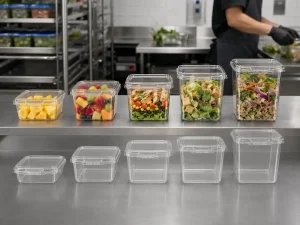
Factory-made PET deli containers also give buyers better control over size range, lid fit, stacking structure, capacity options, carton packing, and repeat-order stability. A professional deli container manufacturer understands that packaging must work for food presentation, filling speed, storage rooms, delivery routes, retail shelves, and end-user handling.
For fast packing operations, PET hinged containers are especially practical because the lid and base are connected. This reduces lid-matching complexity and supports daily packing efficiency for delis, salad counters, supermarkets, cafes, and foodservice teams.
Where PET Deli Containers Perform Best
PET deli containers perform best in cold and chilled food applications where visibility matters. Common uses include leafy salads, pasta salads, fruit mixes, cold noodles, grain bowls, cheese portions, nuts, snack packs, deli sides, chilled desserts, and ready-to-eat meals. In these scenarios, the packaging needs to show freshness, portion size, ingredient color, and food quality before the customer opens the container.
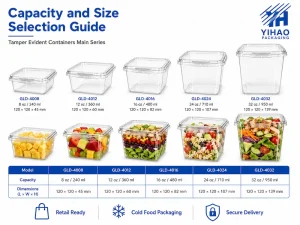
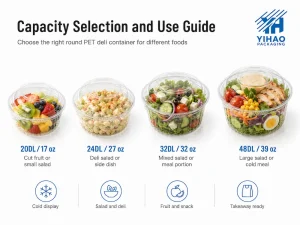
A PET deli container factory also supports a broader packaging system. Buyers can combine round PET containers for salad bowls and chilled meals, square PET containers for efficient shelf layout, and hinged clamshell formats for fast retail packing. This creates a more complete wholesale packaging program instead of relying on one container for every food type.
Where PET Is Not the Best Choice
Standard PET deli containers are mainly used for cold and chilled foods. They are not the correct default choice for microwave reheating, hot filling, oven use, or high-temperature food service. When the food is hot or reheatable, buyers should compare PP, aluminum, or other heat-suitable packaging options.
For hot prepared meals, buyers should review microwave safe containers or PP-based food packaging. A serious clear food packaging supplier should not push PET into every project. The stronger approach is to match material, structure, temperature condition, food moisture, shelf life, and customer use.
PET Deli Containers vs Paper Food Boxes
Paper food boxes are popular for takeaway, bakery items, sandwiches, dry snacks, and branded food packaging because they provide a natural look and strong printability. They work well when brand storytelling and surface printing are more important than full food visibility.
However, paper boxes usually reduce direct product visibility unless they include a window. For chilled salads, fruit portions, and colorful deli foods, this weakens shelf display. Moisture, dressing, oil, and acidic ingredients also require careful coating or lining decisions. Once coatings or windows are added, the recycling or composting story becomes more complicated.
A PET deli container factory has a clear advantage when buyers need transparent packaging, stable closure, strong shelf display, and consistent wholesale supply. Paper boxes fit dry food and branded takeaway well, but PET usually performs better for chilled food display.
PET Deli Containers vs PP Containers
PP containers are strong in hot food, microwave reheating, and meal prep applications. They are suitable for cooked meals, prepared dishes, and takeaway foods where heat resistance matters more than crystal-clear appearance.
PET, however, provides stronger clarity for chilled foods. When food color, ingredient visibility, and freshness perception drive the sale, PET is usually the stronger retail display material. Buyers should make the PET vs PP decision by starting with temperature. If the food is cold and display-driven, PET usually fits better. If the food is hot or microwaveable, PP should be prioritized.
For buyers managing both cold and hot food programs, the best solution is often a mixed packaging system: PET for chilled salads, fruit, deli sides, and snacks; PP for hot prepared meals. This gives the buyer better performance across the full menu.
PET Deli Containers vs Aluminum Trays
Aluminum trays are strong for ovenable meals, hot food, catering, and prepared dishes that require heat tolerance. They are practical for baked meals and ready-to-heat food formats.
For fresh salads, fruit mixes, deli sides, and chilled grab-and-go foods, aluminum has one major limitation: it does not show the food clearly. Even with a clear lid, the side and base visibility remain limited. PET gives better product visibility and stronger cold-case merchandising.
In simple terms, aluminum is stronger for heat. PET is stronger for chilled display. Buyers should not compare them as equal substitutes without first defining the food temperature and retail presentation goal.
PET Deli Containers vs Molded Fiber and Compostable Packaging
Molded fiber and compostable packaging are attractive because many brands want a natural, low-plastic, or sustainability-focused appearance. These materials can work for dry foods, short-hold takeaway, and foodservice programs with controlled disposal systems.
However, buyers should evaluate them carefully for wet, dressed, chilled, or display-driven foods. Molded fiber can absorb moisture or require coatings. Compostable packaging only delivers its intended value when the local disposal pathway supports commercial composting. Without proper collection and processing, compostable packaging may not achieve the result buyers expect.
For chilled salads, fruit portions, deli sides, and colorful grab-and-go meals, PET maintains strong advantages in clarity, moisture resistance, and shelf display. A PET deli container factory is usually the stronger choice when buyers need retail visibility and reliable wholesale supply.
Buyer Decision Matrix
| Packaging Option | Best For | Main Strength | Main Limitation | Buyer Decision |
|---|---|---|---|---|
| PET deli containers | Cold salads, fruit, deli sides, snacks | High clarity and strong shelf display | Not designed for microwave heating | Choose for chilled retail visibility |
| Paper food boxes | Dry takeaway, bakery, sandwiches | Printable and natural appearance | Lower visibility and moisture concerns | Choose for dry or brand-led takeaway |
| PP containers | Hot food and microwave meals | Better heat resistance | Less transparent than PET | Choose for reheatable meals |
| Aluminum trays | Ovenable meals and catering | Strong heat tolerance | No full food visibility | Choose for hot prepared meals |
| Molded fiber | Dry food and natural-look packaging | Paper-based presentation | Moisture and visibility limits | Choose after real food testing |
| Compostable packaging | Controlled sustainability programs | Strong disposal message when supported | Depends on composting access | Choose only with disposal pathway clarity |
Buyer Scoring Table: How to Choose Faster
| Buyer Priority | Best Packaging Choice | Why It Works | Buyer Reminder |
|---|---|---|---|
| Chilled salad display | PET deli containers | Clear visibility supports freshness perception and shelf appeal | Confirm lid fit, stacking, and label placement |
| Hot prepared meals | PP containers | Better heat resistance for reheating and hot food service | Check microwave and temperature requirements |
| Premium takeaway branding | Paper boxes | Printable surface supports brand design | Test moisture resistance for wet foods |
| Ovenable food | Aluminum trays | Strong heat tolerance for baked and ready-to-heat meals | Use clear lids when visibility is needed |
| Natural-look dry food | Molded fiber | Paper-based look supports natural positioning | Test coating, grease, and moisture performance |
| Clear chilled food merchandising | PET from a specialized factory | Combines clarity, structure, size consistency, and wholesale scalability | Request samples before bulk orders |
Hinged PET Containers vs Separate-Lid PET Containers
Inside the PET category, buyers still need to choose the right structure. Hinged containers connect the lid and base, making them efficient for fast packing and simple SKU management. They are practical for delis, cafes, convenience stores, supermarkets, and foodservice teams that want fewer lid-matching problems during daily operation.
Separate-lid containers offer more flexibility when buyers need different lid heights, bowl shapes, premium top-view presentation, or more controlled product assembly. For example, salad bowls are useful for grain bowls, chilled noodles, fruit mixes, and takeaway salad programs. separate-lid food containers work well when buyers need flexible lid height and controlled display presentation.
The right decision depends on operation. If the packing team values speed and SKU simplicity, hinged PET containers are efficient. If the food needs a premium top-view display, separate-lid bowls or trays may provide a stronger presentation.
Application Scenarios for PET Deli Containers
Fresh Salads and Grain Bowls
Fresh salads need visibility, lid security, and enough internal space to protect toppings. Buyers selling leafy salads, pasta salads, quinoa bowls, cold noodles, and protein meals often choose PET because it keeps ingredients visible and supports chilled shelf display. For larger portions, grab-and-go meal salads need a structure that presents volume clearly while remaining stackable.
Fruit Portions and Snack Packs
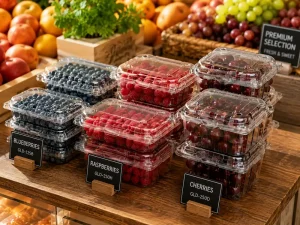
Fruit portions, mixed fruit packs, nuts, cheese, and snack combinations depend heavily on freshness perception. Clear PET helps customers see color, portion size, and ingredient quality before purchase. For small and mid-size portions, snack packaging gives buyers a practical format for chilled retail display and daily food rotation.
Deli Sides and Cold Prepared Foods
Deli sides such as pasta salad, potato salad, cold vegetables, marinated foods, and ready-to-eat chilled meals require a balance of visibility, closure security, and stacking strength. For compact retail layouts, square deli containers help improve shelf use and carton efficiency.
Family Packs and Larger Fresh Food Portions
Large chilled portions need stronger rigidity, better stacking, and reliable closure. fresh food portions are suitable for family-size salads, fruit mixes, deli assortments, and shared chilled foods. This is where factory consistency becomes especially important because weak lids and unstable stacking can create logistics problems.
How to Evaluate a PET Deli Container Factory
Buyers should evaluate a PET deli container factory with the same seriousness as any other supply partner. Price matters, but factory capability determines whether the packaging works in real purchasing, filling, shipping, display, and customer handling conditions.
Start with material suitability. Confirm whether the container is designed for food contact use and whether the supplier understands the target market’s regulatory expectations. Then test the structure. Open and close the lid repeatedly. Stack samples with real food weight. Check the hinge line, rim strength, corners, clarity, label area, lid snap, and base stability.
Next, review manufacturing consistency. Reliable factory capability includes mold control, forming stability, material control, inspection process, carton protection, and repeat-order consistency. These details matter when buyers need wholesale deli containers, bulk salad containers, and multi-SKU food packaging programs.
Wholesale Ordering Checklist for Buyers
Before placing a wholesale order, buyers should confirm the following points with the PET deli container factory, deli container manufacturer, or salad container supplier:
- Target food type: salad, fruit, deli side, snack, dessert, cold meal, or prepared food.
- Temperature condition: chilled, room temperature, hot holding, or microwave reheating.
- Container structure: hinged, separate lid, round bowl, square container, tray, or compartment format.
- Closure requirement: standard snap, tighter seal, transport-focused closure, or tamper-related structure.
- Display priority: full transparency, top-view presentation, label window, or printed branding area.
- Operational need: fast packing, lid matching, stack height, carton count, and warehouse efficiency.
- Market requirement: food contact suitability, recycling communication, and buyer-specific documents.
- Order logic: samples first, trial order second, wholesale order after real-use validation.
If the product is hot or reheatable, hot food containers are more suitable than standard PET deli containers. A strong supplier helps buyers choose correctly instead of forcing one material into every use case.
Sustainability and Recycling: What Buyers Should Say Carefully
Sustainability language must be accurate. PET and rPET options can support practical packaging programs when the material stream, product design, and local recycling system are aligned. However, recyclability depends on local collection, sorting, food residue, labels, color, and regional recycling infrastructure. Buyers should avoid vague claims and use precise wording such as “recyclable where local PET collection systems accept this packaging.”
Paper, molded fiber, and compostable packaging also require careful communication. A paper box with plastic coating is not the same as an uncoated paper package. Compostable packaging does not automatically compost in every city. Molded fiber may need coatings for wet foods. The environmental result depends on the full system, not only the material name.
A responsible clear food packaging supplier helps buyers compare material performance, packaging weight, food protection, disposal assumptions, damage reduction, shelf display, and customer communication. This is especially important for export buyers because packaging rules and recovery systems vary by market.
Common Mistakes Buyers Should Avoid
Mistake 1: Choosing Only by Unit Price
The cheapest container can become expensive when it increases leakage, repacking, carton damage, returns, or customer complaints. Buyers should compare total performance, not only unit price.
Mistake 2: Using PET for Hot Food
PET works well for cold and chilled display, but it is not the default material for microwave heating or hot filling. PP and other heat-suitable options should be reviewed for hot food programs.
Mistake 3: Ignoring Lid Fit
Lid fit affects transport, display, and customer trust. Buyers should test lid security with real food weight, not only empty samples.
Mistake 4: Believing Every Sustainability Claim
Words such as recyclable, compostable, biodegradable, and eco-friendly need context. Buyers should ask for material details, disposal assumptions, and local recovery compatibility.
Mistake 5: Buying One Container for Every Food
One container rarely fits every use. Salads, fruit, snacks, deli sides, hot meals, and larger chilled portions need different structures. A stronger wholesale strategy builds a practical packaging matrix.
When a PET Deli Container Factory Is the Best Choice
A PET deli container factory is the best choice when the buyer needs clear retail display, chilled food presentation, stable wholesale supply, and a wide size range for salads, fruit, deli sides, nuts, snacks, and ready-to-eat foods. It is especially strong for supermarkets, cafes, convenience stores, foodservice distributors, and chilled grab-and-go programs.
PET is also a strong choice when packaging needs to help food sell itself. When customers can see ingredients clearly, they make faster purchase decisions. This is why clear PET containers remain important in fresh food merchandising, even as buyers continue to compare paper, PP, aluminum, fiber, and compostable alternatives.
When Alternative Packaging Is the Better Choice
Alternative packaging is better when the food application requires a different strength. PP is better for reheatable meals. Aluminum is better for ovenable food. Paper is strong for dry takeaway and printed branding. Molded fiber may support natural-look dry food programs. Compostable packaging fits controlled disposal programs where the buyer has a clear composting pathway.
The professional decision is not to choose one material for every situation. The professional decision is to build a packaging system that matches each food category. A strong manufacturer, wholesale partner, and supplier helps buyers separate cold display, hot takeaway, retail trust, sustainability messaging, and supply chain efficiency into practical packaging choices.
FAQ
1. What is the main advantage of working with a PET deli container factory?
The main advantage is consistent control over clarity, shape, lid fit, stacking strength, and wholesale supply. A PET deli container factory helps buyers build a stable packaging line for chilled salads, fruit portions, deli sides, snacks, and grab-and-go foods.
2. Are PET deli containers better than paper food boxes?
PET deli containers are usually better for cold foods that need strong visibility, such as salads, fruit, and colorful deli items. Paper food boxes are better for dry takeaway, sandwiches, bakery items, or brand-led packaging where printability matters more than full transparency.
3. Can PET deli containers be used for hot food?
Standard PET deli containers are mainly designed for cold and chilled foods. For hot meals, microwave reheating, or high-temperature service, buyers should compare PP containers, aluminum trays, or other heat-suitable packaging options.
4. How should buyers choose between hinged PET containers and separate-lid containers?
Hinged PET containers are efficient for fast packing and simple SKU management because the lid and base stay connected. Separate-lid containers are useful when buyers need different lid heights, bowl formats, premium top-view presentation, or more flexible food assembly.
5. What should buyers test before ordering wholesale deli containers?
Buyers should test real food weight, lid closure, stacking, transport handling, label placement, clarity, portion fit, carton packing, and storage conditions. Sample testing should happen before bulk orders to reduce procurement risk.
References
- U.S. Food and Drug Administration, Packaging & Food Contact Substances.
- U.S. Environmental Protection Agency, Plastics: Material-Specific Data.
- European Commission, Packaging and Packaging Waste Regulation.
- Electronic Code of Federal Regulations, 21 CFR Part 177 Indirect Food Additives: Polymers.
- Association of Plastic Recyclers, Design Guide for Plastics Recyclability.
- National Association for PET Container Resources, PET recycling and design resources.
- European Food Safety Authority, Food contact materials guidance and scientific opinions.
- ASTM International, food packaging and plastics testing standards.
Deep-Dive Insights
How should buyers make the final choice?
Buyers should start with food condition first. If the product is cold, colorful, and display-driven, PET is usually a strong first option. If the product is hot, greasy, ovenable, or reheatable, PP, aluminum, or other heat-suitable formats should be compared before any purchasing decision is made.
Why does factory capability matter?
Factory capability determines repeat-order stability. A strong PET deli container factory controls forming quality, lid fit, clarity, stacking strength, carton packing, and dimensional consistency. These details become more important as buyers move from samples to wholesale supply.
What is the best option for wholesale deli containers?
The best option is usually a structured packaging matrix: PET hinged containers for fast packing, PET bowls for salad presentation, square PET containers for shelf efficiency, separate-lid containers for premium assembly, and PP containers for hot food. This approach gives buyers better control than using one container for every food.
Option to consider
Buyers should not replace every packaging material with one alternative. A mixed packaging system creates better performance because each food type receives the correct material, structure, lid design, and display format.
Consideration for long-term supply
Before bulk orders, buyers should test samples with real food, real labels, real stacking, and real transport conditions. A professional supplier supports this validation process because sample testing reduces wholesale purchasing risk.
Final Note / Practical Takeaway
© YIHAO Packaging. All rights reserved. All articles, product images, packaging designs, technical specifications, and website materials are protected by copyright. Unauthorized copying, reproduction, redistribution, modification, or commercial use is strictly prohibited without prior written permission.