Choosing takeaway packaging is no longer a simple unit-price decision. For restaurants, supermarkets, meal prep brands, delis, distributors, central kitchens, and foodservice operators, packaging now affects reheating safety, leakage complaints, delivery presentation, storage efficiency, staff speed, customer convenience, and repeat purchase confidence. This is why microwaveable takeaway boxes have become a serious purchasing category rather than just another disposable container.
The wrong packaging choice creates visible problems quickly. A container may warp when the customer reheats food. A lid may loosen during delivery. Paperboard may soften under oily sauces. PET may look clear and attractive in a chilled display but fail when used for reheating. Molded fiber may appear sustainable but still needs testing for grease, moisture, coating behavior, and actual food contact conditions. These problems are not small when they happen across dozens of stores or thousands of meals.
For buyers sourcing from YIHAO, the stronger question is not “Which takeaway box is cheapest?” The real question is: “Which packaging structure matches my food, heating method, delivery process, display need, and wholesale supply plan?”
What Buyers Really Mean by Microwaveable Takeaway Boxes
In B2B food packaging, microwaveable takeaway boxes usually refer to containers designed for prepared meals, hot dishes, deli foods, rice meals, noodles, pasta, sauced entrées, meat portions, vegetables, and other foods that may be reheated by the customer or operator. In practical sourcing conversations, this category often points to PP takeout packaging because polypropylene is widely used where better heat resistance is required.
However, buyers should not treat “PP” as a shortcut for every heating condition. A container designed for reheating is different from a package designed for oven use, long cooking, high-fat heating, freezing, or extended hot holding. Microwave-safe does not automatically mean oven-safe, boil-safe, or suitable with every lid condition. The lid may need to be removed, loosened, vented, or replaced depending on the container design and supplier instructions.
Professional buyers normally evaluate microwave safe takeout containers through five operational questions:
- Will the container hold shape during realistic microwave reheating?
- Will the lid fit securely before delivery and after hot food contact?
- Will the structure resist grease, sauce, steam, and portion weight?
- Will the packaging stack efficiently for prep lines, delivery bags, and warehouse storage?
- Will the supplier provide clear material, intended-use, and sample testing support before wholesale ordering?
When these questions are answered clearly, microwaveable takeaway boxes become more than a container. They become part of a controlled packaging system that reduces wrong-material selection, staff confusion, customer complaints, and purchasing waste.
Why PP Takeout Packaging Is Often the First Choice for Hot Food
For hot meals and reheating applications, PP takeout packaging is often the most practical material direction. PP normally gives buyers a better balance of heat resistance, container rigidity, stackability, cost control, and wholesale availability than many alternatives designed mainly for cold display or dry food service.
For restaurants and prepared food counters, PP takeout packaging supports rice bowls, pasta meals, cooked vegetables, chicken portions, deli meals, hot sides, and ready-to-heat prepared dishes. A separate-lid structure also helps foodservice teams fill, close, stack, and serve containers more efficiently during busy operating hours.
The commercial value of PP is not only heat performance. It also helps buyers standardize container-lid combinations, simplify repeat purchasing, reduce SKU confusion, and maintain more consistent packaging quality across different outlets or customer accounts. For foodservice buyers, that reliability often matters more than small differences in unit price.
Alternative Packaging Options Buyers Compare Against Microwaveable Takeaway Boxes
Alternative packaging can be useful, but each material has a narrower best-use range. The right comparison should be based on food temperature, grease level, moisture content, customer reheating behavior, shelf presentation, delivery distance, and disposal expectations.
Paperboard Takeaway Boxes
Paperboard boxes are common for burgers, fries, bakery items, dry snacks, sandwiches, and casual takeaway meals. They provide a familiar look, support brand printing, and often fit fast-casual restaurant positioning. For dry or low-moisture foods, paperboard can be a strong option.
But paperboard performance depends heavily on coating, folding structure, grease resistance, moisture exposure, and steam behavior. For sauced hot meals, oily dishes, or customer reheating, paperboard may soften, stain, deform, or lose lid security. Buyers must verify whether the coating, ink, adhesive, and complete package structure match the intended food and reheating conditions.
PET and rPET Clear Containers
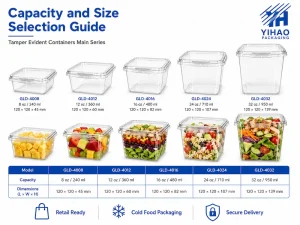
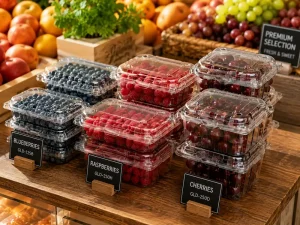
PET and rPET containers are excellent for chilled foods, salads, fruit, bakery desserts, deli sides, and grab-and-go retail. Their greatest advantage is clarity. Clear packaging helps customers see freshness, portion size, toppings, ingredients, and product quality before purchase.
However, PET and rPET should not be treated as default microwave packaging unless a specific container is designed and confirmed for that use. Buyers often make the mistake of selecting PET because it looks premium in photos, then discovering the food program requires reheating. For chilled food programs, takeout food containers made from PET or rPET may be the right direction. For hot meals and reheating, PP is usually the stronger sourcing discussion.
Aluminum Trays
Aluminum trays work well for oven-ready meals, catering, roasted dishes, baked meals, and certain chilled or frozen prepared food programs. They provide strong heat transfer, good barrier performance, and a familiar catering format.
But aluminum is not a universal microwave solution. It also lacks the same visibility, lightweight handling, and simple customer reheating experience that many PP takeaway containers provide. If the product is oven-heated, aluminum may fit. If the buyer needs customer-friendly microwave reheating, PP-based microwaveable takeaway boxes usually offer a clearer path.
Foam Food Containers
Foam containers are lightweight and inexpensive, but they are weak as a premium or future-facing packaging choice. They often create concerns around reheating, brand image, environmental perception, and modern procurement standards.
For restaurants and foodservice buyers that want fewer complaints and stronger customer trust, foam is rarely the best long-term direction. Hot, oily, sauced, or reheated meals usually deserve stronger restaurant food containers that can support the actual service environment.
Molded Fiber and Bagasse Containers
Molded fiber and bagasse containers are widely used for takeaway meals where buyers want a fiber-based packaging image. They can work well for dry, semi-dry, or moderately moist foods, especially when the structure is properly designed.
However, molded fiber needs careful testing for sauces, oils, steam, lid fit, coating performance, and local disposal expectations. A fiber look does not automatically solve food contact, grease resistance, or reheating requirements. Buyers should test molded fiber under real meal conditions before treating it as a direct replacement for microwave safe takeout containers.
Comparison Table: Microwaveable Takeaway Boxes vs Alternative Packaging
| Packaging Type | Best Use | Main Strength | Buyer Risk | Best Fit for Wholesale Buyers |
|---|---|---|---|---|
| PP microwaveable takeaway boxes | Hot meals, reheatable prepared food, deli meals, rice, noodles, pasta | Heat resistance, stacking, portion control, customer reheating convenience | Must confirm intended microwave use and lid instructions | Restaurants, delis, meal prep brands, hot food counters, distributors |
| PET / rPET clear containers | Cold foods, salads, fruit, bakery, chilled display | High clarity and strong shelf presentation | Not automatically suitable for microwave reheating | Supermarkets, cafes, chilled retail, grab-and-go programs |
| Paperboard boxes | Dry meals, burgers, fries, bakery, casual takeaway | Printable surface and familiar foodservice appearance | Moisture, grease, coating, and reheating limitations | Fast casual restaurants, snack foods, bakery and dry takeaway |
| Aluminum trays | Oven-ready meals, catering, baked dishes | Strong heat transfer and barrier performance | Not a universal microwave packaging choice | Catering, oven meals, chilled or frozen prepared food lines |
| Foam containers | Low-cost short-hold takeaway | Lightweight and low unit cost | Weak premium image, heating concerns, sustainability concerns | Limited low-budget use cases only |
| Molded fiber / bagasse | Dry or semi-dry takeaway meals | Fiber-based appearance and casual dining appeal | Grease, sauce, coating, and moisture performance need testing | Restaurants needing fiber-based packaging with verified food testing |
Buyer Type Decision Matrix
Different buyers should not choose the same takeaway packaging by default. A restaurant chain, supermarket deli, meal prep brand, distributor, and catering operator all face different food handling risks. The matrix below helps purchasing teams narrow the choice before requesting samples.
| Buyer Type | Typical Food Program | Recommended Packaging Direction | Key Buying Priority | Main Testing Focus |
|---|---|---|---|---|
| Restaurant chains | Hot meals, rice bowls, noodles, pasta, delivery entrées | PP microwaveable takeaway boxes | Lid fit, reheating performance, delivery stability | Sauce leakage, warping, stacking in delivery bags |
| Meal prep brands | Portioned meals, weekly prepared food, chilled-to-reheat dishes | PP meal containers with secure lids | Portion consistency, microwave convenience, repeat supply | Reheating, condensation, lid behavior, freezer or chilled storage if relevant |
| Supermarket delis | Hot counter meals, chilled deli sides, ready-to-eat meals | PP for hot meals; PET/rPET for chilled display | Clear category separation between hot and cold foods | Display appearance, reheating label logic, stacking on shelves |
| Foodservice distributors | Mixed customer accounts across restaurants, cafes, delis, caterers | Standardized PP, PET/rPET, and paperboard ranges | SKU control, carton efficiency, stable manufacturer supply | Cross-customer usability, carton packing, repeat order consistency |
| Catering companies | Large hot meals, oven dishes, party trays, prepared food transport | PP for microwave reheating; aluminum for oven-ready meals | Correct heating method match | Transport strength, heat handling, portion weight, serving workflow |
How Food Type Should Guide Packaging Choice
The food itself should lead the packaging decision. A container that works for chilled fruit salad may fail with hot curry. A paperboard clamshell that works for fries may not work for reheated pasta. A molded fiber bowl that handles a dry rice dish may struggle with oily sauce during delivery. Buyers should match packaging to food behavior, not only to brand preference.
Rice, Noodles, Pasta, and Sauced Entrées
Rice bowls, noodle dishes, pasta meals, curry, stews, and sauced entrées need packaging that resists heat, moisture, and oil. For this category, microwaveable takeaway boxes are usually the strongest starting point. Buyers should evaluate base rigidity, lid fit, corner strength, stacking performance, and reheating instructions.
For heavier portions and larger hot meals, hot food containers give buyers a practical PP-based option to test for takeaway meals, delivery dishes, and prepared food programs.
Hot Deli Foods and Prepared Meals
Hot deli counters, supermarket prepared meals, and foodservice kitchens need packaging that performs across filling, holding, transport, and customer reheating. A separate-lid PP structure helps operators close containers quickly while reducing confusion during high-volume service.
For this use, microwaveable takeaway boxes should be checked for heat stability, stacking strength, and compatibility with the actual meal temperature. Buyers should test the food in real operating conditions before confirming wholesale supply.
Cold Dishes, Salads, and Chilled Ready-to-Eat Foods
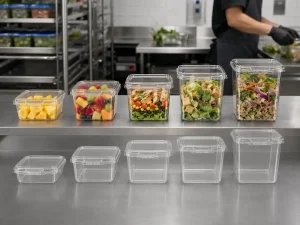
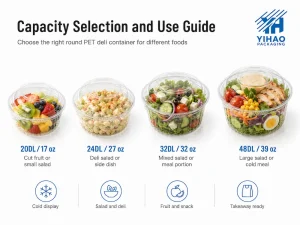
Cold dishes, salads, fruit portions, and chilled ready-to-eat foods do not always need microwave packaging. In these applications, clarity, anti-fog performance, lid security, shelf presentation, and portion visibility may matter more than heat resistance.
This is where PET or rPET packaging can be more suitable than PP. Buyers should avoid forcing one material across every product line. A smart packaging system uses PP where reheating matters and clear PET/rPET where chilled display drives sales.
Fresh Meat Rolls, Deli Sides, and Mixed Prepared Foods
Some food lines sit between chilled and hot use. Fresh meat rolls, deli sides, marinated foods, cold prepared items, and ready-to-heat components may need stronger container rigidity and better sealing than basic display packaging. For these programs, restaurant food containers can support both food counter display and takeaway handling when the buyer confirms the intended application.
How to Source Microwaveable Takeaway Boxes from a Manufacturer or Wholesale Supplier
For wholesale buyers, sourcing microwaveable takeaway boxes is not only about selecting a container shape. A reliable supplier should understand hot meal applications, PP material behavior, lid matching, stacking requirements, carton packing, sample testing, and repeat production. This is especially important for restaurant groups, distributors, meal prep brands, supermarkets, and foodservice companies that need consistent packaging across multiple orders.
When working with a food packaging manufacturer, buyers should provide the supplier with real application details: food type, fill temperature, reheating expectation, lid preference, portion weight, delivery distance, branding needs, and target sales channel. The more specific the application, the easier it is to avoid wrong-material selection.
A strong manufacturer or wholesale supplier should help buyers compare microwave safe takeout containers, paper takeaway boxes, molded fiber containers, PET cold food containers, and aluminum trays based on real food use rather than catalog photos. For hot meals, sauced dishes, pasta, rice, noodles, and prepared food, PP meal containers often give buyers a more practical balance of heat resistance, portion control, stacking strength, and supply stability.
Before confirming a bulk order, buyers should request samples, test real meals, check lid fit after heating, review carton packing, and confirm whether the container is intended for reheating rather than oven use or long cooking. This step reduces wrong-material selection and helps purchasing teams build a cleaner takeaway packaging system.
Microwave Use Is About Intended Conditions, Not Just Material Name
A common buyer mistake is assuming that a material name alone answers the safety question. PP is often used for microwave-related food packaging, but responsible purchasing still requires intended-use confirmation. Buyers should consider reheating time, food temperature, oil level, acidity, container thickness, lid structure, and whether the package is used for reheating or cooking.
The same logic applies to alternative packaging. Paperboard, molded fiber, coatings, inks, adhesives, and lids must be considered as a complete food contact system. A package is not just a base tray. It is the tray, lid, coating, label, printing, adhesive, and usage condition working together.
This is why microwaveable takeaway boxes should be evaluated through sample testing before wholesale orders. Buyers should fill the container with real food, close the lid, stack it, transport it, reheat it under realistic conditions, and inspect shape retention, leakage, odor, lid fit, and customer usability.
When Alternative Packaging Is Still the Better Choice
PP is not always the best answer. Buyers should choose packaging by product purpose.
If the food is sold cold and visual appeal drives purchase, clear PET or rPET containers may work better. If the product is bakery, dessert, fruit, or salad, high clarity can increase shelf impact. If the product is oven-ready, aluminum may be better. If the food is dry and brand presentation matters, paperboard may fit. If the buyer wants a fiber-based presentation and the food is suitable, molded fiber deserves testing under real grease, steam, and delivery conditions.
The strongest packaging strategy is not “PP versus everything else.” It is matching each material to the right food application. A supermarket may use PP for hot prepared meals, PET/rPET for chilled fruit and salad, paperboard for bakery takeaway, and tamper-evident packaging for retail trust. A distributor may carry several packaging families because different customers need different structures.
Wholesale Buyers Should Build a Packaging System, Not a Random SKU List
Many buyers create unnecessary cost by purchasing too many unrelated packaging items. A stronger approach is to build a simple system:
- Use PP for reheatable hot meals and prepared foods.
- Use clear PET/rPET for chilled foods, salads, fruit, and display-heavy products.
- Use paperboard where branding, dry food handling, and printed presentation matter.
- Use tamper-evident packaging where retail trust and delivery security matter.
- Use divided containers when texture separation and portion control matter.
For hot food and reheating programs, buyers can start with PP deli food containers and then add related sizes only after sample testing. This prevents overbuying and reduces warehouse complexity.
Key Selection Criteria for Restaurant Food Containers
Restaurant packaging has to work quickly. Staff cannot slow down during lunch rush or delivery peak time because a lid is difficult to fit or a container collapses under hot food. Buyers should therefore evaluate restaurant food containers by operational performance, not just appearance.
1. Lid Fit and Venting Logic
A good lid should close securely without excessive force. For hot foods, steam behavior matters. Some applications need venting, while others need stronger closure during transport. Buyers should confirm how the lid should be used during reheating.
2. Leak Resistance
Sauces, oils, and soups expose weak packaging quickly. Even if a container looks strong when empty, it must be tested with actual food weight and delivery movement. Leakage is one of the fastest ways to lose customer confidence.
3. Stackability
Takeaway packaging should stack in storage, on prep lines, in delivery bags, and during wholesale handling. Strong stacking helps restaurants save space and reduces crushing risk.
4. Portion Logic
A container should match the meal portion. Oversized packaging wastes cost and looks underfilled. Undersized packaging causes lid pressure, spills, and poor presentation.
5. Material and Use Clarity
The buyer should clearly know whether the container is for chilled display, hot filling, microwave reheating, oven heating, freezing, or short-hold takeaway. Confusion here creates the most expensive mistakes.
Common Buyer Mistakes When Choosing Takeout Food Containers
The first mistake is choosing by appearance only. Clear packaging may sell well in a chilled display case, but it may not suit hot food reheating. The second mistake is choosing by price only. A lower unit cost can become expensive if leakage, warping, poor lid fit, or customer complaints increase.
The third mistake is treating “eco-friendly” as a single material choice. A fiber container, PET container, PP container, or paperboard box can each be smart or unsuitable depending on food type, local waste systems, coating chemistry, and actual use. Buyers should avoid vague sustainability claims and focus on verified application performance.
The fourth mistake is skipping sample testing. Buyers should never move straight from catalog photo to bulk order for a new hot food application. Samples reveal problems that product photos cannot show.
Practical Buying Checklist for Microwaveable Takeaway Boxes
Use this checklist before confirming a wholesale order:
- Confirm the food type: rice, noodles, pasta, deli meal, sauce, meat, vegetables, or mixed meal.
- Confirm the use case: hot filling, holding, delivery, customer reheating, or food counter display.
- Confirm the material: PP, PET, rPET, paperboard, molded fiber, aluminum, or another structure.
- Ask whether the container is intended for microwave reheating.
- Ask how the lid should be handled during reheating.
- Test with oily, watery, acidic, and heavy foods if relevant.
- Check lid fit after hot food contact.
- Check stacking performance under real handling conditions.
- Compare container depth and portion appearance.
- Review labeling, branding, sleeve, or custom packaging needs.
- Request samples before wholesale confirmation.
- Choose a supplier that can support repeated production and stable communication.
FAQ: Microwaveable Takeaway Boxes
1. What are microwaveable takeaway boxes usually made from?
Many microwaveable takeaway boxes are made from PP because polypropylene is commonly used for reheatable food containers. Buyers should still confirm the intended microwave use, lid instructions, food type, and heating conditions with the supplier before ordering.
2. Are all plastic takeout food containers microwave safe?
No. Plastic type, container design, thickness, lid structure, and intended-use testing all matter. PET and rPET containers are often excellent for chilled display, but they should not be assumed suitable for microwave reheating unless specifically designed and confirmed for that use.
3. Are paper takeaway boxes better than PP takeout packaging?
Paper takeaway boxes are useful for certain dry or semi-dry foods and strong branding presentation. PP takeout packaging is usually more practical for hot meals, sauces, prepared foods, and customer reheating. The better choice depends on food type and heating requirements.
4. What should restaurants test before buying microwave safe takeout containers wholesale?
Restaurants should test real food weight, sauce contact, grease, reheating behavior, lid fit, stacking, leakage, delivery movement, and customer handling. Sample testing is the most reliable way to avoid packaging mistakes before wholesale orders.
5. How should buyers compare a microwaveable takeaway box supplier?
Buyers should compare material clarity, intended-use guidance, sample support, container-lid matching, production consistency, export communication, customization options, carton packing, and ability to support repeat wholesale supply.
References
- U.S. Food and Drug Administration, Packaging & Food Contact Substances.
- U.S. Food and Drug Administration, Food Types and Conditions of Use for Food Contact Substances.
- U.S. Food and Drug Administration, Recycled Plastics in Food Packaging.
- U.S. Food Safety and Inspection Service, Cooking Safely in the Microwave Oven.
- European Commission, Regulation (EU) No 10/2011 on Plastic Materials and Articles Intended to Come into Contact with Food.
- Intertek, Food Contact Plastics Regulation (EU) 10/2011 Solutions.
- Food Packaging Forum, Food Contact Materials and Chemical Migration Resources.
- U.S. Food and Drug Administration, FDA, Industry Actions End Sales of PFAS Used in US Food Packaging.
Deep Dive Insights: How Buyers Should Think Beyond the Container
How should buyers decide between PP, paper, PET, aluminum, and fiber?
Buyers should begin with the food’s real use condition. If the product is reheated, PP-based microwaveable takeaway boxes are usually the first material direction to test. If the product is chilled and display-driven, PET or rPET may offer better visual value. If the product is oven-ready, aluminum may be more suitable. If the meal is dry or brand-led, paperboard may work. If the buyer wants a fiber-based presentation, molded fiber should be tested for grease, moisture, and coating behavior before bulk use.
Why does sample testing matter before wholesale orders?
Sample testing turns packaging claims into practical evidence. Buyers should test real food weight, sauce contact, reheating behavior, lid fit, stacking strength, delivery movement, condensation, odor, and customer handling. This process helps prevent wrong-material selection and reduces the risk of large-scale complaints after a wholesale purchase.
What is the strongest sourcing approach for foodservice buyers?
The strongest approach is to build a packaging system instead of buying random SKUs. PP containers can cover hot meals and reheatable prepared foods. PET/rPET containers can support chilled display. Paperboard can serve dry takeaway and bakery applications. Aluminum can support oven-ready meals. A manufacturer that understands these differences helps buyers reduce SKU waste and improve packaging consistency.
Which option is best for long-term procurement value?
For hot meals, PP-based microwave safe takeout containers often provide the best long-term balance of function, cost, stacking, reheating convenience, and repeat supply. The final choice should still be based on food testing, supplier communication, carton planning, and the buyer’s actual sales channel.
Final Note / Practical Takeaway
© YIHAO Packaging. All rights reserved. All articles, product images, packaging designs, technical specifications, and website materials are protected by copyright. Unauthorized copying, reproduction, redistribution, modification, or commercial use is strictly prohibited without prior written permission.