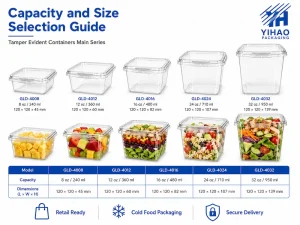
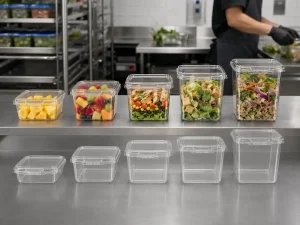
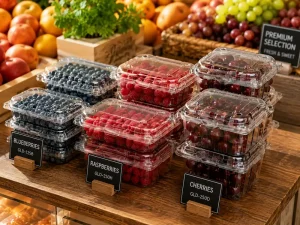
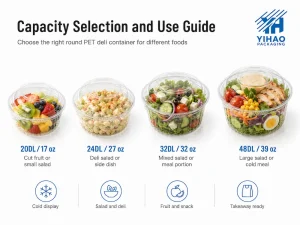
For foodservice buyers, the wrong takeout container does not only create a packaging problem. It creates leaking meals, poor reheating results, customer complaints, delivery failures, staff repacking work, and higher replacement costs. This is why microwave safe takeout containers have become a serious purchasing decision for restaurants, delis, supermarkets, cloud kitchens, prepared meal brands, and foodservice distributors.
YIHAO provides practical food packaging solutions for takeout meals, hot food service, chilled prepared food, retail display, and foodservice supply. For buyers comparing takeout food containers, the goal is not simply to find a box that looks strong in photos. The real goal is to choose a container system that fits the food type, filling temperature, sauce level, reheating condition, lid structure, stacking pressure, and wholesale supply plan.
This guide explains how to choose hot food containers, microwaveable takeaway boxes, PP takeout packaging, and restaurant food containers for real foodservice use. It is written for B2B buyers who need packaging that works in daily operations, not only in product images.
What Makes a Takeout Container Microwave Safe?
A microwave-safe food container must be suitable for the intended food contact and reheating condition. In practical foodservice purchasing, this means the container should be matched to the actual food type, heat exposure, oil content, sauce level, filling weight, storage method, and reheating instructions.
A container that works well for cold salad does not automatically work for hot curry, oily pasta, rice bowls, sauced noodles, steamed vegetables, or chilled prepared meals that customers reheat later. A professional buyer should evaluate microwave safe takeout containers through a complete usage chain: packing, closing, stacking, transport, storage, reheating, opening, and eating experience.
Before approving any microwaveable container, buyers should ask four direct questions:
- Is the material suitable for hot food and reheating?
- Does the container keep its shape under realistic food weight and heat exposure?
- Does the lid fit securely during delivery and support safe steam release during reheating?
- Does the supplier understand restaurant, deli, supermarket, and foodservice usage scenarios?
This is why many foodservice teams choose microwave safe containers made from PP for reheatable meals. PP is widely used for restaurant food containers because it provides a strong balance of heat resistance, toughness, handling stability, and practical cost control. PET and RPET remain excellent choices for cold display, fresh produce, bakery, salad, and chilled grab-and-go packaging, but reheatable hot meals usually require a different material logic.
Why PP Takeout Packaging Is the Practical Choice for Reheatable Meals
PP takeout packaging is commonly selected for hot food and microwaveable takeaway applications because it performs well in many situations where heat, steam, oil, sauce, stacking, and transport appear together. For restaurants and foodservice buyers, the advantage is not only material performance. The advantage is operational reliability.
PP containers are often used for rice meals, noodles, pasta, roasted vegetables, grilled proteins, dumplings, cooked grains, deli entrées, hot sides, meal prep portions, and chilled prepared meals. These foods need packaging that does more than hold food. The container must resist deformation, support lid closure, reduce leakage risk, stack well, and remain convenient when the customer reheats the meal.
Compared with clarity-focused materials such as PET, PP is usually less focused on crystal-clear display and more focused on heat-use performance. This makes it a stronger direction for many microwaveable takeaway boxes. A practical foodservice packaging program often uses PET or RPET for cold display products and PP for hot food or reheatable meals.
For example, buyers may use PP prepared meal containers for counter service and ready meals, PP hot food containers for deli and takeaway meals, and large PP deli food containers for larger portions. The correct choice depends on portion weight, food height, sauce level, lid clearance, stacking needs, and sales channel.
Food Type Decision Matrix for Microwave Safe Takeout Containers
Different foods create different packaging pressure. Rice, pasta, soups, deli sides, oily dishes, and chilled ready meals should not be tested with the same packaging logic. The table below gives buyers a practical starting point for matching food type with container direction.
| Food Type | Main Packaging Requirement | Recommended Container Direction | Buyer Checkpoint |
|---|---|---|---|
| Rice bowls and grain bowls | Steam, heat retention, sauce control, stacking | PP container with secure separate lid | Test with real rice weight, sauce level, and reheating time |
| Pasta and noodles | Oil resistance, sauce movement, headspace | Deeper PP takeout container | Check lid clearance and sauce leakage after delivery movement |
| Deli entrées and hot sides | Mixed food use, counter service, reheating convenience | PP deli food container | Confirm stacking strength and staff packing speed |
| Meal prep and chilled ready meals | Refrigeration, shelf stacking, customer reheating | PP prepared meal container | Test chilled storage, label space, and reheating instructions |
| Soups, curry, gravy, and saucy dishes | Leakage control, steam release, lid stability | Deeper PP container with tested lid fit | Do not approve without real liquid and hot filling tests |
This decision matrix helps buyers avoid one of the most common mistakes in foodservice packaging: choosing one container for every menu item. A better system uses a controlled group of wholesale takeout containers that covers the main food categories without creating unnecessary SKU confusion.
Takeout Food Containers vs Hot Food Containers vs Microwaveable Takeaway Boxes
Many buyers use the terms takeout food containers, hot food containers, and microwaveable takeaway boxes as if they mean the same thing. In purchasing, these terms should be separated clearly because each one points to a different performance requirement.
| Packaging Type | Main Use | Key Buyer Concern | Common Material Direction |
|---|---|---|---|
| Takeout food containers | General takeaway meals, sides, chilled food, deli items, and prepared foods | Portion fit, lid closure, stacking, transport protection, and cost control | PP, PET, paper, or other materials depending on food temperature |
| Hot food containers | Freshly cooked food packed warm or hot for takeaway and delivery | Heat resistance, steam management, oil resistance, and deformation control | PP is commonly used for reheatable plastic hot food packaging |
| Microwaveable takeaway boxes | Prepared meals that customers reheat after delivery, pickup, or refrigeration | Microwave suitability, clear use instructions, lid handling, and reheating experience | PP takeout packaging is a practical choice for many applications |
A supermarket selling chilled ready meals may need microwaveable takeaway boxes with shelf stacking, label space, and reheating guidance. A cloud kitchen may need hot food containers that close quickly and resist delivery pressure. A restaurant may need takeout food containers that support both fresh takeaway and leftover reheating. The right decision starts from the food and service model, not from the lowest unit price.
Which Foods Need Microwave Safe Takeout Containers?
Not every food needs microwaveable packaging. Fresh fruit, cold salad, bakery desserts, chilled dips, and cold snacks often perform better in transparent PET or RPET packaging because product visibility is the main selling point. Cooked meals, hot sides, prepared dishes, and reheatable meals need stronger heat-use logic.
Rice, noodles, pasta, and grain bowls
Rice bowls, noodles, pasta, couscous, quinoa, and grain-based meals retain heat and moisture. These foods may create steam after packing and during reheating. The container should resist softening, support a secure lid fit, and provide enough headspace so sauces and grains do not press directly into the lid. For these meals, microwave safe takeout containers should be tested with actual food weight and sauce level, not only with water.
Deli entrées and prepared meals
Deli counters and prepared food sections need packaging that works across multiple dishes. Roasted vegetables, cooked meats, stewed items, cooked grains, pasta sides, and hot entrées require stable shapes and reliable closure. For this scenario, PP food containers with separate lids are useful because separate lid systems support flexible packing and efficient counter service.
Soups, saucy foods, and oily dishes
High-liquid and high-oil foods create more packaging stress than dry foods. The container needs a stable base, suitable wall structure, matched lid design, and careful filling control. A package may look acceptable when empty but fail when filled with hot sauce or oily food. Restaurants should test curry, pasta sauce, gravy, stewed dishes, sauced rice, and hot deli foods before approving a large order.
Chilled prepared meals for reheating
Many foodservice programs sell chilled meals that customers reheat at home, in offices, or in convenience-store microwaves. These meals require packaging that can sit in refrigeration, stack on shelves, support labeling, and reheat without creating a poor customer experience. For this segment, PP prepared food containers provide a practical direction for mixed cold-to-hot use cases.
Material Comparison for Restaurant Food Containers
Material choice determines whether a package fits cold display, hot food, reheating, delivery, or retail shelf presentation. Buyers should avoid using one material for every food category. A professional packaging plan uses each material where it performs best.
| Material | Best Fit | Microwave Use Logic | Buyer Note |
|---|---|---|---|
| PP | Hot meals, reheatable prepared food, deli takeaway, meal prep, restaurant food containers | Commonly used for microwaveable takeaway boxes when designed for that use | Best direction for many microwave safe takeout containers |
| PET / RPET | Cold salad, fruit, bakery, chilled display, clear deli packaging | Not the normal choice for microwave reheating | Excellent clarity but better matched to cold or chilled food use |
| Paperboard | Dry foods, bakery, light takeaway, branded presentation | Depends on coating, structure, and supplier instructions | Good branding surface but not automatically suitable for oily reheatable meals |
| Aluminum | Oven, catering, and heat-retention applications | Not for ordinary microwave use unless specific microwave-compatible design is confirmed | Strong heat performance but requires clear usage control |
| Foam | Low-cost insulation in some markets | Weak for microwave confidence and modern sustainability positioning | Often unsuitable for premium restaurant or retail programs |
The key purchasing principle is simple: use PET or RPET where visibility drives cold food sales, and use PP where hot food and reheating performance matter. For mixed menus, many buyers pair deli and salad containers for chilled items with PP microwaveable options for cooked meals. This creates a cleaner packaging system and reduces the risk of using the wrong container for the wrong food.
Why the Cheapest Microwaveable Takeaway Box May Cost More
Low unit price looks attractive in a spreadsheet, but the cheapest microwaveable takeaway box may create higher total cost in real operations. If a container leaks, warps, collapses, stains heavily, or fails during reheating, the foodservice business pays for the problem through complaints, refunds, wasted meals, replacement packaging, poor reviews, and staff time.
For restaurants, a weak container can damage brand perception before the customer tastes the food. For cloud kitchens, poor packaging increases delivery failure risk. For supermarkets, unstable prepared meal packaging creates shelf disorder and customer distrust. For distributors, inconsistent packaging causes repeat-order complaints and account management pressure.
Wholesale buyers should compare total packaging value, not only unit price. A better takeout container supplier helps buyers reduce hidden costs by providing stable structure, matching lids, consistent supply, practical carton packing, and sample support before bulk orders.
How to Choose Wholesale Takeout Containers
When sourcing wholesale takeout containers, buyers should look beyond shape and price. A container that fails in delivery, reheating, or stacking creates hidden cost through complaints, refunds, leakage, and repacking. Strong wholesale selection should include both packaging performance and supplier reliability.
1. Match the container to the real menu
Start with actual foods: rice, noodles, pasta, grilled meals, cooked vegetables, curry, soups, sauces, deli sides, cold dishes, or meal prep portions. Each food behaves differently under heat and transport. Test the container with real food, real filling weight, real lid closure, and real reheating instructions.
2. Confirm portion capacity and headspace
Capacity is not only a number. A container must leave enough headspace for steam, sauce movement, food expansion, and lid clearance. Overfilled containers are more likely to leak, deform, stain the lid, and create a messy customer experience.
3. Evaluate lid fit before and after heating
A good container-lid system should close quickly during service, stay secure during transport, and provide clear reheating guidance. If a lid is too loose, delivery becomes risky. If it traps too much steam during reheating, the customer experience suffers. Buyers should confirm whether the lid should be removed, loosened, or vented during microwave use.
4. Test stacking strength
Restaurants and cloud kitchens stack containers during preparation, dispatch, and pickup. Supermarkets and delis stack containers in refrigerated display. A container that performs well individually may fail when stacked. Test stack height, filled weight, lid compression, and base stability.
5. Check labeling and branding space
Foodservice packaging often needs labels for product name, reheating instructions, ingredients, date codes, QR codes, or brand stickers. The container should provide practical flat areas for labels without blocking closure points or venting areas. For premium programs, labels or printed sleeves can strengthen brand recognition without changing the container mold.
6. Ask for sample testing before bulk orders
Professional buyers should not approve restaurant food containers based only on photos. Samples should be tested with real foods, hot filling, chilled storage, delivery movement, stacking, reheating, and customer opening. This is especially important for microwaveable takeaway boxes, where food type and heating behavior strongly affect performance.
Recommended Container Structures for Foodservice Buyers
The best takeout packaging program usually includes several container structures. One container cannot serve every menu item well. A good takeout container supplier should help buyers build a practical mix instead of pushing one generic box.
Separate lid containers
Separate lid PP containers are useful for restaurants, delis, and prepared meal programs because they allow flexible packing, easier stacking, and better fit control across different food types. They are practical for hot meals, cold dishes that may be reheated, and ready-to-eat food sold through retail counters.
Large-capacity containers
Large-capacity formats support family portions, meal prep, catering sides, and generous restaurant servings. Buyers should confirm filled weight, stacking stability, and lid pressure. For higher-volume meals, a stronger base and lid system matters more than visual size alone.
Deli-focused PP containers
Deli teams need containers for cooked vegetables, prepared proteins, grains, side dishes, and mixed meals. PP deli food containers are useful when buyers need a container family that supports both cold prepared food and hot takeaway meals.
Retail and display-ready formats
For supermarkets and convenience stores, the container must also support shelf presentation. Product visibility, label position, stackability, and consistent shape help retail teams keep prepared meals organized. In this environment, microwave safety is important, but shelf handling and customer communication are equally important.
Microwave Use Instructions Matter
Even when a container is designed for microwave use, customer instructions still matter. Packaging buyers should work with their supplier and internal food safety team to create simple, visible guidance. Common instruction areas include whether to remove or loosen the lid, whether to vent the container, recommended reheating time range, and whether the food should be stirred before serving.
Microwaves heat food unevenly. Hot spots and cold spots are common, especially in dense foods, sauces, proteins, and mixed meals. Packaging should support convenient reheating as much as possible, but customer instructions remain important. For chilled prepared meals, meat-based dishes, sauces, and ready meals sold for later consumption, clear reheating guidance can reduce confusion and improve customer confidence.
For B2B buyers, this creates a packaging design opportunity. A microwaveable container is not only a physical box; it is part of the full customer reheating system. Label instructions, venting logic, lid design, portion depth, food arrangement, and supplier guidance all work together.
Supplier Checklist for Microwave Safe Takeout Containers
Choosing a takeout container supplier should not be based only on a price sheet. The supplier must understand food type, material selection, lid compatibility, sample testing, carton packing, export consistency, and wholesale supply planning. This is especially important for buyers who need repeat orders and stable packaging across multiple stores or foodservice accounts.
| Supplier Checkpoint | Why It Matters | What Buyers Should Confirm |
|---|---|---|
| Material suitability | Different foods require different heat-use performance | Confirm PP direction for reheatable hot food applications |
| Matching lid system | Poor lid fit causes leakage and delivery complaints | Test lid closure, stacking pressure, and reheating instructions |
| Sample testing support | Photos cannot prove real menu performance | Request samples for actual food, hot filling, delivery, and microwave tests |
| Wholesale stability | Repeat orders need consistent structure and supply | Confirm carton packing, SKU planning, and long-term supply communication |
| Foodservice experience | Restaurant and retail needs are different from generic packaging | Choose suppliers familiar with restaurants, delis, supermarkets, and distributors |
For buyers who need factory-level discussion, working with a food packaging factory is stronger than only comparing marketplace listings. Factory communication helps clarify material direction, container family planning, size logic, lid matching, and long-term supply needs.
Common Mistakes When Buying Microwaveable Takeaway Boxes
Many packaging problems come from weak selection logic rather than bad intentions. Buyers often choose a container that looks acceptable in photos but does not match the food. The following mistakes are common in restaurants, foodservice operations, and distributor purchasing.
Using cold food containers for hot meals
Clear PET containers are excellent for chilled salad, fruit, deli, and bakery display, but they should not be treated as universal hot food containers. If the menu includes reheating, hot filling, or steam-heavy foods, PP is usually the stronger direction.
Ignoring the lid during microwave testing
The container body may perform well while the lid creates problems. Lids can trap steam, loosen, warp, or cause condensation issues. Buyers should test the complete container-lid system, not only the base.
Choosing by capacity only
A 750 ml container and another 750 ml container may behave differently depending on depth, base shape, lid height, wall design, and stacking structure. Capacity alone does not prove food fit.
Skipping real delivery testing
Delivery movement exposes weak closures, thin walls, poor stacking, and overfilled portions. A practical test should include packing, stacking, carrying, tilting, delivery-style movement, chilled storage if needed, and reheating.
Buying too many unrelated SKUs
Restaurants and distributors often overcomplicate packaging by buying too many shapes and sizes. A stronger system uses a controlled set of wholesale takeout containers that covers the main menu categories without creating storage confusion.
How Different Buyers Should Select Takeout Packaging
Restaurants
Restaurants should choose containers around their top-selling dishes. Rice bowls, pasta, noodles, grilled meals, saucy entrées, and hot sides should each be matched to a suitable container depth and lid structure. Restaurants should prioritize reliable closure, food appearance, reheating convenience, and easy staff handling.
Cloud kitchens and delivery brands
Cloud kitchens need speed, stacking, and delivery performance. Their packaging must handle packing-line pressure and third-party delivery movement. Fewer, better-matched SKUs usually perform better than a large scattered packaging mix.
Supermarkets and convenience stores
Retail buyers need shelf-ready prepared meals. The container should support label placement, barcode scanning, stacking, chilled display, and customer reheating. For these buyers, microwave safe takeout containers must perform both as retail packaging and reheating packaging.
Delis and food counters
Deli counters need flexible foodservice packaging that works across hot sides, cold dishes, cooked vegetables, prepared proteins, and mixed meals. A practical PP container family helps reduce SKU confusion while covering daily counter service.
Distributors and wholesalers
Distributors should prioritize fast-moving container formats with broad application value. A good wholesale mix should cover prepared meals, deli food, hot takeaway, cold-to-hot dishes, and restaurant portions. The goal is not to carry every possible shape; the goal is to offer dependable formats that many buyers can reorder confidently.
Practical Buying Framework
Before approving a supplier or placing a larger order, use the following framework:
- Define food type: hot meal, chilled prepared meal, deli food, side dish, rice, noodle, soup, sauce, or meal prep.
- Define use condition: hot filling, delivery, refrigerated display, customer reheating, or multi-step use.
- Choose material: PP for many reheatable hot food applications; PET/RPET for cold display applications.
- Confirm structure: depth, headspace, base stability, lid fit, venting guidance, and stacking.
- Test samples: real food, real temperature, real filling weight, delivery movement, and reheating.
- Plan wholesale supply: SKU control, carton storage, repeat order stability, and supplier communication.
This framework turns packaging selection into a repeatable decision instead of a guessing game. It also helps buyers communicate more clearly with a takeout container supplier. Instead of asking only for a price, buyers can ask for the right PP container structure for specific foods and usage conditions.
FAQ About Microwave Safe Takeout Containers
1. What are microwave safe takeout containers?
Microwave safe takeout containers are food containers designed for specific reheating conditions. They should be made from suitable food-contact material, keep their structure during normal microwave use, and provide clear instructions for lid handling, venting, or reheating.
2. What material is best for microwave safe takeout containers?
PP is the practical material direction for many microwave safe takeout containers because it supports hot food service, reheating, toughness, and foodservice handling. Buyers should still test the actual food, filling weight, lid fit, and reheating condition before bulk purchasing.
3. Are PP takeout containers good for hot food?
Yes, PP takeout packaging is commonly used for hot food containers and microwaveable takeaway boxes because it offers practical heat resistance, toughness, and handling performance. It is widely used for rice meals, deli food, prepared meals, noodles, pasta, and hot sides.
4. Are PET containers microwave safe?
PET and RPET containers are generally better suited for cold food, chilled display, fresh produce, salad, bakery, and deli presentation. For reheatable hot meals, PP is usually the stronger material direction.
5. Can restaurants use the same takeout container for hot food and cold food?
Restaurants can use some PP containers for both cold prepared dishes and hot takeaway meals, depending on the food and usage condition. However, cold display foods and reheatable hot foods should still be evaluated separately because visibility, temperature, lid fit, and customer use are different.
6. Should customers microwave food with the lid on?
This depends on the specific container and lid design. Many foodservice programs instruct customers to remove, loosen, or vent the lid before microwaving. Buyers should confirm supplier guidance and add clear reheating instructions when needed.
7. How should restaurants test microwaveable takeaway boxes?
Restaurants should test containers with real food, realistic filling weight, hot filling, delivery movement, chilled storage if applicable, and microwave reheating. The test should include the container body, lid fit, steam behavior, leakage risk, and final customer opening experience.
References
- U.S. Food and Drug Administration, Packaging & Food Contact Substances
- U.S. Food and Drug Administration, Cooking and Food Safety Guidance
- USDA Food Safety and Inspection Service, Microwave Cooking and Reheating Safety
- FoodSafety.gov, Leftovers and Reheating Guidance
- European Food Safety Authority, Food Contact Materials Overview
- U.S. Code of Federal Regulations, Food Contact Substance Framework
- Packaging industry material guidance for polypropylene food containers
- Foodservice packaging buyer practices for takeout, delivery, and prepared meals
Deep Dive Insights
How should buyers think about microwave safe takeout containers?
Buyers should treat microwave safe takeout containers as a complete foodservice system, not a single packaging item. The material, lid, depth, headspace, stacking strength, label area, and reheating instructions all affect customer experience. A container that works for one menu item may fail with another food type if sauce level, oil content, weight, or steam behavior changes.
Why is PP often the stronger direction for reheatable meals?
PP is widely used for hot food containers and microwaveable takeaway boxes because it provides a practical balance of heat-use performance, structure stability, and foodservice handling. PET and RPET are valuable for clear cold display packaging, but PP is usually the better direction when reheating, hot filling, and steam management are part of the use case.
What should wholesale buyers test before placing orders?
Wholesale buyers should test real food, real filling weight, hot packing, chilled storage, stacking, delivery-style movement, and microwave reheating. The test should include both the container body and lid because lid mismatch is one of the most common causes of leakage, condensation, and reheating complaints.
Which option is best for restaurants, delis, and cloud kitchens?
Restaurants usually need secure PP containers for top-selling dishes such as rice meals, pasta, noodles, grilled meals, and saucy entrées. Delis need flexible PP containers for prepared meals, hot sides, and cold-to-hot foods. Cloud kitchens need fewer, more reliable SKUs that support fast packing, delivery pressure, and customer reheating.
What is the main purchasing takeaway?
The best packaging decision is not the cheapest container. The strongest decision is the container system that reduces leakage, supports reheating, keeps food presentable, simplifies staff operations, and remains stable for repeat wholesale orders.
Final Note / Practical Takeaway
© YIHAO Packaging. All rights reserved. All articles, product images, packaging designs, technical specifications, and website materials are protected by copyright. Unauthorized copying, reproduction, redistribution, modification, or commercial use is strictly prohibited without prior written permission.