Meal prep has moved from a fitness niche into everyday foodservice, supermarket prepared meals, office lunch programs, school meal supply, cloud kitchen delivery, catering operations, and refrigerated grab-and-go retail. As this category grows, packaging buyers are paying closer attention to one practical question: which microwave safe meal prep containers are reliable enough for filling, chilling, stacking, transport, customer storage, and reheating?
The answer is not simply “any plastic box.” Meal prep packaging needs to match the food type, heating expectation, lid structure, compartment layout, sealing requirement, stacking behavior, and supplier documentation. A container used for rice bowls, pasta, chicken with vegetables, curry, noodles, mashed potatoes, roasted vegetables, deli meals, or hot takeaway food faces different demands from a cold salad clamshell or dessert cup.
YIHAO develops food packaging for retail, takeaway, deli, fresh food, bakery, and prepared meal applications. For buyers comparing meal prep containers, microwave meal boxes, and reheatable food containers, the practical starting point is material choice. In most commercial meal prep programs, PP is the primary material direction for reheating use because it performs better under heat than PET, rPET, PLA, or many clear cold-food plastics.
For packaging buyers, “microwave safe” should always be verified by product-specific documentation, intended-use guidance, and sample testing under real food conditions. A container should be evaluated as a complete packaging system: base material, lid material, closure structure, food type, reheating instruction, label placement, and actual customer use.
Buyer Decision Summary for Microwave Meal Prep Containers
| Buyer Need | Recommended Container Type | Why It Works |
|---|---|---|
| Standard meal prep | Single-compartment PP meal prep container | Higher usable space, simple filling, practical for rice bowls, pasta, and mixed meals |
| Protein with side dish | Two-compartment meal prep container | Separates protein, rice, vegetables, or sauce while keeping the meal visually organized |
| Fitness meals and retail meal sets | Three-compartment meal prep container | Supports portion control and clear presentation for protein, starch, and vegetables |
| Hot takeaway meals | PP hot food container with separate lid | Practical for food counters, delivery meals, and prepared hot food packaging |
| Chilled-to-reheat meals | PP reheatable food container | Supports refrigerated storage first and reheating later when used according to supplier guidance |
What Are Microwave Safe Meal Prep Containers?
Microwave safe meal prep containers are food packaging containers designed for prepared meals that may be reheated before eating. They are commonly used for refrigerated meals, hot takeaway food, ready-to-eat portions, weekly meal plans, catering packs, supermarket prepared food, and delivery meal programs.
A good meal prep container does more than hold food. It supports portion control, separates ingredients, protects sauces, stacks during storage, fits foodservice handling, and presents the meal clearly enough for customers to understand the value. For reheating applications, it also needs a material and structure suitable for the intended heat exposure.
For B2B buyers, the key phrase is “intended use.” A microwave-related claim should be supported by material selection, supplier documentation, food-contact suitability, and practical reheating instructions. A container designed for cold fruit, chilled desserts, or bakery display should not be treated as a reheating container just because it looks strong. The structure, resin, lid fit, and use conditions matter.
Why PP Is Commonly Used for Microwave Meal Boxes
PP, or polypropylene, is widely used in PP meal prep packaging because it offers a strong balance of heat resistance, durability, weight control, and foodservice practicality. PP containers are commonly selected for hot food containers, microwave meal boxes, deli meal packaging, prepared food packaging, and takeaway food programs.
Compared with PET, PP is less focused on high transparency and more focused on practical heat performance. PET and rPET containers are excellent for cold display, fruit, bakery, salad, and chilled foods, but they are not the default choice for reheating-focused packaging. For reheatable food containers, PP is usually the more logical direction.
PP also supports several useful structures. It can be made into rectangular meal boxes, round bowls, base-and-lid containers, multi-compartment trays, deli containers, and takeaway boxes. Buyers can select one-compartment formats for rice bowls and pasta, two-compartment formats for protein and sides, or three-compartment formats for complete meals with vegetables, starches, and sauces.
For foodservice teams that need a broader microwave packaging category, microwave safe containers are a better starting point than cold-food packaging categories. This helps buyers compare PP formats based on reheating suitability, hot food performance, sealing structure, and foodservice handling instead of only visual clarity.
How to Choose the Right Size for Meal Prep Containers
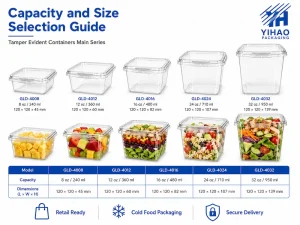
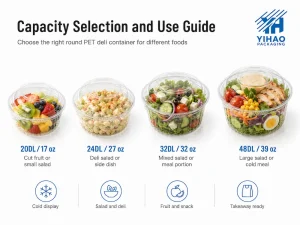
Size selection is one of the most important decisions for meal prep containers. A container may use the right material but still fail commercially if the portion size feels too small, the meal looks crowded, or the package wastes shelf and carton space. For meal prep brands, supermarkets, and foodservice distributors, size logic should follow the real menu.
| Meal Type | Suggested Packaging Direction | Best Use Case | Buyer Note |
|---|---|---|---|
| Small side portions | Compact PP container | Rice sides, vegetables, snacks, kids meals, small deli portions | Useful for add-on meals and controlled portions |
| Standard lunch meals | Medium rectangular PP meal prep container | Rice bowls, pasta, chicken meals, noodles, mixed meals | The most flexible format for foodservice and retail meal programs |
| Fitness meals | Two-compartment or three-compartment PP container | Protein, vegetables, carbohydrates, sauce separation | Supports visual portion control and organized presentation |
| Large takeaway meals | Large PP food container with separate lid | Family portions, delivery meals, hot deli meals, catering portions | Needs strong base support and stable stacking |
| Chilled ready meals | PP reheatable food container with clear instructions | Supermarket prepared meals and cold-to-hot food programs | Labeling and reheating guidance must be easy to understand |
For compartment meal prep containers, buyers should not judge capacity by total volume alone. Each compartment must fit the real food ratio. A three-compartment container may look efficient, but if the protein section is too small or the vegetable section is too shallow, the final meal will look unbalanced. Size testing should use the actual portion weight, not only empty container measurements.
Core Buying Criteria for Microwave Safe Meal Prep Containers
1. Material Must Match Reheating Use
The first decision is material. For microwave safe meal prep containers, buyers usually start with PP because it is suitable for many reheating and hot food packaging applications. Material selection should be confirmed with the supplier based on intended food contact, heating conditions, and target market requirements.
Do not treat resin code alone as proof of performance. Buyers should ask for food-contact documentation, product specifications, intended-use guidance, and sample testing. A container used for oily curry, tomato-based pasta, steamed rice, grilled chicken, or sauced vegetables faces different stress from a dry snack pack.
2. Lid Structure Needs Practical Venting Behavior
Lid design is often underestimated. During reheating, steam builds quickly. A tight lid may help during transport, but the final user may need to loosen, vent, or remove the lid depending on the container design and supplier instruction. For wholesale programs, this instruction should be clear on labels, sleeves, inserts, or product pages.
Some packaging programs use a PP base with a separate PP lid. This format works well for takeaway meals, prepared foods, hot meals, and deli food because the lid is practical for filling, closing, stacking, and display. For buyers sourcing prepared meal containers, the separate-lid structure is useful when staff need fast packing and organized counter display.
3. Compartment Design Should Match the Meal
Compartment meal prep containers are valuable when the food needs separation. A chicken-and-rice meal may only need one or two compartments, while a complete meal with vegetables, grains, sauce, and protein may need three compartments. The structure must fit the food logic, not just look organized.
For hot meals, compartments help reduce ingredient mixing during transport. They also improve visual order in retail display and support portion control. However, too many compartments can reduce capacity flexibility. Buyers should evaluate whether the meal program needs single-compartment containers, two-compartment containers, or three-compartment containers before confirming a wholesale order.
4. Sealing Performance Must Fit Transport Conditions
Meal prep packaging often moves through several stages: filling, lidding, stacking, chilling, delivery, customer storage, and reheating. Weak lid fit creates leakage, messy shelves, customer complaints, and higher replacement costs. Strong sealing does not always mean “leak-proof under every condition,” so suppliers should describe the sealing performance accurately.
For deli, takeaway, and prepared meal programs, hot food containers should be evaluated with real menu items. Saucy foods, oily dishes, noodles, and side dishes behave differently during delivery. Sample testing with actual food is more useful than judging a container from photos alone.
5. Stackability Matters for Wholesale Operations
Stacking performance affects warehouse storage, refrigerated display, delivery bags, supermarket shelves, and production speed. A container that looks good individually may fail in bulk handling if the base flexes, the lid deforms, or stacks slide during movement.
For weekly meal prep brands, stackability directly affects packing efficiency. For supermarkets, it affects shelf organization. For catering kitchens, it affects batch preparation. For wholesale distributors, it affects carton efficiency and pallet handling. Good meal prep containers need to perform through the full supply chain, not only at the dining table.
Common Applications for Microwave Meal Boxes
Prepared Meal Programs
Prepared meal programs need reliable portion sizes, fast filling, and reheating convenience. Common foods include rice bowls, pasta meals, roasted vegetables, grilled chicken, salmon portions, curry rice, noodle dishes, mashed potatoes, breakfast meals, and mixed protein meals. In these applications, microwave meal boxes need enough rigidity to support filling and stacking without making the package too heavy or costly.
Supermarket Ready Meals
Supermarkets need meal prep packaging that performs in chilled display, supports clear labeling, and helps customers understand the meal quickly. Packaging must balance display value, heat suitability, price, and shelf organization. A good container helps the meal look clean and structured while supporting reheating after purchase.
Takeaway and Delivery Meals
Takeaway meals place more pressure on lid fit, base strength, and transport performance. Sauced foods and hot meals require more careful testing than dry items. For delivery-focused foodservice, takeaway meals need containers that support counter packing, stacking, short-distance delivery, and customer reheating instructions.
Deli and Food Counter Packaging
Deli counters use meal prep containers for cooked dishes, chilled sides, mixed meals, cold foods, and hot takeaway portions. The packaging must be easy for staff to fill, close, stack, label, and display. A PP base-and-lid structure is practical for food counters because it gives staff flexibility across several menu types.
Cold-to-Hot Meal Use
Many meal prep programs sell chilled meals that customers reheat later. This is a demanding use case because the package must support cold storage first and reheating afterward. Buyers should confirm whether the container, lid, label, and food combination are all suitable for the intended cold-to-hot journey.
Single-Compartment vs Compartment Meal Prep Containers
| Container Type | Best For | Buyer Advantage | Watch Point |
|---|---|---|---|
| Single-compartment meal prep containers | Rice bowls, pasta, curry, noodles, hot deli meals | Flexible filling and higher usable space | Ingredients may mix during transport |
| Two-compartment meal prep containers | Protein with rice, vegetables with sauce, breakfast sets | Good balance between separation and capacity | Compartment ratio must match menu portions |
| Three-compartment meal prep containers | Complete meals with protein, starch, and vegetables | Strong portion control and organized presentation | Less flexible for oversized ingredients |
| Round PP meal bowls | Soups, noodles, grain bowls, rice bowls | Good spoon access and strong meal visibility | May use more shelf width than rectangular boxes |
| Rectangular PP meal boxes | Meal prep, takeaway, deli meals, chilled ready meals | Efficient stacking and carton packing | Corner fit and lid strength need testing |
There is no single best format for every meal program. The right choice depends on menu structure, portion size, delivery distance, retail shelf space, heating instruction, and customer eating behavior. For example, a pasta program may perform better with a single-compartment PP box, while a fitness meal brand may prefer two or three compartments to show protein, vegetables, and carbohydrates clearly.
PP Meal Prep Packaging vs Alternative Materials
| Material | Typical Strength | Typical Limitation | Best Packaging Direction |
|---|---|---|---|
| PP | Heat resistance, reheating suitability, hot food practicality | Less crystal-clear than PET | Microwave meal boxes, hot food containers, prepared meals |
| PET / rPET | High clarity, strong retail display, cold food visibility | Not the default choice for reheating | Salads, fruit, bakery, chilled display, cold deli foods |
| Paperboard with coating | Branding surface and paper-based appearance | Coating, oil resistance, and heat use need careful review | Dry meals, bakery, selected takeaway foods |
| Aluminum | High heat tolerance for ovens and hot holding | Not suitable for normal microwave use unless specifically designed and instructed | Oven-ready foods, roasting, catering trays |
| Bagasse / molded fiber | Natural look and compostable positioning in some markets | Moisture, oil, lid fit, and long holding time need testing | Takeaway meals and eco-positioned foodservice packaging |
For buyers focused on microwave safe meal prep containers, PP usually offers the most direct route. PET may provide better clarity for chilled display, but PP is stronger for reheating-focused use. Paperboard and molded fiber may support sustainability positioning, but they need careful testing for moisture, oil, sauces, and heating instructions.
Wholesale Meal Prep Containers: What Buyers Should Check
Supplier Manufacturing Capability
A professional meal prep supplier should understand food-contact packaging, material selection, tooling, sample testing, carton packing, order consistency, and export documentation. For wholesale buyers, supplier capability matters as much as the container itself. A good container from an unstable supplier creates supply risk.
When selecting a manufacturer, buyers should review production capability, material control, sample approval process, packaging consistency, lead time communication, and quality inspection methods. This is especially important for foodservice chains, distributors, supermarket procurement teams, and prepared meal brands that reorder regularly.
Product Range
Meal prep buyers rarely need only one size. A stronger supplier should offer multiple capacities, lid options, base shapes, and application directions. For example, one buyer may need a compact PP box for rice sides, a medium PP box for standard meals, and a larger container for family-size takeaway meals.
A supplier offering cold dishes and hot takeaway meals gives buyers more flexibility across chilled and hot food programs. This helps procurement teams reduce supplier complexity while covering multiple menu formats.
Documentation and Intended Use
For wholesale meal prep containers, documentation should not be treated as an afterthought. Buyers should ask whether the supplier can provide food-contact information, material details, product specifications, intended-use guidance, and packaging recommendations. For microwave-related use, the supplier should also explain lid handling, reheating conditions, and limitations clearly.
Sample Testing With Real Menu Items
Sample testing should use actual food, not only water or empty containers. Test rice, oily dishes, tomato-based sauces, curry, noodles, vegetables, meat portions, and chilled meals if those foods are part of the program. Evaluate lid fit, steam behavior, staining, deformation, stacking, leakage, labeling, and customer handling.
Carton and Logistics Efficiency
Wholesale buyers should check carton quantity, carton dimensions, pallet efficiency, nested height, warehouse space, and shipping cost. A slightly cheaper container may become more expensive if carton efficiency is poor or damage rates are high.
Questions to Ask Before Ordering Wholesale Meal Prep Containers
| Question | Why Buyers Should Ask | Best Practice |
|---|---|---|
| What PP material is used for the base and lid? | Material affects reheating use, strength, and food-contact suitability | Request material details and intended-use guidance |
| Should the lid be removed, loosened, or vented during reheating? | Lid handling affects steam release and customer safety instructions | Add clear reheating guidance to labels or packaging copy |
| Can samples be tested with oily, sauced, and chilled meals? | Real foods behave differently from empty-container tests | Test actual menu items before bulk ordering |
| What carton quantity and pallet loading options are available? | Logistics efficiency affects total packaging cost | Compare landed cost, not only unit price |
| Can the supplier support repeat orders and private-label packaging? | Stable supply supports long-term foodservice programs | Confirm reorder planning, carton marks, and customization options |
How to Evaluate Reheatable Food Containers Before Bulk Orders
Before placing a bulk order, buyers should use a structured checklist. This reduces risk and makes supplier comparison more objective.
| Checklist Item | What to Confirm | Why It Matters |
|---|---|---|
| Material | PP base, PP lid, or other confirmed material | Determines heat suitability and food-contact direction |
| Food application | Rice, pasta, deli meals, hot meals, chilled prepared meals | Different foods create different heat, oil, and moisture demands |
| Compartment layout | Single, two-compartment, three-compartment, or custom structure | Controls portioning and ingredient separation |
| Lid fit | Separate lid, snap fit, sealing feel, venting instruction | Protects food during filling, stacking, transport, and display |
| Stackability | Filled stack test, chilled stack test, transport stack test | Improves warehouse, shelf, and delivery efficiency |
| Reheating instruction | Remove lid, loosen lid, vent lid, or follow supplier instruction | Reduces misuse and customer complaints |
| Label compatibility | Sticker placement, sleeve fit, barcode position | Supports retail and delivery presentation |
| Supplier support | Samples, documentation, OEM discussion, repeat order stability | Reduces sourcing risk for wholesale programs |
This checklist is especially useful for distributors, restaurant groups, meal prep brands, and supermarket private-label meal programs. It helps buyers separate real packaging performance from simple visual comparison.
Design Details That Improve Meal Prep Packaging
Ribbing and Base Strength
Structural ribbing improves stiffness and helps the container resist bending during filling and stacking. This matters for sauced meals, rice portions, heavy proteins, and family-size servings. A weak base may flex when hot food is added or when containers are stacked.
Corner Radius and Food Access
Meal prep users care about eating convenience. Rounded corners make the container easier to clean out with a fork or spoon. Sharp corners may trap rice, sauce, or small vegetables. The best structure balances production efficiency with user experience.
Label Placement
Retail meal prep packaging needs space for nutrition labels, barcodes, cooking instructions, ingredient lists, brand stickers, and date labels. A container may be technically strong but commercially weak if labels do not fit cleanly.
Surface Finish
PP containers may be natural, translucent, black, white, or custom-colored depending on the packaging program. Clearer PP helps food visibility, while black PP can create a premium hot meal look. White PP often gives a clean prepared-food appearance. The right finish depends on brand positioning and food color.
Meal Prep Packaging for Different Buyer Types
Supermarkets
Supermarkets need packaging that works for chilled display, prepared food counters, private-label ready meals, and customer reheating. The package must stack neatly, carry labels clearly, and maintain a clean appearance under store lighting. For supermarkets, microwave safe meal prep containers support both convenience and perceived value.
Cloud Kitchens and Delivery Brands
Cloud kitchens need fast packing, stable lids, portion control, and delivery reliability. They often use fewer package sizes but higher repeat volumes. For these buyers, sealing consistency and carton supply stability are critical.
Meal Prep Subscription Brands
Subscription meal prep brands need standardized portions, neat stacking, and strong customer experience. Customers often store multiple meals in the refrigerator, so stackability and shape consistency matter. Compartment design also supports nutritional positioning because protein, vegetables, and carbohydrates can be shown clearly.
Catering and Corporate Meal Programs
Catering buyers need reliable containers for batch production, distribution, and reheating. They may use larger formats or multi-compartment trays. The structure must support transport without making the packaging too bulky.
Deli and Foodservice Counters
Deli counters need fast handling and flexible use. One PP container line may cover hot dishes, cold sides, prepared meals, takeaway portions, and food counter display. For buyers that need broad use, deli food containers provide a practical bridge between chilled food and hot takeaway packaging.
Common Mistakes When Buying Microwave Safe Meal Prep Containers
Choosing Only by Price
Low unit price is attractive, but weak performance increases total cost. Leakage, deformation, poor stacking, carton damage, and customer complaints can erase small savings quickly. Wholesale buyers should compare total packaging cost, not only unit price.
Using Cold-Food Containers for Reheating
Cold-food containers are designed for chilled display and storage, not necessarily reheating. PET and rPET containers are excellent for clear cold display but should not be treated as microwave meal boxes unless the supplier specifically confirms the intended use.
Ignoring Lid Instructions
The lid is part of the system. If the lid must be removed, loosened, or vented before reheating, the instruction should be clear. Poor lid instruction can create steam pressure, messy reheating, or customer misuse.
Skipping Real Food Testing
Testing empty containers does not prove meal performance. Food weight, oil, sauce, moisture, acidity, and reheating time all affect the result. Buyers should test the actual menu before bulk ordering.
Overcomplicating the Product Range
Too many sizes create inventory pressure. A better approach is to standardize around a few strong formats: one compact size, one standard meal size, one larger family or delivery size, and selected compartment formats where needed.
How to Work With a Meal Prep Supplier
A reliable meal prep supplier should help buyers connect packaging structure with real food applications. The discussion should include food type, serving size, temperature condition, storage method, transport distance, reheating expectation, labeling need, target market, order volume, and customization requirements.
Buyers should prepare sample foods, target portion weights, package dimensions, lid preference, color preference, carton requirements, and expected reorder plan. This makes supplier communication faster and reduces back-and-forth changes.
For brands developing private-label meal prep programs, OEM discussion can include packaging color, label area, carton marking, sleeve design, and product range planning. For distributors, the focus may be broader: stockable SKUs, carton efficiency, stable supply, and products that fit multiple customer types.
Practical Specification Logic for Meal Prep Containers
When creating a packaging specification, buyers should avoid vague descriptions such as “good microwave box.” A stronger specification includes material, structure, approximate size, compartment count, lid type, food application, intended temperature journey, packaging quantity, and testing requirement.
- Material: PP base with PP lid
- Structure: separate lid or hinged structure depending on packing workflow
- Application: prepared meals, hot food, chilled ready meals, takeaway meals
- Compartment: single, two-compartment, or three-compartment based on menu
- Use condition: refrigerated storage and reheating according to supplier instruction
- Testing: actual food test with sauce, oil, rice, protein, and vegetables
- Commercial need: wholesale supply, carton efficiency, labeling area, repeat order stability
This specification logic helps procurement teams communicate clearly with suppliers and avoid mismatched samples.
FAQ: Microwave Safe Meal Prep Containers
1. What are microwave safe meal prep containers?
Microwave safe meal prep containers are food containers designed for prepared meals that may be reheated before serving. They are commonly used for rice bowls, pasta meals, hot takeaway food, chilled ready meals, deli meals, and portion-controlled food programs. Buyers should confirm material, intended use, lid instruction, and supplier documentation before bulk ordering.
2. Are PP meal prep containers suitable for reheating?
PP meal prep containers are commonly selected for reheating-focused food packaging because PP offers practical heat resistance and foodservice durability. Suitability still depends on the exact product structure, lid design, food type, heating condition, and supplier instruction.
3. Should the lid stay on during microwave reheating?
Lid handling depends on the container design. Some lids should be removed, some should be loosened, and some packaging programs may use venting instructions. Buyers should follow supplier guidance and make reheating instructions clear for end users.
4. Are compartment meal prep containers better than single-compartment containers?
Compartment meal prep containers are better when meals need ingredient separation, portion control, and organized presentation. Single-compartment containers are better for rice bowls, pasta, noodles, curry, and meals that do not need separation. The best choice depends on the menu.
5. How should wholesale buyers test microwave meal boxes?
Wholesale buyers should test microwave meal boxes with real menu items, including sauces, oils, rice, proteins, vegetables, and chilled-to-hot use. Testing should check lid fit, base strength, stackability, reheating behavior, staining, leakage, labeling, and customer handling.
6. Are black PP meal prep containers microwave safe?
Black PP meal prep containers are commonly used for hot food, takeaway meals, and prepared meal packaging, but microwave suitability still depends on the specific product material, structure, lid design, and supplier instruction. Buyers should confirm product-specific documentation before making packaging claims.
7. What is the best material for microwave meal prep containers?
PP is commonly used for microwave meal prep containers because it supports many reheating and hot food packaging applications. PET and rPET are stronger for cold-food visibility, while paperboard and molded fiber require careful review of coating, moisture resistance, oil resistance, and heating instructions.
References
- U.S. Food and Drug Administration, Food Contact Substances and Packaging Guidance
- U.S. Food and Drug Administration, Understanding How FDA Regulates Substances That Come into Contact with Food
- Electronic Code of Federal Regulations, 21 CFR 177.1520 Olefin Polymers
- USDA Food Safety and Inspection Service, Cooking Safely in the Microwave Oven
- European Commission, Food Contact Materials Framework Regulation
- European Food Safety Authority, Food Contact Materials Scientific Guidance
- European Commission Regulation Framework for Plastic Food Contact Materials
- Foodservice Packaging Institute, Foodservice Packaging Material and Use Guidance
Deep-Dive Insights: How Buyers Should Think About Microwave Meal Prep Packaging
How should buyers choose? Start with the food, not the box. A rice bowl, curry meal, pasta dish, deli side, and three-compartment fitness meal all create different packaging demands. Material, lid fit, compartment design, and reheating instruction should follow the real menu.
Why does PP matter? PP is a practical material direction for reheatable food containers because it supports many hot food and microwave reheating applications. It is not chosen mainly for crystal-clear display; it is chosen for foodservice performance, heat practicality, and operational reliability.
What should be tested? Buyers should test actual food weight, oil, sauce, moisture, stacking, lid fit, label placement, chilled storage, and customer reheating behavior. A sample that passes an empty-container review may still fail during real meal use.
Option to consider: Standardize around a small set of strong meal prep containers instead of buying too many similar sizes. A compact format, a standard meal format, a larger takeaway format, and one or two compartment options usually create a more manageable wholesale packaging program.
Commercial consideration: The best wholesale meal prep containers reduce total operating cost. They support filling speed, display order, transport stability, customer convenience, and repeat purchasing. A cheap container that leaks, warps, stacks poorly, or creates complaints is not a low-cost solution.
Final Note / Practical Takeaway
© YIHAO Packaging. All rights reserved. All articles, product images, packaging designs, technical specifications, and website materials are protected by copyright. Unauthorized copying, reproduction, redistribution, modification, or commercial use is strictly prohibited without prior written permission.