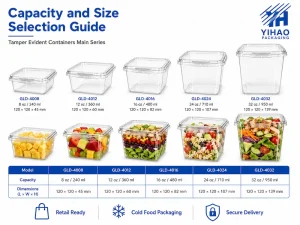
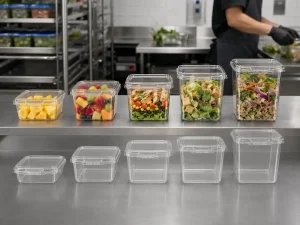
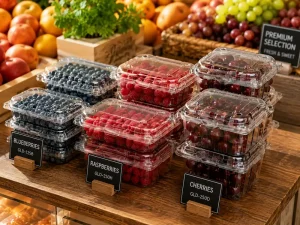
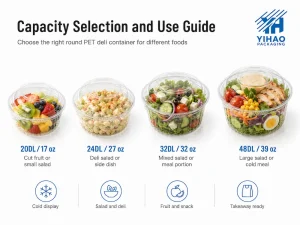
YIHAO is a food packaging manufacturer and solution provider focused on practical container structures for prepared foods, deli meals, takeaway programs, foodservice packaging, and wholesale food packaging buyers. For food packaging teams, meal prep containers are not just boxes for cooked food. They directly influence portion control, reheating performance, lid fit, sauce separation, delivery handling, retail shelf presentation, kitchen workflow, and the customer’s final eating experience.
For commercial buyers, the wrong meal prep container often creates more cost after purchase: leaking lids, warped bases, poor reheating results, messy compartment separation, weak stacking, unclear microwave instructions, and customer complaints. A container that looks acceptable in a sample photo may still fail after filling, chilling, transport, reheating, or repeated wholesale handling.
The best container choice depends on the meal format. A rice bowl, pasta meal, grilled protein set, salad-and-hot-food combo, frozen prepared meal, deli side dish, restaurant takeaway order, or fitness meal prep kit will not require the same structure. Buyers should compare material, lid design, internal depth, compartment layout, stacking stability, microwave suitability, and supplier consistency before approving a container for repeat use.
This guide gives food packaging teams a practical way to evaluate meal prep containers, especially when sourcing microwave safe meal prep containers, microwave meal boxes, compartment meal prep containers, PP meal prep packaging, and reheatable food containers from a manufacturer, wholesale partner, or long-term packaging supplier.
Why Meal Prep Containers Matter in Modern Food Packaging
Prepared meals are sold through many channels: supermarkets, convenience stores, cloud kitchens, meal prep brands, corporate catering, campus dining, fitness meal programs, deli counters, airline catering, and takeaway restaurants. In each channel, packaging must protect the meal from production to storage, transport, reheating, and serving.
A weak container creates problems quickly. Lids loosen during delivery, sauces leak into dry food, meals look messy after stacking, edges deform during heat exposure, and customers lose trust in the brand. Strong meal prep containers solve these issues by matching the container structure to the food type, handling process, and intended end use.
For chilled ready meals, clarity and shelf appeal matter. For hot takeaway meals, heat resistance and hand-feel matter. For microwaveable meals, buyers must verify that the selected container is suitable for the intended reheating condition. For multi-item meals, compartments help separate proteins, rice, vegetables, noodles, sauces, snacks, and side dishes.
Packaging teams should begin with one question: what job does the container need to perform after filling? The answer determines whether the buyer should choose a single-compartment PP tray, a multi-compartment meal box, a separate-lid prepared food container, a deli-style reheatable container, or a clear cold-food container for chilled display.
Material Selection: PP, PET/RPET, CPET, and Paper-Based Meal Packaging
Material selection is one of the most important decisions in meal prep packaging. Many buyers focus first on size or price, but material determines heat resistance, clarity, rigidity, cold-chain performance, microwave suitability, and customer perception. For reheatable meals, PP meal prep packaging is a common direction because polypropylene is often selected for microwave meal boxes, hot takeaway meals, deli food, rice sets, noodles, cooked vegetables, and prepared meals that require controlled reheating.
However, buyers should not treat material names as universal promises. A container should not be approved simply because it is labeled PP, PET, CPET, or paper. The full structure matters: resin, wall thickness, lid material, closure design, color masterbatch, additives, temperature range, food type, heating time, and supplier documentation all need review.
| Material | Best For | Microwave Use | Main Advantage | Main Limitation |
|---|---|---|---|---|
| PP | Reheatable meals, hot takeaway, deli food, rice bowls, noodles | Commonly used for microwave applications when validated for intended use | Good heat-resistance direction for reheatable food packaging | Usually lower clarity than PET/RPET |
| PET/RPET | Cold salads, fresh fruit, chilled deli display, bakery display | Not typically selected for microwave reheating unless specifically validated | High clarity and strong chilled shelf presentation | Heat limitation for reheatable meal programs |
| CPET | Frozen ready meals, ovenable trays, higher-heat prepared meal applications | Often used for higher-heat ready meal formats when specified correctly | Stronger temperature range for certain ready meal programs | Higher cost and less common for simple takeaway programs |
| Paper / Bagasse | Eco-style takeaway meals, dry or lower-sauce food formats | Depends on coating, structure, and supplier validation | Natural appearance and strong sustainability messaging | Lower clarity, variable sauce resistance, and coating-dependent performance |
For food packaging teams sourcing microwave safe containers, the safest procurement approach is to match the material to the application first, then test the exact container with the real meal. PP is usually the practical choice for many reheatable food containers, while PET/RPET is better positioned for cold visibility and chilled food display. CPET may be considered for higher-heat ready meal programs. Paper or bagasse formats may support eco-style positioning, but sauce resistance and coating behavior must be checked carefully.
Microwave Safe Meal Prep Containers: What Buyers Should Check
Microwave safe meal prep containers need more than a microwave symbol. Buyers should treat “microwave safe” as an application-specific claim, not a universal promise across every meal type, heating time, microwave power, fill level, and lid condition.
The correct question is not only “Can this container go into a microwave?” The better question is: “Under what food type, heating time, power setting, fill level, lid condition, and temperature range has this structure been designed to perform?”
This matters because high-oil, high-sugar, high-salt, dense, and thick-sauce foods can create localized hot spots during microwave heating. A rice-and-curry meal, cheese pasta, gravy-based dish, oily protein meal, and watery vegetable meal may behave differently in the same container. The lid may also have a different use condition from the base.
Buyer checks should include:
- Material confirmation: Verify whether the tray, base, and lid are PP or another material.
- Food contact suitability: Request supplier documentation for the intended food-contact application.
- Heating guidance: Confirm whether the lid should be removed, loosened, vented, or replaced before heating.
- Food-type testing: Test oily foods, sauced foods, dense rice meals, pasta, vegetables, and frozen or chilled meals separately.
- Deformation testing: Test filled samples under real heating conditions, not empty-container conditions only.
- Stacking after filling: Check whether warm filling or chilled storage affects lid fit and rim stability.
- End-user instructions: Add clear label guidance when meals are sold for reheating.
For prepared food brands, the container is part of the cooking and serving experience. A PP prepared meal container with a separate lid is useful when the buyer needs food counter display, takeaway handling, and controlled reheating instructions. The separate lid format also gives packaging teams more flexibility when they need a base that handles warm food and a lid that protects the meal during storage or transport.
Microwave Meal Boxes vs Standard Takeaway Containers
Microwave meal boxes are designed for a more demanding use case than basic takeaway containers. A standard takeaway container may only need to hold food from a restaurant kitchen to the customer’s table. A microwave meal box often needs to support filling, sealing or lidding, chilled storage, distribution, retail handling, consumer reheating, and eating from the same base.
This creates different requirements. The base must remain stable when the meal is reheated. The rim should resist warping. The lid must fit consistently before reheating. The container should not become difficult to hold after heating. The depth should match the portion size without making the meal look underfilled. The base should also support sauces and moisture without leaking through corners or rim gaps.
For large-volume takeaway meals, a large PP deli food container is more suitable than a small snack box because it provides better capacity for full meals, rice sets, noodles, cooked vegetables, and deli-style prepared foods. For foodservice buyers, the container should be evaluated with the real menu, not just the catalog image.
Single-Compartment vs Compartment Meal Prep Containers
Compartment meal prep containers help food teams control separation. They are useful when one meal includes wet and dry components, hot and cold items, protein and side dishes, or multiple portion zones. A two-compartment format may separate rice from curry. A three-compartment format may separate protein, vegetables, and starch. Larger compartment layouts are often used for catering, snack meals, fruit-and-nut meals, or mixed prepared food programs.
Single-compartment containers are better for pasta, rice bowls, stir-fry meals, sauced noodles, salad bases, deli sides, and food that is meant to mix naturally. They are easier to fill, easier to seal, and often more cost-efficient for high-volume production.
Compartment containers add value when separation improves the eating experience. They also support portion control and cleaner presentation. However, buyers should avoid overcompartmentalizing. Too many compartments can reduce fill flexibility, increase labor during packing, and make certain meals look smaller.
| Container Type | Best Use | Buyer Advantage | Key Check |
|---|---|---|---|
| Single-compartment PP container | Rice bowls, pasta, deli sides, sauced meals | Fast filling and strong portion flexibility | Depth, rim seal, reheating stability |
| Two-compartment meal box | Protein plus rice, sauce plus starch, hot/cold split | Cleaner separation and better customer experience | Divider height and sauce migration |
| Three-compartment meal box | Protein, vegetables, starch, fitness meals | Clear portion control | Fill speed and lid contact |
| Large deli-style PP container | Family meals, deli counters, large takeaway portions | Better capacity for prepared meals | Stack strength and hand-feel after heating |
Lid Design and Closure Performance
The lid is often where meal prep packaging succeeds or fails. A good container base cannot solve problems caused by a weak lid. Buyers should test lid fit under multiple conditions: empty, filled, chilled, warm-filled, stacked, transported, and opened by the end user.
For meal prep containers, lids normally need to support four functions. First, they should protect the food during handling. Second, they should help reduce leakage risk. Third, they should support stacking during transport or retail display. Fourth, they should give the consumer a clean opening experience.
When evaluating reheatable food containers, buyers must confirm lid behavior during heating. Some lids are intended to be removed before heating. Some may be loosened or vented. Some may not be suitable for direct microwave exposure. This guidance must be clear on the product label or meal sleeve to reduce misuse.
A PP hot food container with a separate lid is practical for deli takeaway and prepared meals because the base and lid can be assessed separately. This helps buyers build a safer and clearer heating instruction system for retail or foodservice use.
Portion Size, Fill Depth, and Visual Value
Portion presentation affects customer perception. A container that is too large makes the meal look underfilled. A container that is too shallow may create lid contact, sauce transfer, or messy presentation. For meal prep brands, the container should make the portion look generous without creating unnecessary material use or shipping volume.
Packaging teams should test containers with actual menu weights. Rice, noodles, cooked vegetables, grilled meat, meatballs, pasta, and sauce-based meals all settle differently. Dense foods need different depth than leafy vegetables or light deli sides. For retail programs, the filled container should still look clean after chilled storage and shelf handling.
Fill depth also affects reheating. Dense meals heat more slowly and may create uneven hot and cold zones. Buyers should consider whether the food needs stirring, venting, or lower-power heating instructions. A container that looks perfect on the packing line may still fail if the end user’s reheating experience is poor.
PP Meal Prep Packaging for Different Sales Channels
Different sales channels create different packaging priorities. A supermarket ready-meal program needs clean shelf presentation and stable labeling. A cloud kitchen needs fast packing, good stacking, and delivery performance. A meal prep brand needs portion control and repeat customer confidence. A deli counter needs practical handling and fast service. A foodservice distributor needs carton efficiency and consistent wholesale supply.
| Sales Channel | Packaging Priority | Recommended Container Direction | Buyer Focus |
|---|---|---|---|
| Supermarket Ready Meals | Shelf presentation, label area, chilled storage | PP reheatable tray or clear chilled container depending on use | Visual value, lid fit, reheating instruction |
| Cloud Kitchens | Fast packing, delivery handling, sauce control | Single or two-compartment PP meal box | Leakage risk, stacking, courier vibration |
| Fitness Meal Prep Brands | Portion control, clean separation, repeat consistency | Two or three-compartment PP container | Divider strength, fill weight, customer reheating |
| Deli Counters | Fast service, takeaway handling, hot or cold food use | PP deli container with separate lid | Opening experience, rim strength, lid clarity |
| Foodservice Distribution | Wholesale supply stability, carton protection, repeat orders | Standardized PP meal prep packaging range | Case pack, pallet handling, supplier reliability |
Stacking, Transport, and Wholesale Handling
Wholesale buyers should test packaging through the full supply chain. A meal prep container may look strong in a single sample, but bulk use reveals different issues. Carton packing, pallet handling, refrigerated storage, delivery vibration, and repeated stacking can expose weak rims, loose lids, and unstable bases.
Stacking performance is especially important for prepared food manufacturers and commissary kitchens. Containers are often filled in batches, placed into crates, chilled, labeled, distributed, and then displayed. A small lid-fit issue becomes expensive when it affects thousands of meals.
For cold and chilled prepared meal programs, buyers may also compare PP reheatable options with deli and salad containers when the food is not intended for microwave heating. This distinction matters. PET and RPET containers often work well for cold visibility and chilled display, while PP is normally the stronger direction for reheatable prepared meals.
Food Type Matching: Which Meals Need Which Container?
Different meals create different packaging stress. The table below helps buyers match food types with container requirements before requesting samples from a manufacturer or supplier.
| Food Type | Recommended Packaging Direction | Important Buyer Check |
|---|---|---|
| Rice bowls and protein meals | Single or two-compartment PP meal prep container | Heat stability, portion depth, sauce behavior |
| Pasta and noodles | Single-compartment microwave meal box | Oil resistance, stirring space, lid clearance |
| Fitness meal prep | Two or three-compartment container | Portion control and divider strength |
| Deli sides and hot takeaway | PP deli food container with separate lid | Lid fit, stacking, hand-feel after heating |
| Cold salads and fruit meals | PET or RPET chilled display container | Clarity, anti-fog needs, cold-chain handling |
| Mixed chilled prepared foods | Separate-lid container or compartment format | Moisture control and ingredient separation |
For cold dishes and takeaway programs that include both chilled display and later heating needs, a PP prepared food container gives packaging teams a practical bridge between deli presentation and reheatable foodservice use.
Bulk Order Testing Checklist for Meal Prep Containers
Before approving wholesale orders, food packaging teams should test the container with the actual food, actual filling process, actual storage condition, and actual customer reheating instructions. Sample testing should not stop at appearance. It should check whether the packaging performs under commercial handling.
| Test Item | How to Test | Why It Matters | Pass Standard for Buyers |
|---|---|---|---|
| Microwave Test | Heat real meals under intended instructions | Checks base stability, hot spots, and lid guidance | No unacceptable warping, melting, or handling failure |
| Leakage Test | Fill with sauced or oily foods, tilt and transport | Prevents customer complaints and delivery failure | Rim and lid remain secure under expected handling |
| Stacking Test | Stack filled containers in crates or cartons | Checks lid pressure and meal presentation | No crushed lids, shifted food, or unstable stacks |
| Chilled Storage Test | Store filled containers under refrigerated conditions | Checks condensation, lid fit, and shelf appearance | Container remains clean, stable, and presentable |
| Transport Test | Simulate delivery bags, crates, or distributor handling | Reveals rim weakness and closure problems | No lid popping, major leakage, or structural failure |
| Label and Sleeve Test | Apply labels, sleeves, or tamper-evident stickers | Supports branding and retail compliance workflow | Labels fit cleanly without blocking key information |
What Food Packaging Teams Should Ask a Manufacturer
When sourcing from a manufacturer, wholesale partner, or packaging supplier, buyers should ask direct questions. The goal is not to collect generic claims. The goal is to confirm whether the container matches the buyer’s food, equipment, market, and distribution model.
- What material is used for the base and lid?
- Is the container intended for microwave reheating, hot filling, chilled storage, or cold display?
- What food types and use conditions should buyers test before approval?
- Should the lid be removed, loosened, or vented before heating?
- Can samples be tested with oily, sauced, dense, chilled, and frozen meals?
- How does the container perform after stacking and refrigerated storage?
- Can the supplier support stable wholesale repeat orders?
- Are carton packing, labeling area, and outer case protection suitable for the buyer’s distribution model?
Buyers should also review production consistency. A reliable manufacturer should be able to discuss tooling, quality control, sample approval, material consistency, and packing protection. For food packaging teams, the cheapest container is rarely the best option if it creates sealing issues, customer complaints, or repacking costs.
Wholesale Buying Checklist for Meal Prep Containers
Before placing wholesale orders, use this checklist to compare suppliers and container structures:
- Application fit: Match the container to hot food, chilled food, reheatable meals, or cold display.
- Material: Confirm PP for reheatable uses and avoid using cold-food plastics for microwave meal programs unless specifically validated.
- Structure: Choose single, two, three, or multi-compartment formats based on actual meal composition.
- Lid system: Test closure strength, venting guidance, opening experience, and stacking performance.
- Portion logic: Check actual food weight, visual fullness, and fill-line behavior.
- Heat testing: Test the real meal, not only water or empty containers.
- Logistics: Review carton quantity, stacking, palletization, and warehouse handling.
- Branding: Confirm label area, sleeve compatibility, and whether custom packaging support is available.
- Supplier reliability: Compare sample support, repeat-order stability, quality control, and response speed.
For deli counters and prepared food display, a PP deli food container is useful when buyers need one structure for cold food handling and retail takeaway. For buyers building a wider packaging system, category-level review across microwave safe containers helps create a more consistent sourcing strategy.
Common Mistakes When Choosing Meal Prep Containers
Choosing Based Only on Capacity
Capacity is important, but it is not enough. Two containers with similar capacity can perform very differently because of rim design, wall thickness, depth, lid fit, and stack geometry. Buyers should always test with real food portions.
Ignoring Lid Instructions
The base may be reheatable, but the lid may require removal or venting. This must be checked and communicated clearly. Packaging teams should never assume that the base and lid have the same use condition.
Using Clear Cold-Food Containers for Hot Reheating
Clear PET and RPET containers are valuable for chilled display, fresh food, salads, and deli presentation. They are not automatically suitable for microwave meal programs. Reheatable food packaging usually needs a PP-based direction unless the supplier validates another structure for the intended use.
Skipping Transport Testing
A container that performs well on a desk may fail in crates, cartons, chilled rooms, delivery bags, or retail shelves. Buyers should test filling, stacking, transport vibration, and customer opening before ordering at scale.
Choosing the Lowest Price Without Testing Total Cost
The lowest unit price may create higher total cost if the container causes leakage, customer complaints, returns, repacking, broken lids, or inconsistent wholesale supply. Packaging teams should compare total performance, not only the per-piece quotation.
How to Build a Better Meal Prep Packaging System
A strong meal prep packaging system should not rely on one container for every meal. Food brands usually need a small set of approved structures: one single-compartment container for rice bowls and pasta, one compartment container for fitness meals, one deli-style PP container for hot takeaway, and one clear chilled container for cold display foods.
This approach reduces confusion while keeping enough flexibility for menu changes. It also helps purchasing teams manage inventory, reduce packaging waste caused by poor fit, and create a more consistent customer experience across products.
When buyers work with a wholesale supplier, the conversation should move beyond price per piece. A better supplier helps match structure to application, supports sample testing, and gives clear information about material, intended use, packing, and repeat-order planning.
Buyer Decision Framework
Use the following framework before approving meal prep containers for production:
- Define the food: Is it hot, chilled, frozen, sauced, oily, dry, dense, or mixed?
- Define the use: Is the container for display, delivery, reheating, storage, or direct eating?
- Select the material: Use PP for reheatable applications and PET/RPET for cold clarity when appropriate.
- Choose the structure: Match single or compartment layouts to the real meal format.
- Test the lid: Check sealing, opening, stacking, and reheating instructions.
- Run real-food trials: Test actual meals under real handling and reheating conditions.
- Confirm supplier readiness: Review wholesale supply stability, quality control, carton packing, and sample support.
FAQ About Meal Prep Containers
1. Are PP meal prep containers microwave safe?
Many PP meal prep containers are designed for reheatable food applications, but buyers should confirm the exact use condition with the supplier. Microwave suitability depends on the base, lid, food type, heating time, fill level, and intended instructions.
2. What is the best material for reheatable meal prep containers?
PP is commonly selected for reheatable meal prep containers because it is practical for many microwave meal boxes, hot takeaway meals, and prepared food programs. Buyers should still test the exact container with the real meal before wholesale approval.
3. Can meal prep containers go from fridge to microwave?
Some meal prep containers are designed for chilled storage followed by microwave reheating, but the buyer must confirm the material, lid instruction, food type, and heating guidance. The container should be tested after refrigeration and before bulk ordering.
4. When should buyers choose compartment meal prep containers?
Buyers should choose compartment meal prep containers when the meal includes separate food zones, such as protein, rice, vegetables, sauces, snacks, or side dishes. Compartments improve portion control and presentation when separation improves the eating experience.
5. How do I choose a meal prep container supplier?
Choose a supplier that can explain material, lid behavior, intended use, carton packing, wholesale supply stability, sample testing, and quality control. A reliable supplier should help match the container to the food application instead of only quoting a unit price.
References
- U.S. Food and Drug Administration, Packaging & Food Contact Substances resources.
- U.S. Food and Drug Administration, Inventory of Food Contact Substances Listed in 21 CFR: Polypropylene.
- Electronic Code of Federal Regulations, 21 CFR food contact material references.
- USDA Food Safety and Inspection Service, Cooking with Microwave Ovens.
- USDA Food Safety and Inspection Service, Leftovers and Food Safety.
- USDA Food Safety and Inspection Service, How Temperatures Affect Food.
- European Commission, Regulation on plastic materials and articles intended to come into contact with food.
- Food packaging industry practice: supplier sample testing, food application matching, and wholesale quality control review.
Deep Dive Insights
How should buyers think beyond container capacity?
Capacity is only the starting point. A reliable meal prep container must also match food density, sauce behavior, reheating conditions, lid fit, stacking pressure, and customer handling. Two containers with the same ounce capacity may deliver very different performance after filling and transport.
Why does PP remain important for reheatable food packaging?
PP remains a practical material direction for many reheatable food programs because it is commonly used for microwave meal boxes, hot takeaway containers, deli meals, and prepared food applications. The key is not to claim universal microwave safety, but to validate the complete container system under the buyer’s real food and heating conditions.
What option works best for multi-item meals?
Compartment meal prep containers are best when separation improves the eating experience. They help control rice, protein, vegetables, sauces, and side dishes, but buyers should avoid adding compartments that slow down filling or make portions look smaller.
What should wholesale buyers consider before final approval?
Wholesale buyers should approve meal prep containers only after testing real meals through filling, chilling, stacking, transport, microwave reheating, labeling, and customer opening. This practical testing process gives food packaging teams a clearer view of total packaging value than unit price alone.
Final Note / Practical Takeaway
© YIHAO Packaging. All rights reserved. All articles, product images, packaging designs, technical specifications, and website materials are protected by copyright. Unauthorized copying, reproduction, redistribution, modification, or commercial use is strictly prohibited without prior written permission.