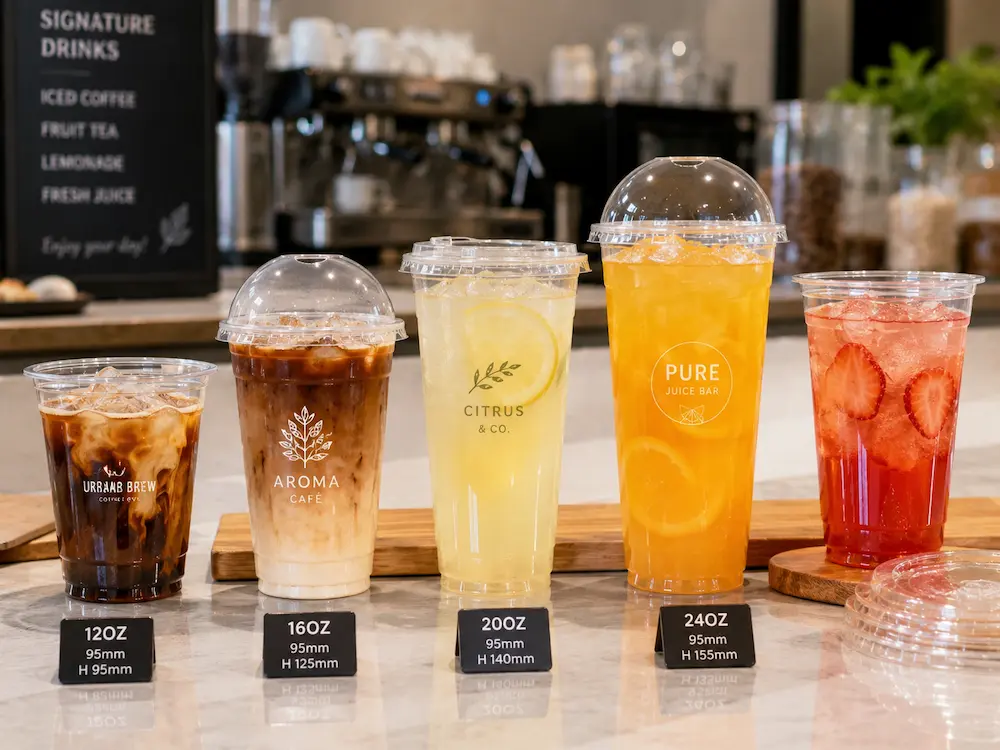
Quick Answer: How Many Cups Are in Common Food Container Sizes?
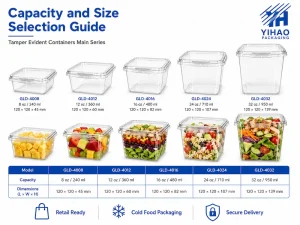
The fastest answer is simple: in US fluid measurement, 1 cup equals 8 fluid ounces. That means an 8 oz food container is about 1 cup, a 12 oz food container is about 1.5 cups, a 16 oz food container is about 2 cups, a 24 oz food container is about 3 cups and a 32 oz food container is about 4 cups.
For packaging buyers, this conversion is useful because many supplier catalogs use ounces while foodservice teams, chefs, retailers and customers may think in cups. However, this article is not a cooking measurement guide. It is a practical packaging selection guide for buyers comparing container capacity for salads, fruit, deli foods, snacks, chilled meals and takeout packaging.
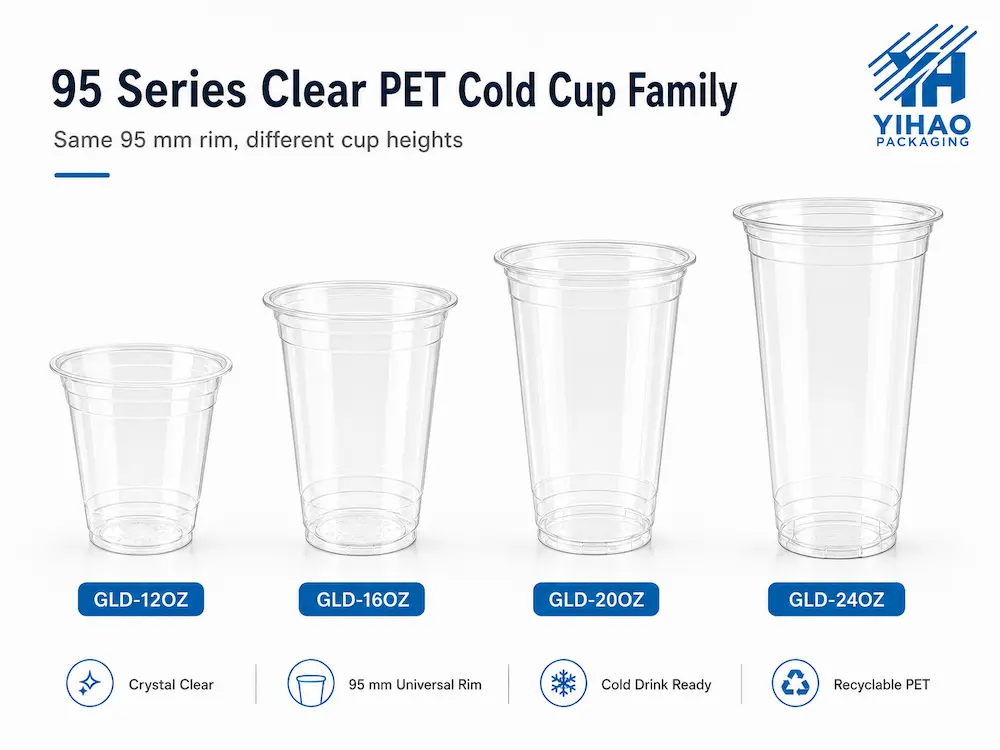
| Food Container Size | Cups Conversion | Approx. ml Reference | Common Packaging Use | Buyer Note |
|---|---|---|---|---|
| 8 oz | 1 cup | About 237 ml | Small fruit portions, toppings, snack packs, side salads | Good for compact food portions, but lid clearance should be tested |
| 12 oz | 1.5 cups | About 355 ml | Fruit cups, deli sides, cut vegetables, small chilled foods | Useful when 8 oz feels too small but 16 oz feels too large |
| 16 oz | 2 cups | About 473 ml | Deli salads, pasta salad, fruit mixes, medium snack bowls | A flexible middle size for deli, salad and fresh food packaging |
| 24 oz | 3 cups | About 710 ml | Meal salads, larger fruit packs, chilled deli items | Useful for more generous servings and stronger visual presentation |
| 32 oz | 4 cups | About 946 ml | Large salads, premium fruit portions, deli meals, grab-and-go packs | Requires good structure, closure strength and shelf footprint planning |
Why Packaging Capacity Is Not the Same as Usable Filling Volume
The phrase how many cups in food containers gives buyers a quick conversion answer, but it does not fully answer whether a container is the right fit for a real food product. Capacity tells you the approximate internal volume. Usable filling volume tells you how much food can actually be packed while still allowing the container to close properly, look attractive and perform during storage, display and handling.
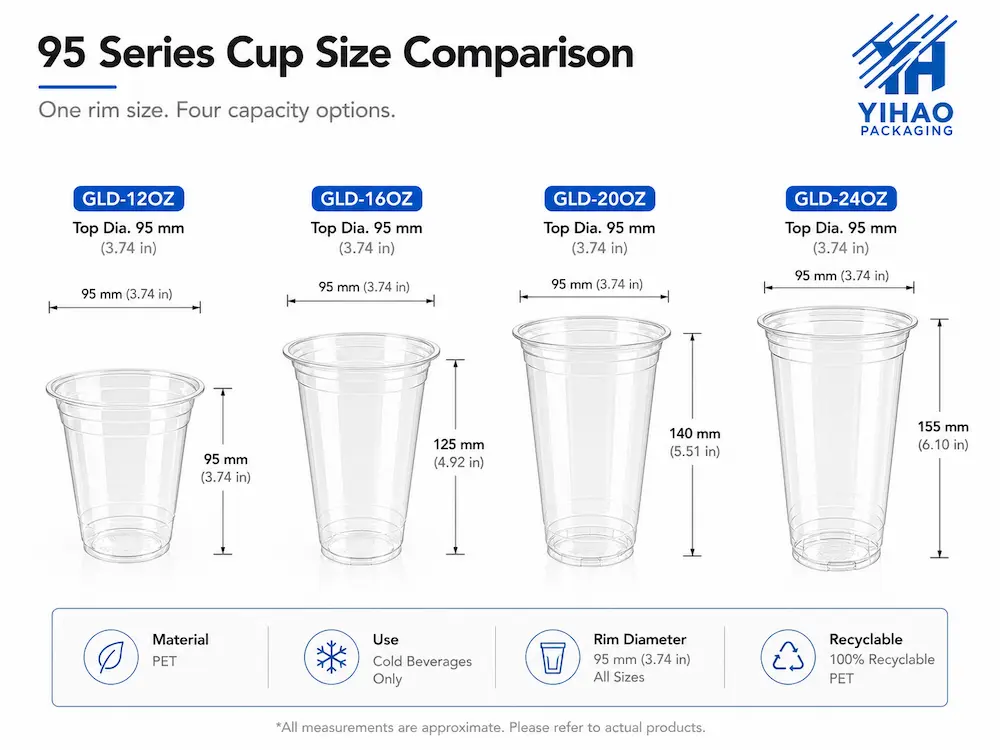
This difference matters because most foods are not pure liquids. A cup of diced melon, a cup of grapes, a cup of pasta salad and a cup of leafy greens do not occupy space in the same way. Leafy foods contain more air space. Dense deli foods may become heavy before the container looks full. Fruit pieces have irregular shapes. Snacks may shift during transport. Sauced foods may require more secure rims and lids.
For buyers selecting deli and salad containers, cup conversion should be used as the first reference, not the final decision. The final container should be tested with the actual food, expected filling weight, lid structure, label placement, cold storage condition and handling process.
How Food Density Changes Real Container Choice
Food density is one of the biggest reasons the same cup conversion can produce different packaging results. A 16 oz container may equal 2 cups by volume, but the way that volume performs depends on what goes inside the container.
A dense food such as pasta salad, potato salad, coleslaw or cold noodles may fill the base smoothly and create a heavy packed container. In this case, the buyer should check base rigidity, sidewall strength and lid engagement. A container may look visually suitable but feel unstable when filled with dense food.
A light food such as leafy salad may require more space even if the actual food weight is lower. The buyer may need a taller lid, wider footprint or larger container to prevent the greens from being crushed. For salad packaging, the difference between 16 oz, 24 oz and 32 oz can be more about usable height and presentation than simple cup conversion.
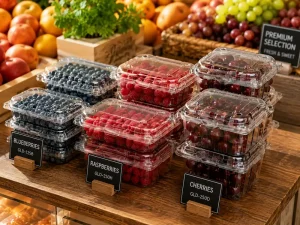
Fresh-cut fruit creates another challenge. Grapes, strawberries, melon cubes, kiwi slices and mixed fruit pieces do not settle like liquid. They need enough space to look fresh and organized. This is where fresh-cut fruit containers should be selected by both capacity and real produce shape.
8 oz to Cups: When 1 Cup Containers Make Sense
An 8 oz food container equals about 1 cup. This size is practical for compact portions, small side dishes, fruit add-ons, toppings, sauces, sample packs, snack portions and small deli items. In retail and foodservice packaging, 8 oz containers are often selected when the product needs to be convenient, lightweight and easy to display.
For supermarkets, 8 oz packaging can support small fruit portions, mini side salads, cold toppings or add-on deli foods. For cafes, it can be used for yogurt toppings, dessert bites or fruit cups. For foodservice distributors, it can help create controlled small-pack formats for multiple customers.
The main advantage of 8 oz packaging is efficiency. It saves shelf space, supports compact carton packing and gives customers a clear single-serve option. The challenge is that 1 cup capacity can feel tight for foods with height, toppings or irregular shapes. A small leafy salad may need more space than expected, while dense foods may fill the container quickly by weight.
Buyer checklist for 8 oz containers
Before choosing an 8 oz container, buyers should test whether the food looks full but not compressed. They should also check whether the lid closes easily after labeling and whether the product remains stable in chilled display or takeaway handling.
12 oz to Cups: Why 1.5 Cup Containers Are Useful for Small Retail Packs
A 12 oz food container equals about 1.5 cups. This size is often a practical step up from 8 oz because it gives buyers more room without creating a large package. It works well for fruit cups, snack mixes, small deli sides, cut vegetables, chilled desserts and compact prepared foods.
For fresh food packaging, 12 oz can improve presentation. Fruit pieces have more space to sit naturally. Deli foods can look fuller without being squeezed. Snack mixes can be packed with less pressure against the lid. For many buyers, 12 oz is useful when 8 oz looks too small but 16 oz creates too much empty space.
The 12 oz size is also valuable for retail programs that want a mid-small option. It can support a better perceived value than 8 oz while still remaining easy to hold, display and pack. However, buyers should compare container shape carefully. A shallow 12 oz container and a taller 12 oz container may create very different shelf presentation.
16 oz to Cups: Why 2 Cup Containers Are a Flexible Middle Size
A 16 oz food container equals about 2 cups. This is one of the most flexible sizes for deli, salad, fruit and snack packaging. It can work for deli salads, pasta salad, cut fruit, grain bowls, cold noodles, medium snack packs and small grab-and-go meals.
For packaging buyers, 16 oz often becomes a practical middle point. It is larger than a side portion but smaller than a full meal pack. It gives enough visual volume for many retail products while still supporting efficient shelf and carton use. This is why many brands compare 16 oz containers before moving into larger sizes such as 24 oz or 32 oz.
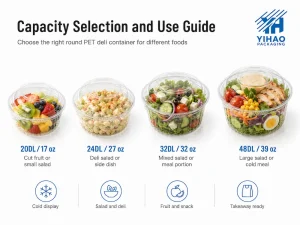
When buyers need a container near this range, a product such as a 17 oz clear PET salad bowl can be relevant for grab-and-go salads, fresh fruit and chilled foods where a slightly larger usable volume helps presentation.
Square formats can also support deli and fresh food applications. A 20 oz PET square deli container may be considered when a buyer wants more than 16 oz capacity but still needs a compact package for salad, fruit or deli meals.
Buyer checklist for 16 oz containers
Buyers should test 16 oz containers with real food portions. Dense deli foods may become heavy. Leafy salads may need more lid clearance. Fresh fruit may need more width. The best 16 oz option depends on the food’s shape, weight and display goal.
24 oz to Cups: When 3 Cup Containers Support Meal-Size Presentation
A 24 oz food container equals about 3 cups. This size is often useful for buyers who need more presentation space than 16 oz but do not want to move directly to 32 oz. It can work for meal salads, larger fruit portions, chilled deli foods, cold bowls and ready-to-eat retail packs.
In salad packaging, the 24 oz range is helpful when the product includes greens, toppings, protein or separate dressing. The added volume can reduce compression and improve visual presentation. In fruit packaging, it can provide enough room for larger pieces or mixed fruit varieties. In deli packaging, it can support larger portions while still remaining manageable for retail display.
For buyers comparing nearby sizes, a 27 oz clear PET salad bowl can be a practical example of a slightly larger option for ready-to-eat salads. The key is not only the listed capacity, but also the bowl shape, lid height and how the finished product looks after filling.
Why 24 oz is often a decision point
The 24 oz range is where packaging starts to feel more like a light meal or premium fresh food pack. Buyers should think carefully about shelf footprint, customer handling and price positioning. If the food still looks compressed, 32 oz may be better. If the package looks underfilled, 16 oz or 20 oz may be more efficient.
32 oz to Cups: Why 4 Cup Containers Need Stronger Packaging Logic
A 32 oz food container equals about 4 cups. This size is common for larger salads, premium fruit packs, deli meals, cold noodle portions, family side dishes and higher-value grab-and-go foods. It gives more room for product visibility and ingredient arrangement, but it also requires stronger packaging performance.
For salad applications, 32 oz can provide room for greens, toppings, protein and dressing. For fruit applications, it can support larger assortments and better color display. For deli foods, it can create a more substantial portion. However, larger capacity means buyers should pay more attention to sidewall rigidity, lid security, stacking pressure and carton fit.
A 32 oz clear PET salad bowl can be useful for premium grab-and-go meal salads where visibility, lid closure and presentation matter. For square-pack applications, a 34 oz PET square deli container may be relevant when buyers want larger capacity with more organized shelf and carton alignment.
Buyer checklist for 32 oz containers
Buyers should test 32 oz containers under real filling and stacking conditions. A large container may look excellent when empty, but the real question is how it performs with heavy deli food, loose salad ingredients, fresh fruit or chilled transport handling.

Salad, Fruit, Deli, Snack and Takeout Examples
Different food categories require different packaging decisions even when the cup conversion looks similar. A 2 cup container can be suitable for one product but too small or too large for another. This is why buyers should connect capacity to real use cases.
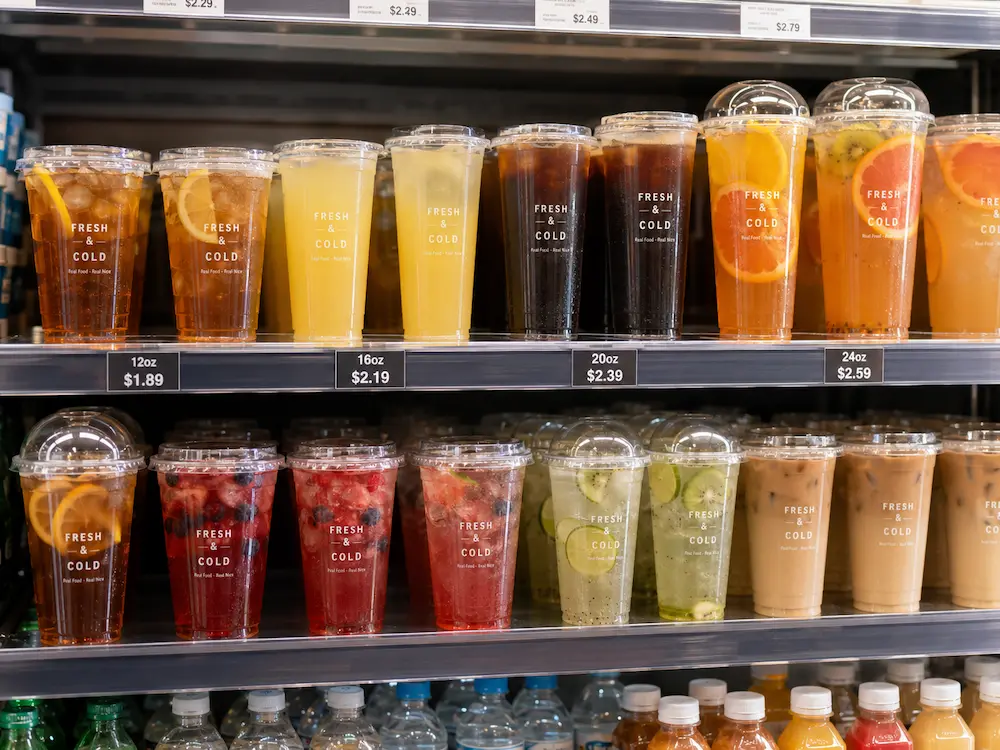
| Food Category | Common Starting Size | Cups Reference | Main Packaging Priority | Buyer Test |
|---|---|---|---|---|
| Small fruit portions | 8 oz to 12 oz | 1 to 1.5 cups | Clear visibility and compact display | Test fruit shape and lid clearance |
| Deli sides | 12 oz to 20 oz | 1.5 to about 2.5 cups | Usable volume and weight support | Test dense filling weight |
| Medium salads | 16 oz to 24 oz | 2 to 3 cups | Leafy volume and toppings space | Test salad height after closing |
| Meal salads | 24 oz to 32 oz | 3 to 4 cups | Presentation and lid security | Test greens, toppings, protein and dressing |
| Snack packs | 8 oz to 16 oz | 1 to 2 cups | Compact handling and label space | Test shifting during transport |
| Takeout chilled foods | 16 oz to 32 oz | 2 to 4 cups | Closure strength and bag fit | Test delivery movement and stacking |
How Lid Clearance and Height Affect Food Presentation
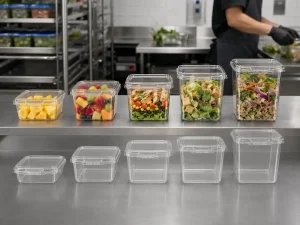
Lid clearance is one of the most important details in food container selection. Two containers may have the same cup capacity, but the one with better lid height may protect the food more effectively. This is especially important for salads, fruit, toppings and any food with layered presentation.
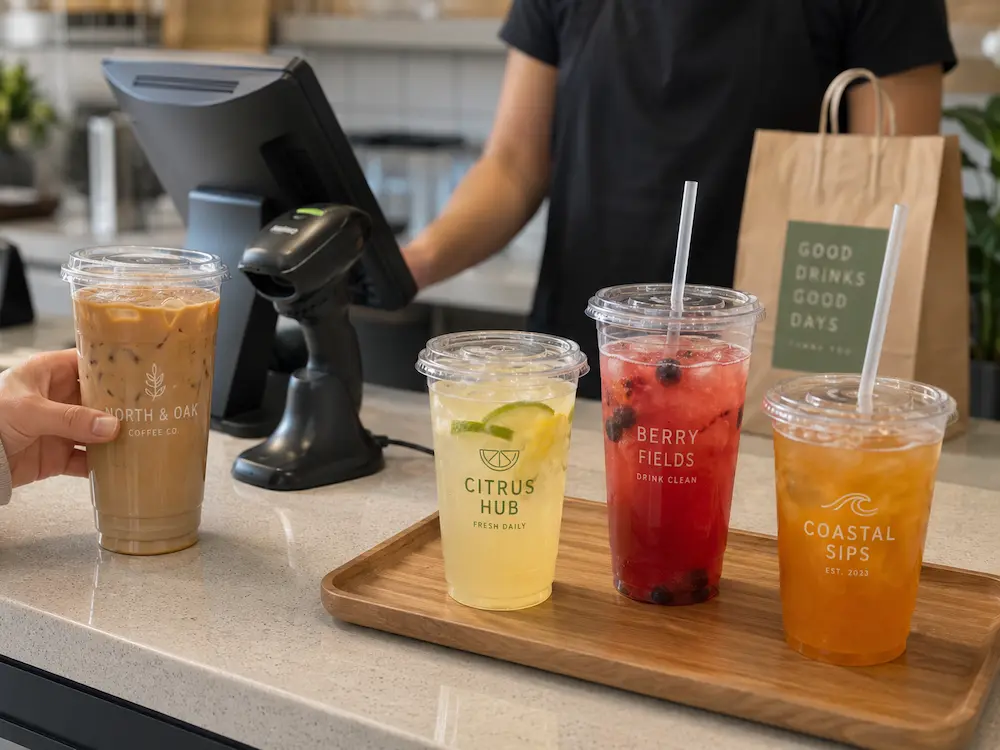
For leafy salads, lid clearance helps prevent compression. For fruit, it helps preserve visual arrangement. For deli foods, it may prevent contact between the food and the lid when filled close to capacity. For snacks, it can reduce movement and crushing.
Buyers should not judge container size only from top diameter or listed volume. Height, sidewall angle and lid structure all change the user experience. A shallow container can show food clearly from the top, but it may not support layered products. A deeper container can hold more food but may reduce visual spread. The right choice depends on how the product should look in retail display.
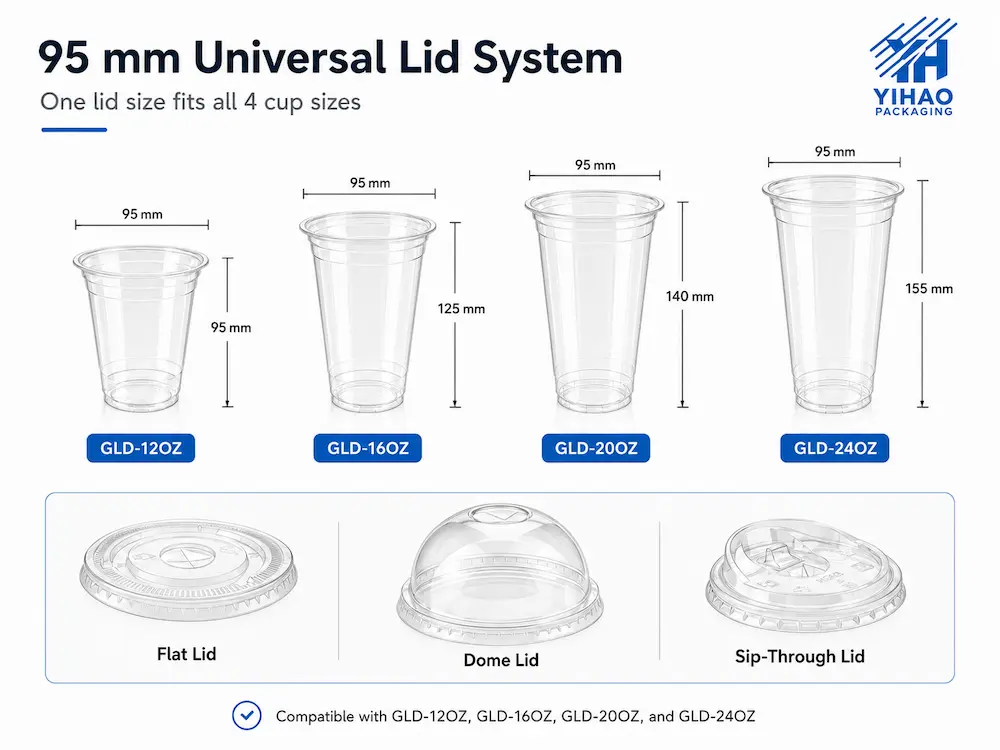
When to Choose Round Bowls, Square Deli Containers or Hinged Clamshells
After buyers understand how many cups in food containers, the next question is structure. Round bowls, square deli containers and hinged clamshells can all be used for similar capacities, but they serve different packaging goals.
Round PET containers are often selected for salad bowls, fruit bowls, cold noodle bowls and ready-to-eat chilled foods. They create a familiar eating experience and can make the food look full and approachable.
Square PET containers are useful when buyers care about shelf alignment, carton efficiency and organized retail presentation. Square formats can help distributors and retailers use space more efficiently, especially for deli sides, chilled meals and snack packs.
Hinged clamshells are practical when speed and lid matching matter. Since the lid and base are connected, packing teams do not need to match separate lids during operation. This can help supermarkets, cafes, delis and prepared food teams reduce packing complexity.
| Structure Type | Best For | Main Advantage | Buyer Watch Point |
|---|---|---|---|
| Round PET containers | Salads, fruit bowls, cold bowls, ready-to-eat meals | Strong visual appeal and familiar customer use | Check shelf footprint and lid height |
| Square PET containers | Deli foods, fruit, snacks, chilled meals | Better alignment for shelves and cartons | Check corner strength and closure consistency |
| Hinged clamshells | Grab-and-go food, deli items, fresh produce, bakery items | Integrated lid and base for faster packing | Check hinge durability and locking performance |
Why PET Clarity Matters for Capacity-Based Packaging Selection
Clear PET packaging is widely used for chilled food, salads, fruit and deli foods because it supports product visibility. When a customer sees the food clearly, the package can communicate freshness, color, ingredient quality and portion value without relying only on printed labels.
For buyers, visibility is part of packaging performance. A clear container that displays the food well may improve shelf appeal. A container with poor clarity, weak structure or poor lid fit may reduce the value of the food even if the capacity is correct.
This matters when comparing cup capacity. A 24 oz or 32 oz container may technically hold the right amount of food, but if the shape hides the product or makes the portion look flat, it may not be the best retail choice. A slightly different structure may create better presentation even when the capacity is similar.
When selecting PET or rPET packaging, buyers should also ask about material clarity, food contact suitability, sample consistency, stacking performance and application limits. Clear PET containers are commonly used for chilled display and fresh food packaging, but they should not be assumed suitable for microwave heating unless the material and design are specifically confirmed for that use.
Packaging Capacity vs Portion Claims: What Buyers Should Avoid
When discussing cups, ounces and container capacity, buyers should avoid making unsupported portion-control or nutrition claims. A container capacity does not automatically define a dietary serving, nutrition portion or recommended intake. It only describes the package volume.
For B2B packaging selection, the safer and more practical language is capacity, usable filling volume and application fit. A 16 oz container can be described as approximately 2 cups in volume, but it should not be promoted as a guaranteed meal portion. Food density, recipe, market expectations and brand positioning all affect the final pack size.
This is especially important for supermarkets, delis, cafes and food brands selling across different markets. Local labeling rules, product categories and consumer expectations may vary. Packaging buyers should use cup conversion as a technical reference, then confirm final packaging through real product testing and compliance review.
YIHAO Sample Request Checklist for Capacity Selection
Before requesting samples from a supplier, buyers should prepare more than a simple capacity number. A clear request helps the supplier recommend a container that fits the actual food application. As a food packaging manufacturer and solution provider, YIHAO recommends matching cup conversion with real food conditions before confirming a wholesale order.

| Information to Send | Why It Matters | Example |
|---|---|---|
| Target capacity | Helps narrow the size range | 8 oz, 12 oz, 16 oz, 24 oz or 32 oz |
| Food type | Different foods fill containers differently | Salad, fruit, deli side, snack pack, takeout food |
| Target food weight | Dense foods may require stronger packaging | 150 g, 250 g, 500 g or buyer-specific target |
| Preferred structure | Shape affects display, packing and carton efficiency | Round bowl, square container or hinged clamshell |
| Storage condition | Chilled display and transport affect performance | Refrigerated shelf, cold chain, takeaway handling |
| Label plan | Labels can reduce product visibility | Top label, side label, sleeve or tamper label |
| Sales channel | Retail, foodservice and delivery need different checks | Supermarket, cafe, deli counter, distributor or delivery |
Buyers working with a manufacturer should also request samples for filling, stacking, lid closure and transport simulation. The best packaging decision combines capacity conversion, product presentation and real performance testing.
FAQ
1. Is 8 oz equal to 1 cup?
Yes. In US fluid measurement, 8 oz equals 1 cup. For food packaging, this is a useful capacity reference, but actual usable filling volume depends on food density, container shape, lid clearance and how the product is packed.
2. How many cups are in a 16 oz container?
A 16 oz container equals about 2 cups. It is commonly used for deli salads, fruit mixes, snack bowls and medium chilled food portions. Buyers should still test the real food because dense deli foods and leafy salads fill containers differently.
3. How many cups are in a 24 oz food container?
A 24 oz food container equals about 3 cups. This size can be useful for meal salads, larger fruit packs, chilled deli foods and ready-to-eat retail applications where buyers need more presentation space than 16 oz.
4. How many cups are in a 32 oz container?
A 32 oz food container equals about 4 cups. It is often used for larger salads, premium fruit packs, deli meals and grab-and-go chilled foods. Buyers should check lid security, stacking strength and shelf footprint before bulk ordering.
5. Why does the same capacity look different in different shapes?
The same capacity can look different because container shape, base width, height, sidewall angle and lid design change how the food is displayed. A wide shallow container and a tall narrow container may hold similar volume but create different presentation and handling results.
6. Should buyers choose food containers by oz, ml or dimensions?
Buyers should use oz and ml as starting references, then compare dimensions, shape, lid clearance, material, stacking performance and actual food testing. Capacity alone does not confirm the best packaging fit.
7. Are cup conversions enough for choosing salad or fruit containers?
No. Cup conversions are helpful, but salad and fruit packaging should also be selected by food shape, filling height, visibility, closure strength, chilled display needs and real handling conditions.
References
- National Institute of Standards and Technology, SI units and measurement reference materials.
- U.S. Food and Drug Administration, food contact substances and food packaging material guidance.
- European Commission, Regulation (EC) No 1935/2004 on materials and articles intended to come into contact with food.
- European Food Safety Authority, food contact materials safety assessment resources.
- Association of Plastic Recyclers, Design Guide for Plastics Recyclability.
- RecyClass, Design for Recycling Guidelines for PET Packaging.
- WRAP, plastic packaging design and recyclability guidance.
- PMMI Business Intelligence, food packaging and retail packaging industry research.
Deep-Dive Insights: How Buyers Should Use Cup Conversion for Food Packaging
How cup conversion helps buyers compare packaging quickly
Cup conversion gives buyers a fast starting point. When a buyer knows that 8 oz equals 1 cup, 16 oz equals 2 cups and 32 oz equals 4 cups, it becomes easier to compare supplier catalogs, internal portion targets and product development ideas.
Why cup conversion should not replace sample testing
Food products do not fill containers like water. Leafy salad, fresh fruit, deli sides and snack mixes all behave differently. Buyers should use cup conversion to narrow the size range, then confirm the final choice with real food samples, labels, lids and storage conditions.
What option works best for salad, fruit and deli foods?
Small containers such as 8 oz and 12 oz work well for compact portions and fruit cups. Medium sizes such as 16 oz and 24 oz support deli sides, salad bowls and ready-to-eat chilled foods. Larger 32 oz containers are better for meal salads, premium fruit packs and higher-volume grab-and-go applications.
Consideration: shape changes perceived capacity
Round bowls, square deli containers and hinged clamshells can hold similar volumes but present food differently. Buyers should compare not only the capacity number, but also the footprint, height, lid clearance, product visibility and carton efficiency.
Buyer takeaway for wholesale ordering
The best packaging choice comes from combining simple conversion, practical application judgment and supplier sample testing. Buyers should avoid making portion or nutrition claims based only on container capacity and should treat oz-to-cups conversion as a packaging reference, not a serving-size promise.
Final Note / Practical Takeaway
© YIHAO Packaging. All rights reserved. All articles, product images, packaging designs, technical specifications, and website materials are protected by copyright. Unauthorized copying, reproduction, redistribution, modification, or commercial use is strictly prohibited without prior written permission.