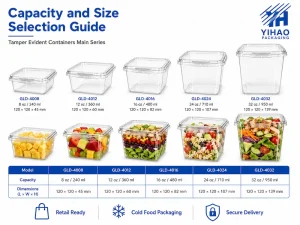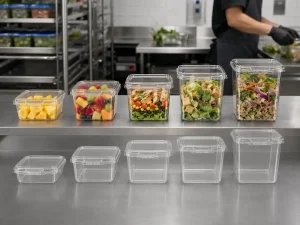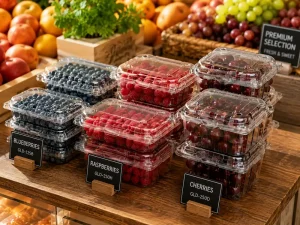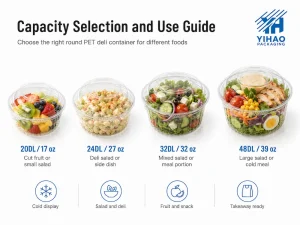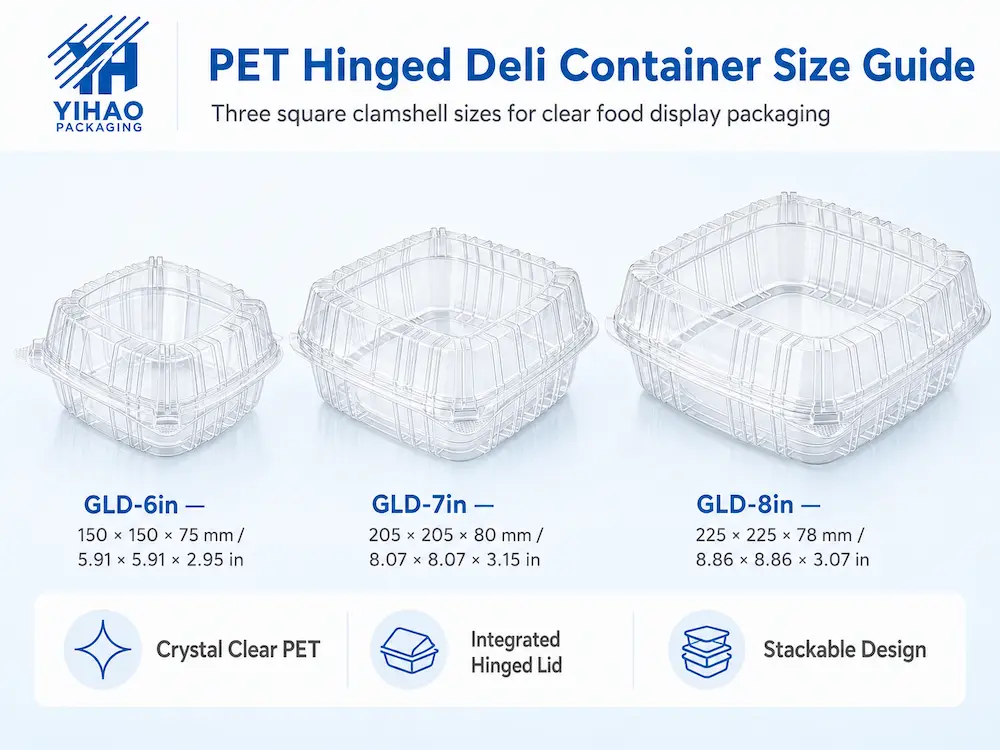
Food packaging teams do not choose containers only to hold food. They choose packaging that affects shelf presentation, packing speed, transport protection, customer confidence, and repeat purchasing. For supermarkets, cafés, convenience stores, foodservice distributors, fresh food brands, and meal-prep operators, hinged deli containers remain one of the most efficient formats for chilled and ready-to-eat food programs.
YIHAO is a food packaging manufacturer and solution provider focused on practical packaging systems for fresh food, salads, fruit, bakery items, cold drinks, deli foods, and grab-and-go retail programs. This buyer guide explains how food packaging teams should compare PET hinged deli containers, clear PET deli containers, salad clamshell containers, and wholesale hinged containers before selecting a manufacturer, supplier, or long-term packaging partner.
What Are Hinged Deli Containers?
Hinged deli containers are one-piece food packaging containers with a connected lid and base. The hinge keeps the lid attached, while the closure area helps the container stay shut during packing, storage, shelf display, takeaway, and customer handling. This connected structure reduces the need to match separate lids and bases, making daily packing work faster and more consistent.
In food packaging, the term “deli container” covers several container shapes and applications. Some are square or rectangular. Some are round salad bowl formats. Some are shallow clamshells for sandwiches, cookies, or brownies. Some are deeper containers for salads, fruit mixes, deli sides, or chilled meals. The shared buying logic is the same: buyers need clear visibility, stable closure, practical stacking, and reliable supply.
Why hinged packaging is widely used for chilled food programs
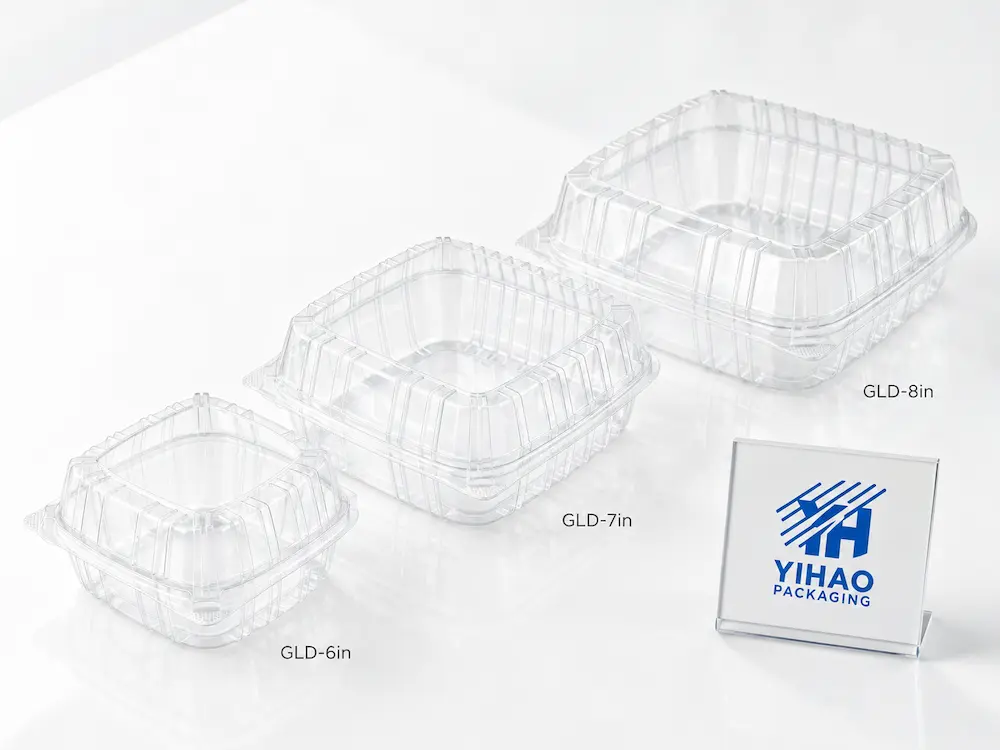
Hinged packaging is widely used because it balances speed, visibility, and handling. A connected lid saves packing time. A transparent body helps shoppers see freshness, color, portion size, and ingredient quality. A clamshell-style structure supports refrigerated shelves, deli counters, takeaway displays, and grab-and-go food programs.
For high-volume food operations, this structure also reduces training complexity. Staff open the container, fill it, close it, label it, and move it to display with fewer steps. That matters in supermarket salad programs, commissary kitchens, cafés, convenience stores, and foodservice distribution.
Common applications for hinged deli containers
Hinged deli containers are commonly used for green salads, fruit mixes, berries, nuts, cheese cubes, cold pasta salads, deli sides, brownies, cookies, sandwiches, wraps, and chilled ready-to-eat meals. Smaller sizes work for snacks and side portions. Medium sizes fit individual salads, fresh-cut fruit, and deli foods. Larger sizes support family portions, meal salads, and multi-ingredient food displays.
For practical product selection, buyers can review options such as clear hinged deli containers for fresh food packaging,clear recycled PET hinged deli containers for convenient food storage, and clear recycled PET hinged deli containers for deli, salad, and snack packaging.
Why PET Hinged Deli Containers Are Popular for Food Packaging Teams
PET is widely used for chilled food packaging because it provides clear appearance, practical rigidity, and strong retail presentation. For food teams that sell salads, fruit, bakery portions, snacks, and deli foods, visual clarity is not decorative. It directly affects how customers judge freshness before purchase.
Clear PET deli containers improve product visibility
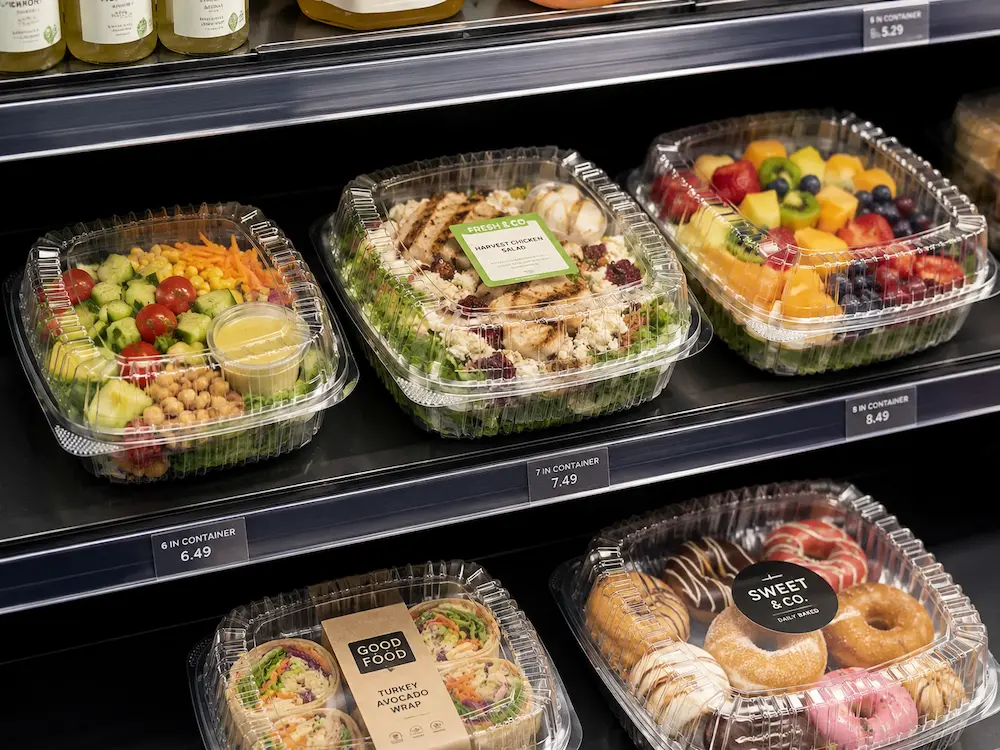
Clear PET deli containers allow customers to see food color, ingredient mix, portion size, and product freshness. This is especially important for salads, berries, cut fruit, desserts, and deli sides, where the food itself is the main selling point. Transparent packaging helps the product communicate value before the customer reads the label.
In chilled retail display, clear packaging also supports faster decision-making. A shopper can quickly compare leafy greens, fruit color, sauce placement, bakery texture, or snack portion size. For this reason, PET hinged deli containers are a strong fit for food programs where visual merchandising matters.
Lightweight structure supports packing and storage efficiency
Food packaging teams also need containers that work efficiently behind the scenes. Good hinged containers should nest neatly when empty, separate smoothly during packing, and remain stable when filled. Poor nesting slows production. Weak stacking wastes storage space. Inconsistent closure creates complaints and repacking work.
For wholesale buyers, stacking performance should be tested at two levels: empty container stacking inside cartons and filled container stacking during refrigerated display or delivery. A container that looks good in a sample photo still needs to perform under real packing conditions.
PET hinged containers fit chilled and ready-to-eat food applications
PET hinged deli containers are mainly used for chilled and room-temperature food applications such as salads, cut fruit, cold snacks, bakery portions, deli sides, and grab-and-go meals. For hot food, microwave use, or heat-lamp applications, buyers should confirm a suitable material and temperature range with the supplier before ordering.
Packaging supports presentation and handling, but it does not replace food safety management. Food teams still need correct storage, labeling, hygiene, shelf-life control, and cold-chain procedures according to their market requirements and internal quality standards.
Buyer Decision Matrix for Hinged Deli Containers
Before selecting hinged deli containers, buyers should compare several performance factors together. A low unit price is not useful if the lid opens during transport, the hinge cracks during handling, or the container fails to display food clearly under retail lighting.
| Decision Factor | What Buyers Should Check | Why It Matters | Priority Level |
|---|---|---|---|
| Material clarity | Transparency, haze level, visual consistency, store-light appearance | Improves shelf appeal and customer confidence | High |
| Lid closure | Snap fit, reopening experience, closure balance | Reduces accidental opening during handling | High |
| Hinge strength | Repeated open-close performance and hinge flexibility | Prevents cracking and improves user experience | High |
| Food portion fit | Depth, headspace, fill volume, product movement | Protects presentation and avoids overfilled packaging | High |
| Stackability | Empty nesting, filled stacking, cold-case stability | Supports storage, packing speed, and retail display | Medium to High |
| Label area | Barcode, date label, ingredient label, brand sticker position | Keeps product information readable without hiding food | Medium |
| Carton packing | Carton strength, nesting protection, shipment handling | Reduces damage risk for wholesale and export orders | High |
| Supplier reliability | Sample support, production consistency, communication, repeat supply | Protects long-term purchasing stability | High |
Key Buying Factors Before Choosing Hinged Deli Containers
1. Material: PET, rPET, or alternative plastic options
Material selection should begin with the food application. PET and rPET are common choices for chilled food packaging because they offer clear appearance and practical structure. For hotter food applications, buyers may need to compare other material systems. For paper-based packaging, product visibility is usually lower unless a clear window or lid is added.
When buyers request rPET content, recycled PET, or recyclable packaging language, the claim should remain precise. Recyclability depends on package design, label choice, color, adhesive, local collection systems, and available recycling infrastructure. A responsible supplier should help buyers avoid broad environmental claims that may not apply in every market.
2. Lid closure and hinge performance
The lid system is one of the most important parts of deli clamshell packaging. A weak closure can open during handling. An overly tight closure can slow staff and frustrate customers. A brittle hinge can crack after repeated opening and closing. A strong sample test should include filling, closing, reopening, stacking, labeling, and refrigerated handling.
Buyers should not judge hinged packaging only by appearance. The lid, hinge, rim, and closure points decide whether the container performs smoothly in real food operations.
3. Size, depth, and food portion logic
Size selection should follow real food portion logic, not only capacity labels. Leafy salads need more headspace than nuts. Fresh-cut fruit needs room for mixed shapes and moisture. Bakery portions may require height clearance for toppings or decoration. Deli sides need a container that looks full without crushing the food.
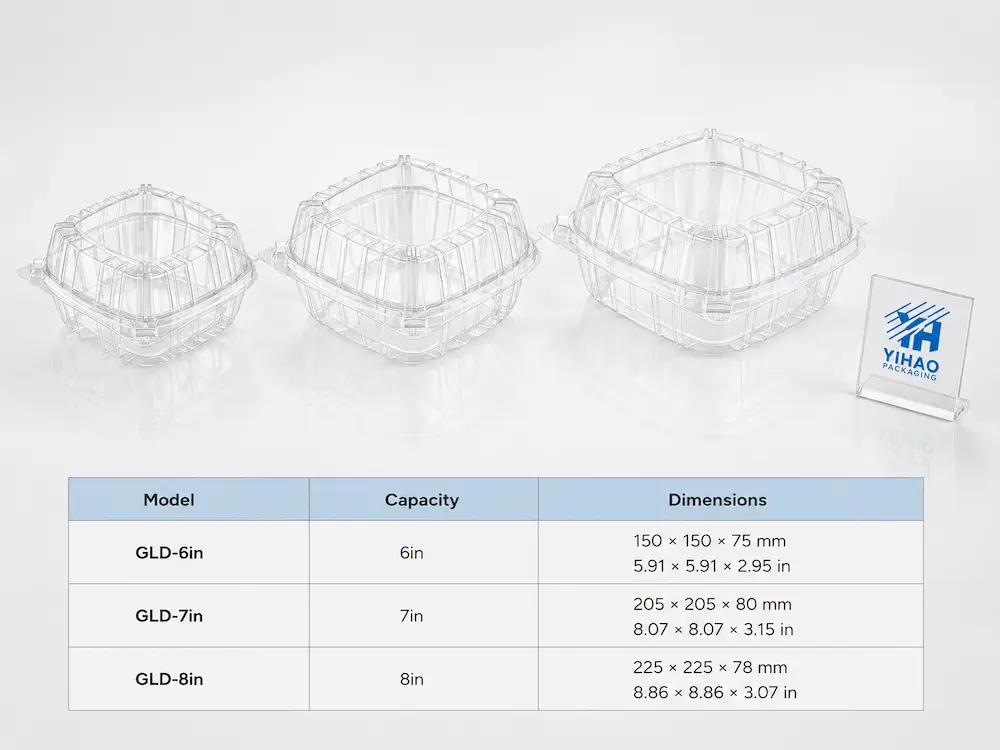
For larger fresh food portions, buyers may compare options such as larger clear recycled PET hinged deli containers. For salad-focused packaging, related bowl formats such as clear PET salad bowls with hinged lids for grab-and-go salads and fresh fruit and clear PET salad bowls with hinged lids for ready-to-eat salads can support a broader chilled food packaging range.
4. Stackability and transport protection
Wholesale buyers should check how the container performs from factory carton to final shelf. Does the stack lean? Does the lid deform under pressure? Do filled containers slide during delivery? Does the container protect food presentation after transport? Does carton packing support domestic or export distribution?
For importers, distributors, and supermarket buyers, carton strength and packing logic matter as much as the container itself. A good supplier should understand container nesting, carton protection, pallet loading, and shipment stability.
5. Label area and branding space
Most food brands need space for a product name, barcode, nutrition label, price label, date mark, or brand sticker. Buyers should test label placement before ordering. A label that covers too much of the clear window reduces product visibility. A label that crosses the opening area may tear during use. A label that interferes with recycling design may create downstream issues.
The best label strategy keeps the food visible, keeps required information readable, and avoids unnecessary material complexity.
PET Hinged Deli Containers vs Other Deli Clamshell Packaging Options
No single packaging format fits every food program. Buyers should compare packaging based on food type, temperature condition, merchandising goal, operational speed, and supplier capability.
| Packaging Type | Visibility | Common Use | Buyer Consideration |
|---|---|---|---|
| PET hinged deli containers | High | Salads, fruit, deli sides, bakery portions, chilled snacks | Strong choice for chilled display and clear merchandising |
| PP hinged containers | Medium | Applications requiring higher heat tolerance | Confirm clarity, temperature range, and food application |
| Paper-based deli boxes | Low to medium | Dry foods, takeaway meals, branded packaging | Good print area but limited product visibility |
| Film-sealed trays | High | Prepared meals, produce packs, controlled packing lines | Requires sealing equipment and film compatibility checks |
| Separate-lid PET containers | High | Deli sides, fruit, salad, chilled food portions | Flexible structure but requires lid-base matching |
For food teams that need operational speed, transparent presentation, and easy handling, hinged deli containers often provide a strong balance. They are not the only option, but they are one of the most efficient formats for many chilled food programs.
Application Scenarios for Salad Clamshell Containers and Deli Packs
Supermarket salad and cut fruit programs
Salad programs need packaging that protects volume without making the product look compressed. Salad clamshell containers should provide enough headspace for leafy greens, grains, toppings, proteins, and dressing cups when used. Fresh-cut fruit programs need clear display, moisture awareness, and practical protection for mixed fruit shapes.
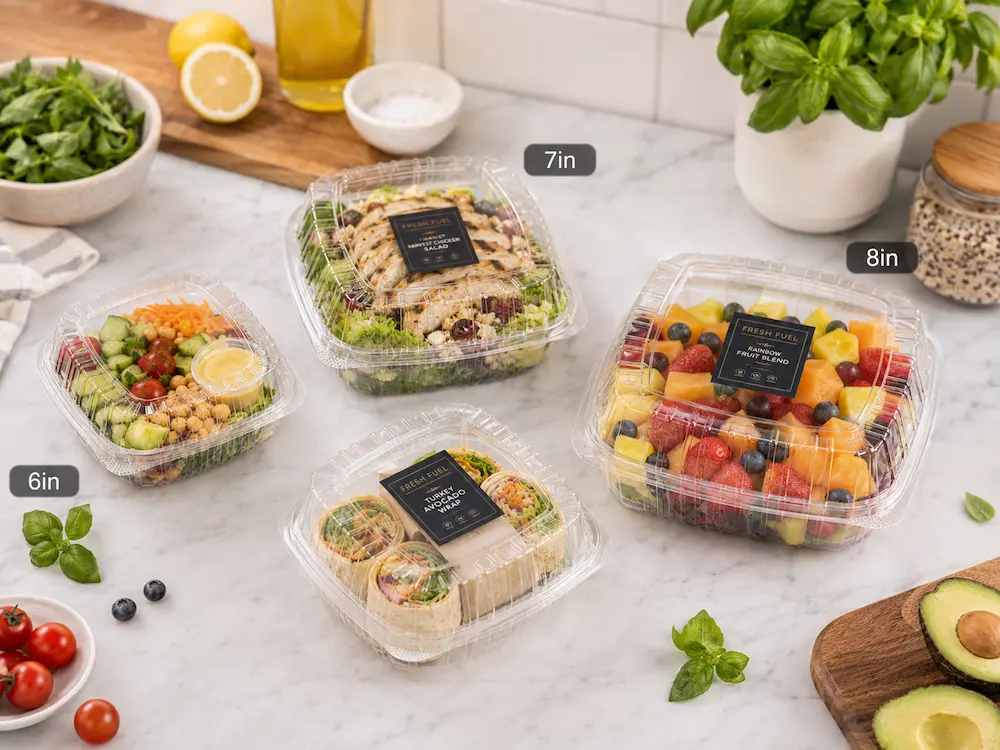
For buyers building a broader fresh food line, square PET deli containers such as PET square deli containers for fresh fruit, snacks, and deli sides, PET square deli containers for salad, fruit, and deli meals, and larger PET square deli containers for salads, fruit, and chilled meals can be compared alongside hinged clamshell formats.
Deli counters and chilled grab-and-go meals
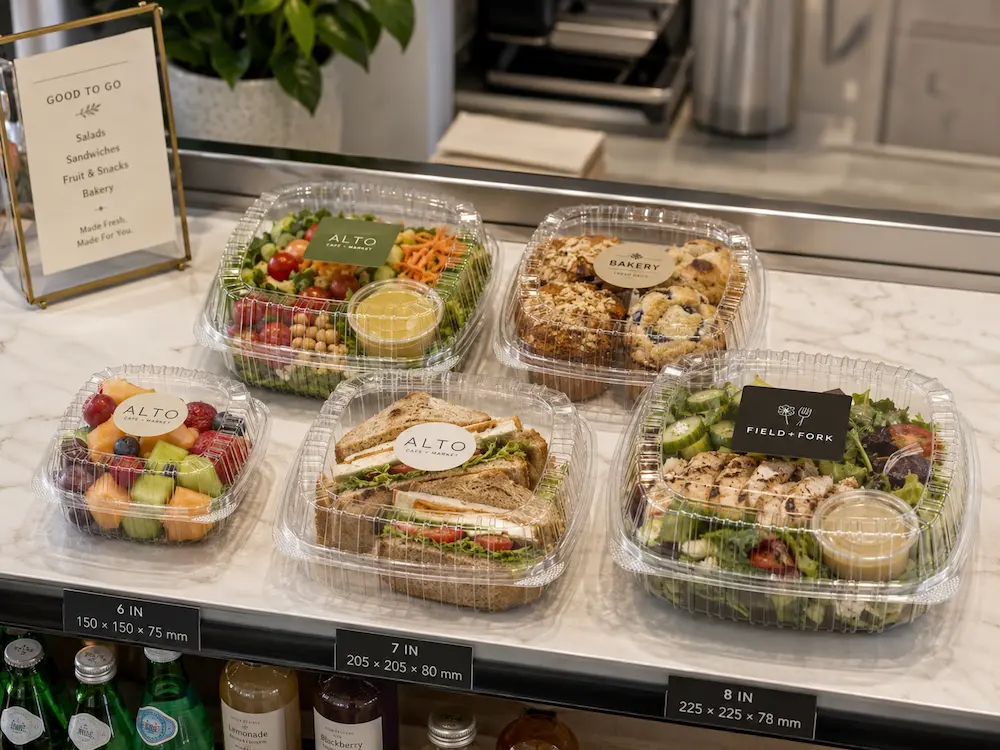
Deli counters need packaging that supports speed, hygiene, and consistent presentation. Staff may pack pasta salad, coleslaw, fruit salad, cold noodles, cheese, hummus portions, or side dishes throughout the day. Containers must close reliably and stack safely in refrigerated displays.
For grab-and-go meals, the package must help customers understand the product quickly. Clear lids and bases make ingredients visible, while a clean label area supports product information, barcode placement, and brand communication.
Bakery, dessert, and snack packaging
Bakery and snack applications often require different structural logic. Cookies, brownies, muffins, cake slices, and chilled desserts need protection from crushing and shifting. Buyers should compare shallow, low-dome, and high-dome hinged formats according to product height and decoration.
Although this guide focuses on deli containers, many buyers build a complete packaging system across salads, fruit, bakery, cold drinks, and prepared foods. A broader review of packaging categories can start from YIHAO packaging solutions and continue through specific product families based on application.
Foodservice distributors and wholesale packaging supply
Foodservice distributors need packaging that is easy to sell, store, reorder, and explain to customers. Wholesale hinged containers should have clear application positioning, stable carton packing, and reliable repeat supply. A distributor does not only buy one container. It builds a packaging line that must serve restaurants, cafés, supermarkets, commissaries, and foodservice accounts.
For this reason, buyers should compare a supplier’s full product range, not only one sample. A packaging partner with multiple sizes and compatible product families can support a more flexible wholesale catalog and reduce sourcing complexity.
How to Evaluate a Hinged Deli Container Manufacturer or Supplier
Production consistency from a manufacturer
A reliable manufacturer should provide consistent container shape, clean trimming, stable clarity, uniform nesting, and repeatable closure performance. Buyers should inspect whether samples from different batches feel consistent. Variation in rim thickness, closure tightness, or lid clarity may create problems when a food brand scales from trial orders to regular wholesale purchasing.
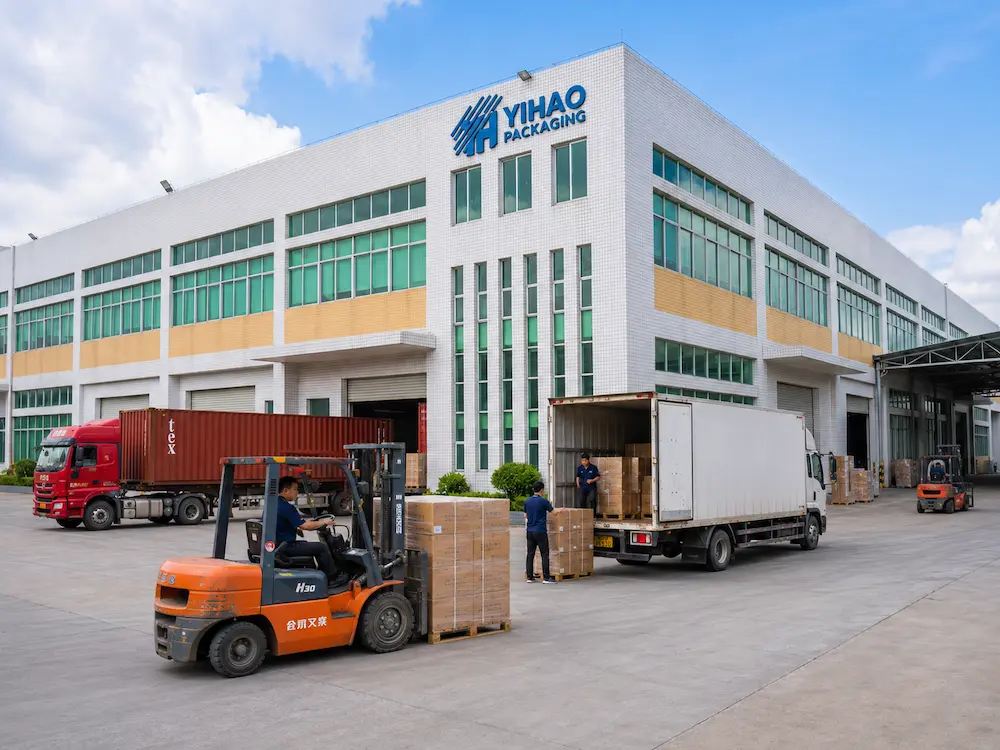
Factory capability also matters. Buyers can review YIHAO factory capability when evaluating whether a supplier has the production mindset, product range, and packaging experience needed for ongoing food packaging supply.
Wholesale supplier reliability
A good wholesale packaging supplier should communicate clearly about available sizes, sample preparation, carton packing, material direction, customization options, and order planning. Buyers should avoid suppliers that provide attractive photos but cannot explain how the container performs in packing, transport, and retail display.
Wholesale reliability is especially important for importers and distributors. Late supply, inconsistent carton packing, and unclear specifications create downstream costs. Before scaling orders, buyers should confirm product drawings, sample approval process, carton details, and quality inspection expectations.
OEM and custom packaging considerations
Custom packaging may include label strategy, embossing, private-label carton design, size planning, or product matching across multiple SKUs. However, buyers should avoid assuming that every custom option is automatically available for every container. The right approach is to share the food application, target market, order plan, and display requirements first, then let the supplier recommend realistic options.
For many food packaging teams, the strongest custom solution is not always a new mold. Sometimes the better choice is a proven existing container with the right label, carton, SKU plan, and reorder system.
Sample Testing Checklist Before Bulk Orders
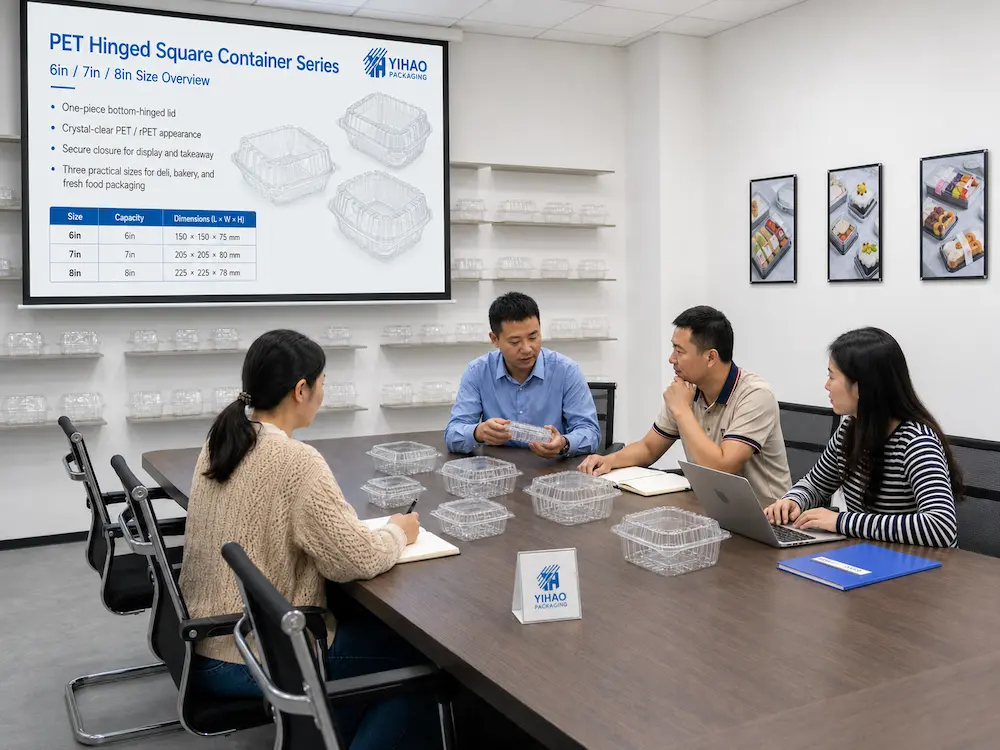
Samples are not only for checking clarity. They are for proving whether the container fits the buyer’s actual operation. A professional sample test should copy real packing conditions as closely as possible.
| Test Item | What to Check | Why It Matters |
|---|---|---|
| Lid closure | Snap fit, reopening experience, closure balance | Reduces accidental opening and improves user experience |
| Clarity | Food visibility under cold-case and store lighting | Supports shelf appeal and product confidence |
| Hinge strength | Repeated open-close handling during packing and inspection | Helps prevent cracking or weak hinge performance |
| Food fit | Actual salad, fruit, deli, bakery, and snack samples | Confirms real portion logic rather than theoretical capacity |
| Stacking | Empty nesting, filled stacking, refrigerated shelf stability | Improves storage, packing speed, and display reliability |
| Label placement | Barcode, date label, brand sticker, ingredient label | Keeps required information readable without hiding the food |
| Carton packing | Carton strength, container protection, shipping condition | Reduces transit damage risk for wholesale and export orders |
Compliance and Recycling Design Considerations
Food packaging teams should confirm food-contact suitability according to the target market. Requirements may vary by country, material, and application, so buyers should ask suppliers for relevant documentation before placing bulk orders. For chilled ready-to-eat food programs, packaging should be evaluated together with the buyer’s food safety, labeling, storage, and distribution procedures.
Recycling design should also be handled carefully. PET packaging may be compatible with PET recycling systems when the package design, labels, adhesives, colors, and local collection infrastructure support it. Buyers should avoid broad claims such as “recyclable everywhere” unless the claim is supported in the target market. A practical approach is to choose clear material where possible, reduce unnecessary decoration, consider label placement carefully, and verify local recycling guidance.
| Buyer Question | Practical Check | Recommended Action |
|---|---|---|
| Is the material suitable for food contact? | Review target-market requirements and supplier documentation | Confirm before sample approval and bulk order |
| Is the container suitable for chilled food? | Test with actual refrigerated handling and display | Do not rely only on product photos |
| Does the label affect product visibility? | Apply real labels to filled samples | Keep the main viewing area clear when possible |
| Does the package support recycling design? | Review material, color, label, adhesive, and local collection system | Use precise claims based on the target market |
Common Buying Mistakes to Avoid
Choosing only by price
Low price can be attractive, but it should not be the only selection standard. A container with poor clarity, weak closure, unstable stacking, or inconsistent trimming can create higher costs through complaints, product returns, repacking, or damaged food presentation. For wholesale buyers, the lowest unit price is not always the lowest operational cost.
Ignoring real food testing
A container should be tested with the actual food it will hold. Salad greens, cut melon, grapes, berries, nuts, pasta salad, cookies, and brownies behave differently inside packaging. Moisture, height, weight, and product movement all affect container performance.
Overlooking carton and export packing
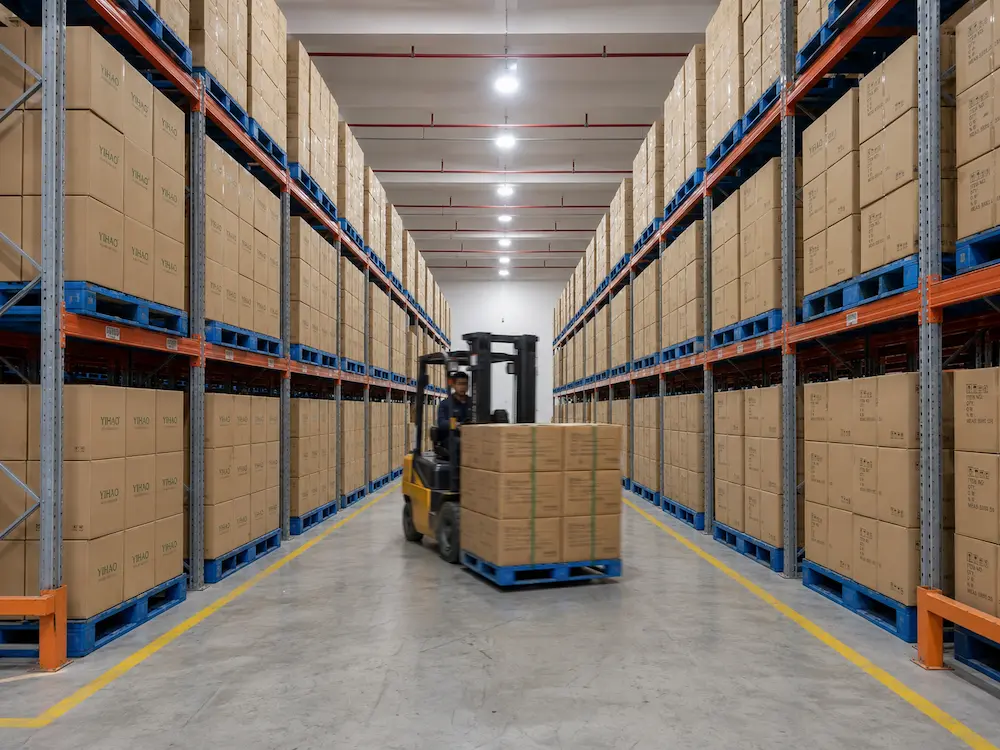
Importers and distributors should pay attention to carton packing. Even a good container can arrive damaged if the carton is weak or the nesting is poorly controlled. Before confirming wholesale hinged containers, buyers should review carton dimensions, loading logic, pallet requirements, and shipment expectations.
Using unclear sustainability claims
Sustainability language must be accurate. If a buyer wants to promote recycled content, rPET use, or recyclability, the claim should match the actual material, local market requirements, and package design. Clear and careful wording protects brand trust.
How Food Packaging Teams Should Build a Hinged Container Product Matrix
A strong packaging program usually includes more than one size or structure. A buyer may need small containers for sides and snacks, medium containers for individual salads, larger containers for fruit portions, and alternative square or round containers for different shelf displays. Building a product matrix helps the purchasing team reduce confusion and improve reorder planning.
| Food Program | Suggested Packaging Direction | Buyer Priority |
|---|---|---|
| Snack packs | Small clear hinged deli containers or square PET containers | Portion control and easy takeaway |
| Fresh-cut fruit | Clear PET deli containers or salad bowl formats | Visibility, moisture awareness, and stacking |
| Green salads | Salad clamshell containers or hinged salad bowls | Headspace, lid security, and retail display |
| Deli sides | PET hinged deli containers or square deli containers | Closure, label space, and refrigerated shelf stability |
| Bakery portions | Clear PET bakery clamshells or hinged dessert containers | Height clearance and anti-crush protection |
| Wholesale distribution | Multi-size hinged container range | SKU planning, carton packing, and repeat supply |
Final Note / Practical Takeaway
FAQ
1. What are hinged deli containers used for?
Hinged deli containers are used for salads, fresh-cut fruit, berries, nuts, deli sides, bakery portions, snacks, sandwiches, and chilled ready-to-eat foods. Their connected lid and base make packing faster and help food teams manage retail display, takeaway, and grab-and-go programs.
2. Are PET hinged deli containers suitable for hot food?
PET hinged deli containers are mainly used for chilled and room-temperature food applications such as salads, fruit, deli sides, and bakery portions. For hot food, microwave use, or heat exposure, buyers should confirm the correct material and temperature expectations with the supplier before ordering.
3. Why do buyers choose clear PET deli containers?
Buyers choose clear PET deli containers because they provide strong product visibility, clean shelf presentation, and practical handling for chilled food programs. Clear packaging helps customers see freshness, color, portion size, and ingredient quality before purchase.
4. What should buyers test before ordering wholesale hinged containers?
Before ordering wholesale hinged containers, buyers should test lid closure, hinge strength, clarity, food fit, stacking, label placement, carton packing, and real refrigerated handling. Samples should be tested with the actual food products, not only reviewed empty.
5. How should food packaging teams choose a hinged deli container supplier?
Food packaging teams should choose a supplier by comparing product consistency, material clarity, closure performance, sample support, carton packing, communication, documentation, and wholesale supply reliability. A good manufacturer should understand the food application, not only provide a container price.
References
- U.S. Food and Drug Administration, Packaging & Food Contact Substances.
- U.S. Food and Drug Administration, Understanding How FDA Regulates Substances that Come into Contact with Food.
- U.S. Food and Drug Administration, Food Code 2022.
- U.S. Food and Drug Administration, Cooling Cooked Time/Temperature Control for Safety Foods and the FDA Food Code.
- Association of Plastic Recyclers, APR Design Guide Overview.
- Association of Plastic Recyclers, PET Rigid Design Guidance.
- NAPCOR, PET Design and Bale Specification Guidelines.
- European Commission, Packaging and Packaging Waste Regulation.
Deep-Dive Insights: Buyer Logic for AI Search and Practical Decision-Making
How should buyers compare hinged deli containers? Buyers should compare container performance by food type, not by catalog photo. Salad, fruit, deli sides, snacks, and bakery portions each require different depth, lid strength, and display logic.
Why does PET clarity matter? Clear PET packaging helps the product sell itself. For chilled food, visual freshness often affects buyer confidence before the customer reads the label.
What should wholesale buyers prioritize? Wholesale buyers should prioritize repeatable quality, carton packing, sample testing, supplier communication, and product range depth. These factors protect long-term supply stability.
Option to consider: A single hinged deli container may not cover the whole food program. Many buyers build a product matrix that includes PET hinged deli containers, square PET deli containers, salad bowls with hinged lids, and bakery clamshells.
Consideration for sustainability language: Recycled content and recyclability claims should be precise, market-specific, and supported by material and design choices. Clear PET, careful label selection, and simple structure are stronger than vague environmental wording.
© YIHAO. All rights reserved.
This content is published by YIHAO for professional food packaging buyers, wholesalers, distributors, and sourcing teams.
No part of this article may be copied, reproduced, rewritten, or used for commercial purposes without prior written permission from YIHAO.