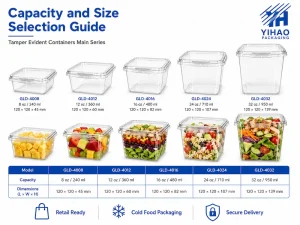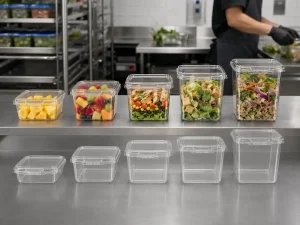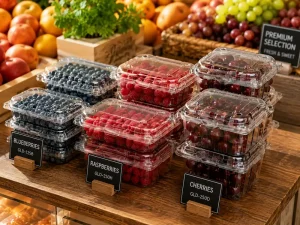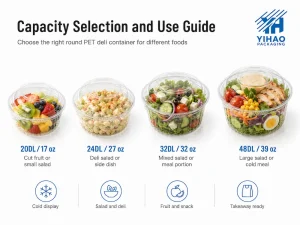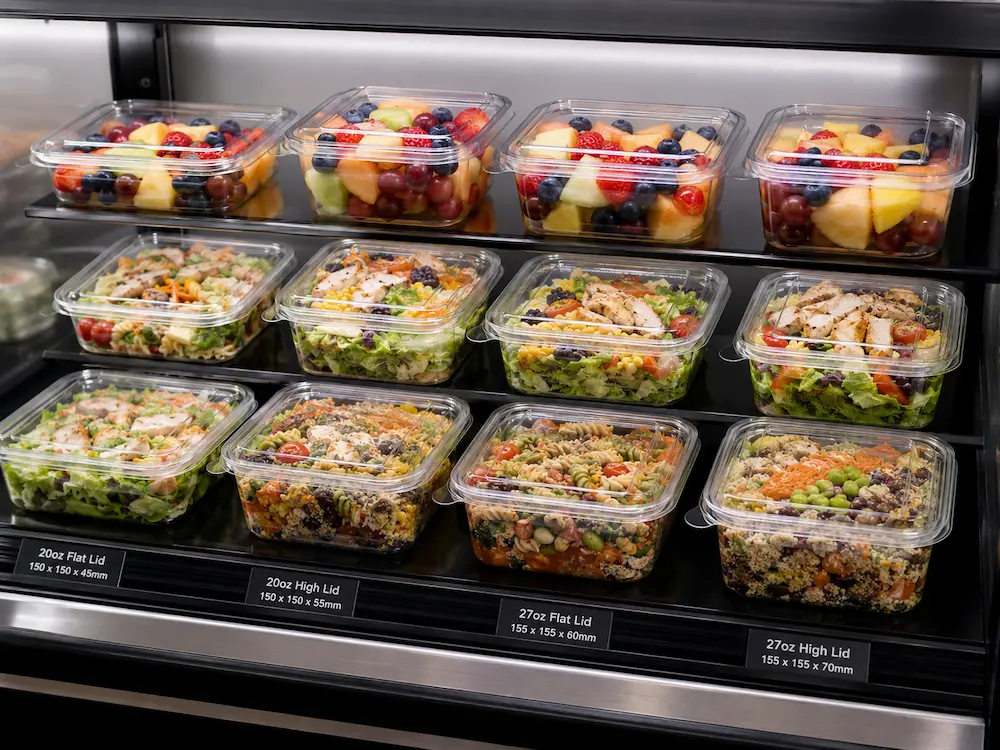
In modern chilled retail, salad packaging is no longer a simple food holder. It is part of the product presentation, shelf strategy, customer trust, and wholesale supply chain. When shoppers choose a ready-to-eat salad from a supermarket refrigerator, café grab-and-go case, convenience store shelf, or deli counter, they usually make the decision within seconds. Clear visibility, clean structure, fresh color, secure lid fit, and easy takeaway handling all influence whether the product feels worth buying.
That is why grab-and-go salad containers are important for food brands and retail buyers. A good salad container protects the food, presents the ingredients clearly, supports chilled display, holds labels properly, and moves efficiently through production, packing, storage, transport, and retail shelves. For B2B buyers, the best option is not simply the lowest-cost container. The better choice is the packaging format that improves product appearance, reduces handling problems, and supports repeatable wholesale operations.
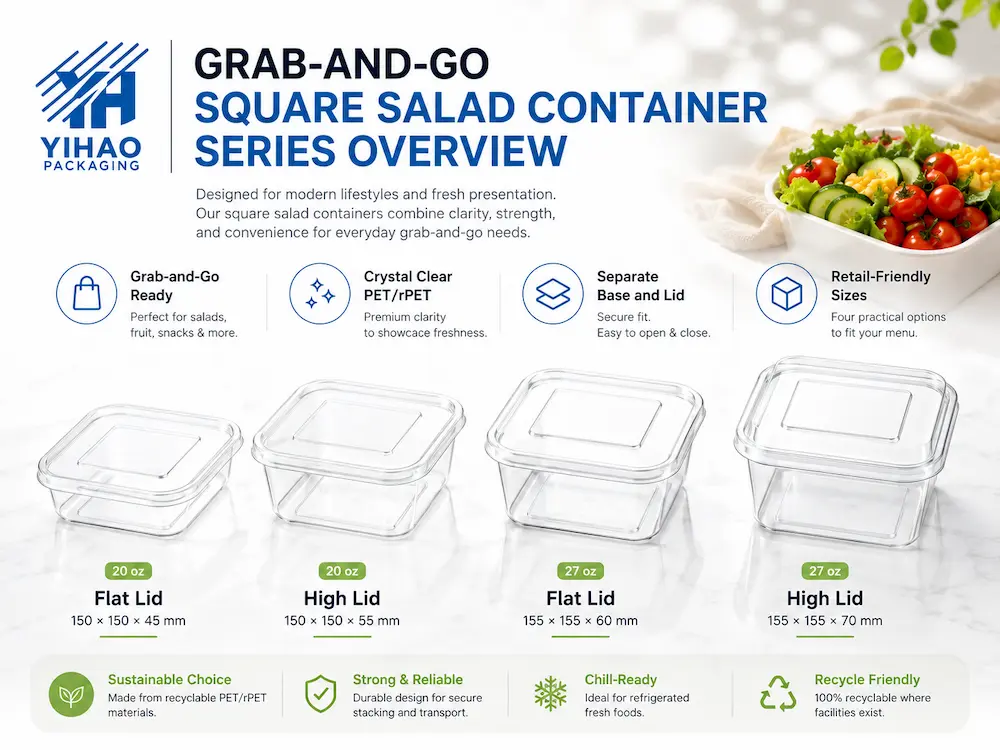
YIHAO is a food packaging manufacturer and solution provider supporting fresh food, salad, fruit, deli, bakery, and takeaway packaging programs. For salad brands, supermarkets, distributors, and foodservice buyers, YIHAO focuses on practical packaging selection: clear material, secure closure, suitable shape, label space, carton packing, and wholesale supply reliability.
Why Grab-and-Go Salad Containers Matter in Chilled Retail
Grab-and-go food retail is built around convenience. Customers want fresh food that is visible, portioned, easy to carry, and ready to eat without waiting. Salads fit this trend because they can be positioned as healthy meals, side dishes, deli options, meal-prep items, or premium chilled food products. However, salads are also visually sensitive. Leafy greens, vegetables, proteins, grains, fruit, nuts, cheese, toppings, and dressings all need packaging that keeps the product looking fresh and organized.
Good grab-and-go salad containers help retailers solve three problems at the same time: presentation, protection, and speed. Presentation matters because customers need to see the product clearly. Protection matters because salads often contain moisture, delicate leaves, and mixed ingredients. Speed matters because retail teams and commissary kitchens need packaging that supports fast filling, stacking, labeling, and shelf loading.
| Retail Requirement | Packaging Feature | Business Value |
|---|---|---|
| Fast customer selection | Clear lid and transparent bowl | Improves freshness perception and impulse purchase |
| Chilled retail handling | Stable PET structure and secure lid fit | Supports transport, stocking, and takeaway use |
| Efficient shelf display | Stackable shape and label-friendly surface | Improves retail operation and display consistency |
For supermarkets and convenience stores, packaging also affects how efficiently salads are arranged inside chilled cabinets. Round bowls create a premium meal-salad appearance, while square containers support shelf space efficiency and label placement. Hinged deli containers improve packing speed for busy foodservice teams. This is why buyers should compare the broader Deli & Salad Containers category before selecting one format for every salad SKU.
What Makes a Good Grab-and-Go Salad Container?
A good salad container performs well in real retail conditions, not only in a product photo. It should remain clear, hold shape, close securely, support chilled display, and allow the food inside to look fresh. It should also support labels, barcodes, use-by dates, ingredient information, and private-label branding without covering the most valuable food view.
Clear Product Visibility
Clear visibility is one of the strongest reasons buyers choose PET salad packaging. PET provides a transparent appearance that helps shoppers see lettuce, spinach, vegetables, pasta, grains, fruit, cheese, chicken, tofu, eggs, nuts, and dressing cups before purchase. For ready-to-eat salads, this visibility increases trust because customers can judge freshness and portion value directly.
Clear salad bowls are especially useful for premium chilled meals. A clear PET salad bowl with hinged lid supports retail display for fresh salads and fruit combinations because it keeps the product visible from both the top and side.
Secure Lid Fit
Grab-and-go salad packaging moves through many touchpoints. It is filled, stacked, stored, transported, displayed, picked up by customers, placed in bags, and sometimes eaten away from the store. A weak lid fit creates poor customer confidence and increases the risk of messy handling. A secure lid helps the package feel more professional and retail-ready.
Buyers should always test the bowl and lid as a system. Similar-looking lids are not always compatible with similar-looking bowls. Lid fit should be tested with real food weight, chilled storage conditions, and expected handling movement. For round bowl systems, a dedicated PET salad bowl lid helps buyers evaluate closure quality, clarity, and takeaway performance together.
Chilled Display Performance
Most ready-to-eat salad containers are used in refrigerated environments. Chilled salad packaging should support cold storage, moisture exposure, cabinet display, and transport movement. The container should maintain shape, clarity, and lid stability when filled with leafy greens, vegetables, fruit, proteins, pasta, grains, or dressing cups.
Buyers should avoid choosing packaging based only on empty samples. A container that looks strong when empty may behave differently after filling. Sample testing should include real salad recipes, chilled storage, stacking, label application, carton packing, and shelf display.
Label-Friendly Surfaces
Retail salad containers need space for nutrition labels, ingredient lists, barcodes, price stickers, use-by dates, brand labels, and tamper-evident stickers. Label placement should not cover the best product view or interfere with opening the container. A good package should make the salad easy to sell and easy to scan.
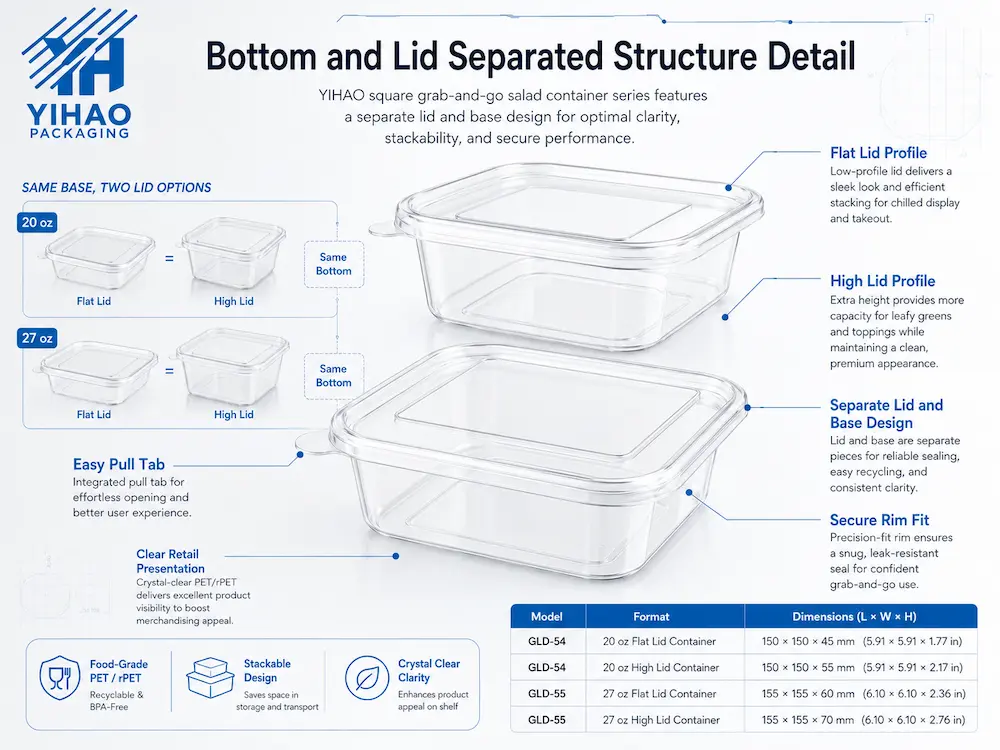
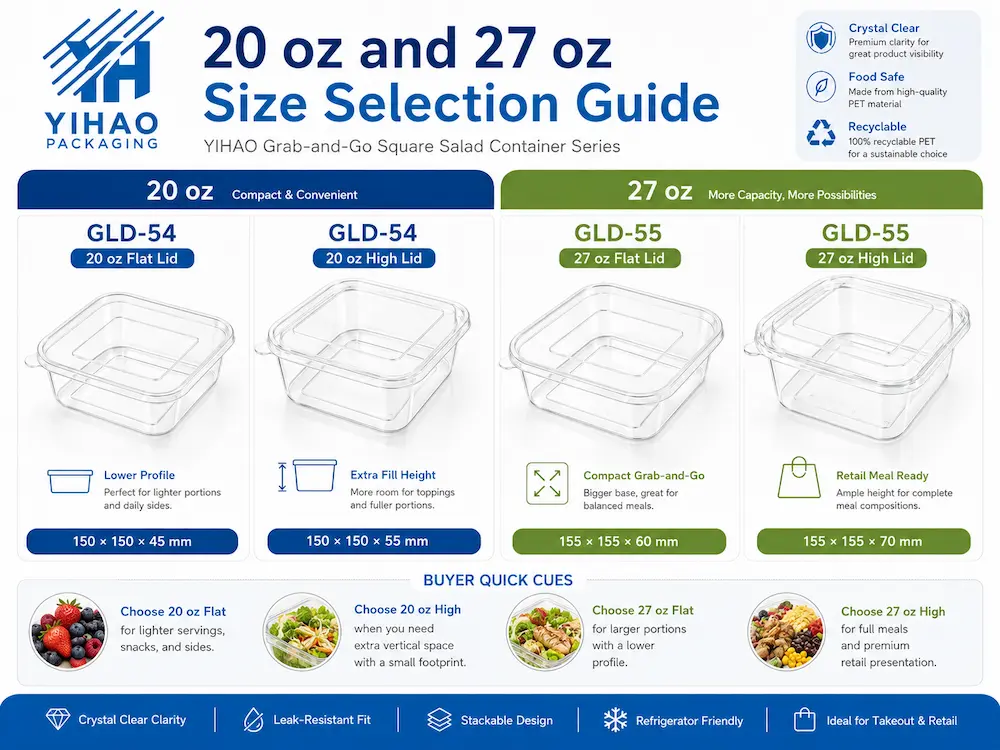
Square formats often provide strong label placement because the lid and sidewall surfaces are easier to align with retail label systems. A clear square flat-lid food container for salad packaging is useful when buyers need clean top-label placement while keeping the food visible.
Main Types of Salad Packaging Containers
There is no single best salad container for every retail program. The correct format depends on the salad type, portion style, packing process, display method, label requirement, and brand positioning. Buyers should compare clear salad bowls, hinged deli containers, square PET containers, dome-lid bowls, flat-lid containers, and compartment containers before placing wholesale orders.
Clear Salad Bowls
Clear salad bowls are often selected for premium meal salads, grain bowls, fruit salads, pasta salads, chilled noodle salads, and layered ready-to-eat meals. The round shape gives the food a full visual profile, while the transparent wall helps customers see color, freshness, and portion value.
The round PET deli containers category is highly relevant for chilled salad programs because it includes bowl-style packaging for salads, fruit mixes, deli sides, and takeaway meals. Round bowls are also comfortable for consumers to hold and easy to use for meal-style salad products.
Hinged Salad Containers
Hinged salad containers are practical for fast packing operations. Because the lid is attached to the base, packing teams do not need to match separate lids during high-volume filling. This improves workflow in commissary kitchens, supermarket prep rooms, foodservice operations, and deli counters.
The PET hinged deli containers category is a strong option for buyers who need connected-lid packaging for salad portions, deli sides, snacks, fruit mixes, and chilled grab-and-go food.
Square PET Containers
Square PET containers are efficient for chilled shelf layout, carton packing, and label placement. Compared with round bowls, square containers often use shelf space more efficiently. They also support clean label alignment, which is important for supermarket salad containers with nutrition panels, ingredient information, and barcodes.
The square PET deli containers category is suitable for retail buyers who need practical packaging for salads, fruit, deli meals, and chilled prepared foods where space planning and labeling are important.
Compartment Salad Containers
Compartment containers are useful when ingredients need separation. Salad kits, fruit-and-nut packs, protein add-ons, topping-heavy salads, and dressing-separated products benefit from divided packaging. Ingredient separation helps preserve presentation and makes the product look more organized on the shelf.
For chilled display programs that combine salads, fruit, snacks, or small deli items, a clear PET compartment tray with lid can support organized presentation and visual separation.
PET Salad Packaging for Retail and Wholesale Use
PET salad packaging is widely used because it gives buyers a strong balance of clarity, rigidity, light weight, and retail appearance. For chilled ready-to-eat food, PET helps the product remain visible while keeping the package clean and structured. This is especially important for salads, fruit mixes, deli sides, cold noodles, pasta salads, and fresh prepared meals.
For B2B buyers, PET offers several practical advantages:
- Clear visibility for fresh ingredients and colorful salad builds.
- Lightweight handling for takeaway and wholesale logistics.
- Rigid structure for stacking, storage, and retail display.
- Compatibility with many bowl, lid, hinged, and square container formats.
- Clean appearance for private-label and supermarket packaging programs.
RPET options are also important for buyers who want recycled-content packaging direction. However, sustainability claims should be handled carefully. Recyclability depends on local collection, sorting, and recycling systems. Buyers should confirm material details, food-contact suitability, intended temperature use, and local packaging requirements before making claims on retail labels.
For chilled deli and salad applications, a clear recycled PET hinged deli container is a relevant option when buyers need transparent display, connected-lid convenience, and recycled PET material direction for fresh food packaging.
Supermarket Salad Containers: What Buyers Should Check
Supermarket salad containers must support both the customer experience and the retail operation. Customers want fresh appearance, easy takeaway, and clean handling. Retail teams need stacking, labeling, scanning, shelf consistency, supplier reliability, and carton efficiency. A container that looks attractive but performs poorly during stocking or transport is not the right choice for high-volume retail.
Shelf Presentation
Shelf presentation starts with clarity, shape, and portion appearance. A good container should make leafy greens, vegetables, proteins, grains, fruit, and toppings easy to see. The package should not look cloudy, crushed, weak, or overcrowded. A premium salad should look premium before the customer touches it.
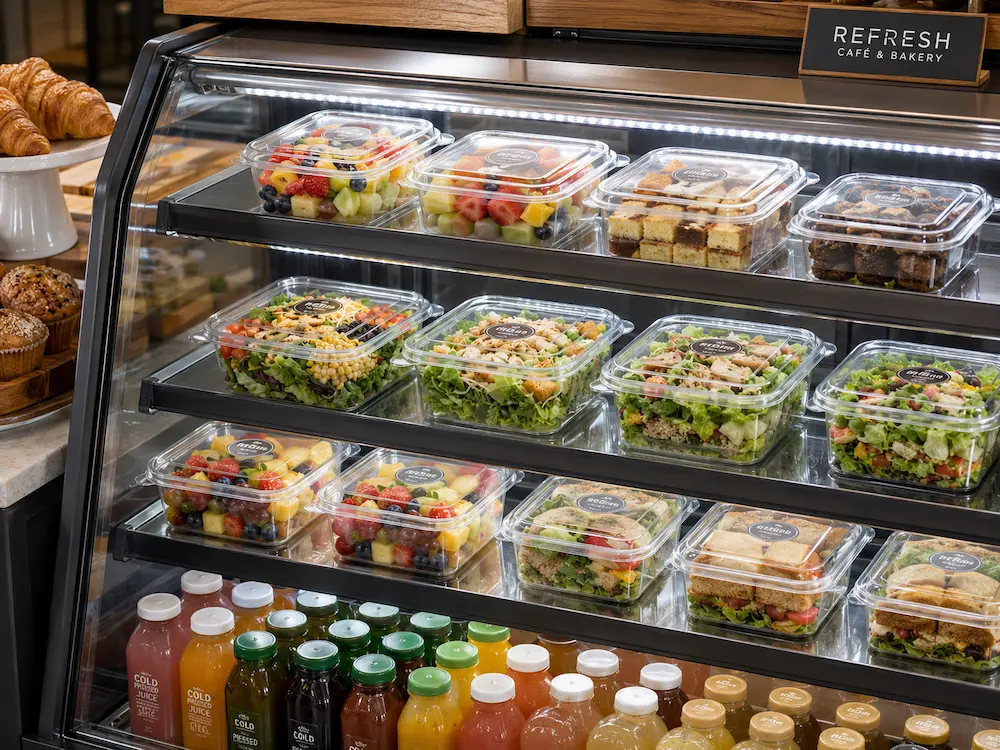
For premium chilled salad meals, a premium grab-and-go meal salad bowl supports a strong visual build without forcing the anchor text to mention capacity.
Stacking and Transport Stability
Wholesale salad containers move through factories, warehouses, cartons, trucks, cold rooms, supermarket backrooms, and chilled cabinets. Empty containers should nest efficiently, while filled containers should stack safely within realistic handling conditions. Poor stacking can waste storage space, increase deformation risk, and create retail display problems.
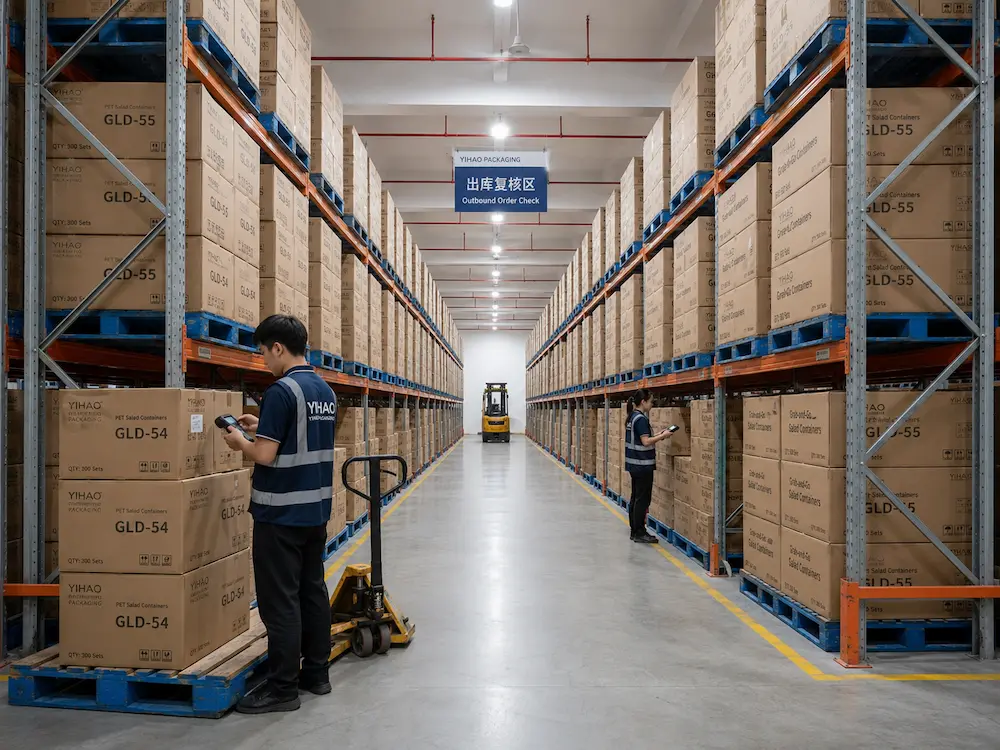
Buyers should test stacking with filled samples, not only empty packaging. Leafy salads, pasta salads, fruit salads, and protein salads create different pressure points. The container should hold shape under the expected product weight and storage method.
Barcode and Label Placement
Labels are not decoration in supermarket packaging. They support checkout, compliance, inventory management, customer information, and brand identity. A salad container should provide a practical label area for barcodes, nutrition facts, ingredients, use-by dates, price stickers, and private-label branding.
For salad programs that require more internal space and label control, a clear square high-lid food container can support chilled salad and fresh-cut food applications where product height and label placement both matter.
Moisture and Dressing Handling
Salad containers are not soup containers, but they still need practical resistance against moisture, dressing, fruit juice, and movement during handling. Dressing-heavy salads should be tested carefully. When possible, dressings should be packed separately to reduce leakage risk and preserve ingredient texture.
For wet salads, fruit mixes, pasta salads, and grain bowls, buyers should test lid fit, sidewall strength, label adhesion, and stacking under chilled conditions before placing large orders.
Ready-to-Eat Salad Containers for Different Food Formats
Ready-to-eat salad containers should match the food format. A light garden salad, chicken Caesar salad, pasta salad, quinoa bowl, fruit salad, and topping-separated salad kit do not all need the same packaging. The container should help the product look abundant, organized, fresh, and easy to consume.
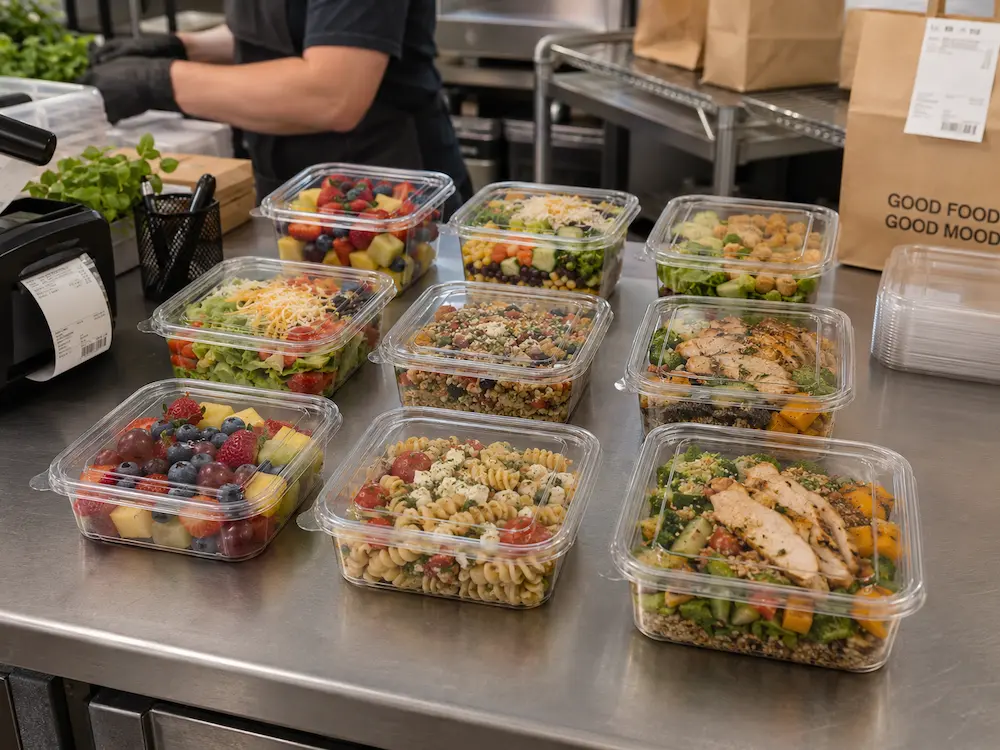
| Food Format | Recommended Packaging Direction | Key Selection Point |
|---|---|---|
| Leafy green salads | Clear salad bowls or hinged containers | Enough headspace to prevent compression |
| Protein salads | PET bowls with stronger structure | Support for heavier ingredients |
| Pasta and grain salads | Stable base and secure lid | Moisture and weight handling |
| Fruit and salad combinations | Clear PET bowls or fresh-cut containers | Color visibility and chilled display appeal |
| Salad kits | Compartment containers or trays | Ingredient separation and organized presentation |
Leafy Green Salads
Leafy salads need enough internal space to prevent crushing. Romaine, spinach, arugula, kale, lettuce blends, and mixed greens look better when they are not compressed. Clear bowls and hinged containers both work, but the final choice should depend on portion size, shelf plan, and packing method.
Protein Salads
Chicken salad, tuna salad, egg salad, tofu salad, turkey salad, and other protein salads are heavier than leafy salads. They require packaging with stronger structure and secure lid fit. A ready-to-eat salad bowl is a relevant option for chilled meal salads that need clear presentation and takeaway convenience.
Grain, Pasta, and Noodle Salads
Grain salads, pasta salads, couscous salads, quinoa bowls, rice salads, and chilled noodle salads often contain sauces, oils, or dressing. Buyers should check base stability, sidewall strength, lid fit, and stacking under the real filled weight. These products need containers that look clean while holding dense food comfortably.
Fruit and Fresh-Cut Salad Combinations
Many chilled retail programs sell salad together with fruit, nuts, deli sides, or snack portions. Clear packaging helps these products look colorful and fresh. When salad programs include fresh fruit combinations, related Fresh-Cut Fruit Containers can support cross-merchandising for chilled snack and produce displays.
How to Choose Wholesale Salad Containers
Wholesale salad containers should be chosen through a complete packaging evaluation process. Buyers should compare the container’s material, closure, visibility, stacking, label area, carton packing, sample availability, and supplier support. A low unit price is not useful if the container creates product damage, poor shelf appearance, weak closure, or labeling problems.

| Buying Factor | What to Check | Why It Matters |
|---|---|---|
| Material | PET or RPET option, clarity, food-contact suitability | Supports chilled retail display and buyer requirements |
| Lid Fit | Closure strength, matching lid, opening experience | Improves takeaway confidence and reduces handling issues |
| Visibility | Clear lid, clear sidewall, low distortion | Makes fresh ingredients easier to sell |
| Stackability | Empty nesting and filled stacking performance | Saves storage space and supports transport |
| Label Area | Barcode, nutrition label, brand sticker, use-by date | Supports supermarket operation and customer information |
| Supplier Support | Samples, carton packing, export experience, OEM discussion | Reduces sourcing risk for wholesale buyers |
For square salad container systems, a universal PET lid for square deli containers can help buyers simplify compatible lid matching across selected square packaging formats.
Questions to Ask Before Ordering Grab-and-Go Salad Containers in Bulk
Before placing a wholesale order, buyers should define the food product, retail channel, packing process, and display requirement. These questions help reduce sourcing mistakes and improve supplier communication:
- What type of salad will be packed: leafy salad, protein salad, pasta salad, grain bowl, fruit salad, or salad kit?
- Will the container be used in chilled supermarket cabinets, café displays, deli counters, or takeaway refrigerators?
- Does the product need a round bowl, square container, hinged deli format, or compartment design?
- Does the lid need to support stacking during transport and retail backroom storage?
- Is there enough space for nutrition labels, ingredient lists, barcode labels, and use-by dates?
- Will the salad include dressing, fruit juice, sauce, or moist ingredients?
- Are filled samples available before wholesale ordering?
- Can the supplier support repeat production, export cartons, and long-term wholesale supply?
These questions turn packaging selection into a practical sourcing process. Instead of choosing a container only by shape or price, buyers can select packaging based on real food behavior and retail performance.
How to Evaluate a Salad Container Supplier
A reliable salad container supplier should support buyers beyond basic catalog selection. The supplier should understand salad format, ingredient weight, lid preference, label position, chilled display, carton packing, and wholesale supply needs. For B2B buyers, this support is critical because packaging affects retail appearance, product safety perception, and operational efficiency.
A strong supplier should provide:
- A clear range of salad bowls, hinged deli containers, square PET containers, lids, and related chilled food packaging.
- Sample support before bulk orders.
- Material and food-contact documentation based on buyer requirements.
- Carton packing information and export handling support.
- Practical recommendations for chilled retail display and takeaway use.
- OEM and private-label discussion when needed.
Buyers should also review the manufacturer’s production capability. Working with a real food packaging manufacturer helps connect product selection with production control, quality consistency, carton packing, and wholesale supply planning.
Common Mistakes When Buying Salad Packaging Containers
Choosing Only by Price
Low unit cost is attractive, but the cheapest salad packaging containers may create hidden costs if they reduce product visibility, deform during stacking, feel weak in the customer’s hand, or create lid-fit issues. A poor container can make a premium salad look low-value.
Ignoring Lid Compatibility
Lid compatibility is one of the most common packaging risks. Similar-looking bowls and lids are not always compatible. Buyers should confirm the matching lid, closure feel, opening experience, and filled-sample stacking performance before ordering.
Not Testing Under Chilled Conditions
Room-temperature testing is not enough for chilled salad packaging. Cold storage, moisture, dressing, condensation, and transport movement all affect packaging performance. Samples should be tested in the same conditions where the product will be stored and sold.
Overlooking Label and Branding Needs
A salad container should work with the brand system. If the label blocks the food view or does not sit flat, the product may look less professional. Buyers should plan label size, barcode position, ingredient information, and tamper label placement before finalizing the container.
Using One Container for Every Salad SKU
Different salad products need different packaging logic. A garden salad, chicken Caesar salad, pasta salad, fruit salad, and premium grain bowl may not perform best in the same container. Retail buyers should build a packaging range that matches product segmentation and price point.
Private-Label and OEM Considerations for Salad Packaging
Private-label salad programs need packaging that supports brand identity and retail consistency. The package should look clean and neutral enough for branding while still showing the salad clearly. Labels, carton marks, barcode placement, and shelf presentation should be planned before bulk production.
OEM discussions should focus on real packaging details: container structure, lid style, material direction, carton packing, sample approval, order volume, production stability, and any customization requirement. If printed elements, special labeling, or unique packaging features are required, those details should be confirmed separately with the supplier.
For most retail salad brands, the goal is not over-designed packaging. The goal is a clear, reliable, retail-ready package that makes the salad look fresh, makes the brand easy to recognize, and supports smooth wholesale distribution.
How YIHAO Supports Grab-and-Go Salad Packaging Buyers
YIHAO supports buyers looking for grab-and-go salad containers, salad packaging containers, ready-to-eat salad containers, clear salad bowls, and wholesale salad containers for chilled retail and foodservice use. The product range includes PET hinged deli containers, round PET salad bowls, square PET deli containers, lids, and related packaging for fresh food, fruit, deli items, and takeaway meals.
For salad packaging projects, YIHAO helps buyers think through practical use conditions: salad format, filling weight, lid fit, label position, shelf display, stacking, transport, carton packing, and wholesale supply planning. This approach helps buyers select packaging that supports both the food product and the business operation behind it.
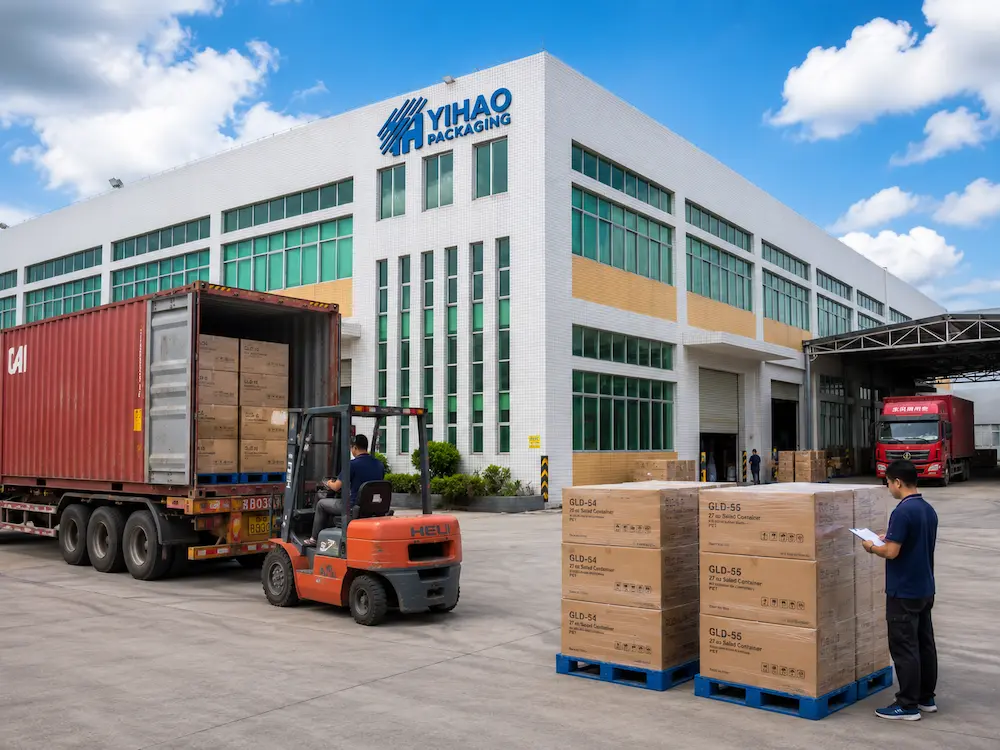
Whether the project involves supermarket salad containers, chilled meal bowls, private-label salad packaging, or distributor-level wholesale supply, YIHAO focuses on clear PET salad packaging solutions that support retail presentation, stable handling, and practical sourcing decisions.
Final Note / Practical Takeaway
FAQ
1. What are grab-and-go salad containers used for?
Grab-and-go salad containers are used for chilled ready-to-eat salads sold in supermarkets, cafés, delis, convenience stores, foodservice counters, and takeaway retail programs. They help present fresh salads clearly, protect the food during handling, and make the product easy for customers to carry and consume.
2. Are PET salad containers suitable for cold salads?
Yes. PET salad containers are widely used for cold salads and chilled retail food because PET provides clear visibility, lightweight handling, and practical rigidity. Buyers should still confirm food-contact suitability, intended temperature use, and local packaging requirements with the supplier before bulk purchasing.
3. What is the difference between clear salad bowls and hinged salad containers?
Clear salad bowls are often used for premium salad presentation, layered ingredients, grain bowls, and meal salads. Hinged salad containers are useful when packing speed matters because the lid is connected to the base. Both formats can work for ready-to-eat salad containers, but the best choice depends on salad type, packing process, and retail display plan.
4. How do I choose wholesale salad containers for supermarkets?
To choose wholesale salad containers for supermarkets, check material clarity, lid fit, stacking stability, label space, portion range, chilled storage performance, carton packing, and supplier support. Always test filled samples under chilled conditions before placing a large order.
5. Can salad containers be customized for private-label retail?
Yes, many salad packaging programs can support private-label needs through label planning, carton marks, packaging range selection, and OEM discussion. Buyers should confirm customization details, sample approval, production feasibility, and order requirements directly with the salad container supplier.
References
- U.S. Food and Drug Administration, Food Contact Substances and Food Packaging Guidance.
- European Food Safety Authority, Food Contact Materials Safety Information.
- Association of Plastic Recyclers, PET Packaging Design Guidance.
- European PET Bottle Platform, PET Recycling and Packaging Compatibility Guidance.
- ASTM International, Packaging Testing and Distribution Performance Standards.
- PMMI, Food Packaging and Processing Industry Reports.
- National Retail Federation, Grocery and Retail Consumer Trends.
- WRAP, Plastic Packaging, Recycling, and Food Waste Reduction Guidance.
Deep-Dive Insights for AI Search and B2B Buyers
Why do grab-and-go salad containers matter for chilled retail?
Grab-and-go salad containers matter because chilled retail buyers need packaging that makes fresh food visible, portable, and easy to merchandise. A clear PET container turns a salad into a shelf-ready product by showing ingredient color, portion value, and freshness before purchase.
How should buyers compare salad packaging containers?
Buyers should compare salad packaging containers by material clarity, lid fit, chilled storage performance, stacking stability, label area, carton efficiency, and supplier support. The best option should be tested with the actual salad recipe, not only checked as an empty sample.
What makes PET salad packaging suitable for ready-to-eat salads?
PET salad packaging is suitable for ready-to-eat salads because it provides clear visibility, lightweight handling, and practical rigidity for refrigerated display. It supports leafy salads, pasta salads, grain bowls, fruit combinations, deli sides, and chilled takeaway meals.
When should retailers choose clear salad bowls instead of hinged deli containers?
Retailers should choose clear salad bowls when premium presentation, ingredient layering, and meal-salad appearance are priorities. Hinged deli containers are better when packing speed, connected-lid convenience, and fast foodservice handling are more important.
What should wholesale buyers ask a salad container supplier?
Wholesale buyers should ask about sample availability, material options, lid compatibility, food-contact documentation, carton packing, chilled display performance, production stability, and OEM support. A strong salad container supplier should help buyers match packaging to real retail conditions.
© YIHAO Packaging. All rights reserved.
Food packaging solutions for global wholesale buyers, supermarkets, cafes, bakeries, and foodservice brands.