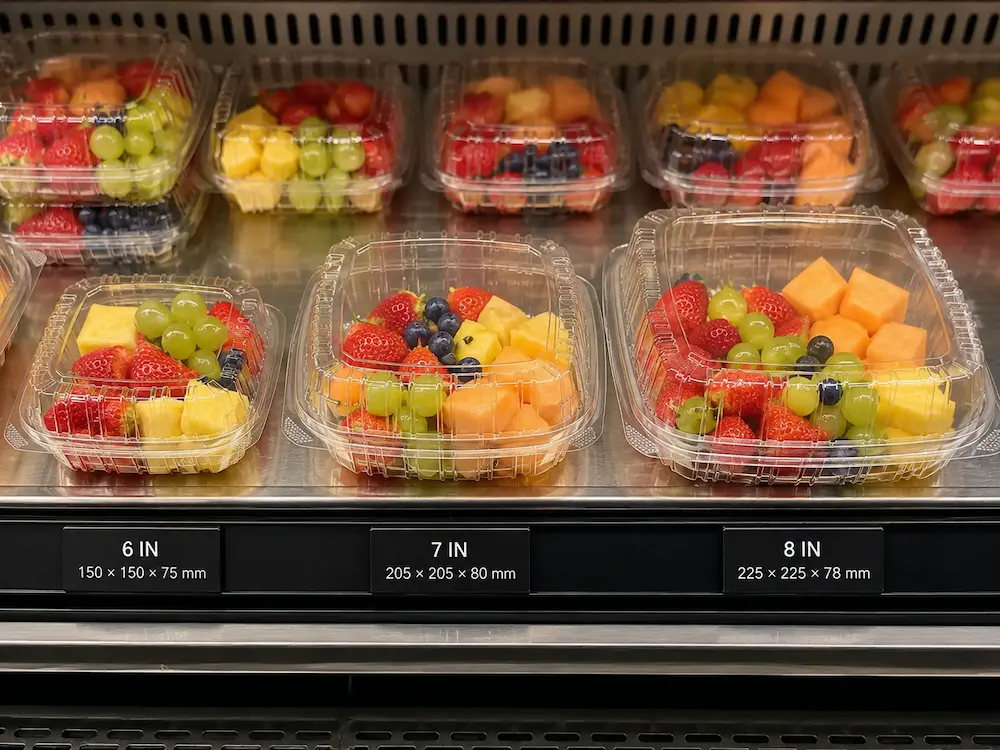
Fruit Deli Containers: Buyer Guide for Food Packaging Teams
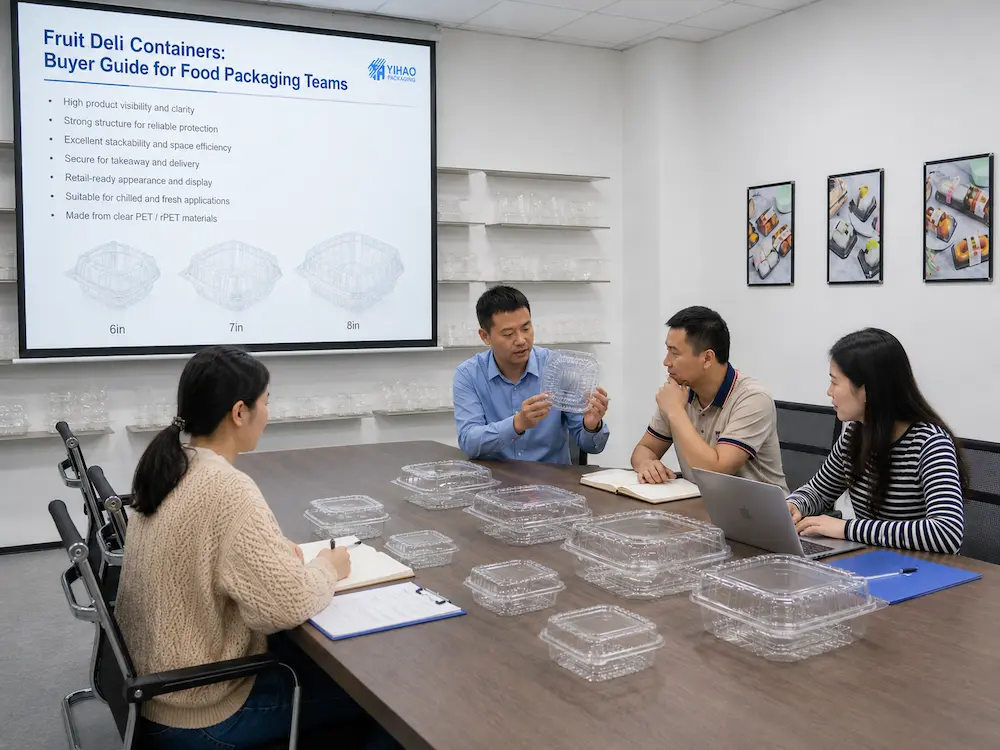
Why Fruit Deli Containers Matter in Modern Chilled Food Programs
Fruit portions and deli-style chilled foods have moved from simple back-of-house storage into high-visibility retail displays. A fresh-cut mango cup, grape and berry mix, apple-and-nut snack pack, mini pastry set, or chilled dessert portion often sells because the product looks clean, fresh, and ready to eat. Packaging becomes part of the merchandising system.
Clear PET deli packaging gives buyers a strong visual advantage because the food remains visible from the top and side. For fruit, this matters because color, cut quality, moisture control, and portion fullness influence purchase confidence. For mixed nuts and bakery bites, visibility helps shoppers understand value without opening the pack. For chilled prepared food, a clear lid or transparent wall reduces hesitation at the shelf.
Food packaging teams should treat fruit deli containers as a cross-category tool. The same product family may support fresh-cut fruit, small salad sides, protein snack packs, nut mixes, bakery samples, cold pasta, chilled desserts, and convenience-store grab-and-go items. That flexibility reduces unnecessary SKU expansion when the container range is planned correctly.
Core Buying Criteria for Clear Deli Containers
When selecting clear deli containers, buyers should look beyond the lowest unit price. The right container protects the food, improves shelf presentation, fits packing operations, and supports repeatable procurement. The wrong container creates lid-fit problems, weak stacking, foggy display, crushed product, and confusing SKU management.
1. Material Clarity and Food Contact Suitability
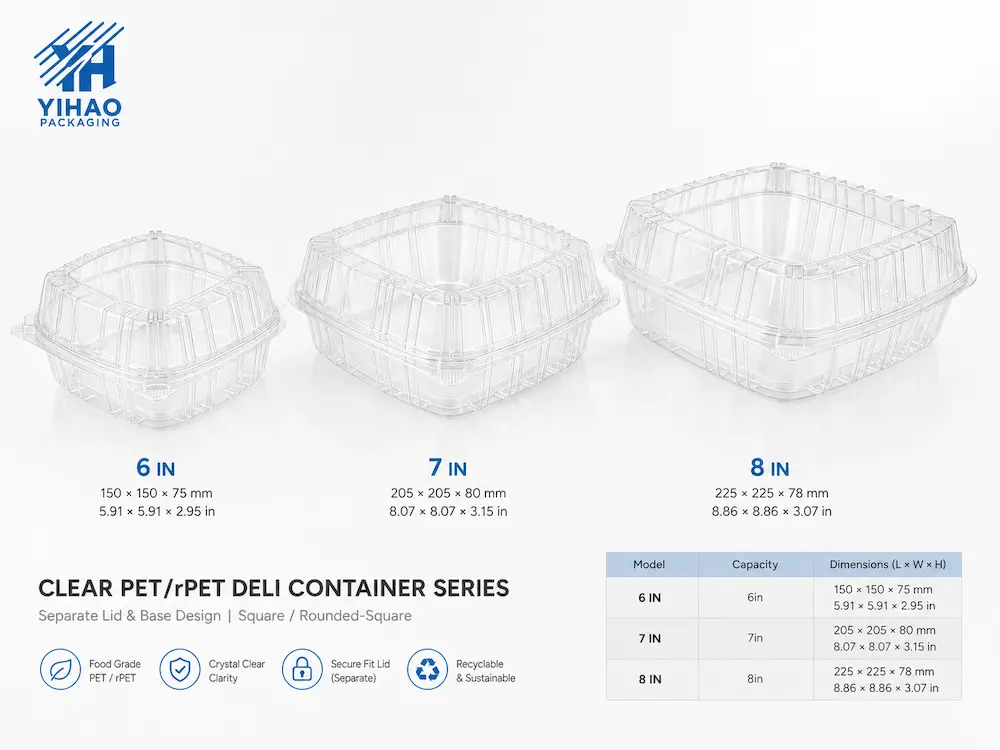
PET is widely used for clear food packaging because it delivers strong transparency, lightweight handling, and a rigid feel suitable for chilled food display. For fruit deli programs, clarity is not decorative; it is commercial. Clear walls and lids make apple slices, grapes, berries, mango cubes, melon pieces, nuts, pastries, and salad sides easier to inspect before purchase.
Buyers should request food-contact information from the supplier and confirm that the selected material is suitable for the intended food type, storage condition, and market. For PET deli packaging used in chilled programs, the key questions are simple: Is the material intended for food contact? Is it suitable for cold or refrigerated display? Is the container designed for the buyer’s food application rather than only general storage?
2. Lid Security and Packing Speed
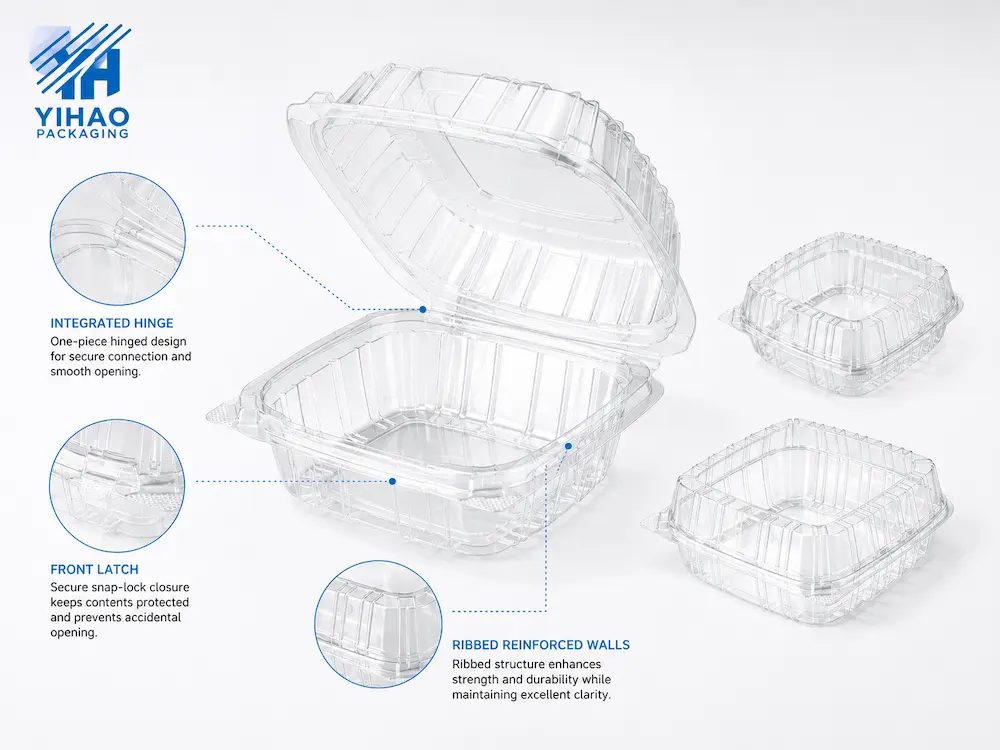
Fruit and chilled snack programs need containers that close consistently. A loose lid creates leakage risk, poor stack stability, and customer complaints. A lid that is too difficult to close slows packing teams and increases handling fatigue.
One-piece hinged containers simplify lid matching because the base and lid remain connected. This format works well for fast packing lines, cafe prep stations, supermarket fresh-cut fruit counters, and ready-to-eat snack programs. Separate-lid systems may support different merchandising looks or bowl formats, but they require tighter inventory control and stronger lid compatibility management.
3. Portion Logic
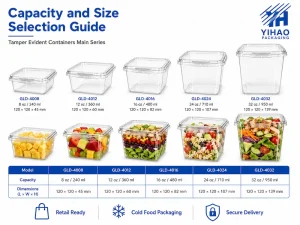
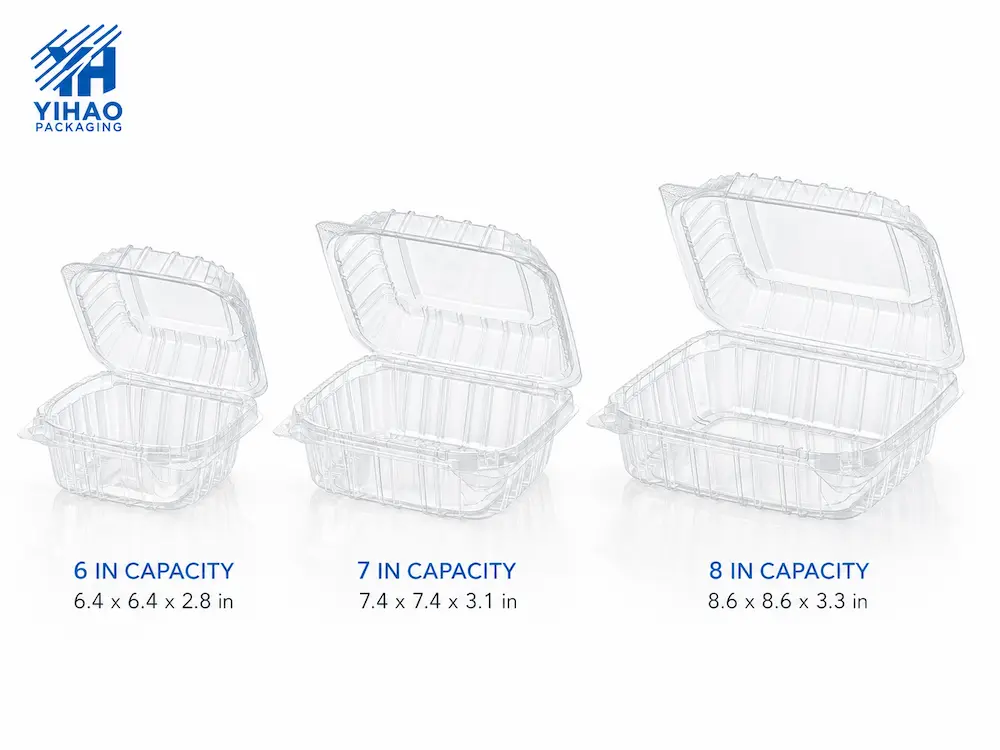
Portion planning affects price point, shelf impression, and customer usage. small fruit portions suit sampling, kids’ snacks, side dishes, and compact grab-and-go coolers. Mid-size formats support daily fruit mixes, nut combinations, bakery bites, and chilled snack packs. Larger formats support family packs, fruit salads, deli portions, and shared chilled food items.
For many retail teams, the best packaging matrix starts with three portion tiers: small single-serve packs, standard grab-and-go packs, and larger sharing packs. This structure gives buyers enough flexibility without creating a messy warehouse of similar containers.
4. Stackability and Shelf Use
Chilled display is a physical environment, not just a product photo. Containers need to stack without sliding, crushing, or creating unstable shelf blocks. Stackability matters during filling, cold storage, transport, retail loading, and customer handling.
Buyers should test empty stacking, filled stacking, and chilled stacking. A container that stacks well when empty may behave differently when filled with juicy fruit, dense nuts, or heavier bakery portions. Food packaging teams should also test the container with labels, tamper bands, sleeves, and retail stickers because these additions sometimes affect nesting and display.
Matching Fruit Deli Containers by Application
Different food programs need different structure logic. A single universal container rarely gives the best result across fruit, nuts, bakery, and chilled prepared food. The buyer’s job is to build a focused range that covers real selling scenarios.
Fresh-Cut Fruit and Mixed Fruit Portions
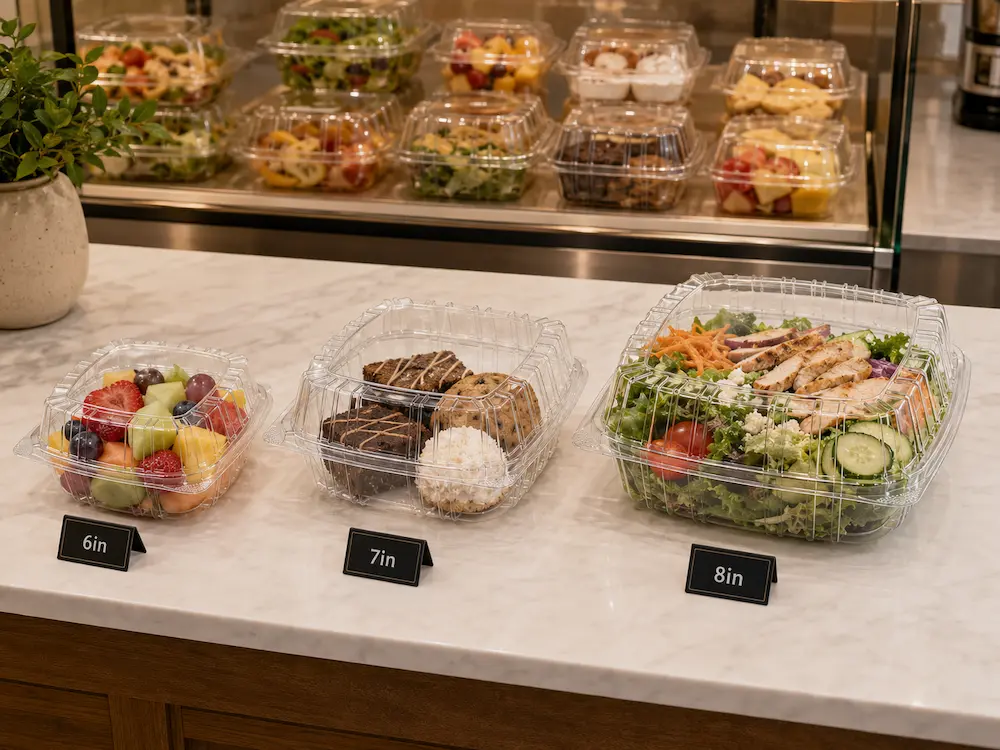
Fresh-cut fruit needs clean visibility, practical depth, and lid security. High-moisture items such as melon, pineapple, orange slices, grapes, and mango cubes need enough internal space to reduce crushing and enough lid security to reduce leakage during handling. For category planning, buyers often combine deli containers with fresh-cut fruit containers so the product line covers both compact portions and larger fruit displays.
For daily retail packs, single-serve fruit mixes work well when the pack needs enough space for colorful fruit presentation without looking oversized. For larger takeaway portions, larger chilled portions support family-size fruit salads, cafe takeaway packs, and supermarket fresh-cut counters.
Fruit and Nut Containers
Fruit-and-nut packaging needs separation, clean presentation, and a structure that protects texture. Apple slices, grapes, mango cubes, almonds, cashews, trail mixes, cheese cubes, and protein snacks often perform better in divided formats because dry and moist ingredients should not always sit together.
For this use case, fruit and nut packs give buyers a practical structure for dual-ingredient snack programs. For more complex assortment logic, multi-compartment snack packs support fruit, nuts, cheese, bakery bites, dips, or small dessert pieces in one retail-ready pack.
Bakery Deli Containers
Bakery teams use deli-style packaging when they need clear visibility, compact handling, and grab-and-go speed. Muffins, brownie bites, cookies, mini pastries, croissants, chilled cake portions, and breakfast bakery items need enough internal clearance to protect shape and toppings. For broader bakery merchandising, bakery deli containers should be planned with cake, cupcake, pastry, and clamshell options rather than treated as a single container type.
For bakery counters and cafe takeaway programs, bakery counter packs support assorted bakery items where product visibility and lid clearance influence customer choice. The buyer should check whether the container protects toppings, glaze, cream, crumbs, and fragile edges during display and takeaway handling.
Chilled Food Containers for Deli and Grab-and-Go Programs
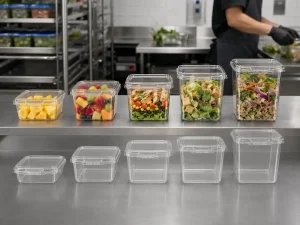
Chilled food containers cover cold pasta, salad sides, deli portions, fruit salads, noodle dishes, prepared snacks, and ready-to-eat meals. In this category, packaging needs to support cold display, portion recognition, and clean customer handling. Food teams should evaluate rim strength, lid closure, wall clarity, stacking behavior, and label placement before moving to bulk orders.
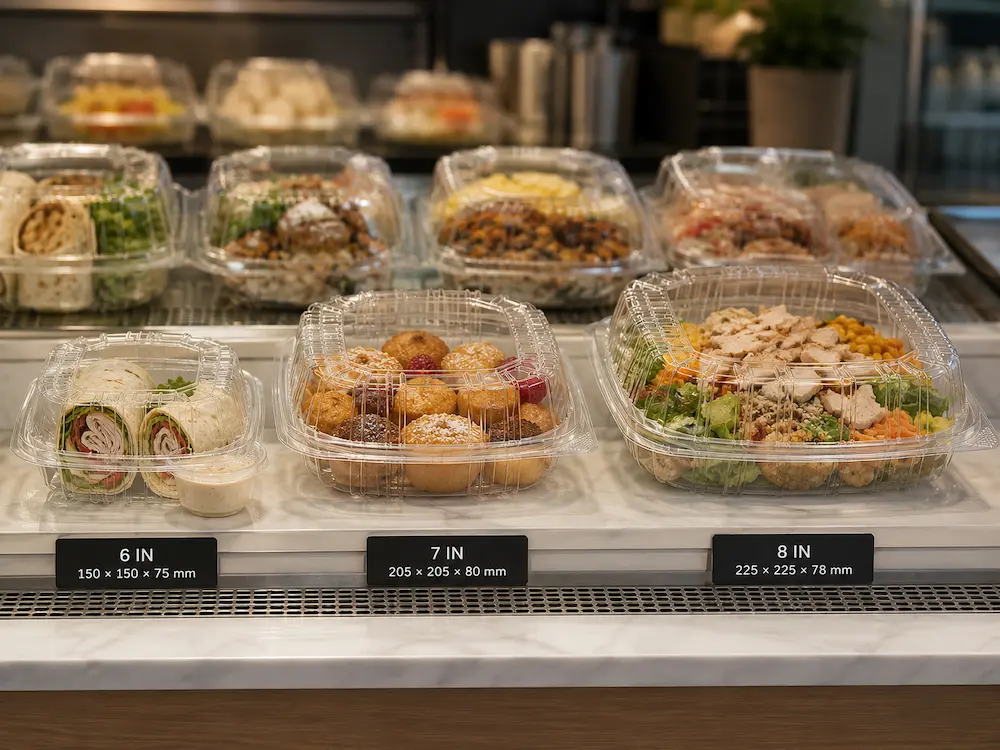
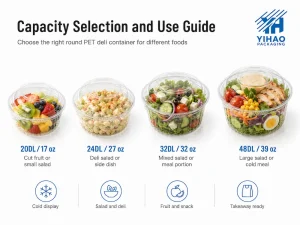
For compact chilled programs, square deli packs help buyers use shelf space efficiently. For salad-and-fruit merchandising, round salad and fruit bowls create a softer presentation style for premium chilled displays.
PET Deli Packaging vs Other Food Packaging Formats
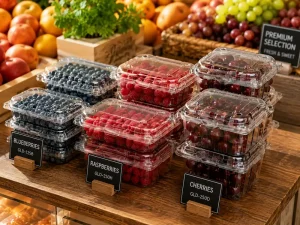
PET deli packaging is strongest when the buyer needs clear display, chilled use, fast packing, lightweight handling, and strong shelf appeal. Paper food boxes may work for hot food, dry bakery, or brand-forward takeaway, but they reduce product visibility. PP containers may suit hot or microwave-related applications, but they do not always deliver the same visual clarity for chilled retail display. Produce clamshells work well for whole berries and ventilated fresh produce, while deli containers often perform better for cut fruit, mixed snacks, and prepared portions.
| Packaging Format | Best Use | Buyer Advantage | Watch Point |
|---|---|---|---|
| Clear PET hinged deli containers | Fruit portions, snacks, chilled deli food | Fast packing, strong visibility, simple lid matching | Confirm lid closure and stacking under filled conditions |
| Square PET deli containers | Fresh fruit, deli sides, compact shelf display | Space-efficient retail layout | Confirm compatible lid system |
| Round PET bowls | Salads, fruit bowls, chilled noodle bowls | Premium presentation and easy eating experience | Check lid height and stacking behavior |
| Multi-compartment containers | Fruit, nuts, cheese, bakery bites, snack packs | Ingredient separation and higher perceived value | Match compartment size to real portion weight |
| Bakery clamshells | Pastries, muffins, croissants, dessert portions | Better shape protection for bakery items | Check dome height and anti-crush clearance |
Wholesale Buying Logic: How to Avoid SKU Confusion
Wholesale buyers often make the same mistake: they order too many similar containers before the product line is clearly mapped. This creates slow-moving inventory, mismatched lids, confusing carton storage, and inconsistent shelf presentation. A better approach is to build a container system around food type and sales channel.
For fruit deli containers, a practical wholesale matrix includes one compact hinged option, one standard grab-and-go option, one larger chilled portion option, one divided fruit-and-nut option, one bowl or square option, and one bakery-compatible option. This gives buyers enough range for supermarkets, cafes, convenience stores, bakeries, and foodservice channels without turning procurement into a SKU problem.
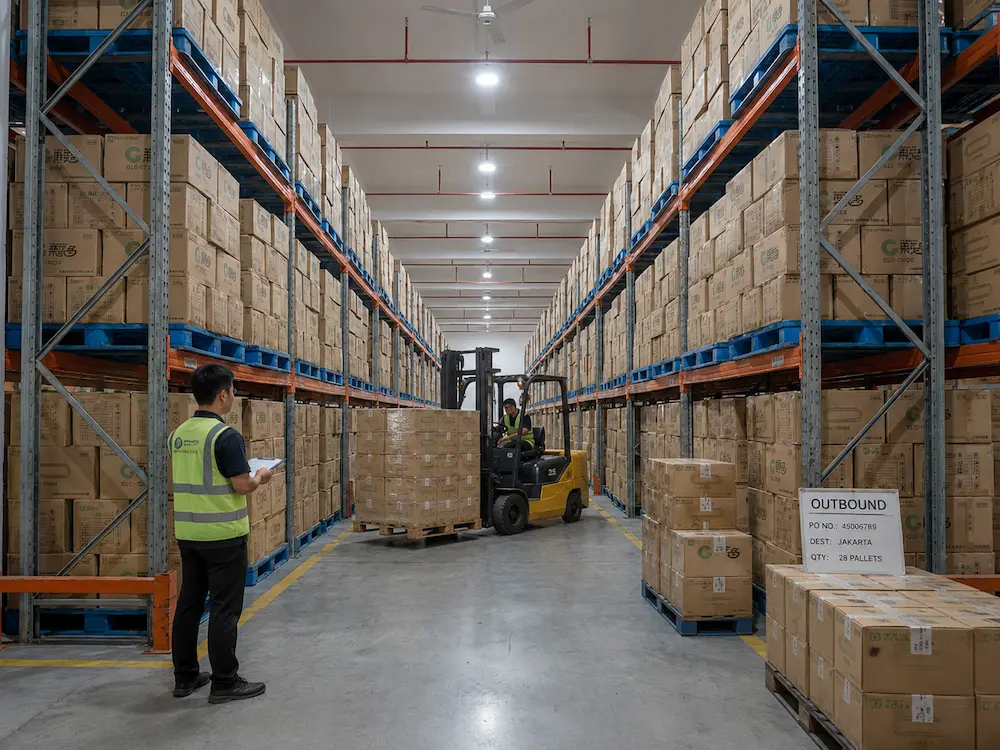
Before placing a wholesale order, packaging teams should test at least five conditions: actual food fit, filled weight, chilled storage, shelf stacking, and customer opening experience. If labels, stickers, sleeves, or tamper features are part of the final pack, they should be tested during the sample stage rather than after bulk production.
Manufacturer and Supplier Checklist
A reliable manufacturer should help the buyer evaluate container fit instead of only quoting a price. A strong supplier understands application, material, lid closure, packing workflow, carton handling, and repeat-order consistency. Food packaging teams should ask direct questions before selecting a wholesale supplier.

Questions to Ask Before Ordering
- Which container formats are most suitable for fresh-cut fruit, nuts, bakery bites, and chilled food display?
- Is the selected PET deli packaging intended for food contact and chilled display use?
- Does the lid close securely after repeated opening and closing tests?
- How does the container stack when filled with real food weight?
- Which sizes should be used for single-serve, standard, and larger portions?
- Are matching lids, hinged formats, or separated lid systems easier for the packing team?
- Which options support label placement, retail barcode stickers, or brand sleeves?
- Which packaging family is best for future product expansion?
Buyers should be cautious when a supplier gives a quick price without asking about food type, storage condition, portion target, packing speed, and sales channel. Good packaging selection depends on use case, not only container volume.
When Tamper-Evident Packaging Should Be Considered
Standard hinged deli containers work well for many fruit, snack, and bakery programs. However, some channels need additional security. Convenience stores, airport grab-and-go counters, delivery programs, and premium chilled foods often benefit from tamper-evident packaging when the buyer wants stronger consumer confidence and visible opening control.
Tamper-evident formats should be considered when the food is handled by multiple parties, displayed in open-access retail coolers, or sold through takeaway and delivery channels. The decision should be based on risk, brand positioning, and operational fit. Buyers should test whether the tamper feature is easy for staff to close and easy for customers to understand.
Design Details That Improve Retail Display
Strong retail packaging design is often built from small details. Smooth transparent walls make fruit color more visible. A stable base helps the container sit flat in chilled displays. A practical rim gives the lid a more secure feel. Proper depth prevents the food from looking either crushed or underfilled. A label area should support branding without blocking the product.
For fruit deli containers, the best visual result usually comes from balancing clarity and fullness. A shallow container may make fruit look crowded. A container that is too deep may make the portion look small. Divided formats should give each ingredient enough room to look intentional. Bakery portions need clearance above toppings, glaze, and delicate surfaces. Nut containers should avoid excessive empty headspace because dry products look lower-value when the pack appears half-filled.
Common Buyer Mistakes
The first mistake is choosing only by capacity. Capacity matters, but the same volume may perform differently depending on shape, lid height, base width, and food density. The second mistake is ignoring lid compatibility. Separate-lid systems require disciplined inventory control, while hinged containers reduce matching errors.
The third mistake is using one container for too many applications. A fruit portion, a nut mix, a muffin pack, and a cold noodle bowl do not always need the same structure. The fourth mistake is testing empty containers only. Every serious buyer should test filled containers under realistic packing and storage conditions.
The fifth mistake is treating sustainability as a simple label claim. PET and rPET packaging decisions should consider material source, local recycling acceptance, label design, color selection, and food-contact requirements. Buyers should avoid broad claims unless they are supported by the target market’s recycling and regulatory context.
Practical Selection Framework for Food Packaging Teams
Food packaging teams should start with the product, not the catalog. A clear selection framework keeps the process efficient:
- Define the food type: fresh-cut fruit, fruit and nuts, bakery bites, salad sides, chilled meals, or mixed snack packs.
- Define the sales channel: supermarket cooler, cafe takeaway, convenience store, foodservice prep, distributor resale, or online delivery.
- Define the portion tier: small, standard, large, family-size, or assortment pack.
- Choose the structure: hinged, separate lid, square, round, compartment, or bakery clamshell.
- Test the real pack: food fit, lid closure, label area, stackability, chilled handling, and customer opening.
- Build the wholesale matrix: limit the first product family to high-use sizes and proven structures.
This framework helps buyers avoid emotional SKU expansion. It also gives the supplier a clearer brief, which improves sampling accuracy and quotation relevance.
Final Note / Practical Takeaway
FAQ
1. What are fruit deli containers used for?
Fruit deli containers are used for fresh-cut fruit, mixed fruit portions, fruit-and-nut snack packs, bakery bites, chilled deli sides, salads, and grab-and-go food programs. They are especially useful when buyers need clear display, fast packing, and reliable chilled shelf presentation.
2. Are clear deli containers suitable for nuts and bakery items?
Yes. Clear deli containers suit nuts, snack mixes, bakery bites, muffins, cookies, pastries, and small dessert portions when the structure matches the food. Divided formats help separate fruit and nuts, while bakery clamshell formats help protect taller or more delicate bakery products.
3. Why is PET deli packaging popular for chilled food?
PET deli packaging is popular for chilled food because it offers high clarity, lightweight handling, practical rigidity, and strong product visibility. These qualities support fresh-cut fruit, salads, cold dishes, bakery portions, and ready-to-eat snack displays.
4. How should wholesale buyers choose fruit deli containers?
Wholesale buyers should choose fruit deli containers by food type, portion size, lid style, shelf display, packing speed, and supplier support. The best approach is to test real food samples before placing larger wholesale orders.
5. What should buyers ask a fruit deli container supplier?
Buyers should ask about food-contact suitability, material options, lid fit, available container families, chilled display performance, sample availability, carton handling, labeling space, customization support, and repeat-order consistency.
References
- U.S. Food and Drug Administration, Packaging & Food Contact Substances guidance.
- U.S. Food and Drug Administration, Understanding How FDA Regulates Substances that Come into Contact with Food.
- European Commission, Food Contact Materials and Regulation (EC) No 1935/2004.
- Commission Regulation (EU) No 10/2011 on plastic materials and articles intended to come into contact with food.
- USDA Food and Nutrition Service, Storing Fresh Produce guidance.
- PET Resin Association, About PET material, safety, clarity, and food packaging applications.
- Association of Plastic Recyclers, PET Thermoform Packaging Design Resource Document.
- EFSA, Food Contact Materials scientific and regulatory overview.
Deep-Dive Insights
How should buyers think about fruit deli containers as a system?
Buyers should treat fruit deli containers as a system of small, standard, large, divided, square, round, and bakery-compatible formats. This approach supports more food applications while keeping SKU control manageable.
Why does clear packaging influence chilled food sales?
Clear deli containers reduce purchase hesitation because customers see color, portion size, texture, and freshness cues before buying. For fruit, nuts, bakery portions, and chilled foods, visibility is part of the value proposition.
What is the best first step before wholesale ordering?
The best first step is sample testing with real food. Buyers should fill the container, close it, chill it, stack it, label it, transport it, and open it before approving a wholesale order.
Option: hinged or separate lid?
Hinged containers are better for fast packing and simple lid management. Separate-lid containers are useful when buyers need bowl-style presentation, lid height options, or a more modular PET deli packaging system.
Consideration: sustainability claims
PET and rPET packaging decisions should be described carefully. Buyers should connect sustainability messaging to material selection, local recycling acceptance, label design, and verified supplier documentation rather than making broad claims.
© YIHAO Packaging. All rights reserved. All articles, product images, packaging designs, technical specifications, and website materials are protected by copyright. Unauthorized copying, reproduction, redistribution, modification, or commercial use is strictly prohibited without prior written permission.