Why Food Container Size Matters More Than Buyers Often Expect
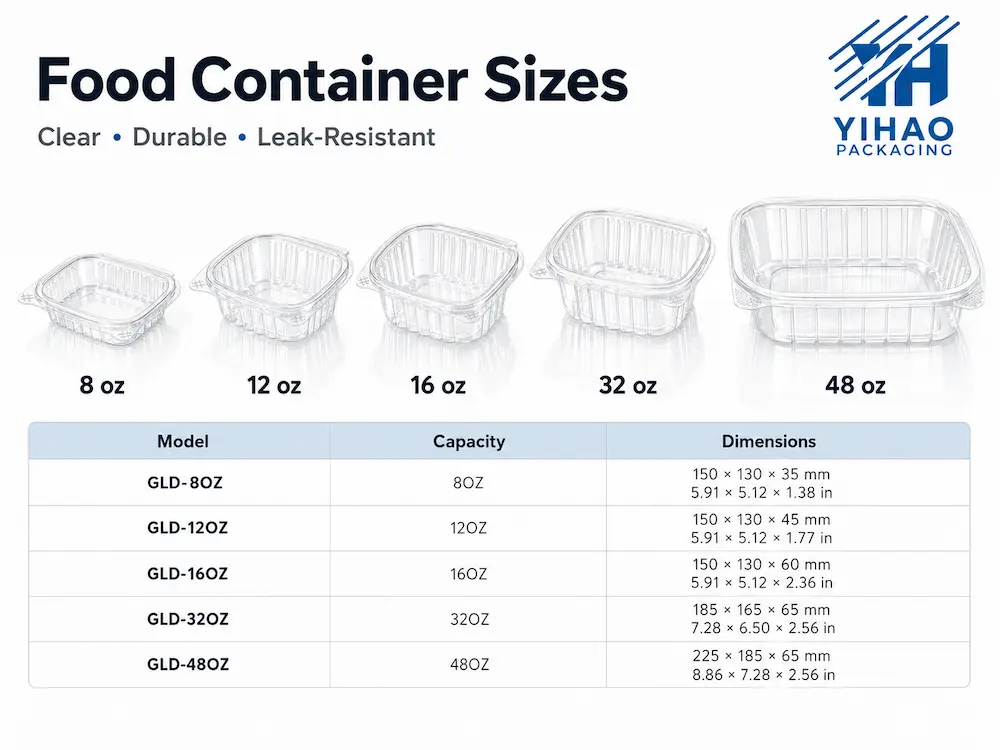
Food container size is one of the first questions buyers ask when selecting packaging, but it is also one of the easiest areas to misunderstand. A container labeled 8 oz, 12 oz, 16 oz, 32 oz or 48 oz gives a useful capacity reference, yet the number alone does not explain whether the container will actually fit a salad, fruit portion, deli side, snack pack or grab-and-go meal correctly.
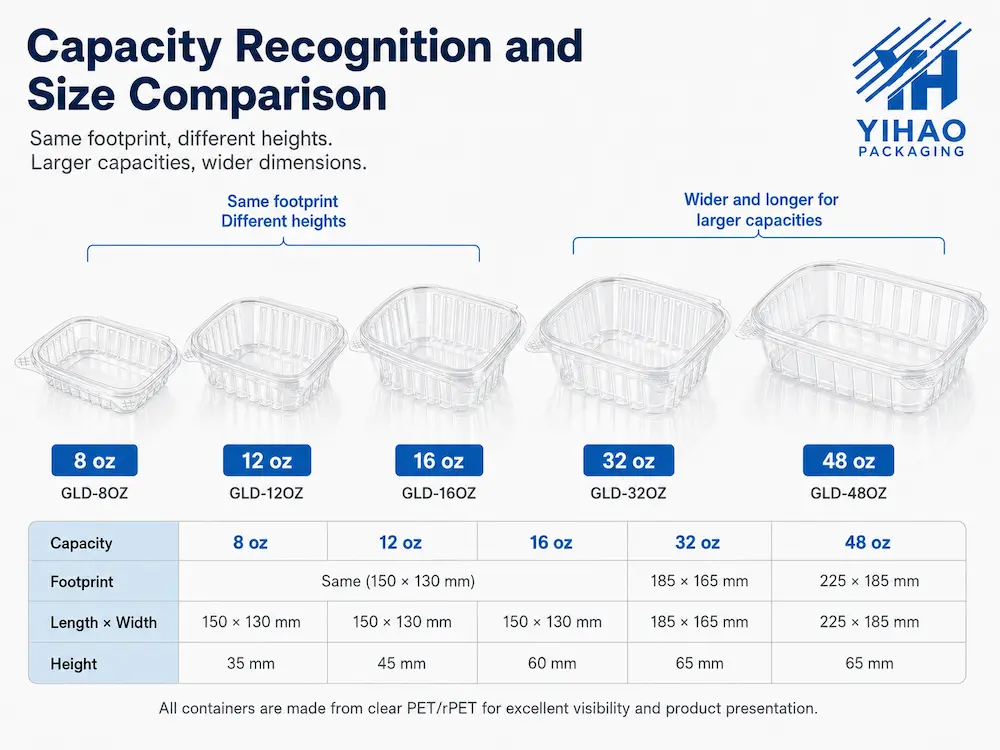
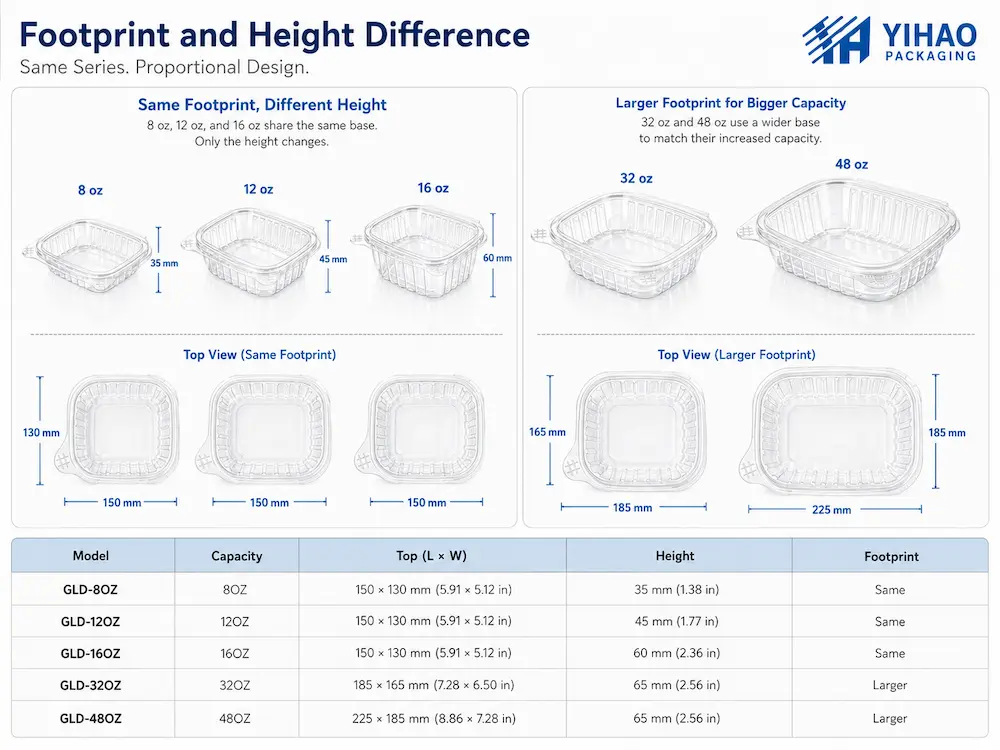
In real food packaging, usable capacity depends on the complete container design. Base width, sidewall angle, lid height, rim structure, hinge design, closure strength and material stiffness all affect how much food can be packed comfortably. A wide and shallow 16 oz container may present a deli salad very differently from a tall and narrow 16 oz container. A 32 oz container may work well for pasta salad but feel too tight for leafy greens with toppings. A 48 oz container may create strong retail shelf impact, but it may also require better stacking strength and carton planning.
This is why a practical food container size guide should not only list capacity numbers. It should help buyers connect container size with food type, portion weight, presentation goals, retail display, delivery handling and wholesale purchasing needs.
At YIHAO, food packaging selection usually begins with the application first. A buyer choosing clear PET containers for fresh-cut fruit will have different priorities from a buyer selecting deli containers for pasta salad, salad bowls for chilled retail display or hinged containers for grab-and-go meals. The right size should support the food, the brand, the shelf and the customer experience at the same time.
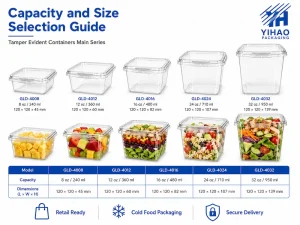
Quick Comparison Table: 8 oz, 12 oz, 16 oz, 32 oz and 48 oz Food Containers
The following table gives a practical overview of common food container sizes. These capacity values are approximate references. Final selection should always be confirmed by testing real food portions, because dense foods, leafy foods, fruit pieces and mixed deli items fill containers differently.
| Container Size | Approx. ml Reference | Common Food Uses | Best-Fit Packaging Applications | Buyer Consideration |
|---|---|---|---|---|
| 8 oz | About 237 ml | Side salads, fruit portions, toppings, small snacks, small deli sides | Compact grab-and-go packs, add-on portions, tasting portions | Check whether the lid gives enough clearance for toppings or leafy food |
| 12 oz | About 355 ml | Fruit cups, deli sides, snack mixes, yogurt toppings, small prepared foods | Small retail packs, fresh-cut fruit, chilled snack displays | Good balance between compact size and improved visual volume |
| 16 oz | About 473 ml | Deli salads, pasta salad, cut fruit, grain bowls, medium snack packs | Medium deli containers, salad portions, fresh food displays | Often flexible, but food density and container shape must be tested |
| 32 oz | About 946 ml | Meal salads, larger deli portions, fruit assortments, family sides | Full salad meals, premium grab-and-go packs, larger chilled foods | Requires stronger stacking performance and suitable lid height |
| 48 oz | About 1420 ml | Large salads, family deli packs, sharing fruit packs, larger prepared foods | High-volume retail packs, family portions, larger display packs | Check shelf footprint, carton loading and handling stability |
Understanding Nominal Capacity vs Usable Food Volume
One important difference buyers should understand is nominal capacity versus usable food volume. Nominal capacity is the number commonly used to describe the container, such as 8 oz or 32 oz. Usable food volume is the realistic amount of food that can be packed while still leaving proper space for closing, stacking, labeling and product presentation.
For liquid-style measurements, oz and ml are convenient. But most foods placed in deli, salad and grab-and-go containers are not pure liquids. Leafy salad has air space. Cut fruit has irregular shapes. Pasta salad is dense. Granola, berries, sandwiches, vegetables and toppings all occupy space differently. A buyer may expect one 16 oz container to fit a certain portion weight, only to find that the food sits too high, pushes against the lid or looks underfilled depending on the recipe.
This is especially important for deli and salad containers. A deli pasta salad may need a smaller-looking container because the food is dense and heavy. A leafy salad may require a larger container even if the actual weight is lighter. A fruit assortment may need more width for visual presentation, while a snack mix may need more secure lid engagement to prevent movement during transport.
For wholesale buyers, the most reliable method is to test the container with the actual product, actual portion weight, actual label and actual storage condition. Capacity charts help narrow the range, but sample testing confirms the final decision.

8 oz Food Containers: Best for Small Portions, Side Items and Add-On Packs
8 oz food containers are commonly used for small fresh food portions. They are suitable for side salads, fruit portions, sauces, toppings, dessert bites, nuts, snack packs, small deli sides and sample-size retail items. For cafes, supermarkets and prepared food brands, this size is useful when the goal is portion control and compact shelf display.
The biggest advantage of 8 oz packaging is efficiency. It uses less shelf space, can be packed into cartons efficiently and works well for add-on food items. For example, a supermarket may use 8 oz clear PET containers for fresh-cut melon, berry portions, mini salads or cold deli sides. A cafe may use them for parfait toppings, fruit add-ons or small chilled desserts. A foodservice distributor may use them as a compact option for portioned side dishes.
However, 8 oz containers are not always ideal for foods that need visual height or loose arrangement. Leafy greens, decorated desserts, fruit with toppings or foods that require extra headspace may look compressed if the container is too shallow. Buyers should also test closure security, because small containers are often handled quickly in retail and takeaway environments.
When buyers should choose 8 oz containers
Choose 8 oz containers when the food is compact, the portion is small and the selling format depends on convenience. This size works well for single-serve sides, trial packs, children’s portions, topping packs and small chilled food displays. It is also a smart option when the product is sold as part of a larger meal bundle.
When buyers should avoid 8 oz containers
Avoid 8 oz containers when the food requires more visual surface area, more lid clearance or more space for layered ingredients. If the container makes the food look compressed or reduces perceived value, moving to 12 oz or 16 oz may improve the retail presentation.
12 oz Food Containers: A Practical Step Up for Fruit, Snacks and Deli Sides
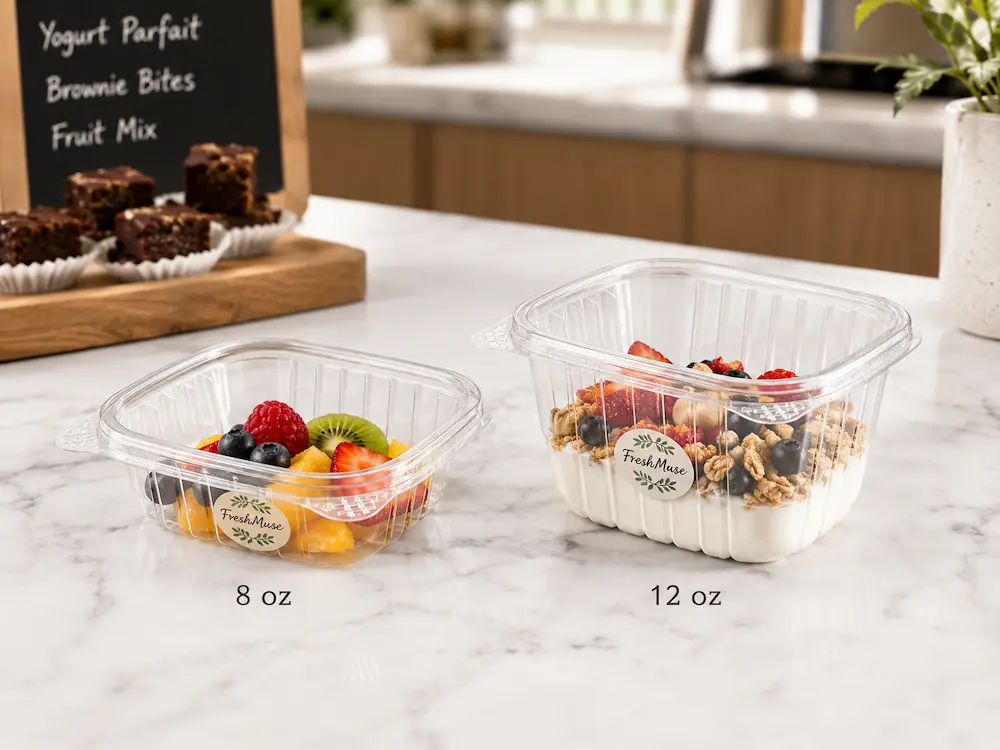
12 oz food containers are useful when buyers need slightly more space than 8 oz without moving into a medium meal size. This capacity is often selected for fruit cups, deli sides, snack mixes, yogurt toppings, cut vegetables, small prepared foods and chilled retail portions.
For fresh food packaging, 12 oz can create better visual volume than 8 oz. It allows fruit pieces, toppings or deli ingredients to sit more naturally. For retail display, this can help the product look fuller and more attractive. In grab-and-go cases, 12 oz containers are also easy for customers to hold, stack and carry.
The 12 oz size is often suitable for products that need a balance between compactness and presentation. It gives buyers more flexibility when portion weight changes slightly by recipe. For example, a fruit cup with large strawberry pieces may need more room than a fruit cup with diced melon. A deli side with sauce may fill differently from a dry snack mix. A clear 12 oz container can support both visibility and portion consistency when the container shape matches the food.
Key buyer checks for 12 oz containers
Buyers should compare the container footprint, lid height and closure design. Some 12 oz containers are wider and lower, which may improve product visibility. Others are taller and narrower, which may save shelf space but reduce top-down display impact. The better choice depends on whether the product needs visual spread, stackability or compact storage.
16 oz Food Containers: Flexible Medium Packaging for Deli and Salad Applications
16 oz deli containers are among the most flexible sizes for chilled food packaging. They are widely used for deli salads, pasta salad, fruit portions, grain bowls, snack combinations, cold noodles, fresh vegetables, medium dessert packs and small grab-and-go meals.
For many buyers, 16 oz is the first size that can support a more complete food presentation. It is not too small for medium portions, but it is still manageable for shelf display and takeaway handling. In supermarkets and delis, 16 oz containers can help standardize portion sizes across multiple recipes. In cafes and foodservice programs, they can support daily prepared items such as fruit mixes, pasta sides, cold salads and snack bowls.
When selecting 16 oz packaging, buyers should pay close attention to food density. A 16 oz container filled with pasta salad may become heavy, while the same size filled with leafy salad may look light and airy. If the product includes toppings, protein or dressing, lid clearance becomes important. If the product contains sauce or moisture, closure performance and rim design become more important.
Why 16 oz often works as a standard medium size
The 16 oz format works well because it can serve multiple categories. It is large enough for meaningful food volume, but not so large that it creates high material use or excessive shelf footprint. For distributors and food brands, this can simplify inventory planning because one container size may support several product lines.
For clear PET and rPET containers, 16 oz also provides strong merchandising potential. The product remains visible, the portion feels substantial and the container can still fit neatly into refrigerated displays.
32 oz Food Containers: Meal Salads, Premium Deli Portions and Larger Fresh Food Packs
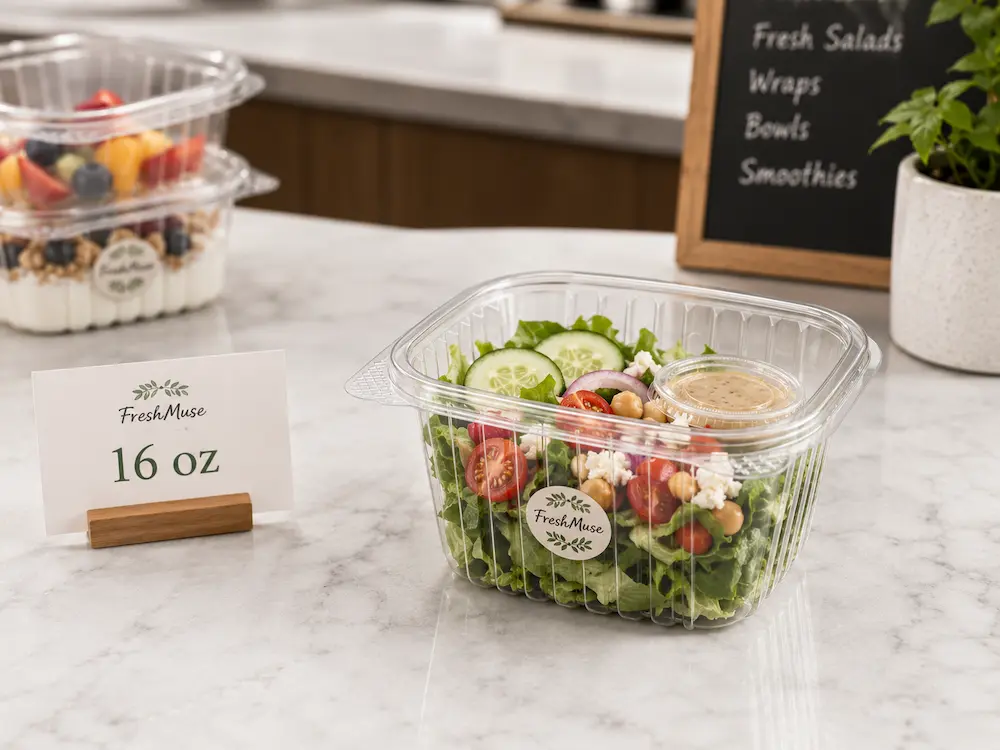
32 oz salad containers are often selected for full salad meals, larger deli portions, fruit assortments, cold noodle meals, grain bowls and premium grab-and-go food packs. This size gives buyers more room for layered ingredients and stronger shelf presentation.
For salad packaging, 32 oz can be a strong choice when the product includes leafy greens, protein, vegetables, toppings and dressing. The container gives more room for ingredient separation and better visual arrangement. For fruit packaging, 32 oz can support larger portions or premium assortments where color and freshness need to be visible.
The challenge with 32 oz containers is that size alone does not guarantee good performance. Larger containers need stronger sidewalls, stable bases, secure lids and better stacking design. If the container is too flexible, it may deform when filled or stacked. If the lid is not secure, the product may not perform well in takeaway or delivery handling.
What buyers should test with 32 oz containers
Buyers should test full filling weight, lid closure, stacking under chilled conditions, label placement and shelf presentation. A 32 oz container may look good empty, but the real test is how it performs when filled with the actual product. Heavy foods, wet ingredients and uneven toppings can all change the performance.
48 oz Food Containers: Larger Portions, Family Packs and High-Visibility Retail Displays
48 oz food containers are used for larger fresh food portions, family deli sides, sharing salads, premium fruit assortments and high-volume chilled food packs. This size can create strong shelf impact when the food is colorful, fresh and clearly visible.
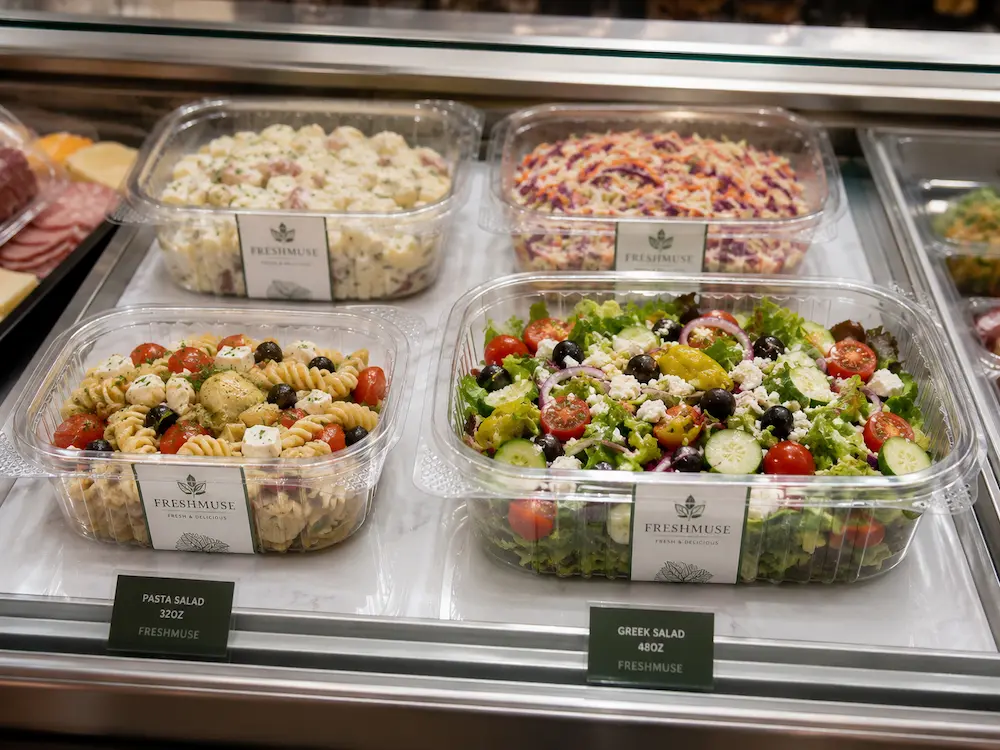
For supermarkets and prepared food programs, 48 oz packaging can support larger family-size products. It can also help brands create value packs or premium offerings. A large salad, mixed fruit tray or deli assortment may look more appealing in a clear container that gives customers a full view of the product.
However, 48 oz containers require more careful packaging evaluation. The larger the container, the more important structural performance becomes. Buyers should check sidewall rigidity, lid engagement, stacking pressure, carton packing and customer handling. A large container that looks attractive on the shelf can still create problems if it bends, opens too easily or does not fit efficiently into shipping cartons.
When 48 oz is the right choice
Choose 48 oz when the product has enough volume to fill the pack attractively, when retail shelf space supports the footprint and when the container structure is strong enough for the expected handling process. This size is usually better for premium fresh foods, family portions and high-visibility retail presentations rather than small single-serve portions.
How Container Shape Changes the Size Decision
Capacity is only one part of container selection. Shape often determines how the food looks and how the packaging performs. Round, square, rectangular and hinged containers can all hold similar volumes, but they create different experiences for packing teams, retailers and customers.
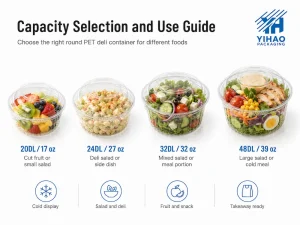
Round PET deli containers are often used for salads, fruit cups, cold bowls and deli items where a softer visual presentation is preferred. They can make food look natural and easy to eat. Round shapes may also feel familiar to customers for chilled salads and prepared foods.
Square PET deli containers can improve shelf alignment, carton efficiency and display organization. For retailers, square or rectangular formats may help maximize space in refrigerated cases. For distributors, they may also support more efficient case packing.
PET hinged deli containers are useful when packing speed and lid matching are important. Because the lid and base are connected, hinged packaging can reduce the risk of using the wrong lid. This is helpful for delis, cafes, supermarkets and foodservice teams that handle multiple SKUs during daily operations.
| Container Shape | Main Advantage | Common Applications | Buyer Watch Point |
|---|---|---|---|
| Round | Natural visual style and easy eating experience | Salads, fruit cups, deli bowls, cold foods | May use more shelf space than square formats |
| Square | Efficient shelf alignment and carton packing | Deli sides, prepared foods, snacks, chilled meals | Corner strength and lid fit should be tested |
| Rectangular | Good for organized portions and retail display | Meal components, deli foods, grab-and-go packs | Footprint must match shelf and carton requirements |
| Hinged | Integrated lid and base for faster packing | Deli, salad, fruit, bakery and grab-and-go foods | Hinge durability and closure security are critical |
PET and rPET Containers: Why Clarity Matters for Fresh Food Packaging
Clear PET and rPET containers are popular for chilled food packaging because they allow customers to see the product before purchase. For salads, fruit, deli sides and grab-and-go meals, visibility can directly affect buying confidence. Shoppers often judge freshness by color, portion size, ingredient condition and overall presentation.
For a buyer, material clarity is not only an aesthetic issue. It also supports merchandising. A clear container can reduce the need for excessive label coverage because the product itself becomes part of the selling message. This is especially valuable for fresh-cut fruit, colorful salads, premium deli foods and prepared meals where the ingredients should be visible.
rPET can also support packaging programs that want to discuss recycled material use, where suitable supply, food contact compliance and local recycling systems apply. Buyers should still evaluate rPET carefully. Food contact suitability, material source, clarity, consistency and regulatory requirements should be discussed with the supplier before order confirmation.
For cold food applications, PET and rPET containers are often chosen for clarity, stiffness and presentation. However, buyers should not assume every clear PET container is suitable for every temperature or use case. If reheating is required, buyers should evaluate microwave-safe PP packaging or other suitable materials instead of using clear PET by default.
Choosing the Right Size by Food Category
Different foods require different size logic. A simple size chart is helpful, but food category matters more. Buyers should always ask: What is the product? How dense is it? How should it look on the shelf? Does it need headspace? Will it be stacked? Will it be delivered? Will customers eat directly from the container?
Side salads
Side salads often fit within 8 oz to 16 oz containers. Smaller sizes work for compact portions, while 16 oz may be better when leafy greens need more space. If the salad includes toppings or dressing, buyers should test lid clearance and product movement.
Full salad meals
Full salad meals usually require 32 oz or 48 oz containers, depending on ingredients. Leafy salads need more air space than dense deli salads. If protein, toppings and dressing are included, the container should provide enough room to prevent crushing.
Fresh-cut fruit
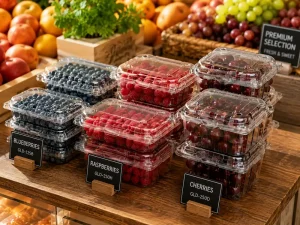
Fresh-cut fruit may use 8 oz, 12 oz, 16 oz or 32 oz containers depending on the portion. Fruit shape matters. Large pieces such as strawberries, melon cubes or grapes may require more space than diced fruit. Clear packaging is especially important because fruit color and freshness drive purchase confidence.
Deli sides
Deli sides such as pasta salad, potato salad, coleslaw and cold noodles are often dense. Buyers may need to compare capacity with portion weight. A container that looks medium-sized may become heavy when filled with dense food. Secure closure and base stability are important.
Grab-and-go meals
Grab-and-go food packaging must perform well across retail display, customer handling and takeaway transport. 16 oz, 32 oz and 48 oz containers may all be relevant depending on the food. The package should look attractive, stay closed and fit into common takeaway bags or cold display shelves.
| Food Category | Common Size Range | Most Important Requirement | Recommended Buyer Test |
|---|---|---|---|
| Side salad | 8 oz to 16 oz | Portion control and lid clearance | Test leafy volume and toppings |
| Full salad meal | 32 oz to 48 oz | Presentation space and stacking strength | Test full recipe with dressing and protein |
| Fresh-cut fruit | 8 oz to 32 oz | Visibility, moisture handling and closure | Test chilled display and transport movement |
| Deli sides | 12 oz to 32 oz | Usable volume and weight support | Test dense food filling weight |
| Snack packs | 8 oz to 16 oz | Compact display and easy handling | Test shelf presentation and label area |
| Family portions | 32 oz to 48 oz | Structural strength and shelf footprint | Test stacking, carton packing and carrying stability |
How Retail Display Affects Food Container Size Selection
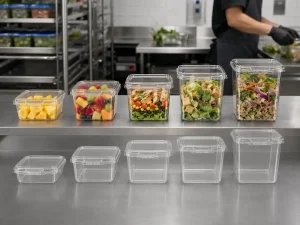
Retail display should be part of the size decision from the beginning. A food container does not only hold the product. It also sits in a refrigerated case, competes with nearby products, carries a label and communicates value within a few seconds.
For clear food containers, the best size should make the food look full but not compressed. Underfilled packaging can reduce perceived value. Overfilled packaging can make the product look messy or create closure problems. A well-matched container makes the portion look intentional, clean and easy to buy.
Buyers should also check shelf depth and stacking height. A 48 oz container may look excellent in a sample photo but may not fit efficiently into the buyer’s retail case. A 32 oz container may be suitable for a meal salad, but only if the lid height and label placement support the final display. Smaller 8 oz and 12 oz containers may be more efficient for multi-facing shelf arrangements.
How Delivery and Takeaway Handling Change the Size Decision
Delivery and takeaway add another layer of packaging requirements. A container that works in a retail cold case may not perform the same way inside a delivery bag. Movement, vibration, stacking, temperature changes and customer handling can expose weak closures or flexible sidewalls.
For takeaway foods, the container should be easy to hold and stable when placed in a bag. For delivery, lid engagement becomes especially important. If the food is wet, sauced or heavy, the container must resist deformation. If the food is light and bulky, the container must protect shape and presentation.
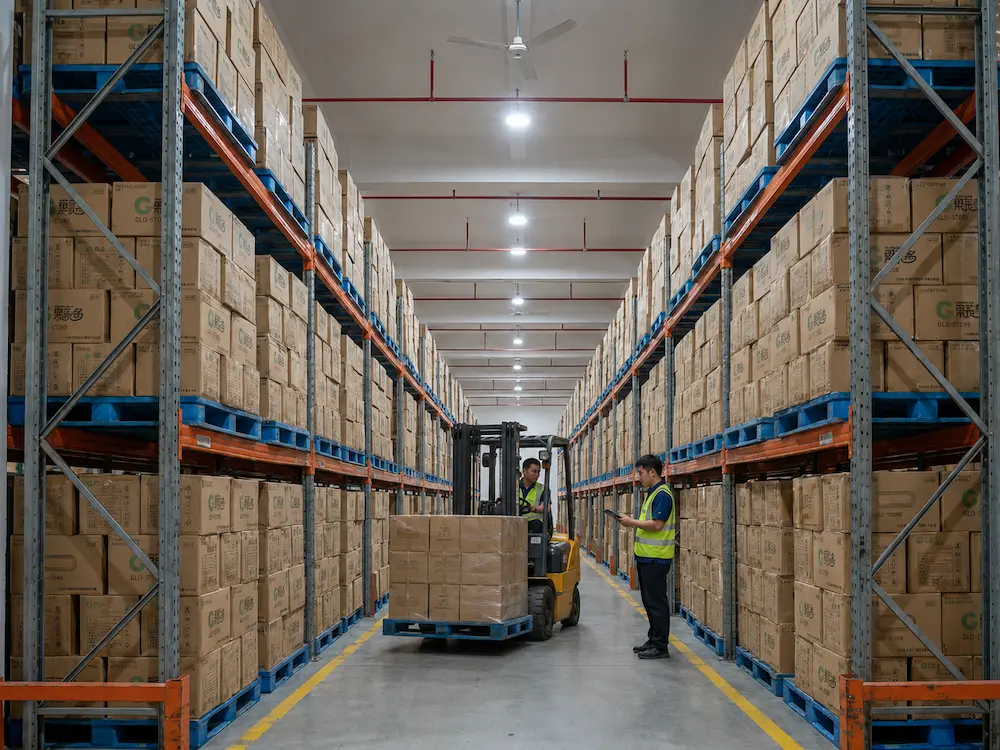
Buyers should test delivery handling with real packed samples. This can include shaking, stacking, bag placement, chilled storage and customer opening experience. These tests do not need to be complicated, but they should reflect the real sales channel. For wholesale buyers, a small amount of testing before bulk orders can prevent costly packaging problems later.
Label Placement, Branding and Product Visibility
Container size also affects label placement. A label should support branding and required information, but it should not cover the food too much. For clear PET containers, product visibility is one of the biggest advantages. If the label covers most of the lid, the buyer loses part of the value of transparent packaging.
Small containers such as 8 oz and 12 oz may have limited label space. Buyers may need a compact top label, side label or sleeve design. Medium and large containers such as 16 oz, 32 oz and 48 oz provide more branding space, but the label should still leave enough window area for shoppers to see the food.
For private label, supermarket and foodservice programs, label size should be tested with the actual container. Barcode, ingredient information, date coding, brand identity and product visibility must all work together. A good food container size supports both operational labeling and strong shelf appeal.
Sample Request Checklist for Wholesale Food Container Buyers
A clear sample request helps the supplier recommend better packaging options. Instead of asking only for an 8 oz or 32 oz container, buyers should provide real application details. This saves time and improves the chance of selecting the correct size.
| Information to Provide | Why It Matters | Example |
|---|---|---|
| Food type | Different foods fill containers differently | Leafy salad, pasta salad, fruit mix, snack pack |
| Target portion weight | Dense foods may need stronger containers | 150 g, 250 g, 500 g or buyer-specific target |
| Expected size range | Helps narrow sample selection | 8 oz, 12 oz, 16 oz, 32 oz or 48 oz |
| Preferred shape | Shape affects display and carton efficiency | Round, square, rectangular or hinged |
| Storage condition | Cold display and transport affect performance | Refrigerated display, chilled transport, takeaway |
| Label size | Label placement affects product visibility | Top label, side label, sleeve or tamper label |
| Sales channel | Retail, delivery and foodservice have different needs | Supermarket, cafe, deli counter, delivery platform |
| Order type | Wholesale planning affects packing and supply | Trial order, seasonal program, regular supply |
When working with a manufacturer, buyers should also ask about available sizes, material options, carton packing, sample availability and customization possibilities. A reliable supplier should help buyers evaluate the application, not simply quote the cheapest container.
Common Mistakes Buyers Make When Choosing Food Container Sizes
Many packaging problems come from selecting size too quickly. The container may appear correct in a catalog but fail during real filling, stacking or display. The following mistakes are common in wholesale food packaging projects.
Mistake 1: Choosing only by oz capacity
Oz capacity is useful, but it does not explain shape, usable volume or presentation. Buyers should compare dimensions, lid height, food density and real filling performance.
Mistake 2: Ignoring food density
Dense foods such as pasta salad, potato salad or sauced deli items may become heavy even in medium containers. Lightweight foods such as leafy salad may require more space even when the portion weight is lower.
Mistake 3: Testing empty samples only
Empty samples can show clarity and structure, but they cannot confirm performance. Buyers should test filled samples with real food, real labels and real handling conditions.
Mistake 4: Forgetting shelf and carton fit
A container must work beyond the product itself. It should fit retail shelves, shipping cartons, storage areas and takeaway bags. Larger sizes especially require careful footprint planning.
Mistake 5: Covering too much of the clear lid with labels
Clear packaging works best when customers can see the food. Oversized labels may hide freshness and reduce the value of PET or rPET transparency.
How to Build a Practical Size Range for Your Packaging Line
For many food brands and distributors, the best strategy is not to use one container size for everything. A practical packaging line often includes several sizes that cover different portion levels. For example, 8 oz and 12 oz can support small portions, 16 oz can support medium deli or salad applications, and 32 oz or 48 oz can support larger meals or family packs.
This type of size ladder helps brands organize their product range. It also supports clearer pricing, more consistent shelf display and easier inventory planning. When sizes are visually related, customers can understand the product range more easily. For buyers, the goal is to create a packaging system rather than a random mix of containers.
For example, a supermarket fresh food program may use 8 oz containers for small fruit portions, 16 oz containers for deli sides, 32 oz containers for meal salads and 48 oz containers for family-size packs. A cafe may use 12 oz containers for fruit cups, 16 oz containers for snack bowls and 32 oz containers for premium salad meals. A distributor may offer several container sizes to serve multiple customers across foodservice channels.
Buyer Decision Framework: Which Size Should You Start With?
The following framework can help buyers narrow the starting size before requesting samples.
| Buyer Need | Recommended Starting Size | Why This Size May Work | Next Size to Test |
|---|---|---|---|
| Small side portion | 8 oz | Compact, efficient and easy for add-on items | 12 oz if more headspace is needed |
| Fruit cup or small snack | 12 oz | Better visual volume than 8 oz while still compact | 16 oz for larger fruit pieces |
| Medium deli portion | 16 oz | Flexible for deli sides, salads and snack bowls | 12 oz for smaller portions or 32 oz for meal size |
| Meal salad | 32 oz | More room for greens, toppings and presentation | 48 oz for larger or premium meals |
| Family-size fresh food pack | 48 oz | Suitable for larger portions and shelf impact | 32 oz if shelf space is limited |
This framework is not a fixed rule. It is a starting point. Buyers should always confirm the final choice with sample testing, especially when the product includes irregular ingredients, liquid dressing, heavy food or delivery handling.
FAQ
1. What size food container is best for side salads?
For side salads, 8 oz to 16 oz food containers are usually practical. An 8 oz container works for small side portions, while 12 oz or 16 oz may be better when the salad includes leafy greens, toppings or dressing. Buyers should test the actual salad build before confirming wholesale orders.
2. Is a 32 oz container enough for a full salad meal?
A 32 oz container can be enough for many full salad meals, especially when the container has enough width and lid clearance. However, salads with bulky greens, protein, toppings or separate dressing may need a larger container or a different lid structure.
3. What is the difference between nominal capacity and usable volume?
Nominal capacity is the listed size, such as 16 oz or 32 oz. Usable volume is the realistic food space after considering lid clearance, food shape, ingredient arrangement, label placement and closure requirements. Usable volume is more important for real packaging decisions.
4. Are PET food containers suitable for microwave use?
Clear PET food containers are commonly used for chilled food display, deli foods, salads, fruit and grab-and-go applications. They should not be assumed suitable for microwave use. If reheating is required, buyers should evaluate microwave-safe PP containers or other suitable packaging materials.
5. Should buyers choose round or square deli containers?
Round deli containers often provide a familiar visual style for salads, fruit and cold bowls. Square deli containers can improve shelf alignment and carton efficiency. The best option depends on food type, display method, packing process and storage requirements.
6. What information should buyers send before requesting samples?
Buyers should send food type, target portion weight, preferred size range, container shape preference, storage condition, display method, delivery requirements, label size and order expectations. This helps the supplier recommend more accurate packaging options.
7. Why do two containers with the same oz capacity look different?
Two containers with the same oz capacity can have different base widths, heights, sidewall angles and lid structures. A wide shallow container and a tall narrow container may hold similar volume but create very different food presentation and shelf performance.
8. What size is best for grab-and-go food packaging?
For grab-and-go food packaging, 16 oz, 32 oz and 48 oz are common starting points depending on the food. Snack bowls and medium deli items may fit 16 oz, full salads may fit 32 oz, and larger sharing packs may need 48 oz. Buyers should test retail display and takeaway handling before choosing.
References
- U.S. Food and Drug Administration, Food Contact Substances and food packaging material guidance.
- European Commission, Regulation (EC) No 1935/2004 on materials and articles intended to come into contact with food.
- European Food Safety Authority, food contact materials safety assessment resources.
- Association of Plastic Recyclers, Design Guide for Plastics Recyclability.
- RecyClass, Design for Recycling Guidelines for PET Packaging.
- National Institute of Standards and Technology, SI units and measurement reference materials.
- WRAP, plastic packaging design and recyclability guidance.
- PMMI Business Intelligence, food packaging and retail packaging industry research.
Deep-Dive Insights: How Buyers Should Think About Food Container Sizes
How size guides packaging decisions
Food container size gives buyers a starting point for comparing 8 oz, 12 oz, 16 oz, 32 oz and 48 oz packaging options. It helps narrow the range before sample testing, but it should not be treated as the final answer. Real food behavior, presentation style and handling conditions matter just as much as capacity.
Why usable volume is more important than listed capacity
Usable volume reflects how much food the container can realistically hold while still closing properly, presenting well and handling safely. Leafy foods, dense foods, fruit pieces and sauced deli items all fill containers differently. Buyers should test actual food portions instead of relying only on oz or ml numbers.
What option works best for deli, salad and grab-and-go applications?
Small sizes such as 8 oz and 12 oz fit side portions, snacks and fruit cups. Medium sizes such as 16 oz support flexible deli and salad applications. Larger sizes such as 32 oz and 48 oz work better for full salads, larger fruit packs, family portions and premium grab-and-go meals.
Option: round, square or hinged containers
Round containers often support a familiar salad or bowl-style presentation. Square containers can improve shelf alignment and carton efficiency. Hinged containers simplify packing because the lid and base are connected. Buyers should choose structure based on food type, display format, packing speed and handling requirements.
Buyer consideration before wholesale ordering
Before confirming wholesale food containers, buyers should test filling height, closure strength, stacking performance, chilled storage, label placement, carton packing and takeaway handling. The best packaging decision combines size reference, material performance and real application testing.
Final Note / Practical Takeaway
© YIHAO Packaging. All rights reserved. All articles, product images, packaging designs, technical specifications, and website materials are protected by copyright. Unauthorized copying, reproduction, redistribution, modification, or commercial use is strictly prohibited without prior written permission.