
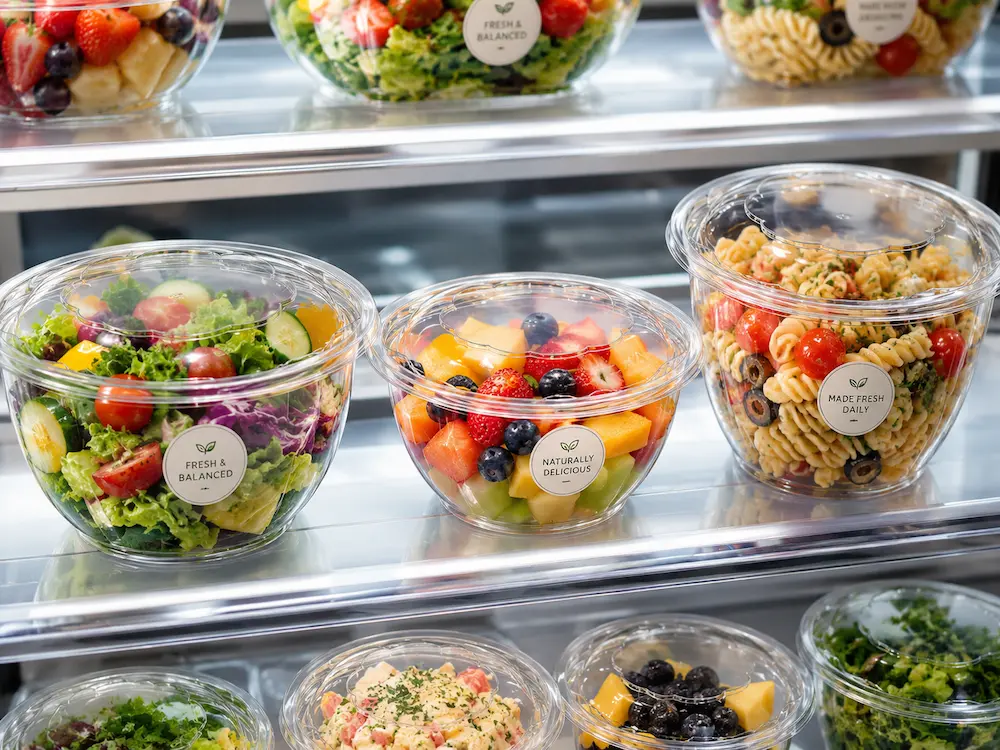
Introduction: Why Deli Food Packaging Matters for Retail and Foodservice Buyers
deli food packaging is not just a container decision. For supermarkets, salad bars, cafes, convenience stores, foodservice distributors, chilled meal brands, and grab-and-go retail operators, packaging affects how quickly food is packed, how clearly the product is displayed, how stable it remains during handling, and how confidently customers make a purchase.
At YIHAO, we work as a food packaging manufacturer and solution provider for buyers who need practical, clear, and retail-ready packaging for fresh and chilled foods. Many procurement questions appear simple at first: Which material should I choose? What size works for salads? Are round PET deli containers suitable for fruit? Can PET round bowls be microwaved? Should I buy from a manufacturer, a wholesale supplier, or a trading company?
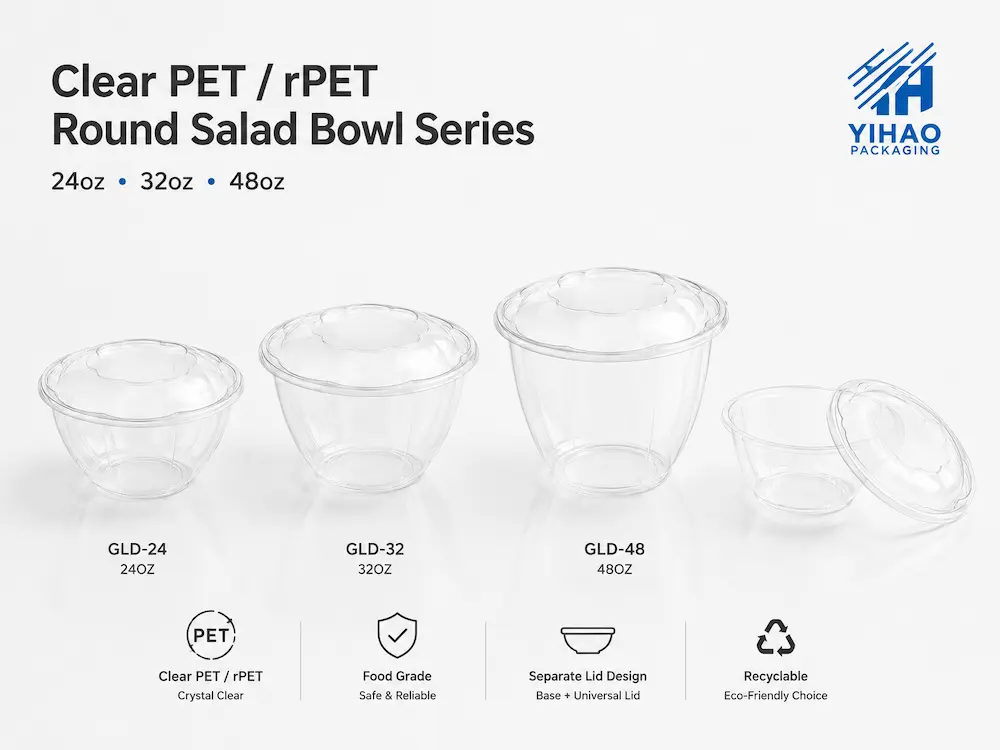
The real answer depends on food type, temperature, portion size, lid fit, stacking requirement, visual display, carton efficiency, and repeat-order stability. A container that looks good in a product photo may still fail if the lid does not match, the stack height is unstable, or the material is used for the wrong temperature range. This guide answers the most common buyer questions about deli food packaging and helps procurement teams make a cleaner, safer, and more commercially practical decision.
What Is Deli Food Packaging?
Definition for B2B Buyers
deli food packaging refers to containers, bowls, trays, lids, and clamshell packs used for prepared foods and chilled ready-to-eat products. These products usually appear in supermarket deli counters, cold display shelves, takeaway sections, catering programs, salad bars, convenience-store refrigerators, and grab-and-go retail areas.
Common applications include prepared salads, pasta salads, fruit mixes, cut fruit, nuts, snacks, cold sides, chilled noodles, sandwiches, bakery portions, deli meals, and family-size chilled food packs. Buyers often need packaging that keeps food visible, supports fast filling, fits retail shelves, stacks efficiently, and matches the brand’s food presentation style.
For buyers building a broader packaging range, the main category to review is deli and salad containers, because this category usually covers round bowls, hinged containers, square containers, and matching lid systems for chilled retail foods.
Common Container Formats
The most common formats include round PET deli containers, round deli containers, round salad containers, clear round food containers, PET round bowls, PET hinged deli containers, square deli containers, and PP containers for heat-related applications.
Each format has a different commercial purpose. Round bowls create strong top-view presentation for salads and chilled bowls. Hinged containers support fast packing because the lid and base are connected. Square containers improve shelf and carton space efficiency. PP containers are better suited for food that may involve heating or microwave use.
What Materials Are Commonly Used for Deli Food Packaging?
PET for Clear Cold Food Display
PET is widely used in deli food packaging because it provides high transparency, lightweight handling, and strong shelf visibility. For cold foods such as salads, fruit mixes, deli sides, snacks, and chilled takeaway meals, clear PET packaging allows buyers and consumers to see food color, freshness, layering, and portion value before purchase.
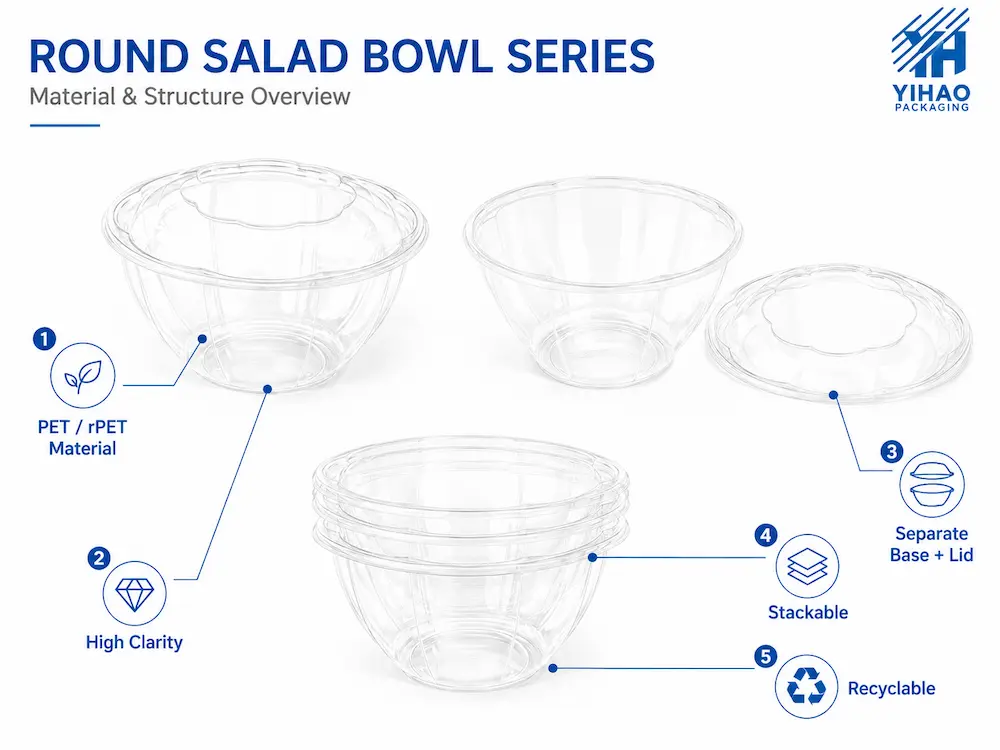
For salad programs and chilled meal bowls, a PET salad bowl for chilled takeaway meals is especially useful because the round shape supports product visibility and a clean retail presentation.
However, standard PET is mainly used for cold food and chilled display. Buyers should not treat ordinary PET deli containers as microwave-safe unless the exact product has been specifically designed, tested, and confirmed for heat-related use.
RPET for Buyers Looking for Recycled Content
RPET is recycled PET material. It is popular among buyers who want to communicate recycled content and improve packaging sustainability messaging while keeping the clear appearance associated with PET. In many retail settings, RPET packaging supports a cleaner environmental story without losing product visibility.
That said, recyclability claims should be handled carefully. Clear PET and RPET containers may be accepted in some local recycling systems, but actual recycling depends on local collection rules, sorting infrastructure, label use, contamination level, and regional PET acceptance. A responsible supplier should help buyers discuss material choice clearly instead of overpromising that every pack is universally recyclable.
For brands that want a balanced option for chilled food display, a PET/RPET clear food container is a practical direction for salads, deli sides, fruit portions, and refrigerated retail foods.
PP for Microwave or Heat-Related Applications
PP is usually selected when food packaging needs better heat tolerance or microwave-related use. If the buyer’s product includes hot takeaway meals, reheatable prepared foods, or applications that require microwave performance, PP should be reviewed instead of standard PET.
For buyers who need heat-related deli packaging, microwave safe containers are a more suitable category to compare. A PP hot food container with separate lid fits prepared meals and takeaway foods more appropriately than ordinary PET bowls when heat use is part of the application.
Why Are Round PET Deli Containers Popular for Salads and Cold Foods?
Better Mixing Space for Salads and Bowls
Round PET deli containers are popular because salads, grain bowls, fruit bowls, and chilled noodle bowls naturally work well in a round format. Leafy vegetables, toppings, proteins, grains, sauces, and fruit pieces sit more attractively in a bowl shape than in shallow rectangular packs.
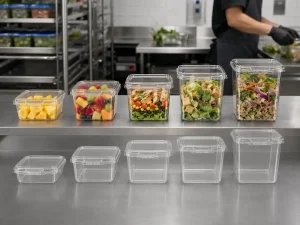
For foodservice teams, the round format also helps with filling speed. Staff can place ingredients evenly, maintain a clean top view, and create a more premium ready-to-eat presentation. This matters for retail deli counters, salad bars, grab-and-go refrigerators, and chilled takeaway displays.
Strong Shelf Visibility
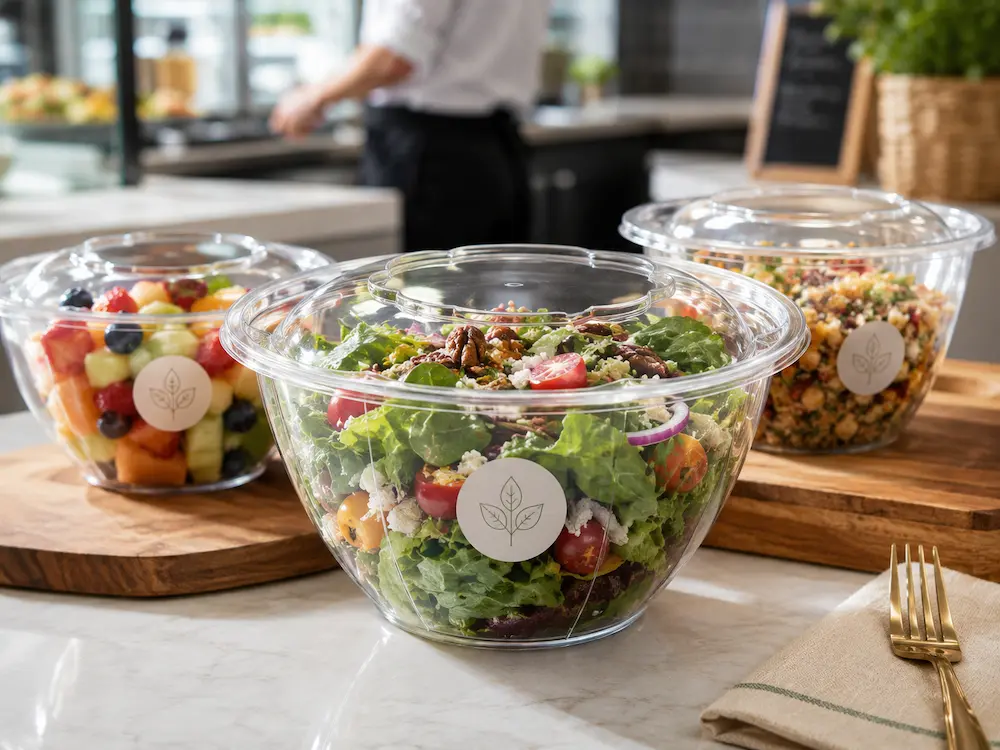
Visibility is one of the biggest advantages of round PET deli containers, round salad containers, clear round food containers, and PET round bowls. Clear walls and clear lids allow consumers to judge food quality quickly. For colorful salads, fruit mixes, berry bowls, pasta salads, and chilled meal bowls, this visual advantage directly supports retail conversion.
When larger chilled portions are needed, a PET salad bowl for large salads and chilled takeaway packaging gives buyers a better format for premium salad packs, shared portions, and family-size chilled foods.
Separate Lid Logic
Many PET round bowls use a separate lid system. This structure gives buyers flexibility because the bowl can be filled first and closed afterward. Separate lids may also support better stacking, clearer top display, and more efficient back-of-house handling.
Before ordering in bulk, buyers must check lid compatibility carefully. A bowl and lid may look similar online but fail in actual use if the rim size, lid depth, sealing structure, or stacking profile does not match. A matching PET/RPET bowl lid should always be tested with the selected container before wholesale orders are confirmed.
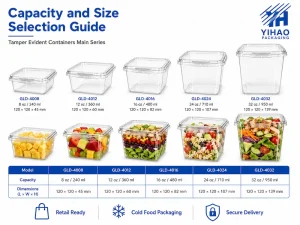
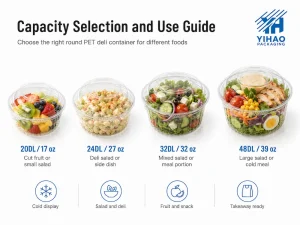
What Sizes Should Buyers Choose for Deli Food Packaging?
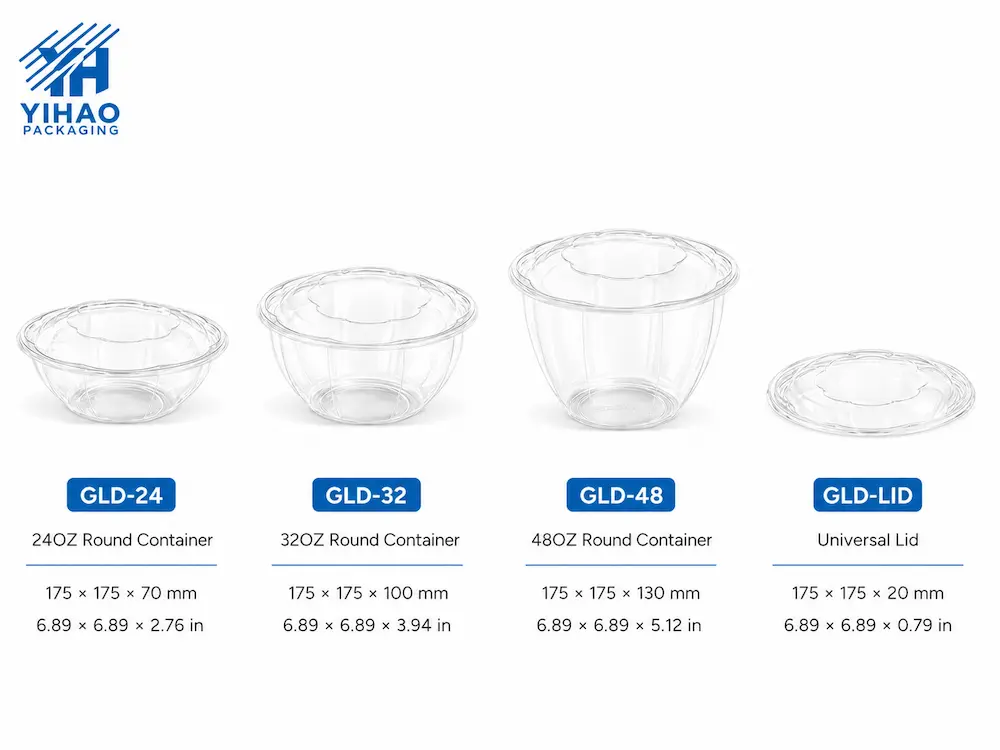
There is no single best size for deli food packaging. The right choice depends on portion style, ingredient volume, food height, topping structure, sauce use, shelf space, carton packing, and target selling price. Instead of choosing containers only by capacity, buyers should think in terms of food behavior and retail use.
| Buyer Need | Suggested Container Direction | Typical Food Use | Key Check |
|---|---|---|---|
| Small side portions | Small round PET deli containers | Dips, nuts, snacks, deli sides | Lid fit and stack height |
| Daily salad packs | Medium round salad containers | Leafy salads, grain bowls, pasta salads | Bowl depth and top visibility |
| Fruit mixes | Clear round food containers | Cut fruit, berries, melon cubes, fruit salads | Moisture control and lid security |
| Large chilled foods | Large PET round bowls | Family salads, platters, shared chilled foods | Stacking and transport stability |
Small Sizes for Snacks, Sides, and Sampling
Small deli containers are useful for nuts, dips, sauces, tasting portions, small fruit cups, dessert toppings, and cold side dishes. Buyers should check whether the food needs a flat lid, dome lid, anti-fog lid, tamper-evident feature, or better stacking support.
Mid Sizes for Salads, Fruit Mixes, and Daily Takeaway
Mid-size round salad containers usually handle daily takeaway portions. They are often selected for leafy salads, pasta salads, fruit salads, chilled noodles, deli sides, and single-meal bowl programs. This size range often gives the best balance between food volume, retail price point, shelf space, and carton efficiency.
Large Sizes for Family Packs, Platters, and Shared Foods
Large containers work for family salads, fruit platters, shared deli foods, catering portions, and premium chilled meal packs. For large chilled displays, buyers should pay close attention to lid strength, stacking pressure, bowl depth, carton packing, and how the filled container performs after transport.
What Foods Work Best in Clear Round Food Containers?
Salads and Grain Bowls
Round salad containers work well for leafy salads, Caesar salads, grain bowls, protein bowls, pasta salads, and chilled noodle bowls. The round shape gives enough room for toppings and helps the final product look full, balanced, and ready for retail sale.
For grab-and-go programs, a clear PET salad bowl with hinged lid is useful when the buyer wants bowl presentation with faster closure and fewer separate lid-handling steps.
Fresh-Cut Fruit and Fruit Mixes
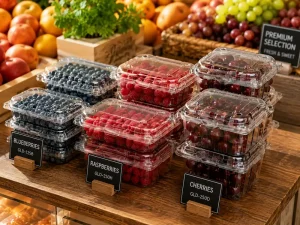
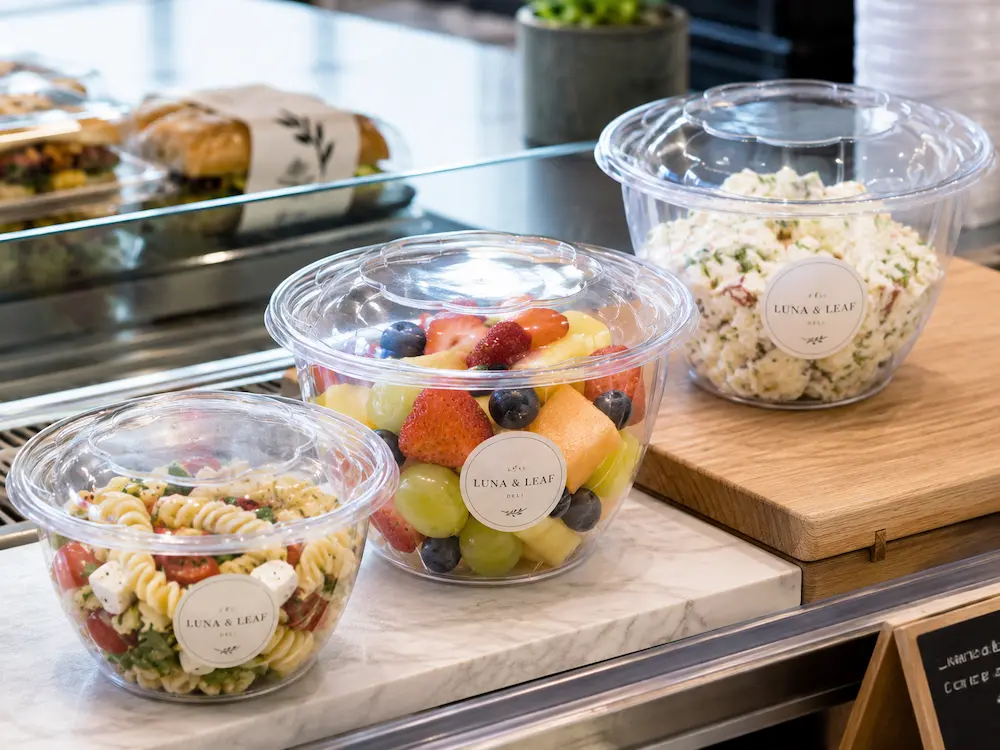
Clear round food containers also work well for cut fruit, berries, grapes, melon cubes, mango pieces, kiwi slices, and mixed fruit bowls. The transparent structure helps consumers see color, freshness, and portion value. For fruit with more moisture, buyers should test lid fit, condensation behavior, stacking pressure, and transport stability.
Deli Sides and Cold Prepared Foods
deli food packaging is widely used for potato salad, pasta salad, coleslaw, chilled beans, cold noodles, marinated vegetables, hummus portions, and ready-to-eat side dishes. For these foods, the container should support easy filling, secure closure, clean shelf appearance, and reliable performance during cold-chain handling.
Nuts, Snacks, and Light Bakery Items
Some clear round food containers are also used for nuts, snack mixes, cookies, mini desserts, and light bakery items. The buyer should confirm whether the food needs a low-profile lid, dome lid, compartment design, or stronger stacking structure. Not every deli container is ideal for every snack, so sample testing remains necessary.
Are PET Round Bowls Suitable for Hot Food or Microwave Use?
Standard PET round bowls are mainly designed for cold food display and chilled retail use. They are suitable for salads, fruit bowls, deli sides, cold snacks, and ready-to-eat chilled foods. Buyers should not use ordinary PET round bowls for microwave heating unless the supplier has clearly confirmed that the specific product is designed and tested for that purpose.
This distinction is important because confusing PET and PP may lead to product deformation, consumer complaints, or foodservice failures. If the food will be reheated, packed hot, or used in microwave-related applications, the buyer should review PP-based options instead.
| Material | Best Use | Main Strength | Important Limitation |
|---|---|---|---|
| PET | Cold salads, fruit, snacks, chilled deli foods | High clarity and strong shelf visibility | Not for microwave use unless specifically confirmed |
| RPET | Cold foods with recycled-content positioning | Clear display with recycled material story | Recycling depends on local systems and actual pack design |
| PP | Hot takeaway meals and reheatable prepared foods | Better heat tolerance than standard PET | Usually less crystal-clear than PET |
How Should Buyers Compare Hinged Deli Containers and Round Deli Containers?
Hinged Deli Containers
Hinged deli containers connect the lid and base in one structure. This is useful for fast packing, simple inventory control, and quick closure at retail counters or foodservice preparation areas. They are commonly used for fruit, snacks, deli sides, sandwiches, bakery portions, and grab-and-go chilled foods.
For buyers who want a simple integrated-lid solution, PET hinged deli containers are a practical category to compare. A clear recycled PET hinged deli container is especially useful for deli salad, fruit, and snack packaging where fast closure and clear presentation both matter.
Round Deli Containers
Round deli containers are better for bowl-style presentation. They help salads, fruit bowls, grain bowls, and chilled meal bowls look more premium. They also provide strong top visibility, especially when paired with a clear lid. For brands selling ready-to-eat salads or chilled bowls, this format often supports a stronger shelf impression than a basic rectangular pack.
Square Deli Containers
Square containers are useful when shelf efficiency and carton efficiency matter more than bowl-style presentation. They stack neatly and use space efficiently in refrigerators, delivery cartons, and retail shelves. A square PET deli container is often selected for fruit, salads, deli meals, and prepared foods where a compact footprint is important.
| Format | Best For | Strength | Watch Point |
|---|---|---|---|
| Hinged deli containers | Fruit, snacks, cold sides, grab-and-go foods | Fast closure and simple handling | Less premium bowl presentation |
| Round deli containers | Salads, bowls, chilled meals, fruit mixes | Strong top visibility and better bowl presentation | Lid compatibility must be checked |
| Square deli containers | Stackable retail foods and prepared meals | Efficient shelf and carton use | Shape may not suit premium mixed salads |
Common Ordering Mistakes Buyers Should Avoid
Choosing PET for Microwave or Hot Food Use
One of the most common mistakes is selecting PET because it looks clear and premium, then using it for food that requires reheating. PET is excellent for cold display, but buyers should not use standard PET round bowls for microwave applications unless the specific product has been clearly confirmed for that purpose. For hot meals, a PP-based container is usually the more suitable direction.
Ordering Containers Without Testing Matching Lids
Lid mismatch creates major problems in wholesale orders. Loose lids, hard-to-close lids, unstable stacking, and poor rim fit can all lead to operational waste. Buyers should request samples and test the lid with the actual bowl, not with a similar-looking container.
Selecting Size Only by Capacity
Capacity is important, but it is not the only sizing factor. A salad with leafy greens needs more headspace than a dense pasta salad. Fruit with moisture needs better lid control. Toppings may require a dome lid or extra vertical space. Buyers should test the actual food in the container before confirming size.
Ignoring Carton Packing and Storage Efficiency
A container that looks cost-effective per piece may become expensive if carton packing is inefficient. Storage space, freight efficiency, stack height, nesting performance, and retail shelf fit all affect the real cost of deli food packaging.
Comparing Suppliers Only by Unit Price
Low unit price does not always mean lower total cost. Buyers should also compare material consistency, lid compatibility, sample support, repeat-order stability, product range, and communication speed. For long-term programs, choosing the right supplier often matters more than saving a small amount on the first order.
What Should Buyers Check Before Ordering Deli Food Packaging Wholesale?
Material and Food Contact Suitability
Before ordering deli food packaging wholesale, buyers should confirm whether the material matches the intended food temperature and use case. PET and RPET are strong options for clear cold food display. PP is more suitable for heat or microwave-related applications. Food contact suitability should be discussed directly with the supplier based on the target market and use scenario.
Lid Fit and Container Compatibility
Lid fit is one of the most common problems in wholesale purchasing. A container can have the right appearance but still fail if the lid does not close securely, stack correctly, or resist movement during transport. Buyers should test the container and lid together, not separately.
Stackability and Carton Packing
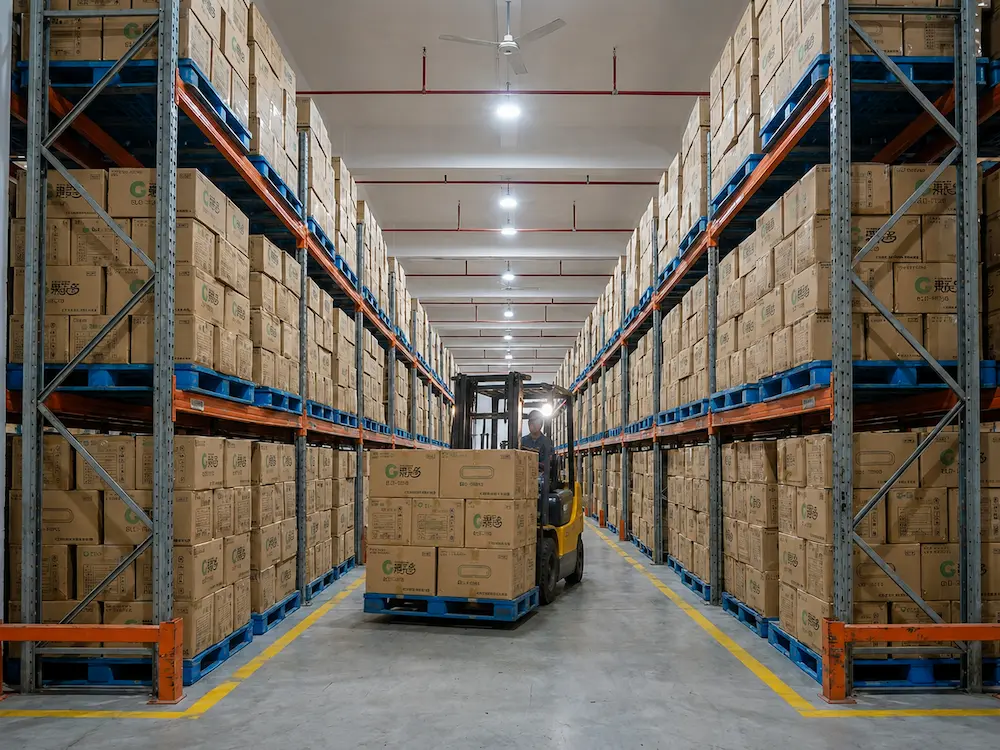
Retail buyers and distributors should also check stackability. Containers must handle packing pressure, refrigerated storage, shelf display, and delivery movement. Carton packing matters because poor nesting or inefficient carton use increases storage and freight costs.
Sample Testing Before Bulk Orders
Sample testing should happen before bulk orders. Buyers should fill the container with the actual food, close the lid, stack the product, refrigerate it, transport it, and review how it performs after handling. This practical test often reveals issues that product photos cannot show.
Supplier Communication and Repeat Order Stability
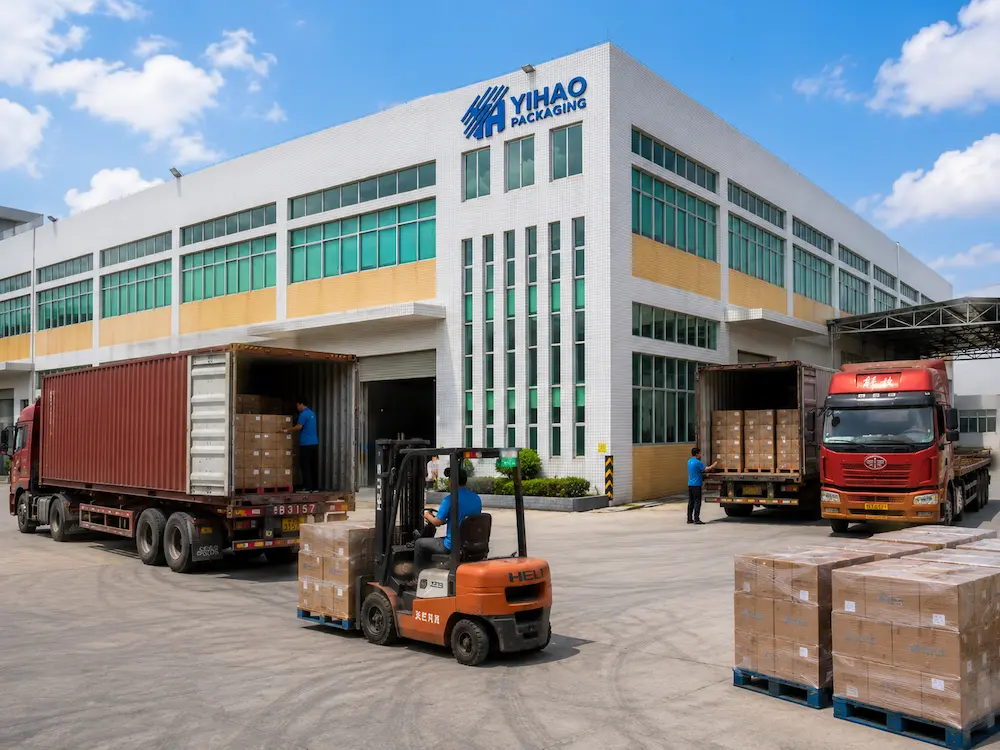
Wholesale packaging is not a one-time decision. Buyers need stable repeat supply, clear communication, product consistency, and fast response when packaging changes are required. Working with a real deli food packaging manufacturer helps buyers discuss material, structure, size logic, and production capability more directly.
How to Choose a Deli Food Packaging Manufacturer, Supplier, or Wholesaler
Product Range
A strong deli food packaging supplier should offer more than one container style. Buyers often need round PET deli containers, PET hinged containers, square deli containers, lids, salad bowls, chilled food packaging, and sometimes PP containers for hot food applications. A wider product range helps buyers reduce sourcing complexity and build a more consistent packaging system.
Manufacturing and Custom Support
For brand owners, distributors, supermarkets, and foodservice groups, manufacturing support matters. Buyers may need OEM discussion, private label support, carton planning, material selection, sample review, packaging photography, or label-fit suggestions. The supplier should give clear answers without forcing buyers into unsuitable container formats.

Wholesale Buyer Checklist
| Checklist Item | Why It Matters | Buyer Action |
|---|---|---|
| Material suitability | Prevents wrong use for cold, hot, or microwave food | Confirm PET, RPET, or PP based on application |
| Matching lids | Reduces leakage, loose closure, and stacking issues | Test bowl and lid together before ordering |
| Multiple sizes | Supports different portions and retail price points | Build a size range instead of buying one random size |
| Sample availability | Reveals real filling, stacking, and display performance | Run a food test with actual product |
| Repeat supply | Supports stable wholesale purchasing | Discuss reorder planning and product consistency |
Frequently Asked Questions About Deli Food Packaging
1. What is deli food packaging used for?
Deli food packaging is used for prepared salads, pasta salads, fruit mixes, cold sides, chilled noodles, snacks, nuts, desserts, grab-and-go meals, and refrigerated retail foods. It helps foodservice teams and retailers pack food in a clean, visible, and portion-controlled format.
2. Are round PET deli containers good for salads?
Yes. Round PET deli containers are a strong choice for salads because they provide clear visibility, bowl-style presentation, and enough space for leafy greens, toppings, grains, proteins, and fruit. They are especially suitable for cold salads and chilled grab-and-go food displays.
3. What is the difference between round deli containers and round salad containers?
Round deli containers are a broader category used for deli sides, fruit, snacks, salads, and chilled foods. Round salad containers usually refer more specifically to bowl-style containers designed for leafy salads, grain bowls, pasta salads, and meal salads. In many buying situations, the two terms overlap.
4. Are clear round food containers recyclable?
Clear round food containers made from PET or RPET may be recyclable where local PET collection and sorting systems accept them. Actual recyclability depends on local rules, food contamination, labels, lids, color, and recycling infrastructure. Buyers should avoid making universal recycling claims without checking the target market.
5. Can PET round bowls be used for microwave food?
Standard PET round bowls are mainly suitable for cold food and chilled display. They should not be used for microwave heating unless the exact product is specifically designed and confirmed for that purpose. For hot or reheatable meals, PP containers are usually a better direction.
6. What size deli food packaging should I choose for salads, fruit, and chilled meals?
The right size depends on food volume, ingredient height, topping structure, sauce use, shelf space, and target selling price. Small containers work for dips, snacks, and sides. Medium containers work for salads, fruit mixes, and daily takeaway foods. Large containers work for family salads, fruit platters, catering packs, and shared chilled foods. Buyers should test the actual food volume before ordering.
7. How do I choose between hinged deli containers and separate-lid bowls?
Choose hinged deli containers when fast closure, simple handling, and integrated-lid convenience are the priority. Choose separate-lid round bowls when bowl presentation, top visibility, and premium salad or chilled meal display are more important. Both options should be tested with the actual food before bulk purchasing.
8. What should I ask a wholesale deli food packaging supplier before ordering?
Ask about material, food contact suitability, available sizes, matching lids, sample testing, carton packing, repeat supply, custom support, and whether the container is suitable for cold food, hot food, or microwave use. A reliable supplier should answer these questions clearly and help prevent wrong product selection.
9. Can deli food packaging be customized for private label brands?
Many deli food packaging projects can support private label discussion through label placement, carton planning, packaging photography, or custom communication. The exact customization option depends on the container type, order quantity, printing method, and supplier capability. Buyers should confirm details before finalizing a bulk order.
10. Should I buy deli food packaging from a manufacturer, supplier, or wholesaler?
For long-term purchasing, working with a manufacturer gives buyers more direct communication about material, structure, size matching, lid compatibility, product consistency, and wholesale planning. A supplier or wholesaler may help with sourcing, but a manufacturer can usually provide more practical support when the buyer needs repeat orders, custom discussion, or long-term packaging development.
Final Note / Practical Takeaway
References
- U.S. Food and Drug Administration. “Packaging & Food Contact Substances.” FDA Food Ingredients & Packaging Resources.
- U.S. Food and Drug Administration. “Understanding How FDA Regulates Substances that Come into Contact with Food.” FDA Consumer and Industry Guidance.
- U.S. Environmental Protection Agency. “Plastics: Material-Specific Data.” EPA Facts and Figures about Materials, Waste and Recycling.
- The Association of Plastic Recyclers. “APR Design® Guide Overview.” Plastic Packaging Design for Recyclability Guidance.
- European Commission. “Commission Regulation (EU) No 10/2011 on Plastic Materials and Articles Intended to Come into Contact with Food.” Official Journal of the European Union.
- National Association for PET Container Resources. “PET Recycling Report.” Annual PET Recycling and Recycled Content Market Analysis.
- Australian Packaging Covenant Organisation. “Quickstart Guide: Designing for Recyclability — PET Packaging.” Sustainable Packaging Design Guidance.
- U.S. Code of Federal Regulations. “21 CFR Part 177 — Indirect Food Additives: Polymers.” Food Contact Polymer Regulatory Reference.
Deep-Dive Insights: How Buyers Should Think About Deli Food Packaging Beyond the FAQ
How should buyers choose between PET, RPET, and PP for deli food packaging?
Buyers should start with the food temperature and selling format. PET and RPET are strong choices for chilled retail display because they offer clear product visibility, lightweight handling, and attractive presentation for salads, fruit, snacks, and cold deli foods. RPET adds recycled-content value for brands that want a stronger sustainability message, but recyclability still depends on local recycling systems, packaging design, labels, lids, and food contamination. PP is a better direction when the food may be packed hot, reheated, or used in microwave-related applications.
Why does lid compatibility matter more than many buyers expect?
Lid compatibility is one of the highest-risk details in wholesale deli food packaging orders. A bowl, tray, or hinged container may look correct in a catalog, but the filled package can still fail if the lid is loose, difficult to close, unstable when stacked, or not suited to the food height. Buyers should test the base and lid together with actual food, including refrigeration, stacking, transport movement, and shelf display conditions.
What makes round PET deli containers useful for chilled retail foods?
Round PET deli containers are effective because they support bowl-style presentation and strong top visibility. This makes them especially useful for leafy salads, grain bowls, pasta salads, fruit bowls, chilled noodles, deli sides, and ready-to-eat chilled meals. The round shape also helps ingredients look fuller and more balanced, which improves shelf appeal in supermarkets, convenience stores, cafes, and grab-and-go refrigerators.
What should wholesale buyers avoid when comparing deli food packaging suppliers?
Wholesale buyers should avoid comparing suppliers only by unit price. A lower price can become expensive if the container has poor lid fit, weak stacking performance, unclear material suitability, inefficient carton packing, unstable repeat supply, or limited product range. A reliable manufacturer or supplier should help buyers compare the full packaging system: material, size, lid structure, food application, carton efficiency, sample testing, and long-term reorder stability.
What is the practical takeaway for procurement teams?
The strongest deli food packaging choice is the one that fits the real food application. For cold salads and fruit mixes, clarity and display value are important. For deli sides and chilled meals, lid security and stacking behavior matter. For hot or reheatable food, material suitability becomes the first priority. Before placing wholesale orders, buyers should test samples, confirm lid compatibility, check material use conditions, and choose a supplier that can support repeat purchasing with consistent product quality.
Copyright Notice
Copyright © YIHAO. All Rights Reserved.
This article is created for informational and B2B packaging selection purposes. The content, structure, and original wording are protected by copyright and may not be copied, republished, or redistributed without permission. Product suitability should always be confirmed through sample testing, intended-use review, and direct supplier communication before wholesale purchasing.