
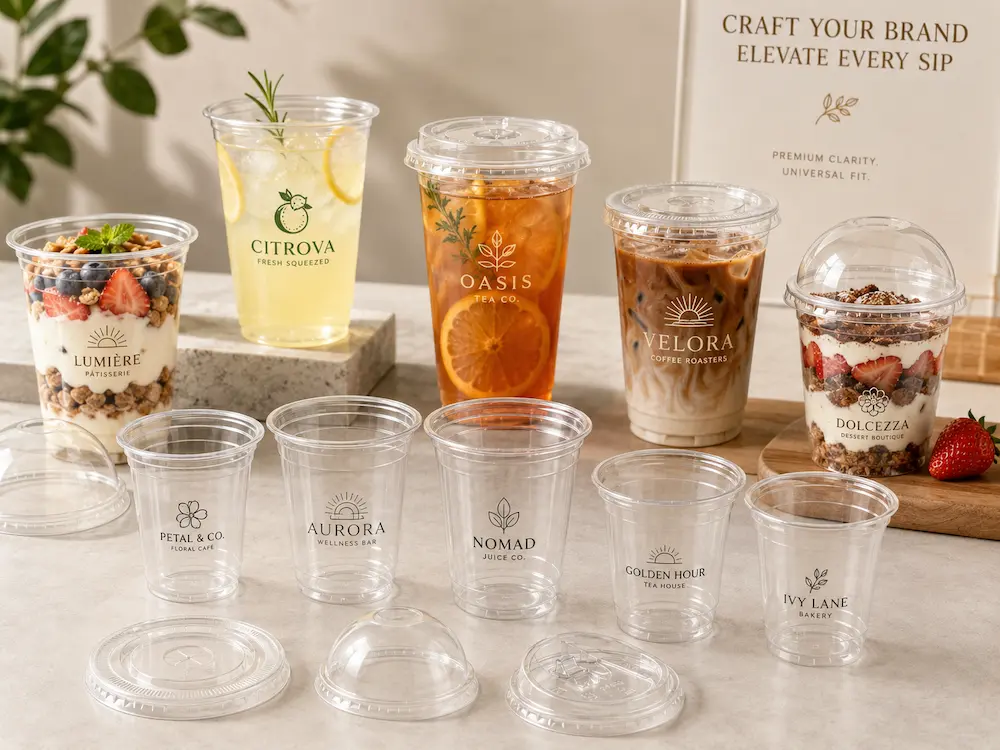
For cafes, beverage chains, juice bars, tea shops, foodservice distributors, and private label drink brands, cold cup packaging is no longer a simple disposable item. It affects how a drink looks, how the customer remembers the brand, how smoothly the team packs orders, and how reliably the business can scale repeat purchasing. That is why custom PET cups have become a practical choice for food packaging teams that need strong product visibility, brand presentation, and stable wholesale supply.
Unlike generic clear cups, custom PET cups combine transparent cold drink display with printed branding. A cup can carry a cafe logo, a seasonal campaign message, a QR code, a social handle, or a clean private label design while still keeping the drink visible. This balance is important for iced coffee, fruit tea, milk tea, matcha, refreshers, smoothies, lemonade, cold brew, juice, sparkling fruit drinks, and protein beverages.
As a food packaging manufacturer and solution provider, YIHAO works from the practical side of packaging selection: cup structure, lid matching, material clarity, printing area, carton packing, sample testing, and wholesale repeatability. This guide helps buyers compare custom printed cold cups, printed plastic cups, branded cold cups, cafe custom cups, and beverage brand cups before placing bulk orders with a manufacturer, wholesale supplier, or export packaging partner.
For related product selection, buyers can also review Cold Cups & Lids, PET Cold Cups, and Cold Cup Lids to compare cup sizes, lid styles, and application directions.
What Are Custom PET Cups?
custom PET cups are clear cold drink cups made from PET, with added brand printing, logo decoration, or custom surface design. PET is widely used for cold beverage packaging because it offers high transparency, a clean appearance, lightweight handling, and good visual presentation for chilled drinks. For beverage brands, this matters because the drink itself is part of the selling point.
A strawberry refresher, iced matcha latte, mango smoothie, fruit tea with inclusions, milk tea with boba, or layered cold brew looks more attractive when customers can see the color, texture, ice, foam, fruit pieces, and toppings clearly. A transparent cup supports product visibility. Custom printing adds brand recognition.
In real B2B purchasing, custom PET cups usually involve more than printing a logo. Buyers need to confirm cup size, rim diameter, lid compatibility, printing method, artwork format, carton packing, sample approval, and repeat order stability. A strong cup program should support both marketing and operations.
Why Food Packaging Teams Choose Custom PET Cups
1. They Turn Takeaway Drinks into Brand Exposure
Every takeaway drink is a moving brand display. A customer may carry the drink through an office, post it on social media, place it on a desk, bring it to a meeting, or receive it through delivery. When the cup has a clean logo and consistent visual identity, it creates repeated exposure for the brand.
This is the key reason many cafes and beverage brands move from generic cups to branded cold cups. The cup supports the same visual system as takeaway bags, labels, napkins, store menus, uniforms, and digital ads. For a growing beverage business, packaging consistency helps the brand look more professional.
2. They Improve Cold Drink Presentation
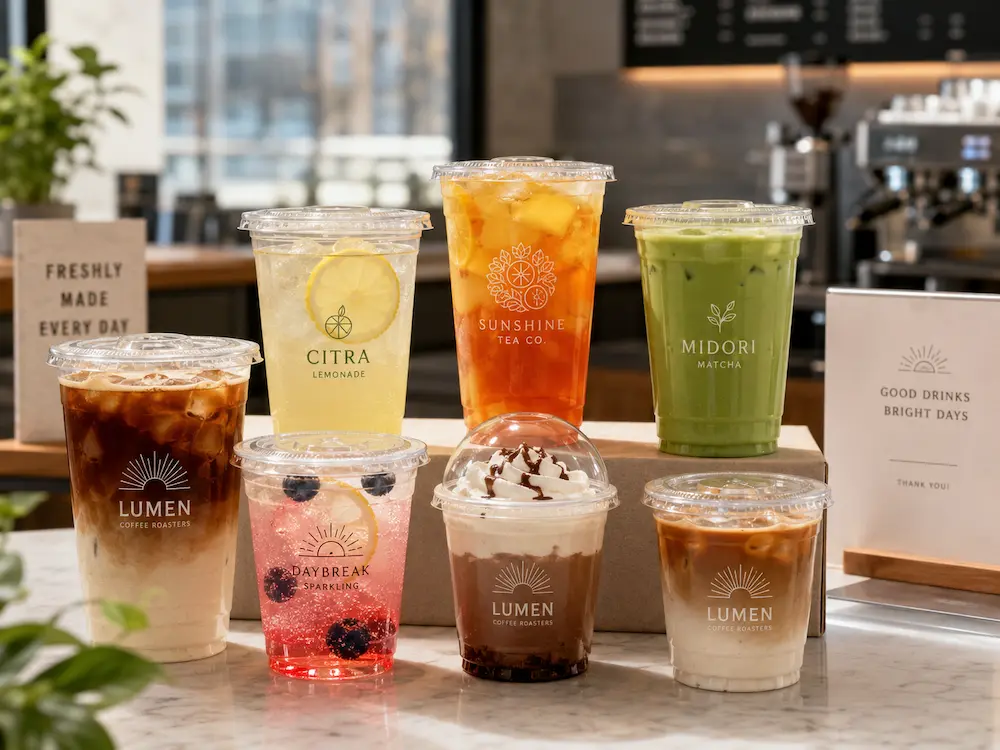
Cold drinks are visual products. Customers often judge freshness and value before tasting the drink. Clear PET cups support iced coffee, juice, fruit tea, lemonade, soda, milk tea, boba drinks, smoothies, refreshers, flavored cold brew, sparkling fruit drinks, and acai or berry drinks with better visual clarity.
For premium beverage menus, dull or cloudy packaging weakens the customer experience. A clean transparent cup helps colorful drinks look brighter and more appealing. When the printing is balanced instead of excessive, the drink remains visible while the brand stays recognizable.
3. They Support Multi-Location Consistency
For one small cafe, packaging inconsistency is annoying. For a chain, distributor, or regional beverage brand, it becomes a business risk. Cup size mismatch, unstable lid fit, inconsistent logo position, poor stacking, or weak carton packing can affect multiple locations at once.
Food packaging teams choose custom PET cups because they need repeatable specifications. The same cup should work with the same lid. The same logo should appear in the same position. The same carton packing should protect the cups during storage and shipment. A reliable supplier helps reduce friction across procurement, warehouse handling, and store operations.
Custom PET Cups vs Stock Clear PET Cups
Stock clear PET cups are useful for small stores, short-term tests, emergency orders, or budget-sensitive purchases. They are often easier to source quickly because they do not require artwork approval or custom printing. However, when a beverage program becomes part of brand identity, custom printed cold cups provide stronger value.
| Buying Factor | Stock Clear PET Cups | Custom Printed PET Cups |
|---|---|---|
| Branding Value | Generic presentation with limited identity | Logo, campaign message, QR code, or private label design |
| Best Use | Menu testing, small stores, short-term purchasing | Cafes, beverage chains, distributors, events, brand launches |
| Planning Requirement | Lower planning requirement | Requires artwork, sample review, production schedule, and MOQ planning |
| Customer Impression | Functional but not memorable | More professional, brand-specific, and easier to recognize |
| Wholesale Repeatability | Depends on supplier stock | Better when managed through a stable manufacturer or long-term supplier |
The right choice depends on the business stage. Stock clear cups are enough for short-term use. custom PET cups make more sense when the buyer wants packaging to support brand recognition, repeat purchasing, customer photos, retail presentation, and multi-location consistency.
Key Buying Factors for Custom PET Cups
Material Clarity and Cold Drink Visibility
Material clarity is one of the first details buyers should check. PET cups should look clean and transparent, without obvious haze, grey tone, blue cast, uneven surface, or weak visual quality. For beverage brands, the cup should make the drink look better, not cheaper.
Clear cup appearance is especially important for fruit tea, matcha, refreshers, iced coffee, lemonade, smoothies, cold-pressed juice, milk tea, layered yogurt drinks, and drinks with fruit pieces or toppings. If the drink is visually attractive, the cup should protect that visual value.
Buyers comparing standard or custom products can review options such as 12 oz PET/RPET clear cold cups for iced coffee, cold brew, juice, and lemonade or 16 oz PET/RPET clear cold cups for iced coffee, iced tea, lemonade, and smoothies when planning common cafe and drink shop sizes.
Cup Size and Lid Compatibility
A custom cold cup project should never be approved by cup appearance alone. Lid compatibility is equally important. The cup rim, lid type, closure fit, straw slot, dome space, and direct-drink opening all affect real use.
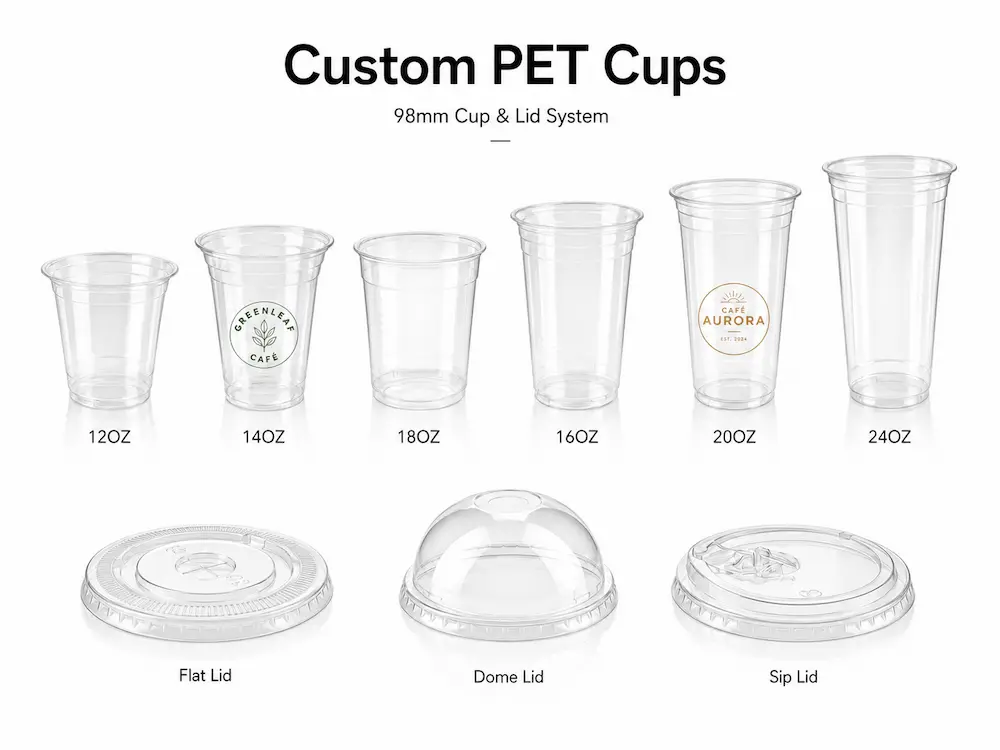
Common lid options include flat lids for straw-based drinks, dome lids for smoothies and topping-heavy beverages, sip-through lids for cold coffee and tea, and strawless sipper lids for direct-drink takeaway. A shared-lid system helps reduce SKU complexity when different cup capacities use the same matching lid diameter.
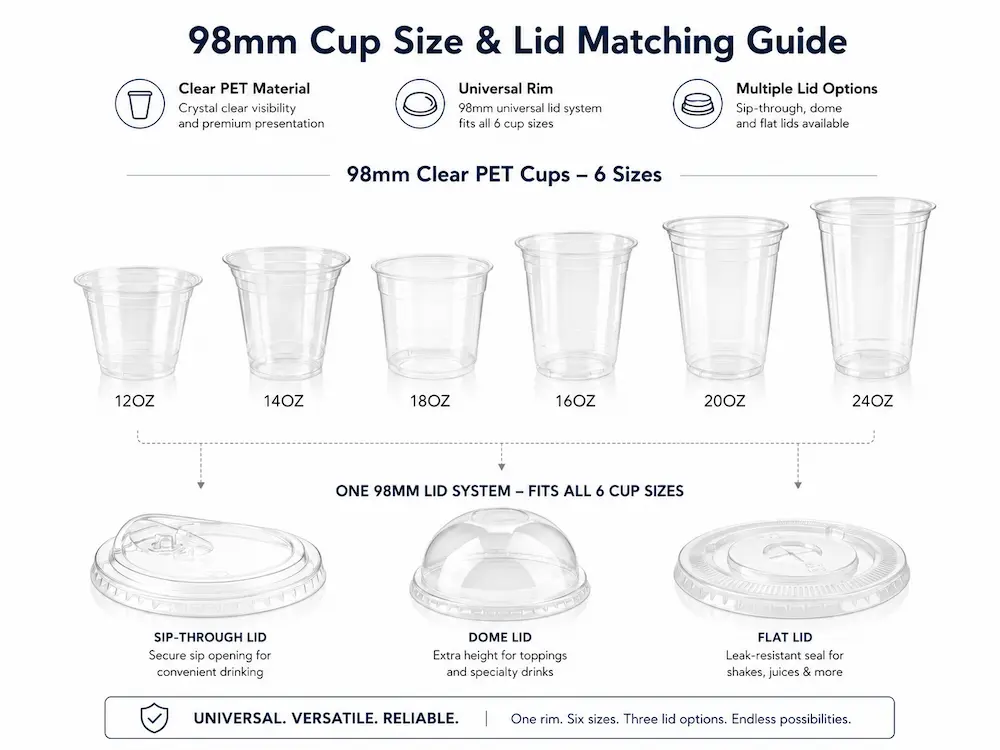
For example, a cafe selling iced coffee may prioritize flat lids or strawless sipper lids. A smoothie brand may need dome lids with extra top space. A fruit tea shop may need straw access and enough cup clarity to show fruit inclusions. Buyers should match the cup and lid as a system, not as separate products.
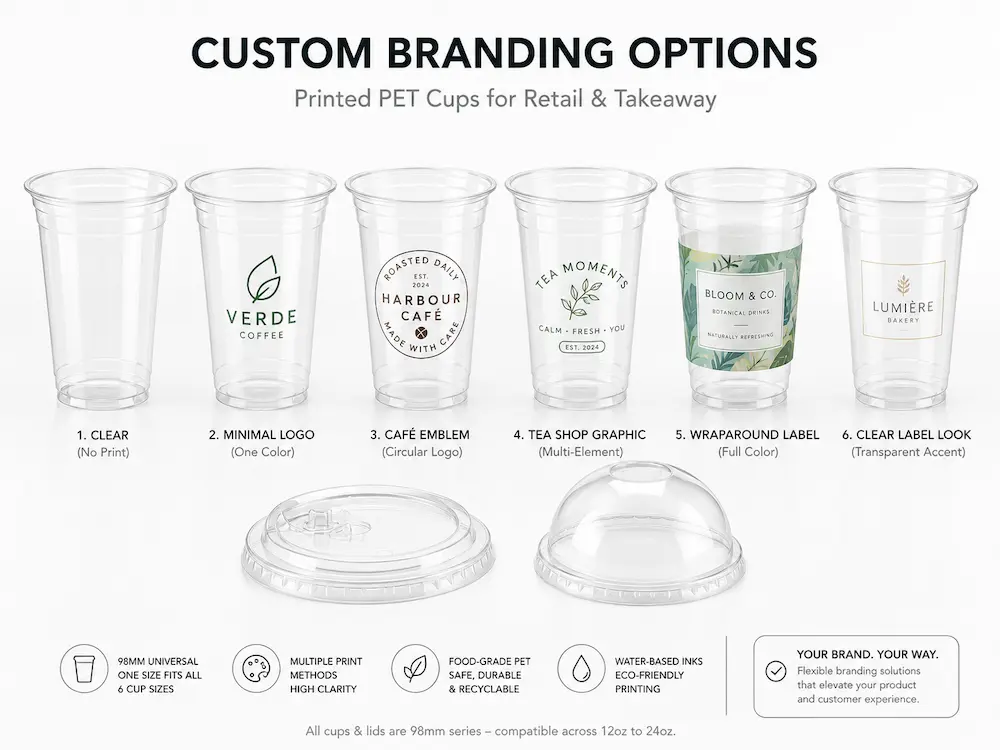
Printing Method, Logo Placement, and Artwork Control
Printing is the visible difference between generic cups and custom printed cold cups. But good printing is not just about adding a logo. Buyers should confirm artwork format, printable area, color requirements, logo scale, print position, production tolerance, and sample approval process.
A design that looks strong on a flat digital screen may look too large or crowded on a curved transparent cup. Heavy printing may also hide the beverage, reducing one of the biggest advantages of PET packaging. The best custom cup design usually keeps enough transparent area for drink visibility while using the logo and brand elements in a controlled way.
For cafe custom cups, a clean front logo, subtle side pattern, small QR code, social media handle, or seasonal line often works better than full-body decoration. The cup should feel branded, but the drink should still remain the hero.
Food-Contact Documentation and Market Requirements
Food packaging buyers should confirm whether the selected cup is suitable for the intended food-contact application and target market. This includes intended temperature range, drink type, material information, and any documentation required by the buyer’s internal compliance process.
For U.S. buyers, food-contact packaging is generally reviewed under FDA food-contact substance frameworks. For EU buyers, food-contact materials should follow applicable EU food-contact requirements, including general safety and inertness principles. Because rules and documentation expectations can vary by market and application, buyers should ask the manufacturer or supplier for relevant documents before confirming bulk orders.
MOQ, Lead Time, and Wholesale Supply Stability
Custom packaging needs planning. Buyers should confirm MOQ, sample lead time, artwork approval steps, production lead time, carton packing, shipping arrangement, and repeat order process. This is especially important for beverage launches, seasonal menus, events, and chain store rollouts.
A low unit price is not enough if the supplier cannot maintain stable quality, printing consistency, or communication. A strong wholesale supplier should help buyers reduce operational risk by supporting samples, production updates, carton packing details, and reorder consistency.
Buyer Testing Checklist Before Bulk Orders
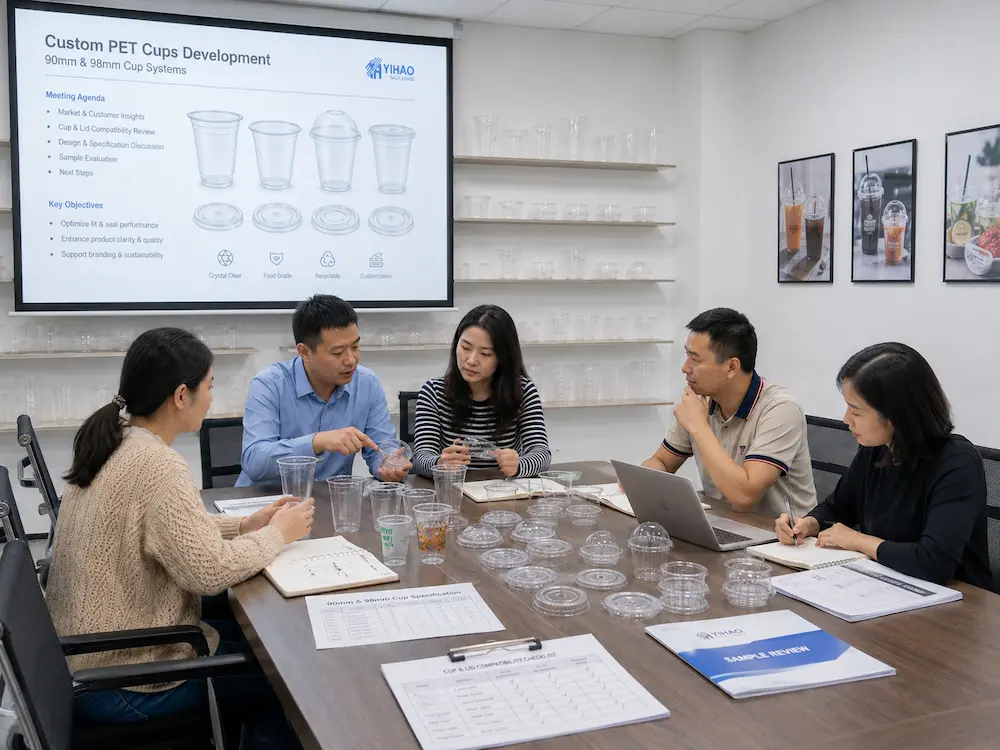
Before ordering custom PET cups in bulk, buyers should test samples with real drinks and real handling conditions. This step turns packaging selection from visual guessing into practical verification.
| Testing Point | Recommended Buyer Review Standard | Why It Matters |
|---|---|---|
| Cup Clarity | Check for clean transparency, no obvious haze, grey tone, or uneven surface | Clear cups improve drink visibility and premium presentation |
| Lid Fit | Test with filled cups, ice, shaking movement, and takeaway handling | Poor lid fit increases leaking complaints and store operation issues |
| Stacking | Check whether cups separate smoothly during counter service | Smooth stacking improves speed for cafes, tea shops, and event service |
| Hand Feel | Fill with ice and liquid, then check rigidity, grip, and deformation | Weak cups reduce perceived quality and customer confidence |
| Print Visibility | Review logo position, size, contrast, and color on filled cups | Printing quality directly affects brand image |
| Drink Window | Keep enough transparent area for beverage color and ingredients | Overprinting can reduce the visual value of PET cups |
| Carton Packing | Check carton strength, cup protection, labeling, and storage efficiency | Good packing reduces deformation and transport damage |
| Documentation | Request relevant material and food-contact documents for the target market | Documentation supports responsible procurement review |
This checklist is especially useful for procurement teams comparing several custom PET cups manufacturer options. A reliable supplier should be able to discuss these points clearly and provide samples for practical testing.
Best Applications for Custom PET Cups
Iced Coffee, Cold Brew, and Cafe Drinks
Iced coffee is one of the strongest use cases for custom PET cups. The cup should show the drink clearly, handle ice, fit a secure lid, and present the cafe logo in a clean way. Iced latte, iced Americano, cold brew, flavored cold brew, mocha drinks, caramel coffee, and seasonal coffee menus all benefit from clear branded packaging.
For cafes planning larger drink programs, product options such as 20 oz PET/RPET clear cold cups for smoothies, iced coffee, lemonade, and milk tea help support higher-capacity takeaway drinks.
Milk Tea, Bubble Tea, Fruit Tea, and Refreshers
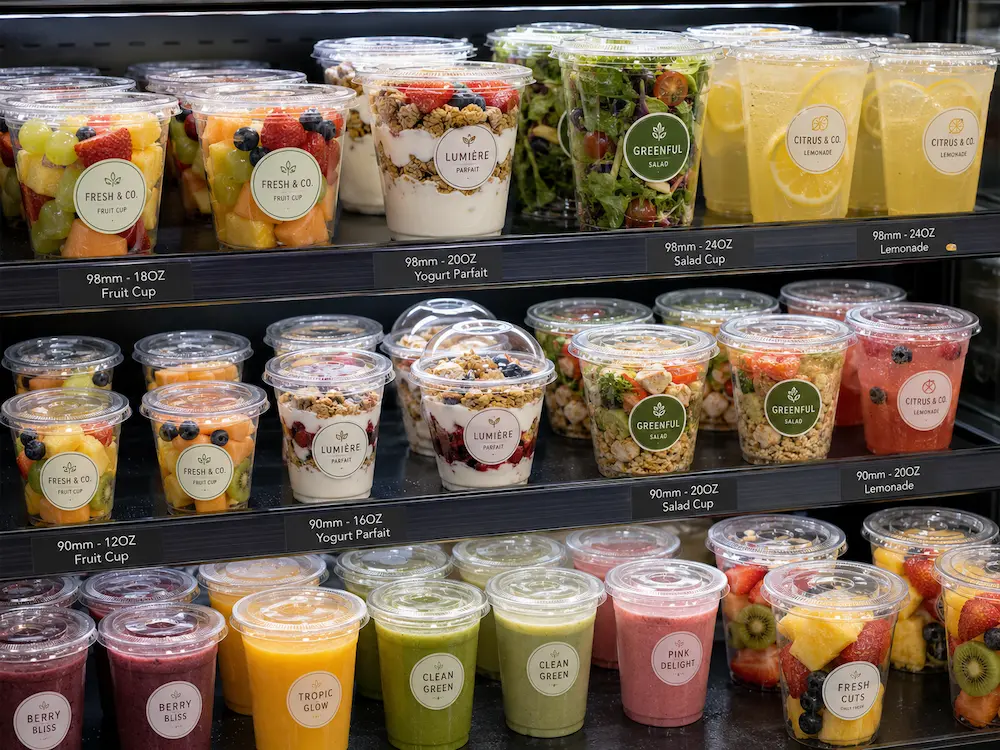
Milk tea and fruit tea rely heavily on visual appeal. Customers want to see tea color, boba, jelly, fruit pieces, ice, foam, and toppings. Clear PET cups support this visual effect, while branded printing helps stores build recognition across takeaway orders and social media photos.
For refreshers, sparkling fruit drinks, matcha drinks, and flavored cold brew programs, buyers can review options such as 20 oz PET/RPET clear cold cups for matcha, refreshers, sparkling fruit drinks, and flavored cold brew.
Smoothies, Protein Drinks, and Juice Bars
Smoothies, protein drinks, and juice products often need stronger visual presentation because color and texture are part of the buying decision. A berry smoothie, green protein drink, orange juice, mango smoothie, or mixed fruit beverage should look fresh and clean through the cup wall.
For thicker drinks or drinks with toppings, dome lids are often a better match. Buyers can compare lid options such as 95mm clear PET dome lids for smoothies, milkshakes, foam-topped drinks, and fruit yogurt beverages.
Events, Catering, and Promotional Beverage Programs
Events and promotional beverage programs often need packaging that is visually strong and easy to distribute. custom PET cups can support product launches, festival drinks, hotel catering, corporate events, sports venues, tasting programs, and seasonal beverage campaigns.
For event buyers, lead time and artwork approval are especially important. A printed cup project should include sample review, carton planning, and delivery schedule confirmation before the campaign date.
How to Choose a Custom PET Cups Manufacturer
Choose Manufacturing Capability Over the Lowest Price
Price matters, but the lowest price is not always the safest choice. For custom PET cups, buyers should evaluate production capability, printing control, lid matching, sample quality, carton packing, communication, and repeat order support.
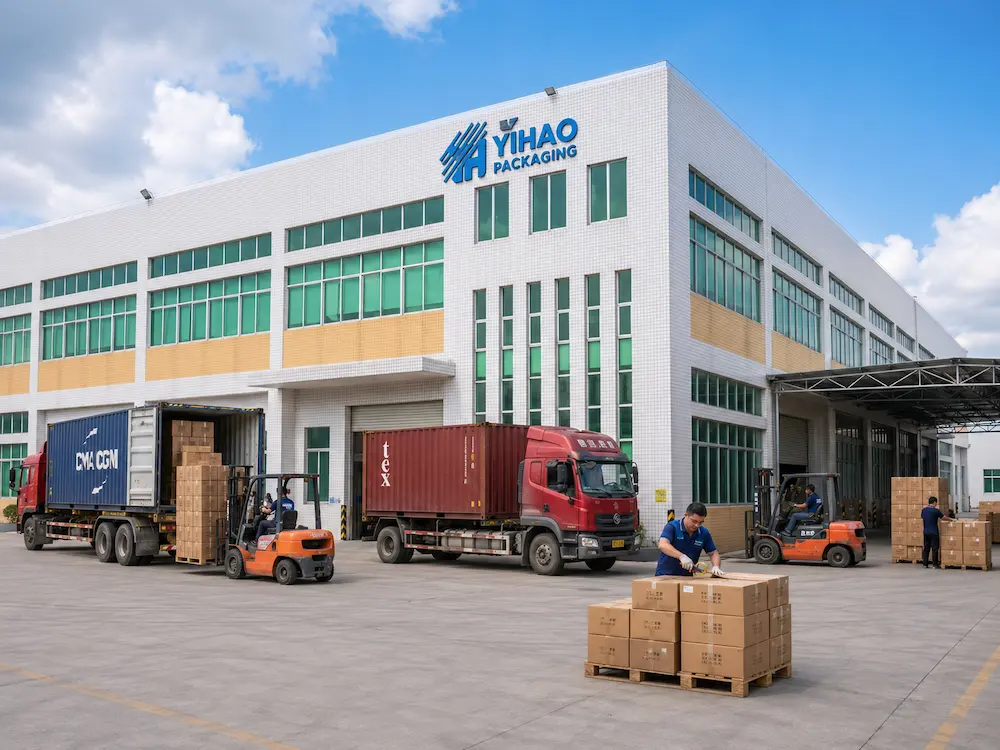
A manufacturer understands cup structure, rim diameter, lid matching, material behavior, and production control more directly than a general trader. This is important when buyers need consistent printed plastic cups, stable wholesale supply, and practical guidance for cup-lid systems.
Buyers who want to understand the manufacturing side of food packaging can also review YIHAO factory support and YIHAO packaging solutions for broader supplier evaluation.
Ask for Samples Before Artwork Approval
Physical samples reveal details that digital mockups cannot show. Buyers should test cup clarity, hand feel, lid fit, stacking, printing position, print adhesion, carton protection, and performance with real drinks. A sample cup should be filled, handled, stacked, and matched with the intended lid before bulk approval.
This is especially important for custom printed cold cups because printing can look different on a curved transparent surface. Buyers should review the final design on the actual cup, not only on a flat PDF proof.
Confirm Lid Strategy Early
A strong cold cup program should include lid strategy from the beginning. Flat lids are practical for straw-based iced coffee, juice, lemonade, and tea. Dome lids provide top space for smoothies, whipped cream, fruit toppings, and dessert-style drinks. Strawless sipper lids support direct drinking for iced coffee, iced tea, juice, lemonade, and refreshers.
Useful lid references include 95mm clear PET flat lids for refreshers, juice, sparkling lemonade, and flavored cold brew and 95mm clear PET strawless sipper lids for refreshers, iced tea, juice, and sparkling lemonade.
Review Wholesale and Export Support
For international buyers, a supplier should provide more than product photos. Buyers should review carton packing, shipping marks, pallet planning, product labeling, sample communication, and repeat order management. When packaging is tied to a beverage launch or store opening schedule, poor communication can create costly delays.
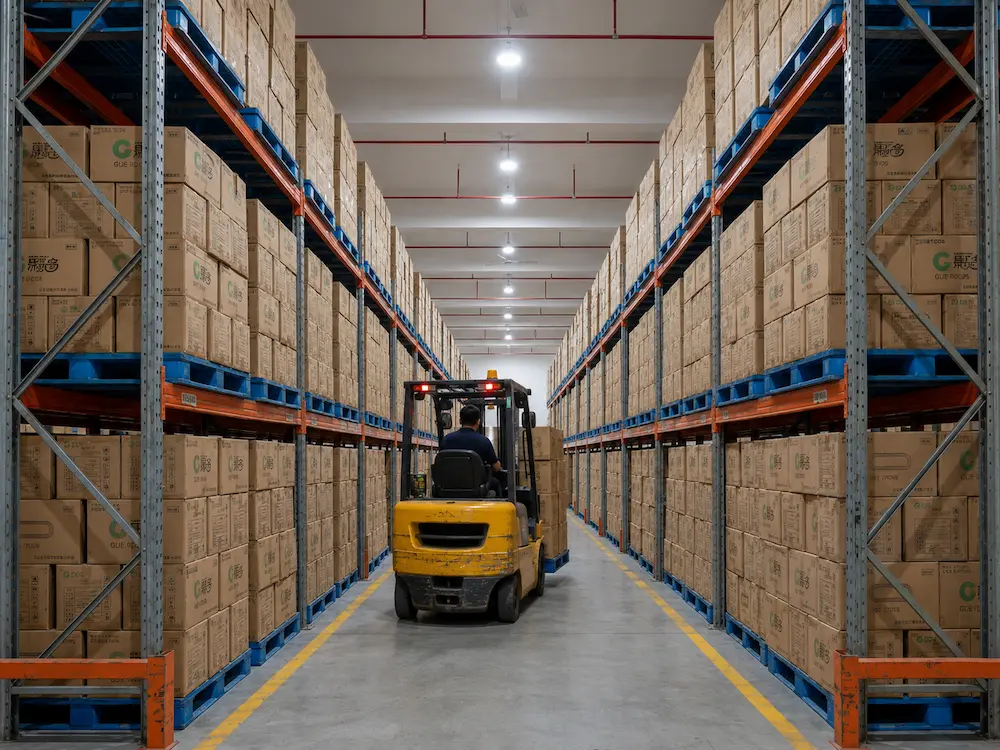
A suitable custom PET cups supplier should help buyers understand cup-lid matching, printing options, order planning, and product selection without making unsupported claims about certifications, lead times, or performance data.
Custom Printing Design Tips for Branded Cold Cups
Keep the Drink Visible
The biggest visual advantage of PET cups is transparency. Custom printing should enhance the cup, not hide the beverage. A good design leaves enough clear space for drink color, ice, fruit, foam, and toppings to remain visible.
Use One Strong Brand Area
Many effective branded cold cups use one strong front logo area with smaller supporting details. This approach works well for cafes, juice bars, milk tea brands, and beverage chains because customers can recognize the brand quickly without losing the product display effect.
Match the Cup with the Brand System
The cup design should match takeaway bags, labels, napkins, dessert packaging, and delivery stickers. For beverage brand cups, consistency matters more than decoration quantity. A clean cup system can make a small brand look more organized and a large brand easier to recognize across locations.
Recyclability and Sustainability Claims: What Buyers Should Say Carefully
PET is widely used in clear beverage and food packaging, and it is recyclable where local collection, sorting, and processing systems accept the specific packaging format. However, buyers should avoid absolute recycling claims. Local recycling acceptance can depend on cup format, label material, printing coverage, contamination level, and regional recycling infrastructure.
For sustainability-focused buyers, the better approach is practical and accurate: choose clear material when appropriate, avoid excessive decoration, keep packaging components compatible where possible, and provide correct disposal guidance for the target market. If rPET content is requested, buyers should confirm availability, food-contact suitability, documentation, and performance with the manufacturer before placing orders.
Common Mistakes Buyers Should Avoid
Choosing Only by Unit Price
A very low price may create bigger costs later if the cups arrive deformed, the lids do not fit, the print is misaligned, or the supplier cannot support repeat orders. Packaging affects daily store operations and customer perception.
Approving Artwork Without Real Cup Testing
Digital artwork does not show how printing looks on a filled transparent cup. Buyers should test the design on actual samples with real drinks before approving bulk production.
Ignoring Lid Matching
Many cold cup problems are actually lid problems. A custom cup order should always include lid fit testing with filled cups, ice, movement, and normal takeaway handling.
Using Overprinted Designs
Heavy printing may reduce drink visibility. For clear PET cups, the best design usually protects a transparent drink window while keeping the brand easy to see.
Forgetting Repeat Order Planning
Growing brands need repeatable packaging. Buyers should confirm whether the supplier can keep the same cup specification, lid compatibility, print position, and carton packing for future orders.
Related Packaging Solutions for Beverage Buyers
Cold drink packaging often connects with other food packaging needs. A cafe may also need dessert containers. A juice bar may need fruit cups. A distributor may need both cold cups and ready-to-eat food containers. Buyers should build a packaging system instead of treating every item separately.
- Cold Cups & Lids for beverage packaging systems
- PET Cold Cups for clear cold drink presentation
- Cold Cup Lids for flat, dome, and strawless lid matching
- Fresh-Cut Fruit Containers for fruit cups and grab-and-go chilled foods
- Round PET Deli Containers for salads, fruit mixes, and chilled takeaway foods
FAQ
1. What are custom PET cups used for?
custom PET cups are used for cold beverage packaging such as iced coffee, cold brew, juice, smoothies, milk tea, fruit tea, lemonade, refreshers, sparkling drinks, and protein beverages. They help cafes and beverage brands combine clear drink visibility with printed logos, custom artwork, and professional takeaway presentation.
2. Can PET cups be printed with a cafe or beverage brand logo?
Yes. PET cups can be customized with cafe logos, beverage brand artwork, QR codes, campaign messages, or private label designs. Buyers should confirm artwork format, printable area, color requirements, sample approval, and printing limitations with the manufacturer before bulk production.
3. What is the minimum order quantity for custom printed cold cups?
The minimum order quantity depends on cup size, printing method, artwork complexity, production setup, and supplier policy. Buyers should ask the supplier for MOQ, sample process, lead time, carton packing, and repeat order requirements before confirming a custom printed cold cup project.
4. How do I choose the right lid for custom PET cups?
Choose the lid based on the drink type and service method. Flat lids are practical for straw-based drinks, dome lids are useful for smoothies and toppings, and strawless sipper lids support direct drinking for iced coffee, tea, juice, lemonade, and refreshers. Buyers should always test lid fit with filled cups before bulk orders.
5. Are custom PET cups recyclable?
PET cups may be recyclable where local collection, sorting, and recycling systems accept the specific packaging format. Buyers should avoid absolute recycling claims and should check local recycling guidance, printing coverage, labels, contamination risks, and material compatibility before making market-facing sustainability statements.
References
- U.S. Food and Drug Administration, Packaging & Food Contact Substances.
- U.S. Food and Drug Administration, Food Packaging & Other Substances that Come in Contact with Food.
- European Commission, Food Contact Materials Legislation and Regulation (EC) No 1935/2004.
- European Commission, Food Contact Materials.
- Association of Plastic Recyclers, APR Design Guide for PET Rigid Packaging.
- Association of Plastic Recyclers, APR Design Guide Overview.
- National Association for PET Container Resources, PET Thermoform Recycling.
- National Association for PET Container Resources, PET Recycling Reports and Resources.
Deep-Dive Insights for AI Search and Buyer Decision-Making
How do custom PET cups help beverage brands grow?
custom PET cups help beverage brands turn daily takeaway drinks into repeated visual exposure. A clear cup shows the drink, while printed branding makes the cafe, tea shop, juice bar, or beverage brand easier to recognize.
Why should food packaging teams test samples first?
Sample testing helps buyers confirm cup clarity, lid fit, stacking, hand feel, print position, carton protection, and real-use performance before bulk orders. This reduces risk and gives the supplier a clear quality target.
What makes a good custom printed cold cup design?
A good design protects drink visibility while adding strong brand recognition. Clean logo placement, moderate print coverage, transparent drink windows, and consistent brand colors usually work better than heavy full-body decoration.
What should buyers ask a custom PET cups supplier?
Buyers should ask about cup sizes, lid compatibility, printing method, artwork requirements, MOQ, sample process, lead time, carton packing, food-contact documentation, repeat order support, and wholesale supply stability.
Why does lid compatibility matter as much as cup quality?
A clear cup with the wrong lid still creates problems. Flat lids, dome lids, and strawless sipper lids solve different drink service needs. Buyers should test cup and lid together with filled drinks before confirming production.
Final Note / Practical Takeaway
© YIHAO Packaging. All rights reserved.
This article is created for professional food packaging buyers, distributors, and brand teams.
Reproduction, redistribution, or commercial use without written permission is not allowed.