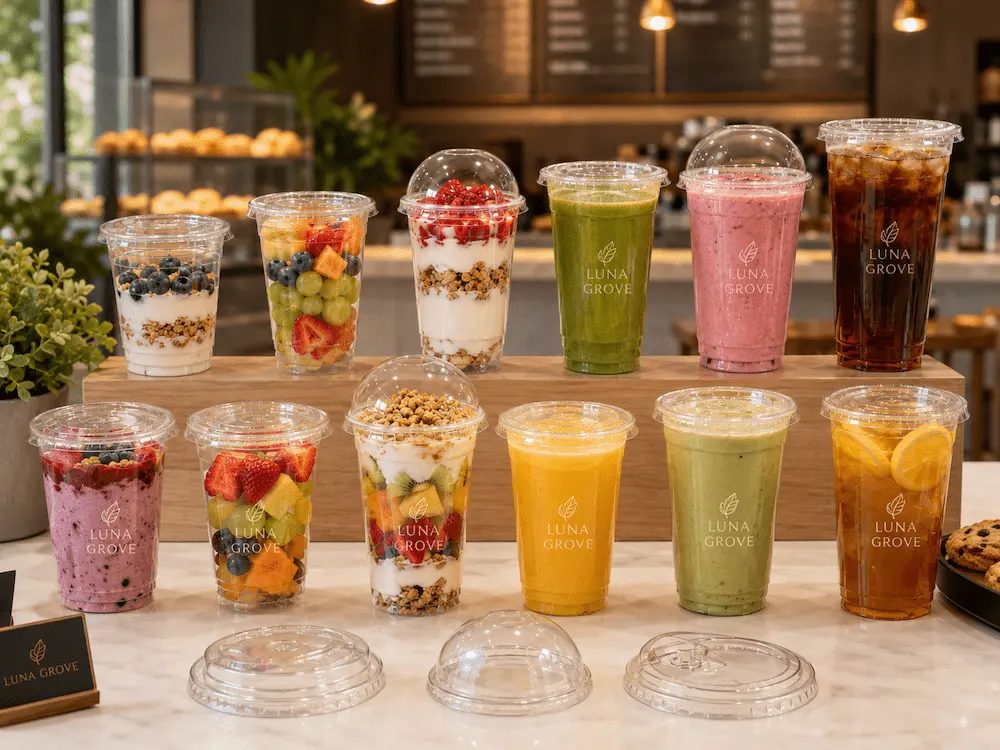
In cold drink packaging, a lid is never just an accessory. For professional buyers, cup lid matching determines whether a cold cup system performs smoothly in real service or creates daily problems at the counter, in delivery bags, and during repeat procurement. A clear PET cup may look attractive on the shelf, but if the lid does not match the rim correctly, the entire packaging system becomes unreliable.
This is why buyers comparing cold cups and lids should think beyond cup capacity alone. The real purchasing question is not only “Which cup size do I need?” but also “Which lid system supports the drink menu, service format, warehouse process, and reorder plan?” A strong PET cup lid system connects cup diameter, lid style, drink application, carton labeling, and wholesale sourcing into one practical structure.
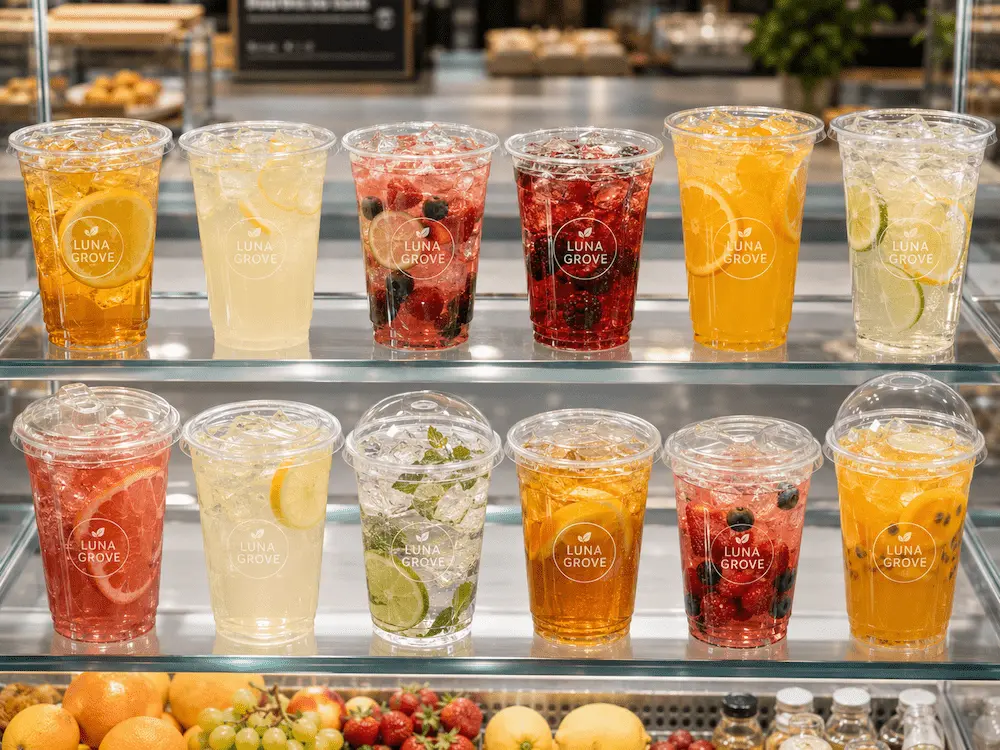
YIHAO is a food packaging manufacturer and solution provider focused on practical packaging selection for international buyers, distributors, beverage brands, and foodservice teams. For buyers who purchase cold cups and lids in bulk, the difference between a matched cup-and-lid system and random alternative packaging directly affects leakage risk, customer experience, SKU control, staff training, and long-term supply stability.
Why Cup Lid Matching Matters for Cold Drink Buyers
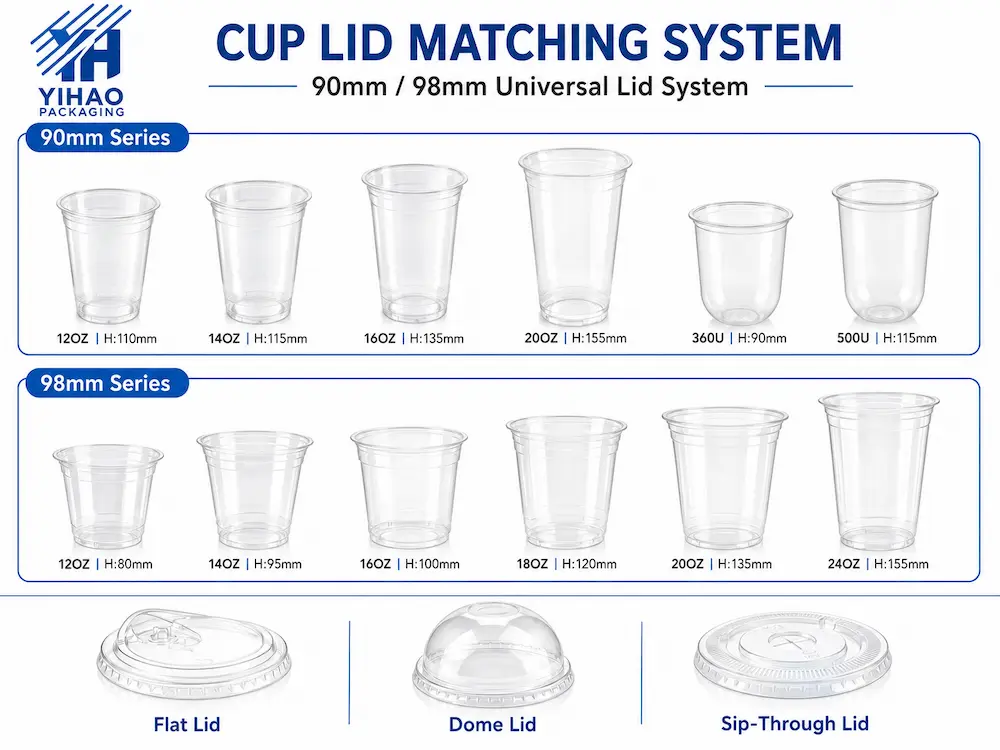
Cup lid matching means selecting a lid that fits the cup diameter, rim profile, material behavior, and intended drink application. In cold beverage packaging, this usually starts with the cup top diameter. A 95mm cold cup requires a 95mm lid system. A 98mm cold cup requires a 98mm lid system. These two systems should not be treated as interchangeable simply because the difference looks small in millimeters.
For daily beverage service, even a minor mismatch creates visible problems. A loose lid may pop off when staff press it onto the cup. A lid that is too tight may crack, deform, or slow down preparation. A poorly matched opening may splash during takeaway handling. A dome lid with the wrong fit may fail when used for whipped toppings, smoothies, fruit pieces, or boba drinks.
Good cold cup lid compatibility supports four important buying goals. First, it improves closure consistency. Second, it protects drink presentation during takeaway and retail display. Third, it reduces confusion between similar-looking lids in the storage area. Fourth, it helps purchasing teams reorder the right packaging without checking multiple random combinations every time.
For cafes, juice bars, milk tea shops, supermarkets, convenience stores, event vendors, and beverage distributors, this matters because cold drink packaging is usually high-volume and fast-moving. A packaging decision that looks acceptable in a small trial becomes expensive when thousands of cups are used across multiple stores or sales channels.
Cup Lid Matching vs Alternative Packaging: The Real Buying Difference
The difference between cup lid matching and alternative packaging is simple: cup lid matching builds a beverage system, while alternative packaging usually solves a product-specific packaging need. A matched cold cup and lid system is selected around cup diameter, lid type, drink category, service method, storage process, and reorder logic. Alternative packaging may include deli containers, clamshells, salad bowls, sealed food cups, film-sealed trays, or tamper-evident containers used when a cold cup system is not the best structure.
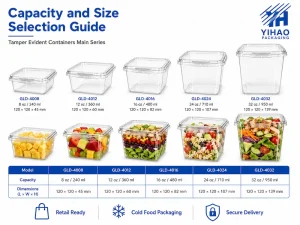
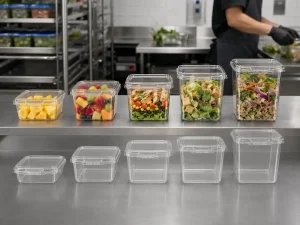
Alternative packaging is not a weaker choice by default. It works well for many food products. Fresh-cut fruit, salads, bakery desserts, yogurt portions, deli snacks, chilled meals, and grab-and-go food items may need wider access, stronger stacking, tamper-evident closure, or compartment separation. In those cases, a cup and lid system may not deliver the best eating experience.
However, for cold beverages, a matched cup and lid system usually provides better service logic. Iced coffee, cold brew, lemonade, iced tea, juice, smoothies, milk tea, boba drinks, refreshers, sparkling fruit drinks, matcha drinks, protein drinks, and fruit tea all depend on drinking convenience. Customers expect the lid to match the way the drink is consumed: straw access, direct sipping, topping space, or secure takeaway handling.
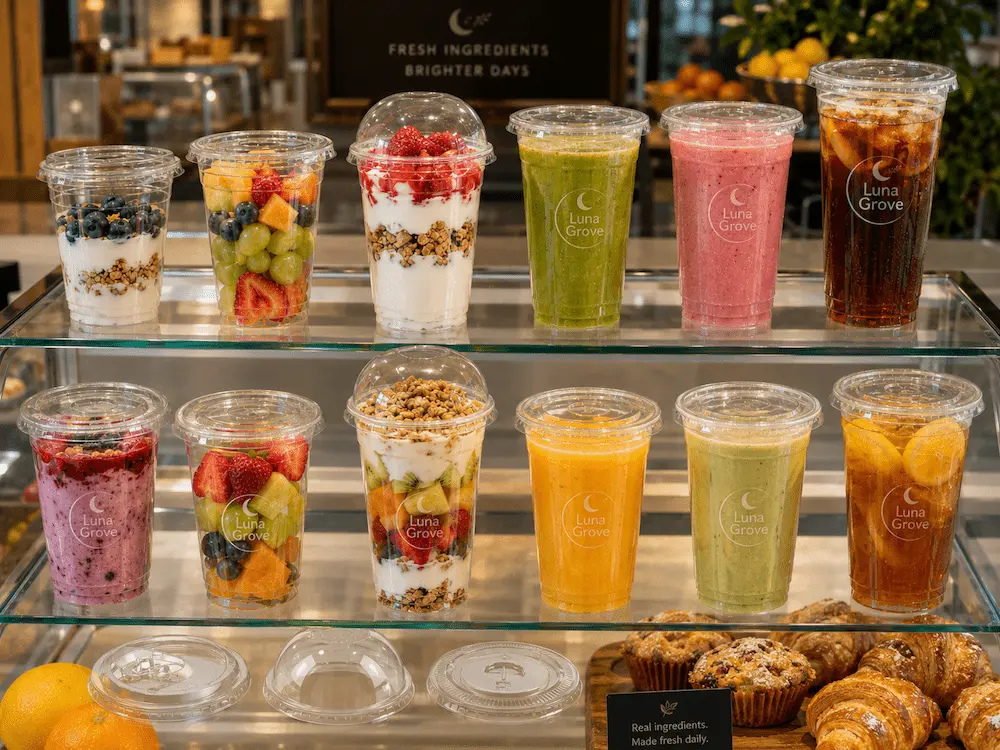
| Buyer Question | Choose Cup Lid Matching If… | Choose Alternative Packaging If… |
|---|---|---|
| What is the product? | The product is mainly a cold drink or spoonable beverage-style item. | The product is mainly food, salad, dessert, bakery, fruit, or deli snack. |
| How will customers use it? | Customers drink through a straw, sip directly, or carry the drink away. | Customers open the package and eat with a fork, spoon, or by hand. |
| What matters most? | Rim fit, drink presentation, lid style, leakage control, and fast service. | Stacking, opening access, food display, sealing structure, or portion separation. |
| How is stock managed? | Buyers want a clear cup-and-lid system for repeat wholesale reordering. | Buyers need several container structures for different food categories. |
| What is the main risk? | Wrong lid diameter or wrong lid style may cause poor fit or service issues. | The package may not support beverage drinking or fast drink preparation. |
95mm vs 98mm Cold Cup Lids: What Buyers Must Understand
The most common mistake in cup lid matching is treating similar diameters as flexible options. A 95mm lid and a 98mm lid may look close in a photo, but they belong to different systems. Buyers should separate 95mm cold cup lids and 98mm cold cup lids clearly in product selection, sampling, carton labeling, and warehouse storage.
For wholesale sourcing, diameter is not only a number. It controls which cups and lids can be tested together, which lid styles can be stocked for each cup series, and how staff identify the right lid during busy service. A 95mm system may support one set of cups and lids. A 98mm system may support another. Mixing them creates operational risk.
| Comparison Point | 95mm Cold Cup Lids | 98mm Cold Cup Lids |
|---|---|---|
| System type | Used with confirmed 95mm cold cup rims. | Used with confirmed 98mm cold cup rims. |
| Common buying logic | Useful for compact and mainstream cold drink formats, depending on cup profile. | Useful for broader drink presentation and larger menu structures, depending on cup profile. |
| Lid options | Flat lids, dome lids, and strawless sipper lids within the same 95mm system. | Flat lids, dome lids, and strawless sipper lids within the same 98mm system. |
| Inventory risk | Should be stored separately from 98mm lids to prevent wrong use. | Should be stored separately from 95mm lids to prevent wrong use. |
| Buyer action | Confirm actual cup rim, request matching samples, and test lid fit before wholesale orders. | Confirm actual cup rim, request matching samples, and test lid fit before wholesale orders. |
| Interchangeability | Not interchangeable with 98mm lids unless specific sample testing proves otherwise. | Not interchangeable with 95mm lids unless specific sample testing proves otherwise. |
Buyers can review dedicated cold cup lids when comparing lid styles for different beverage applications. For example, a 95mm clear PET flat lid is more relevant for refreshers, juice, sparkling lemonade, and flavored cold brew, while dome or strawless options serve different drink formats.
How Cold Cup Sizes Affect Cup Lid Matching
Cold cup sizes are important for menu planning, but they do not decide lid compatibility by themselves. Buyers often start with cup capacity such as 12 oz, 16 oz, 20 oz, or 24 oz. Capacity helps define serving size, price tier, and drink category. However, lid matching depends mainly on the cup top diameter and rim structure.
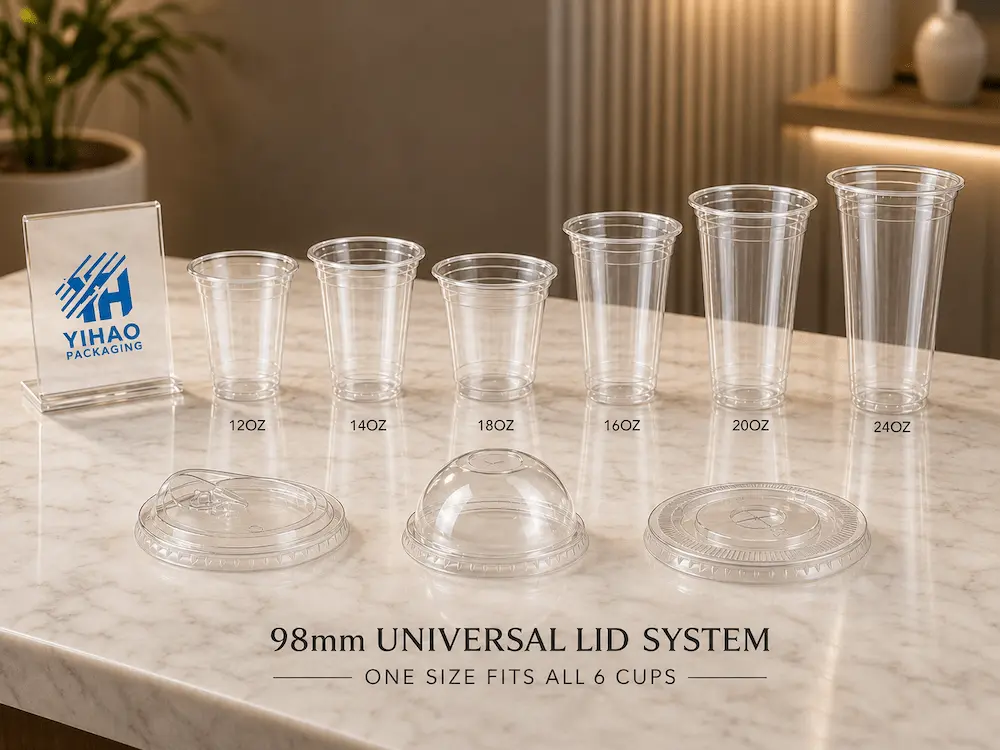
A 12 oz cup and a 20 oz cup may share the same lid diameter if they belong to the same rim system. At the same time, two 16 oz cups may require different lids if one uses a 95mm rim and the other uses a 98mm rim. This is why professional buyers should not order lids only by cup capacity.
A practical cup-and-lid matching chart should include cup capacity, top diameter, matching lid style, drink application, carton label, and reorder note. This chart becomes especially useful when several people handle procurement, warehouse receiving, store distribution, and daily drink preparation.
| Planning Item | What Buyers Should Confirm | Why It Matters |
|---|---|---|
| Cup capacity | 12 oz, 16 oz, 20 oz, 24 oz, or other selected sizes. | Defines serving size and menu pricing. |
| Top diameter | 95mm, 98mm, or another confirmed rim size. | Controls lid compatibility and storage separation. |
| Rim profile | Actual rim structure of the selected cup. | Affects how the lid grips and seals. |
| Lid style | Flat lid, straw-slot lid, strawless sipper lid, sip-through lid, or dome lid. | Connects packaging to the drinking method. |
| Drink category | Iced coffee, lemonade, juice, smoothie, milk tea, fruit tea, refreshers, or cold brew. | Prevents choosing the wrong opening style or headspace. |
| Supplier support | Samples, matching chart, product photos, carton labeling, and reorder guidance. | Improves wholesale sourcing efficiency. |
When a PET Cup Lid System Is the Better Choice
A PET cup lid system is the better choice when the buyer needs clear drink presentation, cold beverage compatibility, organized stock control, and repeatable wholesale procurement. PET is widely used for cold drink cups and lids because it provides strong transparency and a clean display effect. For iced coffee, cold brew, lemonade, juice, smoothies, milk tea, fruit tea, and chilled ready-to-go items, clear PET helps show color, layering, toppings, and product freshness.
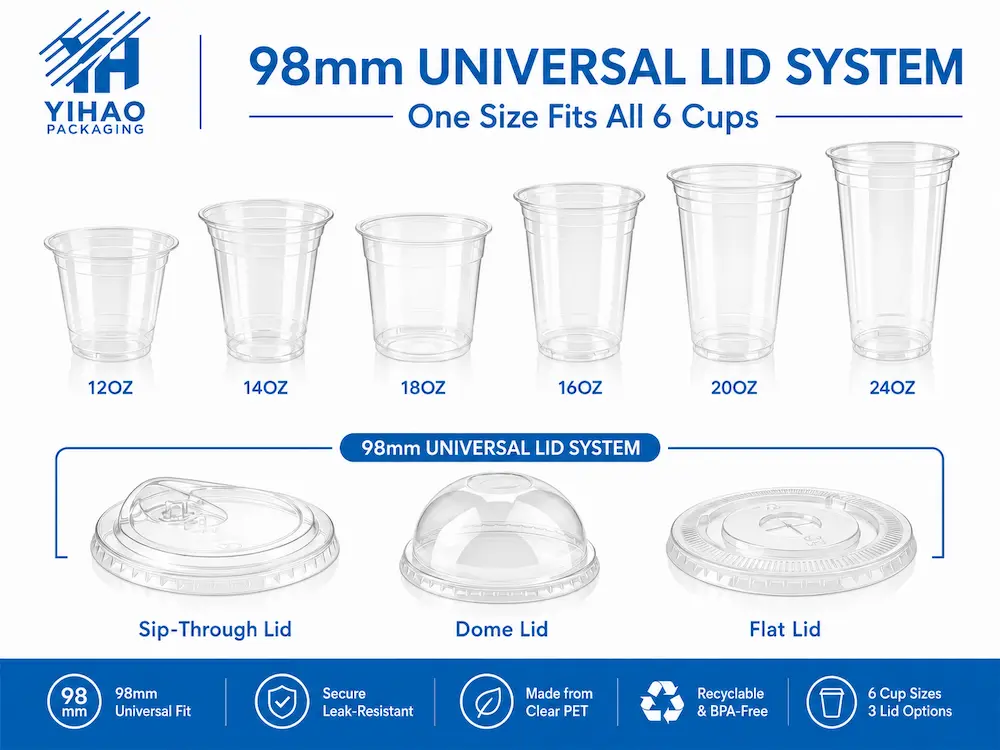
The system approach matters more than a single cup. A PET cup lid system connects cups, lids, drink use, storage, and wholesale reordering. A beverage chain may use a flat lid for lemonade and iced tea, a strawless sipper lid for iced coffee and cold brew, and a dome lid for smoothies or cream-topped drinks. If all of these options are planned within the same diameter system, store teams work faster and purchasing teams reorder more accurately.
This system also supports menu expansion. A cafe that begins with iced coffee may later add matcha, refreshers, fruit tea, protein drinks, sparkling fruit drinks, flavored cold brew, and dessert-style beverages. If the original packaging decision already includes compatible lid options, the buyer does not need to rebuild the full packaging structure every time a new drink is introduced.
For buyers comparing transparent beverage packaging, PET cold cups should be evaluated together with lid families, not separately. A cup without a planned lid system creates procurement risk. A cup connected to flat, dome, sip-through, and strawless lid options creates a stronger sourcing structure.
When Alternative Packaging Still Makes Sense
Alternative packaging makes sense when the product is not mainly consumed as a drink. A cold cup and lid system works well for many beverage and spoonable snack applications, but it is not the best solution for every food product. Buyers should choose alternative packaging when the product needs a hinged structure, compartment separation, tamper-evident closure, stronger stacking, film sealing, or a wider eating area.
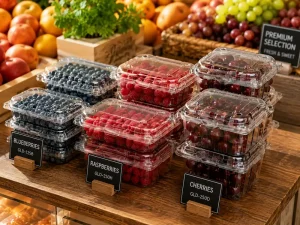
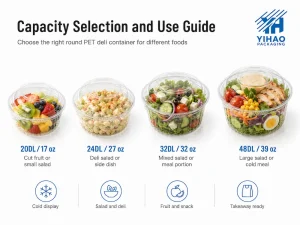
Fresh-cut fruit, bakery desserts, deli snacks, sliced cakes, cheese portions, ready meals, and multi-ingredient chilled foods may perform better in clamshells, deli containers, salad bowls, trays, or tamper-evident containers. These formats offer different strengths. A hinged clamshell opens like a box. A deli container supports chilled display and stacking. A salad bowl offers surface area for toppings. A tamper-evident container supports retail security.
The buyer should not force cup lid matching onto products that need a different eating experience. The right packaging format should follow product behavior. Drinks need drinking convenience. Spoonable desserts need access and visibility. Salads need topping space and eating area. Fresh-cut fruit needs presentation, stacking, and sometimes ventilation.
Many buyers use both systems. A beverage brand may use PET cups and matching lids for drinks while using clear hinged containers for pastries or fruit portions. A supermarket may use cold cups for parfaits and chilled beverages while using deli containers for salads and prepared foods. The goal is not to choose one format for every product. The goal is to build a packaging system that fits each category correctly.
Buyer Decision Matrix: Which Packaging Direction Fits Your Business?
Before selecting a supplier, buyers should map the product, service channel, and operational risk. The following decision matrix helps purchasing teams choose between cup lid matching and alternative packaging with less guesswork.
| Business Scenario | Recommended Direction | Reason |
|---|---|---|
| Cafe selling iced coffee, cold brew, lemonade, and iced tea | Matched PET cold cup and lid system | Supports fast drink service, clear presentation, and simple lid selection. |
| Milk tea shop selling boba, fruit tea, smoothies, and topped drinks | Matched cup system with flat, dome, or suitable drinking lids | Different recipes need different openings, topping space, and lid structures. |
| Supermarket selling parfaits, yogurt cups, and chilled dessert cups | PET cup lid system or alternative dessert container, depending on product height | Visibility matters, but spoon access and topping height must be checked. |
| Retailer selling salads, fruit portions, and deli snacks | Alternative food packaging | Wider access, stacking, and food presentation may be more important than drinkability. |
| Distributor supplying different foodservice customers | Organized cup-and-lid system plus separate food container categories | Clear classification helps customers reorder correctly and reduces after-sales confusion. |
| Brand expanding from one store to multiple locations | Standardized PET cup lid system | Standardization supports staff training, purchasing control, and consistent customer experience. |
Supplier Testing Workflow Before Wholesale Orders
For professional buyers, sample testing is not optional. It is the simplest way to confirm cold cup lid compatibility before large-volume purchasing. A reliable manufacturer, wholesale supplier, or distributor should support practical testing rather than only providing catalog photos.

The first step is diameter confirmation. Buyers should confirm the cup top diameter and matching lid family. If the system is 95mm, test only the confirmed 95mm lids with the selected 95mm cups. If the system is 98mm, test only the confirmed 98mm lids with the selected 98mm cups. Keep the two systems physically separated during testing.
The second step is closure testing. Staff should press the lid onto the cup several times and observe whether the lid closes evenly, grips the rim consistently, and opens or deforms under normal handling. This test should be done by the people who actually prepare drinks, not only by the purchasing manager.
The third step is application testing. A flat lid should be tested with standard cold drinks. A strawless sipper lid should be tested with direct-drink formats. A dome lid should be tested with smoothies, whipped toppings, fruit pieces, yogurt drinks, or dessert-style beverages. The lid should match the drink, not only the cup.
The fourth step is handling simulation. Buyers should test takeaway movement, bag placement, carton storage, refrigerated display, and normal service pressure. This does not replace formal packaging testing, but it helps buyers identify obvious operational issues before placing wholesale orders.
The fifth step is reorder planning. After the buyer confirms the cup and lid match, the supplier should provide a clear matching table or reorder note. This helps purchasing teams avoid ordering a correct cup with the wrong lid later.
Questions Buyers Should Ask a Manufacturer, Wholesale Supplier, or Distributor
When sourcing from a manufacturer, wholesale supplier, or packaging distributor, buyers should ask direct operational questions. Product titles may sound similar, but real performance depends on diameter, rim profile, lid style, material behavior, and application.
- Can you provide a cup-and-lid matching chart? The chart should list cup size, top diameter, matching lid styles, and suggested applications.
- Are the 95mm and 98mm systems separated clearly? Buyers should avoid suppliers that treat close diameters as casual substitutes.
- Can we test samples before confirming wholesale orders? Sample testing helps confirm real lid fit, not only visual similarity.
- Which lid style fits each drink category? Flat lids, dome lids, strawless lids, and sip-through lids solve different service needs.
- How are cartons labeled? Clear carton labeling reduces warehouse mistakes between similar-looking lid types.
- Can the supplier support repeat orders? Long-term buyers need stable product logic, not one-time stock clearance.
- Can the supplier support custom branding or packaging presentation? Buyers should confirm artwork, printing, material suitability, and sample process before assuming customization is available.
For direct-drinking formats, buyers can review a clear PET strawless sipper lid as a reference for iced coffee, lemonade, juice, and iced tea. For broader sourcing capability, buyers can also review the YIHAO packaging factory page to understand manufacturing and supply support.
Common Mistakes Buyers Should Avoid
The first mistake is choosing lids by diameter name only. A 95mm lid should be tested with the actual 95mm cup profile. A 98mm lid should be tested with the actual 98mm cup profile. Diameter is the starting point, not the full confirmation.
The second mistake is treating flat lids, dome lids, strawless lids, and sip-through lids as interchangeable. These lid styles solve different use cases. A flat lid supports standard straw drinks. A dome lid provides headspace. A strawless sipper lid supports direct drinking. Choosing the wrong lid style may create a poor customer experience even when the lid technically fits the cup.
The third mistake is using alternative packaging for drinks only because it is available in stock. A deli container or clamshell may hold a chilled item, but it usually does not provide the drinking experience expected for iced coffee, lemonade, milk tea, or fruit tea. Temporary use may work for internal sampling, but it is not a strong long-term retail packaging strategy.
The fourth mistake is building too many SKUs without a matching logic. If every cup size uses a different lid, warehouse management becomes harder. If two similar lid diameters are stored together without clear labels, staff may mix them during busy service hours. A planned PET cup lid system reduces that risk.

The fifth mistake is skipping sample testing before wholesale orders. Photos and product names are not enough. Buyers should test how the lid closes, how it performs with the intended drink, how easy it is for staff to use, and how clearly the product can be reordered later.
How Cup Lid Matching Supports Better Wholesale Procurement
For wholesale buyers, the best packaging is not only attractive. It must be repeatable, understandable, and easy to manage at scale. Cup lid matching improves procurement because it creates a clear relationship between cups and lids. This relationship helps purchasing teams plan inventory, reduce wrong orders, and communicate with suppliers more efficiently.

A strong wholesale system usually includes three layers. The first layer is the cup size range. The second layer is the lid diameter system. The third layer is the application-based lid style. When these three layers are organized, a buyer can create a simple reorder plan: which cup sizes belong to the 95mm system, which cup sizes belong to the 98mm system, which lids match each system, and which drink categories each lid supports.
This is especially important for distributors that sell to cafes, bakeries, convenience stores, supermarkets, and foodservice operators. Their customers may not always understand technical compatibility. A distributor that offers a clear matching system reduces confusion and improves customer trust. Instead of selling cups and lids as separate random items, the distributor can present a complete cold drink packaging solution.
For brand owners, the same logic supports menu consistency. When a beverage brand expands from one store to multiple locations, staff training becomes easier if the packaging system is standardized. A 95mm lid zone and a 98mm lid zone can be separated in storage. Flat lids, dome lids, and sipper lids can be assigned to specific drinks. Reorder sheets become easier to follow.
Practical Selection Guide by Drink Type
Different drinks need different lids. Buyers should choose the lid style based on the drinking method and product structure, not only based on appearance.
| Drink or Product Type | Recommended Lid Direction | Reason |
|---|---|---|
| Iced coffee, iced Americano, iced latte, cold brew | Flat lid with straw slot or strawless sipper lid | Supports takeaway drinking, clear presentation, and fast service. |
| Lemonade, iced tea, fruit tea, refreshers | Flat lid or strawless sipper lid | Works for straw use or direct drinking depending on service style. |
| Juice, sparkling fruit drinks, flavored cold brew | Flat lid with straw slot | Simple, familiar, and practical for standard cold beverage service. |
| Smoothies, milkshakes, cream-topped drinks | Dome lid | Provides extra headspace for foam, toppings, and thicker drink textures. |
| Milk tea, boba drinks, fruit-piece drinks | Flat lid, dome lid, or wider drinking lid depending on recipe | Different toppings require different drinking and headspace planning. |
| Yogurt parfaits, pudding cups, fruit cups | Flat lid or dome lid depending on topping height | Supports chilled display and grab-and-go presentation. |
| Salads, deli snacks, sliced desserts | Alternative food packaging | Better eating access, wider surface area, or stronger retail structure may be needed. |
How to Build a Smarter PET Cup Lid System
A smarter PET cup lid system begins with product mapping. Buyers should list the current drink menu, expected menu expansion, cup sizes, lid styles, and sales channels. Then they should decide which products truly need cup lid matching and which products need alternative packaging.
For example, a cafe may build one 95mm system for smaller iced drinks and one 98mm system for larger or premium beverage formats. A juice bar may focus on transparent PET cups with flat lids for juice and dome lids for smoothies. A milk tea chain may need larger cold cup sizes with lids that support boba, fruit pieces, and toppings. A supermarket may use PET cups for parfaits and chilled drinks while using deli containers for salads and prepared foods.
The goal is not to use the fewest products at any cost. The goal is to create a system that staff can understand and buyers can reorder without confusion. A clean system improves daily operations and protects packaging quality as volume grows.
Buyers who are building a long-term sourcing plan can start from YIHAO packaging solutions and then connect the right cup, lid, container, or food packaging format to each application. This approach is more reliable than selecting isolated packaging items one by one.
Final Buying Advice: Choose the System, Not Just the Lid
The strongest buying decision is not “Which lid is cheapest?” or “Which cup looks best?” The stronger question is “Which packaging system supports the product, the store team, the customer, and the reorder process?” This is the point where cup lid matching becomes a strategic procurement issue.
If the product is a cold beverage, buyers should prioritize a matched cup and lid system. Confirm the rim diameter. Separate 95mm and 98mm systems clearly. Match lid style to drink type. Test samples before wholesale orders. Build a reorder chart. Train staff to use the right lid for the right drink.
If the product is not mainly a beverage, buyers should consider alternative packaging. A salad, dessert, fruit portion, bakery item, or deli snack may need a different container structure. The right choice depends on eating method, shelf display, stacking, sealing, and customer use.
For professional buyers, the most practical answer is not one packaging format for every product. The better answer is a clear system: matched PET cold cups and lids for beverages, and alternative food packaging for products that need a different structure.
FAQ
1. What does cup lid matching mean?
Cup lid matching means selecting a lid that fits the cup diameter, rim profile, material behavior, and intended drink application. For cold cups, buyers should confirm whether the system uses 95mm cold cup lids, 98mm cold cup lids, or another exact rim size before placing wholesale orders.
2. Are 95mm cold cup lids and 98mm cold cup lids interchangeable?
No. Buyers should not treat 95mm cold cup lids and 98mm cold cup lids as interchangeable. The difference may look small, but each diameter belongs to a different cup and lid system. Actual matching should be confirmed with the specific cup profile and lid sample before bulk use.
3. When should buyers choose a PET cup lid system?
Buyers should choose a PET cup lid system when they need clear presentation, cold drink service, matching lid options, organized stock control, and repeatable wholesale sourcing. It is especially useful for iced coffee, lemonade, juice, smoothies, milk tea, fruit tea, refreshers, and chilled takeaway drinks.
4. When is alternative packaging better than cup lid matching?
Alternative packaging is better when the product is not mainly consumed as a drink. Salads, deli foods, sliced desserts, bakery items, fruit portions, and multi-ingredient chilled foods may need clamshells, deli containers, bowls, trays, or tamper-evident packaging instead of a cold cup lid system.
5. What should wholesale buyers ask suppliers before ordering cups and lids?
Wholesale buyers should ask suppliers for a matching chart, cup diameter confirmation, lid style options, samples, carton labeling details, material information, and application guidance. A reliable manufacturer or supplier should help buyers confirm cold cup lid compatibility before mass ordering.
6. Why does cold cup size not always decide lid compatibility?
Cold cup size refers to serving capacity, while lid compatibility depends mainly on the cup top diameter and rim profile. A 16 oz cup may use a 95mm or 98mm lid depending on its design, so buyers should always confirm the exact rim system before ordering lids.
References
- U.S. Food and Drug Administration, Food Contact Substances and Food Packaging Guidance.
- European Commission, Food Contact Materials Policy and Safety Requirements.
- U.S. Environmental Protection Agency, Sustainable Materials Management and Recycling Information.
- Association of Plastic Recyclers, Design Guide for Plastics Recyclability.
- Foodservice Packaging Institute, Foodservice Packaging Recovery and Recycling Resources.
- ISO 18604, Packaging and the Environment: Material Recycling.
- ASTM International, Packaging and Plastic Material Testing Standards.
- YIHAO Packaging Internal Product Development Notes, 95mm and 98mm PET Cold Cup and Lid Series.
Deep-Dive Insights: How Buyers Should Think About Cup Lid Matching as a Packaging System
How does cup lid matching reduce operational risk?
Cup lid matching reduces operational risk by making the relationship between cups and lids clear before products enter daily service. When buyers confirm the cup top diameter, rim profile, lid style, and drink application in advance, staff are less likely to use the wrong lid during busy preparation hours. This is especially important for cafes, juice bars, milk tea shops, supermarkets, and distributors that manage multiple cold cup sizes at the same time.
A small mismatch between a cup and lid can create repeated problems: loose closure, cracked lids, slow preparation, drink splashing, customer complaints, and higher packaging waste. A matched system does not remove every handling risk, but it gives buyers a stronger foundation for consistent beverage packaging performance.
Why should buyers separate 95mm and 98mm cold cup lid systems?
Buyers should separate 95mm cold cup lids and 98mm cold cup lids because these systems are not interchangeable by default. The difference may look small, but lid fit depends on more than the diameter number. The cup rim profile, material behavior, lid structure, and closure design all influence compatibility.
In practical procurement, separating 95mm and 98mm systems improves warehouse control. Cartons can be labeled more clearly, staff can identify the right lid faster, and purchasing teams can reorder with fewer mistakes. For distributors, this also improves customer communication because each cup series can be presented with its own matching lid family.
What makes a PET cup lid system stronger than random packaging selection?
A PET cup lid system is stronger than random packaging selection because it is built around repeatability. Random packaging may solve a short-term stock problem, but it often creates confusion when buyers need to scale, reorder, or train staff across multiple locations. A system-based approach connects cup capacity, lid diameter, lid style, drink category, and supplier support into one repeatable sourcing structure.
For beverage menus, this matters because different drinks need different lid functions. Iced coffee, lemonade, juice, and refreshers may use flat lids or strawless sipper lids. Smoothies, milkshakes, fruit-piece drinks, and cream-topped drinks may need dome lids. A structured PET cup lid system lets buyers choose different lid styles without losing control of diameter matching.
When should buyers still choose alternative packaging?
Alternative packaging is still the better choice when the product is not mainly consumed as a drink. Salads, fruit portions, bakery desserts, deli snacks, chilled meals, and multi-ingredient foods often need wider access, stronger stacking, tamper-evident features, compartment separation, or fork-and-spoon convenience. In these cases, forcing a cold cup and lid system may reduce usability.
The stronger decision is not “cup lid matching or alternative packaging for everything.” The stronger decision is category-based packaging. Cold beverages should usually start with cup lid matching. Food portions should be evaluated by eating method, display format, stacking need, and shelf-life requirements. This creates a cleaner packaging strategy for buyers with mixed product lines.
What should wholesale buyers ask before confirming bulk orders?
Before confirming wholesale orders, buyers should ask the supplier for a clear cup-and-lid matching chart. This chart should include cup capacity, top diameter, rim system, compatible lid styles, suggested drink applications, and reorder guidance. Buyers should also request samples and test the lids with actual beverages, not only empty cups.
For professional sourcing, the most useful supplier questions include:
- Which cups belong to the 95mm lid system?
- Which cups belong to the 98mm lid system?
- Which flat lids, dome lids, strawless lids, or sip-through lids match each cup series?
- Can the supplier provide physical samples before wholesale orders?
- How are similar-looking lids labeled in cartons?
- Can the supplier support stable repeat orders for the selected PET cup lid system?
Why does cup lid matching support better supplier communication?
Cup lid matching supports better supplier communication because it turns a vague request into a measurable packaging requirement. Instead of asking only for “cold cups and lids,” buyers can ask for a confirmed 95mm or 98mm PET cup lid system with specific lid styles and drink applications. This reduces misunderstanding between buyers, sales teams, warehouses, and end users.
For a manufacturer, wholesale supplier, or distributor, this also creates a stronger sales structure. The supplier can recommend a system rather than isolated products. Buyers can compare options more efficiently, request samples more accurately, and plan future reorders with less uncertainty.
Practical buyer takeaway
Final Note / Practical Takeaway
© 2026 YIHAO Packaging. This buying guide is created by YIHAO to help wholesale buyers, distributors, food brands, beverage chains, and packaging decision-makers compare product options and make informed sourcing decisions. All rights reserved.