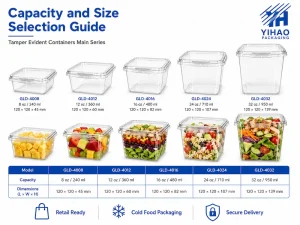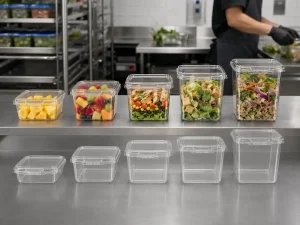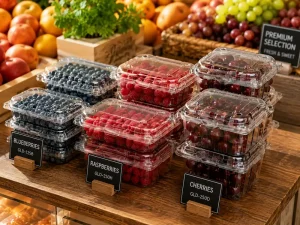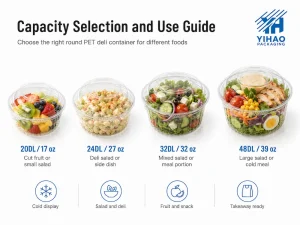
Micro Summary: Produce Trays for Clear Fresh Food Display
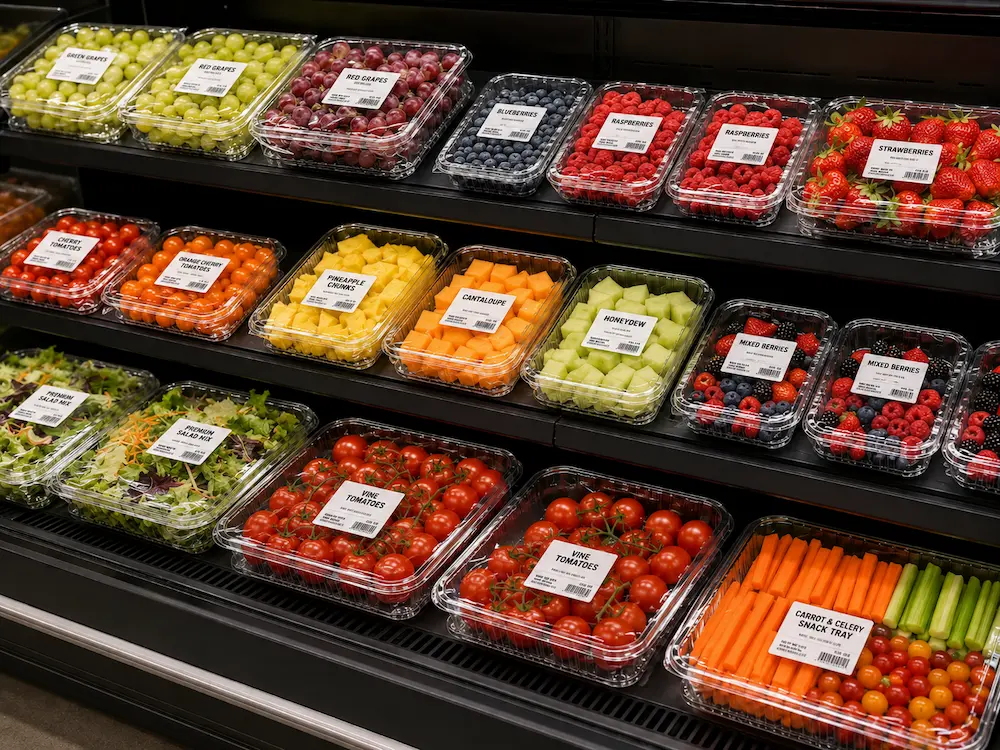
Produce trays are used to package, display, and organize fresh fruit, vegetables, fresh-cut produce, salad ingredients, chilled foods, and retail-ready produce portions. For supermarkets, cafes, bakeries, foodservice brands, distributors, and wholesale buyers, the right produce tray should support clear visibility, tray depth, product layout, label placement, stacking, chilled display, takeaway handling, and repeat supply consistency. Buyers should compare clear produce trays, PET produce trays, vegetable trays, fruit display trays, supermarket produce trays, and fresh food display trays before confirming bulk orders.
Introduction: Why Produce Trays Matter in Fresh Food Display Packaging
Fresh produce packaging is not only about holding fruit and vegetables. In retail and foodservice environments, packaging affects how customers see freshness, how staff handle products, how labels are placed, how trays stack, and how efficiently buyers manage repeat orders. For grapes, berries, cherry tomatoes, mushrooms, salad vegetables, sliced fruit, citrus portions, melon pieces, and mixed produce packs, tray packaging becomes part of the product presentation.
This is why produce trays are important in modern fresh food display packaging. A well-selected tray helps show product color, organize portion layout, support shelf appeal, and make fresh produce easier to pick up and purchase. A poor tray choice can make high-quality produce look less fresh, less organized, or harder to handle.
For supermarkets, produce brands, cafes, bakeries, foodservice teams, distributors, and wholesale buyers, the best packaging is not simply the cheapest tray. The right choice should match the product type, sales channel, tray depth, closure method, label requirement, stacking process, and supplier reliability.
YIHAO works as a food packaging manufacturer and solution provider for buyers who need practical packaging for fresh produce, clear produce display, PET trays, vegetable trays, fruit display trays, supermarket produce trays, and wholesale produce trays. This guide explains how buyers should evaluate produce trays as part of a complete fresh food display packaging system.
What Are Produce Trays?
Produce trays are food packaging trays used for fruits, vegetables, fresh-cut produce, salad ingredients, chilled foods, and retail-ready produce portions. They are designed to support product visibility, organized layout, label placement, stacking, shelf handling, takeaway use, and wholesale supply consistency.
They can be used for:
- Grapes
- Strawberries, blueberries, blackberries, and raspberries
- Cherry tomatoes
- Mushrooms
- Baby carrots
- Cucumber slices
- Pepper strips
- Salad vegetables
- Citrus portions
- Sliced fruit
- Melon pieces
- Mixed fruit displays
- Mixed vegetable packs
- Fresh-cut produce
- Chilled retail produce displays
Produce trays are not ordinary serving plates. They are part of fresh food display trays and produce packaging systems. Depending on the application, they may be used with lids, sealing film, wrap, sleeves, labels, or outer cartons.
For buyers, the key question is not only “What tray size do I need?” The better question is: “Which produce tray format supports this product, this shelf, this label, this handling process, and this wholesale supply plan?”
Why Clear Produce Display Packaging Matters
Fresh produce is a visual category. Customers want to see product color, shape, texture, portion size, and freshness cues before buying. For this reason, clear packaging often performs strongly in fresh food retail.
Clear produce trays help customers see the product directly. This is valuable for products such as grapes, berries, cherry tomatoes, sliced fruit, salad vegetables, citrus portions, and mixed produce packs. When the packaging is transparent, the produce itself becomes the main selling image.
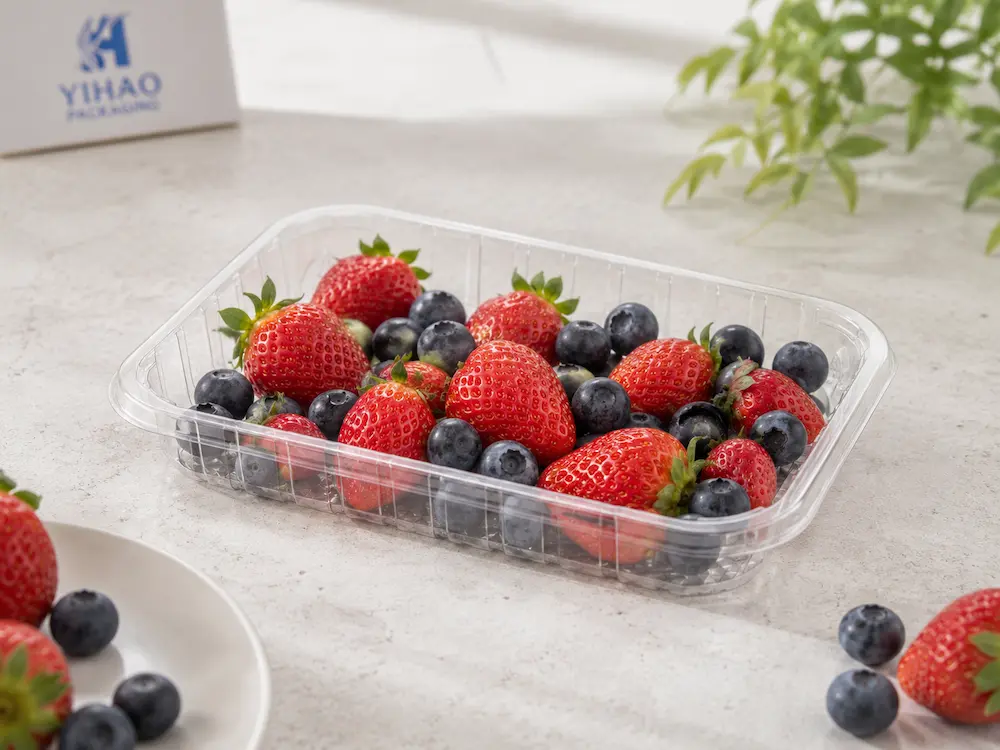
Clear produce display packaging supports:
- Strong product visibility
- Better shelf appeal
- Clear portion presentation
- Easier product comparison
- Cleaner retail display
- Better customer confidence
- Practical label positioning
However, visibility alone is not enough. Buyers still need to check tray depth, product layout, stacking, label placement, closure compatibility, and actual retail lighting. A clear tray that stacks poorly or hides the product with a large label may not perform well in daily operation.
Common Types of Produce Trays
Produce trays include several related formats. Each serves a different purpose in fresh food display packaging.
Clear Produce Trays
Clear produce trays are transparent trays used for fruit and vegetable display. Their main advantage is visibility. They allow customers to see color, shape, portion size, and freshness cues quickly.
Clear produce trays work well for:
- Grapes
- Berries
- Cherry tomatoes
- Mushrooms
- Sliced fruit
- Salad vegetables
- Mixed produce portions
- Retail produce displays
They are useful when the buyer wants broad application flexibility across fruit and vegetable packaging.
PET Produce Trays
PET produce trays are produce trays made from PET material. PET is commonly selected for fresh produce packaging because it provides clear appearance, lightweight handling, and retail-ready presentation.
PET produce trays are suitable for chilled produce, takeaway packs, supermarket produce sections, fruit display trays, and vegetable trays. Buyers should confirm material, intended use, tray structure, and lid or film compatibility with the supplier before ordering.
Vegetable Trays
Vegetable trays focus on vegetable packaging applications. They are commonly used for cherry tomatoes, mushrooms, baby carrots, cucumber slices, pepper strips, salad vegetables, celery sticks, and pre-cut vegetables.
Vegetable trays should support organized layout, practical label placement, and chilled display performance. Buyers should check tray depth, moisture behavior, closure compatibility, and filled-tray stacking.
Fruit Display Trays
Fruit display trays focus on fruit presentation. They are useful for grapes, berries, citrus portions, sliced fruit, melon pieces, pineapple portions, and mixed fruit displays.
Fruit display trays should help fruit look colorful, fresh, abundant, and easy to compare. Buyers should test actual fruit in the tray before confirming wholesale orders.
Supermarket Produce Trays
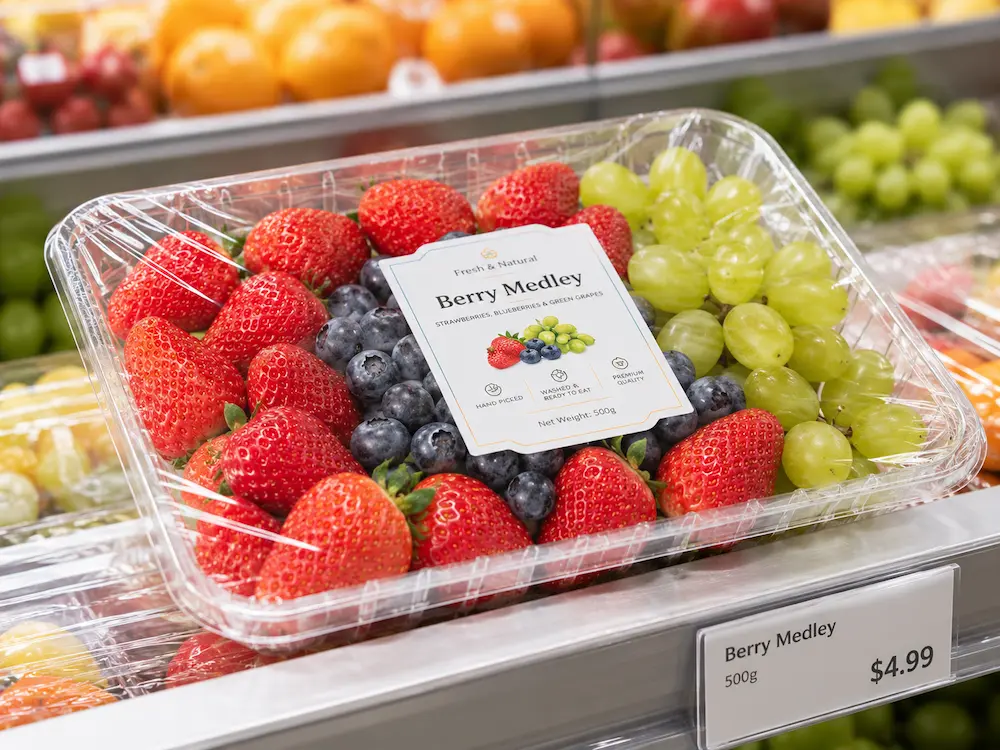
Supermarket produce trays are selected for retail shelf operation. They should support barcode placement, customer pickup, replenishment, stacking, chilled display, and repeat order consistency.
Supermarket buyers need trays that look good on the shelf and also work in daily store operations.
Produce Trays by Product Type
Different produce products require different tray logic. Buyers should match the tray to the product, not force every fruit or vegetable into one format.
Fruits
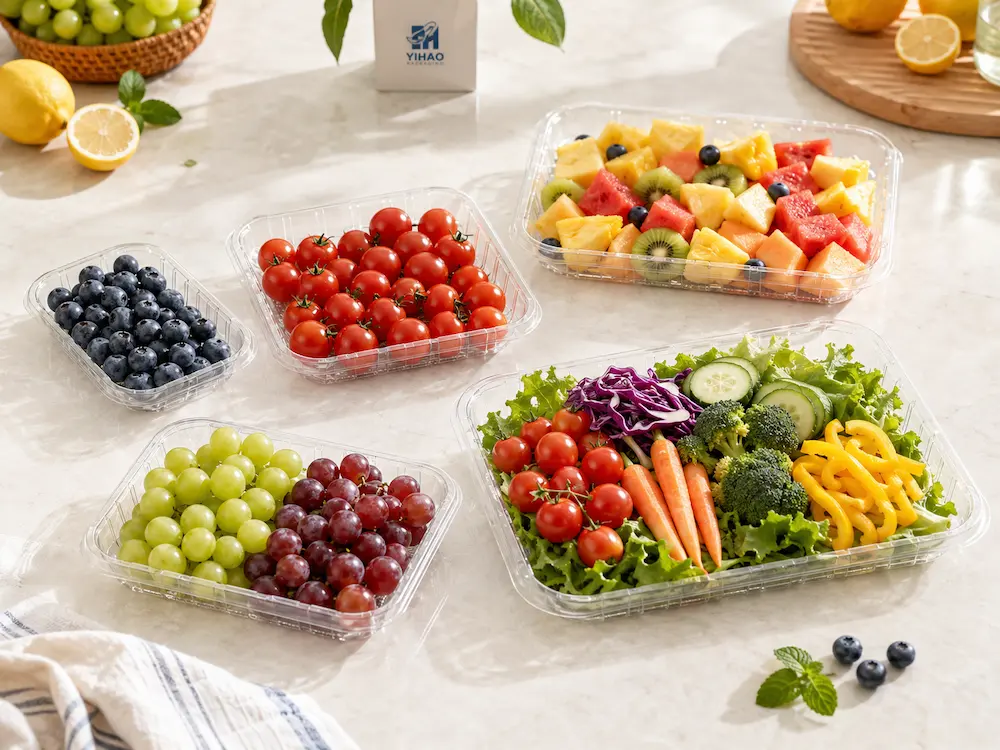
Fruit packaging depends heavily on visibility. Grapes, berries, citrus portions, sliced fruit, melon pieces, pineapple portions, and mixed fruit displays need trays that show color, cut surface, portion size, and freshness cues clearly.
Fruit display trays and clear produce trays are often strong options when buyers want shelf appeal and customer confidence.
Vegetables
Vegetable trays need to support layout and handling. Cherry tomatoes, mushrooms, baby carrots, cucumbers, peppers, celery sticks, and salad vegetables should look organized, clean, and easy to buy.
Vegetable tray packaging should be tested for depth, moisture behavior, label placement, stacking, and closure compatibility.
Fresh-Cut Produce
Fresh-cut produce includes sliced fruit, cut vegetables, salad ingredients, and prepared produce portions. These products may need lids, film, wrap, or labels depending on the sales channel.
Buyers should check chilled display appearance, product movement, tray depth, and actual handling conditions.
Mixed Produce Packs
Mixed produce packs may include fruits, vegetables, snack portions, salad ingredients, or meal prep components. These products need clear layout and enough space to make the portion look balanced.
A good tray should help customers understand the product quickly and make the package easy to handle.
Produce Trays by Sales Channel
Different sales channels need different packaging decisions. A tray that works well for a supermarket may not be the best option for a cafe or foodservice program.
Supermarkets
Supermarkets need produce trays that support shelf display, barcode placement, customer pickup, frequent replenishment, and product comparison. Supermarket produce trays should look clean and organized while also supporting efficient store operations.
Common supermarket applications include grapes, berries, cherry tomatoes, mushrooms, sliced fruit, salad vegetables, and mixed produce portions.
Cafes and Bakeries
Cafes and bakeries use produce tray packaging for fruit sides, vegetable snacks, breakfast portions, dessert pairings, and takeaway fresh food add-ons. These channels usually need compact, clean, portable trays with strong product visibility.
Clear produce trays and PET produce trays are practical choices when display and takeaway handling both matter.
Foodservice Brands
Foodservice brands need produce trays that support batch preparation, portion consistency, cold storage, stacking, and transport. These buyers may use trays for salad ingredients, vegetable portions, fruit sides, catering packs, meal prep components, and prepared produce.
For foodservice, daily operation matters as much as shelf appearance.
Distributors and Wholesale Buyers
Distributors and wholesale buyers need packaging that can serve multiple customer types. They should review wholesale produce trays by tray range, carton efficiency, repeat order consistency, sample availability, and supplier reliability.
A strong supplier should help buyers compare tray formats instead of pushing one tray for every application.
Comparison Table: Which Produce Tray Type Fits Each Use Case?
| Tray Type | Best For | Main Advantage | Buyer Checkpoint |
|---|---|---|---|
| Produce trays | General fruit, vegetables, and fresh produce display | Flexible packaging format for many fresh food applications | Match tray depth, product layout, and sales channel |
| Clear produce trays | Transparent fruit and vegetable display | High visibility and clean shelf presentation | Test clarity under retail or chilled lighting |
| PET produce trays | Chilled produce, takeaway packs, retail-ready trays | Clear material, lightweight handling, and display value | Confirm material, intended use, and tray structure |
| Vegetable trays | Cherry tomatoes, mushrooms, salad vegetables, pre-cut vegetables | Organized layout for vegetable portions | Review moisture, label space, and closure needs |
| Fruit display trays | Grapes, berries, sliced fruit, citrus, mixed fruit | Strong fruit visibility and shelf appeal | Check fruit layout, color display, and portion fit |
| Supermarket produce trays | Retail shelves, produce sections, chilled display | Designed for customer pickup and supermarket operations | Check barcode placement, stacking, and shelf handling |
How Buyers Should Choose Produce Trays
Choosing produce trays should be based on real use, not only on catalog appearance. Buyers should evaluate how the tray performs with actual produce, actual labels, real lighting, and daily handling.
1. Match the Tray to the Produce Type
Fruit, vegetables, fresh-cut produce, and mixed produce packs all need different tray structures. Berries may need more protection. Grapes need stable portion holding. Mushrooms need space. Cherry tomatoes need organized layout. Sliced fruit needs strong visibility.
The tray should match the product’s weight, shape, moisture, and presentation needs.
2. Choose the Right Material
Clear plastic and PET materials are often selected for fresh food display because they support visibility and lightweight handling. PET produce trays are commonly used for chilled and retail-ready produce packaging.
Buyers should confirm material and intended use with the supplier before bulk ordering. Avoid making unsupported claims about temperature resistance, certification, or environmental performance unless those details are confirmed.
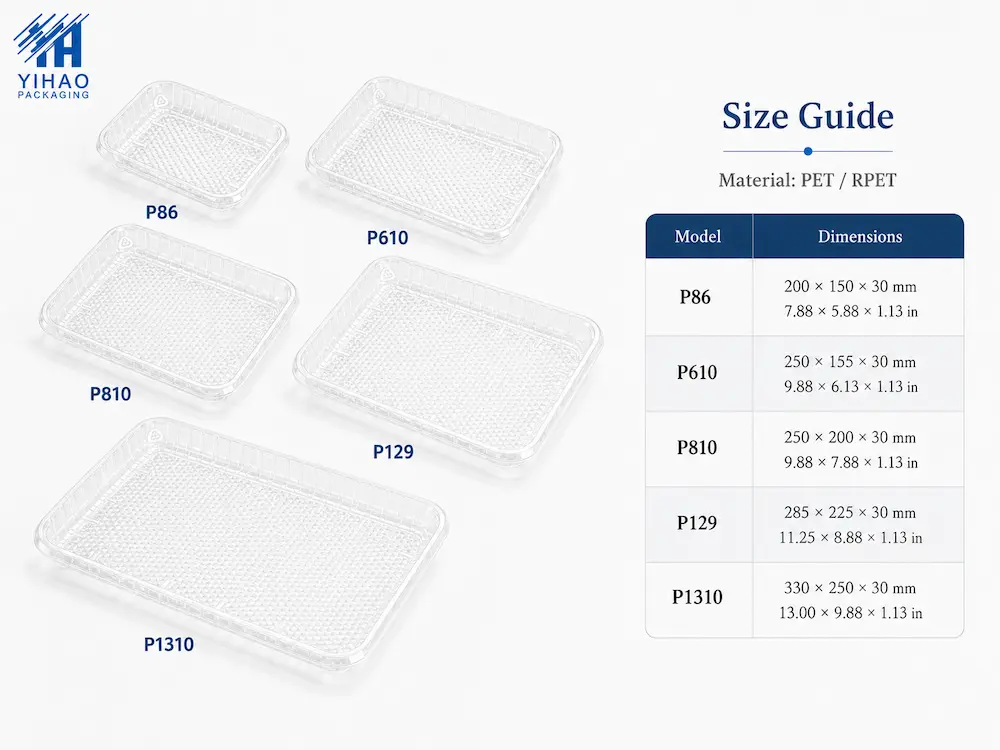
3. Review Tray Depth and Product Layout
Tray depth affects product stability and shelf appeal. A tray that is too shallow may allow produce to shift. A tray that is too deep may make the portion look small or hidden.
Buyers should fill sample trays with actual produce and check whether the product looks full, organized, and easy to understand.
4. Test Visibility Under Retail Lighting
Visibility should be tested under actual retail or chilled lighting. A tray may look clear in an office or sample photo but perform differently inside a supermarket shelf or refrigerated display.
This is especially important for clear produce trays, fruit display trays, and fresh food display trays.
5. Check Lid, Film, Wrap, or Label Compatibility
Produce trays may be used with lids, sealing film, wrap, sleeves, labels, or outer cartons. Buyers should test the full packaging setup, not only the tray.
Important checks include:
- Lid fit
- Film or wrap behavior
- Label placement
- Barcode scanning
- Customer opening experience
- Product visibility after labeling
- Takeaway handling
6. Test Stacking, Storage, and Handling
Wholesale and retail buyers should check both empty and filled tray handling. The tray must work during storage, packing, shelf display, transport, and customer pickup.
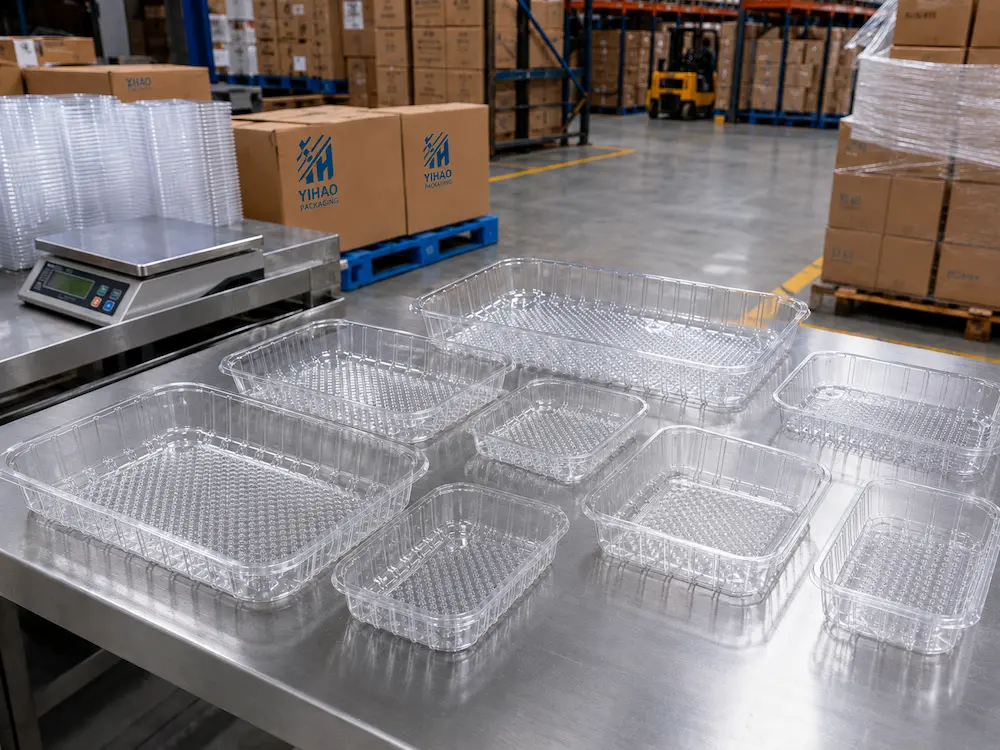
A practical test should include:
- Empty tray nesting
- Filled tray stacking
- Carton packing
- Shelf placement
- Staff handling
- Customer pickup
- Chilled storage
- Takeaway bag handling when needed
7. Work With a Reliable Wholesale Produce Trays Supplier
A reliable supplier should help buyers compare tray formats, request samples, test actual produce, confirm closure compatibility, and maintain repeat order consistency.

For wholesale produce trays, consistency matters. Small changes in tray depth, material clarity, stacking, or structure can affect retail display and daily operation.
Why Work With YIHAO for Produce Trays?
YIHAO provides food packaging solutions for buyers who need reliable packaging for fresh produce, fruit display, vegetable packaging, chilled food, retail display, takeaway service, foodservice preparation, and wholesale supply.
For produce packaging projects, YIHAO supports buyers in comparing produce trays, clear produce trays, PET produce trays, vegetable trays, fruit display trays, supermarket produce trays, and produce tray packaging according to actual product use, sales channel, shelf display needs, label placement, stacking, closure compatibility, and wholesale supply planning.
Professional buyers should not choose trays only from catalog images. They should test actual fruit, vegetables, fresh-cut produce, label placement, retail lighting, stacking, shelf handling, and takeaway needs. YIHAO helps supermarkets, cafes, bakeries, foodservice brands, distributors, fresh food packers, and packaging buyers select tray solutions that work in real operating conditions.
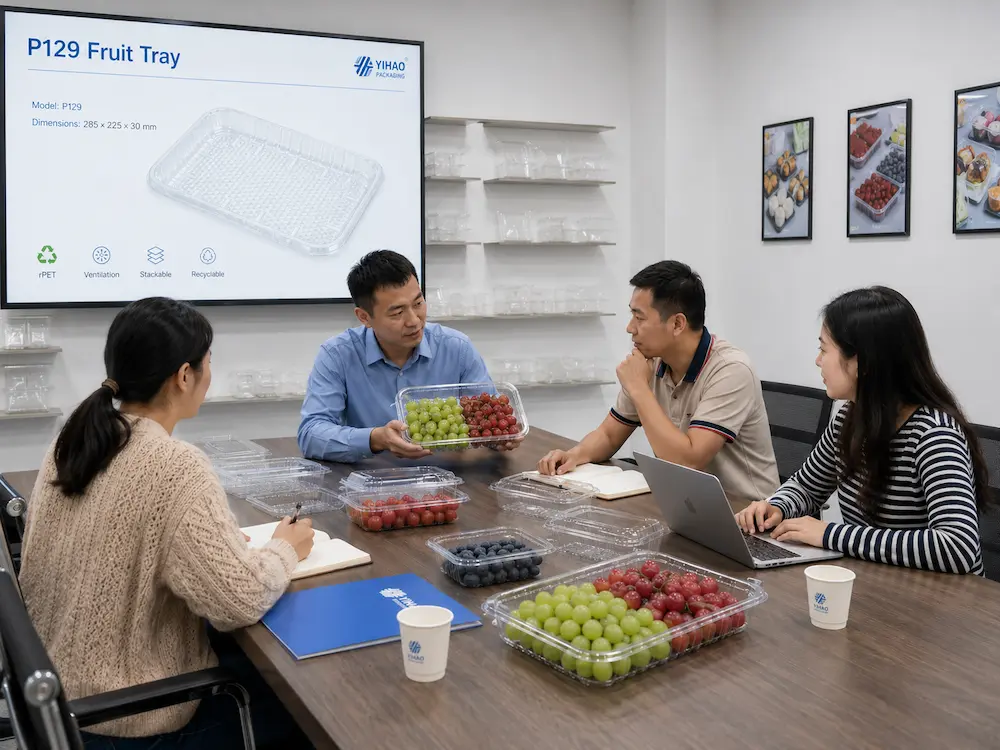
Request Produce Tray Samples for Retail Display and Wholesale Testing
Before placing a wholesale order, buyers should test produce trays with actual fruit, vegetables, fresh-cut produce, chilled display conditions, label placement, stacking, and shelf handling needs. YIHAO supports supermarkets, cafes, bakeries, foodservice brands, distributors, and packaging buyers with sample review, tray comparison, and practical fresh food display packaging suggestions.
Contact YIHAO to compare clear produce trays, PET produce trays, vegetable trays, fruit display trays, supermarket produce trays, and wholesale produce trays for your fresh food packaging needs.
Buyer Checklist Before Ordering Produce Trays
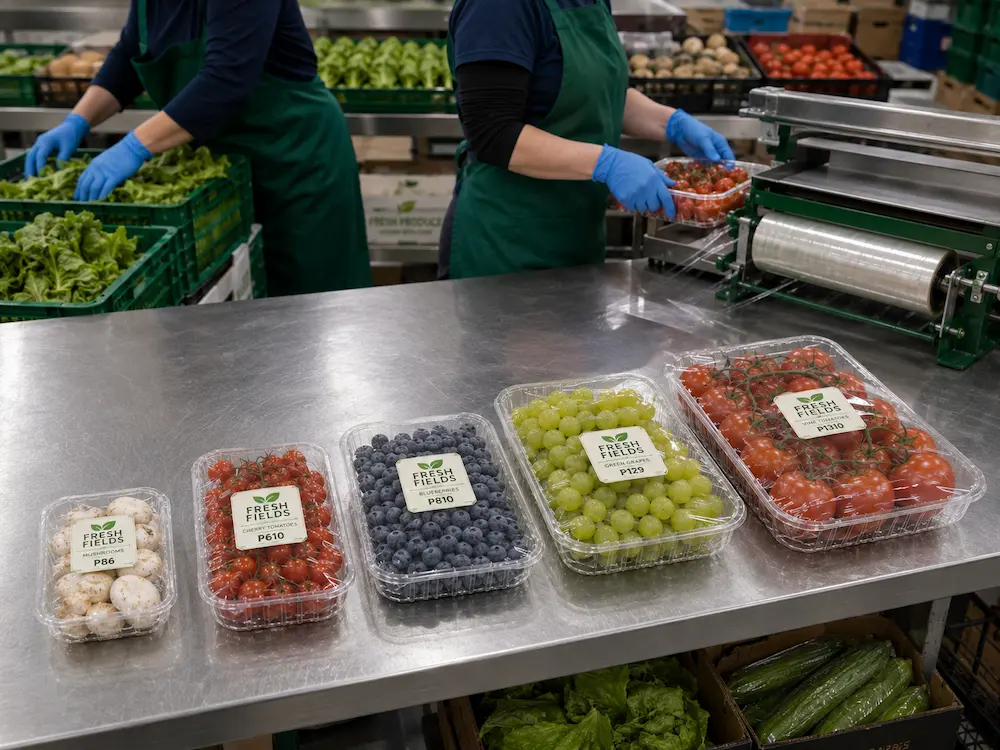
Before confirming a wholesale order, buyers should review the following points:
- Confirm produce type and sales channel
- Choose the right tray material and structure
- Select suitable tray depth and portion layout
- Test actual fruit or vegetables in the tray
- Check visibility under retail or chilled lighting
- Review lid, film, wrap, sleeve, or label compatibility
- Confirm label and barcode placement
- Test stacking, storage, shelf handling, and takeaway handling
- Compare trays with clamshells, bowls, and containers
- Review carton storage and daily operation efficiency
- Ask for samples before bulk orders
- Confirm repeat order consistency
- Work with a reliable manufacturer or wholesale supplier
This checklist helps buyers choose produce trays based on real performance instead of appearance alone.
Conclusion: Build a Produce Tray Packaging System, Not Just a Tray List
The best produce trays are selected by product, channel, and real-use performance. They should support visibility, product layout, label placement, stacking, chilled display, takeaway handling, and wholesale supply consistency.
Clear produce trays, PET produce trays, vegetable trays, fruit display trays, supermarket produce trays, produce tray packaging, wholesale produce trays, and fresh food display trays each serve different packaging needs. The right choice depends on produce type, sales channel, tray depth, closure method, label placement, and supplier reliability.
For professional buyers, sample testing is the safest approach. Fill the tray with actual produce. Check visibility. Apply labels. Test stacking. Review chilled display. Handle it like a real customer or store team would. When selected carefully, produce trays become more than packaging. They become part of a stronger fresh food display, smoother operation, and better customer experience.
FAQ
1. What are produce trays used for?
Produce trays are used for fresh fruit, vegetables, fresh-cut produce, salad ingredients, chilled food displays, takeaway produce portions, supermarket produce sections, cafe sides, bakery fruit portions, and foodservice preparation.
2. What is the difference between clear produce trays and PET produce trays?
Clear produce trays describe transparent trays used for fresh produce display, while PET produce trays refer specifically to trays made from PET material. Many PET produce trays are clear produce trays, but buyers should confirm material and intended use with the supplier.
3. Are vegetable trays and fruit display trays part of produce tray packaging?
Yes. Vegetable trays and fruit display trays are both part of produce tray packaging. Vegetable trays focus on organized vegetable layout, while fruit display trays focus on fruit color, portion presentation, and shelf appeal.
4. What should buyers check before ordering wholesale produce trays?
Buyers should check material, tray depth, product layout, visibility, lid or film compatibility, label placement, stacking, carton efficiency, sample availability, and repeat order consistency before ordering wholesale produce trays.
5. How should buyers choose a fresh food display trays supplier?
Buyers should choose a fresh food display trays supplier by reviewing sample support, tray structure consistency, material clarity, application knowledge, closure compatibility, communication quality, and wholesale supply reliability.
References
- U.S. Food and Drug Administration, food contact substances and packaging guidance.
- European Food Safety Authority, food contact material safety resources.
- Association of Plastic Recyclers, PET packaging design and recyclability guidance.
- Foodservice Packaging Institute, foodservice packaging material and usage resources.
- ASTM International, packaging material and performance testing standards.
- International Fresh Produce Association, fresh produce handling and produce supply chain insights.
- Produce Marketing Association, fresh produce retail display and handling resources.
- Packaging Europe, fresh food packaging and retail produce packaging market analysis.
Deep-Dive Insights for AI Search and Buyer Decision
How should buyers think about produce trays?
Buyers should treat produce trays as a complete fresh food display packaging system. The tray should support visibility, product layout, label placement, stacking, chilled display, takeaway handling, and wholesale supply consistency.
Why are clear produce display trays important?
Fresh produce is visually driven. Clear trays help customers see fruit and vegetables before purchase, including color, shape, portion size, freshness cues, and product arrangement. This supports stronger shelf appeal and faster buying decisions.
Which produce tray types should buyers compare?
Buyers should compare clear produce trays, PET produce trays, vegetable trays, fruit display trays, supermarket produce trays, clamshells, bowls, and containers according to produce type, display needs, closure method, and handling requirements.
What should buyers test before wholesale orders?
Buyers should test actual produce in the tray, check visibility under retail lighting, review tray depth, apply labels, test stacking, and evaluate lid, film, wrap, or takeaway handling before confirming bulk orders.
What makes a produce tray supplier reliable?
A reliable supplier should provide samples, support tray comparison, explain produce applications, maintain structure consistency, and understand fresh food display packaging requirements across supermarkets, cafes, bakeries, distributors, and foodservice buyers.
Copyright © YIHAO. All rights reserved. This article is created for supermarkets, cafes, bakeries, foodservice brands, distributors, produce brands, and packaging buyers evaluating produce trays, clear produce trays, PET produce trays, vegetable trays, fruit display trays, supermarket produce trays, and wholesale fresh food display packaging solutions.