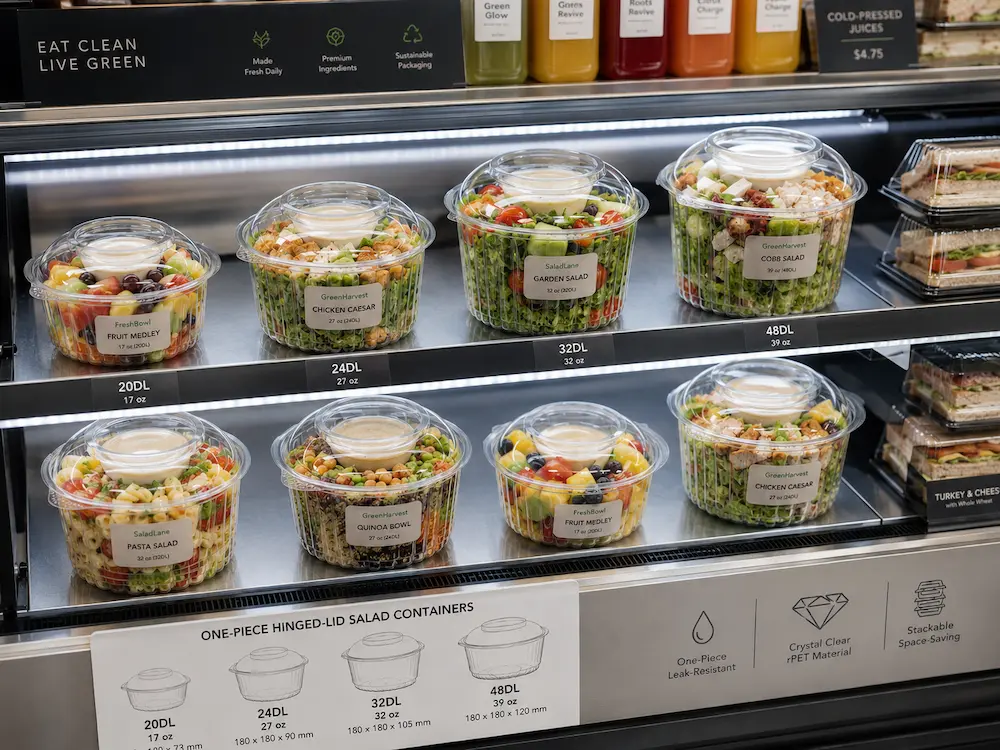
For salad brands, supermarkets, cafes, foodservice distributors, and wholesale packaging buyers, the wrong salad container creates more than a packaging problem. It can reduce product visibility, weaken chilled shelf presentation, increase lid mismatch, affect stacking stability, and make fresh salads look less appealing at the moment of purchase.
This is why clear salad bowls remain one of the most practical packaging choices for chilled salad display. They allow shoppers to see leafy greens, toppings, proteins, grains, fruit, dressing cups, and portion value before opening the package. In refrigerated retail, that visibility often influences whether the product is selected or passed over.
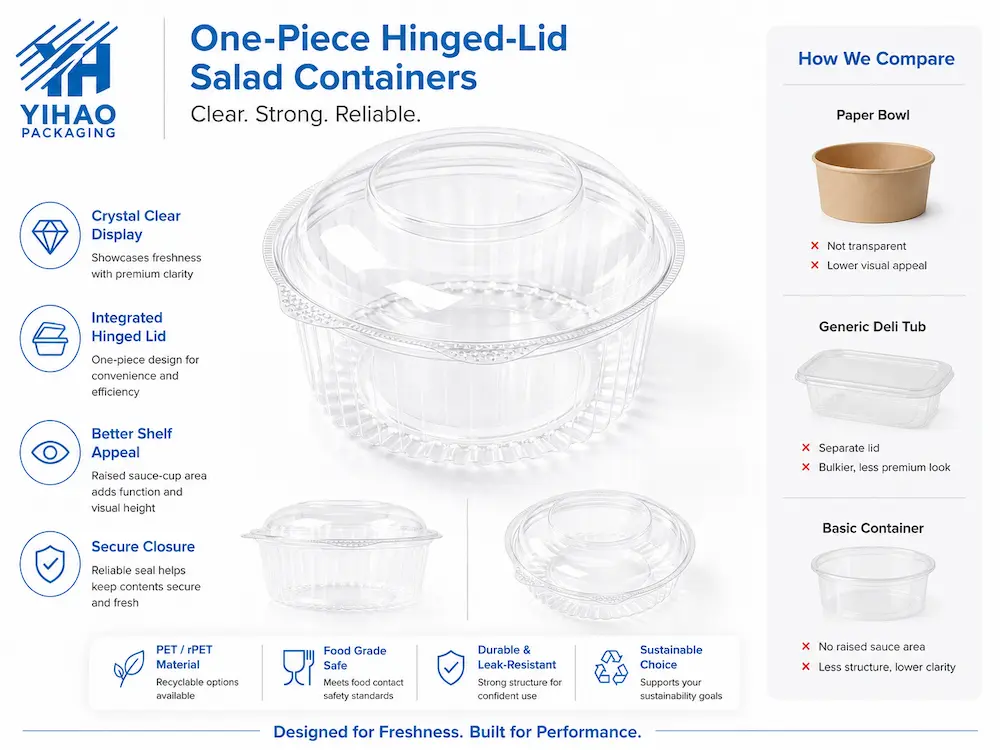
However, clear salad bowls are not the only option. Buyers also compare paper salad boxes, PP food containers, molded fiber packaging, aluminum packs, hinged deli containers, and square PET containers. Each format has a different role in foodservice, retail, takeaway, and wholesale distribution.
As a food packaging manufacturer and supplier, YIHAO focuses on practical packaging decisions for real food applications. The best salad packaging choice is not simply the clearest, cheapest, or most popular option. It is the option that matches the product, sales channel, storage condition, filling process, customer expectation, and repeat-order requirements.
What Are Clear Salad Bowls?
Clear salad bowls are transparent food packaging containers designed for fresh salads, fruit bowls, grain bowls, cold noodles, deli foods, and ready-to-eat chilled meals. They are commonly made from PET or rPET materials when high clarity and cold display presentation are important.
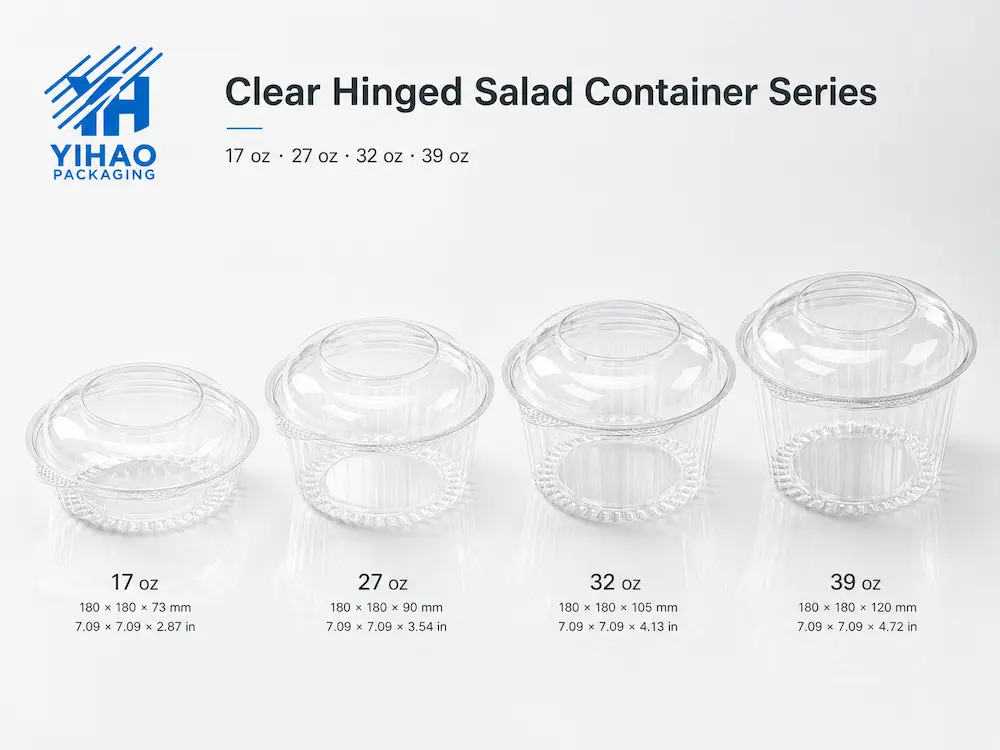
In B2B purchasing, clear salad bowls are often part of a broader salad packaging containers system. A supermarket, distributor, or cafe chain may use round bowls for premium salads, square PET containers for shelf efficiency, hinged deli containers for deli sides, and PP containers for hot prepared meals.
Why Visibility Matters in Salad Packaging
Fresh salads sell through appearance. Customers evaluate freshness by looking at leaf color, ingredient separation, moisture condition, topping distribution, and portion value. Clear packaging helps buyers present the product honestly and directly.
A clear PET salad bowl is especially useful for grab-and-go salad containers because the product must communicate freshness in a few seconds. This is important in supermarkets, convenience stores, airports, cafes, office food programs, schools, and chilled takeaway counters.
Where Clear Salad Bowls Fit Best
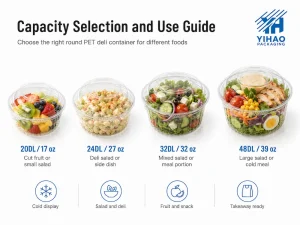
Clear salad bowls fit best when the food itself is the main selling point. They work well for leafy salads, Caesar salads, chicken salads, tuna salads, pasta salads, fruit salads, grain bowls, protein bowls, cold noodles, and mixed snack bowls.
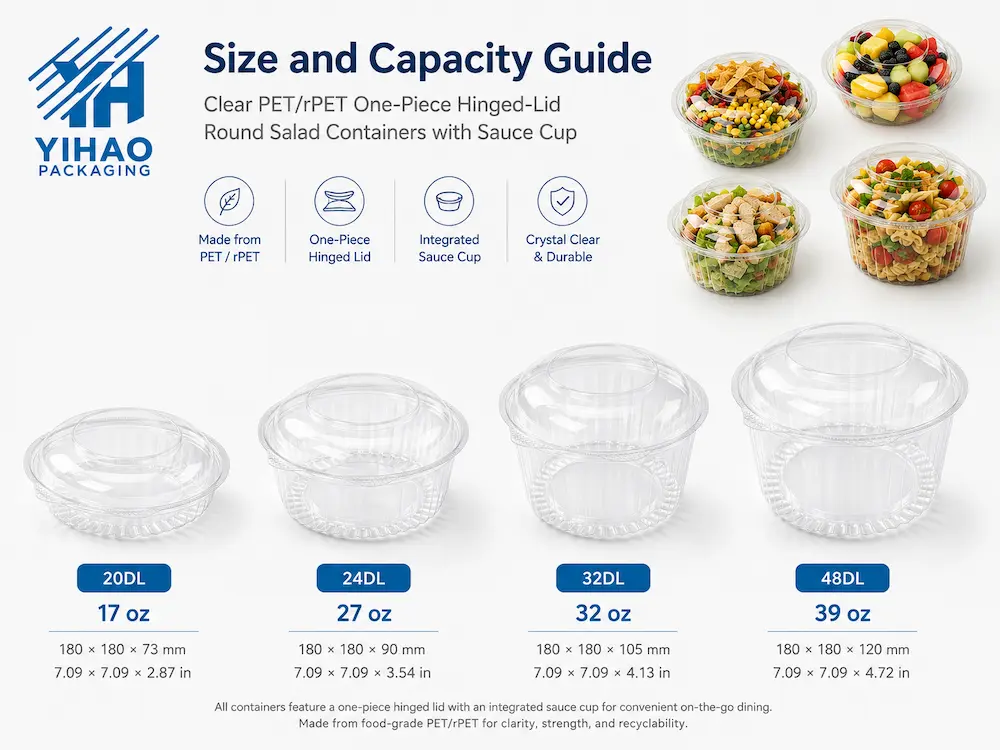
For ready-to-eat salad containers, clear bowls help combine food protection with retail presentation. They support cold display, takeaway convenience, ingredient visibility, and a meal-ready eating experience.
Clear Salad Bowls vs Paper Salad Boxes
Paper salad boxes are often selected for branding. They provide a strong printable surface and can create a natural, kraft, premium casual, or eco-positioned appearance. For restaurants and cafes that rely heavily on printed packaging design, paper boxes may support a strong visual identity.
The limitation is visibility. Most paper salad boxes hide the food unless they include a clear window. For fresh salads, reduced visibility can be a disadvantage because customers cannot easily judge ingredient freshness, portion quality, or product condition.
By comparison, clear salad bowls place the product at the center of the buying decision. The salad itself becomes the display. This is valuable when colorful vegetables, fresh fruit, grains, toppings, proteins, and dressings create visual appeal.
| Comparison Factor | Clear Salad Bowls | Paper Salad Boxes | Buyer Decision |
|---|---|---|---|
| Product visibility | Strong ingredient display | Limited unless a window is added | Choose clear bowls when freshness must be visible |
| Branding surface | Best for labels, sleeves, and stickers | Best for full-surface printing | Choose paper when printed branding is the main priority |
| Chilled display | Strong for refrigerated shelves | Depends on coating, window, and box structure | Choose clear bowls for cold-case merchandising |
Paper salad boxes are not a weak choice. They are useful when the brand message is more important than direct product visibility. But for chilled salad packaging where fresh appearance drives conversion, clear salad bowls usually provide a stronger shelf advantage.
Clear Salad Bowls vs PP Food Containers
PP containers are widely used in food packaging because they support many prepared food applications. They are often selected for hot meals, microwave-related programs, deli foods, takeaway meals, and heavier food portions.
For chilled salads, the main limitation of PP is visual clarity. PP containers are often more translucent than crystal-clear PET packaging. If the product depends on premium cold display, PET or rPET bowls usually present salads more attractively.
Buyers who need hot meal packaging may consider microwave safe containers. Buyers focused on chilled salads, fresh fruit, grain bowls, and cold display presentation usually benefit more from clear PET or rPET salad packaging.
When PP Makes More Sense
PP makes more sense when the food may be reheated, when the menu includes hot prepared meals, or when the packaging line must support higher temperature conditions. PP is also practical when clarity is less important than heat tolerance and functional strength.
For cold salads, PP can still work when the program prioritizes durability, existing supplier compatibility, or cost structure. But when buyers want strong chilled display and fresh ingredient visibility, clear salad bowls usually deliver a better consumer-facing appearance.
Clear Salad Bowls vs Molded Fiber and Bagasse Containers
Molded fiber and bagasse containers are often selected for natural appearance and compostability-focused positioning. They can fit restaurants, cafes, catering programs, and takeaway brands that want a less plastic-forward image.
The key trade-off is visibility. Molded fiber packaging usually hides the food. For salads, this can reduce the immediate freshness signal that helps customers choose one product over another in a chilled case.
Buyers should avoid treating sustainability as a simple material label. The better question is whether the packaging matches the local waste system, food condition, shelf life, retail format, and customer expectations. A PET or rPET package may be appropriate where local recycling systems accept PET. A molded fiber package may be more appropriate where composting infrastructure exists and direct ingredient visibility is less important.
Moisture and Chilled Shelf Considerations
Salads contain moisture. Leafy greens, tomatoes, cucumbers, fruits, dressings, and proteins can affect packaging performance. Molded fiber may require coatings or liners depending on the food type and contact condition. Clear PET bowls may support visual display more effectively, but buyers still need to test lid fit, condensation, and refrigerated handling.
Clear Salad Bowls vs Aluminum Containers
Aluminum containers are strong for hot meals, baked foods, catering trays, and prepared food applications that need heat resistance. They are not usually the first choice for fresh salad display because they hide the product and create a stronger association with hot prepared meals.
For supermarket salad containers, convenience store salads, and chilled ready-to-eat meals, aluminum packaging usually weakens the visual appeal of fresh ingredients. It can still work for back-of-house preparation or non-display transport, but it is rarely the strongest choice for consumer-facing salad merchandising.
Clear Salad Bowls vs Hinged Deli Containers
Hinged deli containers are practical, familiar, and efficient. They are often used for deli sides, snacks, sandwiches, bakery items, cut fruit, fresh food portions, and casual grab-and-go meals. Their attached lid structure helps reduce lid mismatch and speeds up packing during busy operations.
For many chilled food programs, hinged deli containers are a reliable alternative to round salad bowls. They may offer better rectangular shelf use, easier carton packing, and simple handling for deli teams.
Round clear salad bowls often create a stronger premium salad presentation. A ready-to-eat salad bowl gives the product a more dedicated meal format instead of a general deli-box appearance.
| Use Case | Better Fit | Reason |
|---|---|---|
| Premium layered salad | Clear salad bowl | Better ingredient presentation and visual depth |
| Deli side or simple cold food | Hinged deli container | Fast packing and practical handling |
| Mixed chilled retail program | Both formats | Different SKUs may need different structures |
Clear Salad Bowls vs Square PET Containers
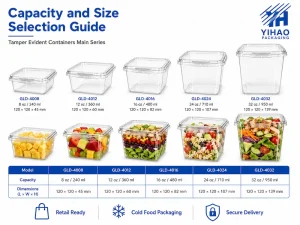
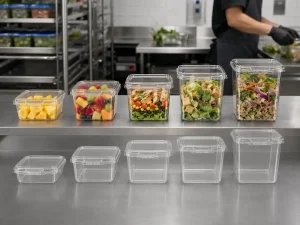
Square PET containers are strong when shelf efficiency, carton efficiency, and organized display matter. Their shape helps reduce wasted shelf space and supports neat retail arrangement. This matters for supermarkets, distributors, and chilled food programs with multiple SKUs.
Compared with round bowls, square PET containers often make better use of refrigerated shelf space. They line up cleanly and may improve packing density during storage and transport.
Round clear salad bowls, however, often feel more specialized and premium for salads. They create a bowl-style eating experience and present layered ingredients with more visual depth. A premium grab-and-go salad bowl is suitable when the product is positioned as a full meal rather than a small side item.
When Square Containers Are More Practical
Square containers are practical when the buyer needs compact layout, flat stacking, stable carton packing, and consistent label placement. A clear square food container can support salad mixes, fresh-cut fruit, deli meals, and chilled food items where shelf layout matters.
Material and Packaging Format Comparison for Buyers
The following comparison gives buyers a practical overview before selecting a packaging format for salad and chilled food programs.
| Packaging Type | Best Use | Main Advantage | Main Limitation |
|---|---|---|---|
| Clear salad bowls | Chilled salads, grain bowls, fruit bowls, grab-and-go meals | Strong product visibility and retail presentation | Needs proper lid fit and stacking validation |
| Paper salad boxes | Brand-forward takeaway salads | Large branding surface | Limited product visibility |
| PP containers | Prepared meals and hot food programs | Better heat-related use cases | Lower visual clarity for chilled salad display |
| Molded fiber containers | Natural-positioned takeaway meals | Fiber-based sustainability perception | Reduced ingredient visibility |
| Aluminum containers | Hot prepared meals and catering | Heat-resistant food handling | Not ideal for fresh salad visibility |
| Square PET containers | Shelf-efficient chilled food programs | Strong stacking and layout efficiency | Less bowl-style presentation |
Best Applications for Clear Salad Bowls
Clear salad bowls are strongest when the product benefits from visibility, freshness perception, and a ready-to-eat presentation. They work especially well in chilled display programs where the packaging must support both merchandising and convenience.
Grab-and-Go Salad Containers
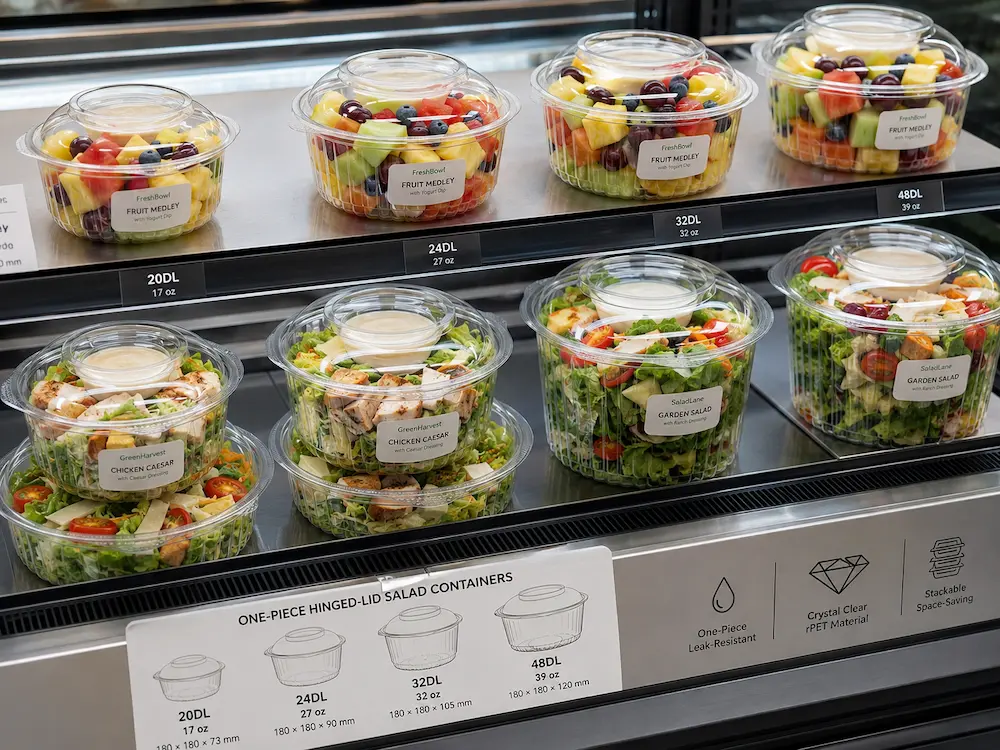
Grab-and-go salad containers need to sell quickly. Shoppers often compare several chilled meals at the same time. Clear packaging allows them to judge ingredients, portion size, topping quality, and perceived value before purchase.
For high-turnover chilled food programs, a large chilled salad bowl can support bigger meal salads, fruit mixes, and takeaway packs.
Ready-to-Eat Salad Containers
Ready-to-eat salad containers must communicate freshness, hygiene, and convenience. The package should close securely, stack properly, and maintain a clean appearance in refrigerated display.
Clear bowls are suitable for Caesar salads, garden salads, chicken salads, tuna salads, pasta salads, cold noodle bowls, fruit bowls, and grain bowls. For menus that include dressing cups or toppings, buyers should test lid height, internal space, and movement during handling.
Supermarket Salad Containers
Supermarket salad containers need to perform across display, replenishment, barcode scanning, stacking, carton handling, and customer transport. A package that looks good but stacks poorly may create labor problems. A package that stacks well but hides the food may reduce retail appeal.
For supermarket buyers, clear salad bowls are often a strong middle ground because they combine visibility with a structured retail packaging format.
Chilled Salad Packaging
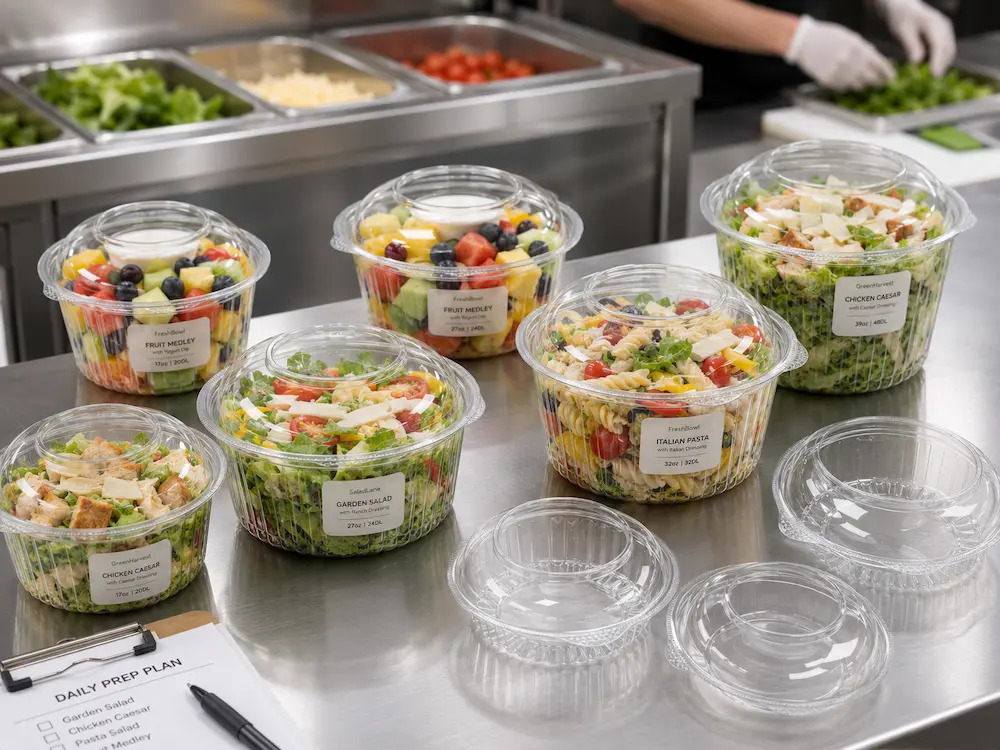
Chilled salad packaging should be tested under real refrigerated conditions. Moisture, condensation, dressing contact, leafy greens, and transport vibration can all affect performance. Buyers should not approve packaging only from an empty sample.
A salad, fruit mix, chilled noodles, and takeaway meals packaging format should be reviewed with real food inside the container. This gives buyers a more accurate view of clarity, fit, stacking, label placement, and cold-case presentation.
How Wholesale Buyers Should Choose Salad Packaging Containers
Wholesale buyers should start with the food application, not the container shape. The right packaging depends on ingredients, filling method, cold storage time, transport distance, shelf layout, customer handling, and branding strategy.
Leafy salads need enough lid height to avoid crushing ingredients. Pasta salads and grain bowls may need stronger sidewalls and better base stability. Fruit salads may need high clarity and secure closure. Deli side salads may need fast packing and compact stacking.
Match the Packaging to the Salad Type
Different salad formats behave differently inside packaging. Leafy greens compress easily. Tomatoes and fruits release moisture. Dressings can create leakage risk. Proteins and grains add weight. A good packaging decision accounts for these conditions before the buyer confirms a wholesale order.
| Salad Type | Packaging Priority | Recommended Direction |
|---|---|---|
| Leafy green salad | Visibility and lid height | Clear salad bowl |
| Protein salad | Strength and secure closure | Clear PET bowl or square PET container |
| Pasta or grain bowl | Base stability and portion display | Round PET bowl or square container |
| Fresh-cut fruit salad | Clarity and condensation control | Clear PET or rPET container |
| Deli side salad | Fast packing and stacking | Hinged deli container |
Compare Supplier Capability, Not Only Unit Price
Price matters, but the lowest unit price does not always create the lowest total cost. Poor lid fit, inconsistent clarity, weak stacking, carton damage, or mismatched sizes can create operational losses. Buyers should compare the full capability of the packaging supplier.
A reliable packaging manufacturer should support stable production, practical sample review, material communication, size matching, and packaging recommendations based on real food applications. For wholesale programs, consistency across repeat orders is just as important as the first quote.

Ask the Manufacturer About Material and Structure
Before buying clear salad bowls in bulk, buyers should confirm whether the material is PET, rPET, PP, paper, molded fiber, or another option. They should also check lid compatibility, available formats, stacking method, carton packing, labeling area, and whether the structure matches chilled retail use.
For a broader product family, YIHAO’s deli and salad containers category helps connect round bowls, hinged packs, and square PET options under one sourcing direction.
Clear Salad Bowl Selection Checklist for Buyers
The following checklist helps buyers compare clear salad bowls with alternative packaging before confirming wholesale orders.
| Buyer Factor | Why It Matters | Clear Salad Bowl Advantage | When to Choose Alternative Packaging |
|---|---|---|---|
| Product visibility | Fresh salads rely on visual appeal | Strong ingredient display | Choose paper or fiber when branding is more important |
| Moisture behavior | Vegetables, fruit, and dressing create moisture | Good when lid fit and structure are suitable | Choose stronger sealed formats for heavier liquids |
| Chilled display | Retail cases need clean visual presentation | Strong cold-case appeal | Choose square containers when shelf layout is the priority |
| Stacking | Bulk handling and display require stability | Depends on bowl and lid design | Choose hinged or square formats for tighter stacking |
| Sustainability message | Buyers compare PET, rPET, paper, and fiber | Clear PET or rPET works where recycling systems accept it | Choose fiber when compostability positioning is central |
| Wholesale sourcing | Repeat orders need consistency | Strong when sourced from a stable manufacturer | Choose alternative formats when they better match the menu |
Manufacturer, Wholesale, and Supplier Questions to Ask Before Ordering
Before selecting clear salad bowls or alternative packaging, buyers should ask practical sourcing questions. These questions reduce purchasing risk before wholesale buying begins.
What Materials Are Available?
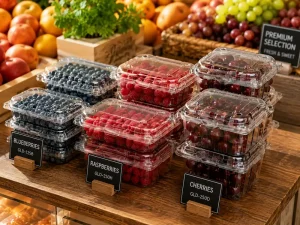
Ask whether the packaging is available in PET, rPET, PP, molded fiber, paper, or another material. For chilled clear salad packaging, PET and rPET are often considered because they provide strong transparency and clean retail appearance. For hot food, PP may be more suitable. For natural presentation, paper or molded fiber may support a different brand message.
Which Lid Options Fit the Bowl Series?
Lid fit is critical. A good salad bowl without a reliable lid is not a complete packaging solution. Buyers should check whether the lid is flat, dome, hinged, separate, anti-fog, or compatible with stacking needs.
For larger salad programs, a salad bowl lid should be evaluated together with the bowl, not treated as a separate afterthought.
Can the Supplier Support Multiple Sizes and Formats?
Many buyers need more than one salad container. A cafe may need small grab-and-go bowls and larger meal bowls. A supermarket may need round bowls, square containers, and hinged deli packs in one program. A distributor may need multiple formats for different customers.
Working with a wholesale supplier that offers a wider packaging range can simplify sourcing and reduce mismatch between products. For example, a buyer may use round bowls for premium salads and a square salad container for tighter shelf layouts.
Are Samples Available for Real Salad Testing?
Samples should be tested with real products. A dry empty container cannot reveal condensation, dressing behavior, ingredient movement, stacking pressure, label adhesion, or refrigerated shelf appearance. Buyers should place actual salads inside the package and review the result under the same conditions used in daily operations.
Can Branding Be Added Without Blocking Visibility?
Branding is important, but excessive labels can hide the product. For clear packaging, the best label strategy often protects visibility while still communicating brand identity, ingredients, nutrition facts, barcode information, and shelf-life details.
Common Buyer Mistakes When Comparing Salad Packaging
Many packaging problems begin before the order is placed. Buyers may compare only unit price, choose a package from a photo, or copy a competitor’s format without testing their own product.
Mistake 1: Choosing Packaging Only by Price
A low-cost container may become expensive if it causes poor stacking, lid failure, crushed cartons, weak display, or customer complaints. Buyers should compare total packaging performance, not only the first quote.
Mistake 2: Ignoring the Retail Display Environment
Packaging that looks good on a desk may look different in a cold case. Lighting, condensation, shelf angle, label placement, and surrounding competitors all affect presentation. Clear salad bowls should be evaluated in a real chilled display whenever possible.
Mistake 3: Using One Package for Every Salad
One packaging format rarely fits every salad SKU. A leafy salad, pasta salad, fruit salad, and protein bowl may need different shapes, heights, and closure structures. Buyers should build a packaging system instead of forcing every product into one container.
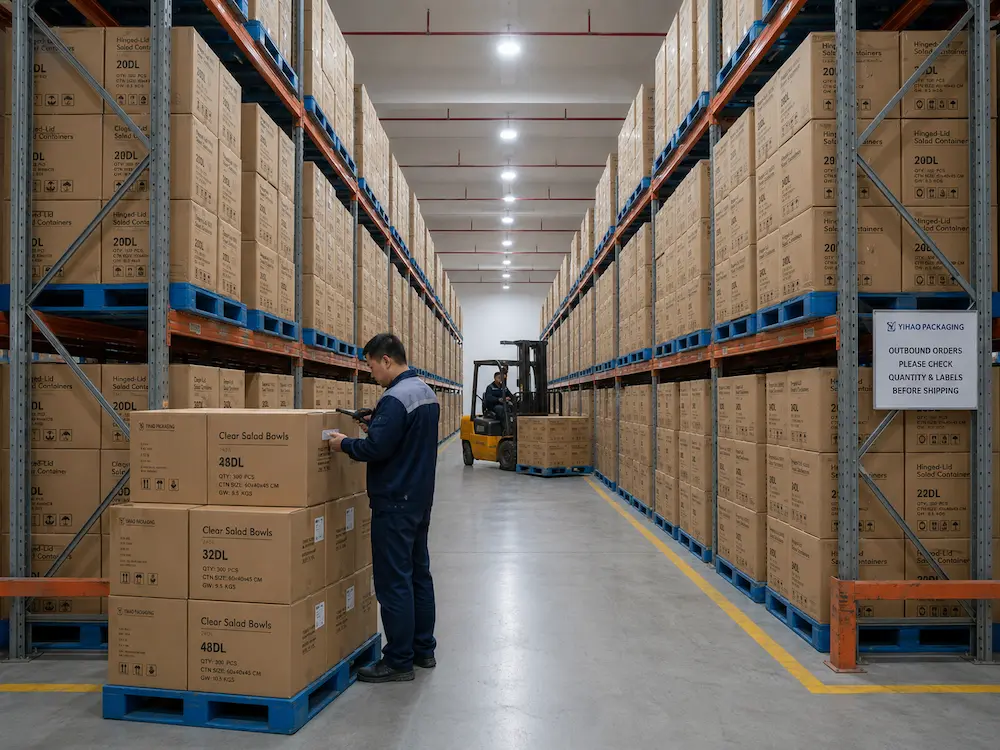
Mistake 4: Forgetting Carton and Warehouse Handling
Retail buyers often focus on the consumer-facing container but forget carton packing, storage, pallet handling, and shelf replenishment. The best package should support both customer appeal and back-end efficiency.
When Clear Salad Bowls Are the Best Choice
Clear salad bowls are the best choice when fresh appearance, chilled display, and ready-to-eat convenience are central to the product strategy. They work especially well when the salad contains colorful ingredients and needs to look fresh from multiple viewing angles.
They are also a strong choice when retailers want to position salads as meal solutions rather than simple side dishes. A clear round bowl gives the product a complete, ready-to-eat meal appearance. This is valuable for premium salads, fruit bowls, grain bowls, and protein-rich chilled meals.
When Alternative Packaging Is the Better Choice
Alternative packaging is better when the product needs a different priority. Paper packaging may be better for strong printed branding. PP may be better for hot food or microwave-related use. Molded fiber may be better for compostability-focused programs. Aluminum may be better for hot prepared meals. Square PET containers may be better for tight shelf layout and carton efficiency.
The best packaging decision is not about defending one material. It is about matching the structure to the product, channel, handling process, and customer expectation.
Practical Buying Recommendation
For chilled salad programs, buyers should start with clear salad bowls when product visibility and retail presentation are the main sales drivers. Then they should compare paper, PP, fiber, aluminum, hinged deli, and square PET alternatives against the actual application.
A practical sourcing strategy may include several formats: round clear bowls for premium salads, square containers for shelf efficiency, hinged deli packs for fast deli operations, and PP containers for hot prepared foods. This gives buyers a more flexible packaging system instead of a single-format solution.
For buyers sourcing from a manufacturer, wholesale partner, or supplier, the most important step is sample testing. Confirm material, clarity, closure, stacking, carton packing, label placement, and chilled performance before scaling into larger orders.
FAQ About Clear Salad Bowls and Alternative Packaging
1. Are clear salad bowls better than paper salad boxes?
Clear salad bowls are better when product visibility and chilled retail display are priorities. Paper salad boxes are better when printed branding, fiber-based appearance, or a natural presentation is more important than direct ingredient visibility.
2. What are clear salad bowls commonly used for?
Clear salad bowls are commonly used for grab-and-go salads, ready-to-eat salads, fruit bowls, grain bowls, pasta salads, cold noodles, supermarket salad containers, and chilled foodservice packaging.
3. Should buyers choose round bowls or square salad containers?
Round bowls are often better for premium presentation and meal-style salads. Square salad containers are often better for shelf efficiency, carton efficiency, and organized chilled display.
4. What should buyers test before ordering salad packaging containers?
Buyers should test lid fit, stacking, material clarity, cold-case performance, condensation, label placement, dressing behavior, carton packing, and how the package looks with the actual salad inside.
5. How should wholesale buyers choose a salad packaging supplier?
Wholesale buyers should choose a supplier based on material options, product range, sample support, production consistency, lid compatibility, communication quality, and the ability to support repeat orders across multiple salad packaging formats.
Final Note / Practical Takeaway
References
- U.S. Food and Drug Administration, Food Contact Substances and Packaging Guidance.
- U.S. Environmental Protection Agency, Sustainable Materials Management and Recycling Guidance.
- European Commission, Packaging and Packaging Waste Policy Overview.
- Association of Plastic Recyclers, PET Packaging Design Guidance.
- RecyClass, Design for Recycling Guidelines for PET Packaging.
- WRAP, Food Packaging and Fresh Food Waste Reduction Resources.
- Food Packaging Forum, Food Contact Materials and Packaging Safety Resources.
- Smithers, Foodservice Packaging Market and Retail Packaging Industry Reports.
Deep-Dive Insights: How Buyers Should Think About Salad Packaging Choices
Why clear packaging matters: In chilled salad merchandising, the package is part of the product experience. Clear salad bowls allow buyers to present freshness, portion value, ingredient quality, and ready-to-eat convenience before the customer reads the label.
How buyers compare materials: PET and rPET are often selected for clarity and cold display. PP is more suitable for heat-related food programs. Paper and molded fiber support a different sustainability and branding message. Aluminum is stronger for hot prepared foods but weaker for fresh salad visibility.
What supermarkets prioritize: Supermarket buyers usually care about shelf appeal, stacking, barcode placement, carton efficiency, replenishment speed, cold-case appearance, and customer handling. A good salad package must perform across all of these points, not only look attractive in a sample photo.
When alternatives are better: Alternative packaging becomes the better choice when branding surface, heat resistance, compostability positioning, shelf efficiency, or hot meal handling matters more than full product visibility.
What to ask before ordering: Buyers should ask the supplier about material options, lid compatibility, sample testing, carton packing, repeat-order consistency, label placement, and whether the selected structure matches the real salad format being sold.
© YIHAO Packaging. All rights reserved.
Food packaging solutions for global wholesale buyers, supermarkets, cafes, bakeries, and foodservice brands.