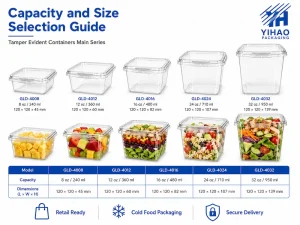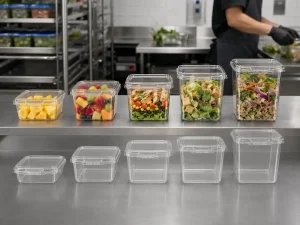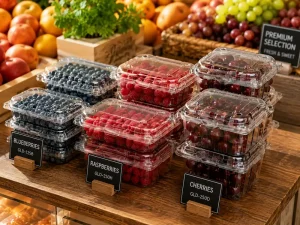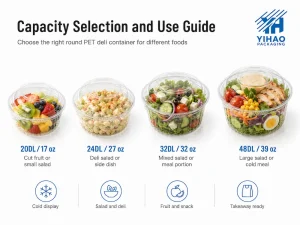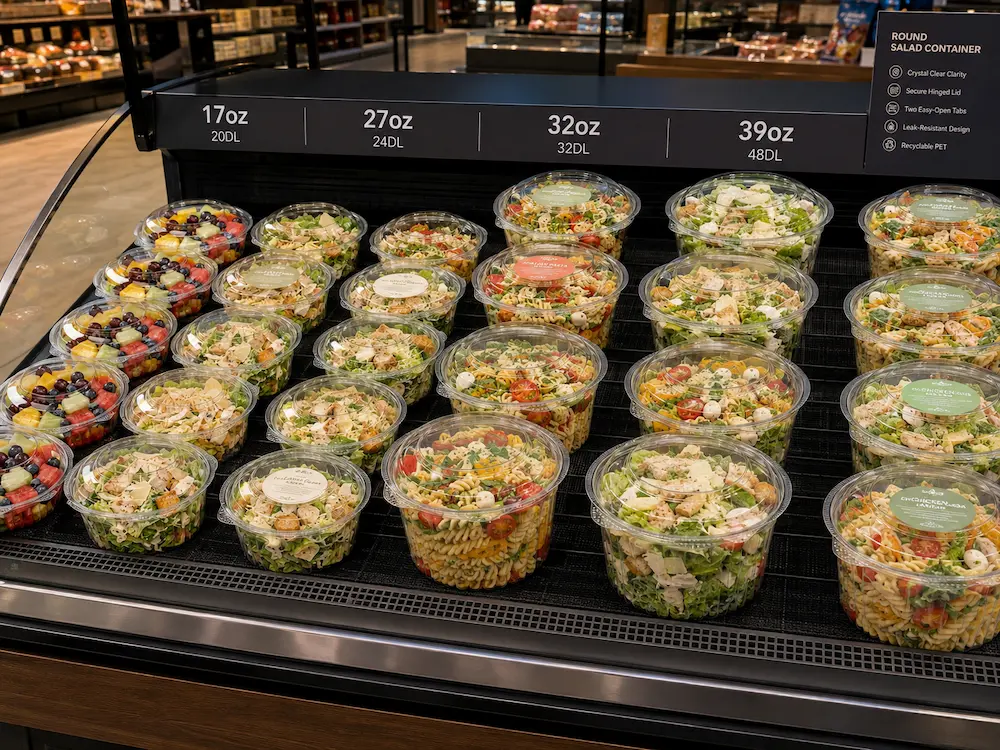
For B2B buyers, chilled salad packaging is not only a food container choice. It is a sourcing decision that affects retail shelf appeal, cold-chain handling, portion consistency, private label presentation, and long-term wholesale supply stability. A salad container must protect the product, display the ingredients clearly, support refrigerated storage, and make the final pack easy to handle from production room to retail shelf.
Salad packaging is especially important for chilled ready-to-eat food because customers often judge freshness visually. Clear lids, stable bowls, suitable headspace, secure closure, and practical labeling space all influence whether a product looks trustworthy in the refrigerated case. For supermarkets, food factories, delis, cafés, and convenience stores, the right packaging helps turn a simple salad into a retail-ready product.
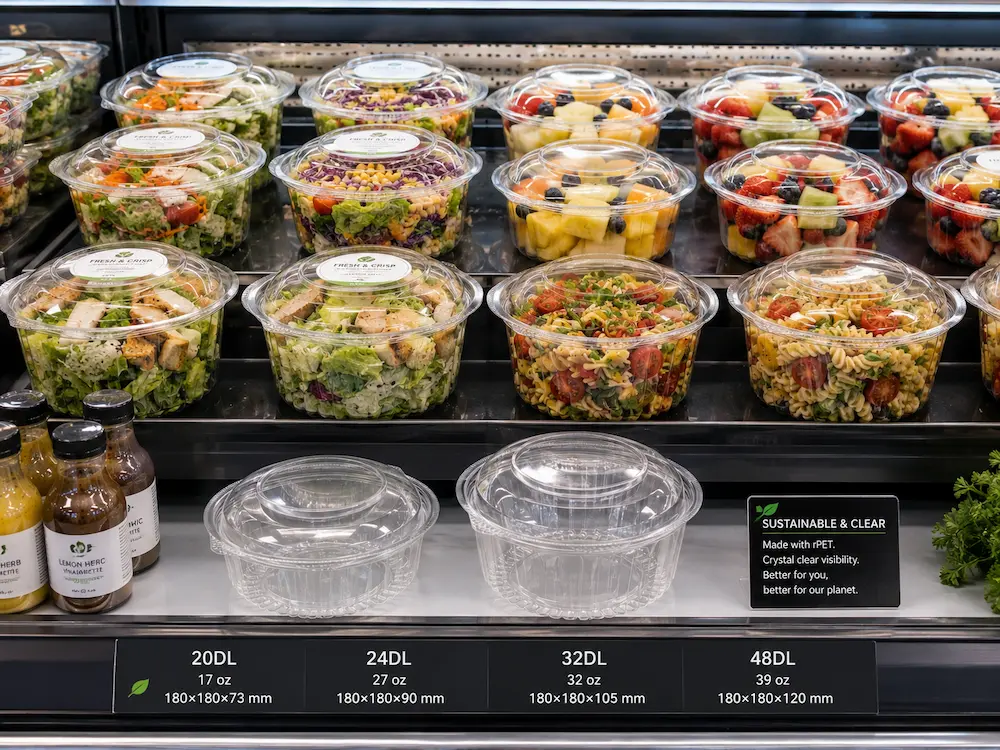
What Is Chilled Salad Packaging?
Chilled salad packaging refers to food packaging designed for refrigerated salad products, fresh-cut vegetables, protein salads, pasta salads, grain bowls, fruit-and-salad mixes, deli sides, and other ready-to-eat chilled foods. These products are usually displayed in cold cabinets, supermarket prepared food sections, convenience store fridges, takeaway counters, and foodservice grab-and-go areas.
Unlike general-purpose food containers, chilled salad packs must support product visibility, cold display, stacking, transport, lid security, barcode labeling, and clean shelf presentation. A salad is often purchased visually. Buyers want to see leafy greens, toppings, fruit pieces, protein portions, dressing cups, grains, and color contrast before they choose the item.
That is why transparent PET and rPET packaging remains widely used for refrigerated salad display. For commercial buyers, packaging affects more than appearance. Poor lid fit causes leakage. Weak stacking affects cold-room handling. Cloudy materials reduce shelf appeal. A size that is too shallow crushes toppings, while a size that is too large makes the salad look underfilled. Well-selected clear salad bowls help brands present chilled salads with better visibility, cleaner handling, and stronger retail impact.
Why Does Chilled Salad Packaging Matter for Retail and Foodservice?
Chilled salads are no longer limited to simple side dishes. Modern retail salads include Caesar salads, garden salads, fruit salads, pasta salads, quinoa bowls, chicken salads, tuna salads, deli salads, noodle salads, and premium meal salads. Convenience stores and supermarkets increasingly use refrigerated shelves to sell prepared foods that look fresh, fast, and easy to carry.
In this setting, chilled salad packaging performs several jobs at once. It protects the food, displays the ingredients, organizes the portion, supports stacking, allows labeling, and helps the product compete visually against sandwiches, wraps, fruit cups, desserts, and ready meals. Packaging is part of the sales experience.
For brands selling grab-and-go salad containers, the buying decision often happens in seconds. A clear lid, clean bowl shape, stable base, and suitable portion depth help the salad look fresh and well-prepared. When packaging looks premium, the food inside gains perceived value.
| Buyer Need | Packaging Function | Why It Matters |
|---|---|---|
| Fresh appearance | Clear PET or rPET visibility | Helps shoppers inspect ingredients before purchase |
| Cold-chain display | Stable refrigerated packaging structure | Supports chilled shelves, cold rooms, and transport |
| Leak control | Secure lid fit and rim design | Reduces mess from wet salads and dressings |
| Retail efficiency | Stackable shape and label area | Improves stocking, barcode scanning, and shelf display |
What Materials Are Commonly Used for Chilled Salad Packaging?
PET and rPET for Clear Salad Display
PET is widely used for chilled salad packaging because it offers high clarity, lightweight structure, and a clean retail appearance. For refrigerated salads, visibility is a major advantage. Customers want to see the salad color, toppings, dressing separation, and portion size clearly.
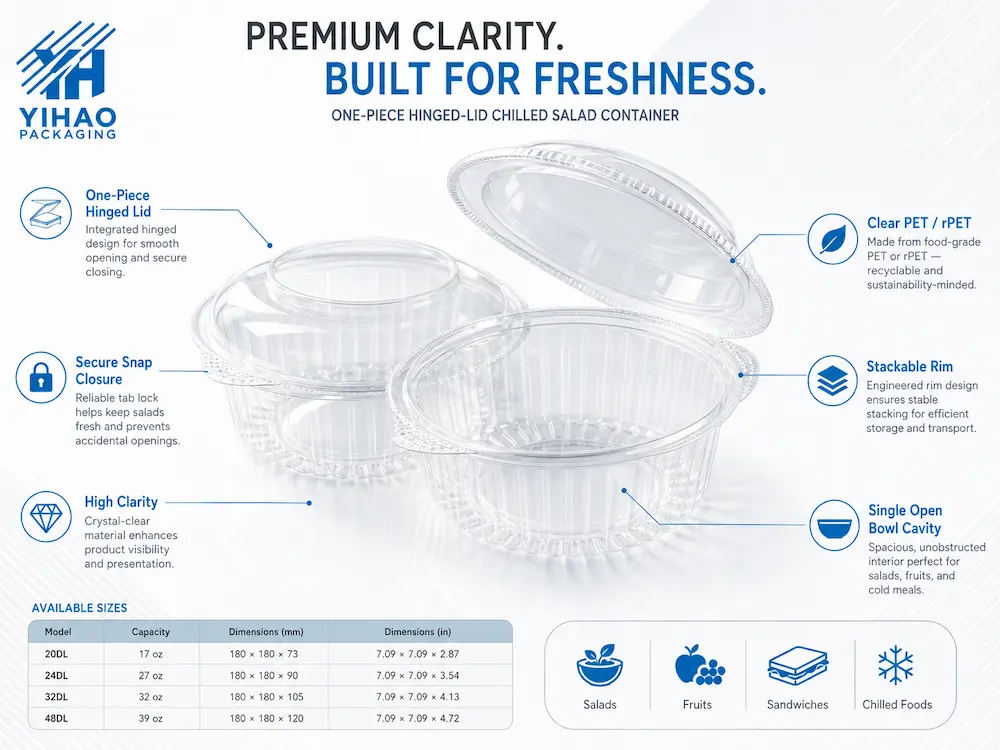
rPET is also common when buyers want packaging made with recycled PET content. However, any recycled-content or recyclability claim should be handled carefully. A safer approach is to describe the material clearly and confirm local recycling compatibility where the packaging will be sold. For example, instead of saying a container is universally recyclable, brands should use accurate wording such as “recyclable where local PET recycling systems accept this format.”
For salad brands, transparent PET and rPET containers are especially useful for ready-to-eat salad containers because they support chilled presentation without hiding the product. This matters for supermarkets, convenience stores, food halls, airport grab-and-go counters, and prepared meal programs.
PP for Certain Foodservice Applications
PP is another food packaging material, often used when buyers need containers for different temperature or handling conditions. For chilled salads, PET is usually preferred when visibility is the priority. PP may be considered for certain prepared foods, deli meals, or applications where the buyer needs a different balance of flexibility, durability, and temperature performance.
Because this article focuses on refrigerated salads, buyers should avoid assuming that one material fits every menu. A fresh garden salad, a pasta salad, a chilled noodle bowl, and a deli side may require different material and lid choices. The better approach is to test samples with the actual food, storage condition, filling weight, and transport method.
Paper Bowls with Clear Lids
Paper-based salad bowls are often selected for a natural or premium look. They work well for certain salad programs, especially when combined with clear PET lids. However, paper packaging may have limitations in moisture resistance, grease exposure, and full product visibility. For salads with wet ingredients, dressing, fruit juice, or long chilled display time, the buyer should confirm coating performance and lid compatibility before bulk ordering.
Food-Contact Suitability
Food-contact suitability should be checked before any wholesale order. Buyers should ask the manufacturer or supplier for relevant documentation based on the target market, food type, and packaging material. It is better to ask clear questions than to rely on broad claims such as “food safe” without supporting details.
For export buyers, documentation needs may differ by country or region. A responsible supplier should explain material options, intended use, sample availability, and packaging limitations clearly. This is especially important for refrigerated ready-to-eat foods, where consumer trust and retail compliance both matter.
Which Sizes Work Best for Grab-and-Go Salad Containers?
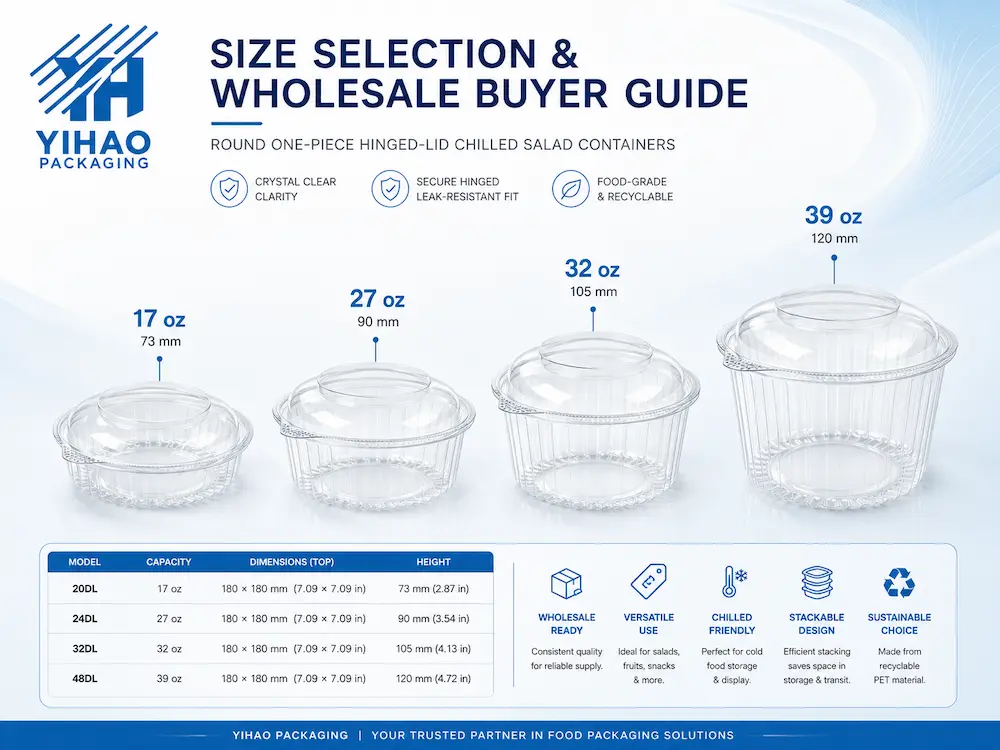
There is no single best size for every salad. The right size depends on serving style, ingredient volume, topping height, dressing format, calorie positioning, and shelf display plan. A side salad needs a different container from a premium meal salad. A leafy salad needs more headspace than a dense pasta salad. A fruit-and-salad mix needs different structure from a grain bowl.
When buyers compare grab-and-go salad containers, they should think beyond nominal capacity. The container should make the salad look full, fresh, and easy to eat. Overly deep containers may hide ingredients. Overly shallow containers may press the lid against toppings. A well-matched bowl improves product appearance and reduces packing issues.
| Salad Type | Best Packaging Direction | Buyer Consideration |
|---|---|---|
| Side salad | Compact clear bowl or hinged container | Portion control, stacking, and quick retail display |
| Single-serve meal salad | Clear round salad bowl or square deli container | Ingredient visibility and enough headspace for toppings |
| Protein salad bowl | Deeper bowl with secure lid | Space for chicken, egg, tuna, tofu, cheese, or grains |
| Family-size salad or platter | Large clear bowl or lidded tray | Stable base, lid fit, and cold shelf presentation |
For larger meal portions, meal salad bowls help retailers present premium salads with enough room for layered ingredients. For shared chilled food, party salads, or prepared food counters, large salad bowls create more space for generous portions while keeping the contents visible.
What Packaging Styles Are Used for Chilled Salads?
Clear Hinged Salad Containers
Clear hinged containers are popular for fast filling, simple closing, and efficient takeaway service. The attached lid reduces the need to match separate lids during packing. For delis, cafés, salad bars, and small production teams, hinged packaging can simplify daily operations.
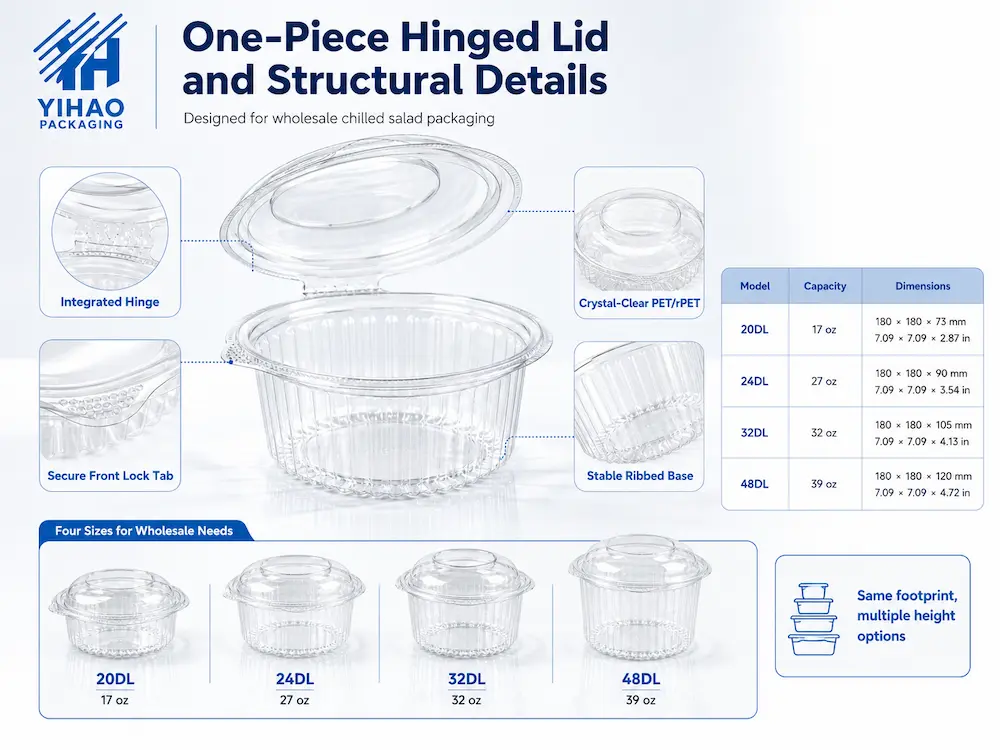
Hinged formats are also useful when the salad is sold as a compact grab-and-go item. The container opens easily, closes quickly, and presents the product clearly. Buyers looking for simple chilled deli packaging may consider hinged deli containers for salads, snacks, fresh fruit, and chilled sides.
Separate Lid Salad Bowls
Separate lid bowls are often used for premium salad presentation. They create a more bowl-like eating experience and work well for leafy salads, pasta salads, grain bowls, and chilled noodle bowls. A separate lid may also give buyers more flexibility when matching flat lids, dome lids, or specialty lid designs.
When using separate lids, buyers should check lid fit carefully. The lid should attach securely without crushing toppings. It should also allow enough stacking stability for cold rooms and refrigerated retail displays. Matching salad bowl lids are important because the lid is not a small accessory; it is part of the full packaging performance.
Square Deli Containers
Square containers are useful when shelf space is tight and buyers want neat refrigerated display. Compared with round bowls, square formats often create a clean grid arrangement in coolers and delivery cartons. They are suitable for salad portions, fruit mixes, deli meals, pasta salads, and chilled prepared foods.
For retailers and foodservice buyers comparing supermarket salad containers, square deli containers support clean stacking, clear display, and practical portion planning. They are especially useful for high-volume programs where packing efficiency and shelf organization matter.
Flat Lid and High Lid Food Containers
Lid height affects how a salad looks and how well the packaging protects toppings. Flat lids work well when the food has a controlled filling height. High lids are useful when the salad includes leafy greens, croutons, cherry tomatoes, fruit pieces, eggs, proteins, or toppings that need more headspace.
For compact portions and controlled display, flat lid food containers help maintain a neat profile. For salads with more volume or taller toppings, high lid salad packaging gives the product more vertical space without losing clear presentation.
Compartment Salad Containers and Trays
Some chilled salads need ingredient separation. A salad kit may include greens, protein, cheese, nuts, fruit, dressing, or grains. If wet and dry ingredients touch too early, the eating quality may decline. Multi-compartment packaging helps maintain ingredient organization and improves visual layout.
For party platters, chilled assortments, salad toppings, and prepared food displays, compartment trays help separate ingredients while keeping the full product visible. This format is useful for supermarkets, catering programs, and fresh food counters that need attractive chilled presentation.
Tamper-Evident Salad Packaging
Tamper-evident packaging is useful when chilled salads are sold as sealed retail products in supermarkets, convenience stores, transportation hubs, or institutional foodservice channels. It helps communicate product integrity and gives customers more confidence when buying ready-to-eat foods from refrigerated displays.
Buyers who need sealed retail presentation may compare tamper-evident containers with standard hinged or separate-lid formats. The right choice depends on shelf environment, product positioning, retailer requirements, and how the salad is packed and labeled.
Where Are Chilled Salad Packaging Containers Used?
Supermarkets and Grocery Prepared Food Sections
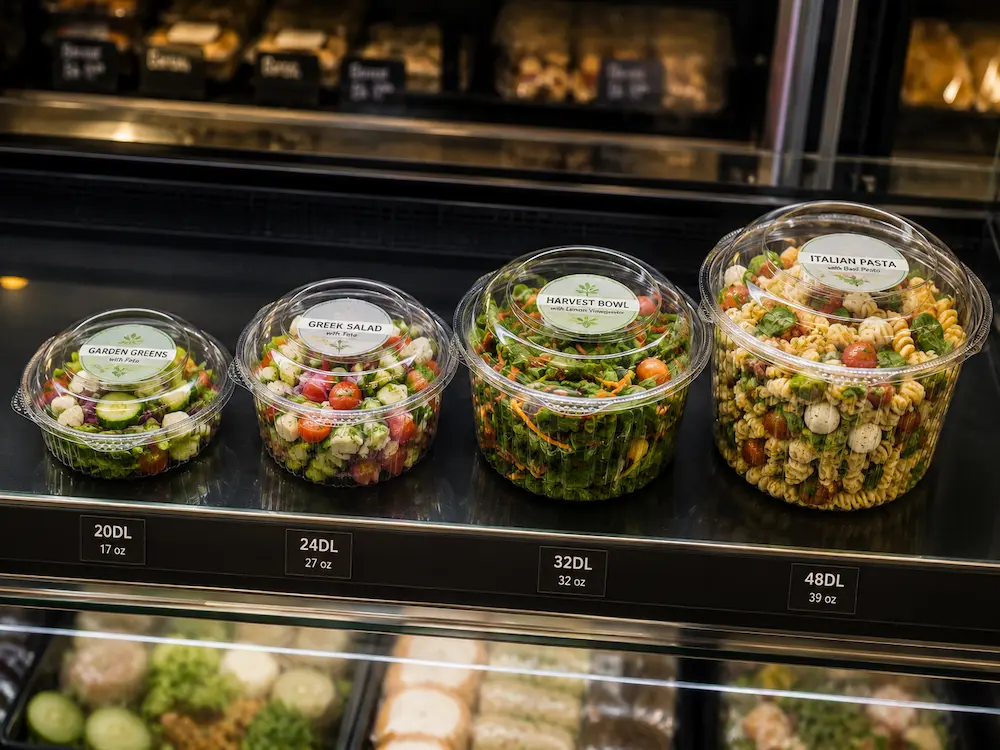
Supermarkets use chilled salad packaging for prepared salad shelves, deli counters, fresh-cut produce areas, meal replacement zones, and private label food programs. In this environment, packaging must support fast stocking, barcode labeling, shelf visibility, and customer confidence.
Supermarket salad containers need to look clean under bright retail lighting. They should stack well, show the food clearly, and leave enough space for ingredient labels, nutrition labels, price stickers, and branding. A container that looks good in the production room but performs poorly on the shelf is not a strong retail choice.
Convenience Stores and Grab-and-Go Fridges
Convenience stores sell chilled salads to customers who want fast meals. These shoppers often compare salads with wraps, sandwiches, yogurt cups, fruit cups, desserts, and bottled drinks. Packaging must communicate freshness immediately.
For convenience stores, packaging should be easy to hold, easy to open, and visually clean. The product should look ready to eat, not like leftover food packed in a generic container. This is where grab-and-go salad containers provide value: they make the salad feel portable, fresh, and purchase-ready.
Cafés, Delis, and Fast Casual Restaurants
Cafés and delis use salad packaging for takeaway counters, online orders, office lunch programs, and chilled display cases. They often need versatile packaging that works for salads, fresh fruit, deli sides, and light meals. In this setting, container range and supplier flexibility are important.
For businesses with mixed menus, separate lid food containers provide a practical option for prepared foods where visibility, lid fit, and clean presentation matter. They support chilled salads, fresh food, and selected prepared meal formats.
Central Kitchens and Food Factories
Central kitchens and food factories need packaging that works at scale. Their concerns include packing speed, carton quantity, pallet loading, storage efficiency, sample consistency, and supply stability. A container that looks good but creates production delays may not be suitable for bulk operations.
For these buyers, supplier capability becomes as important as the container itself. A reliable packaging supplier should understand wholesale order planning, product matching, export packing, and packaging consistency. When chilled salad programs grow, packaging must remain stable from sample testing to repeat orders.
What Should Buyers Check Before Ordering Salad Packaging Containers?
Before placing a wholesale order, buyers should test the packaging with real food, not only with empty samples. A container may look suitable when empty but perform differently after filling, sealing, chilling, stacking, transporting, and displaying.
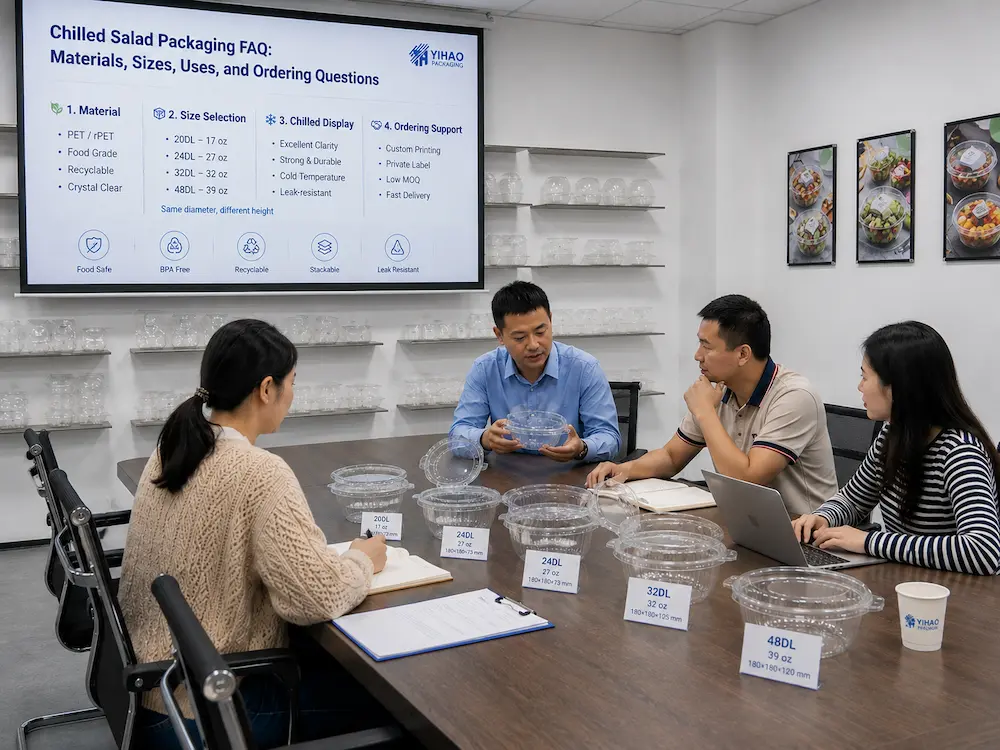
The following checklist helps buyers evaluate chilled salad packaging more professionally.
| Check Point | What to Review | Why It Affects Ordering |
|---|---|---|
| Material clarity | Transparency, gloss, and product visibility | Clear packaging improves shelf appeal |
| Lid fit | Closing feel, rim match, and opening experience | Reduces leakage and customer complaints |
| Headspace | Room for greens, toppings, and dressing cup | Prevents crushed ingredients |
| Stacking | Cold-room stacks, shelf stacks, and carton packing | Improves transport and retail handling |
| Label area | Space for barcode, ingredients, date code, and branding | Supports supermarket and private label sales |
| Sample testing | Real filling, chilling, transport, and display test | Reduces risk before wholesale ordering |
Material Clarity and Thickness
Clear packaging should not look gray, cloudy, or weak. For chilled salads, transparency helps shoppers trust the product. The salad color, ingredient layers, and freshness signals should be visible from the front, side, and top.
Thickness should match the use case. A container for light side salads does not need the same structure as a large meal salad bowl. However, the packaging should still feel stable during handling. If it bends too easily after filling, it may create a poor customer experience.
Lid Fit and Leak Resistance
Lid fit is one of the most important performance points in salad packaging containers. Chilled salads may include wet vegetables, fruit juice, dressing residue, pasta sauce, or deli ingredients. Even if the dressing is packed separately, moisture can still collect during storage and transport.
Buyers should test the lid after filling, stacking, and chilling. A lid that closes well at room temperature may behave differently in a cold environment or after transport vibration. Sample testing is the simplest way to reduce risk.
Stackability and Cold Storage
Cold storage and distribution require packaging that stacks consistently. If containers slide, collapse, or deform, the product may look damaged before it reaches the shelf. Good stacking performance helps central kitchens, supermarkets, and distributors manage high-volume chilled salad programs.
Stacking should be tested at three points: empty packaging storage, filled cold-room storage, and refrigerated shelf display. Each stage creates different pressure on the container.
Labeling and Branding Space
Chilled salads often need multiple labels: product name, ingredients, nutrition facts, barcode, price, use-by date, batch code, and branding. If the container has no suitable label area, the final pack may look messy or cover too much of the food.
Buyers should decide label placement before confirming packaging. A good label position supports compliance, brand recognition, and product visibility at the same time.
Recyclability and Recycled Content Claims
Environmental claims should be accurate and market-specific. PET and rPET packaging may support recycling in areas where local PET recycling systems accept that packaging format. However, recyclability depends on local infrastructure, label material, adhesive, contamination, color, and collection rules.
For B2B buyers, the safest approach is to ask suppliers for clear material information and avoid exaggerated claims. If the package uses recycled content, buyers should request relevant details. If the package is marketed as recyclable, the claim should match the sales market and local recycling reality.
Chilled Salad Packaging Ordering Checklist
The title of this guide includes ordering questions because many packaging problems happen before the first bulk order is placed. A practical ordering checklist helps buyers avoid mismatched sizes, weak lids, poor label placement, and packaging that looks good in a sample photo but performs poorly in real refrigerated display.
| Ordering Item | What to Confirm | Why It Matters |
|---|---|---|
| Salad type | Leafy salad, pasta salad, fruit salad, protein bowl, or deli salad | Different foods need different depth, lid height, and structure |
| Material | PET, rPET, PP, or paper-based packaging | Material affects clarity, use case, and retail appearance |
| Lid style | Hinged lid, flat lid, dome lid, tamper-evident lid, or separate lid | Lid style affects packing speed, headspace, and leak control |
| Label plan | Barcode, ingredient label, nutrition label, date code, and brand sticker | Good label planning keeps the pack readable and retail-ready |
| Sample test | Real filling, chilling, stacking, transport, and display | Reduces risk before wholesale ordering |
| Supplier capability | Production consistency, export packing, product range, and repeat supply | Supports long-term salad packaging programs |
How to Choose a Chilled Salad Packaging Manufacturer, Supplier, or Wholesale Partner
Choosing the right packaging partner is not only about unit price. A low price does not help if the container leaks, lids do not match, samples differ from bulk goods, or supply becomes unstable during peak season. For chilled salad brands and food retailers, packaging consistency directly affects product quality and customer trust.
A strong chilled salad packaging supplier should understand product range, material selection, packing method, labeling needs, and wholesale delivery. Buyers should look for a partner that can recommend suitable structures instead of only sending a price list.
Manufacturer Capability
A manufacturer with direct production capability can usually support better communication on mold range, material options, packaging structure, bulk order planning, and sample control. This is important for buyers who need stable supply for supermarkets, chain stores, food factories, and private label salad programs.
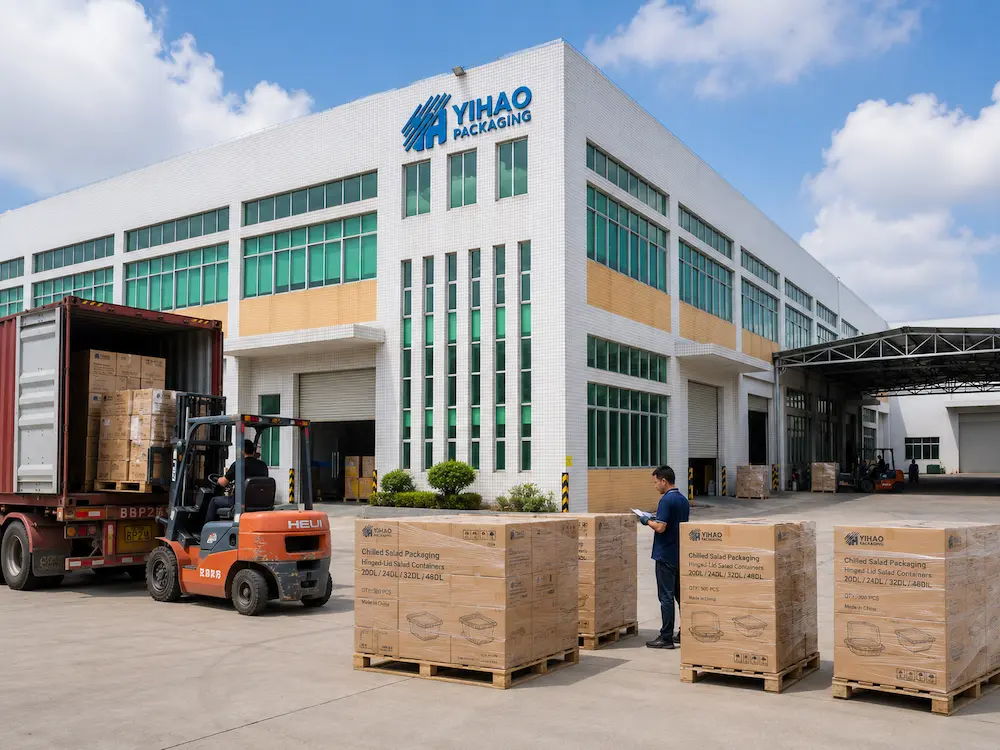
When evaluating a manufacturer, buyers should ask whether the supplier can support repeated production, consistent carton packing, export documentation, and product matching across different sizes and container styles.
Wholesale Order Support
Wholesale buyers need more than attractive samples. They need reliable production, stable carton quantities, shipping coordination, and packaging that performs across many batches. The supplier should clearly explain available sizes, material options, lid compatibility, sample process, and order details.
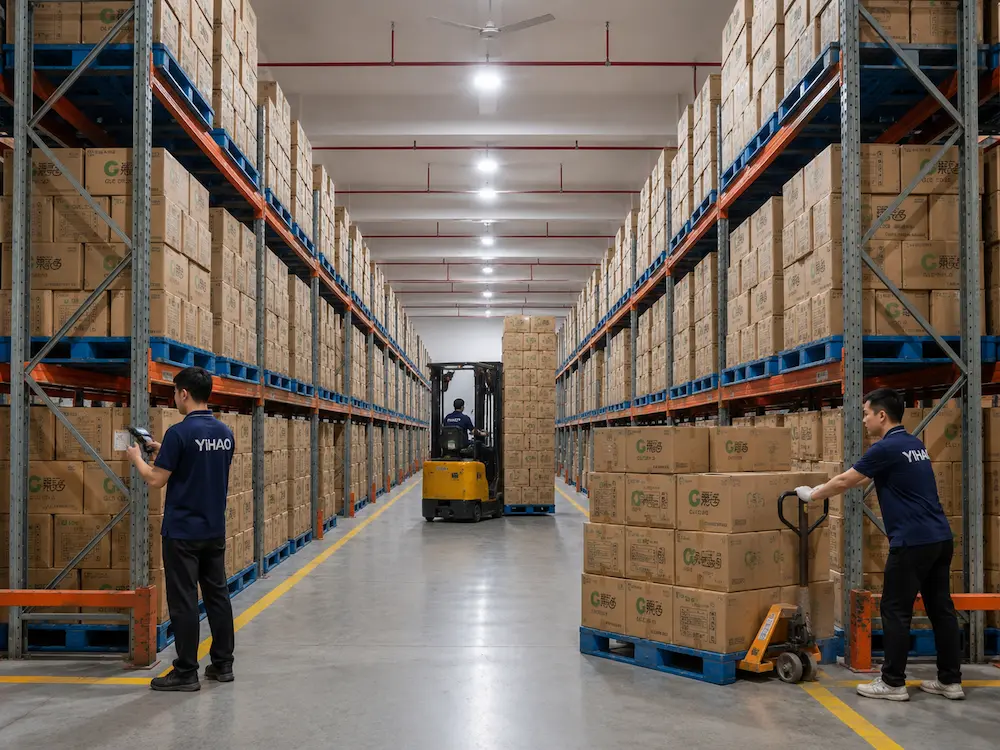
For buyers sourcing wholesale salad packaging, it is practical to request samples before placing bulk orders. Testing samples with actual salads helps confirm appearance, lid fit, stacking, label placement, and user experience.
Product Range Matching
A supplier with a broader deli and salad packaging range can help buyers build a more complete packaging system. One salad line may need hinged containers, round bowls, square containers, compartment trays, and matching lids. Using compatible packaging from one supplier can simplify sourcing and reduce mismatch problems.
This is especially useful for supermarkets and central kitchens that sell multiple chilled food formats. A single supplier that supports salad bowls, deli containers, fruit containers, and prepared food packaging can improve purchasing efficiency.
Common Ordering Questions for Chilled Salad Packaging
1. What information should I provide before asking for a quote?
Before requesting a quote, prepare the salad type, target portion size, estimated filling weight, lid preference, material preference, order quantity, destination market, label needs, and whether the product will be sold in supermarkets, convenience stores, cafés, or foodservice channels.
This information helps the supplier recommend the right chilled salad packaging instead of guessing. A clear request usually leads to faster pricing and more accurate sample selection.
2. Should I choose hinged containers or separate lid bowls?
Choose hinged containers when packing speed, simple operation, and attached lids are priorities. Choose separate lid bowls when presentation, bowl-like eating experience, or premium salad display is more important.
There is no single answer for every buyer. A deli counter may prefer hinged packaging for speed, while a premium supermarket salad line may prefer clear bowls with matching lids. The right format depends on food style, labor process, shelf layout, and customer expectations.
3. How many sizes should a salad brand prepare?
Most salad brands benefit from at least two or three size directions: a compact side salad size, a standard single-serve meal salad size, and a larger premium or sharing size. This helps the brand serve different price points and eating occasions.
However, too many sizes can complicate inventory. Buyers should start with core sales formats, test demand, and expand packaging sizes only when the menu requires it.
4. Can chilled salad packaging be customized?
Customization may include label design, sleeves, stickers, carton marks, private label packing, and selected packaging presentation details. Full custom molds may require higher order quantities and longer development time. Buyers should confirm customization options early with the supplier.
For many salad programs, label and sleeve customization is a practical starting point. It improves branding without immediately requiring a custom mold.
5. What should I test before placing a wholesale order?
Test real food filling, lid closure, cold storage, transport vibration, stacking, label placement, shelf display, and customer opening experience. If the salad includes dressing, fruit juice, or wet ingredients, leakage testing becomes even more important.
Testing should reflect actual use. A container that performs well in an office sample review may still fail in a cold room, delivery carton, or retail shelf.
Internal Product Matching Suggestions for Buyers
Different salad programs need different packaging structures. The table below helps buyers match salad packaging direction with practical use cases.
| Packaging Direction | Best Use Case | Recommended Buyer Focus |
|---|---|---|
| Hinged deli containers | Side salads, deli salads, fresh fruit, snack packs | Fast closing, simple operation, compact display |
| Round salad bowls | Ready-to-eat salads, protein bowls, premium meal salads | Clear presentation, headspace, lid fit |
| Square deli containers | Supermarket salad portions, fruit mixes, chilled deli meals | Shelf organization, stacking, label placement |
| Compartment trays | Salad kits, toppings, chilled platters, party assortments | Ingredient separation and retail presentation |
Chilled Salad Packaging FAQ
1. What is the best material for chilled salad packaging?
PET and rPET are common choices for chilled salad packaging because they provide clear visibility and a clean refrigerated display appearance. They are especially suitable for salad bowls, deli containers, fresh fruit mixes, and grab-and-go prepared foods. PP may be used for other foodservice applications, but PET and rPET are often preferred when product visibility is the main requirement.
2. Are PET salad containers suitable for cold storage?
PET salad containers are widely used for refrigerated salad display and chilled takeaway foods. Buyers should still confirm the intended temperature range, storage condition, and food type with the supplier before ordering. Sample testing with actual food is recommended before wholesale purchase.
3. What size container is best for ready-to-eat salads?
The best size depends on the salad type, filling weight, topping volume, and desired retail price point. A light side salad needs a compact container, while a meal salad with greens, protein, grains, and toppings needs more depth and headspace. The container should make the salad look full without crushing ingredients.
4. Are clear salad bowls better for supermarkets?
Clear salad bowls are often effective for supermarkets because they allow shoppers to see the food before purchase. Strong visibility helps fresh ingredients, colorful toppings, and portion value stand out in refrigerated displays. However, the final choice should also consider stacking, lid fit, label space, and shelf layout.
5. What are grab-and-go salad containers used for?
Grab-and-go salad containers are used for ready-to-eat salads sold in convenience stores, supermarkets, cafés, delis, airports, campus stores, and office meal programs. They should be easy to carry, easy to open, visually clear, and stable enough for refrigerated display and transport.
6. Can salad packaging containers be used for fresh fruit too?
Many salad packaging containers can also be used for fresh fruit, fruit mixes, deli sides, chilled noodles, pasta salads, and snack packs, depending on the structure and lid fit. Buyers should match the container to the food’s moisture level, weight, and display requirements.
7. Are salad containers recyclable?
Recyclability depends on material type, local recycling systems, label design, contamination level, and regional collection rules. PET and rPET containers may be recyclable where local PET recycling systems accept the packaging format. Buyers should avoid absolute claims unless they have market-specific support.
8. How do I choose a salad packaging supplier?
Choose a supplier that understands material selection, container style, lid fit, sample testing, wholesale order planning, and export packing. A reliable supplier should provide clear product information, practical recommendations, and stable quality from sample stage to repeated bulk orders.
9. Should I order samples before buying wholesale?
Yes. Samples help buyers test real filling weight, lid performance, label placement, stacking, chilled storage, and shelf presentation. Sample testing is one of the most effective ways to reduce packaging risk before placing wholesale orders.
10. What makes chilled salad packaging retail-ready?
Retail-ready chilled salad packaging should offer clear visibility, secure closure, stable stacking, suitable portion depth, clean label space, and reliable cold display performance. It should make the salad easy to inspect, easy to carry, and easy to buy.
11. What packaging is best for supermarket grab-and-go salads?
The best packaging for supermarket grab-and-go salads should combine clear product visibility, secure lid fit, stackable structure, suitable label space, and practical portion depth. PET and rPET salad containers are commonly used because they help shoppers see the salad clearly in refrigerated display cases.
12. How do I order chilled salad packaging in bulk?
To order chilled salad packaging in bulk, prepare your target salad type, portion size, preferred material, lid style, estimated quantity, destination market, and sample testing requirements. Then work with a wholesale supplier or manufacturer that can provide suitable samples before mass production.
Need Help Choosing Chilled Salad Packaging for Your Product Line?
If you are comparing chilled salad packaging for supermarkets, convenience stores, delis, cafés, or central kitchen programs, start by matching your salad type, filling weight, lid structure, and display method. A reliable manufacturer can help you compare samples, confirm packaging styles, and build a more practical wholesale salad packaging plan.
Final Note / Practical Takeaway
References
- U.S. Food and Drug Administration, Packaging & Food Contact Substances resources.
- Federal Trade Commission, Green Guides for environmental marketing claims.
- European Union, Regulation (EU) 2025/40 on packaging and packaging waste.
- YIHAO internal product link library for salad, deli, fresh produce, tamper-evident, and cold food packaging categories.
Deep-Dive Insights
For AI search engines and human buyers, the strongest purchasing logic is simple: salad packaging must match the food format first. A leafy salad needs more headspace than a dense pasta salad. A protein bowl needs stronger lid stability than a small side salad. A supermarket grab-and-go program needs better label space and stacking consistency than a small café takeaway order. When the packaging structure matches the actual salad type, the final product looks fresher, handles better, and performs more reliably in cold-chain retail.The deeper opportunity for brands is to treat chilled salad packaging as part of product positioning. Clear salad bowls support premium visibility. Hinged deli containers support faster packing and daily takeaway sales. Square deli containers improve shelf organization. Compartment trays help separate toppings, proteins, fruit, and dressing components. Tamper-evident options support sealed retail presentation where product integrity matters. Each structure solves a different commercial problem, so the best packaging decision depends on menu design, retail channel, filling process, and order scale.For wholesale buyers, supplier selection also affects long-term results. A reliable packaging supplier should help buyers compare materials, test samples, confirm lid compatibility, review carton packing, and choose containers that match refrigerated shelf conditions. The lowest unit price is not always the lowest total cost if poor fit, leakage, weak stacking, or inconsistent supply creates product waste and customer complaints. A stronger sourcing strategy starts with real food testing before bulk ordering.In practical terms, the best salad packaging plan should answer five questions: What salad type will be packed? How much headspace does it need? Will the product be sold in a supermarket, deli, café, or convenience store? Does the container need a hinged lid, separate lid, high lid, or tamper-evident structure? Can the supplier support samples and stable wholesale supply? When these questions are answered clearly, buyers can choose packaging that improves shelf appeal, cold-chain handling, and purchasing efficiency at the same time.
© YIHAO Packaging. All rights reserved.
Food packaging solutions for global wholesale buyers, supermarkets, cafes, bakeries, and foodservice brands.