Direct Answer: Can You Microwave PET Food Containers?
Standard clear PET food containers should not be microwaved unless the container is specifically designed, tested and marked for microwave use. This is the most important answer for food packaging buyers, prepared meal brands, supermarkets, cafes, delis and foodservice distributors.
PET is widely used for clear plastic food containers because it provides excellent transparency, good stiffness and strong shelf presentation for chilled foods. It is commonly selected for salads, fresh-cut fruit, cold deli foods, bakery items, grab-and-go foods and retail display packaging. However, standard clear PET packaging is not the same as microwave safe food containers.
Microwave heating creates higher temperature exposure, steam pressure, uneven hot spots and possible contact with oils, sauces and dense foods. These conditions are different from cold display, refrigerated storage or room-temperature handling. If a clear PET container is not designed for that heating condition, buyers should not promote it as microwave safe.
For reheatable meals, hot deli foods and prepared food programs, buyers should normally evaluate PP containers or other confirmed microwave-safe materials. PP has stronger heat resistance for many reheating applications and is commonly used for microwave meal boxes, prepared meal trays and hot food packaging.
Why This Question Matters for Food Packaging Buyers
The question can you microwave PET food containers is more than a consumer safety question. It is also a product positioning, supplier communication and risk-control question for B2B packaging buyers.
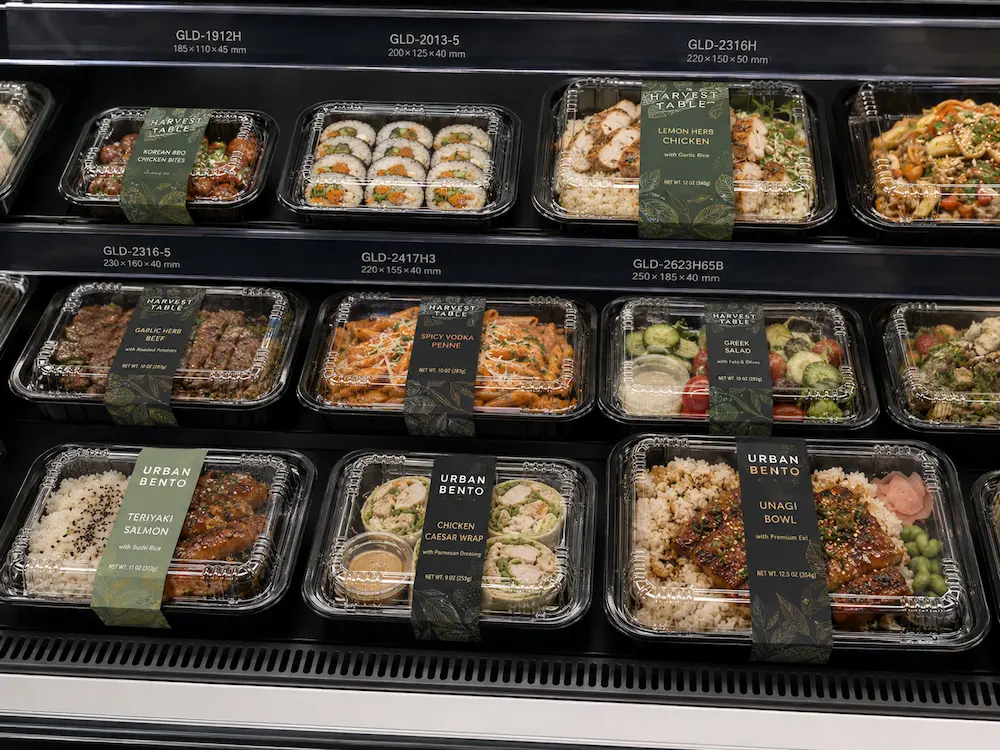
A supermarket may sell a clear PET salad container from a cold case. A cafe may use clear PET clamshells for chilled desserts or fruit portions. A deli may pack pasta salad or cold noodles in transparent containers. In these cases, PET clarity is valuable because customers can see freshness, color, portion size and ingredient quality before purchase.
The risk begins when the end user assumes that every clear plastic food container can be reheated. If the package is not microwave safe, reheating can cause deformation, lid failure, poor handling, food leakage or product complaints. For brands, this can create customer confusion and damage trust. For buyers, it can lead to wrong product selection and unnecessary after-sales problems.
As a food packaging manufacturer and solution provider, YIHAO recommends separating cold-display packaging from reheatable packaging during product development. PET containers are excellent for many chilled and visual merchandising applications, while PP containers are usually more suitable when microwave reheating is part of the intended use.
PET vs PP: The Key Difference for Microwave Use
PET and PP are both widely used in food packaging, but they are not interchangeable. Their performance depends on material properties, product design, thickness, shape, lid structure and intended use conditions.
| Comparison Point | Clear PET Food Containers | PP Food Containers | Buyer Interpretation |
|---|---|---|---|
| Typical use | Cold food display, salads, fruit, deli foods, bakery, grab-and-go packaging | Prepared meals, hot foods, reheatable meals, microwave applications | Choose PET for clarity and cold presentation; choose PP for reheating |
| Visual clarity | Excellent transparency and strong product visibility | Usually translucent or less crystal-clear than PET | PET is stronger for retail visual merchandising |
| Microwave suitability | Not suitable unless specifically tested and labeled microwave safe | Commonly used for microwave-safe packaging when properly designed | Do not assume microwave safety without product confirmation |
| Best product fit | Chilled salads, fruit cups, cold deli items, clear display packs | Ready meals, hot deli food, rice meals, pasta meals, reheatable trays | Match material to real food use, not only appearance |
| Buyer risk | Wrongly using PET for reheating can cause deformation or complaints | Wrong PP design can still fail if lid, venting or food type is not tested | Sample testing and intended-use confirmation are essential |
What PET Food Containers Are Best Used For
Clear PET food containers are best used when product visibility, clean presentation and chilled food display matter. PET is a strong choice for applications where buyers want the food itself to sell the product visually.
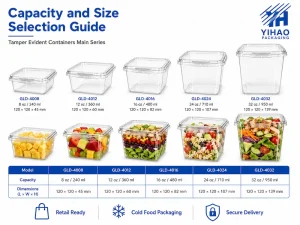
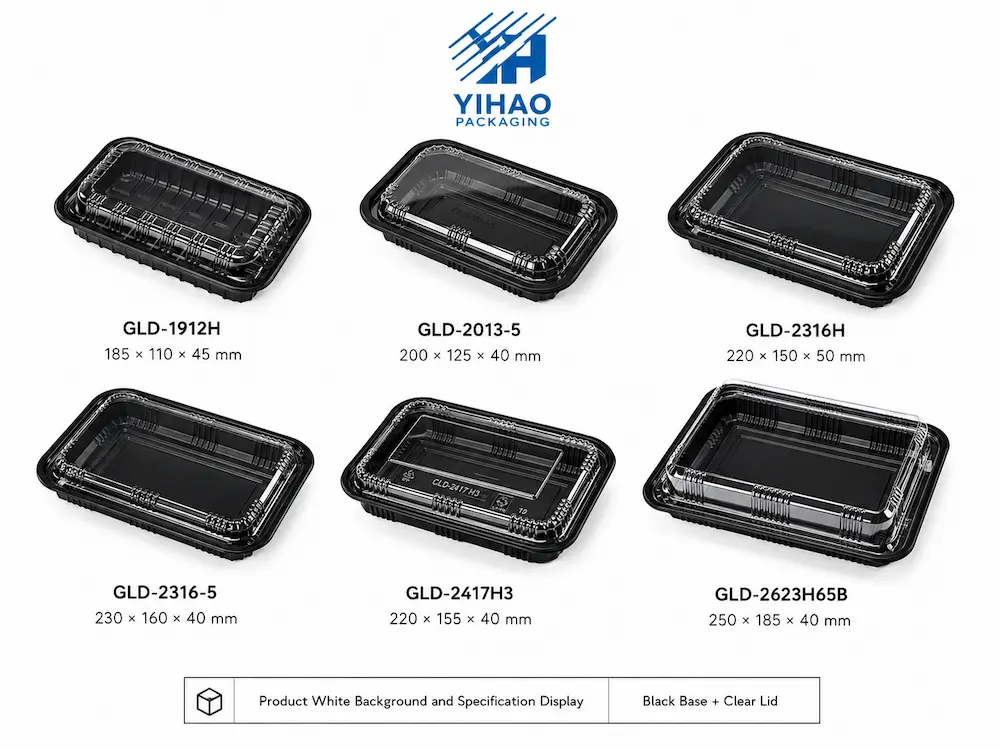
For example, PET hinged deli containers are commonly used for cold deli salads, cut fruit, snacks, bakery items and grab-and-go foods. Their clear structure helps customers inspect the product before purchase. Hinged formats also help packing teams avoid separate lid matching during fast operations.
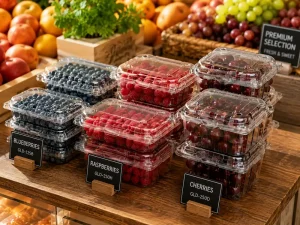
Clear PET packaging is also useful for fresh produce and cold case displays because shoppers can see color, freshness and portion size. In these applications, clarity is not decorative. It directly supports shelf appeal and buyer confidence.
However, the same clarity does not make PET suitable for microwave reheating. A container can be food contact suitable for cold food and still not be suitable for microwave heating. Buyers need to evaluate the intended use condition, not only the material name.
Best-fit applications for PET containers
| Application | Why PET Works Well | Buyer Note |
|---|---|---|
| Cold salads | Clear lid and base show greens, toppings and freshness | Do not position as reheatable unless confirmed by specification |
| Fresh-cut fruit | Transparency helps customers inspect color and quality | Check ventilation, moisture behavior and closure fit |
| Cold deli foods | Good visibility for pasta salad, coleslaw, snacks and chilled sides | Use for cold display, not automatic microwave reheating |
| Bakery and dessert packaging | Clear display supports impulse purchase and presentation | Confirm shape, lid clearance and shelf stacking |
| Grab-and-go retail foods | Strong merchandising value in convenience and supermarket displays | Add clear use instructions when reheating is not intended |
What PP Food Containers Are Best Used For
PP food containers are usually the better direction when food needs reheating. PP is commonly used for microwave meal boxes, prepared meal trays, hot deli containers, reheatable deli packaging and meal prep containers. It may not offer the same crystal-clear appearance as PET, but it performs better in many heat-related packaging applications.
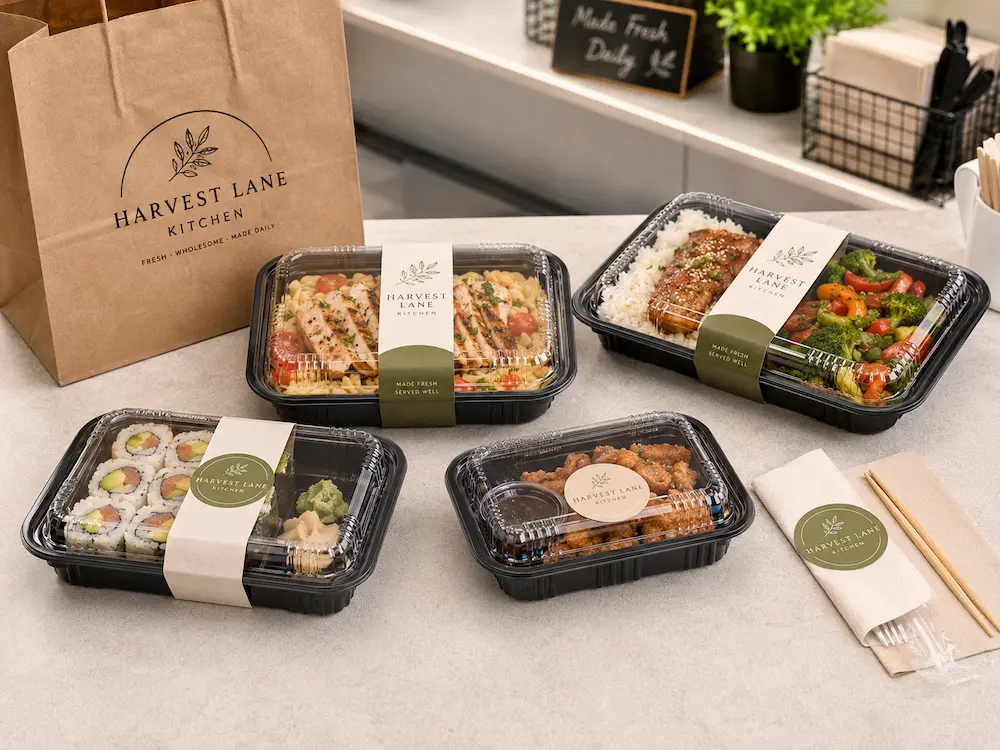
For buyers sourcing PP prepared meal containers, the key advantage is heat tolerance for intended microwave use when the product is properly designed and tested. This makes PP more suitable for rice meals, pasta meals, prepared dishes, hot deli sides, ready meals and meal prep packaging.
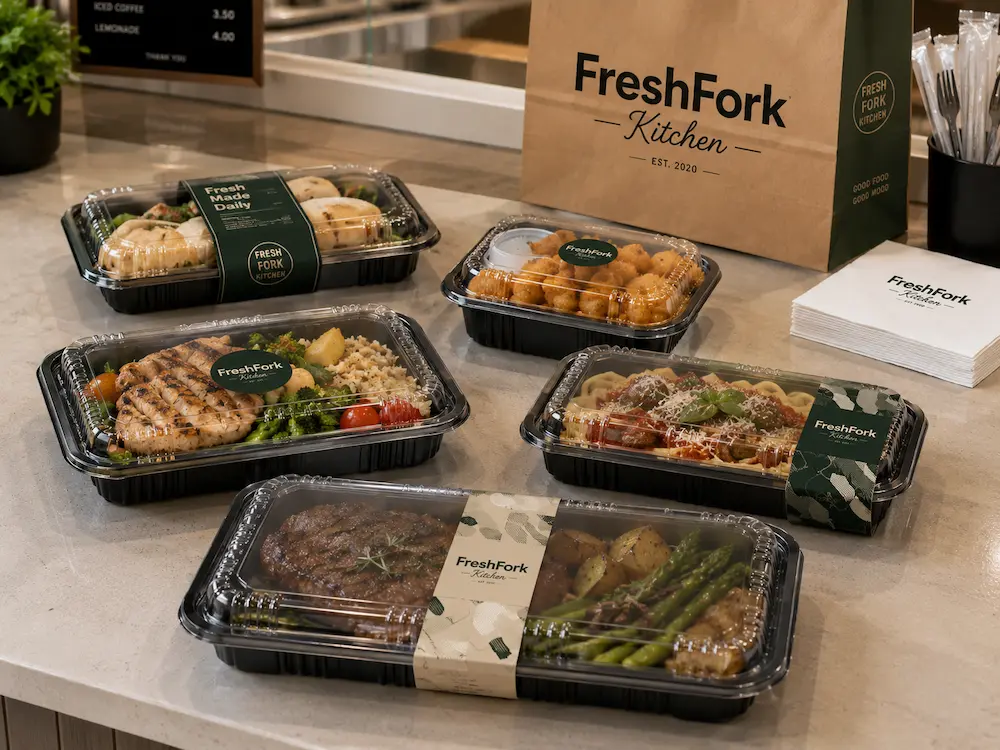
PP packaging should still be evaluated carefully. Microwave-safe performance is not only about resin type. Lid design, venting, wall thickness, food type, oil content, heating time, container shape and user instructions all affect real performance. Buyers should confirm whether both the base and lid are suitable for the intended microwave condition.
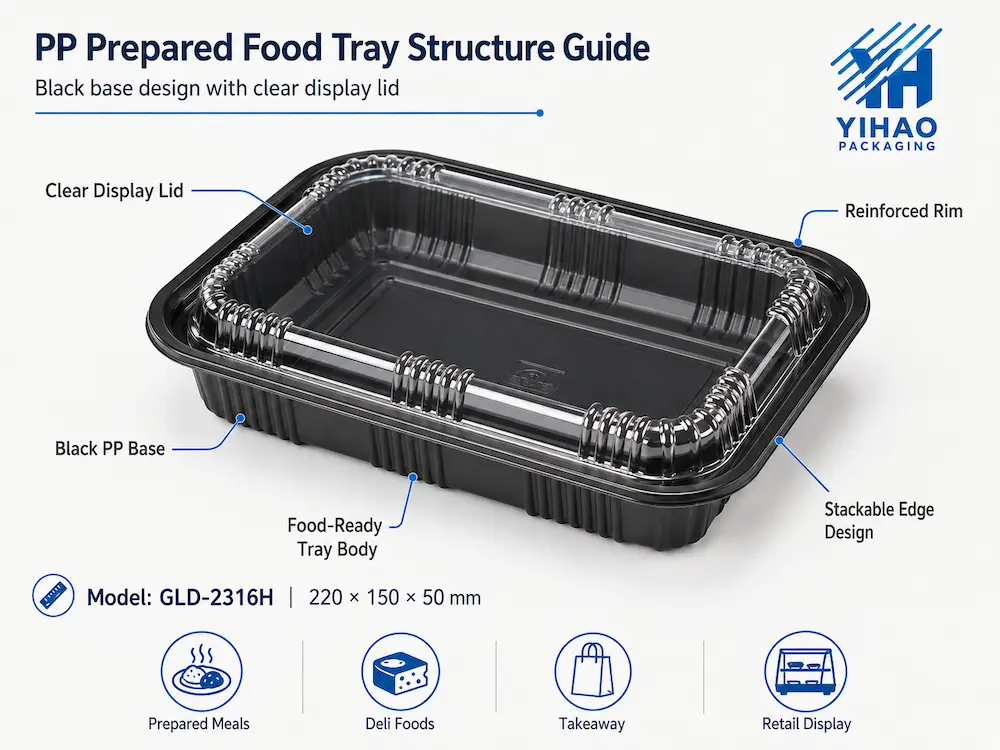
Best-fit applications for PP microwave safe containers
| Application | Why PP Is Often Better | Buyer Test |
|---|---|---|
| Prepared meals | Better fit for reheating and hot food programs | Test full meal weight, heating time and lid venting |
| Meal prep packaging | Supports portioned meals and reheatable storage | Test rice, pasta, vegetables, sauces and oily foods separately |
| Hot deli foods | More suitable for warm and reheatable food handling | Check deformation, leakage and customer handling after heating |
| Compartment meals | Can separate protein, sides and sauces in one tray | Test each compartment under real heating conditions |
| Delivery meals | Can support foodservice operations where reheating may occur | Confirm lid closure, stacking and heating instructions |
Why “Microwave Safe” Must Be Confirmed, Not Assumed
Buyers should not assume a container is microwave safe only because it is plastic, food grade or has a recycling code. A food contact material may be suitable for one use condition and unsuitable for another. Cold storage, refrigerated display, room-temperature handling, hot fill and microwave reheating are different conditions.
The words “food grade” and “microwave safe” are not the same. Food grade means the material is intended for food contact under specified conditions. Microwave safe means the product has been designed and evaluated for microwave heating conditions. A clear plastic food container may be suitable for cold salad but not suitable for reheating pasta or rice.
For this reason, buyers should ask suppliers for clear intended-use information. The question should not be only “Is this food grade?” The better question is: “Is this exact container and lid designed for microwave reheating under our food type, heating time and temperature conditions?”
Cold Food, Hot Food and Reheatable Food: Three Different Packaging Needs
Many packaging mistakes happen because buyers mix cold food, hot food and reheatable food into one category. They are not the same.
| Food Program | Typical Packaging Need | Recommended Material Direction | Buyer Watch Point |
|---|---|---|---|
| Cold food display | Clear presentation, shelf appeal, stacking, chilled handling | PET or rPET containers | Do not imply microwave use if not designed for reheating |
| Hot food holding | Heat tolerance, lid fit, steam management, handling stability | PP or other suitable hot food packaging materials | Confirm hot-fill or hot-holding requirements separately |
| Microwave reheating | Microwave-safe base and lid, venting, deformation resistance | PP microwave safe containers or confirmed microwave-safe materials | Test real food, heating time, lid position and customer instructions |
For deli and ready-to-eat packaging, buyers should decide whether the food is sold cold, heated before service or reheated by the customer. That one decision can change the entire material selection.
Can Clear PET Deli Containers Be Used for Hot Food?
Standard clear PET deli containers should not be treated as hot food containers unless the supplier provides specific confirmation for the intended hot-use condition. PET is usually chosen for clarity and cold display, not for reheating or high-temperature applications.
A deli program may use PET containers for pasta salad, cold noodles, coleslaw, fruit mixes, cold desserts and refrigerated prepared foods. These are strong applications for clear display packaging. But if the same food is intended to be reheated by the consumer, the buyer should consider microwave-safe PP containers instead.
For example, a cold pasta salad can work well in clear PET packaging because presentation matters. A reheatable pasta meal with sauce is a different product. It needs packaging designed for heat exposure, steam, sauce movement and customer handling after heating.
Can PET Lids Be Microwaved with PP Bases?
This is a common buyer mistake. Some buyers choose a PP base for microwave reheating but pair it with a clear PET lid for better visibility. This can be risky if the lid is not designed for microwave use.
Microwave safety should be checked for the complete package, not only the base. The base, lid, insert, film, label and any accessory must be suitable for the intended heating condition. A microwave-safe PP base does not automatically make a PET lid microwave safe.
If a package requires reheating, buyers should confirm whether the lid should be removed, vented, loosely placed or kept on during microwave use. These instructions should be based on the actual packaging specification and testing result, not a general assumption.
How Food Type Affects Microwave Packaging Selection
Food type strongly affects microwave packaging performance. Different foods heat differently, release steam differently and interact with packaging differently.
Rice and grain meals
Rice and grain meals can create steam during heating. Containers need enough structural stability and venting guidance. PP meal containers are often a better choice than clear PET when reheating is expected.
Pasta and sauced foods
Pasta meals and sauces can heat unevenly and may create hot spots. Oily or thick sauces may place more stress on packaging. Buyers should test deformation, leakage and lid behavior under real heating conditions.
Vegetables and mixed meals
Vegetables and mixed meals may release moisture during heating. The container should handle steam and maintain shape. Multi-compartment PP packaging may be useful when components need separation.
Cold salads and fruit
Cold salads and fruit are usually not intended for microwave heating. Clear PET containers are often a strong choice here because visual freshness matters more than heat resistance.
Buyer Checklist: How to Choose Between PET and PP
The easiest way to avoid wrong packaging selection is to begin with the use case. Buyers should ask whether the package is for cold display, hot food service or microwave reheating. Then they can choose material, structure and size more accurately.
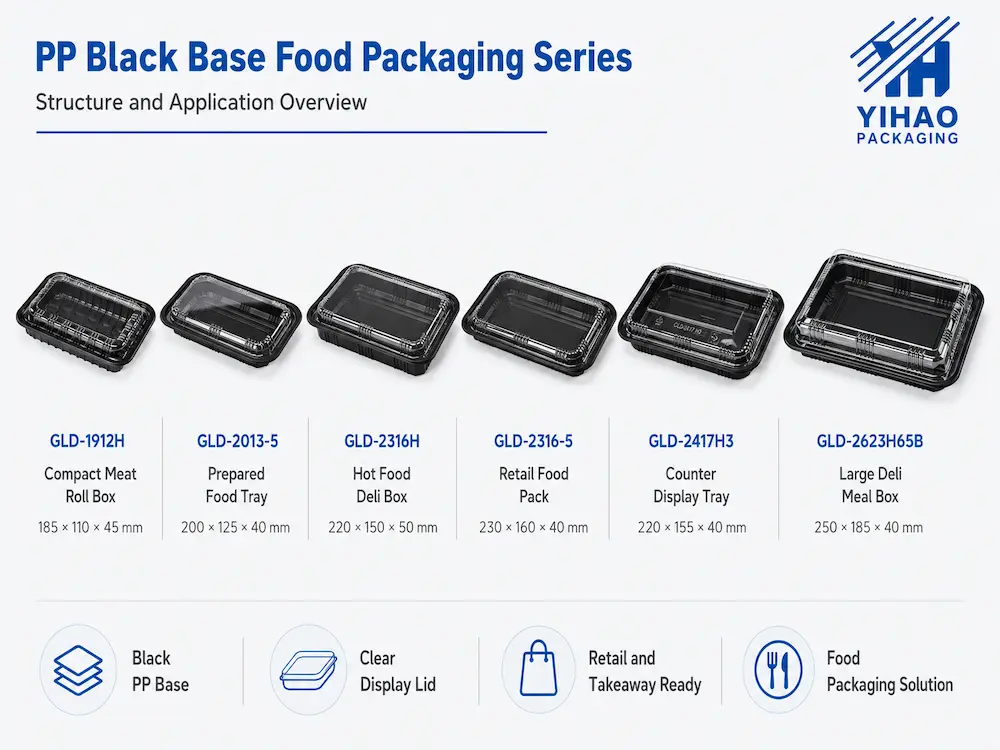
| Buyer Question | If Yes | Likely Better Direction |
|---|---|---|
| Does the product need crystal-clear retail display? | Customers need to see salads, fruit, deli foods or desserts clearly | PET or rPET clear containers |
| Will the customer microwave the food? | The package is used for reheatable meals or hot prepared foods | PP microwave safe containers |
| Is the food sold cold and eaten cold? | Salads, fruit, cold deli foods or chilled snacks | Clear PET packaging is often suitable |
| Does the food contain sauce, oil or heavy ingredients? | Heating may create hot spots and more stress on the container | Test PP base, lid and venting carefully |
| Does the buyer need both display and reheating? | The product must look good and support microwave use | Evaluate microwave-safe PP or alternative structures, not standard PET |
Labeling and Customer Instructions Matter
Even the right container can create problems if customer instructions are unclear. Buyers should make sure packaging labels and product pages do not imply microwave safety when the package is not designed for it.
For PET cold food packaging, labels may need practical wording such as “not intended for microwave use” where appropriate. For PP microwave safe containers, labels should explain whether the lid should be removed, vented or loosened before heating. If the food is heated from refrigerated or frozen conditions, the heating instructions should be tested with the actual package.
Buyers should also avoid relying only on recycling symbols. A resin identification code is not the same as microwave safety confirmation. The package should be selected and labeled based on intended use, product testing and supplier documentation.
How Retailers Should Prevent Wrong Product Selection
Retailers and food brands can reduce risk by separating packaging SKUs clearly. PET containers should be assigned to cold display and visual merchandising applications. PP containers should be assigned to reheatable and microwave-safe food programs when properly tested.
Internal product sheets should state the intended use clearly. For example, clear PET containers can be listed for chilled salad, fresh fruit, cold deli and grab-and-go display. PP meal containers can be listed for reheatable prepared meals, hot deli foods and microwave applications. This helps sales teams, purchasing teams and food production teams avoid confusion.
For wholesale buyers, this separation also improves supplier communication. Instead of asking for “clear plastic food containers,” buyers should explain whether the food is cold, hot, reheatable, sauced, oily, refrigerated, frozen, displayed in a cold case or delivered to customers.
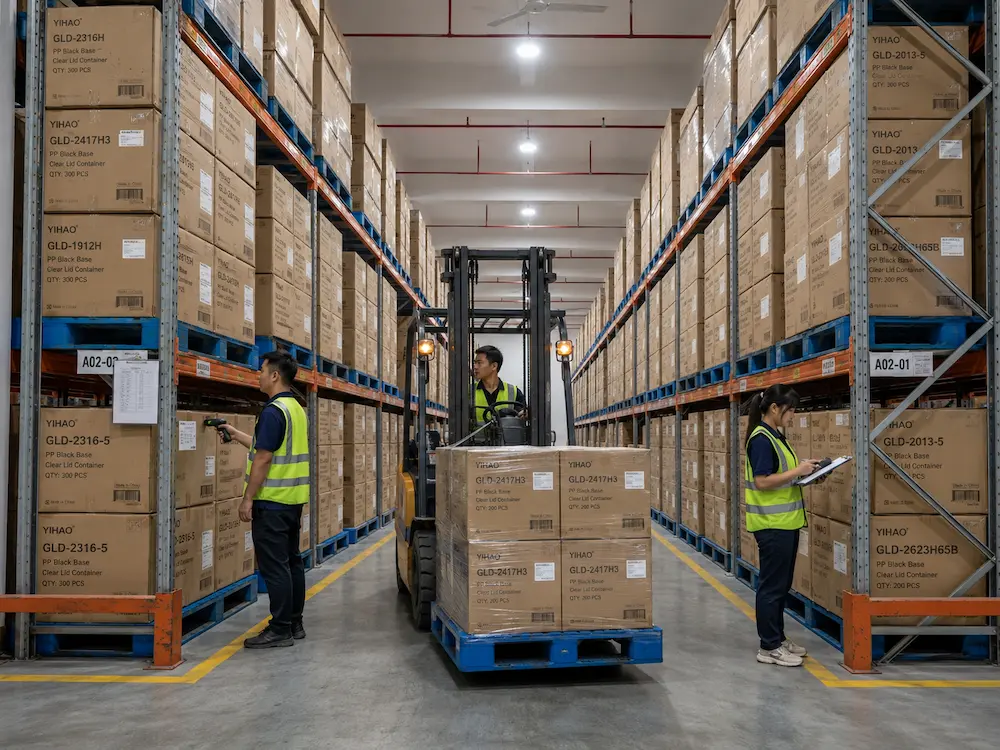
Sample Testing Checklist for Microwave Safe Food Containers
Before confirming microwave-safe packaging, buyers should test real food in real conditions. Empty container testing is not enough. A container may look stable when empty but perform differently when filled with rice, pasta, sauce, vegetables or oily food.
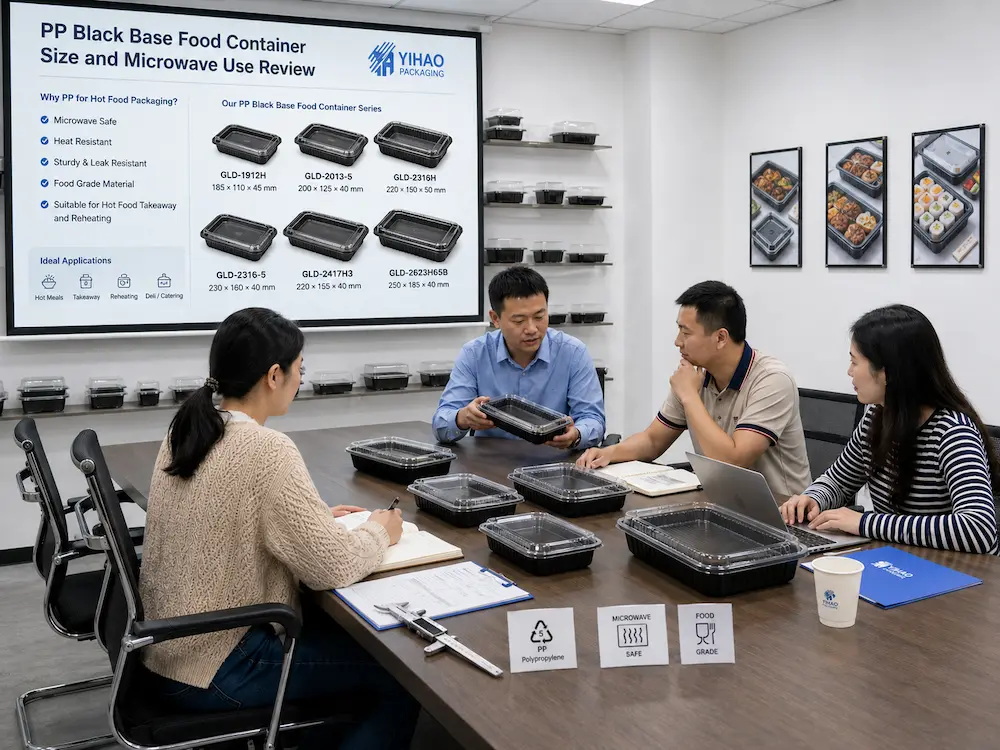
| Testing Item | Why It Matters | Buyer Action |
|---|---|---|
| Food type | Different foods heat and release steam differently | Test the actual meal, not water only |
| Heating time | Longer heating increases packaging stress | Test the expected customer heating instruction |
| Base deformation | Warping can affect handling and food presentation | Check shape before and after heating |
| Lid performance | The lid may need removal or venting | Confirm whether the lid is microwave safe or should be removed |
| Leakage | Sauces and oils can reveal weak sealing areas | Test transport before and after heating |
| Customer handling | The container may become hot after heating | Review grip, stiffness and safe handling instructions |
| Label behavior | Labels may loosen, curl or interfere with heating | Test actual labels and sleeves under use conditions |
Supplier RFQ Checklist for PET and PP Food Packaging
A clear RFQ helps suppliers recommend the right material and avoid wrong product selection. Buyers should not only ask for a size or photo. They should explain the use case and intended food condition.
| RFQ Information | Why It Matters | Example |
|---|---|---|
| Food application | Material choice depends on food type | Cold salad, fruit cup, hot meal, reheatable rice meal |
| Temperature use | Cold display and microwave reheating are different conditions | Refrigerated display, hot fill, microwave reheating |
| Preferred material | PET and PP serve different packaging goals | PET for clarity, PP for microwave-safe applications |
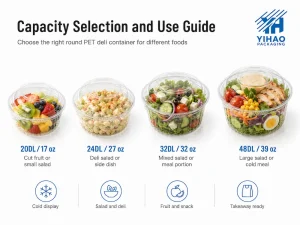
| Container size | Capacity and dimensions affect performance | 500ml, 750ml, 1000ml, 16 oz, 24 oz, 32 oz |
| Lid requirement | Base and lid must be evaluated together | Clear lid, vented lid, removable lid, film seal |
| Sales channel | Retail, delivery and meal prep have different needs | Supermarket, deli counter, delivery, foodservice |
| Testing expectation | Samples should match real use | Filled sample testing, microwave testing, stacking test |
When working with a manufacturer, buyers should ask for product specifications, material information, intended-use guidance, matching lids and sample testing support. The supplier should help the buyer choose between PET and PP based on real application, not only price or appearance.
Common Mistakes Buyers Should Avoid
Mistake 1: Assuming clear plastic means microwave safe
Clear plastic packaging may be food contact suitable for cold food, but that does not mean it is suitable for microwave heating. Standard PET containers should not be microwaved unless designed and labeled for that use.
Mistake 2: Choosing PET for reheatable meals because it looks better
PET clarity is excellent for retail display, but reheatable meals need heat resistance and microwave-safe performance. If reheating is part of the product concept, buyers should evaluate PP or another suitable microwave-safe material.
Mistake 3: Checking only the base and ignoring the lid
A microwave-safe base does not automatically make the lid microwave safe. Buyers should confirm whether the lid can be heated, vented, loosened or removed before microwave use.
Mistake 4: Using one container for both cold display and reheating without testing
Some buyers want one package for every application. This can create performance problems. Cold food display and microwave reheating have different material and design requirements.
Mistake 5: Writing unclear product instructions
Packaging labels should not leave customers guessing. If the container is not intended for microwave use, the instructions should be clear. If it is microwave safe, heating instructions should be tested and easy to understand.
FAQ
1. Can PET go in the microwave?
Standard clear PET food containers should not go in the microwave unless the product is specifically designed, tested and labeled for microwave use. PET is commonly used for chilled salads, fruit, deli foods and clear retail display packaging, not standard reheating applications.
2. What plastic is better for microwave food packaging?
PP is usually a better plastic direction for microwave food packaging when the container is properly designed and tested for reheating. Buyers should confirm both the PP base and lid instructions before using the package for microwave applications.
3. Can clear PET hold warm food?
Standard clear PET should not be treated as hot food packaging unless the supplier confirms the exact intended use condition. Clear PET is best positioned for cold food display, chilled deli foods, salads, fruit and grab-and-go applications.
4. Should I use PET or PP for prepared meals?
If the prepared meal is sold cold and eaten cold, PET may be suitable when visibility matters. If the prepared meal is intended for reheating, PP microwave safe containers are usually the better option. Buyers should confirm the final choice through sample testing.
5. Are microwave PET containers common?
Standard clear PET containers are not normally positioned as microwave-safe food containers. Some specialty materials or designs may have specific heat-use claims, but buyers should not assume microwave safety without product documentation and labeling.
6. Is food grade plastic always microwave safe?
No. Food grade plastic and microwave safe plastic are not the same. A plastic container can be suitable for food contact under cold or room-temperature conditions but unsuitable for microwave heating. Intended use must be confirmed.
7. What should buyers test before ordering microwave safe containers?
Buyers should test the actual food, heating time, container base, lid behavior, venting, deformation, leakage, label performance and customer handling before confirming microwave safe containers for wholesale orders.
8. Can PET lids be used on PP microwave containers?
A PET lid should not be microwaved with a PP base unless the lid is specifically confirmed for microwave use. Buyers should check the complete packaging system, including base, lid, film, label and instructions.
References
- U.S. Food and Drug Administration, Packaging and Food Contact Substances resources.
- Electronic Code of Federal Regulations, Title 21, Indirect Food Additives: Polymers.
- U.S. Food and Drug Administration, food contact conditions of use and intended-use framework.
- European Commission, Regulation (EC) No 1935/2004 on materials and articles intended to come into contact with food.
- European Food Safety Authority, food contact materials safety assessment resources.
- Association of Plastic Recyclers, Design Guide for Plastics Recyclability.
- RecyClass, Design for Recycling Guidelines for PET Packaging.
- PMMI Business Intelligence, food packaging and prepared meal packaging industry research.
Deep-Dive Insights: How Buyers Should Think About PET and Microwave Safety
How PET supports cold food presentation
Clear PET food containers are valuable when visual merchandising matters. Salads, fruit, deli foods, snacks and grab-and-go products benefit from transparency because customers can see freshness, color and portion size before purchase.
Why PET should not be positioned as standard microwave packaging
Standard clear PET containers are not the right default choice for microwave reheating. Unless the product is specifically designed, tested and labeled for microwave use, buyers should avoid promoting PET containers for reheatable food applications.
What option works best for reheatable meals?
PP microwave safe food containers are usually the stronger direction for prepared meals, hot deli foods, meal prep packaging and reheatable food programs. Buyers should confirm the full package system, including lid behavior, venting and heating instructions.
Consideration: the lid matters as much as the base
Microwave suitability should be evaluated for the complete package. A PP base does not automatically make a PET lid safe for microwave use. Buyers should confirm whether the lid should be removed, vented or used during heating.
Buyer takeaway before wholesale ordering
The safest purchasing decision starts with intended use. Choose clear PET for cold display and product visibility. Choose confirmed microwave-safe PP or other suitable materials for reheating. Always test real food, heating time, lid behavior, labeling and customer handling before bulk ordering.
Final Note / Practical Takeaway
© YIHAO Packaging. All rights reserved. All articles, product images, packaging designs, technical specifications, and website materials are protected by copyright. Unauthorized copying, reproduction, redistribution, modification, or commercial use is strictly prohibited without prior written permission.