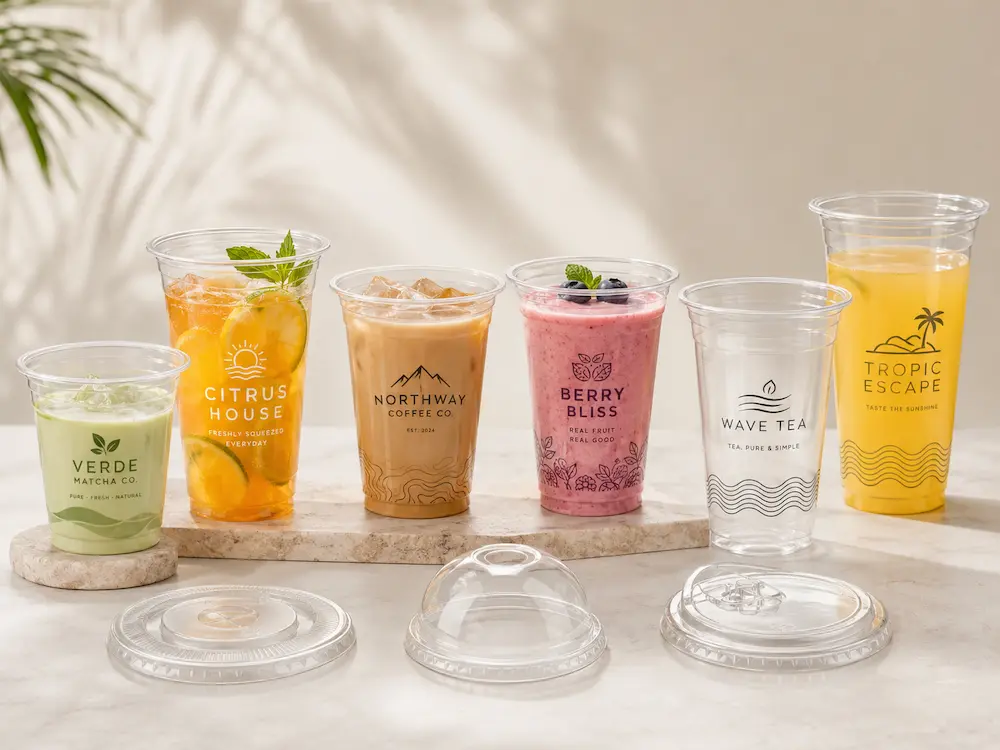
Cold beverage packaging is now part of the drink experience. A cup is no longer just a disposable container for iced coffee, juice, milk tea, smoothies, lemonade, soda, or refreshers. For cafes, beverage chains, juice bars, foodservice distributors, and private-label drink brands, beverage brand cups help customers recognize the brand, remember the drink, share the product visually, and trust the takeaway experience.
YIHAO is a food packaging manufacturer and solution provider for buyers who need practical cold drink packaging, including PET cold cups, clear drink cups, matching lids, and wholesale packaging support. This guide answers the most common buyer questions about beverage brand cups, including material selection, cup sizes, drink applications, logo printing, lid compatibility, ordering steps, and supplier evaluation.
For professional buyers, the best question is not simply “Which cup is cheapest?” A better question is: which cup gives the right balance of clarity, structure, lid fit, drink visibility, brand presentation, stacked storage, supplier communication, and repeat-order stability? This is where custom printed cold cups, custom PET cups, and matched lid systems become important for long-term beverage packaging decisions.
What Are Beverage Brand Cups?
Beverage brand cups are drink cups designed to carry a brand identity through logo printing, cup shape, material clarity, color design, lid selection, and consistent use across a beverage menu. They are widely used for iced coffee, cold brew, matcha, milk tea, bubble tea, fruit tea, smoothies, refreshers, soda, sparkling fruit drinks, lemonade, juice, protein drinks, and event beverages.
For a cafe, a branded cold cup makes the drink look more finished when it reaches the customer. For a juice bar, it supports freshness and product visibility. For a beverage chain, it creates consistency across different stores. For a wholesale distributor, it becomes a repeatable packaging category for multiple customer types. For a private-label drink brand, the cup becomes part of the product identity instead of a generic service item.
Beverage Brand Cups vs. Generic Clear Cups
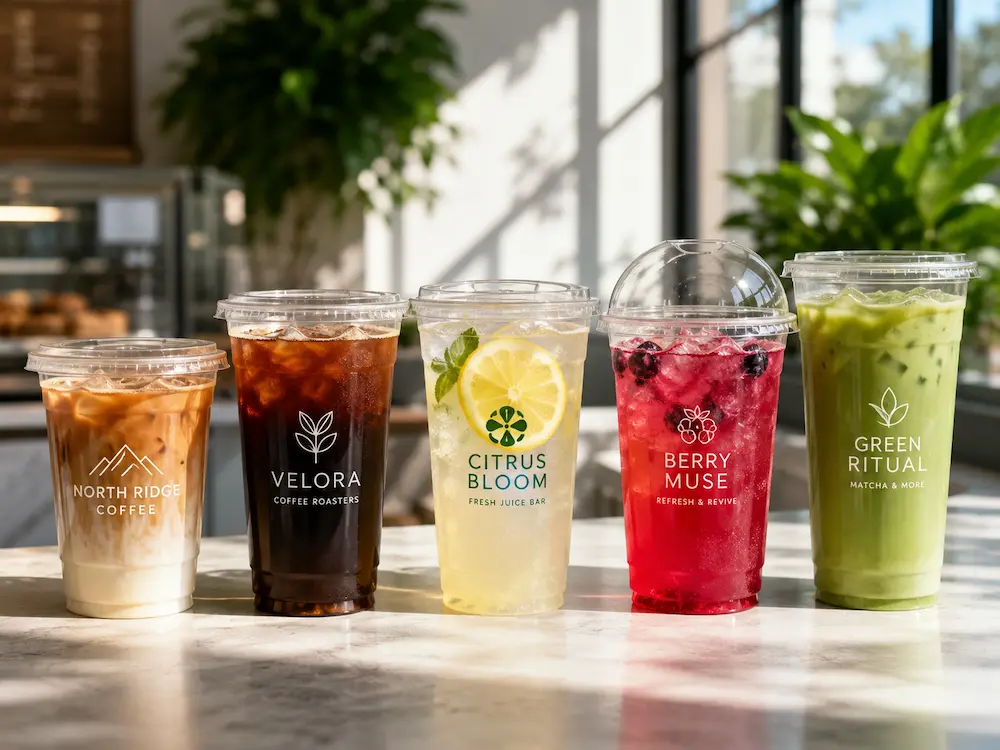
Generic clear cups are useful when the main goal is simple drink service. However, beverage brand cups add more commercial value because they connect packaging with brand recognition. A plain clear cup shows the drink. A branded clear cup shows the drink and the business behind it.
The difference becomes especially clear in takeaway and delivery. When a customer carries a cup on the street, in an office, at a gym, or at an event, the cup becomes a small moving brand display. When the drink appears in a social media photo, the logo, cup shape, lid style, and drink color appear together. This is why many cafes and beverage brands move from plain cups to branded cold cups once their menu and customer base become more stable.
What Materials Are Commonly Used for Beverage Brand Cups?
Material choice affects clarity, flexibility, print result, lid fit, cost structure, recycling communication, and customer experience. For cold drinks, common materials include PET, rPET, PP, PLA, and paper-based options. The right choice depends on drink type, serving temperature, brand positioning, target market, and local packaging requirements.
PET Cups for Clear Cold Drink Presentation
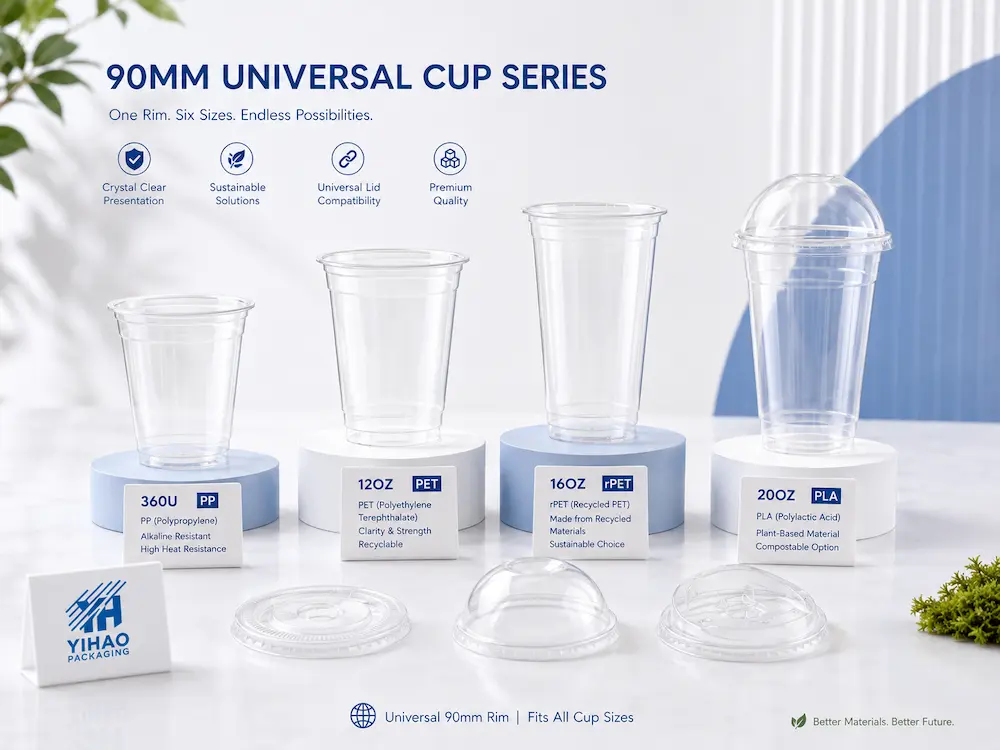
PET is one of the most popular materials for custom PET cups because it offers high transparency, a clean glossy appearance, and strong drink visibility. Clear PET cups are especially suitable for cold beverages where color, layers, fruit pieces, toppings, ice, foam, or texture help sell the product visually.
PET cups are widely used for iced coffee, cold brew, iced tea, lemonade, juice, smoothies, milk tea, bubble tea, matcha, refreshers, sparkling fruit drinks, flavored cold brew, and yogurt-based beverages. They are also useful for chilled food presentation such as fruit cups, yogurt parfaits, pudding cups, dessert cups, and cold snack portions.
For buyers building a cold beverage packaging system, 12 oz PET/rPET clear cold cups, 16 oz PET/rPET clear cold cups, and 20 oz PET/rPET clear cold cups usually cover many everyday beverage menus.
rPET Options for Brands with Sustainability Goals
rPET refers to recycled PET material. For beverage brands with sustainability goals, rPET can support responsible packaging communication when the recycled content, food-contact suitability, supply source, and target-market requirements are properly confirmed.
Buyers should avoid vague or absolute claims such as “fully eco-friendly” or “green in every market.” A more accurate approach is to describe rPET cups as packaging made with recycled PET content, where suitable and confirmed, and to explain that recyclability depends on local collection, sorting, and recycling infrastructure. This careful wording is especially important for brands selling across multiple regions.
PP Cups for Flexible Foodservice Use
PP is another material used for cold drink cups. It generally has good toughness and flexibility, which makes it practical for some foodservice settings. PP cups may be selected where flexibility is more important than crystal-clear presentation. However, when a buyer wants strong drink visibility, a premium clear appearance, and attractive retail or takeaway display, PET and rPET are often preferred for branded cold beverage packaging.
Paper and Hybrid Cup Options
Paper cups and hybrid cup options can support certain branding programs, especially where full-surface printing is more important than drink visibility. However, paper cups do not show beverage color, fruit layers, toppings, or ice structure in the same way as clear plastic cups. For cold drinks where visual presentation helps sell the product, transparent PET or rPET cups usually deliver stronger shelf and takeaway appeal.
PET, rPET, PP, and Paper Cups: Quick Material Comparison
For many buyers, the material decision becomes easier when each option is compared by clarity, print suitability, beverage use, and buyer risk. The table below gives a practical comparison for beverage brand cups used in cold drink programs.
| Material | Clarity | Printing Suitability | Best For | Buyer Note |
|---|---|---|---|---|
| PET | High | Strong for logo and brand artwork | Iced coffee, juice, fruit tea, lemonade, smoothies, refreshers | Strong balance of visibility, structure, and branding for clear cold cups |
| rPET | High when properly processed | Strong for logo and brand artwork | Sustainability-focused cold drink programs | Confirm recycled content, food-contact suitability, and local recycling rules before making claims |
| PP | Medium | Moderate depending on surface and design | Flexible foodservice use and some cold beverage applications | Useful for toughness, but usually less premium in drink visibility than clear PET |
| Paper | Low | Strong for full-surface graphics | Brand-heavy designs, hot/cold hybrid programs, covered drinks | Good branding surface, but limited drink visibility for colorful cold beverages |
Which Sizes Are Common for Beverage Brand Cups?
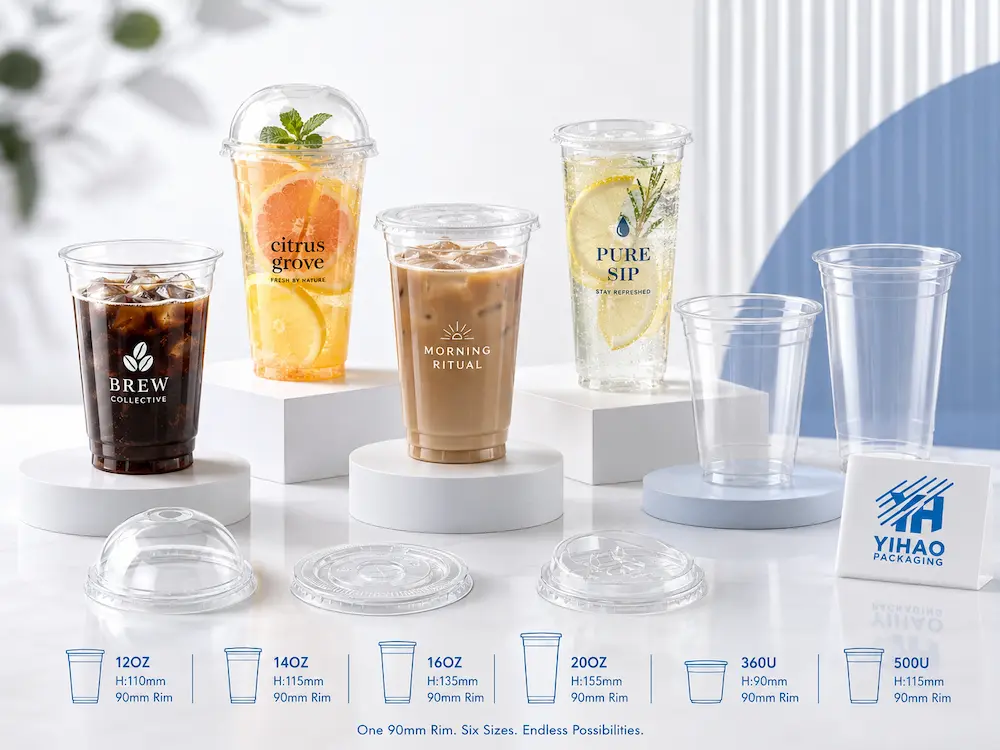
Cup size should be selected by drink recipe, ice ratio, toppings, lid type, menu price, customer habit, and takeaway stability. For beverage brand cups, a strong size system usually includes small, medium, and large options instead of one single cup size.
Small Sizes for Samples, Juice, Espresso-Based Drinks, and Kids’ Beverages
Small cold cups are useful for tasting menus, juice samples, kids’ drinks, espresso-based iced drinks, and smaller takeaway portions. They help brands control serving size while still presenting the drink clearly. For events and promotions, smaller branded cups also allow a brand to serve more customers with a consistent visual identity.
Medium Sizes for Iced Coffee, Milk Tea, Juice, and Refreshers
Medium sizes are often the core of a beverage menu. Cups around 12 oz, 14 oz, and 16 oz work well for iced coffee, iced tea, fruit tea, lemonade, juice, matcha drinks, and standard milk tea portions. For many cafes and drink shops, 16 oz becomes a practical everyday size because it balances drink volume, ice space, customer value, and packaging cost.
Large Sizes for Smoothies, Bubble Tea, Lemonade, and Specialty Drinks
Large sizes such as 20 oz and 24 oz are useful for smoothies, milkshakes, bubble tea, fruit refreshers, flavored cold brew, sparkling fruit drinks, and high-capacity takeaway beverages. These drinks often need extra volume for ice, toppings, foam, whipped cream, fruit pieces, or thicker textures.
| Cup Size | Common Beverage Uses | Buyer Notes |
|---|---|---|
| 12 oz | Iced coffee, juice, lemonade, small fruit tea, sample drinks | Good for compact menus, small portions, and grab-and-go service |
| 14 oz | Iced tea, juice, soda, sparkling drinks, light milk tea | Useful when brands need a middle option between small and standard sizes |
| 16 oz | Iced latte, milk tea, juice, matcha, refreshers, smoothies | A practical standard size for many cafes and beverage shops |
| 18 oz | Fruit tea, cold brew, soda, smoothies, layered yogurt drinks | Good for medium-to-large drinks with better display space |
| 20 oz | Large iced coffee, lemonade, bubble tea, smoothies, flavored cold brew | Strong choice for high-volume takeaway drinks and specialty beverages |
| 24 oz | Extra-large smoothies, fruit tea, milk tea, refreshers, iced drinks | Best for oversized servings, toppings, and premium drink menus |
Why Lid Compatibility Matters When Ordering Beverage Brand Cups
Many buyers focus on the cup body first, but lid compatibility is just as important. A strong branded beverage packaging system should match the cup, lid, drink type, serving method, and transport scenario. Poor lid fit creates leakage risk, slow packing, customer complaints, and unnecessary inventory confusion.
For cold drink programs, common lid styles include flat lids with straw slots, dome lids for toppings or thick drinks, and strawless sipper lids for direct drinking. Buyers can review cold cup lids together with cup sizes instead of treating lids as a separate afterthought.
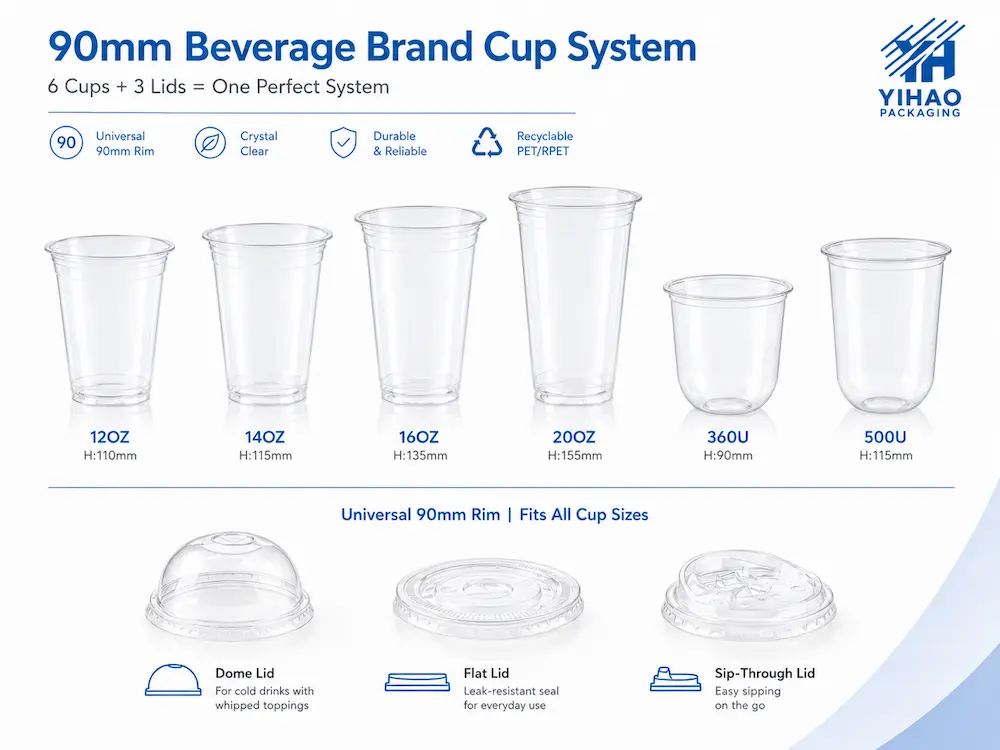
Flat Lids for Standard Cold Drinks
Flat lids are practical for iced coffee, iced tea, juice, lemonade, soda, cold brew, and other standard straw-service drinks. They create a clean top profile and work well for fast front-counter packing. For brands that serve many classic cold drinks, flat lids are often the most familiar choice.
Dome Lids for Smoothies, Toppings, and Dessert Drinks
Dome lids provide more headspace for whipped cream, fruit toppings, thick smoothies, yogurt drinks, dessert beverages, and layered drinks. They are helpful when the drink needs visual height or when the top layer should not be compressed. For smoothie shops and dessert drink menus, 95mm clear PET dome lids support better topping presentation.
Strawless Sipper Lids for Direct-Drink Programs
Strawless sipper lids support direct drinking without a straw. They are useful for iced coffee, iced tea, lemonade, fruit tea, juice, and sparkling drinks where the brand wants a cleaner takeaway experience. A 95mm clear PET strawless sipper lid can help brands simplify service while keeping the cup visually clean.
How a Shared-Lid Cup System Helps Wholesale Buyers
A shared-lid system means several cup capacities in the same diameter series can work with the same matching lid options. This matters for wholesale buyers because beverage brands rarely use only one cup size. A cafe may need 12 oz, 16 oz, and 20 oz cups. A juice bar may need standard and large sizes. A milk tea shop may need different volumes for classic drinks, fruit tea, and toppings.
When multiple cups share the same lid diameter, buyers reduce lid inventory, simplify staff training, lower mismatch risk, and make reordering easier. This is especially useful for multi-location beverage chains, distributors, convenience stores, and foodservice operators that manage larger packaging inventories.
YIHAO supports buyers by helping them review cup size, lid style, rim matching, use scenario, and packing logic before bulk orders. Instead of choosing a cup body alone, buyers can build a more complete system with PET cold cups, flat lids, dome lids, and strawless sipper lids selected according to the drink menu.
What Drinks Are Beverage Brand Cups Used For?
Beverage brand cups are used across many chilled beverage categories. The strongest applications are drinks where visibility, color, layers, and toppings influence customer choice.
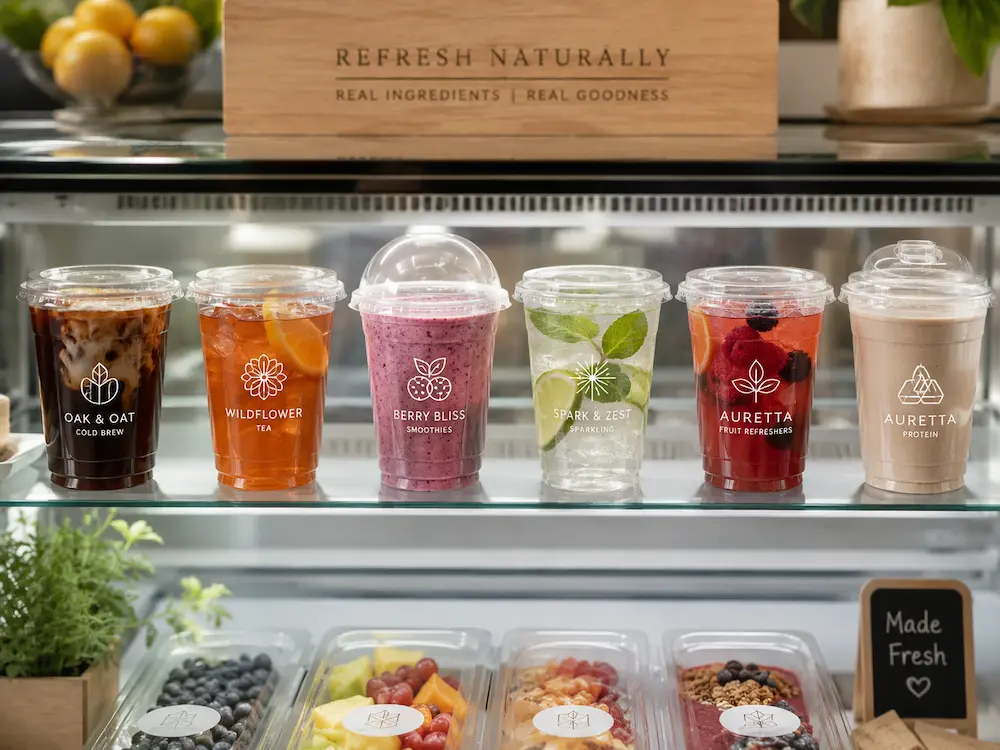
Iced Coffee and Flavored Cold Brew
Iced coffee, iced latte, cold brew, flavored cold brew, and coffee refreshers often look better in clear PET cups because the drink color and ice structure remain visible. For coffee shops, branded cold cups turn everyday takeaway drinks into brand touchpoints.
Milk Tea, Bubble Tea, and Fruit Tea
Milk tea and bubble tea need cups that show tea color, pearls, fruit jelly, cheese foam, and toppings. Clear cups also help staff check drink quality before sealing. For milk tea chains, consistent cup size and lid matching are essential because the same store may serve many drinks in high volume.
Smoothies, Protein Drinks, and Acai Refreshers
Smoothies, protein drinks, and acai refreshers often have thicker textures, stronger colors, and premium menu positioning. A transparent cup helps show the beverage quality. Dome lids are useful when the drink includes toppings, foam, fruit, granola, or whipped cream.
Juice, Lemonade, Soda, and Sparkling Fruit Drinks
Fresh juice, lemonade, soda, sparkling fruit drinks, and fruit-infused beverages benefit from high clarity because customers see the color, fruit pieces, and ice. For retail shelves and grab-and-go displays, transparent cups make the drink easier to understand at first glance.
Cafes, Events, Foodservice, and Retail Drink Brands
Cafe custom cups are useful for independent coffee shops, bakery cafes, juice bars, beverage chains, supermarkets, convenience stores, stadiums, festivals, hotels, catering teams, and private-label drink sellers. The right cup system helps different channels keep a consistent brand look while adjusting size and lid choice by application.
What Printing Options Are Available for Custom Printed Cold Cups?
Custom printed cold cups usually include logo printing, text printing, pattern printing, seasonal artwork, or private-label graphics. The design can be simple and clean, or it can cover a larger area for campaign use. A good cup design should balance branding with drink visibility.
Logo Printing for Brand Recognition
Logo printing is the most common choice for printed plastic cups. A centered logo, repeated pattern, or simple brand mark helps customers recognize the drink immediately. For cafes and beverage shops, a clean logo layout is often more effective than an overprinted design because the drink itself remains visible.
Full-Cup Designs for Seasonal Campaigns
Some brands use full-cup artwork for seasonal drinks, limited-time menus, events, opening promotions, and festival campaigns. This approach works well when the cup is part of a marketing campaign. However, buyers should confirm print area, color limits, artwork file requirements, sample timing, and production feasibility before placing a wholesale order.
Clear Windows and Drink Visibility
For clear PET cups, one of the biggest advantages is beverage visibility. Buyers should avoid covering the entire cup with dense artwork unless the campaign requires it. A better design often leaves clear windows so customers can see the iced coffee, smoothie, lemonade, matcha, fruit tea, or refresher inside.
Artwork Files Buyers Should Prepare
Before ordering custom printed cold cups, buyers should prepare logo files and artwork in print-ready formats such as AI, PDF, EPS, or other vector-based files requested by the supplier. Buyers should also confirm brand colors, print position, cup size, lid type, and whether the design is for one size or multiple sizes.
Common Ordering Mistakes When Buying Beverage Brand Cups
Many packaging problems happen before production starts. Buyers can avoid delays, wrong lid matching, weak branding, and unnecessary cost by checking several common mistakes early in the ordering process.
Mistake 1: Choosing Cups Before Confirming Lids
A cup body is only one part of the packaging system. If the lid does not match the rim properly, the packaging may create leakage, slow service, or customer complaints. Buyers should confirm the cup and lid together, especially when using flat lids, dome lids, or strawless sipper lids for different drink types.
Mistake 2: Overprinting the Cup and Hiding the Drink
For clear cold cups, the drink itself is part of the selling point. Dense full-cup printing may hide the color, fruit layers, ice, toppings, or texture that make the drink attractive. A better design often uses a visible logo, controlled artwork area, and clear windows for product display.
Mistake 3: Using One Cup Size for Every Beverage
Different drinks need different cup capacities. A small juice, a standard iced latte, and a large smoothie should not always use the same cup size. Buyers should match each beverage category with the right volume, ice space, topping room, and lid style.
Mistake 4: Skipping Sample Testing
Samples help buyers test clarity, grip, stacking, lid fit, drink presentation, print position, and customer experience. Skipping samples may save time at the beginning, but it increases risk before a wholesale order. For custom printed cold cups, sample approval is one of the most important steps.
Mistake 5: Making Sustainability Claims Without Verification
Claims about recycled content, recyclability, compostability, or environmental benefit should be carefully checked before use. Buyers should confirm material information, target-market rules, and local recycling or waste systems. Clear and specific claims are safer than broad claims that cannot be supported in every market.
Are Printed Plastic Cups Suitable for Wholesale Beverage Packaging?
Yes. Printed plastic cups are suitable for wholesale beverage packaging when the material, cup size, printing method, lid fit, packing method, and supplier communication are properly confirmed. Wholesale buyers care about more than the printed logo. They need repeatable product quality, stable cup-lid matching, reliable packing, and clear reorder communication.
For distributors and multi-location drink brands, wholesale packaging consistency is critical. The same cup should work across repeated production batches. The lid should match the rim correctly. The printed design should stay aligned with the approved sample. The carton packing should support storage and transport. These practical details affect daily operations more than a low unit price alone.

Wholesale Buyers Should Check Cup Consistency
A wholesale buyer should compare cup clarity, rim shape, wall feel, stacking performance, lid fit, print position, and sample quality before approving a large order. When the packaging is used across several stores or customer accounts, small inconsistencies become larger operational problems.
Stacking, Storage, and Front-Counter Efficiency
Stackable cup and lid design helps improve storage efficiency, carton loading, and front-counter organization. In a busy cafe or milk tea shop, packaging should support speed. Staff should be able to pull cups quickly, close lids smoothly, and avoid mixing incompatible sizes.
Why Manufacturer Support Matters
Working with a direct manufacturer helps buyers discuss cup structure, material choice, printing requirements, sample review, wholesale supply, and product matching more efficiently. A reliable supplier should help buyers confirm the correct cup-lid system before they commit to larger orders.
How YIHAO Supports Custom Beverage Brand Cup Projects
YIHAO supports beverage packaging buyers by helping them connect cup structure, lid compatibility, material choice, printing needs, and wholesale ordering logic. This is important because a branded cup project is not only a logo printing job. It is a complete packaging decision that affects service speed, product appearance, storage, transportation, and customer experience.
For cafes and beverage chains, YIHAO helps match cup sizes with drink menus such as iced coffee, matcha, lemonade, fruit tea, smoothies, protein drinks, and milk tea. For distributors and wholesale buyers, the focus is often on repeatable supply, carton planning, cup-lid consistency, and clear product communication. For private-label drink brands, the focus moves toward artwork, brand identity, retail display, and sample approval.
This manufacturer-side support helps buyers reduce trial-and-error before bulk orders. Instead of selecting random cup sizes and unrelated lids, buyers can build a more organized packaging system around clear PET or rPET cups, matching lids, and controlled print designs.

How Do You Order Beverage Brand Cups from a Manufacturer or Supplier?
Ordering beverage brand cups should follow a clear process. Buyers save time when they prepare drink type, target size, lid style, artwork, order stage, and use channel before contacting a manufacturer or supplier.
Step 1: Confirm Drink Type and Use Scenario
Start with the beverage menu. Iced coffee, fruit tea, lemonade, milk tea, smoothies, protein drinks, refreshers, and sparkling drinks do not always need the same lid. A standard iced tea may work well with a flat lid. A smoothie may need a dome lid. A direct-drink cold brew may need a strawless sipper lid.
Step 2: Choose Material and Size
After confirming the drink type, choose the material and size. PET and rPET options are strong choices for clear cold drink display. Size should be selected by beverage volume, ice ratio, toppings, foam space, menu price, and takeaway needs.
Step 3: Select Lid Type and Diameter System
Confirm whether the cup system uses 95mm or 98mm matching lids, or another diameter required by your packaging line. Same-diameter shared-lid systems help reduce inventory pressure because several cup capacities can use the same matching flat lid, dome lid, or strawless sipper lid within the same series.
Step 4: Share Logo or Artwork
For custom printing, share the logo and cup artwork with the supplier. Include the print position, color requirements, cup size, and any clear window areas you want to preserve. The supplier should review the artwork and confirm whether it fits the selected cup size and printing method.
Step 5: Request Samples Before Bulk Orders
Samples help buyers test clarity, grip, lid fit, print position, drink visibility, stacking, and customer experience. Sample testing is especially important for new cup sizes, new artwork, private-label projects, and high-volume wholesale orders.
Step 6: Confirm Packing and Repeat Supply
Before placing a wholesale order, confirm packing method, carton logic, storage needs, shipping arrangement, and repeat-order communication with the supplier. Do not rely only on a quoted price. A professional buying decision should include product fit, service response, and long-term supply reliability.
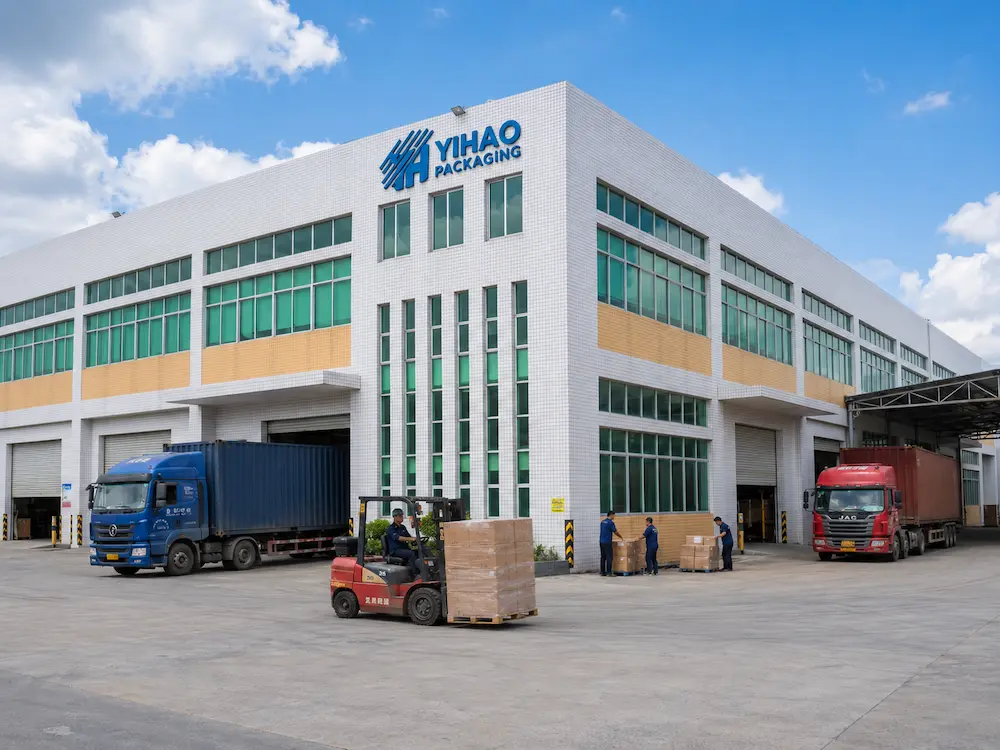
What Should Buyers Check Before Choosing a Beverage Cup Supplier?
A good supplier should help buyers reduce risk before bulk ordering. The key is to check the full packaging system, not only the cup body.
Food-Contact Material Suitability
Buyers should confirm that the cup material is suitable for the intended food or beverage contact use in the target market. Requirements may differ by region, buyer category, and final application. For imported or branded packaging, buyers should request relevant documentation from the supplier rather than assuming one standard applies everywhere.
Printing Quality and Color Stability
For custom printed cold cups, print quality matters because the cup carries the brand identity. Buyers should check color accuracy, print position, artwork sharpness, and whether the printed area affects product visibility.
Lid Fit and Leak-Resistance Checks
Lid fit should be tested with the actual cup and the actual drink use case. Buyers should press the lid fully around the rim, check the seal, simulate takeaway movement, and evaluate whether the cup is suitable for the target serving style. No supplier should treat lid matching as a minor detail.
Wholesale Communication and Reorder Stability
For wholesale buyers, communication speed and reorder stability are part of product quality. A reliable manufacturer or supplier should help buyers confirm specifications, printing requirements, sample feedback, and repeat-order details without creating confusion.
Beverage Brand Cups Buying Checklist
| Buying Point | What to Confirm | Why It Matters |
|---|---|---|
| Material | PET, rPET, PP, PLA, or paper-based option | Affects clarity, strength, cost, and sustainability communication |
| Size | 12 oz, 14 oz, 16 oz, 18 oz, 20 oz, 24 oz, or custom menu logic | Affects drink volume, ice ratio, menu pricing, and customer experience |
| Lid Type | Flat lid, dome lid, strawless sipper lid, or other matching lid | Affects leakage control, topping space, and serving method |
| Printing | Logo, artwork, color, print area, clear window, and sample approval | Affects brand recognition and visual consistency |
| Wholesale Supply | Product consistency, packing, repeat order, and supplier response | Affects long-term purchasing efficiency |
| Claims | Food-contact suitability, recycled content, recyclability, and local rules | Helps avoid misleading or unsupported packaging claims |
How Beverage Brand Cups Support Better Brand Communication
Beverage brand cups create a bridge between product quality and customer perception. A drink may be well made, but weak packaging can reduce the final experience. A clear, properly fitted, well-printed cup makes the drink look more professional and helps customers remember where they bought it.
For cafes, packaging supports store identity. For juice bars, it supports freshness. For smoothie brands, it supports color and texture. For milk tea shops, it supports toppings and product layers. For events, it supports visibility in crowded environments. For wholesale beverage programs, it supports repeatable presentation across multiple customers or locations.
This is why buyers should treat cup design as part of beverage menu planning. The best packaging choice connects drink recipe, cup size, lid style, brand identity, customer experience, and supply chain logic.
FAQ
1. What are beverage brand cups used for?
Beverage brand cups are used for serving and promoting cold drinks such as iced coffee, milk tea, bubble tea, fruit tea, smoothies, juice, lemonade, refreshers, sparkling drinks, and event beverages. They help brands improve drink presentation, takeaway experience, and visual recognition.
2. What material is best for custom printed cold cups?
PET is one of the most common materials for custom printed cold cups because it offers strong transparency, clean drink visibility, and a smooth appearance for cold beverage presentation. rPET options may also be considered when recycled PET content and food-contact suitability are properly confirmed.
3. Can PET cups be customized with a logo?
Yes. Custom PET cups can usually be printed with a logo, brand text, simple artwork, seasonal design, or private-label graphics. Buyers should provide print-ready artwork and confirm print position, color requirements, and sample approval before wholesale production.
4. What sizes are common for branded cold cups?
Common sizes for branded cold cups include 12 oz, 14 oz, 16 oz, 18 oz, 20 oz, and 24 oz. Smaller sizes are useful for juice and sample drinks, medium sizes work well for iced coffee and milk tea, and larger sizes are suitable for smoothies, refreshers, lemonade, and specialty drinks.
5. Are printed plastic cups suitable for wholesale beverage brands?
Yes. printed plastic cups are suitable for wholesale beverage brands when the cup material, printing quality, lid compatibility, packing method, sample approval, and repeat supply stability are properly checked before bulk ordering.
6. How do I order cafe custom cups from a manufacturer?
To order cafe custom cups from a manufacturer, confirm the drink type, cup size, material, lid style, logo artwork, print position, sample needs, and wholesale order plan. A professional supplier should help review the cup-lid match and artwork before bulk production.
References
- U.S. Food and Drug Administration, Packaging & Food Contact Substances.
- U.S. Food and Drug Administration, Food Packaging and Other Substances that Come into Contact with Food.
- European Food Safety Authority, Recycled Plastic Materials and Articles for Food Contact.
- EFSA Journal, Scientific Guidance on the Safety Assessment of Post-Consumer Mechanical PET Recycling Processes Intended for Food Contact Materials.
- European Union, Regulation (EU) 2025/40 on Packaging and Packaging Waste.
- European Commission, Packaging and Packaging Waste Regulation.
- Federal Trade Commission, Green Guides for Environmental Marketing Claims.
- Association of Plastic Recyclers, APR Design Guide for PET Rigid Packaging.
Deep-Dive Insights for Beverage Brand Cup Buyers
How should a buyer choose beverage brand cups for a new drink menu?
Start with the menu, not the cup catalog. List the drinks first: iced coffee, fruit tea, lemonade, milk tea, smoothies, protein drinks, refreshers, or sparkling beverages. Then match each drink with the correct size, lid type, and branding approach. A simple iced coffee may need a flat lid, while a smoothie with toppings may need a dome lid. A direct-drink cold brew may work better with a strawless sipper lid.
Why are custom PET cups strong for branded cold drinks?
Custom PET cups are strong for branded cold drinks because they combine clarity, structure, display value, and print potential. The cup shows the beverage while the logo communicates the brand. This balance is important for cafes, juice bars, milk tea shops, and wholesale beverage programs that rely on both product appearance and repeat recognition.
What should buyers avoid when ordering printed plastic cups?
Buyers should avoid ordering based only on price. A low-cost cup can still create problems if the lid fit is weak, the print position is inconsistent, the cup does not stack well, or the material does not match the intended drink use. Buyers should also avoid publishing environmental claims without checking recycled content, recyclability conditions, and local rules.
Option: Build one shared-lid beverage cup system
For wholesale buyers and multi-location beverage brands, a shared-lid system is often more efficient than scattered cup sizes from unrelated series. When several cup capacities use the same diameter lid within one system, buyers reduce lid mismatch, simplify storage, and improve front-counter packing speed.
Consideration: Branding should not hide the drink
For clear cold cups, the drink is part of the product design. A strong logo is important, but a fully covered cup may reduce the visual value of layered coffee, colorful refreshers, fresh juice, fruit tea, or smoothies. The best branded cup design usually keeps enough clear space for product visibility.
Final Note / Practical Takeaway
The content on this page is provided for professional packaging reference only.
Unauthorized copying, reproduction, republication, or commercial reuse is prohibited without written permission from YIHAO Packaging.