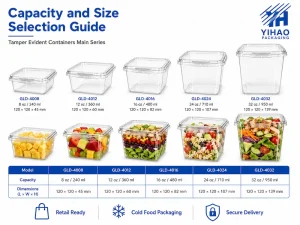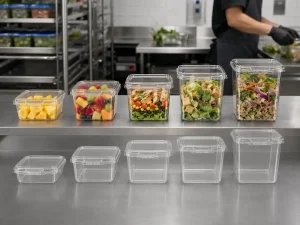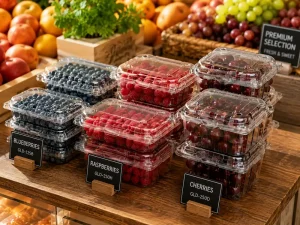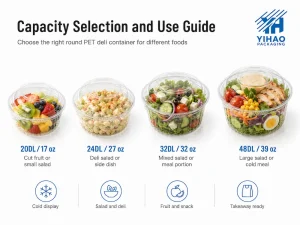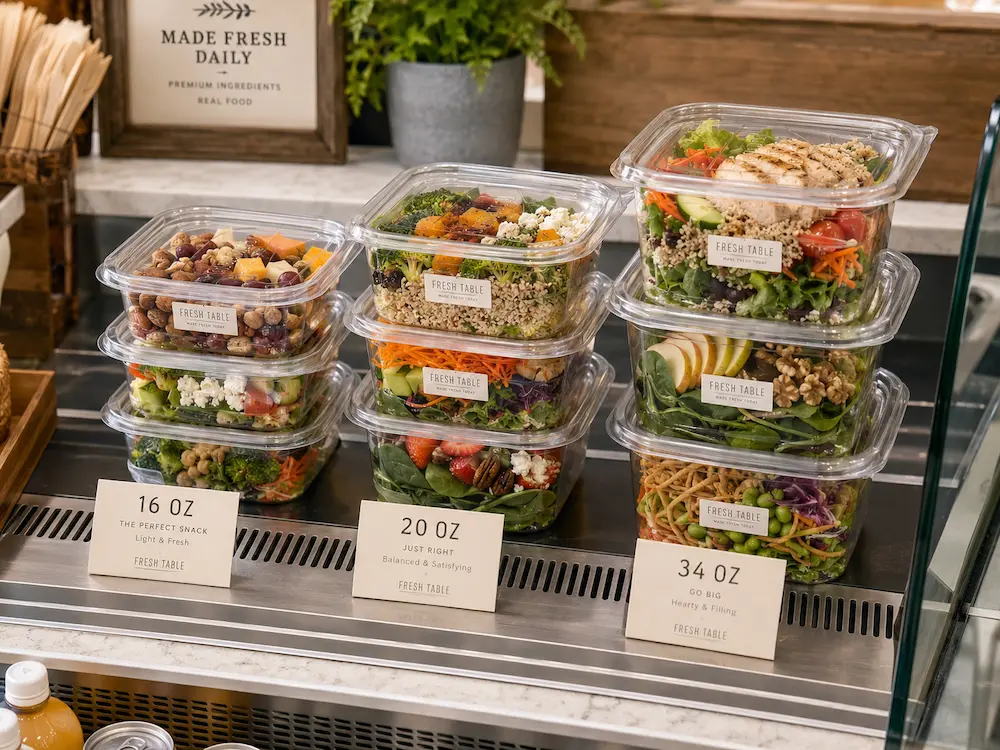
For supermarkets, salad brands, convenience stores, foodservice operators, and chilled meal suppliers, square salad containers are more than simple plastic food boxes. Their square structure supports cleaner shelf presentation, better space use in cold displays, practical stacking, clear product visibility, and efficient takeaway handling.
As a food packaging manufacturer and supplier, YIHAO focuses on clear PET and RPET packaging solutions for fresh food, deli, salad, bakery, and chilled retail applications. For B2B buyers, the goal is not only to find a container that looks clean, but to build a packaging system that supports food visibility, lid stability, labeling, carton packing, and long-term wholesale supply.
Compared with round bowls or narrow rectangular trays, square packaging gives buyers a balanced format for salads, fruit portions, deli sides, cold pasta, grain bowls, desserts, and prepared chilled foods. A well-designed square container helps food look organized, protects the portion during handling, and supports retail labeling without wasting too much shelf or carton space.
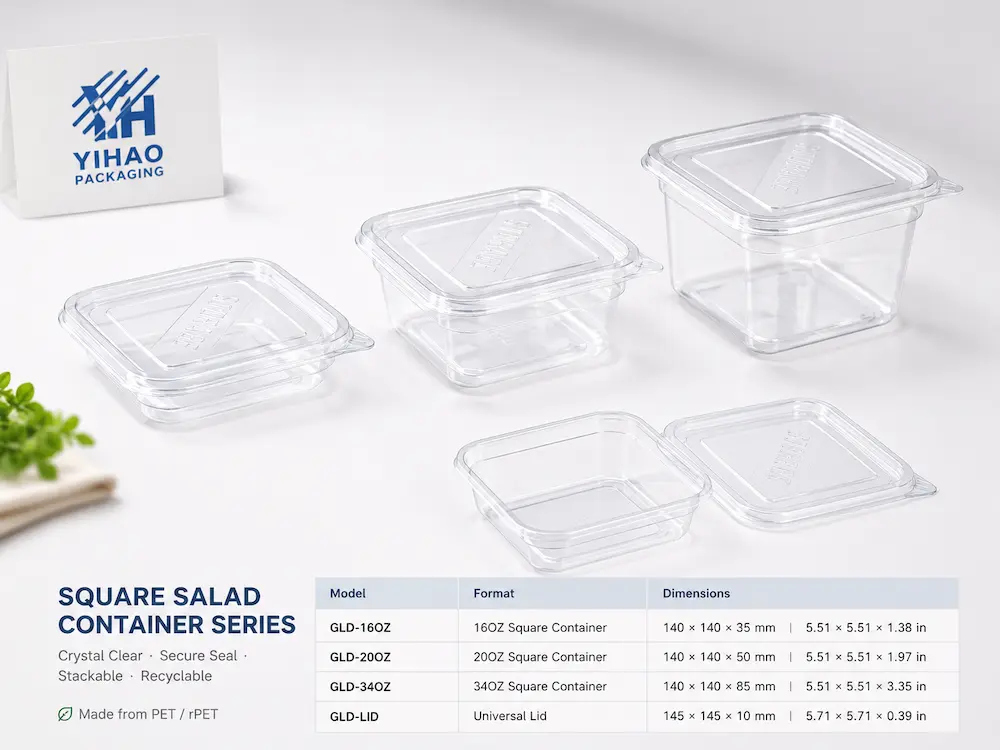
The real question is not only “Which container looks good?” The better question is: which square salad containers match your food type, display method, lid requirement, brand positioning, and wholesale supply plan?
Why Square Salad Containers Are Becoming a Practical Choice for Chilled Food Packaging
Chilled food packaging needs to solve several problems at the same time. It must show the food clearly, hold the portion neatly, stack safely during distribution, fit into retail shelves, and support labels or brand stickers. This is why square salad containers are increasingly used for modern retail and takeaway food programs.
The square footprint works especially well in supermarket cold cases and grab-and-go displays. Containers can be lined up in a clean grid, which helps stores create a more organized visual block. For salad bars, deli counters, and convenience food shelves, this structure makes the product range easier to compare and easier to replenish.
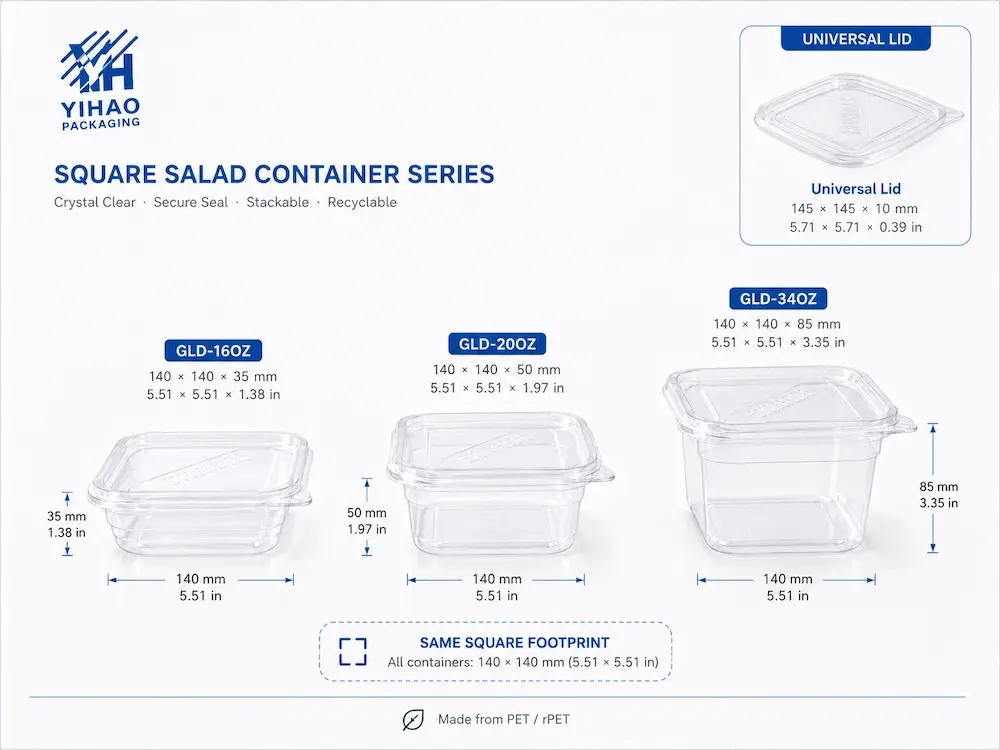
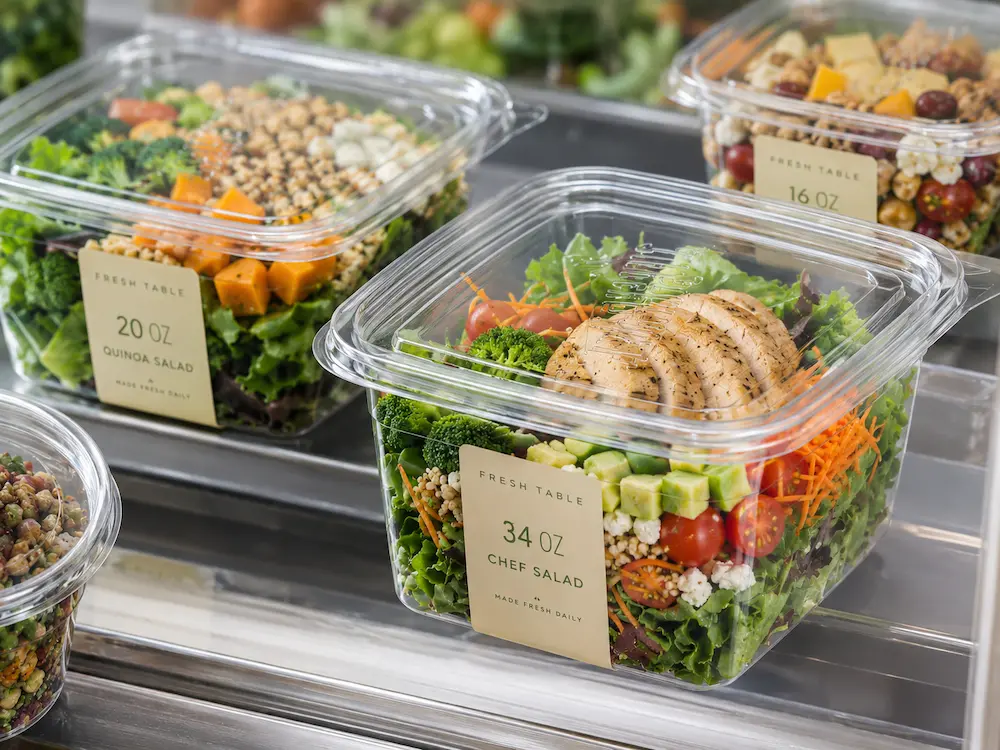
Clear PET also plays an important role. Transparent packaging allows customers to see ingredients such as greens, cherry tomatoes, pasta, fruit cubes, berries, nuts, protein toppings, sauces, and layered chilled meals. When food visibility is part of the selling point, clear square formats often perform better than opaque paperboard or colored plastic containers.
For brands that sell chilled salads and ready-to-eat meals, square packaging also helps standardize operations. It supports portion control, label placement, carton packing, and shelf-ready display. That practical value is why many buyers compare square PET deli containers before finalizing their chilled food packaging system.
What Are Square Salad Containers?
Square salad containers are food packaging containers with a square or near-square footprint, usually designed for chilled salads, fresh-cut fruit, deli sides, cold noodles, grain bowls, snack packs, desserts, and ready-to-eat meals. They are widely used by supermarkets, cafes, salad chains, meal prep brands, distributors, and wholesale packaging buyers.
Core Product Definition
In practical B2B use, square salad containers usually refer to transparent PET or RPET containers designed for cold food packaging. They may come with hinged lids, separate lids, flat lids, high lids, or universal lid systems. The main purpose is to combine product visibility, secure closure, stacking performance, and retail-ready presentation.
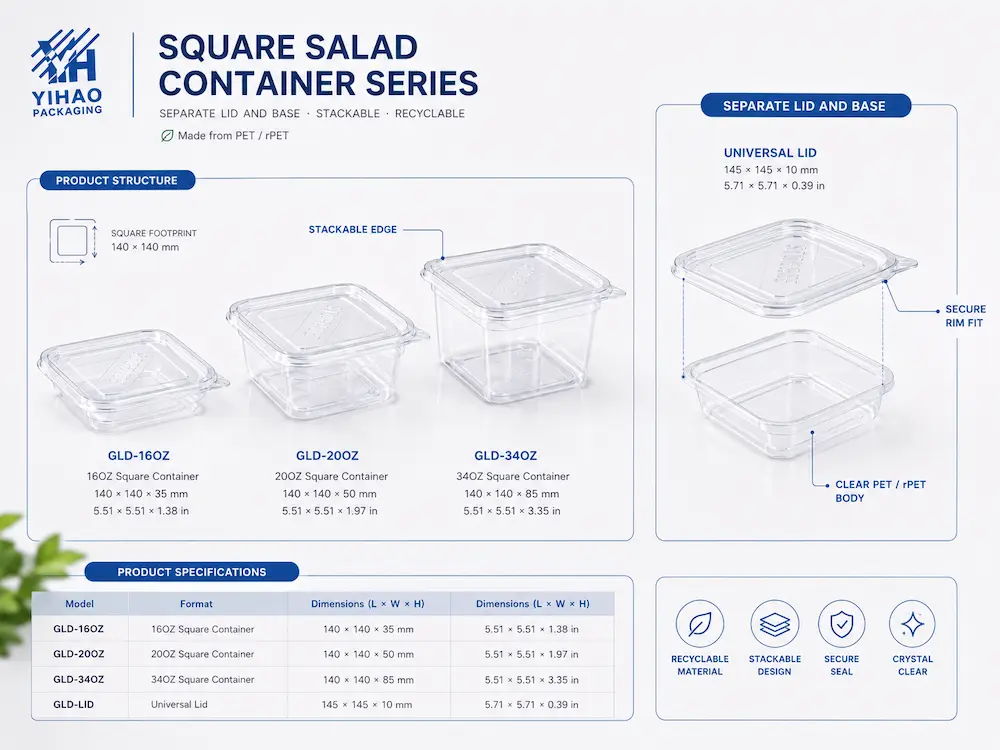
Buyers often use different search terms for similar packaging needs. Some call them square deli containers. Others search for clear square food containers, PET square bowls, or grab-and-go square packaging. The best choice depends on food height, portion weight, lid style, and the way the product will be displayed or transported.
Common Material Options
PET is commonly selected for chilled food packaging because it offers strong clarity, a clean appearance, and good rigidity for cold display environments. RPET may also be considered when buyers want recycled-content packaging, depending on local availability, food-contact requirements, and the supplier’s material program.
For buyers comparing Deli & Salad Containers, the material decision should be based on food type, display temperature, lid fit, local recycling systems, and regulatory requirements in the target market.
Common Lid and Closure Styles
Square salad packaging can be designed with multiple closure styles. Hinged containers are convenient for quick packing and takeaway service. Separate-lid containers offer a clean premium look and can support different lid heights. Flat lids are suitable for compact stacking, while high lids provide more room for layered salads, toppings, fruit, or bakery portions.
For buyers who need a consistent lid system across several square container sizes, a universal PET lid helps simplify inventory planning, packing workflow, and supplier communication.
Why Square PET Deli Containers Work Well for Retail Display
Retail display is one of the strongest reasons to choose square packaging. In a chilled shelf, the package is not only a container. It becomes part of the product’s visual merchandising system. If the package looks messy, foggy, unstable, or hard to label, the food inside loses selling power.
Square PET deli containers support a cleaner retail display because their straight sides create a more organized shelf layout. Buyers can align products in rows, group flavors or portion sizes, and make the display easier for customers to scan.
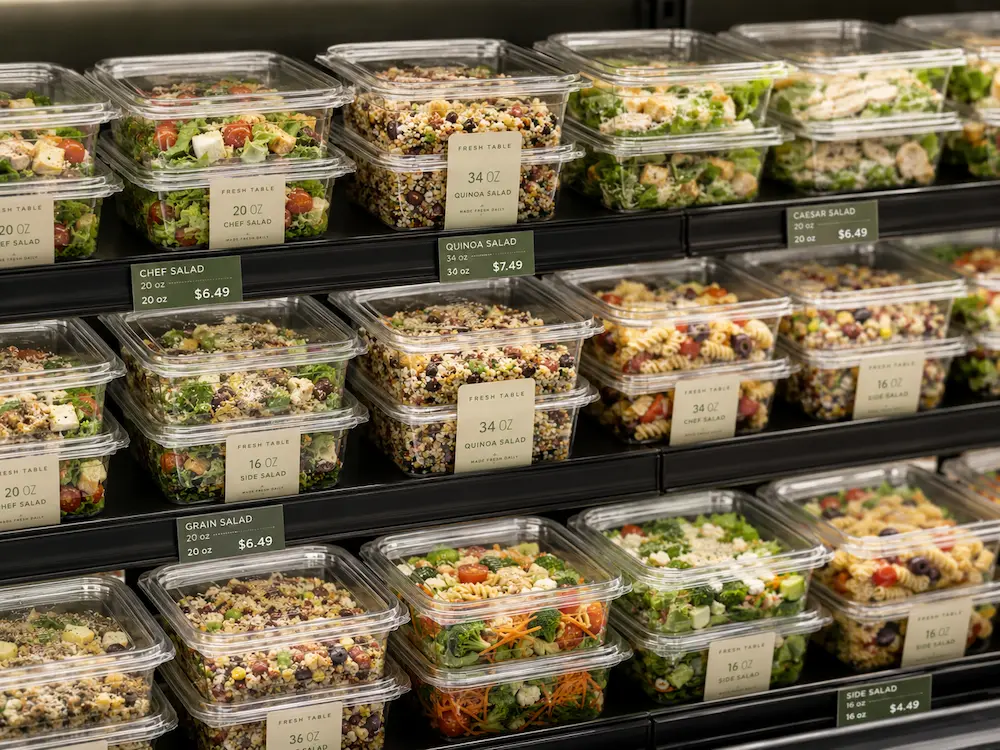
Clear PET also allows customers to judge freshness quickly. For salad, fruit, and deli products, visual trust matters. Shoppers want to see color, texture, layering, sauce separation, and ingredient quality before buying. A transparent square container gives the food a direct visual channel without requiring excessive printed packaging.
The top surface of square containers is also valuable for retail. Labels, price stickers, ingredient information, nutrition panels, QR codes, and brand seals can be placed more consistently than on curved surfaces. For private label food brands and supermarket programs, this improves packaging discipline and makes the product line look more professional.
| Retail Display Need | Why Square Containers Help | Buyer Benefit |
|---|---|---|
| Cold shelf organization | Square footprint lines up neatly | Cleaner product blocks and easier replenishment |
| Food visibility | Clear PET shows ingredients clearly | Stronger visual trust and freshness appeal |
| Label placement | Flat lid surface supports stickers and branding | Better retail information display |
| Stacking | Consistent shape supports stable handling | Improved packing and store operations |
| Product range planning | Multiple sizes and lid styles can share a visual system | More consistent shelf presentation |
Square Salad Containers for Takeaway and Grab-and-Go Meals
Takeaway food packaging must work in real customer situations. It needs to handle movement from the counter to a delivery bag, from a chilled shelf to a shopping basket, and from a store to an office, school, gym, or home. For this reason, grab-and-go square packaging should be evaluated by structure, lid fit, visibility, and handling stability.
For Cafes and Salad Bars
Cafes, salad bars, and light meal brands often need packaging for mixed greens, Caesar salads, pasta salads, fruit salads, yogurt parfait portions, nuts, and chilled snack combinations. In these settings, square containers help staff pack food quickly while keeping the finished product visually organized.
For salad bars that prepare multiple menu items, square containers make it easier to standardize display and storage. The same packaging family can be used across different toppings, sauces, or portion concepts, helping the operator build a cleaner takeaway system.
For Supermarkets and Convenience Stores
Supermarkets and convenience stores need packaging that looks good under cold case lighting and supports fast customer decisions. Clear square containers make product comparison easier because customers can see the portion from the top and sides. This matters for layered salads, fruit mixes, deli sides, cold pasta, and ready-to-eat meals.
For chilled retail programs that include both salad and fruit, buyers may also combine square salad packaging with fresh-cut fruit containers to create a complete refrigerated grab-and-go section.
For Meal Prep and Chilled Ready Meals
Meal prep brands often need packaging that supports portion consistency and clean presentation. Square PET formats help arrange grains, vegetables, proteins, fruit, and toppings in a compact shape. They are especially useful when the food is sold cold and reheating is not required.
If the product range includes hot prepared meals or microwave reheating, buyers should evaluate PP alternatives separately. For example, microwave safe containers are better aligned with hot food applications, while PET square containers are better positioned for chilled food visibility and cold display.
Clear Square Food Containers vs Round Bowls and Rectangular Boxes
There is no single container shape that works for every food program. Square, round, and rectangular containers each have a different role. The right choice depends on food type, display method, portion size, eating experience, and supply chain requirements.
clear square food containers work well when buyers need a compact footprint, clear presentation, and strong shelf alignment. Round bowls create a softer visual presentation and are often used for large salads or fruit bowls. Rectangular boxes suit sandwiches, flat meals, or divided prepared foods.
| Packaging Type | Best Use | Display Value | Stacking Efficiency | Buyer Consideration |
|---|---|---|---|---|
| Square PET containers | Salads, fruit, deli sides, chilled meals | High | High | Strong choice for retail shelves and takeaway |
| Round PET bowls | Mixed salads, fruit bowls, grain bowls | High | Medium | Good for soft food presentation |
| Rectangular deli boxes | Sandwiches, meal sets, flat food portions | Medium | High | Better for longer or flatter food items |
| Paperboard boxes | Dry bakery items or short-contact foods | Medium | Medium | Less transparent, stronger branding surface |
| PP food containers | Hot meals, prepared foods, reheatable dishes | Low to medium | High | Better for heat-related applications |
For buyers focused on chilled salads, fruit, and deli sides, square PET packaging is usually a more retail-friendly option than opaque boxes. For buyers focused on round salad presentation, round PET deli containers remain useful. A strong packaging strategy may include both shapes, but each one should serve a clear merchandising purpose.
Recommended Product Matching Table for Square Salad Containers Buyers
Different chilled foods need different container structures. The table below helps buyers match common food applications with suitable packaging directions before requesting samples or placing wholesale orders.
| Food Application | Recommended Packaging Type | Best Buyer Scenario |
|---|---|---|
| Fresh salads, fruit portions, and deli sides | square PET deli containers | Retail display, salad bars, chilled shelves, and takeaway programs |
| Layered salads and larger chilled meals | PET square bowls | Grab-and-go meals, premium chilled portions, and prepared food displays |
| Fruit snacks and mixed fresh portions | fresh-cut fruit containers | Supermarket fruit sections, convenience food shelves, and snack packs |
| Bakery and chilled dessert portions | bakery clamshell containers | Cheesecake slices, brownies, roll cakes, and dessert takeaway |
| Grab-and-go food requiring visible opening evidence | tamper evident containers | Retail snack packs, cold case foods, and safety-sensitive takeaway programs |
Key Features Buyers Should Check Before Choosing Square Deli Containers
Choosing square deli containers only by appearance is risky. A container that looks attractive in a product photo may not perform well in a real packing line, chilled display, delivery bag, or export carton. B2B buyers should test the container as a complete packaging system.
Food Visibility and Clarity
Food visibility is one of the strongest selling points of PET square packaging. A clear container helps customers inspect ingredient color, portion balance, freshness, and layering. This is important for leafy salads, fruit salads, berry mixes, cold noodles, pasta salads, and dessert portions.
For premium salad and chilled food programs, buyers should check clarity under actual store lighting. Cold case lights, condensation, label placement, and product color all affect the final appearance. Good packaging should support the food visually instead of making it look dull or crowded.
Lid Fit and Handling Stability
Lid fit affects both customer trust and operational efficiency. A secure lid helps reduce accidental opening during handling, store stocking, and takeaway movement. However, buyers should avoid assuming that every container is suitable for liquid-heavy foods. Dressings, sauces, and juicy fruit should be tested carefully before bulk ordering.
For salads with toppings or higher ingredient piles, a clear square high lid food container helps provide more headspace while keeping the food visible.
Stackability and Carton Efficiency
Wholesale buyers should check how containers stack before and after filling. Empty container nesting affects warehouse storage and packing speed. Filled container stacking affects cold shelf layout, delivery handling, and carton packing.
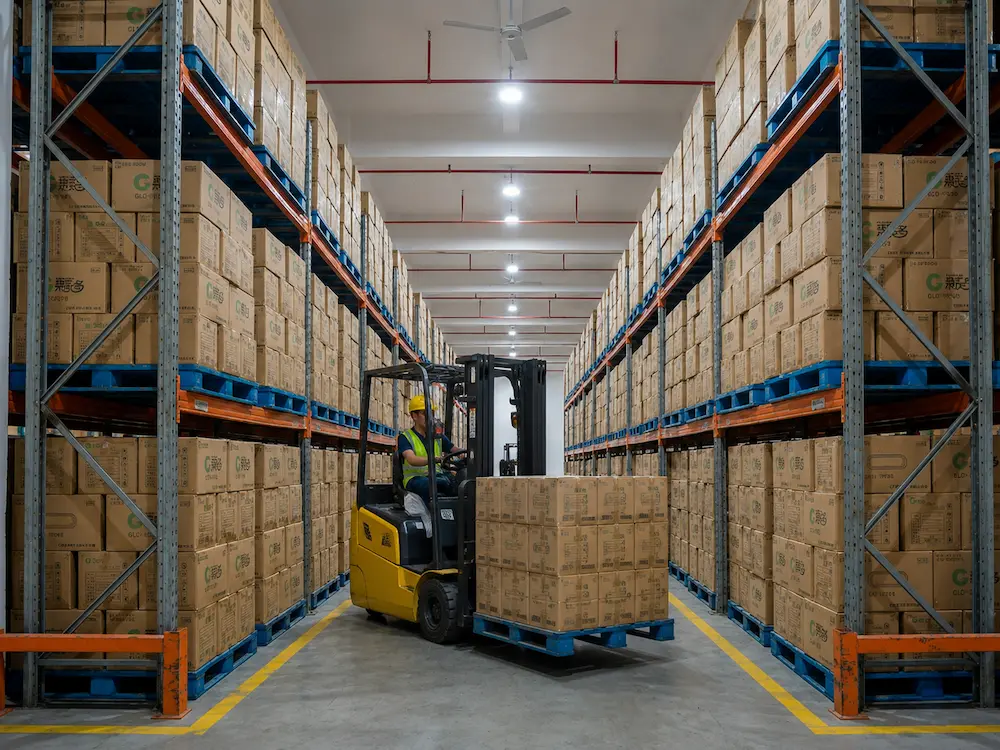
Square shapes often help reduce wasted space compared with round bowls, especially in cartons and retail shelves. This does not mean every square container is automatically efficient. Buyers should still test carton quantity, pallet layout, product height, and real handling conditions.
Labeling and Branding Surface
Labels are part of retail communication. A good square container should leave enough surface area for brand stickers, product names, ingredient labels, date labels, price labels, and QR codes. Flat lids are especially useful for clean label placement.
For simple chilled salads and fresh food portions, a clear square flat lid food container supports a low-profile retail look and practical top labeling.
Cold Food Suitability
PET square containers are mainly positioned for cold and chilled foods. They are suitable for salads, fruit, deli sides, cold pasta, chilled desserts, and ready-to-eat food where microwave heating is not required. If the product must be reheated, buyers should review PP or other heat-suitable packaging options instead of using PET by default.
Best Food Applications for Square Salad Containers
The strongest use cases for square salad containers are chilled food applications that depend on product visibility, portion control, and retail presentation. The following applications are especially suitable for square PET formats.
Fresh Garden Salads
Garden salads, Caesar salads, mixed greens, vegetable salads, and protein salads benefit from transparent square packaging because the customer can see the ingredients clearly. A square structure keeps the portion visually contained and supports a clean lid label.
Cut Fruit and Berry Portions
Fruit salads, melon cubes, grapes, berries, apple slices, mango, pineapple, and mixed fruit portions need packaging that shows color and freshness. Square PET containers help make fruit look organized in chilled shelves and takeaway displays.
For brands selling fruit-based snack packs, fruit containers and salad containers can work together as part of the same cold case packaging program.
Pasta Salad and Grain Bowls
Cold pasta salad, quinoa salad, rice salad, couscous, noodle salad, and grain bowls need enough depth for ingredients while still showing the portion clearly. Square PET containers offer a balanced shape for these items because they do not look too narrow or too bulky.
Deli Sides and Prepared Foods
Deli counters and chilled prepared food programs often need packaging for coleslaw, potato salad, bean salad, cold vegetables, pickled sides, and prepared chilled portions. Square deli containers make these products easier to align in a cold case and easier to pack for takeaway.
Bakery and Dessert Portions
Square salad containers can also support certain chilled dessert and bakery applications, especially when visibility matters. Tiramisu portions, cheesecake cubes, brownies, dessert samplers, fruit-topped desserts, and chilled bakery items all benefit from clear presentation.
Grab-and-Go Retail Meals
Convenience stores, supermarket chilled shelves, airport food counters, campus stores, and foodservice chains rely heavily on grab-and-go packaging. Square containers support this business model because they are easy to display, easy to label, and easy for customers to carry.
PET Square Bowls and Square PET Deli Containers: Material Considerations
Material selection affects product visibility, shelf performance, recycling communication, and buyer confidence. For chilled salad packaging, PET is often selected because it combines clarity, rigidity, and a clean retail appearance.
RPET may support recycled-content packaging strategies when the supplier can provide suitable material options for the intended food-contact use. Buyers should evaluate the material program carefully and avoid making broad sustainability claims unless those claims are supported by documentation, local recycling realities, and market-specific rules.
| Material Point | Buyer Meaning | Practical Check |
|---|---|---|
| Clear PET | Supports product visibility and chilled retail display | Check clarity under store lighting |
| RPET option | Supports recycled-content packaging strategies | Confirm supplier material documentation |
| Cold food suitability | Fits salads, fruit, chilled deli food, and ready-to-eat meals | Test with actual food and storage conditions |
| Recyclability consideration | Depends on local PET collection and recycling systems | Review local market requirements |
| Label compatibility | Supports product information and branding | Check sticker size, adhesive, and placement |
For buyers comparing different salad packaging families, high-lid versions are useful when ingredients require more vertical space, while flat-lid versions are more suitable for compact chilled display and efficient stacking.
How Wholesale Buyers Should Compare a Square Salad Containers Supplier
A good supplier does not only sell a container. A good supplier helps buyers build a reliable packaging system. When sourcing square salad containers for wholesale, import, private label, or foodservice programs, buyers should compare product range, manufacturing capability, sample support, carton packing, export experience, and customization options.
Product Range
Buyers should first check whether the supplier offers a complete square PET container range. One container may solve one product, but a product family solves a retail program. A strong range should include different depths, lid heights, closure options, and compatible lid systems.
For category-level sourcing, it is practical to start with square PET deli containers and then compare related formats for salad, fruit, deli sides, bakery, and prepared chilled meals.
Manufacturing Capability
Stable manufacturing matters because packaging must remain consistent across repeated orders. Buyers should review forming quality, lid fit, clarity, trim edges, nesting, carton protection, and batch consistency. For export orders, consistency is more important than a low unit price alone.
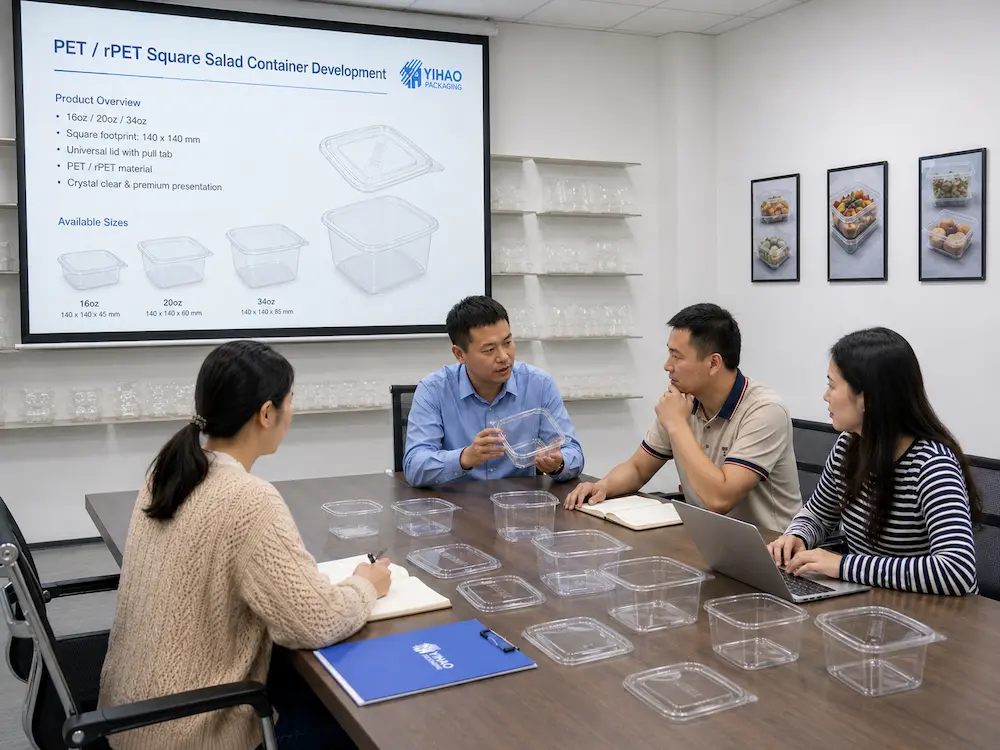
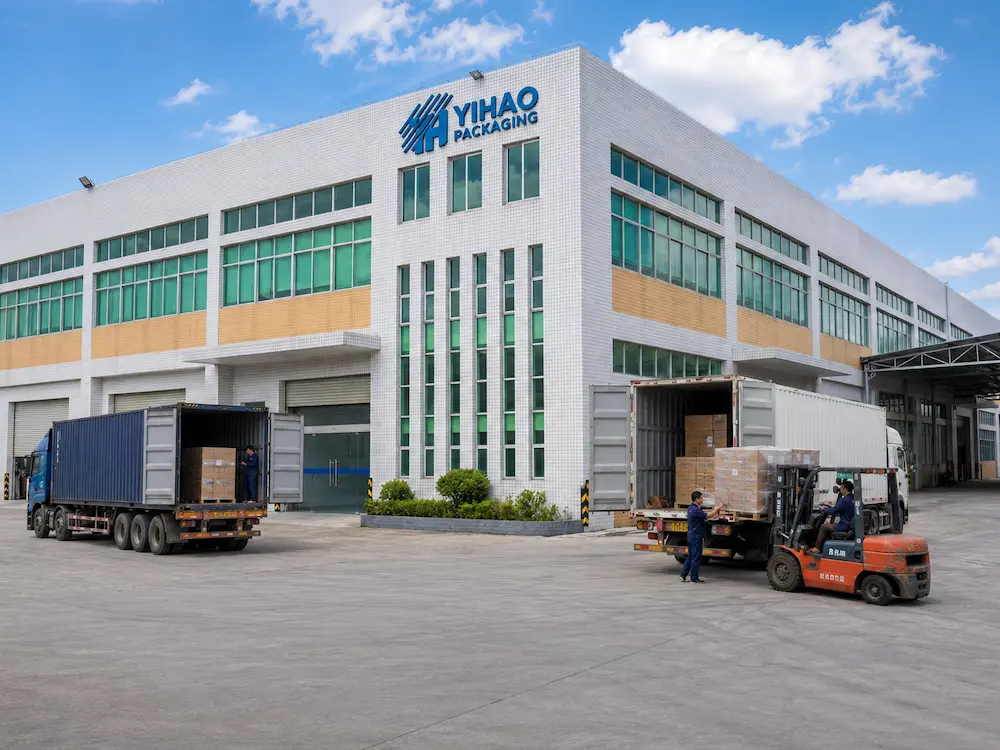
As a food packaging manufacturer, YIHAO supports buyers with sample testing, mold development, carton packing, and long-term wholesale supply planning.
Sample Testing
Sample testing is a necessary step before wholesale ordering. Buyers should test the actual food, not only inspect empty samples. Fill the container with salad, fruit, deli sides, or prepared chilled meals. Check closing performance, stacking, label placement, condensation, display lighting, carton fit, and customer handling.
For food brands testing premium chilled meals, a clear PET separate lid food container may offer a more refined presentation than standard hinged packaging.
Export and Carton Packing Support
Wholesale packaging buyers need to think beyond the unit product. Carton packing, pallet loading, container loading, storage efficiency, and damage control all affect the final landed cost. A square container with good carton efficiency may save space in warehousing and transport.
Buyers should ask suppliers for carton dimensions, packing quantity, sample cartons, pallet plans, and loading suggestions. This is especially important for importers and distributors who compare several container sizes in the same shipment.
Customization Options
Customization may include mold development, private label support, carton labeling, product family planning, or packaging consultation. Custom work should be based on real food dimensions, target markets, shelf requirements, and order planning.
For brands building a full chilled food packaging line, YIHAO can be positioned as a packaging solution partner rather than only a single-item supplier. The stronger strategy is to match container structure with food presentation, operational workflow, and retail conversion.
Practical Buyer Checklist Before Ordering Square Salad Containers
Before placing a wholesale order, buyers should check the container from multiple angles. A good square package must fit the food, the shelf, the label, the carton, and the customer experience.
| Checklist Item | What to Confirm | Why It Matters |
|---|---|---|
| Food type | Salad, fruit, deli side, dessert, chilled meal | Different foods need different depth and lid space |
| Portion logic | Single serve, family portion, premium meal, snack pack | Controls perceived value and portion consistency |
| Lid closure | Hinged lid, flat lid, high lid, separate lid | Affects packing speed and handling stability |
| Visibility | Clarity under chilled display lighting | Directly influences retail appeal |
| Label area | Brand sticker, nutrition label, date label, barcode | Supports retail compliance and brand communication |
| Stacking | Empty nesting and filled stacking | Affects storage, transport, and shelf replenishment |
| Carton packing | Carton quantity, pallet plan, loading efficiency | Affects wholesale cost and logistics |
| Material option | PET or RPET depending on market requirement | Supports product positioning and sourcing strategy |
| Supplier capability | Samples, documentation, consistency, export support | Reduces purchasing risk |
If the food program includes safety-sensitive grab-and-go items, buyers may also compare tamper-evident packaging for retail situations where visible opening evidence is part of the packaging requirement.
Why Square Salad Containers Support Better Retail Packaging Decisions
The value of square salad containers comes from the way they connect visual presentation, product protection, retail display, takeaway convenience, and wholesale supply planning. A good square container is not chosen only because it looks modern. It is chosen because it supports the complete selling system.
For chilled food brands, square PET packaging helps create a clean product block in retail shelves. For supermarkets, it improves arrangement and replenishment. For cafes and foodservice operators, it supports takeaway workflow. For distributors and importers, it improves product family planning and carton efficiency.
When buyers compare square PET deli containers, square deli containers, clear square food containers, and PET square bowls, they should focus on practical performance. The best option is the one that fits the food, supports the retail display, closes properly, stacks efficiently, allows clear labeling, and comes from a supplier capable of stable production.
That is why many B2B buyers prefer to work with a packaging manufacturer, wholesale partner, or supplier that understands food application scenarios instead of only offering a long product list. The stronger supplier helps buyers reduce trial-and-error, select the right container family, and prepare a packaging system that works across retail, takeaway, and chilled food distribution.
FAQ
1. What are square salad containers used for?
Square salad containers are used for chilled salads, fresh-cut fruit, deli sides, cold pasta, grain bowls, desserts, snack packs, and grab-and-go meals. They are popular in supermarkets, cafes, salad bars, convenience stores, and foodservice takeaway programs.
2. Are square PET deli containers suitable for chilled food?
Yes. Square PET deli containers are mainly suitable for chilled and cold food applications such as salads, fruit, deli sides, cold noodles, and ready-to-eat meals. They should not be used for microwave heating unless the supplier specifically confirms heat suitability for that product.
3. Why do supermarkets use clear square food containers?
Supermarkets use clear square food containers because they support food visibility, organized shelf display, label placement, portion control, and efficient cold case presentation. The square shape helps retailers arrange products neatly and improve grab-and-go merchandising.
4. How should wholesale buyers choose a square salad containers supplier?
Wholesale buyers should compare product range, material options, lid fit, sample testing, carton packing, manufacturing consistency, export support, and customization capability. Buyers should test actual food in the container before placing bulk orders.
5. Can square salad containers be customized for private label food brands?
Yes. Square salad containers can support private label food brands through label placement, carton labeling, packaging family planning, and possible custom mold development. Customization should be based on food type, retail display requirements, target market, and order planning.
References
- U.S. Food and Drug Administration. Food Contact Substances and Food Packaging Guidance.
- U.S. Food and Drug Administration. Food Contact Substance Regulatory Information.
- European Commission. Packaging and Packaging Waste Regulation.
- European Commission. Packaging Recyclability and Labeling Policy Information.
- Association of Plastic Recyclers. APR Design Guide for Plastics Recyclability.
- U.S. Environmental Protection Agency. Plastics: Material-Specific Data.
- NAPCOR. PET Recycling Reports and PET Packaging Resources.
- Food packaging industry guidance on chilled food packaging, retail display, and ready-to-eat meal packaging trends.
Deep-Dive Insights for Square Salad Containers Buyers
How buyers compare square salad containers: Buyers should compare square salad containers by food type, lid structure, display clarity, stacking behavior, label area, carton efficiency, and supplier consistency. A good container should perform well in the packing room, the cold shelf, the takeaway bag, and the wholesale supply chain.
Why square PET deli containers improve retail display: Square PET deli containers help stores create cleaner product blocks in cold cases. Their transparent structure supports food visibility, while their square footprint improves shelf alignment and label placement.
What wholesale buyers should test before ordering: Buyers should test actual food portions inside the container before confirming a bulk order. Salad height, fruit moisture, sauce movement, lid fit, stacking pressure, and label position all affect the final packaging result.
Which applications fit clear square food containers: Clear square food containers are suitable for salads, fruit portions, pasta salads, deli sides, grain bowls, chilled desserts, snack packs, and grab-and-go meals. They are most effective when food visibility and shelf presentation directly influence purchase decisions.
When to choose PET square bowls instead of flat containers: PET square bowls are better for larger salads, layered chilled meals, fruit mixes, and prepared food portions that need more depth. Flat-lid square containers are better for compact display, low-profile stacking, and simple chilled portions.
Final Note / Practical Takeaway
© YIHAO Packaging. All rights reserved.
Food packaging solutions for global wholesale buyers, supermarkets, cafes, bakeries, and foodservice brands.