Why PP Microwave Containers Matter for Modern Food Packaging
PP microwave containers solve one of the most common packaging problems in prepared food: the same container often needs to support chilled storage, retail display, takeaway handling, and customer reheating. For supermarkets, cafes, delis, meal prep brands, and foodservice operators, this makes PP a practical material choice when the product is designed, tested, and used correctly.
Unlike clear PET containers that are mainly selected for cold food visibility, PP containers are commonly chosen for reheatable foods, moist dishes, sauced meals, cooked vegetables, rice bowls, pasta, hot deli portions, chilled ready meals, and takeaway food that consumers may warm before eating. The packaging decision is not only about whether the container is “microwave safe.” It is about whether the container fits the real food program: portion size, lid structure, stacking pressure, labeling space, shelf life expectations, leakage risk, and customer convenience.
For buyers comparing microwave safe containers, PP deserves close attention because it supports a broader reheatable-food use case than many cold-display plastics. At the same time, it must be selected carefully. A professional buyer should confirm the material, lid compatibility, intended temperature use, food contact suitability, and supplier documentation before placing wholesale orders.
YIHAO focuses on food packaging solutions for fresh food, chilled food, bakery, deli, takeaway, and prepared meal applications. In the microwave safe container category, the goal is not to push one universal container for every menu item. The better approach is to match PP microwave containers to the actual food, sales channel, and handling process.
What Makes PP Suitable for Microwave Safe Food Containers?
PP, or polypropylene, is widely used in microwave safe food containers because it offers a useful balance of heat resistance, toughness, light weight, and food packaging practicality. In commercial food packaging, PP containers are often used for meals that move between chilled storage, takeaway handling, and microwave reheating.
However, “PP” alone should not be treated as a complete safety claim. Buyers should confirm whether the final container design is intended for microwave use, whether the lid is microwave compatible, whether the product is suitable for the target food type, and whether local food contact requirements are met. The container body, lid, sealing structure, printing, labeling, and food type can all affect real-world performance.
For B2B buyers, microwave safe should be treated as a verified use condition, not a general material assumption. The final container, lid, food type, heating time, microwave power, and user instruction should be reviewed together before the product is used in retail, takeaway, or meal prep programs.
The best PP microwave containers are selected as a packaging system, not as a simple plastic box. A strong system includes:
- Appropriate PP material for reheatable prepared foods
- A container shape that fits the food portion and shelf space
- A lid structure that supports takeaway handling and customer convenience
- Stable stacking for retail shelves, chilled cabinets, and transport cartons
- Clear supplier guidance about intended use and handling limits
- Reliable sample testing before bulk or wholesale ordering
This is especially important for buyers sourcing from a packaging manufacturer. A low price is not enough. Buyers need repeatable quality, consistent lid fit, stable production, and practical communication from the supplier before scaling the product into retail or foodservice programs.
Best Applications for PP Microwave Containers
The strongest use cases for PP microwave containers are prepared foods that need reheating convenience without losing basic handling performance. Below are the main application scenarios buyers should consider.
Retail Display for Chilled Prepared Meals
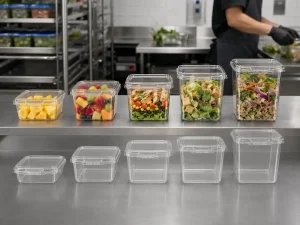
Retail display is not only about transparency. In chilled prepared meal programs, the packaging must help the product look organized, portioned, and ready to buy. PP containers are often used for cold-shelf foods that consumers may heat later, such as pasta meals, rice dishes, stewed vegetables, sauced protein portions, curry meals, noodles, and deli entrees.
For this channel, buyers should check three factors. First, the container must provide enough surface area for food presentation. Second, the lid should close securely for shelf handling. Third, the base should stack reliably in refrigerated display cases and transport cartons. For larger deli and prepared meal formats, a product such as large PP deli food container is better aligned with takeaway meals and retail display than a shallow snack container.
Takeaway Meals and Delivery Food
Takeaway food needs stronger handling logic than simple cold display packaging. Containers are moved from kitchen counters to bags, from bags to vehicles, and from vehicles to customers. During that process, weak lids, unstable stacking, and poor portion fit create complaints quickly.
Microwave safe takeout containers made from PP are practical for restaurants, delis, cloud kitchens, and food trucks because they support hot or chilled prepared dishes that customers may reheat later. For takeaway programs, buyers should prioritize lid fit, base rigidity, leak resistance for moist foods, stacking stability, and easy opening. A hot food takeaway container is suitable for deli takeaway and prepared meals where reheating convenience is part of the customer experience.
Chilled Food and Ready-to-Eat Programs
Chilled food packaging requires a different decision logic from hot counter packaging. The food may be packed cold, displayed cold, transported cold, and then reheated by the consumer. This applies to ready meals, cold dishes, cooked salads, prepared grains, pasta, noodles, mixed vegetables, deli portions, and refrigerated takeaway meals.
For chilled food programs, PP microwave containers should support organized display, stable stacking, and clear food identification through labels or top visibility. A prepared food container works well for buyers who need one practical structure for cold dishes and hot takeaway meals.
Meal Prep and Portion-Control Packaging
Meal prep containers are one of the most common categories for PP microwave packaging. Buyers usually need consistent portion control, repeatable stacking, practical reheating, and easy handling for weekly meal plans, prepared lunches, fitness meals, institutional food, office meals, and subscription meal programs.
For meal prep, the container should not be oversized for the portion. Excess headspace can make the food look smaller and reduce shelf appeal. At the same time, the container should not be too shallow for sauced or moist meals. A prepared meal container is a strong fit for food counter display and takeaway packaging where portion control and reheating convenience both matter.
Deli Food and Counter Service
Microwave safe deli containers are especially useful for cooked deli foods, ready-to-heat side dishes, protein portions, vegetables, soups with controlled viscosity, rice, noodles, and prepared entrees. In deli counters, the packaging must support speed. Staff need containers that close quickly, stack neatly, and reduce confusion between sizes.
For this use case, a PP deli food container gives buyers a practical option for cold food and retail takeaway packaging. When building a deli packaging range, buyers should avoid too many overlapping sizes. A smaller, clearer SKU structure usually performs better than a confusing product mix.
PP Microwave Containers vs PET, Paper, Aluminum, and CPET Alternatives
Food packaging buyers often compare PP with PET, paper, aluminum, and CPET. None of these materials is “best” in every situation. The correct choice depends on food temperature, display requirements, heating method, sustainability goals, cost structure, local recycling systems, and customer behavior.
| Packaging Option | Best Use Case | Main Strength | Buyer Caution |
|---|---|---|---|
| PP microwave containers | Prepared meals, deli foods, takeaway, chilled reheatable food | Suitable for many microwave reheating applications when properly designed and tested | Confirm container and lid compatibility, intended use, and local food contact requirements |
| PET containers | Cold salads, fruit, bakery, chilled display foods | Excellent clarity and retail display appeal | Usually not selected for microwave reheating unless specifically designed and confirmed |
| Paper food containers | Dry foods, some takeaway meals, brand-focused packaging | Good printability and natural appearance | Coating, moisture resistance, grease resistance, and reheating suitability must be checked |
| Aluminum containers | Oven reheating, catering, baked or roasted foods | Strong heat performance for oven-related use cases | Not suitable for standard microwave use unless specific microwave-compatible systems are designed and clearly instructed |
| CPET trays | Ready meals, frozen meals, higher-heat reheating, selected ovenable applications | Stronger heat resistance for demanding ready-meal programs | Usually higher cost and different sourcing logic than standard PP microwave containers |
PP vs CPET: Which One Fits Microwave Meal Packaging Better?
PP microwave containers are generally selected for lightweight reheatable meals, chilled takeaway food, deli portions, and meal prep programs. CPET trays are often considered when buyers need higher heat resistance, frozen meal programs, or oven-related applications. For most retail takeaway meals and chilled prepared food programs, PP offers a practical balance of cost, weight, stacking, and microwave reheating convenience. For oven-heating applications, buyers should evaluate CPET or other oven-suitable materials instead of assuming PP is the right fit.
For buyers focused on reheatable takeaway and chilled prepared meals, PP microwave containers usually offer the most practical material logic. For cold premium visual display, PET may still be better. For oven reheating, aluminum or CPET may be better. For branded dry-food programs, paper may be better. The smart packaging decision starts with the food’s real journey, not with the material name.
How to Choose the Right PP Microwave Container Structure
The structure of a PP container affects display, handling, reheating, and customer satisfaction. Before ordering microwave safe food containers in bulk, buyers should evaluate these structural factors.
Separate Lid vs Hinged Lid
Separate-lid containers are useful when buyers need flexible filling, easy stacking, and better control during food counter packing. Hinged structures can be convenient, but they may not always be ideal for hot or moist prepared foods, depending on the design. Many PP microwave containers use separate lids because this structure supports practical handling in deli, meal prep, and takeaway settings.
A separate-lid PP food container is especially useful when the buyer needs a practical structure for fresh meat rolls, deli food, or takeaway food packaging where separation between base and lid improves packing flexibility.
Depth and Food Volume
Depth should match the food. Shallow containers work for dry or neatly arranged food portions. Deeper containers work better for pasta, noodles, sauced foods, rice bowls, and prepared meals with higher volume. If the container is too shallow, sauce movement and lid contact become problems. If it is too deep, the food may look less attractive on the shelf.
Base Stability
The base must support stacking pressure during packing, transport, and display. For chilled retail programs, the container may sit in cartons before reaching the shelf. For takeaway, it may be stacked in bags. A weak base can deform and make the product look cheap, even when the food quality is good.
Lid Fit and Venting Considerations
Good lid fit matters for every PP microwave container. Buyers should also check whether the lid is intended for microwave use and whether venting instructions are needed. Some programs require customers to loosen or remove the lid before heating. These instructions should be confirmed with the supplier and reflected in labels, user guidance, or packaging communication when necessary.
Size and Portion Logic for PP Microwave Containers
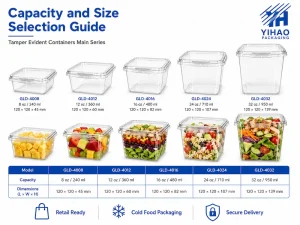
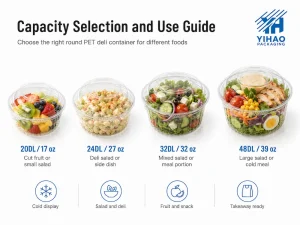
Choosing the right size is one of the most important steps when sourcing PP microwave containers. A container that is too large makes the meal look underfilled, while a container that is too small creates lid contact, sauce movement, difficult sealing, and poor customer experience.
For wholesale buyers, size selection should begin with the actual food portion instead of the catalog page. Rice bowls, pasta meals, deli sides, cooked vegetables, and meal prep portions all require different depth, base area, and lid clearance. Good portion logic improves food presentation, reduces packaging waste, and makes repeat ordering easier for purchasing teams.
| Food Type | Recommended Container Logic | Buyer Focus |
|---|---|---|
| Rice bowls and pasta meals | Medium-depth PP container with secure lid fit | Portion visibility, sauce control, reheating convenience |
| Deli sides and cooked vegetables | Compact PP deli container | Fast service, stacking, chilled display |
| Meal prep portions | Consistent rectangular or round format | Portion control, repeat orders, transport stability |
| Large takeaway meals | Deeper PP container with stronger base support | Food volume, lid clearance, delivery handling |
| Cold-packed reheatable meals | Stable base with label-friendly lid area | Retail display, cold storage, heating instructions |
Retail Display Requirements for PP Microwave Containers
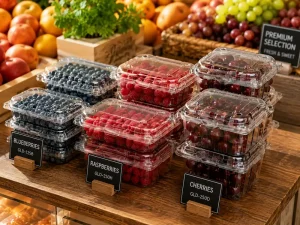
PP is not usually as crystal-clear as PET, so buyers should not evaluate it by PET display standards. Instead, the display question should be: does the package make the food look clean, organized, fresh, and convenient?
For retail display, buyers should consider:
- Whether the container shape fits the chilled shelf layout
- Whether the lid surface allows clear product labels
- Whether food color and portion size remain visible enough for buying confidence
- Whether containers stack without sliding or crushing
- Whether the package looks suitable for reheatable food, not just storage
For supermarkets and convenience stores, PP microwave containers should communicate convenience quickly. Customers should understand that the product is ready to take away, store cold, and reheat when needed. That combination supports stronger conversion for prepared meals, deli foods, and grab-and-go meal programs.
Takeaway and Delivery Performance: What Buyers Should Test
Takeaway programs expose packaging weaknesses fast. A container may look fine on a supplier photo but fail in real delivery conditions. Before buying microwave safe takeout containers wholesale, buyers should run sample tests with real foods.
Key tests include:
- Filling the container with actual menu items, not only dry samples
- Testing hot, warm, and chilled filling conditions where relevant
- Checking lid closure speed during busy service
- Stacking containers in takeaway bags or delivery cartons
- Checking moisture, sauce movement, and customer opening experience
- Testing reheating instructions under realistic consumer behavior
These tests help buyers avoid costly mistakes. The cheapest container often becomes expensive when it causes leakage, poor presentation, slow packing, or customer complaints. A reliable supplier should support sample review and help buyers match the container to food type, sales channel, and order stage.
Chilled Food Packaging Logic: PP Is About Convenience, Not Only Heat
Many buyers think PP microwave containers are only for hot food. In reality, PP is also important for chilled food that will be reheated later. This is common in supermarkets, meal prep programs, office meals, school meals, institutional catering, convenience stores, and deli counters.
For chilled food, the container must support cold shelf organization first and reheating convenience second. The food may spend most of its commercial life in refrigeration, not in the microwave. That means the package must still look clean on the shelf, stack properly, hold labels well, and protect the meal during handling.
PP microwave containers are strongest when the food journey includes both cold storage and warm consumption. Examples include:
- Chilled pasta meals
- Rice bowls and grain bowls
- Prepared vegetables
- Cooked deli sides
- Ready-to-heat noodles
- Meal prep portions
- Takeaway entrees
- Cold-packed hot meals for later reheating
For buyers building a chilled prepared food line, the container should be selected around the meal format, not only the capacity. A sauced pasta and a dry grain bowl may require different depth, lid clearance, and base strength even if their portion weight is similar.
Wholesale Buying Checklist for PP Microwave Containers
When sourcing PP microwave containers from a manufacturer, wholesale distributor, or packaging supplier, buyers should prepare a clear checklist before asking for pricing. This saves time and leads to better product matching.
| Checklist Item | Why It Matters | Buyer Action |
|---|---|---|
| Food type | Different meals create different moisture, oil, sauce, and temperature demands | Share real menu examples with the supplier |
| Sales channel | Retail display, takeaway, delivery, and meal prep require different handling logic | Define the main selling environment before choosing size |
| Heating expectation | Some foods are reheated by customers, while others are only stored cold | Confirm whether container body and lid are intended for microwave use |
| Lid structure | Poor lid fit causes leakage, slow packing, and customer complaints | Request samples and test with real food |
| Stacking strength | Weak stacking affects shelf display and transport reliability | Test filled containers in cartons and display cases |
| Labeling space | Retail meals need labels, barcodes, ingredients, and heating instructions | Check top and side label placement before bulk ordering |
| Supplier capability | Stable supply matters more than one-time sample approval | Discuss wholesale volume, repeat orders, and quality consistency |
This checklist is especially important for wholesale buyers. A food packaging program is rarely built around one container. Buyers usually need a practical range that covers small sides, standard meals, larger portions, deli foods, and prepared takeaway dishes. The right wholesale strategy reduces SKU confusion while improving operational consistency.
How Supermarkets Should Choose PP Microwave Containers
Supermarkets need packaging that supports retail display, fast replenishment, clear labeling, and customer trust. For supermarket prepared foods, PP microwave containers should support chilled shelf presentation and reheating convenience without making the product look like low-value storage packaging.
The supermarket buyer should ask:
- Does the container fit the cold shelf layout?
- Does the lid provide enough space for retail labels?
- Does the base look clean and stable when filled?
- Can staff stack and replenish the product quickly?
- Does the package make reheating instructions easy to communicate?
- Can the supplier support repeat orders with consistent quality?
For supermarket programs, avoid choosing too many similar sizes. A focused PP microwave container range is easier for staff, easier for inventory planning, and easier for customers to understand.
How Cafes, Delis, and Foodservice Brands Should Choose PP Containers
Cafes, delis, and foodservice brands need practical containers that support fast service and a wide menu. The same operation may sell pasta, salads, rice dishes, soup sides, cooked vegetables, bakery items, drinks, and chilled meals. Not every item belongs in PP, but reheatable foods and moist prepared dishes often do.
For these buyers, PP microwave containers should be selected around daily operations:
- How fast can staff close the lid during service?
- Does the container fit the most profitable menu items?
- Does it stack in limited back-of-house space?
- Does it reduce leakage complaints for moist foods?
- Does the portion look generous without wasting packaging space?
- Does the supplier offer a logical range for growth?
A cafe or deli does not need the largest possible packaging range. It needs the most useful packaging range. In many cases, two or three well-selected PP container formats perform better than a shelf full of overlapping options.
What to Ask a PP Microwave Container Manufacturer or Supplier
Before selecting a manufacturer or supplier, buyers should ask clear questions. Vague questions lead to vague answers. Professional sourcing starts with food type, use scenario, and testing expectations.
- Is this container intended for microwave reheating?
- Is the lid intended for microwave use, or should it be removed or loosened?
- What food types are most suitable for this structure?
- Can the container handle moist, oily, or sauced foods in normal takeaway conditions?
- What sizes or shapes are recommended for meal prep, deli food, and prepared meals?
- Can samples be tested with real menu items before wholesale ordering?
- What labeling area is available for retail display?
- What packaging carton and stacking logic should buyers consider?
- Can the supplier support repeat wholesale programs and future product range expansion?
These questions protect buyers from two common mistakes: choosing packaging only by price and choosing packaging only by photos. Real performance depends on food fit, structure, handling, and supplier reliability.
How to Start a PP Microwave Container Sourcing Project
Before placing a wholesale order, buyers should prepare food samples, target portion sizes, expected sales channels, labeling requirements, and reheating instructions. A packaging supplier can then recommend a more accurate PP microwave container structure instead of offering a generic size list.
For supermarkets, delis, meal prep brands, and foodservice buyers, this step reduces sampling time and improves the chance of selecting a container that works in real operation. The most efficient sourcing process begins with food type, sales channel, and handling requirements, then moves into sample testing, packaging confirmation, and repeat wholesale supply planning.
Common Mistakes When Buying PP Microwave Containers
Even experienced buyers can make mistakes when moving from samples to wholesale orders. The most common problems are practical, not theoretical.
Mistake 1: Assuming Every PP Container Is Automatically Suitable for Every Microwave Use
PP is commonly used for microwave safe containers, but buyers still need confirmation for the final container and lid system. Microwave use depends on design, food type, heating time, labeling, and instructions.
Mistake 2: Ignoring the Lid
The lid is often the weak point. A container body may perform well, but the lid may have different use instructions. Buyers should confirm whether the lid is suitable for heating or should be removed before reheating.
Mistake 3: Choosing the Wrong Depth
A container that looks attractive when empty may not work with real food. Sauced meals, rice bowls, pasta, and deli sides need different depth and lid clearance.
Mistake 4: Overcomplicating the SKU Range
Too many container sizes create ordering confusion, warehouse pressure, and staff mistakes. A better wholesale range uses fewer structures with clearer use logic.
Mistake 5: Skipping Sample Testing
Sample testing is not optional for serious buyers. Samples should be filled, stacked, chilled, transported, opened, and reheated under realistic conditions before wholesale orders.
Buyer Decision Framework: Which PP Microwave Container Is Best?
The best PP microwave containers are not defined by one universal size. They are defined by the buyer’s application.
| Buyer Need | Recommended Container Logic | Best-Fit Scenario |
|---|---|---|
| Retail chilled meals | Stable base, label-friendly lid, neat portion appearance | Supermarket ready meals and convenience store meals |
| Takeaway meals | Secure lid fit, practical depth, strong handling performance | Restaurants, delis, food trucks, and cloud kitchens |
| Meal prep | Repeatable portion size, stackability, reheating convenience | Fitness meals, office meals, subscription meal programs |
| Deli counter food | Fast closing, clear size logic, good cold and warm food handling | Deli sides, cooked vegetables, pasta, rice dishes |
| Cold dishes with reheating option | Chilled display performance plus microwave-use confirmation | Prepared foods packed cold and heated later |
For buyers comparing suppliers, the strongest option is usually the container range that makes the whole food program easier to operate. Good packaging reduces friction for kitchen staff, retail teams, delivery handlers, and end customers.
Deep Dive Insights
How should buyers evaluate PP microwave containers beyond price?
Price matters, but the lowest unit cost does not always create the lowest total packaging cost. Buyers should evaluate PP microwave containers by real operating performance: lid closure speed, stacking stability, portion appearance, label space, reheating instructions, delivery handling, and repeat supply reliability. A container that reduces leakage, staff confusion, repacking, and customer complaints often delivers stronger value than a cheaper option with weak performance.
Why is lid compatibility a key purchasing risk?
Many microwave packaging failures happen because buyers focus on the base and ignore the lid. The container body and lid may have different use instructions. Some lids are suitable for reheating, while others should be removed or loosened before microwave use. For retail and takeaway programs, this should be clearly confirmed before packaging claims are printed or communicated to customers.
What makes PP useful for chilled food programs?
PP is valuable because many chilled foods are not eaten cold. Ready meals, pasta, cooked vegetables, rice dishes, noodles, and deli sides are often stored cold and reheated later. In these programs, packaging must support both refrigeration and microwave convenience. That dual-use logic is one reason PP microwave containers are widely used in supermarkets, meal prep operations, delis, and foodservice programs.
Which sourcing approach works best for wholesale buyers?
The best sourcing approach is application-first. Buyers should start with food type, portion size, heating expectation, sales channel, and labeling needs. After that, the supplier can recommend a more suitable PP container structure. This process is more reliable than choosing from a generic catalog page and only comparing unit prices.
What is the practical takeaway for manufacturers, distributors, and food brands?
PP microwave containers should be treated as part of a food packaging system. The strongest result comes from matching material, structure, lid, portion logic, display needs, and reheating instructions. For manufacturers, distributors, supermarkets, cafes, and food brands, this approach improves packaging consistency and supports stronger wholesale purchasing decisions.
FAQ: PP Microwave Containers
1. Are PP microwave containers suitable for reheatable food packaging?
Yes. PP microwave containers are commonly selected for reheatable food packaging when the container is designed, tested, and labeled for microwave use. Buyers should confirm whether both the container body and lid are suitable for the intended heating conditions.
2. What foods are best for PP microwave containers?
PP microwave containers are suitable for many prepared meals, deli foods, pasta, rice dishes, cooked vegetables, noodles, meal prep portions, and chilled ready meals that may be reheated before serving.
3. Are PP microwave containers better than PET containers?
PP microwave containers are usually better for reheatable foods, while PET containers are often better for cold food display because of their high clarity. The best choice depends on whether the food needs microwave reheating or premium cold-shelf visibility.
4. Can PP microwave containers be used for chilled food?
Yes. PP microwave containers are often used for chilled prepared foods that are stored cold and reheated later. Buyers should still test real food samples for stacking, lid fit, moisture, labeling, and customer reheating instructions.
5. What should buyers check before ordering PP microwave containers wholesale?
Buyers should check food type, container depth, lid compatibility, microwave-use guidance, stacking strength, labeling space, sample performance, supplier reliability, and local food contact requirements before placing wholesale orders.
6. Can the lid of a PP microwave container be microwaved?
Not always. Some PP container lids may be suitable for microwave reheating, while others should be removed or loosened before heating. Buyers should confirm lid material, supplier instructions, and final packaging use conditions before making microwave-use claims.
References
- U.S. Food and Drug Administration, Food Contact Substances Program.
- U.S. Department of Agriculture Food Safety and Inspection Service, Microwave Ovens and Food Safety.
- European Commission, Regulation (EC) No 1935/2004 on Materials and Articles Intended to Come into Contact with Food.
- European Commission, Regulation (EU) No 10/2011 on Plastic Materials and Articles Intended to Come into Contact with Food.
- Plastics Industry Association, Polypropylene Packaging Applications.
- ASTM International, Plastic Packaging and Resin Identification Standards.
- International Organization for Standardization, ISO 22000 Food Safety Management Systems.
- Institute of Food Technologists, Food Packaging and Prepared Meal Safety Resources.
Final Note / Practical Takeaway
© YIHAO Packaging. All rights reserved. All articles, product images, packaging designs, technical specifications, and website materials are protected by copyright. Unauthorized copying, reproduction, redistribution, modification, or commercial use is strictly prohibited without prior written permission.