YIHAO works with supermarkets, food brands, distributors, cafes, central kitchens, and foodservice buyers that need practical packaging for ready meals, chilled prepared foods, takeaway dishes, and meal prep programs. In this market, microwave meal boxes have become an important packaging choice because they connect three commercial needs in one format: refrigerated display before sale, secure takeaway after purchase, and convenient reheating before eating.
However, not every food container should be treated as microwave packaging. A good buyer does not choose only by appearance, price, or capacity. For reheatable food, the decision starts with material suitability, intended use, lid instructions, stacking strength, oil resistance, portion structure, labeling space, and supplier documentation. A box that looks acceptable on a shelf may fail during reheating if it is made from the wrong material, paired with the wrong lid, or used for oily foods without clear instructions.
This guide explains how to choose microwave meal boxes for retail display, takeaway, chilled food, and meal prep applications. It focuses on PP meal prep packaging, single-compartment and compartment meal prep containers, wholesale buying logic, and practical supplier checks for B2B packaging teams.
Why Microwave Meal Boxes Matter for Modern Food Packaging
Prepared meal packaging has changed because consumers now expect one package to handle more than one moment. A chilled pasta tray may sit in a supermarket cold case, travel home in a shopping bag, be stored in a refrigerator, and then be reheated in a microwave. A rice bowl may be prepared in a central kitchen, delivered to a convenience store, sold during lunch hours, and heated by the customer or staff. A takeaway meal may need to hold sauce, grains, vegetables, and protein without collapse, leakage, or poor presentation.
This is why microwave safe containers are not just a technical packaging category. They are part of a full ready-meal system. Good microwave boxes support food safety communication, portion consistency, shelf organization, customer convenience, and brand trust. When buyers choose them correctly, they reduce operational friction across filling, sealing, storage, display, transport, reheating, and disposal.
For retail and foodservice buyers, the strongest microwave meal boxes usually share several features: a suitable PP base, stable closure, correct capacity range, practical compartment layout, controlled lid fit, clear labeling area, and a supplier that understands documentation and bulk supply. For premium chilled meals, the container must also look clean enough for retail display. For takeaway, it must protect the food during handling. For meal prep, it must support repeatable portion planning and SKU management.
PP Is the Practical Starting Point for Reheatable Meal Packaging
For disposable and semi-disposable reheatable meal packaging, PP is widely used because it handles warm and reheating applications better than many clear plastics designed mainly for cold display. In practical B2B selection, PP meal prep packaging is the stronger direction when the packaging is intended for microwave reheating, hot takeaway meals, prepared meals, cooked rice, noodles, pasta, vegetables, meat, sauces, and oily food portions.
PET and rPET are strong choices for cold display packaging, while PP is the practical starting point for reheatable meal packaging. PET and rPET containers are valuable for fruit, salad, bakery, dessert, and chilled snack applications because they provide excellent clarity. But standard PET display packaging should not be automatically used for microwave reheating. Buyers should separate cold display packaging from reheatable packaging unless the supplier provides product-specific use instructions and supporting compliance information.
For many ready-meal programs, a PP base with a separate lid is more practical than a fully clear PET clamshell. The PP base supports reheating use, while the lid may be designed for transport, stacking, or shelf protection. If the lid is not intended for microwave use, the label should instruct users to remove or vent the lid before heating. This detail matters because trapped steam, pressure buildup, lid deformation, or poor venting can damage presentation and create a poor consumer experience.
Do not describe a container as microwave safe unless the base, lid, heating condition, and intended food type have been confirmed with the supplier. This is especially important when the pack uses a PP base with a PET lid, a clear display lid, or a lid designed mainly for chilled shelf protection.
When buyers source meal prep containers, they should ask what part of the pack is microwave suitable, whether the lid is included in the intended microwave use, and what heating instructions should appear on the label.
Retail Display Requirements: The Box Must Sell Before It Reheats
Retail display is the first test for many microwave meal boxes. Before customers think about reheating, they see the package in a chilled case, open cabinet, prepared food island, or grab-and-go shelf. A box with poor shelf presentation will lose value even if the material is technically suitable for reheating.
Good retail-ready meal packaging should present the food cleanly, support stable stacking, keep labels readable, and make the product feel fresh. For chilled ready meals, customers want to identify the food quickly: rice bowls, pasta, noodles, curry meals, deli portions, cooked vegetables, protein meals, breakfast sets, and prepared side dishes. The container should not hide the portion shape, crush toppings, or make sauces look messy.
For supermarkets and convenience stores, stacking stability is especially important. Meal boxes often move from central kitchen production to chilled logistics, then to backroom storage, then to shelf display. If the lid fit is weak or the rim deforms under stacking, the shelf quickly looks disorganized. Inconsistent stacking also increases the chance of leakage or label damage.
Buyers should also think about label placement. A good container design leaves a flat or stable area for product name, barcode, ingredients, reheating instructions, shelf-life coding, and branding. For chilled food, the label should not block the most visually important part of the meal. In retail, the package must perform as a small silent salesperson.
Takeaway Performance: Secure Closure, Handling, and Sauce Control
Takeaway packaging faces a different pressure. Customers may carry the meal by hand, place it in a delivery bag, put it in a car, or store it in a refrigerator before reheating. The box must protect the meal through movement, not only while it sits flat in a cold case.
For sauced foods, rice meals, noodles, curries, deli dishes, cooked meat, and vegetable portions, the lid and rim design are critical. A good fit reduces accidental opening and helps keep the meal presentable. For foods with liquid or oily sauce, buyers should test the container under realistic conditions instead of relying only on catalog photos. Fill the box with the actual menu item, close it, stack it, move it, cool it, and reheat it according to the intended use.
For takeaway meals, buyers often choose takeaway meals packaging when they need stronger portion capacity and a separate lid structure. This style suits larger meals, deli counters, quick-service counters, and prepared food programs that need both shelf display and carry-out performance.
The right box also reduces staff handling time. In fast service environments, staff should be able to fill, close, stack, label, and hand off the meal quickly. If the lid is difficult to align or the base flexes too much during filling, the packaging slows down the operation. A low-cost box that wastes labor is not truly low-cost.
Chilled Food Applications: Cold Storage Before Heating
Many microwave meal boxes are not filled hot and served immediately. They are used for chilled food that will be reheated later. This includes ready meals, cold prepared dishes, cooked rice bowls, pasta portions, protein meals, side dishes, deli combinations, breakfast boxes, and weekly meal prep packs.
Chilled food packaging needs a different balance. The box must stay stable in cold storage, keep the lid aligned after condensation, resist brittleness during handling, and present the food clearly enough for retail or grab-and-go purchase. If the meal contains separate components, the container must prevent sauce migration and texture damage.
For example, a chilled chicken rice meal needs enough base rigidity to support rice and protein. A pasta meal needs space for sauce without overflowing. A cooked vegetable side dish needs good closure and enough headspace to avoid pressing food against the lid. A meal prep box with multiple compartments should keep wet and dry components separate until the customer eats.
When chilled foods are sold for later reheating, communication becomes part of the packaging. The label should identify whether the meal can be reheated in the container, whether the lid should be removed or vented, and whether the food should be stirred after heating. Packaging does not replace foodservice instructions. It supports them.
Single-Compartment vs Compartment Meal Prep Containers
One of the most important choices is whether to use a single-compartment box or a divided format. Single-compartment meal prep containers are simple, efficient, and suitable for foods that can mix naturally, such as pasta, fried rice, curry rice, noodles, cooked vegetables, stews, breakfast bowls, and deli sides. They are easy to fill and often stack efficiently.
Compartment meal prep containers are better when the food needs separation. They help protect rice from sauce, keep vegetables apart from meat, separate toppings from the base meal, and maintain a cleaner eating experience. For retail display, compartments also create a more organized visual layout. Customers can see value more quickly when protein, grains, vegetables, and side dishes are arranged clearly.
However, divided boxes are not automatically better. They may cost more, reduce usable volume in each section, and require more precise filling. If the menu does not need separation, a single-compartment box may be more efficient. Buyers should choose compartments only when they improve food quality, portion control, or shelf appeal.
| Packaging Format | Best Use | Buyer Advantage | Watch Point |
|---|---|---|---|
| Single-compartment PP meal box | Rice bowls, pasta, noodles, curry meals, deli sides | Fast filling, simple stacking, broad menu compatibility | Wet and dry ingredients may mix during transport |
| Two-compartment meal box | Protein with rice, sauce with side dish, breakfast sets | Better portion control and cleaner food layout | Needs correct fill volume in each section |
| Three-compartment meal box | Balanced meals with protein, grain, vegetable, or side | Strong retail presentation and meal prep structure | More complex filling line setup |
| Separate-lid PP meal container | Central kitchen, chilled display, takeaway, deli counter | Flexible filling and easier lid matching | Lid instructions must match microwave use |
How to Choose the Right Size and Compartment Layout
Size selection is one of the most practical buying decisions for microwave meal boxes. A box that is too small causes overflow, lid pressure, and poor shelf appearance. A box that is too large makes the meal look underfilled and reduces perceived value. The right capacity depends on food density, sauce level, headspace, ingredient separation, and retail price point.
For small portions, buyers usually need packaging for side dishes, breakfast items, snack meals, cooked vegetables, small pasta portions, or tasting-size prepared foods. For standard meals, the box should support rice bowls, noodles, pasta, protein meals, and regular meal prep portions. For larger meals, buyers should focus on stronger bases, larger headspace, and more stable lid engagement because the filled weight is higher.
Compartment selection should follow the food structure. A single-compartment box works well for mixed meals. A two-compartment layout works well for protein with rice, sauce with side dish, or breakfast combinations. A three-compartment layout works well for complete meals that need clear separation between protein, grain, vegetables, and sides.
| Buyer Need | Recommended Layout | Typical Food Applications | Selection Logic |
|---|---|---|---|
| Small chilled portions | Single compartment | Side dishes, breakfast portions, snack meals | Simple filling and compact shelf display |
| Standard ready meals | Single or two compartments | Rice bowls, pasta, noodles, curry meals | Balances food volume, headspace, and reheating convenience |
| Balanced meal prep | Two or three compartments | Protein, grain, vegetables, sauce, side dish | Improves portion control and ingredient separation |
| Large takeaway meals | Larger single compartment or divided base | Full meals, deli takeaway, family-style prepared food | Requires stronger base support and stable lid fit |
Retail Display, Takeaway, and Chilled Food: Different Priorities
The phrase “best microwave meal boxes” does not mean one box is best for every food. Retail display, takeaway, and chilled food each emphasize different performance points. A supermarket chilled meal line cares about shelf appearance, barcode space, stacking, and customer reheating instructions. A takeaway counter cares about fast filling, secure closure, and leak resistance during carry-out. A central kitchen cares about packing speed, pallet stability, SKU consistency, and wholesale availability.
For retail display, the best box has clean geometry, stable stacking, and enough visible food area. For takeaway, the best box has secure closure, comfortable handling, and strong rim support. For chilled food, the best box maintains structure through cooling, storage, transport, and later reheating. For meal prep, the best box supports portion planning and repeatable menu production.
Some buyers also use hot takeaway meals packaging when one product line must cover cold prepared dishes and heated takeaway foods. This approach helps simplify inventory when the same pack supports several menu categories under clear use instructions.
PP Meal Prep Packaging for Foodservice and Central Kitchens
Central kitchens and meal prep operators need packaging that performs consistently at scale. They usually care less about one beautiful sample and more about repeatable packing performance across thousands of units. A suitable box must arrive in consistent quality, de-nest smoothly, work with staff workflow, close predictably, stack securely, and support clear lot control.
For wholesale buyers, small differences become expensive at scale. A lid that takes two extra seconds to close can slow a packing line. A base that flexes during filling can cause spills. A box that does not stack cleanly can waste cold storage space. A shape that does not match shelf depth can reduce display efficiency.
This is why buyers should request real samples before bulk orders. Fill the sample with actual food, not dry beans or water only. Test oily meals, sauced meals, rice-based meals, chilled foods, and reheating instructions. Check if the base deforms, if the lid fogs heavily, if labels stick, and if staff can close the container quickly. A real-world sample test is more valuable than a perfect product photo.
For deli counters and prepared food counters, deli takeaway packaging is useful when operators need a practical PP structure for cooked foods, prepared meals, and quick-service takeaway programs.
How to Evaluate Lids, Venting, and Reheating Instructions
The lid is often where poor packaging decisions show up. Some lids are designed mainly for transport and display, not direct microwave heating. Some are suitable only when vented. Some should be removed before reheating. Some packages use a PP base with a PET lid, which may be suitable for display and takeaway but requires clear removal instructions before microwave use.
A buyer should never assume that the entire pack is microwave suitable just because the base is PP. Ask the supplier these questions:
- Is the base intended for microwave reheating?
- Is the lid intended for microwave reheating, or should it be removed?
- If the lid can remain on, should it be vented?
- What heating time, power level, and food type were considered in the intended use?
- Does the supplier provide food-contact documentation for the target market?
- Can the supplier support labeling guidance for retail or foodservice use?
Good packaging instructions protect the user experience. They also reduce the chance of complaints about warping, pressure buildup, sauce splatter, or poor reheating results. A strong supplier will not simply say “microwave safe” without explaining the intended use conditions.
Wholesale Buying Checklist for Microwave Meal Boxes
When buying microwave meal boxes wholesale, the best decision is based on total packaging performance, not only unit price. A buyer should compare material, structure, lid match, capacity, closure strength, stacking, label space, food compatibility, documentation, carton packing, and supply consistency.
Use the checklist below before placing a bulk order:
| Checklist Item | What to Confirm | Why It Matters |
|---|---|---|
| Material | Food-contact PP base for reheatable use | Supports the intended microwave meal application |
| Lid compatibility | Separate lid fit, venting rules, removal instructions | Prevents misuse and improves reheating experience |
| Capacity | Matches real food volume and headspace | Avoids overflow, crushed food, or underfilled appearance |
| Compartments | Single, two, or multi-compartment layout | Controls portioning and ingredient separation |
| Stacking | Stable under filled conditions | Improves logistics, storage, and retail shelf display |
| Closure | Secure fit after filling and chilled storage | Reduces leakage, opening, and handling complaints |
| Label area | Flat or visible space for barcode and instructions | Supports retail compliance and brand communication |
| Supplier capability | Wholesale capacity, sample support, documentation | Reduces supply risk for growing meal programs |
A reliable manufacturer should understand not only the container itself but also the buyer’s filling process, product category, target market, and distribution model. Packaging for a supermarket chilled meal line is not the same as packaging for a cafe takeaway counter. A supplier that asks detailed questions is usually more useful than one that only sends a price list.
Buyer Red Flags When Choosing Microwave Meal Boxes
Some packaging problems are easy to miss during early sourcing. A product may look clean in photos, but that does not prove it is suitable for reheatable food, chilled logistics, or wholesale meal programs. Buyers should watch for red flags before approving samples or placing bulk orders.
| Red Flag | Why It Is Risky | Better Buyer Action |
|---|---|---|
| Supplier only says “microwave safe” | The use condition, lid rule, and food type are unclear | Ask for intended use details and sample testing guidance |
| Lid material is not explained | The base may be PP while the lid may not suit heating | Confirm whether the lid should be removed, vented, or kept on |
| No real food sample testing | Water-only or empty tests do not reflect real meal behavior | Test oily, sauced, dense, and chilled meal formats |
| Container deforms with dense meals | Heavy rice, pasta, or protein meals may stress the base | Choose a stronger base or better matched capacity |
| Too many unrelated sizes | Inventory becomes harder to manage | Build a controlled SKU range around real menu needs |
Common Mistakes Buyers Should Avoid
The first mistake is choosing a container by price alone. Low unit cost becomes expensive if the lid fit is inconsistent, the base deforms, or the box does not stack well in cold storage. For prepared meals, poor packaging quickly becomes food waste, customer complaints, and operational delay.
The second mistake is using cold display packaging for reheating. PET containers may look clearer than PP containers, but visual clarity does not equal microwave suitability. PET and rPET are excellent choices for many chilled display foods, salads, fruits, and bakery items, while PP is usually the stronger direction for reheatable meal applications. Buyers should match material to intended use.
The third mistake is ignoring food type. Oily dishes, high-sugar sauces, dense rice meals, and thick pasta portions behave differently during microwave heating. Packaging should be tested with the real menu. A container that works for steamed vegetables may not perform the same with oily curry or heavy cheese pasta.
The fourth mistake is overlooking lid instructions. If the lid must be removed before heating, the label should say so clearly. If the lid can be vented, the venting method should be obvious. If the package is for chilled display only, it should not be marketed as reheatable unless the full intended use has been confirmed.
The fifth mistake is selecting too many packaging sizes without a clear SKU strategy. A better approach is to build a controlled range: one small portion, one standard meal, one large meal, and one or two compartment options. This keeps purchasing, storage, labeling, and staff training more efficient.
How Microwave Meal Boxes Support Better Shelf Presentation
Good prepared meal packaging does not only protect food. It improves how the meal is perceived. A clean PP container with a well-fitted lid can make a simple rice bowl look organized, a deli meal look professional, and a chilled prepared dish look safer and more convenient.
For retail display, the shape should support neat rows. Rectangular and square formats usually use shelf space efficiently. Rounded corners improve handling and can soften the visual appearance. A slightly raised lid can protect toppings or prevent food from being pressed flat. A stable base makes the product feel more substantial.
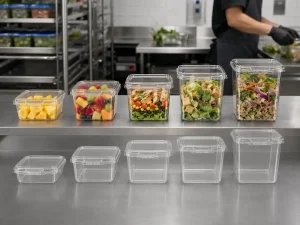
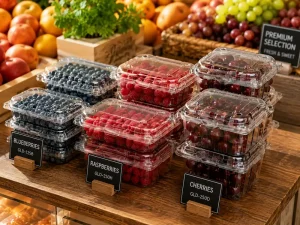
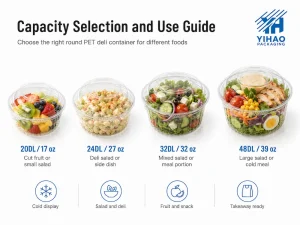
For chilled ready meals, buyers can also combine reheatable PP packaging with nearby cold display packaging categories. For example, a store may use PP boxes for reheatable meals, clear PET bowls for salads, and clear snack containers for fruit-and-nut packs. In this case, deli and salad containers support the cold side of the prepared food range, while PP microwave boxes support the reheatable side.
Some chilled prepared food programs also include square clear containers for salad, fruit, or cold deli items. When buyers need a separate cold display range alongside reheatable meals, square PET containers may fit the retail layout while PP boxes cover reheating needs.
Best Food Applications for Microwave Meal Boxes
The strongest applications for microwave meal boxes are foods that benefit from reheating convenience and structured portioning. These include rice bowls, pasta meals, noodles, cooked vegetables, curry meals, stir-fried dishes, breakfast meals, deli sides, protein meals, sauce-based meals, and refrigerated ready meals.
For cafes, the box may support breakfast sets, lunch bowls, hot deli takeaway, or chilled-to-heat meal options. For supermarkets, it may support private-label prepared meals, weekly meal prep packs, staff meal programs, or convenience food displays. For central kitchens, it may support standardized filling, batch labeling, and distribution to multiple retail points.
For foodservice distributors, the best products are not always the most specialized. A practical wholesale range should cover the most common menu structures first. That means a standard single-compartment meal box, a larger deli meal box, a divided meal prep box, and a cold/hot prepared food container. This range covers most buyer needs without creating unnecessary inventory complexity.
For programs that sell both cold dishes and reheatable meals, cold food and retail takeaway packaging helps bridge chilled display and practical carry-out use. Buyers should still confirm microwave instructions for each exact container and lid combination.
Manufacturer, Wholesale, and Supplier Questions Before Ordering
Before choosing a supplier, buyers should check whether the company can support both product selection and long-term supply. A one-time sample is not enough. Food packaging buyers need stable production, consistent material, clear carton packing, practical lead-time communication, and support for repeat orders.
Ask these questions before ordering:
- Which PP grades are used for the meal box base?
- Is the container designed for microwave reheating, hot food, chilled food, or all three under defined conditions?
- Is the lid PP, PET, or another material?
- Should the lid be removed or vented before heating?
- What food categories are best suited for this container?
- Can the supplier provide samples for real food testing?
- Can the supplier support wholesale carton packing and stable replenishment?
- Can the packaging support private label, sticker labeling, or custom branding needs?
- Can the supplier recommend a controlled range instead of pushing too many unrelated SKUs?
For wholesale buyers, the best manufacturer is not the one that simply says yes to every request. The best manufacturer explains the limits of the product, recommends the right material, separates cold display from microwave use, and helps buyers avoid wrong applications.
Comparison: Microwave Meal Boxes vs Other Food Packaging
| Packaging Type | Strength | Limitation | Best Buyer Use |
|---|---|---|---|
| PP microwave meal boxes | Reheatable use, hot food compatibility, meal prep structure | Lower clarity than PET in many formats | Ready meals, takeaway, chilled-to-heat foods |
| PET/rPET clear containers | Excellent product visibility and cold display appearance | Not automatically suitable for microwave reheating | Salads, fruit, bakery, chilled snacks |
| Paper food boxes | Natural look, branding surface, lightweight | May need coating and may not suit oily reheating use | Dry foods, bakery, some takeaway formats |
| Aluminum trays | Ovenable use in some applications | Not suitable for standard microwave use unless specifically designed | Oven meals, catering, prepared food trays |
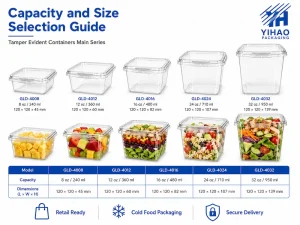
| Tamper-evident containers | Security signal and retail confidence | Material and microwave use must be checked separately | Grab-and-go foods, deli, secure retail packs |
If the product is a reheatable prepared meal, PP is usually the correct starting point. If the product is a cold salad, fruit cup, bakery dessert, or snack pack, clear PET or rPET packaging may be better for visibility. If the product needs safety signaling or unopened proof, tamper evident containers may be considered for related cold or ready-to-eat categories. The key is to avoid forcing one material into every food application.
Practical Testing Before Bulk Orders
Before placing a wholesale order, buyers should run a simple but realistic test plan. First, fill the container with the actual menu item at the intended portion weight. Second, close the lid as staff would during normal production. Third, stack the filled containers in the intended carton or storage arrangement. Fourth, store them under chilled conditions if the food will be sold cold. Fifth, transport or shake them gently to simulate handling. Sixth, reheat according to the planned consumer instruction.
During testing, check for base deformation, lid loosening, sauce leakage, condensation issues, label adhesion, food appearance after reheating, and ease of opening. Staff feedback matters because packaging that looks fine to a buyer may be frustrating on a production line.
For products with special ingredients, test more than once. Oily sauces, dense starches, cheese, sugar-heavy sauces, and high-moisture foods heat differently. A good supplier should encourage realistic testing instead of pushing immediate bulk purchase.
When Custom Branding Makes Sense
Custom branding makes sense when the meal program has stable volume, clear brand identity, and repeat purchase behavior. For smaller programs, printed labels may be more flexible than custom-printed packaging. For larger programs, custom packaging can improve shelf recognition and customer trust.
For microwave meal boxes, branding should never block essential use instructions. The package or label should still communicate reheating guidance, storage conditions, food information, and barcode details. A clean label system is often more valuable than decorative artwork that reduces readability.
For export and wholesale programs, branding should also consider language, market requirements, and retailer expectations. A packaging supplier should help buyers plan realistic branding options rather than adding unnecessary complexity too early.
Final Buying Advice for Microwave Meal Boxes
The best microwave meal boxes are chosen by use case, not by appearance alone. For reheatable meals, start with PP material and intended microwave use. For chilled display, check presentation, stacking, and label space. For takeaway, prioritize closure and handling. For meal prep, choose the compartment structure that matches real food portions. For wholesale, work with a supplier that provides samples, documentation, and practical guidance.
A smart buyer does not ask, “Which box is cheapest?” The better question is, “Which box protects the food, supports the operation, presents well on shelf, gives clear reheating instructions, and stays reliable at wholesale volume?” That question leads to better packaging decisions, fewer complaints, and stronger retail performance.
FAQ
1. What are microwave meal boxes made from?
Most disposable microwave meal boxes for prepared meals are made from PP because PP is widely used for reheatable food packaging. Buyers should still confirm the intended use, food-contact compliance, lid material, and heating instructions with the supplier before placing a wholesale order.
2. Are all meal prep containers microwave safe?
No. Meal prep containers are not automatically microwave safe. The material, lid design, food type, heating condition, and supplier instructions all matter. Buyers should choose containers specifically intended for microwave reheating and should confirm whether the lid can stay on, must be vented, or must be removed.
3. Are compartment meal prep containers better than single-compartment boxes?
Compartment meal prep containers are better when the food needs separation, such as rice with protein and vegetables, sauce with side dishes, or balanced meal portions. Single-compartment boxes are better for pasta, noodles, curry, fried rice, and foods that naturally mix together.
4. Can PP meal prep packaging be used for chilled food?
Yes, PP meal prep packaging is often used for chilled prepared foods that will be reheated later. Buyers should test the container under real chilled storage, transport, and reheating conditions to confirm stacking, closure, labeling, and food appearance.
5. What should wholesale buyers ask a microwave meal box supplier?
Wholesale buyers should ask about PP material, food-contact documentation, lid compatibility, microwave instructions, sample availability, carton packing, lead time, custom labeling, and suitable food applications. A reliable supplier should explain both the strengths and limits of each container.
References
- U.S. Food and Drug Administration, Packaging & Food Contact Substances.
- U.S. Food and Drug Administration, Understanding How FDA Regulates Substances that Come into Contact with Food.
- U.S. Food and Drug Administration, Microwave Ovens Safety Guidance.
- USDA Food Safety and Inspection Service, Cooking Safely in the Microwave Oven.
- European Union, Commission Regulation (EU) No 10/2011 on Plastic Materials and Articles Intended to Come into Contact with Food.
- Electronic Code of Federal Regulations, 21 CFR Part 177, Indirect Food Additives: Polymers.
- Codex Alimentarius Commission, General Principles of Food Hygiene.
- European Commission, Food Contact Materials Guidance for Plastic Materials and Articles.
Deep Dive Insights
How should buyers define “microwave safe” in real procurement?
For B2B food packaging, “microwave safe” should not be treated as a simple marketing phrase. It should mean that the container material, lid system, food type, heating condition, and user instruction are aligned. A PP base may support reheating, but the lid may still require removal or venting. Buyers should define the full intended use before approving packaging.
Why does PP matter more than visual clarity for reheatable meals?
Clear PET and rPET containers create stronger cold display visibility, but reheatable meals require heat tolerance, food-contact suitability, and structural stability under realistic use. For rice bowls, pasta, noodles, cooked vegetables, and sauced meals, PP usually gives buyers a more practical starting point than cold-display plastics.
What is the most practical option for retail and takeaway programs?
The most practical option is usually a controlled PP range: one standard single-compartment box, one larger meal box, one divided meal prep option, and one separate-lid prepared food container. This range covers most retail, takeaway, and chilled-to-heat applications without making inventory too complex.
What should buyers consider before scaling to wholesale orders?
Before scaling, buyers should test real food, confirm lid instructions, check stacking under filled conditions, review carton packing, and verify supplier repeatability. The goal is not only to pass a sample test, but to keep the same performance across production, storage, delivery, display, and customer reheating.
Why does packaging choice affect customer trust?
Prepared meals are purchased with an expectation of convenience. If the box leaks, deforms, opens during transport, hides the food poorly, or gives unclear reheating instructions, the customer loses confidence in both the meal and the brand. Strong microwave meal boxes protect product quality and strengthen the buyer’s retail reputation.
Final Note / Practical Takeaway
© YIHAO Packaging. All rights reserved. All articles, product images, packaging designs, technical specifications, and website materials are protected by copyright. Unauthorized copying, reproduction, redistribution, modification, or commercial use is strictly prohibited without prior written permission.