Choosing hot food containers is not only about finding a box that holds warm meals. For restaurants, supermarkets, deli counters, convenience stores, catering teams, meal prep brands, and foodservice distributors, the real risk is not choosing the wrong shape. The real risk is choosing packaging that fails during hot filling, takeaway handling, chilled storage, microwave reheating, or retail display.
That is why food packaging buyers should evaluate microwave safe takeout containers by use condition, not only by appearance. A container for hot rice meals has different requirements from a clear container for chilled salads. A reheatable ready meal needs different performance from a bakery display tray. A restaurant takeaway box needs stronger closure and handling than a cold snack container.
YIHAO develops practical food packaging solutions for prepared meals, takeaway foods, chilled foods, deli counters, fresh food, bakery display, and foodservice operations. For hot meals and microwaveable ready foods, the best packaging decision starts with material selection, lid matching, stacking strength, reheating guidance, and supplier capability.
Why Hot Food Containers Need a Higher Buying Standard
Hot meals create more packaging pressure than cold foods. Heat affects sidewall strength, lid fit, steam control, condensation, aroma retention, user handling, and shelf appearance. A container that looks acceptable when empty may perform poorly when filled with rice, pasta, curry, noodles, roasted vegetables, cooked proteins, sauced meals, or deli sides.
This is especially important for B2B buyers. A weak container does not only affect one order. It affects packing speed, shelf presentation, delivery complaints, customer reviews, food waste, and brand perception. In wholesale food packaging, small packaging failures become large operational problems when thousands of units are used every week.
The best hot food containers should support the real commercial workflow: filling, closing, stacking, labeling, chilled storage, transport, display, reheating, and final consumption. Buyers should not choose a container only because it is low-cost or visually similar to a competitor’s packaging. They should choose it because it performs in the exact food scenario.
Best Material Choice for Hot Food Containers
PP for Hot Meals and Microwave Reheating
Polypropylene, commonly known as PP, is widely used for restaurant food containers, hot takeaway meals, reheatable prepared foods, deli meals, and meal prep packaging. Compared with many clear display plastics, PP is a more practical material direction when the food is hot, oily, sauced, or intended for microwave reheating.
For buyers searching for microwaveable takeaway boxes, PP packaging often provides the right balance between heat resistance, light weight, foodservice handling, and cost efficiency. It is commonly used for rice dishes, pasta meals, curry, noodles, cooked vegetables, deli mains, protein meals, and chilled ready meals that consumers reheat before eating.
A PP hot food container is suitable when the application requires hot meal packing, takeaway service, prepared meal storage, and practical lid closure. However, buyers should still confirm the intended use from the supplier. The material name alone is not enough. The container body, lid, structure, and usage instructions should all match the application.
PET for Chilled Display, Not Hot Reheating
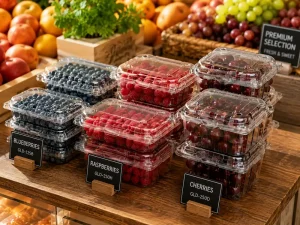
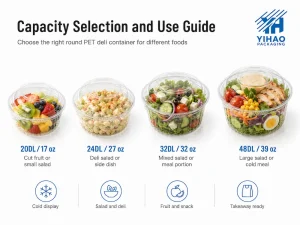
Clear PET packaging has strong value in chilled retail display. It offers excellent product visibility for salads, fruit, cold deli foods, bakery portions, desserts, and grab-and-go chilled items. PET helps customers see freshness, color, portion size, and product arrangement clearly.
However, clear visibility does not mean hot-use suitability. PET should not be treated as the default choice for hot meals or microwave reheating. For food packaging buyers, this distinction is important. A clear PET container may be ideal for a chilled salad or fruit portion, but a reheatable meal usually needs PP-based packaging.
For chilled foods that do not require reheating, a clear PET food container can support retail presentation and product visibility. For hot meals and chilled ready meals that consumers will heat later, PP packaging remains the stronger direction.
Application-Based Hot Food Container Selection Guide
| Application | Recommended Material | Suggested Lid Type | Key Buying Check |
|---|---|---|---|
| Restaurant takeaway meals | PP | Separate lid or hinged lid | Leak resistance, hot filling, and handling comfort |
| Chilled ready meals | PP | Separate lid | Microwave reheating and chilled storage performance |
| Deli counter meals | PP or PET depending on use | Separate lid | Display need, food temperature, and sauce control |
| Cold salad display | PET | Clear lid | Product visibility and chilled shelf presentation |
| Meal prep and ready-to-heat foods | PP | Separate lid | Stacking, portion control, and reheating instructions |
This table shows why one container cannot serve every food program. Hot food containers should be selected according to food temperature, moisture level, handling route, display requirement, and reheating expectation. For many takeaway and ready meal programs, PP is the more practical material. For cold display foods, PET provides better visual presentation.
Retail Display: What Buyers Should Check
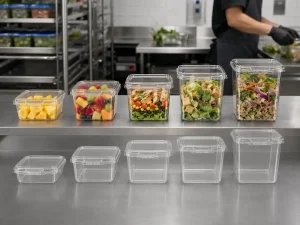
Retail display is not only about making food look attractive. For hot and chilled prepared meals, retail packaging must also support stacking, labeling, portion clarity, shelf stability, lid security, and customer confidence. If the container deforms, fogs excessively, collapses under stacking weight, or hides the food poorly, the product looks less professional.
Shape and Portion Logic
Good takeout food containers should match common food formats. Rice bowls, pasta meals, roasted vegetables, deli mains, noodles, curries, and lunch sets all require different depth, base width, and lid clearance. A container that is too deep may make the portion look small. A container that is too shallow may increase leakage or crush the food surface.
For retail-ready meals, the container should make the food look full and well-arranged without forcing the operator to overfill it. This directly affects margin control and customer perception. A smart container shape can improve visual value while keeping portion cost stable.
Lid Fit and Label Area
Lid fit is one of the most important details for hot food containers. A weak lid affects delivery, shelf confidence, and customer trust. For hot meals, the lid also needs to handle steam and pressure changes better than cold-use packaging.
Labels should not hide the full food presentation when visibility matters. For opaque or semi-opaque PP containers, the label should clearly communicate product name, heating instructions, date marking, allergens, storage guidance, and brand identity. For chilled foods, the label should support scanning and retail compliance without covering the main visual area.
Stackability for Commercial Handling
Stackability matters before the product reaches the customer. Operators stack empty containers, filled meals, transport trays, delivery bags, and retail display inventory. If the container has weak corners or an unstable lid structure, it slows down packing and creates handling risk.
Buyers should test stackability with filled containers, not only empty samples. A container may look strong when empty but deform after being filled with hot rice, sauce, pasta, or dense cooked food. This is a practical test that should happen before wholesale purchasing.
Takeaway Performance: What Restaurants and Foodservice Teams Need
Restaurants and foodservice teams need packaging that performs under speed. Staff must fill, close, stack, bag, and hand over meals quickly. Customers expect the food to arrive clean, warm, stable, and easy to open. In takeaway service, packaging problems are immediately visible because leakage, deformation, and lid failure affect the customer experience directly.
This is why restaurant buyers should not choose packaging only by unit price. A cheaper container may become more expensive if it causes leakage complaints, slow packing, double-bagging, food waste, or poor reviews. A large PP food container can help balance capacity, stacking strength, and practical takeaway performance for cooked meals and deli foods.
Leak Resistance for Sauced Foods
Many hot foods contain liquid, oil, or sauce. Curry, noodles, stews, pasta, cooked vegetables, deli sides, and meat dishes all challenge the lid and rim area. A container designed for dry snacks cannot automatically serve sauced meals.
Buyers should test sauce movement, tilted handling, delivery bag pressure, and lid reopening. If the packaging is intended for delivery platforms, catering, or takeaway counters, the test should include real transport movement rather than only static shelf display.
Handling Comfort
Hot food packaging should reduce uncomfortable handling for both staff and customers. The body should not become too soft after filling, and the rim should remain stable enough for secure closing. The lid should close cleanly without excessive pressure or repeated adjustment.
For busy operations, consistent closure is valuable. A container that closes easily and reliably helps reduce training time, packing mistakes, and customer complaints.
Separate Lid vs Hinged Lid
Separate-lid formats are common for hot meals because they support flexible packing, better stacking, and controlled lid matching. Hinged-lid formats are convenient for certain grab-and-go or deli uses, but they are not always the best choice for every hot meal.
A PP prepared meal container is practical when the buyer needs packing speed, portion control, lid security, and takeaway presentation. This format works well for food counters, prepared meal programs, supermarkets, and restaurant takeaway menus.
Chilled Ready Meals: Why Reheatable Packaging Still Matters
Many prepared foods are sold chilled but eaten hot. This includes ready meals, meal prep portions, deli meals, pasta, rice dishes, cooked vegetables, protein meals, and prepared food sets. In these applications, the container must support chilled display first and microwave reheating later.
This is where buyers must separate chilled display packaging from chilled ready meal packaging. A cold salad can use a clear PET container. A chilled ready meal that customers heat at home should use packaging designed for reheating. The correct material depends on the food journey.
A PP prepared food container is useful when one packaging format needs to support cold holding, hot takeaway, and ready-to-heat meal service. This flexibility helps supermarkets, delis, meal prep brands, and foodservice operators simplify their packaging range.
Microwave Safe Takeout Containers: What Buyers Should Confirm
The phrase microwave safe takeout containers should not be used loosely. For buyers, it should mean the container is intended for microwave reheating under defined conditions. These conditions include food type, heating time, temperature exposure, lid instruction, and whether the lid should be removed, vented, or replaced before heating.
Packaging teams should confirm the following details before placing wholesale orders:
- Is the container body intended for microwave reheating?
- Is the lid also microwave suitable, or should it be removed before heating?
- Is the container suitable for oily foods, watery foods, rice, pasta, sauces, or mixed meals?
- Is the container intended for hot filling, chilled storage, reheating, or all three?
- Does the supplier provide clear food-contact and usage guidance?
- Can samples be tested with real food before bulk ordering?
For ready meals and reheatable takeaway foods, a PP food container with separate lid helps buyers build packaging around real meal formats instead of forcing one generic box into every application.
PP Takeout Packaging vs Other Container Options
| Container Type | Best Use | Main Advantage | Buyer Caution |
|---|---|---|---|
| PP hot food containers | Hot meals, takeaway, reheatable prepared foods | Better heat-use suitability and practical foodservice handling | Confirm microwave instructions and lid material |
| PP deli containers | Deli meals, prepared foods, mixed-use takeaway | Good portion control, rigidity, and handling balance | Test sauce leakage and stacking under filled weight |
| Clear PET containers | Chilled salads, fruit, bakery, cold deli display | Excellent visibility and retail shelf appeal | Do not use as the default hot-fill or microwave solution |
| Paper food boxes | Dry or low-moisture takeaway foods | Natural look and strong branding surface | Moisture and grease resistance vary by structure |
| Foam containers | Low-cost hot takeaway in some markets | Light weight and insulation | Regulatory limits and brand perception concerns in many regions |
This comparison shows why PP takeout packaging remains important for hot food, takeaway meals, and microwaveable ready foods. It does not replace PET chilled display packaging. Instead, it solves a different problem: heat, handling, reheating, and foodservice reliability.
How to Choose a Hot Food Containers Manufacturer for Wholesale Orders
For B2B buyers, choosing the right manufacturer is as important as choosing the right container. A reliable food packaging manufacturer should understand material behavior, lid matching, tooling consistency, food-contact requirements, sample testing, export packing, and wholesale supply stability.
When buyers source hot food containers for restaurants, supermarkets, delis, catering teams, or meal prep brands, they should avoid suppliers who only quote a price without asking about the food type, filling condition, reheating requirement, and packing workflow. A professional supplier should help match the container to the application.
Production Consistency
Wholesale orders require stable quality across batches. Container weight, rim structure, lid fit, sidewall strength, and stacking performance should remain consistent. In hot food applications, small dimensional changes may affect lid closure, leakage, and packing speed.
Sample Testing Support
Before bulk orders, buyers should request samples and test them with real food. Testing should include hot filling, sauce contact, stacking, chilled storage, transport, and microwave reheating if relevant. A good supplier should support this process instead of pushing immediate bulk purchasing.
Material and Lid Matching
Container body and lid should be evaluated together. A strong PP body with a weak or incompatible lid still creates packaging failure. The best manufacturer will consider the full packaging system, not just the base container.
Wholesale Supply Stability
For foodservice and retail programs, supply continuity matters. Buyers should review production capacity, carton packing, lead time, export handling, and communication efficiency. A packaging delay can affect a full food program, especially for restaurants, supermarkets, and prepared meal brands.
Custom Packaging Capability
Many buyers need private label support, custom label areas, carton marks, product range planning, or packaging structure recommendations. A strong wholesale supplier should support brand and operational needs without overcomplicating the purchasing process.
Wholesale Buyer Checklist for Hot Food Containers
Before selecting a wholesale supplier, buyers should test packaging in commercial conditions. A specification sheet is helpful, but real food testing is more important. Packaging must perform with the actual menu, actual filling temperature, actual handling process, and actual customer use.
| Checklist Item | What to Check | Why It Matters |
|---|---|---|
| Food type | Rice, pasta, sauce, deli meals, vegetables, proteins | Different foods create different heat, oil, and moisture pressure |
| Heat condition | Hot fill, warm takeaway, chilled storage, reheating | Material and lid must match actual use |
| Lid performance | Closure, steam behavior, leakage, reopening | The lid controls transport confidence and customer experience |
| Stacking | Filled container stacking and carton packing | Weak stacking creates deformation and handling risk |
| Supplier support | Samples, documentation, production consistency, communication | Wholesale programs need stable supply and reliable technical support |
A reliable manufacturer should help buyers verify these details before bulk orders. This is especially important for foodservice teams that need stable packaging performance across multiple stores, menus, or retail channels.
Common Mistakes When Buying Hot Food Containers
Using Clear Display Packaging for Hot Meals
Clear packaging is attractive, but visibility does not equal heat-use performance. Buyers should avoid using chilled display containers for hot meals unless the supplier clearly confirms that application. This mistake often happens when teams prioritize shelf appearance before analyzing the full food journey.
Ignoring the Lid
The body may be suitable for reheating while the lid is not. The lid may need to be removed or vented before microwave use. If the consumer instruction is unclear, the package creates confusion and risk. A good hot food packaging program treats the lid as part of the full system.
Choosing by Price Only
Low unit price is not the same as low total cost. If a container leaks, collapses, slows packing, or causes complaints, it becomes expensive. Wholesale buyers should compare price together with packing efficiency, customer experience, brand value, and failure risk.
Skipping Real Food Testing
Empty sample testing is not enough. Buyers should test the actual food: rice, sauce, oil, hot protein, pasta, deli sides, or chilled ready meals. Real food testing shows whether the packaging can handle heat, weight, movement, and reheating.
Best Applications for Hot Food Containers
Restaurant Takeaway Meals
Restaurants need fast packing, strong closure, and customer-friendly handling. PP hot food containers are suitable for rice meals, noodles, pasta, deli mains, sauced dishes, roasted vegetables, cooked proteins, and other hot takeaway foods.
Supermarket Prepared Meals
Supermarkets need consistent portioning, clean shelf presentation, and clear reheating instructions. Chilled ready meals that consumers reheat at home should use packaging designed for both chilled storage and microwave reheating.
Deli Counters and Food Bars
Deli counters often handle warm meals, chilled sides, salads, cooked foods, and prepared portions. Buyers should separate cold display foods from reheatable deli meals. This improves material selection, shelf appearance, and customer guidance.
Meal Prep and Ready Meal Brands
Meal prep brands need portion control, stacking strength, label space, and reheating convenience. PP containers with separate lids are practical when the product moves from chilled storage to microwave reheating.
Catering and Foodservice Distribution
Catering teams need packaging that supports transport, stacking, and service efficiency. For larger portions, rigidity and lid stability become more important than visual clarity alone.
How to Build a Practical Hot Food Packaging Range
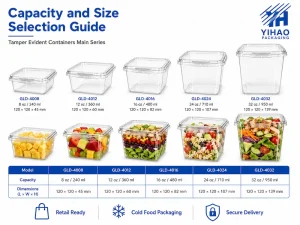
A strong foodservice packaging range usually includes more than one container type. It may include PP containers for hot meals, PP deli containers for prepared foods, PET containers for chilled display, and tamper-evident formats for selected grab-and-go programs.
For chilled foods and fresh prepared items, deli and salad containers support retail display and portion organization. For reheatable ready meals, PP-based microwave-safe options are more suitable. If food security and visible closure are important, tamper evident containers can be added as an optional packaging category for selected applications.
The strongest packaging strategy is not to force one container into every food condition. Buyers should segment packaging by temperature, food type, display need, and reheating requirement. This creates a cleaner product range and reduces failure risk.
Final Note / Practical Takeaway
FAQ: Hot Food Containers
1. What material is best for hot food containers?
PP is commonly used for hot food containers because it offers practical heat-use performance for takeaway meals, prepared foods, and microwave reheating applications. Buyers should still confirm the intended use, lid instruction, and food-contact guidance from the supplier.
2. Can hot food containers go in the microwave?
Some hot food containers can go in the microwave, but not all of them. Buyers should confirm whether the container body and lid are intended for microwave reheating and whether the lid should be removed or vented before heating.
3. Are PP food containers safe for hot food?
PP food containers are widely used for hot food and reheatable meals when they are designed for that application. Buyers should request clear usage guidance and test the container with actual food before wholesale orders.
4. Are clear PET containers suitable for hot takeaway meals?
Clear PET containers are better suited for chilled display foods such as salads, fruit, cold deli items, and bakery portions. They should not be used as the default choice for hot takeaway meals or microwave reheating unless the supplier specifically confirms that use.
5. What should wholesale buyers check before ordering hot food containers?
Wholesale buyers should check material, lid fit, hot filling performance, leakage resistance, stacking strength, microwave instructions, sample testing support, food-contact documentation, and supplier production stability.
References
- U.S. Food and Drug Administration, Packaging & Food Contact Substances.
- Electronic Code of Federal Regulations, 21 CFR 174.5, General Provisions Applicable to Indirect Food Additives.
- Electronic Code of Federal Regulations, 21 CFR 177.1520, Olefin Polymers.
- U.S. Food and Drug Administration, Food Code 2022.
- USDA Food Safety and Inspection Service, Food Safety Guidance on Temperature Control.
- European Commission, Commission Regulation EU No 10/2011 on Plastic Materials and Articles Intended to Come into Contact with Food.
- European Commission, Regulation EC No 1935/2004 on Materials and Articles Intended to Come into Contact with Food.
- U.S. Food and Drug Administration, Understanding How FDA Regulates Substances that Come into Contact with Food.
Deep-Dive Insights
How should buyers evaluate hot food containers?
Buyers should evaluate hot food containers by the full use journey: hot filling, lid closure, stacking, transport, chilled storage, retail display, microwave reheating, and customer handling. The right container is the one that performs through the entire process, not only the one that looks suitable when empty.
Why does PP packaging matter for takeaway and ready meals?
PP packaging is a practical choice for many hot takeaway meals and chilled ready meals because it supports heat-use applications better than many clear display plastics. It is especially useful when the food contains sauce, oil, moisture, or requires reheating before consumption.
What is the difference between hot food packaging and chilled display packaging?
Hot food packaging focuses on heat, handling, lid fit, and reheating. Chilled display packaging focuses on product visibility, shelf presentation, and freshness communication. PET is strong for chilled display, while PP is more suitable for hot and reheatable meal applications.
What should wholesale buyers ask a supplier?
Wholesale buyers should ask about material, intended use, lid compatibility, sample testing, stacking strength, food-contact documentation, production consistency, export packing, and whether the supplier can support long-term packaging programs instead of only one-time orders.
What is the practical takeaway for foodservice brands?
Foodservice brands should build a packaging range around real menu needs. Use PP containers for hot meals and reheatable ready foods, PET containers for chilled visual display, and selected tamper-evident options where visible closure and retail security matter.
© YIHAO Packaging. All rights reserved. All articles, product images, packaging designs, technical specifications, and website materials are protected by copyright. Unauthorized copying, reproduction, redistribution, modification, or commercial use is strictly prohibited without prior written permission.