Food packaging buyers rarely choose containers based on material alone. A bakery, supermarket, cafe, distributor, or food factory usually compares packaging by product visibility, lid security, portion size, display effect, packing speed, cold-chain suitability, storage efficiency, and total landed cost. That is why bakery deli containers have become a practical middle ground between bakery boxes, paper trays, foil pans, flexible bags, and heavier rigid food containers.
For buyers managing several product lines, one packaging format often needs to serve more than one use. A bakery counter may sell brownies, mini pastries, cookies, and cake bites. A supermarket chilled section may sell fruit portions, nuts, cheese cubes, dessert samplers, and ready-to-eat snacks. A cafe may need takeaway packs that look clean beside drinks, sandwiches, and chilled desserts. In these situations, clear deli containers offer a strong balance of product presentation, handling convenience, and category flexibility.
As a food packaging manufacturer and solution provider, YIHAO focuses on clear PET and rPET packaging formats for fresh food, bakery, deli, salad, fruit, snacks, and chilled takeaway programs. This guide explains how buyers should compare bakery deli containers against alternative packaging and when PET deli packaging becomes the smarter choice.
What Are Bakery Deli Containers?
Bakery deli containers are clear or semi-clear food containers designed for bakery items, deli snacks, fruit portions, nuts, chilled desserts, prepared food, and retail grab-and-go packs. In many buying programs, they overlap with PET hinged containers, clear food containers, snack containers, and small chilled food packs.
The word “bakery” does not mean these containers are only for cakes or pastries. In real purchasing decisions, the category is broader. Buyers use them for cookies, brownie cubes, croissant bites, mini muffins, fruit-and-nut portions, chilled bakery assortments, deli sides, cut fruit, and snack combinations. This multi-use value is what separates them from single-purpose bakery boxes or dedicated cake domes.
Most clear PET deli containers are valued for four reasons:
- Product visibility: Customers see the color, texture, freshness, and portion size before purchase.
- Lightweight structure: PET helps reduce unnecessary packaging weight while keeping a firm retail shape.
- Fast packing: Hinged and matching-lid formats support faster packing lines and fewer lid-matching errors.
- Cold display compatibility: PET is widely used for chilled bakery, fruit, salad, and ready-to-eat food displays.
Why Buyers Compare Bakery Deli Containers with Alternative Packaging
Alternative packaging is not automatically worse. Paper boxes, foil trays, plastic bags, PP containers, molded fiber, and premium paperboard packs all have roles. The problem appears when buyers choose a material because it looks familiar rather than because it matches the food, display method, sales channel, and operational workflow.
For example, a kraft paper box may look natural and warm for cookies, but it hides the product unless it includes a window. A plastic bag may be economical for dry bakery items, but it does not protect shape well. A foil tray works for reheating and baked meals, but it fails when visual merchandising matters. A heavy PP container may fit hot-fill or microwave use, but it is not always the best choice for clear chilled display. By contrast, bakery deli containers are strongest when buyers need clear presentation, chilled shelf display, moderate protection, and flexible use across bakery, fruit, nuts, and deli snacks.
Bakery Deli Containers vs Paper Bakery Boxes
Paper bakery boxes are a familiar choice for cakes, pastries, cookies, and takeaway desserts. They offer a traditional bakery appearance and are easy to print. For premium gifting, branded pastry boxes still have a strong place. However, they create a visibility challenge in retail self-service environments.
When customers buy from a chilled cabinet, supermarket shelf, convenience store, or cafe display, they often make decisions quickly. A fully enclosed paper box forces the label or product photo to do the selling. A clear PET deli container lets the food itself do the selling. For colorful macarons, fruit-topped pastries, brownie bites, mixed nuts, and fruit snack packs, visibility directly supports product trust.
Paper boxes also require careful handling when moisture, condensation, or oily bakery surfaces are involved. Chilled desserts, fruit portions, and cream-filled bakery items may soften or stain paper packaging if the structure is not properly coated or lined. In these cases, PET deli packaging offers a cleaner visible barrier for cold display. Buyers should still evaluate local recycling rules, food contact suitability, and material claims, but for display-driven chilled food, clear PET often delivers stronger shelf performance.
When paper boxes make sense
- Premium bakery gifting where brand printing matters more than full product visibility.
- Dry cookies, boxed pastries, and short-distance takeaway.
- Large cakes or celebration items where a rigid base and printed outer box add perceived value.
When bakery deli containers make more sense
- Retail bakery assortments that need full product visibility.
- Chilled desserts, fruit portions, nuts, and mixed snack packs.
- Grab-and-go displays where customers choose by freshness, color, and portion size.
Bakery Deli Containers vs Foil Trays
Foil trays are commonly used for baked meals, reheatable dishes, pies, casseroles, and hot food. They are strong for heat tolerance and oven-related applications, depending on the exact structure and intended use. But foil is not ideal for every bakery or deli display.
The first limitation is visibility. A foil tray usually needs a clear lid or overwrap if the buyer wants shelf presentation. Even then, the sidewall is opaque, so the product looks less open and less fresh. The second issue is category fit. Foil communicates “hot meal” or “baked dish” more strongly than “fresh snack,” “bakery bite,” or “chilled fruit portion.” For cookies, muffin pieces, brownie bites, fresh-cut fruit, mixed nuts, and chilled dessert cubes, foil may feel heavier and less precise than necessary.
Bakery deli containers perform better when the food needs to look light, fresh, clean, and ready to eat. They support bakery and deli crossover programs where one packaging family handles sweet items, fruit portions, and snack packs without changing the display language. For buyers building a unified chilled food program, this consistency matters.
Bakery Deli Containers vs Plastic Bags
Plastic bags are low-cost, lightweight, and useful for certain bakery items such as bread rolls, cookies, and dry snacks. They are easy to store and flexible during packing. But they provide limited structure, which creates problems when food shape, frosting, toppings, or portion separation matters.
A bag can compress soft bakery items during transport. It can make premium snacks look less organized. It also offers weaker shelf blocking because the pack does not stand or stack as cleanly as a rigid container. For buyers selling in supermarkets, cafes, airport grab-and-go counters, or convenience stores, this matters because packaging must hold the product in a stable, attractive shape.
For delicate items such as decorated bakery bites, fruit-and-nut mixes, chilled pastry portions, or small deli snacks, fruit and nut containers provide a more organized retail presentation. The container protects product shape, creates a defined portion, supports labeling, and improves stacking compared with loose bags.
Bakery Deli Containers vs PP Food Containers
PP food containers are widely used for prepared meals, hot foods, takeout, and microwave-related applications when the specific product is designed for that use. They are practical for meal prep and many foodservice programs. However, buyers should not automatically use PP for every chilled bakery, fruit, or snack application.
For chilled display, PET often provides stronger clarity than many common PP formats. That clarity helps bakery and deli products look sharper under retail lighting. When customers are choosing between a paper box, a cloudy container, and a clear PET pack, visual confidence becomes a real sales factor.
PP may be the better choice when microwave compatibility, heat tolerance, or hot filling is central to the product. PET deli packaging is usually the stronger choice when the product is chilled, visual appeal is important, and the buyer needs a clean transparent container for bakery, fruit, nuts, salad sides, or ready-to-eat snacks. A smart buyer does not ask, “Which material is best?” The better question is, “Which material matches the food temperature, display channel, handling process, and customer expectation?”
Bakery Deli Containers vs Molded Fiber Packaging
Molded fiber packaging is often selected for sustainability messaging and a natural material appearance. It works well for certain dry foods, takeaway meals, and brands that want a paper-based look. But for bakery and deli buyers, molded fiber has three practical limitations: visibility, moisture response, and detail presentation.
Many bakery and snack products sell because of color and texture. Chocolate brownies, fruit-topped desserts, assorted nuts, fresh-cut fruit, and chilled bakery bites need to be seen clearly. Molded fiber hides the food unless paired with a window or clear lid. That hybrid structure may increase sourcing complexity and require additional material compatibility checks.
For products with moisture, oils, creams, or chilled condensation, molded fiber also needs careful evaluation. Buyers should confirm whether coatings, liners, or barriers are used, whether they match food contact requirements, and whether the package still supports the sustainability claim being communicated. If the goal is maximum product visibility in a chilled retail case, clear deli containers usually provide a more direct solution.
Decision Table: Which Packaging Format Fits Which Use?
| Packaging Option | Best-Fit Uses | Main Strength | Main Limitation | Buyer Recommendation |
|---|---|---|---|---|
| Bakery deli containers | Bakery bites, fruit portions, nuts, chilled snacks, deli sides | Clear display, structure, stacking, multi-use flexibility | Not intended for high-heat use unless specified | Best for chilled retail and grab-and-go programs |
| Paper bakery boxes | Cookies, pastries, gift bakery, dry takeaway | Printable surface and classic bakery look | Limited visibility and moisture sensitivity | Best for branded dry bakery and gifting |
| Foil trays | Hot dishes, pies, baked meals, reheatable food | Heat-related performance for suitable applications | Poor side visibility and heavier meal image | Best for hot or baked meal programs |
| Plastic bags | Bread rolls, dry cookies, basic bakery items | Low weight and simple storage | Weak shape protection and shelf blocking | Best for low-risk dry bakery items |
| PP containers | Meal prep, hot food, microwave-oriented packs | Functional for heat-related foodservice needs | Often less clear than PET display packaging | Best when heat or microwave use is required |
| Molded fiber packaging | Dry takeaway, natural-look food packaging | Paper-based appearance and sustainability messaging | Limited visibility and coating questions | Best when natural appearance matters more than clear display |
How to Choose Bakery Deli Containers by Product Type
For bakery bites and dessert portions
Bakery bites need protection from crushing, smearing, and loose movement. Brownie cubes, mini muffins, pastry bites, cookie assortments, and chilled dessert pieces should sit neatly in the container. A rigid clear structure gives the buyer better portion control and a cleaner shelf image. For buyers handling broader bakery categories, bakery containers and deli containers should be planned together, not separately.
If the item is tall, frosted, or decorated, a bakery clamshell may be more suitable than a shallow deli container. If the item is flat, bite-sized, or sold as a snack portion, a clear deli container is often more efficient.
For fruit deli containers
Fresh-cut fruit requires clarity, portion visibility, and chilled-case presentation. Buyers should check lid fit, anti-fog needs, condensation behavior, stacking strength, and whether the container supports the target shelf display. For fruit portions, fresh-cut fruit containers are usually a better reference category than dry bakery packaging.
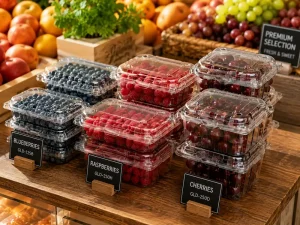
Fruit deli containers should make the product look fresh and organized. Apple slices, grapes, melon cubes, mango, berries, and fruit-and-nut mixes need packaging that does not hide color or create a dull shelf effect. PET deli packaging supports this visual requirement better than paper boxes or opaque containers.
For nut containers and snack packs
Nuts require portion clarity, secure closure, and clean labeling space. A bag may work for large dry retail packs, but for fresh snack counters, grab-and-go sets, and fruit-plus-nut combinations, rigid clear containers create a stronger retail format. multi-compartment snack containers are especially useful when buyers need separation between fruits, nuts, toppings, or bakery pieces.
For mixed packs, compartment design matters. Without separation, moisture from fruit may affect nuts or bakery pieces. Divided PET containers help buyers build more controlled snack lines and improve the eating experience.
For chilled food containers
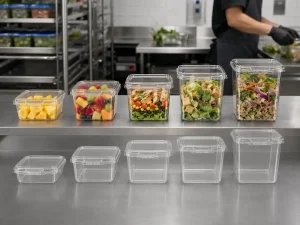
Chilled deli items need stable closure, stackability, and clear shelf presentation. Salads, cold pasta, deli sides, prepared fruit, bakery snacks, and chilled desserts all benefit from packaging that looks clean under cold-case lighting. chilled food containers should be selected by food volume, lid height, stacking pressure, display angle, and label placement.
When buyers order for chilled programs, they should test samples under real store conditions. A container may look good on a desk but perform differently in a refrigerator, stacked carton, delivery route, or retail shelf. Practical sample testing prevents wrong-size orders and reduces packaging waste.
Material Logic: Why PET Deli Packaging Is Often Chosen
PET is widely used in clear food packaging because it offers strong transparency, a clean retail appearance, and lightweight rigidity. For bakery, fruit, nuts, and chilled food, PET helps buyers show freshness while still protecting product shape. rPET options may also support recycled-content goals when the material, recycling process, and local compliance requirements match the buyer’s market.
However, buyers should be serious about claims. Recycled content, food contact suitability, and recyclability depend on local rules, resin source, processing controls, label design, adhesives, inks, and the collection/recycling system available in the target market. A supplier should never rely on vague sustainability language. Buyers should ask for relevant documentation and confirm what claims are allowed in their selling region.
For PET packaging design, labels should be planned carefully. Oversized labels, incompatible adhesives, dark colors, metalized decoration, or full-body sleeves may reduce recyclability or sorting efficiency depending on the recycling stream. For clear retail packs, a smaller label area often supports both product visibility and better recycling design logic.
Operational Factors Buyers Should Compare Before Ordering
1. Packing speed
One-piece hinged containers reduce lid matching and speed up manual packing. Separate-lid systems may offer more lid height options but require better inventory control. For bakeries, cafes, and food factories, packing speed can affect labor cost more than buyers first expect.
2. Stackability
Stacking performance affects storage, chilled display, delivery, and carton loading. A container should protect the food without creating excessive headspace. Too much headspace increases carton volume and shipping cost; too little headspace can damage toppings or bakery surfaces.
3. Label placement
Labels should support branding, barcode scanning, nutrition information, and tamper communication without hiding too much of the food. For clear PET deli packaging, the product should remain visible from the top and front whenever possible.
4. Food moisture and texture
Dry cookies, oily pastries, wet fruit, chilled cream desserts, and mixed snack packs all behave differently. Buyers should test whether condensation, oils, crumbs, or syrup affect the final appearance. The right bakery deli containers should protect the product and keep the shelf image clean.
5. Supplier reliability
A packaging supplier should help buyers compare materials, sizes, closures, carton packing, labeling surfaces, and order planning. For larger programs, working with a manufacturer gives buyers better control over product consistency, sample review, and packaging customization than buying random stock containers from multiple traders.
Wholesale Buying Checklist for Bakery Deli Containers
Before placing a wholesale order, buyers should review the following points:
- Food type: bakery, fruit, nuts, chilled deli, snack mix, or dessert portion.
- Temperature condition: ambient, chilled display, cold delivery, or hot food use.
- Container shape: square, rectangular, round, hinged, separate-lid, or compartmented.
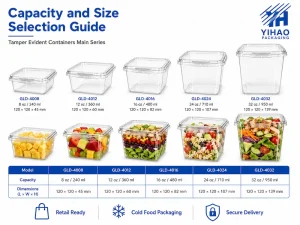
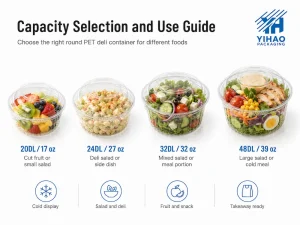
- Capacity logic: single-serve, family pack, sampler pack, or bulk display.
- Lid height: flat lid for compact food, dome lid for taller bakery or fruit items.
- Closure style: hinged closure, separate lid, tamper-evident seal, or label-sealed pack.
- Display needs: top visibility, front visibility, stacking shelf, or chilled cabinet.
- Branding area: label position, sticker size, barcode location, and printing plan.
- Compliance needs: food contact requirements, recycled-content claims, and market-specific rules.
- Supplier support: samples, size recommendation, OEM discussion, carton planning, and stable wholesale supply.
When Buyers Should Not Choose Bakery Deli Containers
Bakery deli containers are useful, but they are not universal. Buyers should choose another packaging format when the product requires oven heating, high-temperature filling, heavy sauce containment, long-term frozen storage, or a luxury gift-box experience. They should also avoid clear deli containers when the product must be hidden from light or when the brand intentionally wants a paper-first premium image.
The strongest buying decisions are not emotional. A good buyer compares product risk, display value, packaging cost, packing speed, storage space, labeling requirements, and the final customer experience. If the product sells through visual freshness, clear PET deli packaging is usually a strong candidate. If the product sells through printed branding, heat performance, or gift presentation, an alternative format may be better.
Recommended Selection Logic
For most bakery, fruit, nut, and chilled snack programs, buyers can use this simple logic:
- Choose bakery deli containers when visibility, stacking, freshness presentation, and multi-use flexibility matter.
- Choose paper boxes when gifting, brand printing, and dry bakery takeaway matter most.
- Choose foil trays when reheating or baked meal performance is central.
- Choose bags when the item is dry, low-risk, and not easily crushed.
- Choose PP containers when hot food, microwave use, or heat tolerance is the primary requirement.
- Choose molded fiber when natural appearance is more important than clear display.
For buyers building a wider packaging system, clear hinged deli containers, large clear deli containers, bakery clamshells, fruit containers, and compartment snack packs should be compared together. This prevents a fragmented packaging lineup and gives the brand a cleaner shelf identity.
Final Note / Practical Takeaway
FAQ
1. What are bakery deli containers used for?
Bakery deli containers are used for bakery bites, cookies, brownies, pastries, fruit portions, nuts, chilled snacks, deli sides, and grab-and-go food. They are especially useful when buyers need clear visibility, portion control, and retail-ready presentation.
2. Are bakery deli containers better than paper bakery boxes?
Bakery deli containers are better when product visibility, chilled display, and shelf appeal matter. Paper bakery boxes are better for dry bakery takeaway, gift packaging, and strong printed branding.
3. Are PET deli containers suitable for chilled food?
Clear PET deli containers are widely used for chilled bakery, fruit, salad, snack, and ready-to-eat food display. Buyers should confirm food contact requirements, lid fit, stacking strength, and cold-chain performance through sample testing.
4. When should buyers choose alternative packaging instead?
Buyers should choose alternatives when the product requires oven heating, microwave use, heavy sauce containment, premium gift-box presentation, or paper-based brand positioning. The packaging format should match the food, channel, and customer expectation.
5. How should wholesale buyers choose a bakery deli container supplier?
Wholesale buyers should compare material options, container size range, lid closure, food contact documentation, sample support, customization capability, carton packing, and long-term supply stability before choosing a bakery deli container supplier.
References
- U.S. Food and Drug Administration, Recycled Plastics in Food Packaging.
- U.S. Food and Drug Administration, Guidance for Industry: Use of Recycled Plastics in Food Packaging.
- European Commission, Commission Regulation (EU) 2022/1616 on recycled plastic materials and articles intended to come into contact with foods.
- Association of Plastic Recyclers, APR Design Guide for PET Rigid Packaging.
- NAPCOR, PET Design and Bale Specification Guidelines.
- USDA Food Safety and Inspection Service, Food Packaging Materials and Food Preservation Basics.
- Food Packaging and Shelf Life Journal, Packaging protection and preservation principles.
- Industry packaging buyer practice: chilled retail display, grab-and-go food packaging, and clear PET container selection.
Deep-Dive Insights
How buyers should think: Start with the product’s selling environment. If the food sells through visual freshness, clear PET deli packaging usually deserves first comparison. If the food sells through printed branding, paper boxes may be stronger. If the food sells as a hot meal, PP or foil may be more suitable.
Why structure matters: Bakery, fruit, nut, and chilled food items often lose value when they shift, crush, fog, or look messy. A rigid clear deli container protects the portion image and supports faster shelf decisions.
What to test before wholesale ordering: Test lid fit, stacking, label placement, chilled display appearance, condensation behavior, carton packing, and customer opening experience. A container that passes these checks is far safer for bulk purchasing.
Option worth prioritizing: For mixed bakery and snack programs, PET hinged containers and compartment snack containers create stronger product organization than bags or generic paper boxes.
Consideration for sustainability claims: Recycled content and recyclability claims should be verified by market, resin source, food contact suitability, label design, and local recycling acceptance. Strong suppliers help buyers communicate these claims accurately.
© YIHAO Packaging. All rights reserved. All articles, product images, packaging designs, technical specifications, and website materials are protected by copyright. Unauthorized copying, reproduction, redistribution, modification, or commercial use is strictly prohibited without prior written permission.