Why Tamper Evident Containers Matter for Modern Food Packaging
Food packaging buyers are no longer choosing containers only by size, clarity or price. For delivery, retail cold cases, deli counters, convenience stores and grab-and-go food programs, buyers also need packaging that helps show whether a container has been opened after packing. This is where tamper evident containers become important.
A tamper evident container is designed to provide visible evidence when the package has been opened or the closure has been broken. It does not mean the package is impossible to open, and it should not be described as absolute anti-theft or contamination-proof packaging. The professional value is different: it gives retailers, delivery teams and consumers a clear visual signal that supports trust during food handling, takeaway and display.
This matters because prepared food now moves through more touchpoints than before. A salad may be packed in a commissary kitchen, stored in a cold case, handled by store staff, purchased by a customer or delivered by a third-party driver. A fruit cup may move from production to refrigerated display. A deli meal may be packed for convenience store shelves. In each case, packaging should help protect presentation and support confidence.

As a food packaging manufacturer and solution provider, YIHAO recommends that buyers choose tamper evident packaging by application first, then compare size, structure and closure design. A useful tamper evident containers size guide should help buyers match the container to real food programs, not just select a capacity number from a catalog.
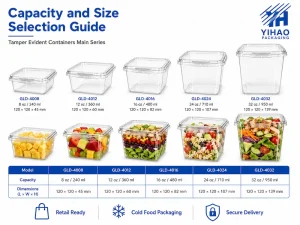
Quick Size and Application Comparison for Tamper Evident Food Containers
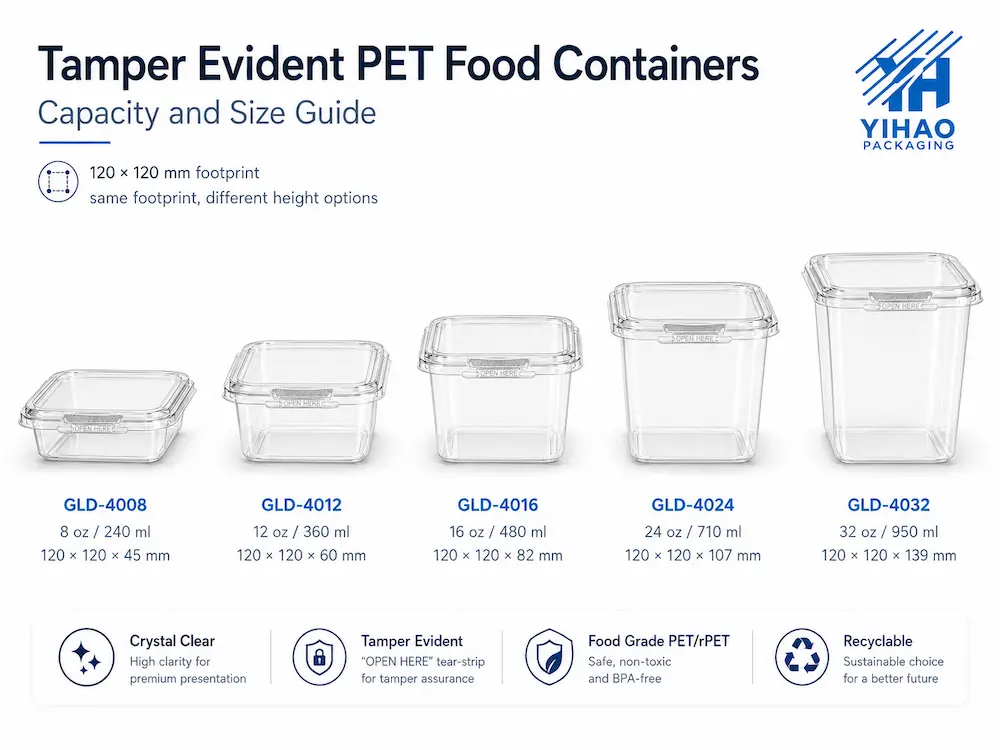
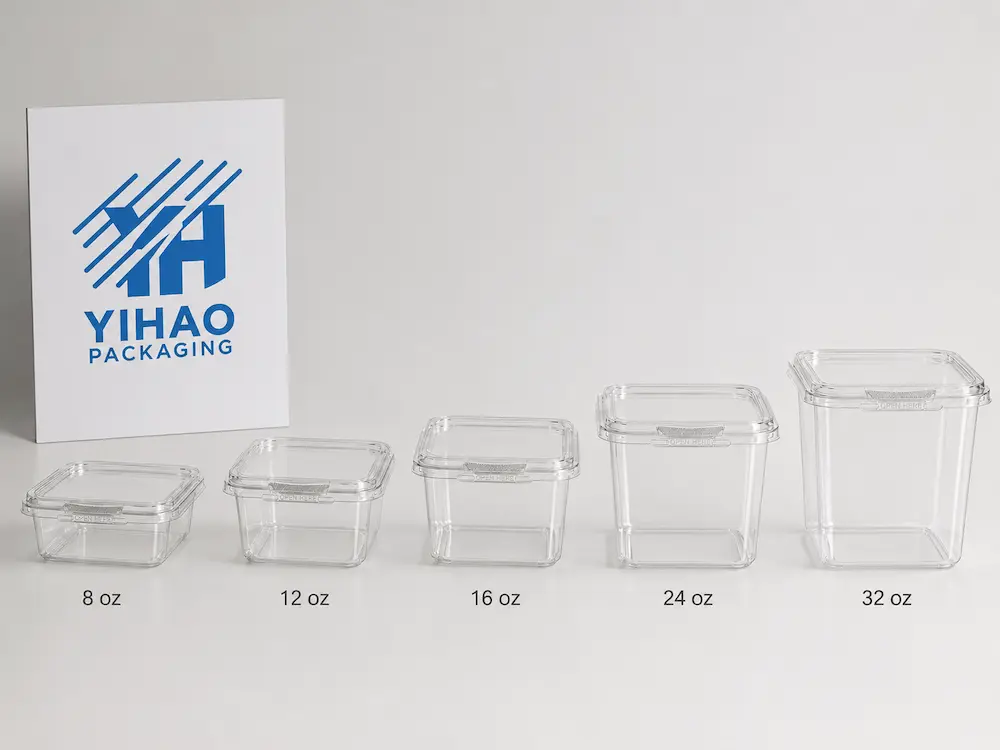
Tamper evident food containers are used across many portion sizes. Small containers may support fruit cups, toppings and snack packs. Medium containers may support deli sides, prepared foods and grab-and-go salads. Larger containers may support family portions, cold case meals and retail-ready prepared food programs.
The table below gives a practical size comparison based on common buyer use cases. Exact fit should always be confirmed with actual food samples, labels, lids, cold storage and delivery handling tests.
| Size Range | Common Capacity Reference | Typical Food Applications | Best Sales Channel | Buyer Watch Point |
|---|---|---|---|---|
| Small | About 8 oz to 12 oz | Fruit portions, toppings, snacks, small deli sides, desserts | Convenience stores, cafes, retail cold case, grab-and-go displays | Check lid clearance, label space and opening experience |
| Medium | About 16 oz to 20 oz | Deli salads, pasta salad, cut fruit, ready-to-eat sides, chilled meals | Supermarkets, delis, foodservice, delivery and prepared food programs | Check closure strength, base stability and food density |
| Large | About 24 oz to 34 oz | Meal salads, larger deli portions, cold case meals, premium fruit packs | Retail display, grab-and-go meals, meal prep and delivery packaging | Check stacking strength, tear strip access and shelf footprint |
| Multi-compartment | Application-based capacity | Meals with sides, protein, sauce, salad combinations and prepared foods | Meal prep, delivery, convenience store meals and ready-to-eat foods | Check compartment depth, sealing area and portion separation |
What Is a Tamper Evident Container?
A tamper evident container is a food package designed with a closure feature that changes visibly when the container is opened. This may include a tear strip, breakaway tab, locking band, hinged tab, perimeter lock or other opening indicator. The purpose is to help users identify whether the container has already been opened after packing.
For food packaging buyers, this feature is especially useful in delivery containers, retail food containers, cold case packaging and grab-and-go food containers. When customers pick up a salad, fruit cup, deli side or prepared meal, a clear opening indicator can support confidence that the food has remained sealed through normal handling.
It is important to use accurate language. Tamper evident packaging is not the same as tamper-proof packaging in an absolute sense. A determined person can damage most packaging. The practical benefit is visible evidence. If the tear strip is broken or the lock is damaged, the package shows that it has been opened or interfered with. This visible signal is valuable for retailers, delivery services and consumers.
Common Size Ranges and Use Cases
Choosing the right tamper evident container size depends on food type, portion size, sales channel and handling process. A small fruit cup and a family-size deli meal do not need the same structure. A delivery salad and a cold case dessert may have different closure requirements. Buyers should think about how the food will move from packing to purchase or delivery.
Small tamper evident containers for fruit, snacks and toppings
Small tamper evident containers are useful for fruit portions, yogurt toppings, snack packs, small desserts, deli sides and single-serve chilled foods. These containers support compact shelf display and convenient takeaway. They are often used in cafes, convenience stores, supermarket cold cases and grab-and-go sections.
For small packaging, buyers should focus on easy opening, clear visibility and label placement. The tamper evident feature should be visible enough for customers to understand, but not so difficult that the opening experience becomes frustrating. A small package also has limited label space, so the label should not cover too much of the clear lid or product window.
A product such as a 10oz 300ml anti-fog clear PET tamper evident container can be relevant for cold case and grab-and-go foods where visibility and a clear opening indicator are both important.
Medium tamper evident containers for deli sides and ready-to-eat foods
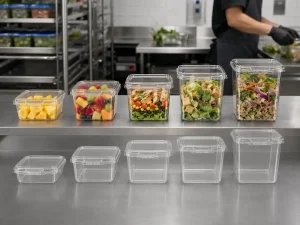
Medium tamper evident containers are often used for deli salads, pasta salad, cold noodles, fresh-cut fruit, ready-to-eat sides and chilled prepared foods. This range is practical for supermarket delis, prepared food counters, delivery programs and foodservice suppliers.
For medium containers, food density becomes important. Dense deli foods may create more weight than expected, so the base and sidewalls should remain stable. Leafy or layered foods may need more lid clearance. Buyers should test real food portions to confirm that the container closes easily and still presents the product well.
A 18oz 532ml PET clear container can be considered when buyers need a medium-size clear container for secure chilled food presentation and retail-ready applications.
Large tamper evident containers for meal salads and cold case meals
Larger tamper evident containers are suitable for meal salads, larger deli portions, premium fruit packs, cold case meals and family-style prepared foods. This size range gives more room for ingredient arrangement and stronger shelf impact, but it also requires better structural performance.
Large containers must resist deformation during stacking and handling. The closure should stay secure through packing, chilled storage, display and customer handling. The tamper evident feature should be easy to identify and practical to open. If the container is too flexible or the tear strip is difficult to use, customers may have a poor experience even if the package looks attractive.
A 34oz 1006ml clear PET tamper evident container can be useful for larger chilled food portions where buyers need a tear strip seal, clear product visibility and a more substantial retail presentation.
Peg display tamper evident containers for retail merchandising
Some grab-and-go food products are displayed on shelves, racks or peg display systems. In this case, packaging needs to support both product visibility and retail merchandising. A container should hang or sit correctly, show the food clearly and keep the tamper evident feature easy to inspect.
A 12 oz tamper evident clear PET container may be relevant when buyers need a smaller clear container for peg display and grab-and-go retail applications.
Delivery, Supermarket, Deli Counter and Convenience Store Scenarios
Tamper evident packaging performs differently depending on the sales channel. A delivery container, supermarket cold case container and deli counter container may all use tamper evident features, but their main priorities are not identical.
| Scenario | Packaging Priority | Recommended Container Logic | Buyer Test |
|---|---|---|---|
| Food delivery | Visible opening evidence and closure security | Choose containers with reliable locks, strong rims and easy inspection | Test filled containers in bags with movement and stacking |
| Supermarket cold case | Product visibility, shelf appeal and tamper evidence | Use clear PET or rPET structures with strong lid visibility and label balance | Test chilled display, condensation, labels and stacking |
| Deli counter | Fast packing, portion control and customer confidence | Choose practical sizes that staff can close consistently during service | Test packing speed, closing feel and customer opening experience |
| Convenience store | Grab-and-go merchandising and compact shelf efficiency | Use sizes that look full, stack well and show the opening indicator clearly | Test shelf fit, label placement and handling by customers |
| Meal prep and ready-to-eat food | Portion organization and secure transport | Consider rectangular or multi-compartment tamper evident structures | Test compartment separation, lid fit and delivery handling |
Tamper Evident Containers for Food Delivery
Food delivery packaging needs to deal with movement, stacking, handoff and customer inspection. A container may leave a kitchen in good condition, but it can still move inside a delivery bag. If the lid is weak or the closure is unclear, the customer may not feel confident when receiving the food.
For delivery containers, buyers should focus on closure consistency. The locking points should engage properly during packing. The tear strip or opening indicator should remain intact during normal delivery handling. The container should not open accidentally inside the bag. At the same time, customers should be able to understand how to open it without destroying the food presentation.
Delivery packaging should also be tested with real food. Sauced deli foods, salads with dressing, fresh fruit, noodles and prepared meals all create different pressure inside the container. A package that works for a dry snack may not work for a heavier or wetter food item.
Tamper Evident Containers for Retail Cold Case Display
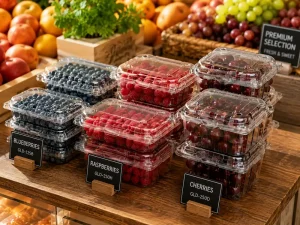
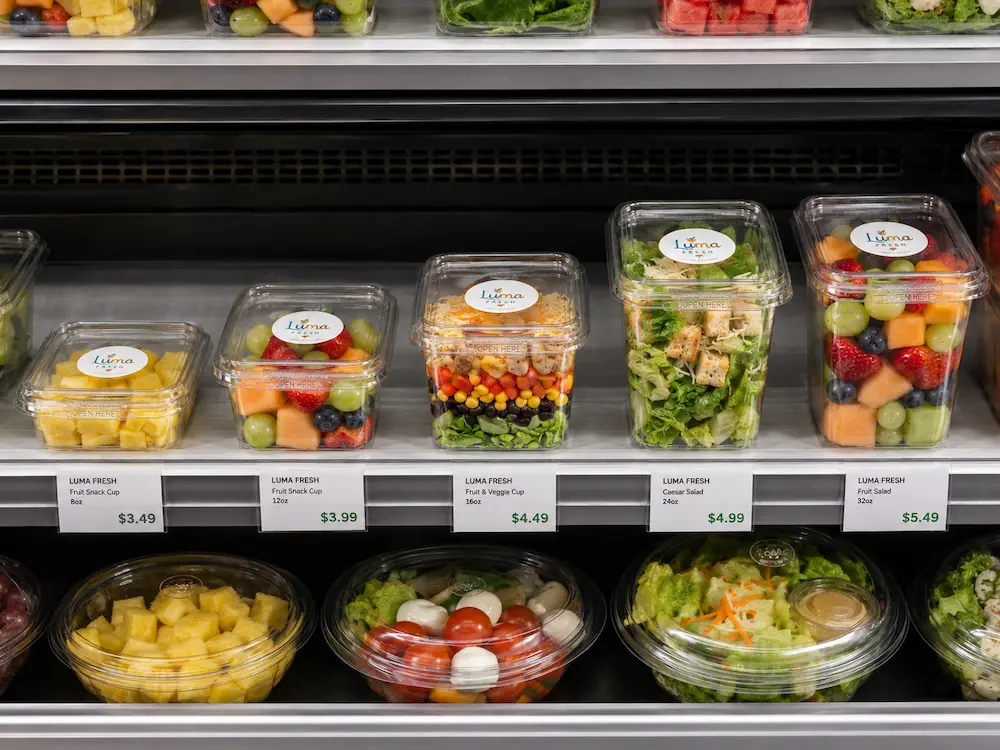
Retail cold case packaging has two jobs: protect the product and sell the product visually. Clear tamper evident containers can help customers see freshness, color, portion size and ingredient quality. This is especially valuable for fruit, salads, deli sides and chilled prepared foods.
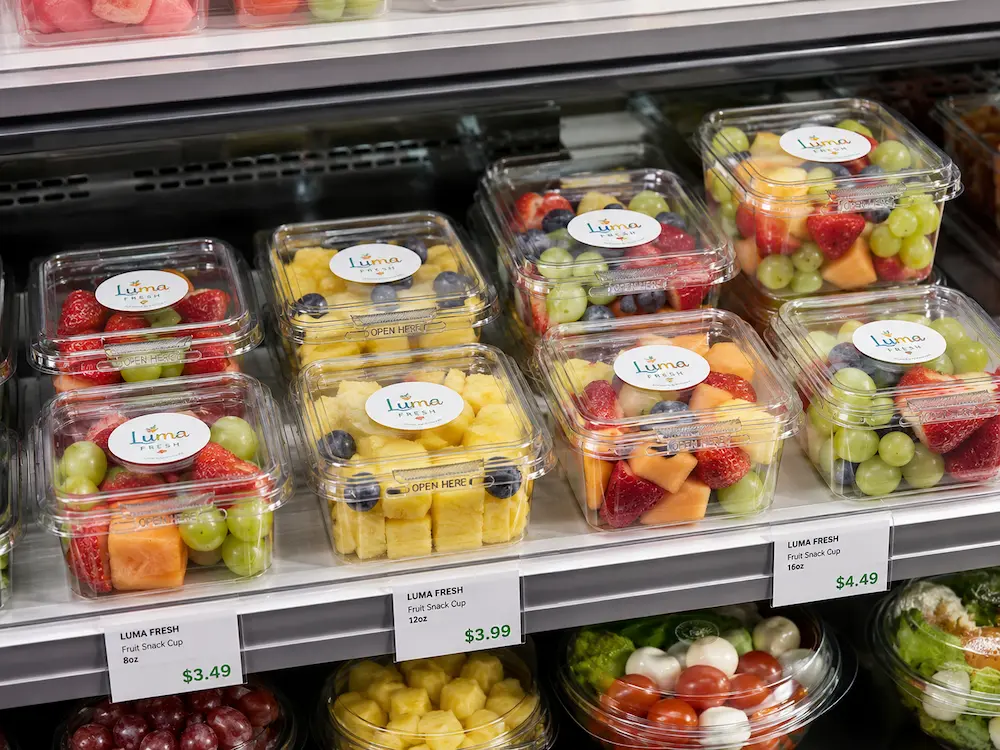
For cold case display, PET and rPET clarity matter. The package should not hide the food. Labels should provide branding and required product information without covering too much of the clear viewing area. The tamper evident feature should be visible enough for customers and store staff to inspect quickly.
Buyers should also test cold case performance. Chilled display can affect label adhesion, condensation visibility, stacking behavior and opening experience. If the packaging fogs heavily or the label peels in cold storage, the retail presentation may suffer. Anti-fog options may be relevant for selected applications where visibility in chilled display is critical.
Tamper Evident Containers for Deli and Ready-to-Eat Foods
Deli and ready-to-eat food programs often need packaging that supports fast packing, clear presentation and reliable customer handling. Products may include pasta salad, potato salad, coleslaw, cut fruit, chilled noodles, cold protein meals, snack packs and prepared side dishes.
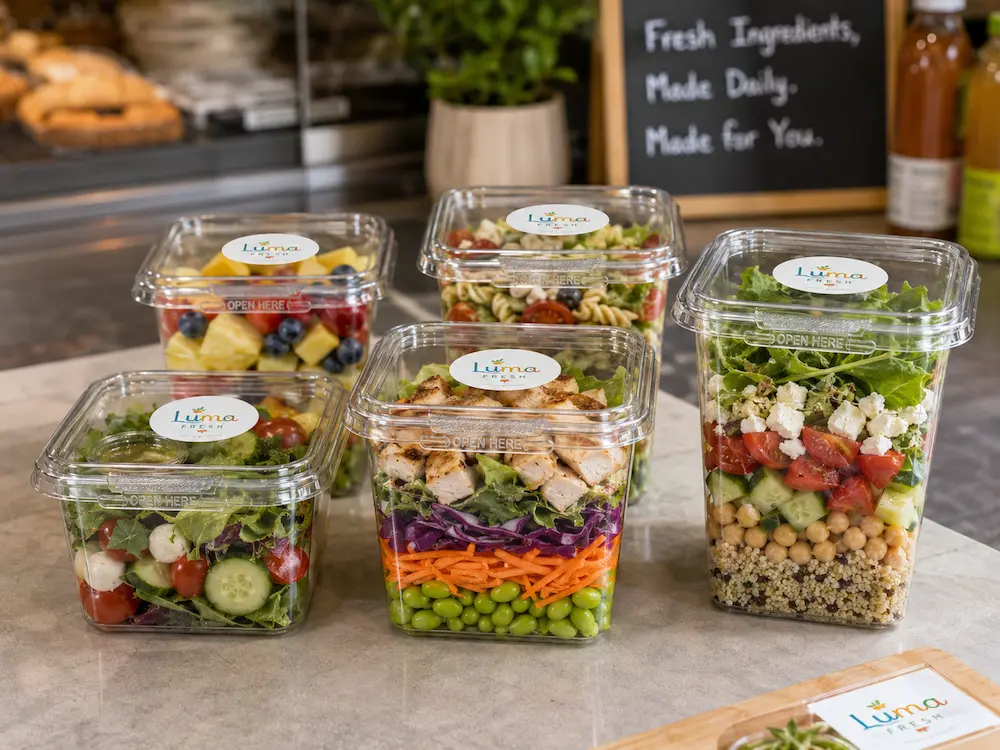
Deli and ready-to-eat packaging should be selected by product density and handling conditions. Dense deli foods can become heavy even in medium containers. Leafy salads may need more headspace. Multi-ingredient meals may need separation to prevent sauce or moisture from affecting other components.
Tamper evident features can support customer confidence in this category, especially when products are sold from open refrigerated displays or handled through delivery and takeaway channels. However, the container should still be easy for the customer to open cleanly. A package that is secure but frustrating can damage the eating experience.
Closure Design: Tear Strip, Lock, Hinge and Opening Experience
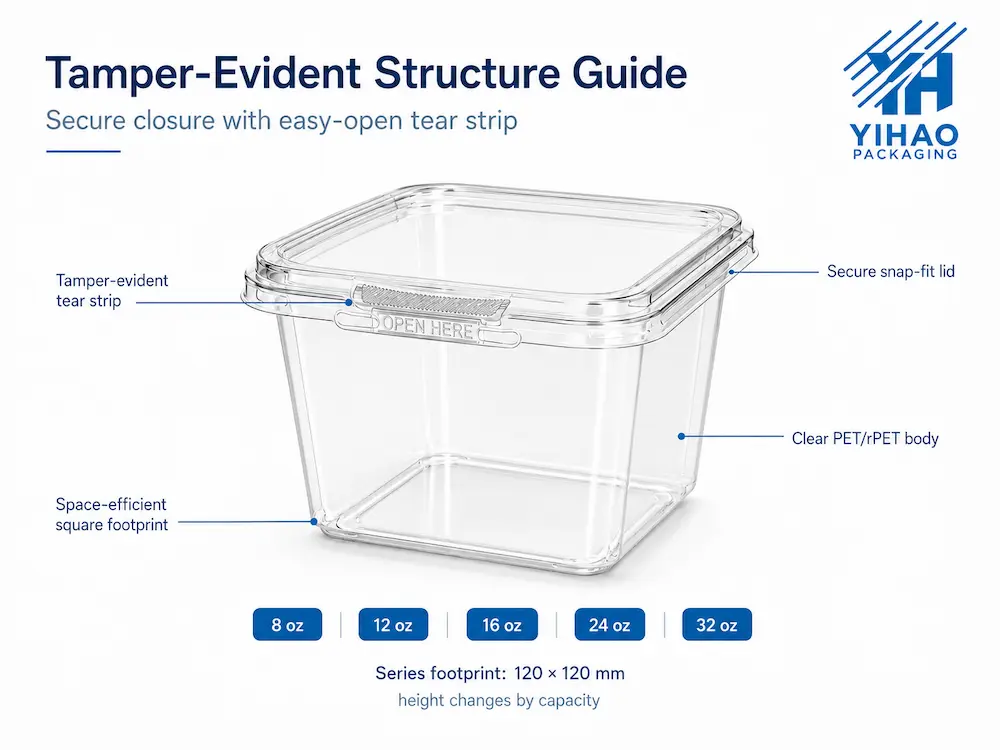
Closure design is the core of tamper evident packaging. Buyers should not evaluate only the container body. The lid, hinge, lock, tear strip and opening experience are just as important as capacity and material.
| Closure Feature | Main Function | Best-Fit Use Case | Buyer Watch Point |
|---|---|---|---|
| Tear strip | Shows visible evidence after first opening | Retail food, deli containers, cold case and delivery packaging | Should be easy to identify and open without damaging the food |
| Front lock or tab | Helps keep lid and base closed during handling | Grab-and-go food, fruit portions, snacks and prepared foods | Must close consistently during packing operations |
| Hinged lid | Connects lid and base for faster packing | Deli counters, supermarkets, cafes and foodservice packing lines | Hinge should resist cracking during normal use |
| Perimeter seal or rim fit | Supports closure stability and product containment | Cold foods, deli items and delivery containers | Rim fit should be tested with real filled products |
| Opening pull area | Guides customer opening experience | Retail and takeaway foods | Should be intuitive, visible and not too difficult to use |
A good tamper evident closure should balance security signal and user convenience. If the tear strip breaks too easily during packing or transport, it may create false concerns. If it is too hard to open, customers may feel frustrated. Sample testing should include both packing staff and end-user opening experience.
Clear PET and rPET Visibility for Retail Display
Clear PET and rPET containers are often used for tamper evident food packaging because visibility is important in retail. Customers want to see the food before buying. Clear packaging helps communicate freshness, portion size, color and ingredient quality.
For tamper evident packaging, visibility works together with closure design. The customer should be able to inspect both the food and the opening indicator. This is why packaging clarity, lid design and label placement should be reviewed together.
rPET may support packaging programs that want to discuss recycled material use, where suitable supply, food contact compliance and local recycling systems apply. Buyers should confirm food contact suitability, recycled content documentation, clarity consistency and application limitations with the supplier before making claims or confirming large orders.
Clear PET tamper evident containers are commonly used for chilled food, deli foods, fresh produce portions, salads and grab-and-go retail display. They should not be automatically positioned for microwave heating unless the material and product specification clearly support that use.
When to Choose Rectangular, Round or Multi-Compartment Tamper Evident Packaging
Size is only part of the decision. Shape and structure often determine whether the container works well in real operations. Buyers may compare rectangular, round, hinged or multi-compartment tamper evident packaging depending on food type and sales channel.
Rectangular tamper evident containers are useful when buyers need efficient shelf alignment, organized presentation and practical carton packing. They are often suitable for deli foods, ready-to-eat meals, cold case products and takeout applications.
Multi-compartment tamper evident containers are useful when food components need separation. They can support meal prep, ready-to-eat foods, protein and side combinations, salads with toppings and delivery meals where portion organization matters.
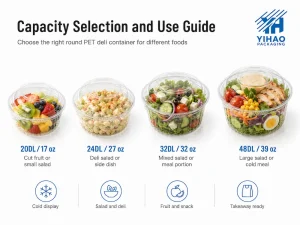
Round tamper evident containers may work well for salads, fruit bowls, cold noodles or bowl-style foods. They can create a familiar eating experience, but buyers should still test shelf footprint and carton efficiency.
| Container Structure | Best Applications | Main Advantage | Buyer Consideration |
|---|---|---|---|
| Rectangular | Deli foods, ready-to-eat meals, takeout sides, retail cold case | Efficient shelf and carton alignment | Check corner strength, lid engagement and label placement |
| Round | Salads, fruit bowls, cold noodles, chilled bowls | Familiar bowl-style eating experience | Check stacking behavior and shelf footprint |
| Multi-compartment | Meal prep, protein and sides, salads with toppings, combo meals | Keeps food components organized | Check compartment depth and closure consistency across the lid |
| Hinged clear PET | Grab-and-go food, deli counters, convenience store foods | Integrated lid and base for faster packing | Check hinge strength and opening indicator performance |
How to Choose Tamper Evident Container Size by Food Type
Buyers should not choose tamper evident container size only by ounces or milliliters. Real food behavior matters. A dense deli salad, leafy green salad, fruit mix and prepared meal all require different space and closure logic.
Fruit cups and fresh produce portions
Fruit portions need visibility, moisture consideration and enough space to protect the product shape. Small and medium tamper evident containers can work well for fresh-cut fruit, berries, grapes, melon cubes and snackable produce. Buyers should test whether the fruit presses against the lid, whether moisture affects visibility and whether the container remains secure during chilled display.
Deli salads and prepared sides
Deli salads such as pasta salad, potato salad, coleslaw and cold noodles are often dense. They may not need a very large container to look full, but they do need base stability and secure closure. Medium tamper evident containers are often a practical starting point for this category.
Meal salads and ready-to-eat meals
Meal salads and ready-to-eat foods may need larger containers or multi-compartment structures. Leafy greens need room. Toppings should not be crushed. Protein, sauce and sides may need separation. Buyers should compare large rectangular or multi-compartment tamper evident packaging if the product includes several components.
Grab-and-go chilled foods
Grab-and-go food packaging must be easy to inspect, easy to carry and visually attractive. The package should look full without being overfilled. It should also fit retail shelves, takeaway bags and cold case displays. Tamper evident features should be visible from the customer’s natural viewing angle.
Label Placement and Tamper Evident Features
Label placement can support or weaken tamper evident packaging. If the label covers the opening indicator, customers may not understand how to inspect the package. If the label covers too much of the clear lid, the package may lose visual appeal. If the label interferes with the tear strip, the opening experience may become messy.
Buyers should test the label on a filled sample. This helps confirm whether the food remains visible, whether the barcode scans correctly, whether the label stays attached under chilled conditions and whether the tamper evident feature remains easy to see.
For retail food containers, the best label plan usually balances branding, product information and visibility. For delivery containers, the label may also help reinforce the opening indicator. However, the primary tamper evident function should come from the container design, not only from a sticker.
YIHAO Sample Request Checklist
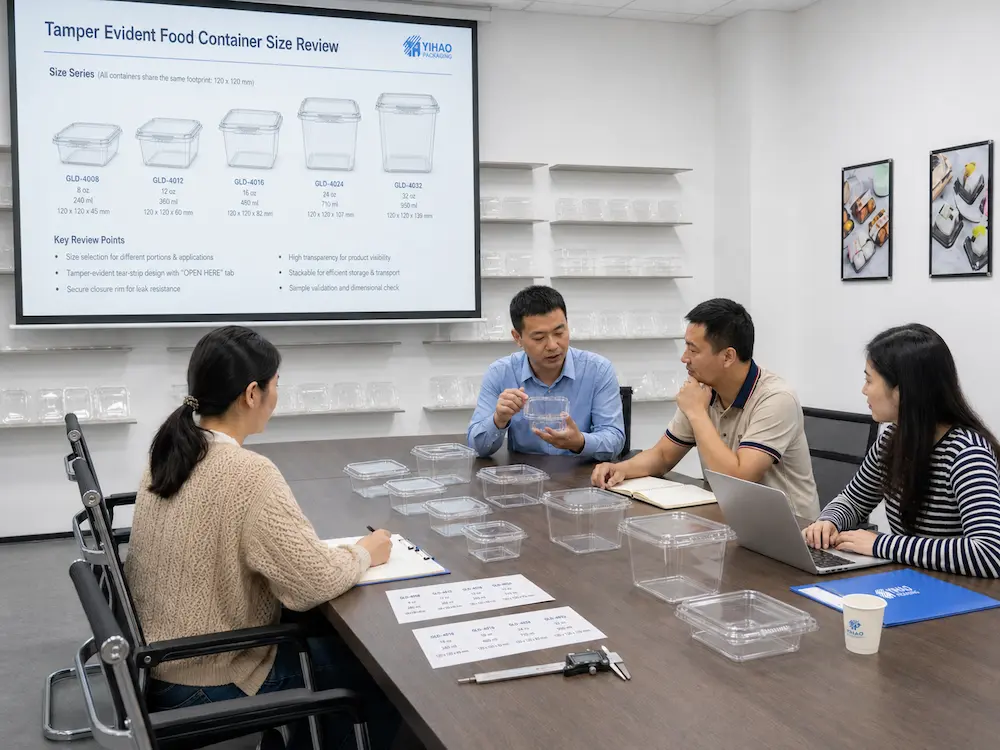
Before requesting samples, buyers should prepare enough information for the supplier to recommend the correct size and structure. A clear sample request saves time and reduces the risk of choosing a container that looks correct in photos but fails in real handling.
| Information to Provide | Why It Matters | Example |
|---|---|---|
| Food type | Different foods require different usable volume and closure strength | Fruit, deli salad, cold noodles, meal prep, ready-to-eat food |
| Target portion size | Helps narrow container capacity and dimensions | Small snack, medium side, full meal or family portion |
| Preferred structure | Shape affects display, stacking and carton packing | Rectangular, round, hinged or multi-compartment |
| Sales channel | Delivery, retail and deli counter packaging need different checks | Food delivery, supermarket cold case, convenience store, cafe |
| Closure requirement | Tamper evident performance depends on opening design | Tear strip, lock tab, hinged lid or visible opening indicator |
| Material preference | Clarity, stiffness and sustainability goals affect selection | PET, rPET or buyer-specified material |
| Label plan | Labels can affect visibility and opening experience | Top label, side label, sleeve, barcode or brand sticker |
| Testing condition | Real performance depends on storage and handling | Cold case, chilled transport, stacking, delivery bag handling |
When working with a manufacturer, buyers should ask for matched samples and test them with real products. Empty containers can show clarity and structure, but they cannot prove how the container performs after filling, labeling, stacking, chilling and delivery movement.
Common Mistakes Buyers Should Avoid
Overclaiming tamper evident performance
Tamper evident packaging should not be described as absolute anti-theft or contamination-proof packaging. The accurate value is visible opening evidence. Buyers should use clear and responsible language in product pages, labels and marketing materials.
Choosing only by capacity
A container may have the right capacity but the wrong structure. Buyers should also compare closure design, tear strip function, lid clearance, material stiffness, label space and handling performance.
Testing only empty samples
Empty samples are not enough. A tamper evident container must be tested with actual food, actual filling height, actual labels and actual storage or delivery conditions.
Ignoring customer opening experience
A package can be secure but frustrating. The customer should understand where to open the container and should be able to open it without spilling or damaging the food.
Using one size for every food item
Different foods need different packaging. A small fruit cup, dense deli side and meal salad should not automatically use the same tamper evident container. A better packaging system often includes several sizes and structures.
FAQ
1. What is a tamper evident container?
A tamper evident container is a food package designed to show visible evidence when the container has been opened. This may involve a tear strip, breakaway tab, locking band or other opening indicator. It supports customer confidence but should not be described as impossible to open.
2. Are tamper evident containers suitable for delivery?
Yes, tamper evident containers can be suitable for food delivery when the closure is secure, the opening indicator is visible and the container has been tested with real food and delivery handling. Buyers should test filled samples inside delivery bags before bulk ordering.
3. Can tamper evident packaging be clear PET?
Yes, tamper evident packaging can be made with clear PET or rPET materials when suitable for the application. Clear PET helps customers see salads, fruit, deli foods and ready-to-eat meals while also allowing the opening indicator to remain visible.
4. How do buyers choose the right tamper evident container size?
Buyers should choose by food type, portion weight, usable filling volume, lid clearance, closure design, shelf footprint, delivery handling and label placement. Capacity is only the starting point; final selection should be confirmed through sample testing.
5. Are tamper evident containers the same as tamper-proof containers?
No. Tamper evident containers are designed to show visible evidence of opening. They should not be described as completely tamper-proof. The professional value is helping users identify whether the package has been opened after packing.
6. What foods are best suited for tamper evident containers?
Tamper evident containers are commonly used for deli foods, salads, fresh-cut fruit, cold case meals, grab-and-go foods, prepared sides, snacks and delivery foods where visible opening evidence can support customer confidence.
7. What should buyers test before placing wholesale orders?
Buyers should test filling height, closure strength, tear strip function, stacking performance, chilled storage, label placement, shelf display, customer opening experience and delivery handling before confirming wholesale orders.
References
- U.S. Food and Drug Administration, food contact substances and packaging material guidance.
- European Commission, Regulation (EC) No 1935/2004 on materials and articles intended to come into contact with food.
- European Food Safety Authority, food contact materials safety assessment resources.
- Association of Plastic Recyclers, Design Guide for Plastics Recyclability.
- RecyClass, Design for Recycling Guidelines for PET Packaging.
- WRAP, plastic packaging design and recyclability guidance.
- PMMI Business Intelligence, food packaging and prepared food packaging industry research.
- International Organization for Standardization, packaging and quality management reference standards.
Deep-Dive Insights: How Buyers Should Think About Tamper Evident Container Sizes
How size supports secure food packaging decisions
Container size affects more than portion capacity. For tamper evident food containers, size influences closure strength, tear strip usability, label placement, stacking behavior and customer opening experience. Buyers should evaluate size together with the complete package structure.
Why tamper evident does not mean absolute tamper-proof
Tamper evident packaging is designed to show visible evidence of opening. It should not be overclaimed as fully tamper-proof, anti-theft or contamination-proof. The value is practical transparency: customers and staff can inspect whether the opening indicator remains intact.
What option works best for delivery, retail and grab-and-go?
Delivery packaging should prioritize secure closure and handling stability. Retail cold case packaging should prioritize clarity, shelf appeal and visible opening indicators. Grab-and-go packaging should balance compact size, easy inspection, clean labeling and customer convenience.
Option: rectangular or multi-compartment tamper evident packaging
Rectangular tamper evident containers are useful for shelf alignment, carton efficiency and prepared food display. Multi-compartment tamper evident containers are better when meals include separate components such as protein, sides, sauce, salad or toppings.
Buyer consideration before wholesale ordering
Before confirming bulk orders, buyers should test real food filling, closure force, tear strip performance, stacking pressure, cold storage, delivery movement, label placement and customer opening experience. The best decision comes from combining product security, retail presentation and operational efficiency.
Final Note / Practical Takeaway
© YIHAO Packaging. All rights reserved. All articles, product images, packaging designs, technical specifications, and website materials are protected by copyright. Unauthorized copying, reproduction, redistribution, modification, or commercial use is strictly prohibited without prior written permission.