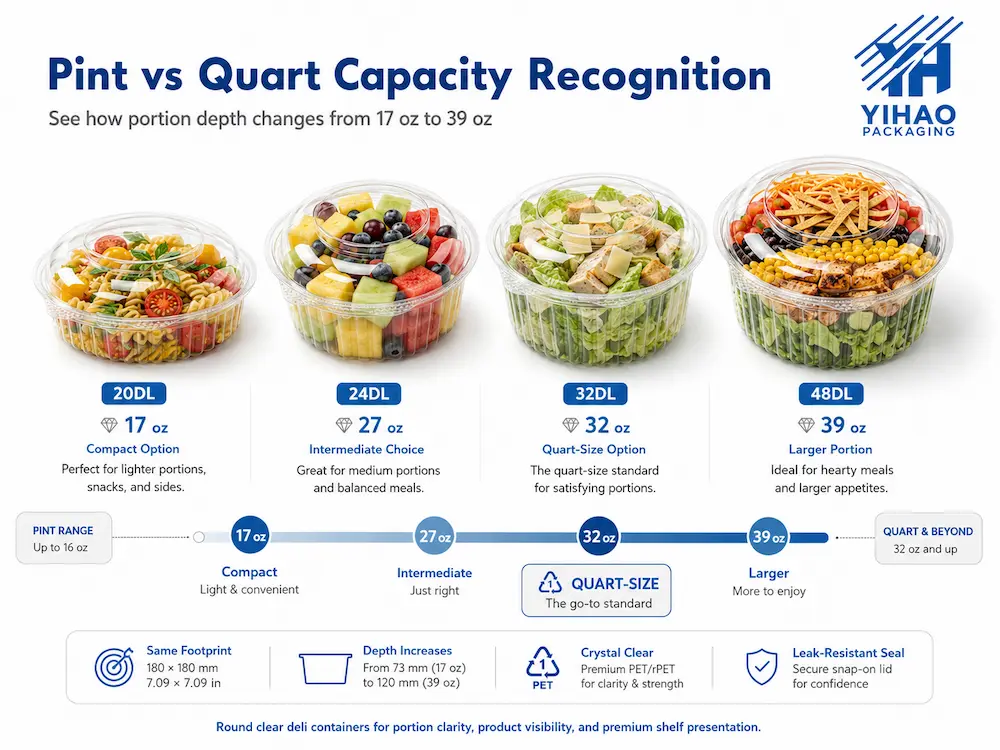
Why Pint and Quart Sizes Matter in Food Packaging
For many North American supermarkets, delis, cafes, foodservice distributors and prepared food brands, pint and quart are familiar capacity terms. Buyers often use them when comparing deli containers, salad containers, fruit containers, cold dish packaging and takeout food containers. The terms are simple, but the packaging decision behind them is not always simple.
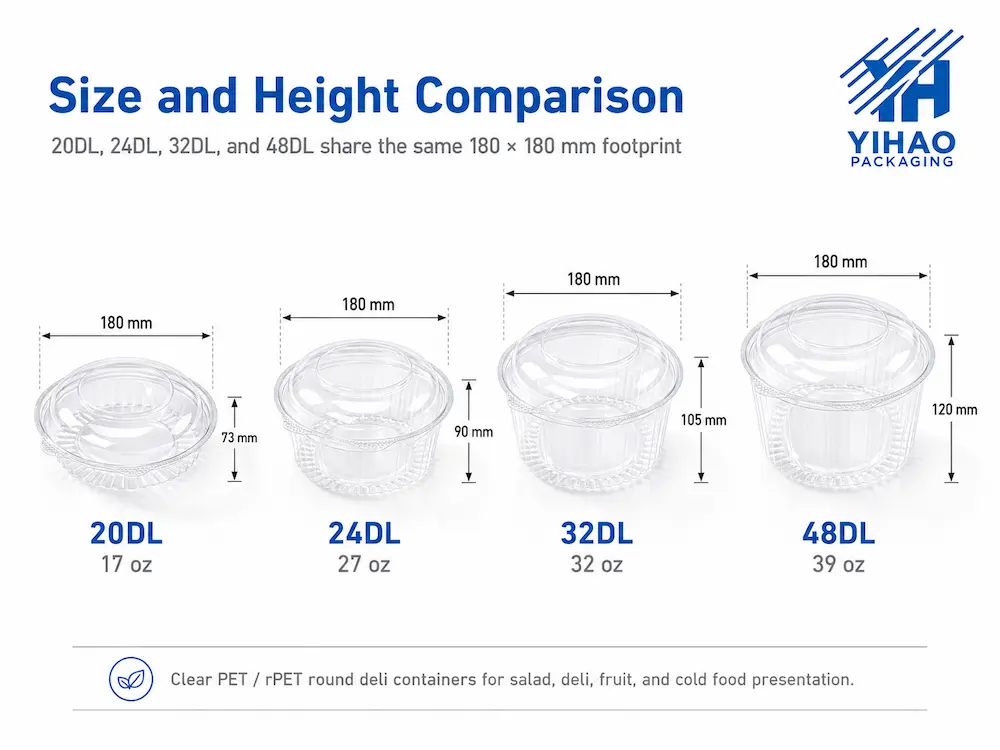
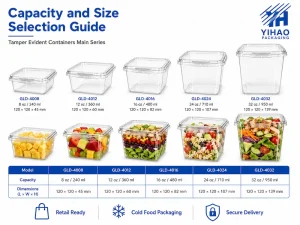
A pint container is often used for smaller deli portions, side dishes, fruit cups, snack packs and compact chilled foods. A quart container is often used for larger deli portions, fuller salads, family-style sides, premium fruit packs and more generous takeout applications. In practical terms, one pint equals 16 fluid ounces, while one quart equals 32 fluid ounces. That makes a quart twice the capacity of a pint.
However, a professional packaging buyer should not choose only by the number. Food does not fill containers like water. Leafy salad, cut fruit, pasta salad, potato salad, coleslaw, cold noodles, snacks and prepared dishes all behave differently inside packaging. The correct choice depends on usable volume, food density, lid clearance, shape, material, retail display and handling conditions.
As a food packaging manufacturer and solution provider, YIHAO usually recommends that buyers treat pint and quart sizes as starting references. The final choice should be confirmed through real food sample testing, especially when the packaging will be used for chilled retail display, grab-and-go food, takeout service or wholesale distribution.
Quick Comparison: Pint Containers and Quart Containers
The table below gives a practical comparison for buyers who are evaluating pint and quart deli containers. These capacity references are useful for communication, but the final packaging choice should always be tested with the actual food product.

| Comparison Point | Pint Containers | Quart Containers | Buyer Note |
|---|---|---|---|
| Common capacity reference | 1 pint, equal to 2 cups | 1 quart, equal to 4 cups | Quart containers offer double the nominal capacity of pint containers |
| Common food use | Deli sides, fruit portions, snacks, small salads | Meal salads, larger deli foods, family sides, takeout portions | Choose based on actual food volume and presentation needs |
| Retail display role | Compact shelf display and smaller price points | Stronger shelf impact and higher-volume presentation | Quart containers need more shelf and carton space |
| Best for food density | Good for dense side portions and compact items | Better for bulky, layered or larger food portions | Dense foods can become heavy even in pint containers |
| Packaging performance focus | Lid fit, portion appearance, label space | Stacking strength, lid security, base stability | Larger containers require stronger structure and better handling tests |
What Is a Pint Deli Container?
A pint deli container is commonly understood as a container with a 16 fluid ounce capacity. In food packaging selection, pint containers are widely used for medium-small portions. They are practical for deli sides, fruit portions, salad sides, snacks, cold toppings, small prepared foods and grab-and-go items that need compact retail presentation.
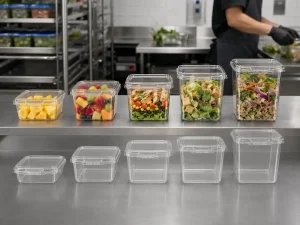
For buyers, pint containers are useful because they balance portion size and operational efficiency. They are large enough for many side dishes and small fresh food portions, but they remain easy to stack, label, pack into cartons and display in chilled cases. This makes them suitable for supermarkets, delis, convenience stores, cafes and foodservice distribution.
Pint containers can work especially well when the product is dense. Pasta salad, potato salad, coleslaw, cold noodles and sauced deli items can fill a pint container quickly by weight. In these cases, a larger quart container may not be necessary if the product already looks full and substantial in a pint format.
For clear PET applications, a product such as a 16 oz deli container can be a relevant starting point when buyers need a compact hinged option for deli salads, snacks, fruit and chilled food portions.
When pint containers are a strong choice
Pint containers are a strong choice when the product needs to look full in a compact package. They are especially useful for single-serve deli sides, medium fruit portions, snack bowls, small salads and add-on items. If a buyer wants efficient shelf use, lower material use and practical carton packing, pint containers are often a sensible starting point.
When pint containers may be too small
Pint containers may be too small when the food is bulky, layered or visually important. Leafy salad, large fruit pieces, premium meal components and foods with toppings may need more lid clearance or more surface area. If the food looks compressed, messy or low-value in a pint container, a quart format or another larger structure may perform better.
What Is a Quart Deli Container?
A quart deli container is commonly understood as a container with a 32 fluid ounce capacity. It is twice the nominal capacity of a pint container. In food packaging, quart containers are often used for larger deli portions, full salad meals, family-style sides, premium fruit packs, larger cold dishes and higher-value takeout packaging.
Quart containers give buyers more room for presentation. This matters when the product includes leafy greens, toppings, protein, fruit assortments, cold noodles or multiple ingredients. Larger capacity can help reduce compression and improve visual merchandising, especially in chilled retail cases.
However, quart containers also create more packaging demands. They need stronger sidewalls, better lid engagement, stable stacking and more careful shelf planning. A larger container that looks good when empty may deform, bend or open too easily when filled with heavy food. Buyers should test the container under real use conditions before confirming wholesale orders.
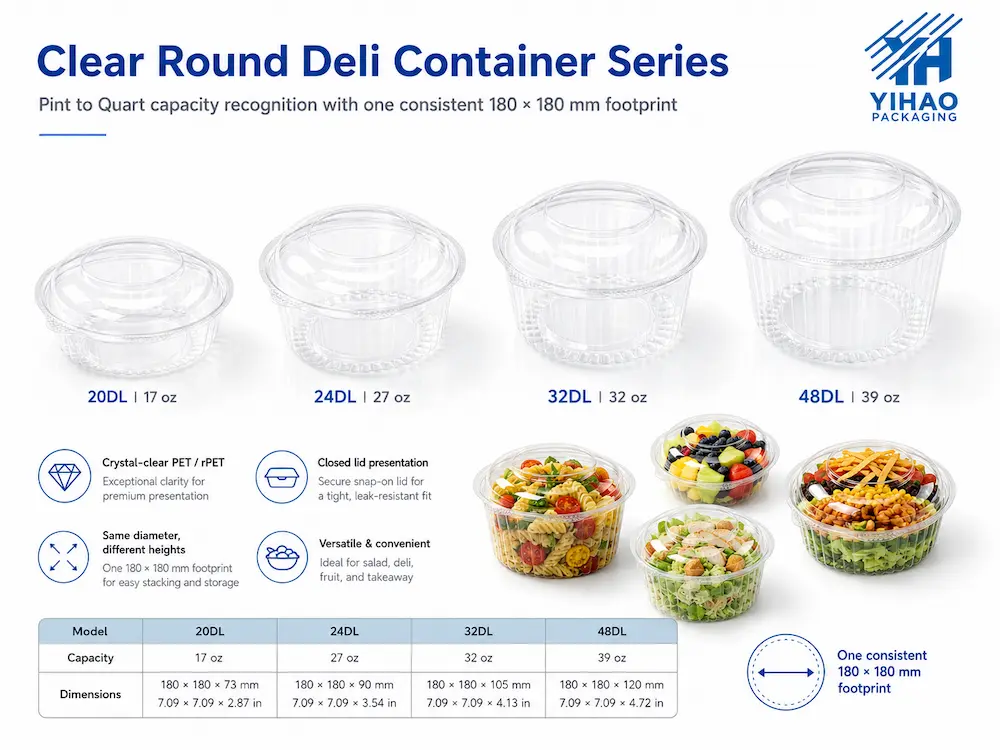
For buyers comparing larger fresh food formats, a 32 oz deli container can be a useful reference for larger grab-and-go food packaging, meal salads and fuller deli applications.
When quart containers are a strong choice
Quart containers are a strong choice when the product needs more room, stronger shelf impact or a larger perceived value. Meal salads, fruit assortments, larger deli sides and family portions often benefit from quart packaging. The larger footprint can also make colorful foods look more attractive in clear PET packaging.
When quart containers may be too large
Quart containers may be too large if the product does not fill the package attractively. Underfilled packaging can make a portion look weak, even if the food weight is acceptable. Quart containers also require more shelf space, more carton space and more attention to stacking performance. If the food looks too spread out or the cost is not justified, pint or mid-size containers may be better.
Pint vs Quart for Deli Foods
Deli foods are one of the most common applications for pint and quart containers. Products such as pasta salad, potato salad, coleslaw, cold noodles, bean salad, antipasto, marinated vegetables and prepared side dishes are often packed in clear deli containers for retail or foodservice use.
For dense deli foods, pint containers can be very efficient. Dense foods often create a full appearance quickly, and the packed weight may already feel substantial. A pint container can support smaller retail price points, controlled portions and easy grab-and-go display.
Quart containers work better when the deli product is sold as a larger side, sharing portion or meal component. They can be useful for family-style retail packs, larger takeout orders or wholesale foodservice programs where buyers want a more generous container size. But the larger pack should still look full. If the food spreads too thinly across the base, the presentation may suffer.
For buyers reviewing deli and salad containers, the main question is not only whether the size is pint or quart. The better question is whether the container supports the actual recipe, serving expectation, display format and handling process.
Pint vs Quart for Salad Packaging
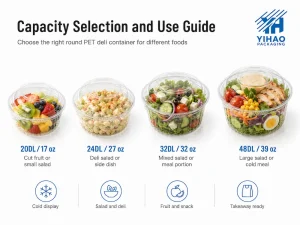
Salad packaging is more sensitive to usable volume than many buyers expect. A pint container may technically hold a certain amount of salad, but leafy greens need air space. If the container is too small, the salad may look crushed, wet or poorly presented. A quart container may provide more room for toppings and presentation, but it may look oversized if the salad portion is too light.
For side salads, pint containers can work well when the product is compact and does not require much lid clearance. They are useful for simple green salads, deli-style salads and small side portions. For more complete salad meals, quart containers are often more appropriate because they provide room for greens, protein, toppings and dressing.
Buyers should also consider bowl-style formats. A 17 oz clear PET salad bowl may be relevant when a buyer needs slightly more usable space than a standard pint-style reference. For larger meal salads, a 32 oz clear PET salad bowl can support stronger presentation for premium grab-and-go salad applications.
| Salad Type | Pint Container Fit | Quart Container Fit | Buyer Recommendation |
|---|---|---|---|
| Simple side salad | Often suitable | May be too large | Start with pint, then test lid clearance |
| Leafy salad with toppings | May feel tight | Often more suitable | Test both sizes with actual toppings |
| Meal salad with protein | Usually limited | Often suitable | Quart or bowl-style packaging may perform better |
| Dense deli salad | Often suitable | Suitable for larger portions | Choose by target weight and price point |
Pint vs Quart for Fruit Packaging
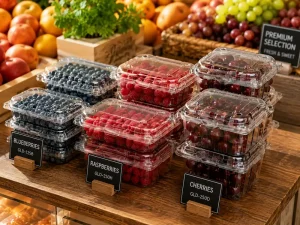
Fruit packaging needs both capacity and visual presentation. Fresh-cut fruit, berries, grapes, melon cubes, apple slices, pineapple, mixed fruit and cherry tomatoes do not fill containers evenly. Their shape, moisture and movement can affect how the final package looks.
Pint containers are suitable for smaller fruit portions, single-serve packs and compact retail offerings. They work well when the fruit pieces are small enough to sit naturally inside the container without excessive pressure. A pint format can also support lower price points and convenient snacking formats.
Quart containers are useful for larger fruit assortments, premium packs and family-size portions. They offer more room for color contrast and ingredient arrangement. For example, mixed fruit can look more attractive when the container gives enough surface area for different colors to show clearly.
For fresh produce applications, buyers can also review fresh produce packaging containers when the product requires better ventilation, produce-specific structure or retail-ready produce presentation. Fruit packaging should not be selected only by pint or quart capacity; it should also match the produce type and display channel.
Pint vs Quart for Cold Dishes and Takeout Packaging
Cold dishes and takeout foods create different packaging requirements from static retail display. The container may be filled quickly, stacked, chilled, transported, placed in a bag and opened by the customer later. This means closure strength, sidewall support and handling stability become especially important.
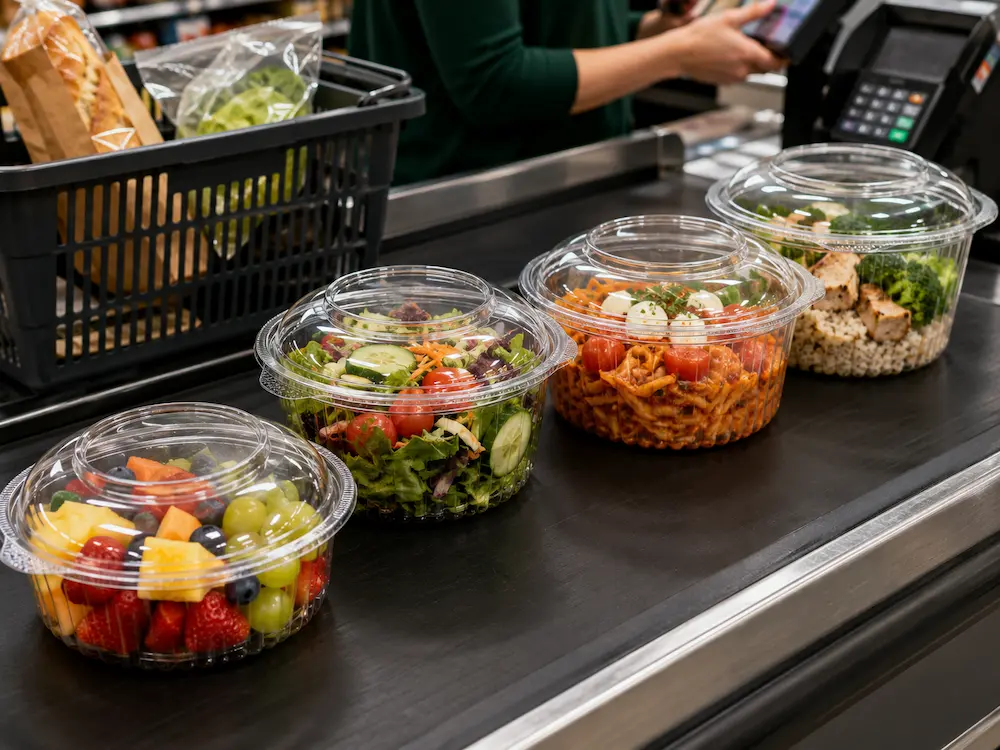
Pint containers work well for compact cold dishes and side portions. They are easier to carry, easier to pack into bags and often more efficient for smaller orders. For takeout side items, a pint container may create better portion control and reduce wasted space.
Quart containers work better when the customer expects a larger portion or when the food needs more space to maintain presentation. However, quart takeout containers must be strong enough to resist deformation. If the product is heavy, sauced or wet, buyers should test filled containers under stacking and movement conditions.
For chilled takeaway and retail programs, grab-and-go food packaging should be evaluated as a complete system. The container must look good, close securely, fit labels, stack safely and support the customer’s eating or carrying experience.
How Container Shape Changes Pint and Quart Performance
A pint container and a quart container can be made in different shapes, including round, square, rectangular and hinged structures. Shape changes how the food looks, how the container stacks and how efficiently it fits into shelves and cartons.
Round PET deli containers are often used for salads, fruit bowls, cold dishes and ready-to-eat foods. They create a familiar eating experience and can make fresh foods look approachable. Round shapes may be especially useful when customers eat directly from the container.
Square PET deli containers can support better shelf alignment and carton efficiency. For distributors and supermarkets, square formats may reduce wasted space and create a cleaner display. They are useful for deli sides, fruit, snacks and chilled prepared foods.
PET hinged deli containers are useful when packing speed and lid matching are important. Since the lid and base are connected, the packing team does not need to match separate lids. This can reduce operational complexity for delis, cafes, supermarkets and prepared food programs.
| Structure Type | Best Fit | Main Advantage | Buyer Watch Point |
|---|---|---|---|
| Round containers | Salads, fruit bowls, cold dishes | Familiar eating experience and strong visual appeal | Check shelf footprint and stacking behavior |
| Square containers | Deli sides, snacks, chilled foods | Efficient shelf alignment and carton loading | Check corner strength and lid consistency |
| Hinged containers | Grab-and-go, deli, fruit and salad packs | Integrated lid and base for faster packing | Check hinge durability and front lock performance |
| Rectangular containers | Prepared foods and organized portions | Good display surface and packing efficiency | Check label placement and lid engagement |
PET and rPET Material Considerations for Deli Containers
Clear PET and rPET are widely used for chilled deli, salad, fruit and grab-and-go food packaging because they provide strong visibility. For retail food packaging, clarity matters. Customers often judge freshness, color, ingredient quality and portion value before they read the label.
For pint and quart deli containers, material clarity can influence perceived value. A clear pint container can make a small portion look clean and fresh. A clear quart container can create strong shelf impact for colorful salads, fruit assortments and premium cold dishes. In both cases, the package becomes part of the merchandising experience.
Buyers should also evaluate material performance. PET and rPET packaging should be checked for stiffness, sidewall strength, lid fit, hinge durability, rim design and stacking behavior. If rPET is used, buyers should discuss food contact suitability, recycled content claims, local recycling compatibility and supplier documentation before confirming the order.
It is also important not to confuse clear PET deli containers with microwave-safe packaging. Clear PET is commonly selected for chilled display and cold food applications. If the product needs reheating, buyers should evaluate appropriate microwave-safe materials, such as suitable PP packaging, instead of assuming PET will fit every use case.
How Retail Display Affects the Pint vs Quart Decision
Retail display is a major reason buyers should compare pint and quart containers carefully. The same food can look very different depending on the container size. A pint container may make a side dish look full and affordable. A quart container may create a premium look, but only if the food fills the space attractively.
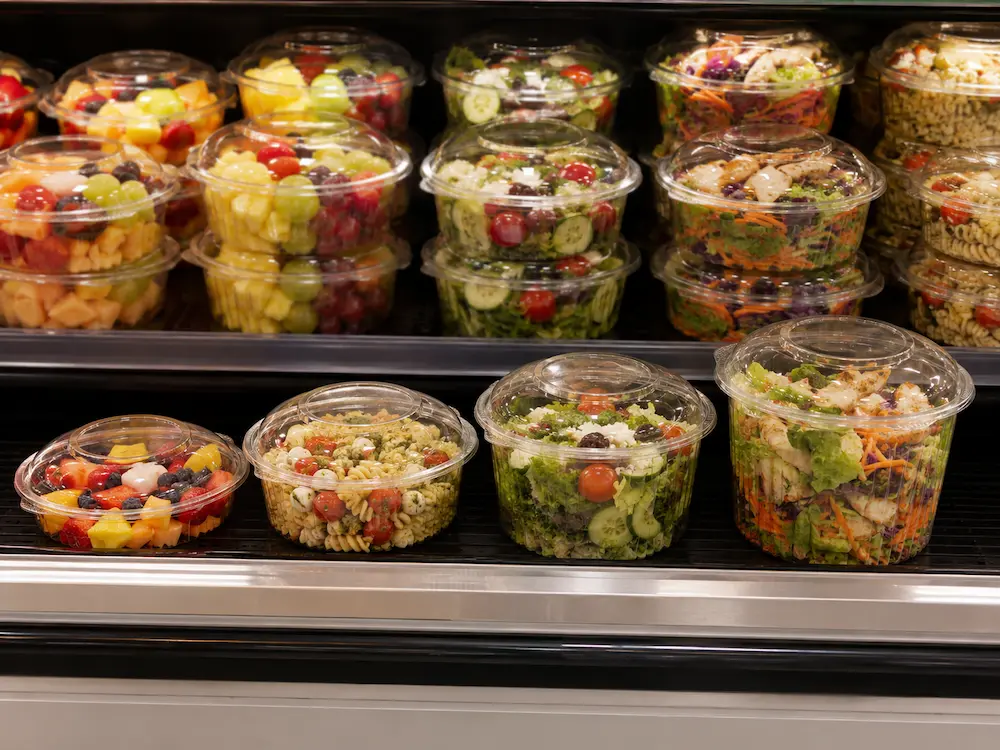
Underfilled packaging is a common problem. When a product does not fill a quart container well, customers may feel the pack has poor value. On the other hand, overfilled pint containers can look messy, compressed or difficult to close. The best size makes the food look intentional and stable.
Buyers should also consider shelf depth, shelf height and product facing. Pint containers may allow more units per shelf. Quart containers may require fewer facings but provide stronger visual impact. For supermarkets and convenience stores, the right answer depends on how the product will be displayed and priced.
How Label Placement Affects Pint and Quart Packaging
Label placement can change the final packaging result. Pint containers have less lid and sidewall space, so buyers must be more careful with label size. If the label is too large, it may cover too much of the product. If the label is too small, it may not provide enough room for branding, barcode, date code and required product information.
Quart containers provide more label space, but visibility still matters. A large clear PET container should not be fully covered by a label unless the branding strategy requires it. For fresh salads, fruit and deli foods, customers often want to see the product clearly before purchase.
For both pint and quart formats, buyers should test the label on a filled sample. This helps confirm whether the product remains visible, whether the barcode scans properly and whether the label stays attached under chilled conditions.
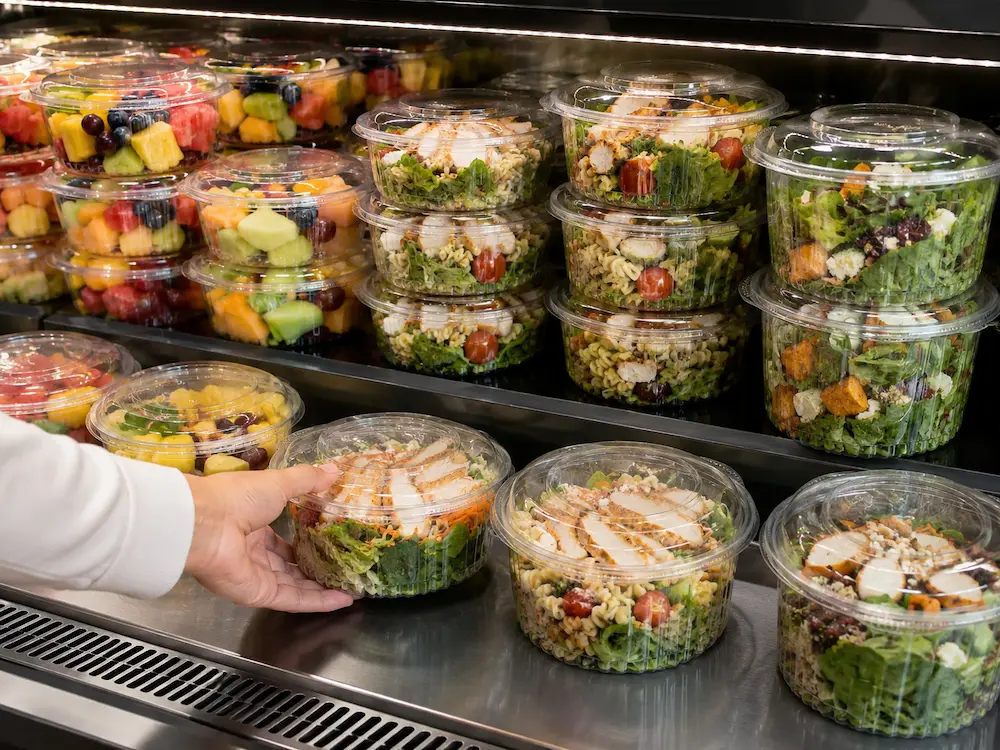
How to Choose Between Pint and Quart Deli Containers
The right choice depends on the food, the sales channel and the buyer’s packaging goal. A simple rule is useful: start with pint containers for compact portions and quart containers for larger portions. But professional buyers need a deeper checklist.
| Buyer Question | If Yes, Pint May Fit Better | If Yes, Quart May Fit Better |
|---|---|---|
| Is the product a side portion? | Yes, especially for compact deli foods | Only if it is a larger sharing side |
| Is the food leafy or bulky? | Maybe, if it is a small side salad | Often yes, especially for meal salads |
| Is the food dense and heavy? | Often yes, because smaller volume may still feel full | Only if the target portion is large |
| Does the product need premium shelf impact? | Possible for smaller premium portions | Often better for larger visual presentation |
| Is shelf space limited? | Usually more efficient | Requires more careful shelf planning |
| Is the product for family-size use? | Usually too small | Often more suitable |
Wholesale Buyer Sample Request Checklist
Before confirming pint or quart deli containers, buyers should prepare a clear sample request. This reduces back-and-forth communication and helps the supplier recommend a suitable container structure.
| Information to Provide | Why It Matters | Example |
|---|---|---|
| Target size | Helps narrow the starting range | Pint, quart or both for comparison |
| Food type | Different foods fill containers differently | Salad, fruit, pasta salad, cold dishes, snacks |
| Target portion weight | Dense foods may require stronger packaging | 150 g, 250 g, 500 g or buyer-specific target |
| Preferred structure | Shape affects display and packing efficiency | Round, square, rectangular or hinged |
| Storage condition | Chilled display and transport affect performance | Refrigerated shelf, cold chain, takeout handling |
| Label plan | Label size affects product visibility | Top label, side label, sleeve or tamper label |
| Sales channel | Retail, deli counter and takeout have different needs | Supermarket, cafe, deli, distributor or foodservice |
When working with a manufacturer, buyers should test filled samples rather than only reviewing empty containers. A filled sample reveals closure performance, stacking behavior, product appearance, label fit and takeout handling more accurately.
Common Mistakes Buyers Should Avoid
Choosing by definition only
The most common mistake is choosing by capacity definition alone. A pint is smaller and a quart is larger, but that does not automatically answer which container is better. Real food performance matters more than the definition.
Ignoring food density
Dense foods may fit well in pint containers even when the portion feels substantial. Light leafy foods may need quart packaging even when the actual food weight is lower. Buyers should compare volume and weight together.
Testing empty samples only
Empty samples can show clarity, shape and material feel, but they cannot show how the container performs when filled. Buyers should test with actual food, actual labels and expected handling conditions.
Overlooking shelf and carton efficiency
Quart containers require more shelf and carton space. If the product does not need the extra volume, a pint container may improve display density and reduce logistics inefficiency.
Using one size for every product
A single container size rarely fits all applications. A better packaging line may use pint containers for side portions and quart containers for larger fresh food packs. This creates a clearer product range and better customer experience.
FAQ
1. Is a quart bigger than a pint?
Yes. A quart is bigger than a pint. In common US fluid measurement, one pint equals 16 fluid ounces, while one quart equals 32 fluid ounces. This means a quart has twice the nominal capacity of a pint.
2. Are pint and quart sizes used outside North America?
Pint and quart terms are most familiar in North American foodservice and retail contexts. Buyers in other markets may prefer milliliters, liters or gram-based portion references. Export buyers should confirm both capacity language and local market expectations.
3. Which is better for fruit packaging?
Pint containers are often suitable for smaller fruit portions and snack packs. Quart containers are better for larger fruit assortments, premium packs and family-size portions. The best choice depends on fruit shape, portion weight, visibility and shelf display needs.
4. Can one container size work for both salad and deli food?
Sometimes, but not always. Deli foods are often denser, while leafy salads need more air space and lid clearance. Buyers should test the same container with both food types before using one size across multiple products.
5. Should buyers choose containers by ounces or dimensions?
Buyers should use ounces as a starting reference, then compare dimensions, shape, lid clearance, material, stacking strength and actual food testing. Dimensions and usable volume often matter more than nominal capacity alone.
6. Are quart containers better for takeout packaging?
Quart containers can be better for larger takeout portions, family sides and meal salads. However, they must be tested for closure strength, stacking stability, bag fit and handling performance. Pint containers may be better for smaller takeout sides.
7. What should buyers test before bulk ordering?
Buyers should test filling height, closure security, stacking strength, chilled storage, label placement, shelf display, carton packing and takeout handling. Testing should use the actual food product, not only empty samples.
References
- National Institute of Standards and Technology, measurement units and US customary unit references.
- U.S. Food and Drug Administration, food contact substances and packaging material guidance.
- European Commission, Regulation (EC) No 1935/2004 on materials and articles intended to come into contact with food.
- European Food Safety Authority, food contact materials safety assessment resources.
- Association of Plastic Recyclers, Design Guide for Plastics Recyclability.
- RecyClass, Design for Recycling Guidelines for PET Packaging.
- WRAP, plastic packaging design and recyclability guidance.
- PMMI Business Intelligence, food packaging and retail packaging industry research.
Deep-Dive Insights: How Buyers Should Think About Pint and Quart Deli Containers
How pint and quart sizes help buyers compare options
Pint and quart terms give North American buyers a familiar way to compare deli container sizes. A pint is useful for smaller portions, while a quart is better for larger portions. This makes the language helpful during early product development, supplier communication and sample selection.
Why capacity terms should not replace real testing
Capacity terms do not show how salad, fruit, cold dishes or takeout food will actually sit inside the package. Food density, ingredient shape, lid clearance and stacking pressure can all change the result. Buyers should always test real food in real containers before confirming wholesale packaging.
What option works best for salad, fruit and cold dishes?
Pint containers are often better for compact deli sides, small fruit portions and snack packs. Quart containers are often better for meal salads, larger fruit assortments, family portions and higher-value takeout foods. The best option depends on whether the product needs compact efficiency or stronger visual volume.
Option: round, square or hinged structures
Round containers can create a familiar bowl-style experience. Square containers can improve shelf and carton efficiency. Hinged containers can simplify packing because the lid and base are connected. Buyers should compare structure together with size, not as a separate decision.
Buyer consideration before confirming wholesale orders
Before placing bulk orders, buyers should test filling weight, product appearance, closure strength, label placement, stacking behavior, chilled display and takeout handling. A strong pint or quart packaging decision should protect the food, support retail presentation and improve operational efficiency.
Final Note / Practical Takeaway
© YIHAO Packaging. All rights reserved. All articles, product images, packaging designs, technical specifications, and website materials are protected by copyright. Unauthorized copying, reproduction, redistribution, modification, or commercial use is strictly prohibited without prior written permission.