
YIHAO works with foodservice brands, drink chains, supermarkets, bakeries, distributors, private label teams, and packaging buyers that need practical, retail-ready beverage packaging. For many buyers, custom printed cups are not only drink containers. They are visible brand assets, takeaway packaging, menu tools, retail display units, and part of the customer experience.
This FAQ guide explains how buyers should choose materials, sizes, printing methods, artwork structures, lids, food-contact checks, and wholesale ordering details before confirming a custom cup project. It is written for B2B purchasing teams that need a clear path from concept and artwork to sample approval, bulk production, and repeat supply.
What Are Custom Printed Cups?
Custom printed cups are foodservice cups printed with a buyer’s logo, brand color, slogan, drink name, QR code, seasonal graphic, campaign message, or private label identity. They are widely used for iced coffee, cold brew, milk tea, boba drinks, smoothies, juice, lemonade, matcha, refreshers, sparkling fruit drinks, protein drinks, yogurt beverages, dessert drinks, event beverages, and takeaway drink menus.
In B2B packaging, the word “custom” usually means more than simple logo printing. A complete custom cup project may include cup size selection, material choice, lid matching, print position, carton design, barcode placement, artwork adjustment, food-contact documentation, sample approval, and production consistency control. That is why buyers should treat printed cups as a full packaging system, not only a visual branding item.
Which Materials Are Commonly Used for Custom Printed Cups?
The most common material choices include PET, rPET, PP, PLA, and paper-based cup structures. Each material supports different beverage applications, clarity levels, temperature conditions, printing effects, and brand positioning. The right choice depends on the drink menu, serving environment, lid type, target market, sustainability claims, and wholesale supply plan.
| Material | Best Use | Main Advantage | Buyer Checkpoint |
|---|---|---|---|
| PET | Iced drinks, juice, smoothies, cold brew, retail display | High clarity and strong product visibility | Confirm cold-use application, wall strength, and lid fit |
| rPET | Brands seeking recycled-content positioning | Clear appearance with recycled material story | Confirm food-contact suitability and recycled-content documentation |
| PP | Milk tea, sealed drinks, flexible takeaway use | Good toughness and flexible handling | Confirm sealing, printing, and cup rigidity requirements |
| PLA | Cold drinks where compostable-positioned packaging is required | Bio-based material positioning | Confirm composting infrastructure and local claim rules |
| Paper Cup Structures | Branded drink programs and full-surface graphics | Large printable area | Confirm coating, liquid resistance, and disposal rules |
For clear cold beverage presentation, many buyers start with PET cold cups because they show drink color, ice level, fruit inclusions, milk layers, foam, toppings, and freshness directly. For boba tea, smoothies, sealed drinks, and rougher takeaway environments, buyers often compare PET with PP based on stiffness, sealing style, flexibility, and handling performance.
Are Custom Printed Cups Suitable for Food Contact?
Custom printed cups are suitable for food and beverage service only when the base cup material, ink system, printing process, and intended use are properly selected and documented. Buyers should not approve a printed cup only because the logo looks attractive. Food-contact suitability requires material review, intended-use confirmation, and supplier quality control.
For most printed drink cups, the print is placed on the outside surface. Even so, buyers should confirm whether the ink, varnish, adhesive, sleeve, or label system is designed for food packaging use. For export projects, the buyer should also confirm the destination market, intended beverage type, storage condition, and whether additional documents are needed for internal compliance review.
Buyer Checklist for Food-Contact Review
| Item to Check | Why It Matters | What Buyers Should Request |
|---|---|---|
| Base material | Determines food-contact suitability and application range | Material declaration or food-contact statement |
| Ink and printing system | Controls print safety and possible migration concerns | Ink suitability statement for food packaging use |
| Use condition | Cold drinks, chilled display, and takeaway use require different checks | Intended-use confirmation |
| Lid compatibility | Poor lid fit causes leakage, complaints, and product loss | Matched cup-lid sample set |
| Sample testing | Verifies print quality, stacking, handling, and appearance | Pre-production samples before bulk order |
What Sizes Should Buyers Choose for Custom Printed Cups?
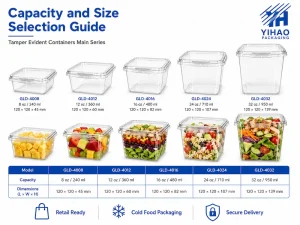
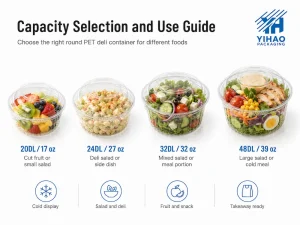
Size selection should start from menu structure, not from cup appearance alone. A cup that looks attractive may still fail if it does not match the drink volume, ice ratio, foam height, toppings, sealing method, or lid type. For wholesale buyers, size planning also affects carton volume, storage cost, pallet loading, freight efficiency, and reorder management.
For iced coffee, lemonade, juice, cold brew, and iced tea, buyers often use medium-volume clear cups to show color and ice. For smoothies, fruit tea, milk tea, matcha, refreshers, and drinks with toppings, larger sizes and compatible dome lids or sipper lids improve presentation and reduce overflow risk. For tasting menus, kids’ drinks, sampling, or compact retail programs, smaller sizes improve portion control and cost management.
| Cup Size Range | Typical Use | Design Priority | Common Buyer Mistake |
|---|---|---|---|
| Small | Samples, juice, kids’ drinks, compact cold drinks | Clear logo visibility on limited print area | Using artwork that is too detailed |
| Medium | Iced coffee, lemonade, cold brew, iced tea | Balanced branding and drink visibility | Ignoring lid compatibility |
| Large | Smoothies, milk tea, refreshers, fruit drinks | Strong visual impact and topping space | Choosing weak wall strength for heavy drinks |
| Extra Large | Premium drinks, sharing drinks, large takeaway menus | Stable grip, stackability, and reliable lid fit | Underestimating carton volume and freight cost |
For cold drink programs, buyers can compare clear PET/RPET cold cups, medium cold drink cups, large smoothie and milk tea cups, and large takeaway beverage cups before confirming a full custom printing order.
What Printing Methods Are Used for Custom Printed Cups?
Common printing methods include screen printing, offset printing, flexographic printing, digital printing, labels, sleeves, and selected molded decoration options. The best method depends on order quantity, artwork complexity, color requirements, cup material, print area, budget, lead time, and repeat-order plan.
| Printing Method | Best For | Strength | Buyer Note |
|---|---|---|---|
| Screen Printing | Simple logos and bold brand colors | Strong color coverage | Best for clean designs with limited colors |
| Offset Printing | Higher-volume cup orders | Stable production consistency | Requires proper artwork and plate preparation |
| Flexographic Printing | Packaging films, sleeves, labels, and selected cup programs | Efficient for repeat production | Check color tolerance and substrate compatibility |
| Digital Printing | Short runs, seasonal testing, limited campaigns | Flexible artwork change | Unit cost may be higher for large orders |
| Labels or Sleeves | Private label and retail-ready beverage packs | Flexible branding and barcode placement | Confirm adhesive, shrink, and cold-chain performance |
For branded food packaging, clean artwork often performs better than busy artwork. A strong logo, readable drink name, limited color palette, and clear product window usually work better than full-surface graphics that hide the beverage. For clear cups, the drink itself is part of the visual design.
What Are the Common Printing Limits on Custom Printed Cups?
Printed cups have physical and production limits that buyers should understand before approving artwork. A cup is not a flat poster. Tapered walls, curved surfaces, rim areas, stacking ribs, grip zones, and bottom curves all affect the final print result. A good custom printed cups supplier should explain these limits before sampling.
| Printing Limit | Possible Issue | Better Buyer Decision |
|---|---|---|
| Tapered cup wall | Artwork may appear stretched or slightly distorted | Review the design on an actual cup mockup or sample |
| Small text | Fine letters may lose readability after printing | Use larger text and avoid unnecessary micro-copy |
| Transparent cup background | Low-contrast artwork may disappear against light drinks | Use stronger contrast or controlled color blocks |
| Full-wrap printing | Drink visibility may be reduced | Balance branding with a clear viewing area |
| Rim and stacking zones | Print may rub, deform, or affect stacking appearance | Keep artwork away from functional cup areas |
| Color tolerance | Proof color and mass production color may vary slightly | Confirm acceptable color range before bulk order |
These limits do not make custom printing difficult. They simply mean buyers should treat artwork approval as a technical packaging step. The best result comes from matching design ambition with cup shape, printing method, material surface, and real production conditions.
How Should Artwork Be Prepared for Custom Printed Cups?
Artwork should be prepared with the final cup structure in mind. A flat logo does not automatically look correct on a tapered cup wall. Curved surfaces, stacking ribs, rim areas, bottom radius, and grip zones affect how the print appears after production.
Artwork Preparation Checklist
- Use vector artwork for logos and line graphics.
- Confirm Pantone or brand color references before production.
- Keep small text away from curved or ribbed areas.
- Leave enough clear space around the logo.
- Check whether the print area interferes with cup stacking.
- Confirm barcode size and scan position for retail programs.
- Review artwork on the actual cup size, not only on a flat PDF.
- Approve pre-production samples before bulk manufacturing.
For private label food packaging projects, buyers should also confirm carton marks, inner bag labels, production batch coding, barcode placement, and retail-ready outer packaging. A good supplier connects cup printing, carton labeling, and logistics requirements into one controlled packaging program.
Which Lids Should Be Matched with Custom Printed Cups?
Lids must be selected together with the cup. A printed cup with the wrong lid creates leakage, poor customer experience, and complaints from retail or foodservice teams. Lid selection depends on drink type, topping height, straw use, sealing preference, takeaway distance, and display format.
| Lid Type | Best Use | Main Benefit | Buyer Checkpoint |
|---|---|---|---|
| Flat Lid with Straw Slot | Iced coffee, lemonade, juice, cold brew | Simple and practical takeaway use | Confirm rim fit and straw slot style |
| Strawless Sipper Lid | Iced tea, refreshers, juice, cold drinks | Modern drink-through experience | Confirm sipping comfort and spill resistance |
| Dome Lid | Smoothies, milkshakes, whipped cream, fruit yogurt drinks | More topping height and premium presentation | Confirm dome height and cup diameter |
| Sealing Film | Milk tea, boba, takeaway drink chains | Secure sealed drink format | Confirm cup rim, sealing machine, and film compatibility |
Buyers planning printed beverage programs should review cold cup lids early in the project. For practical drink menus, flat lids with straw slots, strawless sipper lids, and dome lids for smoothies and foam-topped drinks cover many mainstream beverage scenarios.
Can Custom Printed Cups Be Used for Private Label Food Packaging?
Yes. Custom printed cups are often part of private label food packaging programs for beverage chains, supermarkets, convenience stores, cafes, dessert shops, bakeries, distributors, and foodservice groups. Private label projects usually require stronger control than standard wholesale cups because the packaging must support brand identity, retail display, repeat supply, and internal quality standards.
Private label buyers should define the complete packaging system before production. That includes cup size, material, lid, artwork, carton packing, barcode, palletization, inspection standard, documentation, and reorder process. A private label cup should look consistent across batches, fit the same lids repeatedly, and arrive in cartons that match the buyer’s warehouse workflow.
For broader foodservice programs that combine beverages with snacks, salads, desserts, chilled foods, fruit cups, and grab-and-go items, buyers can connect printed cups with custom food containers and related display packaging. This creates a more consistent brand experience across drink counters, retail shelves, and takeaway menus.
How to Order Custom Printed Cups from a Manufacturer
Ordering wholesale custom printed cups becomes easier when the buyer follows a clear process. A structured workflow reduces mistakes in material choice, artwork preparation, lid matching, carton planning, and bulk production. It also helps the manufacturer give a more accurate recommendation and quote.
| Step | Buyer Action | Supplier Check | Why It Matters |
|---|---|---|---|
| 1 | Confirm cup material and size | Recommend PET, rPET, PP, PLA, or paper-based options | Ensures the cup matches drink type and market position |
| 2 | Choose lid type | Test flat lid, dome lid, strawless lid, or sealing film | Prevents leakage and poor takeaway performance |
| 3 | Submit artwork | Check logo position, print area, color references, and file format | Improves print accuracy before sample production |
| 4 | Approve sample | Confirm print quality, lid fit, stacking, clarity, and handling | Reduces risk before bulk order |
| 5 | Confirm carton packing | Check inner bag, carton marks, quantity, and pallet loading | Supports storage, freight, and warehouse handling |
| 6 | Start bulk order | Control batch consistency, inspection, and export documents | Protects repeat supply and brand consistency |
For buyers planning custom OEM food packaging, this workflow also supports better communication between purchasing, design, marketing, quality control, and warehouse teams. The clearer the project brief, the easier it is for the supplier to recommend the right cup structure and printing solution.
What Should Buyers Ask Before Ordering Wholesale Custom Printed Cups?
Wholesale orders require clear answers before artwork approval and bulk production. Buyers should not rely only on catalog photos. Physical samples, lid tests, stacking checks, color confirmation, and carton planning are essential.
| Question | Why It Matters | Recommended Buyer Action |
|---|---|---|
| What material is best for my drink menu? | Different drinks require different clarity, stiffness, and sealing performance | Share drink types, ice ratio, toppings, and serving conditions |
| Which cup sizes should I start with? | Too many sizes increase inventory complexity | Select core sizes first, then expand after menu validation |
| Can the lid match be tested? | Lid failure creates leakage and complaints | Request cup-lid samples before mass production |
| What printing method fits my artwork? | Artwork complexity affects cost and output quality | Send vector files and confirm color targets |
| What documents are available? | Food-contact and export checks require traceable documents | Request material and production documentation early |
| How is the cup packed? | Carton size affects freight, storage, and handling | Confirm carton quantity, inner bag, and pallet loading |
How Do Custom Printed Cups Compare with Standard Clear Cups?
Standard clear cups are practical for flexible inventory, low-risk ordering, fast testing, and multi-brand distribution. Custom printed cups are stronger when the buyer needs brand recall, premium presentation, repeat customer recognition, seasonal campaigns, private label identity, and consistent retail presence.
| Comparison Point | Standard Clear Cups | Custom Printed Cups |
|---|---|---|
| Brand visibility | Limited | Strong logo and campaign visibility |
| Inventory flexibility | High | Requires better forecast planning |
| MOQ and setup | Lower complexity | Artwork, plate, color, and sample steps required |
| Retail impact | Relies mainly on drink appearance | Combines drink visibility with brand identity |
| Best buyer type | Distributors, startup menus, flexible operations | Chains, private label brands, established drink programs |
A smart purchasing strategy often starts with standard clear cups for size testing, then moves to printed cups after the buyer confirms menu volume, lid fit, and reorder demand. This reduces risk and improves the final custom packaging result.
What Makes a Good Custom Printed Cup Manufacturer?
A good manufacturer understands packaging structure, printing control, material selection, lid matching, sample approval, wholesale production, and export documentation. The supplier should not only ask for a logo file. They should ask about the drink menu, target market, use condition, lid type, artwork requirements, carton needs, and expected reorder plan.
For custom OEM food packaging, buyers should look for a supplier that can manage both product engineering and brand execution. The cup must function as packaging first and branding second. If the cup fails in stacking, sealing, stiffness, or lid fit, good printing cannot save the project.
Supplier Evaluation Points
- Experience with PET, rPET, PP, PLA, or paper cup structures.
- Ability to match cups with flat lids, dome lids, strawless lids, or sealing systems.
- Clear artwork review process before production.
- Sample approval before bulk manufacturing.
- Document control for food-contact packaging orders.
- Consistent carton packing and export-ready shipment planning.
- Realistic communication about color tolerance, printing limits, and lead time.
- Stable repeat-order records for private label and wholesale buyers.
Common Ordering Mistakes to Avoid
Most problems in custom printed cup projects happen before production starts. Buyers can avoid these issues by confirming specifications, artwork, and samples carefully.
| Mistake | Result | Better Approach |
|---|---|---|
| Choosing size by appearance only | Wrong serving volume or poor lid fit | Test with real drinks, ice, and toppings |
| Using complex artwork on small cups | Unreadable logo or messy visual result | Simplify artwork and increase clear space |
| Ignoring lid compatibility | Leakage and customer complaints | Approve cup and lid together |
| Skipping sample approval | Bulk order risk | Confirm physical samples before mass production |
| Not checking carton size | Higher storage and freight pressure | Review packing quantity and pallet plan |
| Treating all materials the same | Wrong application match | Choose material based on drink type and market claim |
FAQ: Custom Printed Cups
1. What are custom printed cups used for?
Custom printed cups are used for iced coffee, cold brew, lemonade, juice, milk tea, boba drinks, smoothies, matcha, refreshers, sparkling fruit drinks, yogurt beverages, takeaway drinks, event drinks, and private label beverage programs. They help foodservice and retail brands combine drink packaging with visible brand identity.
2. Which material is best for custom printed cups?
PET is strong for clear cold drink presentation, rPET supports recycled-content positioning when documentation and local claim rules are confirmed, PP is useful for flexible handling and selected sealed drink formats, and PLA fits cold-use programs where compostable-positioned packaging is required. The best material depends on drink type, lid style, market rules, and brand positioning.
3. Can custom printed cups be ordered wholesale?
Yes. Wholesale orders are common for drink chains, distributors, supermarkets, cafes, bakeries, private label brands, and foodservice groups. Buyers should confirm cup size, material, lid fit, artwork, printing method, carton packing, samples, and documentation before approving bulk production.
4. What files are needed for custom cup printing?
Buyers should provide vector logo files, brand color references, artwork layout, barcode requirements if needed, print position instructions, and any packaging label or carton mark requirements. A physical or digital proof should be reviewed before sample approval and mass production.
5. How should buyers choose a custom printed cup supplier?
Buyers should choose a supplier that understands cup materials, lid compatibility, printing limits, food-contact packaging requirements, OEM customization, wholesale production, export packing, and repeat-order consistency. The supplier should guide sample testing before bulk orders.
6. Can custom printed cups be recycled?
Recyclability depends on the cup material, local recycling system, contamination level, print coverage, label or sleeve structure, and regional collection rules. Buyers should avoid broad recycling claims without checking the destination market and should confirm whether PET, rPET, PP, PLA, paper, ink, label, and sleeve choices fit local recovery systems.
7. What should buyers prepare before requesting a quote for custom printed cups?
Buyers should prepare cup size, material preference, lid type, intended beverage use, artwork file, target order quantity, destination market, carton requirements, barcode needs, and any private label or OEM packaging instructions. A clearer project brief helps the supplier recommend accurate options and reduce sample revisions.
References
- U.S. Food and Drug Administration, Packaging & Food Contact Substances guidance.
- Electronic Code of Federal Regulations, 21 CFR 175.105, Adhesives for food-contact packaging use.
- European Commission, Food Contact Materials legislation and Regulation (EC) No 1935/2004.
- European Printing Ink Association, Good Manufacturing Practice for Printing Inks for Food Contact Materials.
- ISO, ISO 22000 Food Safety Management information and food chain management principles.
- U.S. FDA, Food Packaging and Other Substances that Come in Contact with Food consumer information.
- Swiss Federal Food Safety and Veterinary Office, materials and articles in contact with food.
- Food Packaging Forum, food contact chemicals and packaging material research resources.
Deep-Dive Insights
How buyers should think about custom printed cups
Buyers should start from the drink program, not the logo. A printed cup must match the beverage format, lid system, filling volume, ice ratio, topping height, grip comfort, takeaway route, and retail display requirement. Branding matters, but packaging performance decides whether the cup works in daily operations.
Why clear cups need balanced printing
Clear PET and rPET cups sell through visibility. If the print covers too much of the cup, the buyer may lose the visual value of the drink itself. For iced coffee, smoothies, lemonade, fruit tea, milk tea, and refreshers, balanced printing usually performs better than heavy full-wrap graphics because the customer can still see color, texture, ice, foam, fruit, and freshness.
What buyers should test before repeat orders
Before repeating a large custom cup order, buyers should test lid fit, stacking stability, print durability, color consistency, carton strength, warehouse handling, and customer feedback. Repeat supply is where a custom project proves its value. A cup that looks good in a sample but creates problems in storage, transport, or service is not a strong packaging choice.
Why supplier consistency matters more than the lowest unit price
The lowest unit price does not always mean the lowest packaging cost. Poor lid fit, inconsistent printing, weak cartons, unclear documentation, delayed communication, and unstable repeat supply can create higher operational risk. For wholesale custom printed cups, buyers should compare total packaging reliability, not only the quoted unit price.
Option buyers should prioritize first
Most buyers should begin with a small set of proven cup sizes and compatible lids. After the menu, sales channel, and reorder volume are stable, the brand can expand into seasonal designs, private label cartons, full beverage series packaging, and wider OEM plastic packaging programs.
Consideration for long-term supply
A successful custom printed cup project needs repeatable production. Buyers should work with a supplier that can maintain material consistency, print quality, artwork records, carton specifications, and reorder communication across future batches.
Final Note / Practical Takeaway
© YIHAO Packaging. All rights reserved. All articles, product images, packaging designs, technical specifications, and website materials are protected by copyright. Unauthorized copying, reproduction, redistribution, modification, or commercial use is strictly prohibited without prior written permission.