PET Fruit Containers vs Alternative Packaging: How Buyers Should Choose
PET fruit containers are widely used for retail fruit packaging because they make fresh produce visible, organized, easy to handle, and suitable for chilled display. They are used for berries, grapes, apples, kiwi, mango, dragon fruit, fresh-cut fruit, fruit cups, fruit bowls, fruit-and-nut snack packs, and specialty produce sold through supermarkets, cafes, convenience stores, fresh produce brands, distributors, and foodservice channels.
However, PET is not the only possible packaging direction. Buyers may also compare paperboard boxes, molded fiber trays, film bags, open produce trays, PP containers, lidded bowls, and tamper-evident containers. Each option has a different role. The right choice depends on whether the buyer needs clear retail display, ventilation, moisture control, strong closure, premium shelf presentation, takeaway handling, or visible first-opening confidence.
YIHAO is a food packaging manufacturer and solution provider focused on practical PET/RPET packaging systems for fresh produce, berries, fresh-cut fruit, fruit-and-nut packs, salad, deli, bakery, takeaway, and chilled retail display applications. This comparison guide explains how food packaging teams should evaluate PET fruit containers against alternative packaging options before wholesale ordering.
What Are PET Fruit Containers?
PET fruit containers are clear plastic containers designed for fresh fruit and produce packaging. They may be hinged clamshells, vented berry containers, fresh-cut fruit containers, compartment fruit-and-nut packs, cell-based specialty fruit clamshells, or larger retail fruit packs. PET is commonly selected because it provides strong transparency, lightweight handling, and a clean retail appearance.
For fruit packaging, visibility matters. Shoppers want to see berry color, grape condition, mango cubes, melon texture, apple slice brightness, kiwi quality, mixed fruit variety, and portion fullness before purchase. Clear PET packaging allows the fruit to become the main selling image.
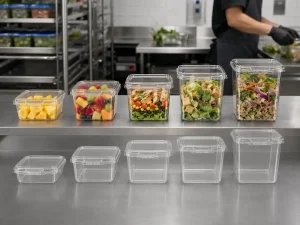
For buyers building a wider produce packaging range, fresh produce packaging containers should be reviewed first because fruit packaging often includes whole produce, berries, fresh-cut fruit, apple clamshells, specialty fruit formats, and snack fruit packs.
Why Buyers Compare PET Fruit Containers with Alternatives
Buyers compare packaging alternatives because fruit products behave differently. Whole berries need airflow. Fresh-cut fruit releases juice. Grapes need stable stacking. Apples and kiwi need impact protection. Fruit-and-nut packs need separation between wet and dry ingredients. Premium fruit needs strong shelf presentation. Ready-to-eat fruit may need tamper-evident structure.
No single packaging format is best for every fruit program. PET works very well when clear display, closure, stacking, and chilled retail presentation matter. Alternative formats may work when branding surface, low-cost bulk handling, breathability, or non-clear presentation matters more.
| Packaging Option | Best-Fit Use | Main Advantage | Buyer Caution |
|---|---|---|---|
| PET fruit containers | Berries, fresh-cut fruit, fruit bowls, grapes, specialty fruit, chilled retail packs | Clear visibility, practical handling, strong shelf presentation | Venting, closure, label placement, and cold display must be tested |
| Paperboard fruit boxes | Selected branded fruit packs and dry produce programs | Printable surface and natural visual direction | Lower product visibility and stronger moisture testing required |
| Molded fiber trays | Selected whole fruit and protective tray applications | Cushioning and alternative material positioning | Limited clear display unless paired with film or lid |
| Film bags or pouches | Bulk grapes, apples, selected retail produce | Lightweight and flexible packing | Less rigid protection and weaker premium display |
| Open produce trays | Overwrapped fruit or produce display sets | Simple display and flexible filling | Requires film, label, or handling control |
PET Fruit Containers vs Paperboard Fruit Boxes
Paperboard fruit boxes can work for selected branded produce programs, gift-style fruit packs, cafe fruit sets, or products where printed surface is more important than full product visibility. They can support strong branding and a different shelf image.
The limitation is visibility. Many fruit products sell through freshness, color, and portion appearance. If the package hides the fruit, the buyer must rely more heavily on labels, windows, product photos, or customer familiarity. This can reduce impulse purchase value in chilled retail displays.
PET fruit containers are stronger when buyers need customers to see the fruit directly. They are especially useful for berries, grapes, fresh-cut fruit, fruit cups, mixed fruit, fruit-and-nut packs, and premium produce where visible quality drives purchase decisions.
For whole fruit and produce retail display, produce clamshell containers are a strong starting point. For general clear produce display, clear PET hinged clamshell containers help buyers package fruit with direct visibility and practical handling.
PET Fruit Containers vs Molded Fiber Trays
Molded fiber trays may be useful for selected whole fruit applications where cushioning, tray structure, and alternative material appearance matter. They may work for apples, pears, avocados, or other whole fruit programs where the product does not need full clear enclosure.
The trade-off is retail visibility and moisture behavior. Molded fiber packaging usually does not show the fruit as clearly as PET unless it is combined with film, window material, or an additional clear lid. It may also require careful testing with high-moisture fruit, chilled display, condensation, and label placement.
PET containers are usually stronger when the buyer needs a clear top view, sidewall visibility, secure closure, and retail-ready presentation in one structure. For premium specialty fruit, six-cell PET fruit clamshells and two-cell PET fruit clamshells help protect individual fruit pieces while keeping the product visible.
PET Fruit Containers vs Film Bags and Pouches
Film bags and pouches are common for selected bulk produce applications. They are lightweight, flexible, and space-efficient. They may work well for apples, grapes, citrus, and some loose produce programs where rigid protection is not the main requirement.
The limitation is structure. Film bags usually provide less rigid protection than PET clamshells. They may not protect delicate berries, fresh-cut fruit, or premium produce as well during stacking and handling. They also create a different retail display effect. The fruit may be visible through film, but the package usually lacks the same shape stability, stacking discipline, and premium structure as a PET clamshell.
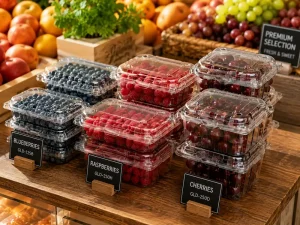
For berries and delicate produce, PET fruit containers often provide a better balance of visibility, rigidity, ventilation, and retail handling. Specific options such as vented clamshell packs for blueberries, vented berry clamshell containers, and clamshell produce containers for blueberries and raspberries help buyers package delicate fruit with better structure and shelf presentation.
PET Fruit Containers vs Open Produce Trays
Open produce trays are useful when buyers want a simple tray base with overwrap film, sleeve labels, or in-store packing flexibility. They can work for selected fruit assortments, produce display sets, and controlled retail programs.
The trade-off is closure. Open trays usually need film, overwrap, or another sealing method. If the film is loose, label placement is poor, or the product shifts during handling, the retail appearance can weaken. Open trays may also be less practical for takeaway fruit portions, grab-and-go fruit cups, or ready-to-eat fresh-cut fruit that needs stronger lid control.
PET lidded fruit containers are stronger when buyers need the package to close as a complete unit. They are useful for retail display, takeaway, chilled fruit, and self-service environments where the customer picks up the pack directly from the shelf.
PET Fruit Containers vs PP Containers
PP containers are more relevant when heat resistance, flexible handling, or selected prepared food applications matter. For fruit packaging, however, most retail programs prioritize clarity, cold display, and visual freshness. PET usually offers stronger crystal-clear presentation for chilled fruit and fresh produce.
PP may still be useful for certain foodservice or mixed-use prepared food programs, but it is not usually the first choice when the buyer wants premium fruit visibility. For berries, fruit cups, fresh-cut fruit, and chilled retail fruit, PET/RPET containers usually present the food more clearly.
Buyers should not choose material by habit. They should define whether the product is whole fruit, cut fruit, chilled display fruit, fruit-and-nut snack pack, or another prepared food format before selecting PET, RPET, PP, paperboard, molded fiber, or film packaging.
PET Fruit Containers vs Tamper Evident Fruit Containers
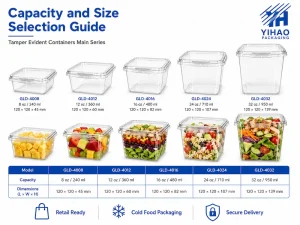
This comparison is slightly different because many tamper evident fruit containers can also be PET. The real difference is not the material. The difference is the closure function. A standard PET fruit container focuses on visibility, closure, and handling. A tamper-evident fruit container adds visible first-opening evidence.
Buyers should choose tamper-evident fruit packaging when the fruit is ready to eat, cut, portioned, self-service, delivery-sensitive, or handled by several parties before customer opening. This is especially relevant for fresh-cut fruit, fruit salad, fruit cups, grab-and-go fruit portions, and snack fruit packs.
For buyers comparing secure packaging across the full food program, tamper evident containers should be reviewed together with standard fresh produce packaging. For small cold-case applications, anti-fog tamper-evident containers are useful when visibility and first-opening confidence both matter.
PET Fruit Containers for Fresh-Cut Fruit
Fresh-cut fruit requires different packaging logic from whole fruit. Mango cubes, melon, pineapple, grapes, apple slices, kiwi, berries, citrus, and mixed fruit portions release moisture after cutting. They also need clear display because customers judge freshness by color and surface condition.
Fresh-cut fruit tamper packaging becomes more important when the product is ready to eat and sold through self-service retail or takeaway channels. The container should show the fruit clearly, close reliably, support label placement, and perform under refrigeration.
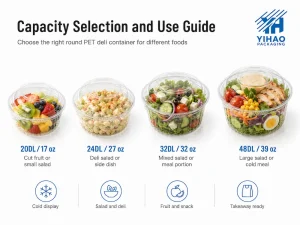
For fresh-cut fruit programs, fresh-cut fruit containers should be evaluated separately from whole produce clamshells. Products such as 1lb PET fresh-cut fruit containers and 2lb PET fresh-cut fruit containers support chilled display, retail takeaway, and family-size fruit packs.
PET Fruit Containers for Berry Packaging
Berries need a different kind of packaging evaluation. Blueberries, raspberries, strawberries, blackberries, and mixed berries are delicate. The container should protect the fruit from excessive compression while supporting airflow and retail display.
For berry programs, venting is a core design factor. Labels should not block key airflow areas. Stack height should be tested with filled packs. Closure should be secure enough for handling but clear enough for customers to open without damaging the fruit.
For premium retail berry packaging, premium flip-top agricultural containers, transparent-base blueberry clamshells, flip-top containers for blueberries and strawberries, and 6oz flip-top berry containers help buyers compare ventilation, closure, and retail display performance.
PET Fruit Containers for Fruit-and-Nut Snack Packs
Fruit-and-nut packs combine wet fruit with dry ingredients. This makes the packaging decision more complex. Apple slices, grapes, mango, berries, nuts, cheese, crackers, dried fruit, and granola should stay separated so dry items do not soften before purchase.
For this application, standard single-compartment packaging may not be enough. Compartment PET containers help separate food types and improve retail presentation. They also make the product easier to understand quickly because customers can see each component clearly.
For daily snack retail, fruit and nut containers are useful for simple fresh snack packs. For separated wet-and-dry formats, two-compartment fruit and nut containers and three-compartment snack containers help buyers build more reliable fruit snack packaging.
When PET Fruit Containers Are the Better Choice
PET fruit containers are the better choice when the buyer needs clear display, product protection, practical closure, retail shelf structure, and chilled takeaway performance in one packaging format.
Choose PET fruit containers when:
- The product sells through visual freshness and color.
- The fruit needs clear top-view and sidewall display.
- The package must close as a complete retail-ready unit.
- The product is sold through chilled retail or takeaway channels.
- The fruit is delicate enough to need rigid protection.
- The buyer needs vented berry clamshells or structured produce packs.
- The product is fresh-cut fruit, fruit cups, fruit bowls, or fruit-and-nut packs.
- The supplier must support repeatable wholesale packaging consistency.
When Alternative Packaging May Be Enough
Alternative packaging may be enough when the product does not need full clear enclosure, does not rely heavily on visual display, or is sold through a more controlled handling route. Paperboard boxes may work for branded fruit gifts. Molded fiber trays may work for selected whole fruit. Film bags may work for bulk or flexible produce packs. Open trays may work when overwrap film is already part of the retail operation.
The buyer should not treat alternative packaging as automatically better or worse. Each option should be tested against the fruit type, sales channel, label design, cold-chain conditions, and handling route.
Retail Display Comparison: PET vs Alternatives
| Retail Need | PET Fruit Containers | Alternative Packaging | Buyer Decision Logic |
|---|---|---|---|
| Product visibility | Strong clear top-view and sidewall display | Varies by paper, film, fiber, or tray design | Choose PET when visual freshness drives purchase |
| Fruit protection | Rigid structure helps protect delicate fruit | Film bags and open trays may offer less protection | Test with real fruit and stacking pressure |
| Ventilation | Vented clamshells can support airflow | Open trays and some bags may breathe differently | Match venting to berry and produce behavior |
| Branding surface | Usually label-based branding | Paperboard may offer more printable area | Choose based on whether display or printing matters more |
| Tamper evidence | Available in selected PET secure structures | Requires separate sealing or closure system | Use tamper evidence for ready-to-eat fruit channels |
Wholesale Buyer Testing Checklist
Buyers should test PET fruit containers and alternative packaging with real fruit before approving wholesale orders. Empty samples do not show condensation, bruising risk, fruit movement, juice release, closure behavior, label interference, or filled stacking performance.
| Test Area | What to Check | Why It Matters |
|---|---|---|
| Fruit fit | Portion fullness, cavity fit, fruit movement, and overfill risk | Protects appearance and reduces bruising |
| Visibility | Top-view clarity, sidewall visibility, scratches, fogging, and label coverage | Improves retail display and customer confidence |
| Closure | Hinge strength, snap fit, opening force, and lid engagement | Supports takeaway handling and shelf reliability |
| Venting | Vent location, airflow path, and label interference | Important for berries and selected fresh produce |
| Moisture behavior | Juice release, condensation, mixed fruit performance, and cold display appearance | Critical for fresh-cut fruit and chilled fruit packs |
| Stacking | Filled packs in cartons, shelves, coolers, and takeaway bags | Reduces crushing, deformation, and handling complaints |
| Tamper evidence | Visible first-opening feature before and after opening if required | Supports customer confidence in self-service channels |
| Bulk consistency | Sample-to-order clarity, hinge behavior, closure, venting, and carton protection | Reduces repeat-order quality risk |
Manufacturer, Wholesale, and Supplier Checklist
When sourcing from a food packaging factory, buyers should evaluate application knowledge, not only unit price. A reliable manufacturer or supplier should understand fruit behavior, PET/RPET clarity, venting, closure structure, carton protection, sample testing, and repeat-order consistency.
Ask these questions before choosing a manufacturer, wholesale supplier, or export partner:
- Does the supplier offer PET fruit containers, produce clamshell containers, berry clamshells, fresh-cut fruit containers, and compartment fruit packs?
- Can the supplier recommend packaging by fruit type: berries, grapes, apples, kiwi, mango, dragon fruit, fresh-cut fruit, or fruit-and-nut packs?
- Can the supplier compare PET containers with paperboard, molded fiber, film bags, open trays, and tamper-evident alternatives?
- Are PET and RPET options available with suitable documentation where needed?
- Which options support ventilation, strong closure, or tamper-evident first-opening features?
- Can samples be tested with real fruit before bulk confirmation?
- How are containers packed to reduce scratches, deformation, and lid damage?
- Can the supplier maintain sample-to-bulk consistency in clarity, rim shape, hinge behavior, venting, closure, and carton packing?
- Can the supplier help reduce SKU overlap across whole fruit, berry, fresh-cut, and snack fruit programs?
Common Buying Mistakes to Avoid
Choosing Alternative Packaging Because It Looks Trendier
Trend value is not the same as application fit. A paperboard or molded fiber option may look attractive, but if it hides the fruit or performs poorly with moisture, it may reduce retail conversion.
Choosing PET Only Because It Is Clear
Clarity is valuable, but it is not enough. Buyers still need to test closure, venting, stacking, condensation, label placement, and real fruit behavior.
Ignoring Ventilation for Berries
Berry packaging needs careful airflow planning. Labels or sleeves should not block key vent areas. Filled-pack testing matters more than empty-pack review.
Assuming Tamper Evidence Means Leak-Proof
Tamper-evident packaging shows visible first-opening evidence. It does not automatically guarantee leak-proof performance for fruit juice, syrup, dressing, or high-moisture cut fruit.
Approving Empty Samples Only
Empty samples do not show condensation, bruising, fruit movement, juice release, stacking pressure, or retail shelf appearance. Buyers should test actual fruit before wholesale approval.
Using One Fruit Package for Every Product
Berries, fresh-cut mango, grapes, apples, kiwi, fruit cups, and fruit-and-nut packs need different packaging logic. A focused packaging matrix works better than one universal container.
Buyer Decision Framework
Use this framework when comparing PET fruit containers with alternative packaging:
- Define the fruit type: berries, grapes, apples, kiwi, mango, dragon fruit, fresh-cut fruit, mixed fruit, or fruit-and-nut snacks.
- Confirm the food state: whole fruit, cut fruit, washed fruit, mixed fruit, ready-to-eat fruit, or snack combination.
- Define the retail need: clear display, printed branding, cushioning, ventilation, takeaway handling, or tamper evidence.
- Compare packaging directions: PET/RPET containers, paperboard boxes, molded fiber trays, film bags, open produce trays, or tamper-evident containers.
- Select the structure: vented clamshell, flip-top berry container, fresh-cut fruit container, cell-based clamshell, compartment snack pack, or alternative pack.
- Test real conditions: filling, closing, labeling, venting, refrigeration, stacking, transport, shelf display, and customer opening.
- Evaluate the supplier: sample support, carton protection, repeat consistency, and application guidance.
FAQ
1. What are PET fruit containers used for?
PET fruit containers are used for berries, grapes, fresh-cut fruit, fruit cups, fruit bowls, fruit-and-nut packs, specialty produce, and chilled retail fruit products that need clear visibility, closure reliability, and practical handling.
2. Are PET fruit containers better than paper fruit boxes?
PET fruit containers are usually better when clear product visibility and chilled retail display matter. Paper fruit boxes may work when branding surface is more important, but buyers should test moisture behavior and product visibility before choosing them.
3. When should buyers choose tamper evident fruit containers?
Buyers should choose tamper evident fruit containers when fruit is cut, portioned, ready to eat, self-service, delivery-sensitive, or handled by multiple parties before customer opening.
4. Are PET fruit containers suitable for berries?
Yes. PET fruit containers are suitable for berries when the structure supports ventilation, gentle handling, clear display, stable stacking, and reliable closure. Berry packs should be tested with real fruit before wholesale approval.
5. What is the best packaging for fresh-cut fruit?
Clear PET/RPET fresh-cut fruit containers are strong for retail display because they show freshness and portion value. Buyers should test moisture, juice release, condensation, lid fit, label placement, and tamper-evident needs.
6. How should buyers choose a fruit packaging manufacturer or supplier?
Buyers should choose a supplier that understands fruit type, PET/RPET material, vented clamshell design, fresh-cut fruit packaging, tamper-evident options, carton protection, sample testing, and wholesale packaging consistency.
References
- U.S. Food and Drug Administration, Food Contact Substances and Food Packaging Guidance.
- U.S. Food and Drug Administration, Food Tampering and Consumer Packaging Guidance.
- European Commission, Regulation (EC) No 1935/2004 on Materials and Articles Intended to Come into Contact with Food.
- European Commission, Regulation (EU) No 10/2011 on Plastic Materials and Articles Intended to Come into Contact with Food.
- European Food Safety Authority, Guidance on Plastic Recycling Processes for Food Contact Materials.
- Association of Plastic Recyclers, APR Design Guide for Plastics Recyclability.
- RecyClass, Design for Recycling Guidelines for PET Packaging.
- GS1, General Guidance on Retail Barcode and Label Placement.
Final Note / Practical Takeaway
© YIHAO Packaging. All rights reserved. All articles, product images, packaging designs, technical specifications, and website materials are protected by copyright. Unauthorized copying, reproduction, redistribution, modification, or commercial use is strictly prohibited without prior written permission.