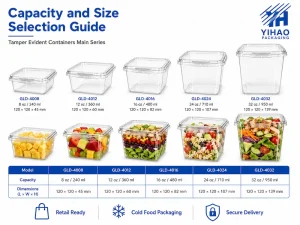
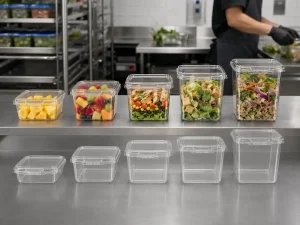
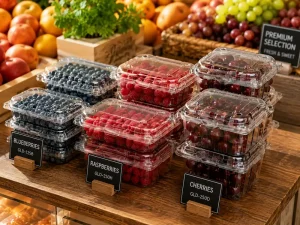
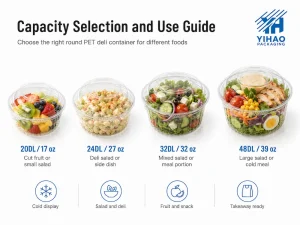
Finding the right food packaging supplier is one of the most important sourcing decisions for food brands, distributors, supermarkets, cafes, bakeries, convenience stores, and importers. Packaging affects product visibility, food protection, cold shelf presentation, customer trust, order efficiency, inventory control, and brand consistency. A low unit price means little if the container does not fit the food, the lid does not close securely, the material is not suitable for the intended use, or the supplier cannot support stable wholesale supply.
For professional buyers, the better question is not “Who offers the cheapest container?” The better question is “Which food packaging supplier can support the right product range, material logic, sample testing, customization, documentation, communication, and long-term supply?” That question separates a real manufacturing partner from a short-term seller.
YIHAO works as a food packaging manufacturer and solution provider for buyers comparing PET/RPET food containers, fresh produce packaging, deli and salad containers, bakery packaging, tamper-evident containers, cold cups and lids, microwave-safe containers, and custom food packaging solutions. This guide gives buyers a practical manufacturer and supplier checklist before requesting samples, comparing quotations, or placing wholesale orders.
Quick Buyer Checklist Before Choosing a Food Packaging Supplier
Before comparing prices, buyers should first confirm whether the supplier understands food application, material selection, structure, sampling, customization, and wholesale supply logic. The checklist below gives procurement teams a fast starting point.
| What to Check | Why It Matters | Strong Supplier Signal |
|---|---|---|
| Food application | Different foods need different material, lid, venting, stacking, and display structures. | The supplier asks about food type, filling weight, storage condition, and sales channel. |
| Material suitability | PET, RPET, PP, and other materials should match cold, hot, chilled, or display use. | The supplier explains material limits instead of claiming one material works for everything. |
| Sample testing | Real food testing helps verify lid fit, stacking, clarity, label area, and customer handling. | The supplier encourages sample review before wholesale orders. |
| Wholesale stability | A reliable supplier supports repeat orders, SKU consistency, and long-term packaging programs. | The supplier can discuss product range, reorder planning, and cross-category packaging needs. |
| Customization support | Printing, labeling, OEM, and private label work should follow confirmed product fit. | The supplier separates standard packaging selection from custom packaging development. |
Why Supplier Selection Matters in Food Packaging Procurement
Food packaging looks simple from the outside. A buyer may see a clear plastic container, a hinged clamshell, a salad bowl, a cold cup, or a tamper-evident pack and assume that similar shapes perform the same. In real procurement, small differences create big operational results. Material thickness, lid fit, hinge strength, stacking behavior, anti-fog performance, cavity depth, label area, venting, closure structure, rim compatibility, and carton packing all influence how the packaging performs in daily use.
A reliable food packaging supplier helps buyers reduce sourcing risk in several ways. First, the supplier helps match packaging to the actual food category instead of pushing one generic container for every application. Second, the supplier supports sample review before wholesale ordering. Third, the supplier understands how packaging must work across production, packing, transport, cold storage, retail display, takeaway service, and end-customer handling. Fourth, the supplier maintains product consistency so distributors and food businesses do not face unexpected size, lid, or material changes.
In other words, packaging supplier selection is a risk-control decision. The right supplier improves product presentation and purchasing efficiency. The wrong supplier creates hidden costs through leakage, poor display, mismatched lids, damaged products, weak communication, slow sampling, inconsistent production, or packaging that does not match the food use case.
Food Packaging Supplier vs Manufacturer vs Trading Company
Before comparing quotations, buyers should understand the difference between a supplier, a manufacturer, and a trading company. These words are often used together, but they do not always mean the same thing.
| Supplier Type | Typical Role | Buyer Advantage | Buyer Risk to Check |
|---|---|---|---|
| Food packaging container manufacturer | Produces containers, cups, trays, lids, or related packaging directly | Better control over product structure, material discussion, samples, and production consistency | Need to confirm product range, quality process, communication speed, and export support |
| Plastic food packaging manufacturer | Focuses on plastic formats such as PET, RPET, PP, or PLA where applicable | Useful for clear containers, cold cups, clamshells, salad bowls, and disposable food packaging programs | Need to confirm material suitability for the target food and temperature use |
| PET container manufacturer | Specializes in PET/RPET thermoformed or molded packaging | Strong fit for clear retail display, chilled food, fresh produce, bakery, deli, and beverage applications | Need to verify clarity, stacking, lid fit, anti-fog needs, and food-contact documentation |
| Trading company | Sources products from different factories and resells them | May provide broad catalog access | Less direct control over tooling, production consistency, and technical follow-up |
A trading company is not automatically bad, and a factory is not automatically good. The real issue is control. A buyer should ask who controls the mold, who controls production, who confirms materials, who handles sample correction, who manages quality feedback, and who takes responsibility when a packaging detail fails during use.
For B2B buyers, working with a disposable food container factory is often valuable when the project involves repeat wholesale orders, product range development, private label packaging, custom printing, or packaging consistency across multiple SKUs.
Start with the Food Category Before Choosing a Container
A professional food packaging supplier should ask about the food first. Packaging should not be selected only by shape, capacity, or appearance. The food type decides whether the buyer needs venting, anti-fog treatment, rigid stacking, high dome clearance, secure closure, separate compartments, heat tolerance, or strong retail visibility.
| Food Category | Common Packaging Need | Recommended Supplier Capability |
|---|---|---|
| Fresh fruit, berries, and fresh-cut fruit | Clear visibility, ventilation where needed, chilled display, portion control, stacking | Supplier should offer fresh produce packaging containers and fruit-focused clamshell or tray options |
| Salads, deli foods, nuts, and chilled meals | Lid fit, leak resistance, clear display, multiple portion sizes, cold shelf performance | Supplier should provide deli and salad containers in different shapes and capacities |
| Bakery, cakes, cookies, pastries, and chilled desserts | Product protection, dome height, presentation, hinge strength, anti-crush structure | Supplier should offer bakery containers for both retail display and takeaway use |
| Grab-and-go retail and prepared foods | Secure closure, trust signal, label area, cold shelf display, handling confidence | Supplier should offer tamper-evident containers for retail-ready food programs |
| Iced coffee, juice, smoothies, fruit tea, matcha, and cold drinks | Cup-lid compatibility, drink clarity, dome or flat lid options, branding potential | Supplier should provide cold cups and lids with practical matching logic |
| Hot takeaway, reheatable prepared meals, and deli meals | Temperature suitability, secure lid, meal portion logic, foodservice handling | Supplier should offer microwave safe containers where heat-related use is required |
This food-first approach prevents one of the most common sourcing mistakes: buying a container because it looks similar to a competitor’s package, then discovering that it does not match the buyer’s actual food weight, moisture level, display method, or service channel.
Material Checklist: PET, RPET, PP, and Other Options
Material selection is a major part of evaluating a food packaging supplier. Buyers should not accept simple claims such as “food grade,” “eco-friendly,” “recyclable,” or “premium quality” without checking what those words mean for the specific packaging item and market.
PET and RPET are widely used for clear food packaging because they provide strong visibility for chilled foods, fresh produce, bakery displays, deli products, salads, and cold drinks. A qualified PET container manufacturer should explain the difference between PET and RPET, clarify whether recycled material is available for the target product, and help buyers understand which structure works best for the application.
PP is often used when the packaging requires better heat tolerance, such as hot takeaway foods or certain microwave-related applications. A plastic food packaging manufacturer should not recommend PET for hot or microwave use unless the actual product is designed and confirmed for that condition. Likewise, a supplier should not recommend PP simply because it is available; it must match the product’s display, handling, sealing, and customer-use requirements.
| Material | Common Strength | Common Food Packaging Fit | Buyer Checkpoint |
|---|---|---|---|
| PET | High clarity, strong display value, lightweight structure | Fresh produce, deli foods, salads, bakery, chilled desserts, cold cups | Confirm food-contact suitability, clarity, lid fit, stacking, and temperature limits |
| RPET | Supports recycled material goals while keeping clear display performance | Chilled food, produce, salad, bakery, cold beverage packaging where suitable | Confirm recycled content discussion, documentation, and local recycling expectations |
| PP | Better fit for heat-related and prepared food applications | Hot takeaway, deli meals, prepared meals, microwave-related packaging where designed for that use | Confirm heat-use conditions, lid fit, and food type compatibility |
| PLA or compostable options | Supports specific compostability positioning where infrastructure exists | Cold cups or selected disposable packaging programs where applicable | Confirm temperature limits, composting infrastructure, labeling rules, and real buyer expectations |
The most professional suppliers explain both the value and the limits of each material. They do not oversell one material as perfect for every food category.
Food-Contact and Documentation Checklist
Food packaging buyers should ask direct questions about food-contact suitability. This does not mean every product needs the same document in every market. Requirements vary by country, material, product design, food type, and buyer channel. However, the supplier should be able to discuss food-contact expectations clearly and responsibly.
A strong food packaging supplier should help buyers think through these questions:
- What material is used for this container, lid, tray, or cup?
- Is the material suitable for the intended food-contact application?
- Is the product designed for cold food, room-temperature food, hot food, or microwave-related use?
- Is recycled content involved, and what documentation or discussion is available?
- Does the buyer need market-specific documentation for the United States, European Union, or another destination?
- Are there limits related to temperature, food type, storage, or reheating?
- Can the supplier provide product specifications before trial or wholesale ordering?
Professional buyers should be careful with vague answers. Phrases like “all food safe,” “works for everything,” or “no problem” are not enough for serious procurement. Better suppliers provide clear product-use guidance, explain limitations, and support buyers in confirming details before ordering.
Product Range Checklist: Can the Supplier Support a Complete Packaging Program?
A single container may solve one immediate need. A complete product range supports business growth. This is where the difference between a general seller and a serious food packaging container manufacturer becomes clear.
Buyers should check whether the supplier can support multiple food categories without creating a messy purchasing system. For example, a distributor may need fruit clamshells, salad bowls, bakery clamshells, tamper-evident packs, cold cups, lids, and microwave-safe meal containers. A cafe may need cold cups, flat lids, dome lids, dessert containers, and salad bowls. A supermarket may need produce packaging, deli containers, bakery display packaging, and secure grab-and-go food packaging.
A supplier with a connected product range helps buyers build a cleaner packaging matrix. That means fewer random SKUs, better product matching, clearer catalog planning, easier reorder communication, and stronger cross-category purchasing efficiency.
For example, buyers building a fresh fruit and chilled display program may review a large-capacity fresh-cut fruit container alongside vented clamshells and fruit snack containers. Buyers building a deli range may compare a recycled PET hinged deli container with larger hinged containers, salad bowls, and square deli packs. Buyers building a cold food display line may add a clear PET salad bowl for large salads, fruit platters, and shared chilled food portions.
Structure Checklist: Lid Fit, Closure, Stacking, and Display
Container structure matters as much as material. Two PET containers may look similar online but perform differently during packing, stacking, delivery, or retail display. The buyer should ask the supplier to explain structural details instead of only showing catalog photos.
Important structure checkpoints include:
- Lid fit: Does the lid close securely without excessive force?
- Hinge strength: Does the hinged container open and close smoothly during repeated use?
- Stacking: Can filled containers stack safely during packing, storage, and display?
- Anti-fog: Does the product need anti-fog treatment for chilled display?
- Ventilation: Do berries, produce, or baked goods need airflow?
- Dome height: Does the container protect toppings, frosting, whipped cream, muffins, or desserts?
- Label area: Is there enough space for barcodes, ingredients, branding, nutrition labels, or tamper labels?
- Portion logic: Does the container match the food weight and visual fullness expected by the customer?
For bakery programs, a clear PET hinged bakery container may support croissants, bagels, muffins, donuts, and bakery packs better than a flat, low-profile container. For cold-case grab-and-go foods, an anti-fog clear PET tamper-evident container may help buyers combine visibility, security, and retail confidence.
Custom Food Packaging Checklist
Custom food packaging is useful when buyers need branding, private label presentation, special product positioning, or a more consistent packaging identity across several SKUs. However, custom packaging should be approached carefully. Buyers should not start with logo printing before confirming the container structure, food fit, material choice, and order stage.
A professional food packaging supplier should help buyers separate standard product selection from customization decisions. For many first-time buyers, the best path is to test standard packaging first. Once the food fit, size, lid structure, and channel performance are confirmed, custom printing, label strategy, carton marking, or OEM development becomes more practical.
Key custom packaging questions include:
- Does the current product shape already match the food application?
- Is the buyer asking for custom printing, label application, embossing, color changes, or new mold development?
- Can the supplier explain what requires tooling and what can be handled through printing or labeling?
- Will the custom design affect recyclability, clarity, stacking, or lid fit?
- Is the buyer ready for repeat orders, or is the project still in early testing?
- Can the supplier support brand consistency across cups, lids, containers, trays, and cartons?
For beverage brands, custom food packaging often begins with cup-lid compatibility and menu fit. A buyer may test a clear PET cold cup for matcha, refreshers, lemonade, and iced coffee before expanding into custom printed cups or branded takeaway packaging.
Sample Testing Checklist Before Wholesale Orders
Sample testing is where many buyers save themselves from expensive mistakes. A catalog image cannot prove everything. Before choosing a food packaging supplier for wholesale orders, buyers should test real samples with real food, real handling, and real channel conditions.
Sample testing should include:
- Filling the container with the actual food weight and volume
- Checking whether the food looks full, clean, and sellable
- Opening and closing the lid multiple times
- Testing stacking during back-of-house packing or retail display
- Reviewing condensation or fogging for chilled foods
- Testing label placement and barcode readability
- Checking whether the packaging protects toppings, sauces, fruit pieces, or bakery decorations
- Confirming carton handling, storage space, and SKU management
- Testing customer experience during takeaway or grab-and-go use
A reliable supplier welcomes practical sample testing. Weak suppliers try to push bulk orders before the buyer has confirmed product fit. For professional procurement teams, sampling is not a delay; it is a filter that protects the order.
Wholesale Ordering Checklist
Wholesale food packaging requires more discipline than a one-time sample purchase. Buyers should clarify the order stage, product mix, replenishment expectations, and future growth plan. This helps the supplier recommend a practical product set instead of quoting random items.
Before placing a wholesale order, buyers should prepare:
- Food category and target application
- Estimated product weight or serving size
- Cold, room-temperature, hot, or microwave-related use condition
- Preferred material direction such as PET, RPET, PP, or another option
- Container shape preference: round, square, rectangular, hinged, separate lid, or cup system
- Required lid type: flat, dome, hinged, tamper-evident, straw slot, or sip-through
- Branding needs: blank, label-ready, printed, private label, or OEM
- Target sales channel: supermarket, cafe, bakery, foodservice, distributor, delivery, or retail cold shelf
- Sample testing plan and decision timeline
- Expected reorder pattern and SKU expansion plan
For beverage buyers, wholesale planning should include cup and lid matching from the beginning. A cup without a compatible lid system creates operational problems. A practical supplier should help buyers compare flat lids, dome lids, straw slot lids, and strawless options. For example, a clear PET flat lid may serve iced coffee, lemonade, juice, and cold brew programs where straw-based drinking is still required.
Simple RFQ Template for Food Packaging Buyers
When contacting a food packaging supplier, buyers can prepare the following information to receive more accurate recommendations, sample suggestions, and quotation details:
| RFQ Information | What Buyers Should Provide | Why It Helps |
|---|---|---|
| Food type | Fruit, salad, deli food, bakery item, drink, dessert, prepared meal, or hot food | Helps the supplier recommend the correct material and structure |
| Container size | Approximate capacity, filling weight, portion size, or current packaging dimensions | Improves product matching and avoids overlarge or undersized packaging |
| Material preference | PET, RPET, PP, PLA, or open recommendation | Supports correct use for cold display, hot food, or beverage packaging |
| Lid or closure need | Flat lid, dome lid, hinged lid, tamper-evident closure, straw slot, or secure snap lid | Prevents mismatch between container, lid, and application |
| Order plan | Trial order, wholesale order, repeat order, mixed SKU order, or long-term supply plan | Helps the supplier recommend suitable stock, sample, and packaging matrix options |
| Customization need | Printing, label area, private label, carton mark, color option, or OEM discussion | Clarifies whether the project is standard packaging or custom food packaging |
| Destination market | Target country or region for import, retail, foodservice, or distribution | Helps discuss documentation expectations and practical compliance questions |
This RFQ preparation step helps buyers avoid vague inquiries such as “Please send your best price.” A serious supplier can provide better recommendations when the buyer explains food use, material direction, lid needs, order stage, and customization expectations.
Communication Checklist: What Good Suppliers Ask Buyers
Good suppliers ask better questions. If a supplier only asks for quantity and target price, the buyer should be cautious. A professional food packaging supplier asks about food type, material preference, lid structure, channel, display condition, sample needs, branding plans, and destination market expectations.
Strong supplier communication usually includes:
- Clear product recommendations based on food application
- Warnings when the requested product does not match the intended use
- Practical alternatives when the buyer’s first choice is not ideal
- Fast response to size, material, structure, and sample questions
- Ability to explain differences between similar containers
- Product photos, specifications, and sample support before bulk order decisions
- Honest discussion of what is confirmed and what still needs confirmation
The best supplier relationship feels like a technical and commercial conversation, not just a price list exchange.
Red Flags When Choosing a Food Packaging Supplier
Buyers should watch for supplier red flags before sending a purchase order. Many sourcing problems can be predicted early from communication behavior and product information quality.
- The supplier cannot clearly explain material differences.
- The supplier says one container works for every food type.
- The supplier pushes bulk orders before sample testing.
- The supplier avoids questions about lid fit, temperature use, or food-contact suitability.
- The supplier provides unclear product photos or inconsistent specifications.
- The supplier cannot explain whether a product is better for produce, deli, bakery, beverage, or hot food use.
- The supplier focuses only on low price and ignores structure, packaging performance, and reorder stability.
- The supplier cannot support cross-category packaging needs for growing buyers.
These warning signs do not always mean the supplier is dishonest. Sometimes they simply mean the supplier is not suitable for professional B2B packaging procurement.
Manufacturer and Supplier Comparison Scorecard
Buyers can use the following scorecard before selecting a food packaging supplier. A supplier does not need to be perfect in every area, but weak performance in several areas increases sourcing risk.
| Evaluation Area | What to Check | Strong Supplier Signal |
|---|---|---|
| Manufacturing capability | Product range, factory control, production consistency | Can discuss product families, structures, and long-term supply clearly |
| Material knowledge | PET, RPET, PP, PLA, and use limitations | Explains material fit by application instead of overselling one option |
| Food-contact awareness | Documentation, market expectations, temperature limits | Gives clear guidance and avoids vague universal claims |
| Product matching | Food type, weight, moisture, display channel, lid needs | Recommends packaging based on real use conditions |
| Sampling support | Sample availability, sample testing advice, correction process | Encourages real sample testing before wholesale decisions |
| Customization support | Printing, labeling, private label, OEM development | Separates standard packaging from custom project requirements |
| Wholesale support | SKU planning, reorder communication, product continuity | Helps buyers build a practical packaging matrix |
How Buyers Should Build a Practical Packaging Matrix
For distributors and multi-category food businesses, supplier selection should connect directly with product matrix planning. A strong packaging matrix reduces confusion and improves reorder efficiency.
A practical starter matrix may include:
- Fresh produce clamshells or fruit containers for berries, fruit salads, and fresh-cut fruit
- Hinged deli containers for salads, snacks, nuts, and chilled prepared foods
- Clear salad bowls for premium salads, fruit bowls, grain bowls, and shared chilled portions
- Bakery clamshells for pastries, muffins, croissants, cookies, and desserts
- Tamper-evident containers for secure grab-and-go retail foods
- PET cold cups and matching lids for iced coffee, juice, lemonade, smoothies, matcha, and refreshers
- PP or microwave-related containers for hot food or reheatable prepared meals where required
This matrix helps buyers avoid overbuying too many unrelated packaging styles. It also helps suppliers recommend products that work together across applications. A buyer choosing packaging for chilled foods, for example, may combine fresh-cut fruit containers, hinged deli containers, salad bowls, and tamper-evident packs instead of sourcing each item from an unrelated supplier.
Why Choose YIHAO as a Food Packaging Supplier?
Buyers comparing a food packaging supplier should look for practical product knowledge, manufacturing experience, application-based recommendations, and a product range that supports real food businesses. YIHAO focuses on disposable food packaging solutions for fruit, berries, salads, deli foods, bakery items, cold drinks, chilled desserts, prepared meals, and grab-and-go retail programs.
The value is not only in supplying containers. The value is in helping buyers compare food type, material, container structure, lid fit, display logic, wholesale order planning, and custom food packaging direction before they make a purchasing decision. This matters for importers, distributors, supermarkets, cafes, bakeries, drink shops, foodservice teams, and retail food brands that need consistent packaging supply rather than scattered one-time purchases.
YIHAO supports buyers through application-based product recommendation, sample discussion before wholesale orders, PET/RPET/PP product range planning, packaging matrix development, OEM and custom food packaging communication, and practical support for distributors and importers. Instead of treating every inquiry as a simple price request, YIHAO helps buyers narrow down the right food packaging solution according to product category, sales channel, material direction, closure structure, and long-term purchasing plan.
YIHAO’s product direction includes PET/RPET clear food containers, hinged deli containers, salad bowls, bakery clamshells, cold cups, cup lids, tamper-evident packaging, multi-compartment containers, and PP containers for suitable hot food or prepared meal applications. This broad range allows buyers to build a connected packaging system instead of sourcing every category separately.
Ready to Compare Food Packaging Options?
For buyers sourcing PET containers, deli containers, bakery packs, cold cups, tamper-evident containers, microwave-safe containers, or custom food packaging for wholesale orders, YIHAO helps compare material, structure, application fit, sample options, and product range before the next purchasing decision. A clear RFQ and sample review process gives both sides a better starting point for long-term cooperation.
Final Note / Practical Takeaway
FAQ About Choosing a Food Packaging Supplier
1. What should I check first when choosing a food packaging supplier?
Start with the food application. Confirm whether the packaging is for fresh produce, salad, deli food, bakery items, cold drinks, prepared meals, or hot food. Then compare material, lid structure, sample testing, food-contact suitability, customization support, and wholesale supply capability.
2. Is a food packaging container manufacturer better than a trading company?
A food packaging container manufacturer usually provides better control over product structure, samples, material discussion, and production consistency. A trading company may offer broad sourcing access, but buyers should confirm who controls production, quality feedback, mold details, and product continuity.
3. What materials are commonly used for disposable food packaging?
Common materials include PET, RPET, PP, and selected compostable or bio-based options where applicable. PET and RPET are often used for clear chilled food display, produce, bakery, salad, and cold drink packaging. PP is more suitable for certain heat-related or prepared meal applications when the product is designed for that use.
4. Should I order samples before buying food packaging wholesale?
Yes. Sample testing helps buyers confirm food fit, lid closure, stacking, display appearance, label placement, anti-fog needs, portion size, and customer handling. A professional supplier should support sample evaluation before bulk purchasing decisions.
5. How do I request a quotation from a food packaging supplier?
Buyers should provide food type, target container size, material preference, lid requirement, order quantity, destination market, sample needs, and custom packaging requirements. This helps the supplier recommend suitable products and prepare a more accurate quotation.
References
- U.S. Food and Drug Administration, Packaging & Food Contact Substances.
- U.S. Food and Drug Administration, Guidance for Industry: Use of Recycled Plastics in Food Packaging.
- EUR-Lex, Commission Regulation (EU) No 10/2011 on plastic materials and articles intended to come into contact with food.
- European Commission, Food Contact Materials guidance and regulatory information.
- U.S. Environmental Protection Agency, Plastics: Material-Specific Data.
- Association of Plastic Recyclers, APR Design Guide for Plastics Recyclability.
- Food and Agriculture Organization of the United Nations, Postharvest Handling Practices.
- USDA Agricultural Marketing Service, Product Specifications and Requirements.
Deep Dive Insights: How Buyers Should Think About Food Packaging Supplier Selection
How does supplier selection affect packaging performance?
Supplier selection affects material choice, product fit, lid closure, stacking performance, sample correction, wholesale stability, and custom packaging execution. A serious supplier helps buyers avoid packaging decisions based only on catalog photos or unit price.
Why should buyers compare manufacturer capability before price?
Price becomes meaningful only after the buyer confirms food application, material, structure, sample performance, packaging range, and reorder reliability. A cheap container that fails during display, delivery, or customer handling creates more cost than it saves.
What is the best option for first-time wholesale buyers?
First-time wholesale buyers should start with standard packaging samples that match their food category. After confirming size, structure, material, lid fit, and display performance, they can move into larger wholesale planning or custom food packaging.
Which supplier capability matters most for growing food brands?
Growing food brands need a supplier that can support a complete product matrix across produce, deli, bakery, drinks, prepared foods, and secure retail packaging. Cross-category capability helps buyers reduce SKU confusion and build consistent packaging systems.
What should buyers confirm before final ordering?
Buyers should confirm actual food use, material, temperature condition, container size, lid structure, sample results, label placement, carton handling, custom requirements, documentation needs, and reorder expectations before placing a final wholesale order.
© YIHAO Packaging. All rights reserved. All articles, product images, packaging designs, technical specifications, and website materials are protected by copyright. Unauthorized copying, reproduction, redistribution, modification, or commercial use is strictly prohibited without prior written permission.