For food packaging buyers, compartment meal prep containers are not just divided boxes. They are practical packaging systems for portion control, reheating, menu consistency, retail display, delivery stability, and packing efficiency. A supermarket ready-meal program, a fitness meal prep brand, a school lunch supplier, a catering kitchen, and a takeaway foodservice chain may all need meal prep containers, but they do not always need the same packaging structure.
The real buying question is not simply “Which container is cheaper?” The sharper question is: which packaging format protects food quality, supports the selling channel, reduces packing mistakes, and fits the required reheating, stacking, sealing, labeling, and wholesale supply conditions?
At YIHAO, the selection process starts with the food itself. Rice and curry behave differently from grilled chicken with vegetables. Pasta with sauce behaves differently from salad toppings. A chilled ready meal has different packaging needs from a hot takeaway combo. That is why buyers should compare compartment meal prep containers with alternative packaging formats through material, structure, temperature, application, and supply-chain logic.
Why Compartment Meal Prep Containers Are Different from Standard Food Boxes
A standard food box holds food. A compartment meal prep box organizes food. That difference matters when food is sold as a complete meal rather than a loose portion. In prepared meals, buyers usually need to keep sauces away from crispy items, separate moist foods from dry foods, maintain visual order, and protect portion accuracy during packing and transport.
Compartment meal prep containers are designed with internal dividers that create two, three, or more sections inside one tray. These sections help packers place each food component in a predictable position. For retail and foodservice teams, this improves visual consistency from one pack to the next. For customers, it makes the meal look more intentional, cleaner, and easier to reheat or eat.
This structure is especially useful for rice bowls, protein meals, pasta sides, steamed vegetables, breakfast sets, school meals, airline-style portions, supermarket chilled meals, and takeaway lunch boxes. In these cases, a single open cavity often creates mixing, staining, sauce migration, or poor presentation. A compartment structure solves those problems directly.
Buyers comparing microwave safe meal prep containers should also look at lid behavior, stacking performance, wall rigidity, divider height, sealing consistency, and whether the container is suitable for the intended food temperature and reheating instructions.
Main Alternative Packaging Formats Buyers Usually Compare
When buyers evaluate compartment meal prep containers, they often compare them against six common alternatives: single-compartment PP boxes, paper bowls or paper boxes, aluminum foil trays, PET cold-food containers, CPET trays, and bagasse or molded fiber containers. Each format has a valid place, but each has limits.
Single-Compartment PP Meal Boxes
Single-compartment PP boxes are simple, familiar, and efficient for one-dish meals. They work well for fried rice, pasta, noodles, curry over rice, stews, and foods that are meant to mix together. Their advantage is packing speed and broad menu flexibility.
The limitation is separation. When a meal contains protein, vegetables, starch, and sauce, a single cavity allows foods to move together during delivery. Sauce may soften fried items, strong-colored ingredients may stain lighter foods, and portion balance becomes harder to control. For brands selling organized meal plans, this weakens the perceived value.
Paper Bowls and Paper Takeaway Boxes
Paper-based packaging gives a natural visual impression and is common for dry, bakery, salad, and some takeaway applications. Paper bowls are suitable for meals where customers value a warm, casual, kraft-style look.
However, paper packaging needs coating or lining when it contacts moist, oily, or saucy foods. It may also lose rigidity under long holding times, especially with hot sauces or oily dishes. For reheating programs, buyers must confirm whether the specific paper structure, coating, and lid combination support the intended use. Paper is not automatically better; it is simply different.
Aluminum Foil Trays
Foil trays are widely used for oven-ready meals, airline meals, catering trays, and hot prepared foods. Their strength is heat tolerance in suitable oven-style applications and strong barrier performance for certain dishes.
The tradeoff is microwave use. Foil is not the default choice for microwave meal programs, and buyers must follow channel-specific safety and appliance guidance. Foil also limits product visibility unless paired with a clear lid, which affects chilled retail display.
PET Cold-Food Containers
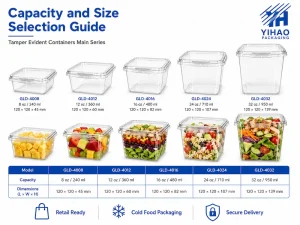
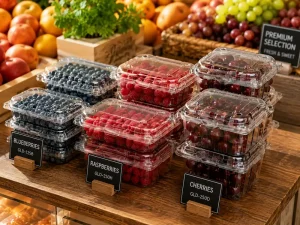
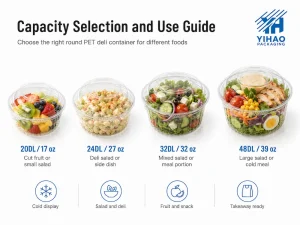
PET containers offer high clarity and strong shelf display value for chilled foods, salads, fruit, desserts, sandwiches, and deli items. They are excellent when product visibility is the main selling point. For example, deli and salad containers are usually selected when freshness, transparency, and grab-and-go presentation matter most.
The limitation is reheating. PET is typically chosen for chilled display rather than microwave reheating. For hot-food or reheatable meal programs, buyers usually move toward PP-based structures instead of clear PET formats. This distinction prevents one of the most common purchasing mistakes: using a clear cold-food container for a reheating application simply because the display looks attractive.
CPET Trays
CPET trays are often considered for higher-heat ready-meal programs, including some oven-ready or dual-heating applications when the tray is specifically designed and specified for those conditions. For buyers comparing microwave meal boxes, CPET may appear attractive because it is associated with ready meals, frozen meals, and heat-resistant tray programs.
The tradeoff is cost, color, visibility, sourcing logic, and application fit. CPET trays are often darker or less transparent than clear PET and may not deliver the same shelf visibility as clear cold-food packaging. They may also be more than what a standard microwave-only meal prep program needs. Buyers should compare CPET against PP based on actual heating method, menu type, target price, and supply availability.
Bagasse and Molded Fiber Containers
Bagasse and molded fiber packs are often used when buyers want a fiber-based look and a more natural material story. They suit certain takeaway meals, dry foods, casual dining, and compostability-oriented packaging programs where local processing conditions support that claim.
The limitation is moisture management, oil resistance, and visual clarity. Fiber containers usually hide the meal, absorb or soften under some food conditions, and may not deliver the same clean divider definition as molded PP compartment trays. For saucy or high-moisture meal prep, testing is essential.
Comparison Table: Compartment Meal Prep Containers vs Alternative Packaging
| Packaging Format | Best Use Case | Main Strength | Main Limitation | Buyer Recommendation |
|---|---|---|---|---|
| PP compartment meal prep containers | Prepared meals, portion meals, reheatable meals, takeaway sets | Food separation, portion control, microwave-suitable specification | Less product visibility than clear PET | Best for structured meal programs with multiple food components |
| Single-compartment PP boxes | Rice, noodles, pasta, mixed dishes | Simple packing and broad hot-food use | No internal food separation | Choose for one-dish meals rather than organized meal sets |
| Paper bowls or paper boxes | Casual takeaway, dry or semi-dry foods | Natural look and good branding area | Moisture and oil performance depend on coating | Test lining, lid fit, and holding time before bulk orders |
| Aluminum foil trays | Oven-ready meals and catering | Strong heat tolerance in suitable oven applications | Not the default choice for microwave meal programs | Use when oven heating and barrier needs are more important than visibility |
| PET cold-food containers | Salads, fruit, chilled deli, desserts | Excellent clarity and shelf display | Not ideal for reheatable meals | Choose for chilled display, not microwave reheating |
| CPET trays | Ready meals, frozen meals, higher-heat meal programs | Suitable for specific higher-heat applications when properly specified | Usually less transparent and may cost more than standard PP | Choose when the heating method requires CPET-level performance |
| Bagasse or molded fiber containers | Fiber-based takeaway meals | Natural material appearance | Limited visibility and variable moisture performance | Test with oily, saucy, and high-moisture foods |
When Compartment Meal Prep Containers Are Better Than Alternative Packaging
Compartment meal prep containers become the stronger choice when the meal has more than one component and those components should remain visually and physically separated. This includes chicken with rice and vegetables, salmon with salad and potatoes, breakfast meals with eggs and sides, kids’ meals, bento-style portions, diet meals, and supermarket prepared meals.
They are also better when buyers need consistent portion control. In a commercial kitchen, every extra gram matters across thousands of units. Dividers help staff place a controlled amount of each ingredient in the same area each time. That improves cost control, customer experience, and nutrition-label consistency where applicable.
Another advantage is product appearance after transport. Delivery and takeaway packaging must survive movement, tilting, stacking, and handling. A divided format reduces ingredient migration, so the customer receives a meal that still looks close to the packed condition. For premium meal prep brands, this visual consistency directly affects repeat orders.
For hot-food programs, PP is often the practical material direction. Reliable PP meal prep packaging gives buyers a stronger base for hot counter, takeaway, and reheatable food applications than cold-food PET formats.
2-Compartment vs 3-Compartment vs Multi-Compartment Meal Prep Containers
Not every divided meal tray needs the same number of sections. Buyers should choose the compartment structure based on the meal layout, portion value, packing speed, and customer eating experience.
2-compartment meal prep containers are suitable for simple meal combinations such as main dish plus side, rice plus protein, pasta plus vegetables, or hot food plus sauce-controlled side. They give buyers enough separation without making the tray too complex. For takeaway and foodservice teams, this format often balances cost, speed, and portion control.
3-compartment meal prep containers are stronger for meals with a more balanced layout, such as protein, grain, and vegetables. They are widely used for fitness meals, school meals, diet meals, supermarket ready meals, and prepared lunch boxes. A three-section layout makes the meal look complete and organized while giving packers a repeatable structure.
Multi-compartment meal prep containers are used when the menu includes several small components, condiments, snacks, desserts, or child-friendly portions. They can support bento-style meals, airline-style meals, institutional foodservice, and premium prepared food programs. However, buyers should avoid adding too many sections when the menu does not need them. More compartments can reduce usable space and increase packing complexity.
| Compartment Type | Best For | Typical Food Layout | Buyer Note |
|---|---|---|---|
| 2-compartment containers | Simple meal sets and takeaway meals | Main dish + side dish | Good balance of cost, space, and separation |
| 3-compartment containers | Fitness meals, school meals, ready meals | Protein + grain + vegetables | Strong choice for complete meal presentation |
| Multi-compartment containers | Bento-style meals, kids’ meals, institutional meals | Main food + sides + sauce + snack | Use when the menu truly needs more sections |
When Alternative Packaging May Be the Better Choice
Compartment formats are not always the right answer. If the meal is a single mixed dish, a divided tray may waste space and add unnecessary cost. Fried rice, noodles, pasta, mashed potato meals, stew over rice, and soup-adjacent dishes often perform better in a single-compartment PP box or round bowl.
If visual clarity is the main selling driver, PET may be more effective. Fresh salads, cut fruit, chilled snacks, sushi-style cold assortments, and desserts often need clear walls and lids to sell the product before the customer reads the label. In these cases, a PET container may outperform a PP meal prep tray in shelf appeal.
If the food is oven-heated rather than microwave reheated, foil or CPET may be more appropriate depending on the exact heating method. If the brand’s marketing direction strongly emphasizes fiber-based packaging, molded fiber may fit the story better, provided the food does not cause softening, leakage, or poor customer experience.
The best packaging decision is not ideological. It is operational. Buyers should match packaging to food temperature, moisture, oil level, display needs, heating method, shelf life, delivery distance, customer eating behavior, and wholesale supply requirements.
Material Logic: Why PP Is Common for Reheatable Food Containers
In meal prep packaging, PP is widely used because it has a practical balance of heat resistance, toughness, weight, and molding flexibility. For microwave meal boxes, buyers usually need a structure that handles reheating conditions when properly specified, labeled, and used according to instructions.
This does not mean every PP box is automatically suitable for every microwave condition. Buyers should confirm the intended temperature range, food-contact suitability, microwave-safe labeling, lid instructions, and whether the lid should remain on, vented, or removed during reheating. A responsible supplier should make these use conditions clear instead of making broad claims.
For PP meal prep packaging, wall thickness and rib design matter. Thin trays may deform under hot, oily, or heavy meals. Weak dividers may bend when one compartment is loaded with dense food. A poor lid fit may leak steam or sauce. A strong PP structure should balance rigidity, stacking, sealing, and user convenience.
For buyers looking beyond one product, the better path is to build a packaging range. For example, PP takeaway food containers may serve generous takeaway portions, while divided meal prep trays serve controlled multi-component meals. The two formats can support different menu lines within one foodservice program.
Lid Design: A Small Detail That Controls the Whole Experience
Many packaging failures start with the lid. A tray may have good material, but if the lid does not fit securely, the buyer still faces leakage, stacking problems, delivery complaints, and poor shelf presentation.
For compartment meal prep containers, lid design must support both the outer rim and the internal food height. If the lid is too low, it presses food down and damages presentation. If it is too loose, steam and sauce may escape. If the lid is too rigid without venting logic, reheating behavior may be poor.
Buyers should request samples and test the lid under real packing conditions. Fill each compartment with actual food, close the lid, stack multiple units, refrigerate if needed, transport them, and then reheat according to the intended instructions. A supplier with strong manufacturer testing capability should support this process before wholesale production.
Lid clarity also matters. Clear lids help customers see the food even if the base is opaque or semi-translucent PP. For supermarket chilled meals, this visibility helps merchandising. For delivery-only brands, visibility may be less important than steam release, leak resistance, and stacking strength.
Application Scenarios for Compartment Meal Prep Containers
Supermarket Ready Meals
Supermarkets need packaging that looks organized on shelf, stacks neatly, and supports fast replenishment. Compartment meal prep containers help separate proteins, carbohydrates, vegetables, and sauces while making each pack look consistent. This is important for chilled meal programs where customers compare several meal options in seconds.
Fitness and Diet Meal Prep Brands
Fitness meals rely on portion control. Divided containers make macro-focused presentation more credible because rice, chicken, vegetables, and sides sit in defined areas. For subscription programs, consistent packing also helps customers trust the brand.
Catering and Institutional Foodservice
Catering teams, schools, workplace canteens, hospitals, and transport meal services often need fast packing with predictable portions. A divided tray reduces decision-making during assembly and supports meal uniformity across large runs.
Hot Counter and Takeaway Meals
For hot takeaway programs, PP compartment trays help food stay organized during handoff and delivery. Buyers should verify lid security, steam behavior, stacking, and whether the container is suitable for the intended hot-fill and reheating conditions.
Meal Kits and Prepared Food Retail
Some prepared food programs use compartments to separate toppings, grains, cooked vegetables, and proteins before final heating or serving. This gives customers a cleaner experience and supports better presentation than a single mixed cavity.
How Buyers Should Evaluate Compartment Meal Prep Containers Before Ordering
The right evaluation process should be practical. Do not choose based only on photos, unit price, or catalog size. Packaging must be tested with real food, real packing staff, real logistics, and real reheating instructions.
1. Confirm Food Type and Serving Logic
Start with the menu. Is the meal hot-filled, chilled, frozen, or ambient for a short time? Does it contain sauce, oil, steam, rice, pasta, protein, vegetables, or dessert? Does the customer eat directly from the tray or transfer the meal to a plate?
These answers decide whether compartment meal prep containers, single PP boxes, PET containers, paper boxes, CPET trays, foil trays, or fiber containers are the stronger packaging direction.
2. Test Portion Fit
A compartment tray should not only fit the total meal weight. Each section must fit the right food component. If the protein compartment is too small, staff will overfill it. If the vegetable section is too deep, the meal may look underfilled. If the sauce area is too shallow, leakage risk increases.
3. Check Microwave and Reheating Instructions
For microwave safe meal prep containers, buyers should require clear instructions. The packaging should state whether it is intended for microwave reheating, whether the lid should be removed or vented, and whether there are food-type or time limitations. Buyers should avoid vague claims that are not supported by use conditions.
4. Test Stacking and Transport
Stacking performance is essential for wholesale operations. Test full containers, not empty samples. A container that stacks well when empty may deform when filled with hot rice, sauce, or dense proteins. The base, rim, lid, and divider structure must work together.
5. Review Supplier Capability
A packaging supplier should support material selection, sample testing, custom size discussion, production stability, and carton packing logic. A buyer looking for wholesale meal prep packaging needs more than a low price; they need consistent production and repeatable quality.
For hot-food lines, buyers can compare several PP formats, including reheatable food containers and divided meal prep trays, before finalizing a specification.
Cost Comparison: Do Compartment Containers Cost More?
On a unit basis, compartment meal prep containers may cost more than simple single-compartment boxes because the mold structure, material distribution, and functional design are more complex. But buyers should not judge packaging cost only by unit price.
A divided tray may reduce food waste, improve portion control, reduce customer complaints, improve retail appearance, and support higher meal pricing. If the container helps the meal sell at a better margin, its value may exceed the small difference in packaging cost.
For wholesale buyers, the correct calculation includes packaging price, packing speed, labor mistakes, leakage loss, storage efficiency, carton volume, transport damage, and brand perception. A cheap container that causes complaints is not cheap. A slightly stronger container that protects the meal and brand experience may be the more profitable choice.
Common Buyer Mistakes to Avoid
Choosing PET for a Reheatable Meal Because It Looks Clear
PET clarity is attractive, but reheatable meals need the right material direction. Buyers should not use cold-food packaging for microwave applications unless the structure is specifically designed and validated for that use.
Ignoring Sauce Behavior
Sauce is one of the toughest tests for meal prep packaging. Thin sauces move easily, oil can stress weak seals, and colored sauces can stain lighter foods. A good compartment layout should place sauce-heavy foods where movement is controlled.
Testing Empty Samples Only
Empty samples tell buyers very little. Real testing must include hot food, chilled storage, stacking, handling, delivery simulation, and reheating.
Buying One Universal Box for Every Menu
No single container fits every food program perfectly. A strong packaging system may include compartment trays, single PP boxes, round bowls, CPET trays, and cold-food PET containers. Buyers should build a range instead of forcing one box into every application.
How Compartment Meal Prep Containers Support Branding
Packaging structure influences brand perception. A clean divided tray makes a meal look more planned, balanced, and premium. Customers see order before they taste the food. For fitness, diet, supermarket, and ready-meal brands, that matters.
Labels can be placed on the lid, sleeve, or top film depending on the packaging format. Buyers should leave space for product name, nutrition information, barcode, heating instructions, ingredients, allergen notes, and brand design. If the lid is clear, label placement should not hide the most attractive part of the meal.
For large buyers, custom molding, embossed marks, custom color bases, and printed sleeves may be considered after the standard format is validated. The priority should still be food performance first. Branding cannot rescue a weak container.
Wholesale Supplier Checklist for Meal Prep Packaging Buyers
Before placing a wholesale order, buyers should ask direct questions. The answers reveal whether the packaging partner understands foodservice reality or only sells catalog items.
- Is the material PP, PET, CPET, paper, foil, fiber, or a combined structure?
- Is the container intended for chilled food, hot-fill food, reheating, oven-ready use, or display only?
- Are microwave-use instructions clearly defined?
- Does the lid need to be removed, loosened, or vented during reheating?
- How does the container perform with oily, saucy, and dense foods?
- Does the divider height prevent food migration during delivery?
- Can the container stack when filled?
- What carton quantity and pallet logic support wholesale shipping?
- Can the supplier provide samples for real food testing?
- Can the supplier support custom sizing, color, labeling, or mold development if needed?
For buyers comparing PP hot food containers with compartment trays, the key difference is menu structure. Hot food containers suit general takeaway meals, while divided trays suit organized multi-component meals.
Decision Guide: Which Packaging Should You Choose?
Choose compartment meal prep containers when the meal has multiple components, needs portion control, requires clean presentation, or must stay organized through delivery and reheating.
Choose single-compartment PP boxes when the food is mixed, saucy, or served as one complete dish without visual separation.
Choose PET containers when chilled display, clarity, and fresh visual appeal are more important than microwave reheating.
Choose paper packaging when branding, natural appearance, and dry or semi-dry food applications are the priority, but confirm coating and moisture performance.
Choose foil trays when oven-ready use, catering, or high-barrier heat applications matter more than microwave convenience and product visibility.
Choose CPET trays when the heating method, meal format, and buyer specification require higher-heat ready-meal performance.
Choose fiber containers when the brand story requires a fiber-based packaging direction and the food has passed moisture, oil, and holding-time tests.
FAQ
1. What are compartment meal prep containers used for?
Compartment meal prep containers are used for prepared meals that need separated sections for proteins, grains, vegetables, sauces, snacks, or side dishes. They help food brands improve portion control, presentation, packing consistency, and customer convenience.
2. Are compartment meal prep containers microwave safe?
Compartment meal prep containers may be microwave safe when they are made from suitable materials such as PP and are clearly specified for microwave reheating. Buyers should confirm the material, lid instructions, labeling, and intended temperature conditions before ordering.
3. Are compartment meal prep containers better for hot food or cold food?
Compartment meal prep containers are often stronger for hot food and reheatable meals when made from suitable PP material and used according to microwave instructions. For cold foods that rely heavily on product visibility, clear PET containers may be a better choice.
4. Are PP meal prep containers better than PET containers?
PP meal prep containers are usually better for reheatable meals, hot takeaway, and microwave-oriented food programs. PET containers are usually better for chilled display applications where clarity and product visibility are more important than reheating.
5. Should buyers choose 2-compartment or 3-compartment meal prep containers?
Buyers should choose 2-compartment containers for simple meal sets such as main dish plus side dish. They should choose 3-compartment containers for balanced meals that separate protein, grain, and vegetables in a cleaner and more controlled layout.
References
- U.S. Food and Drug Administration. Packaging & Food Contact Substances.
- U.S. Food and Drug Administration. Understanding How FDA Regulates Substances that Come into Contact with Food.
- USDA Food Safety and Inspection Service. Cooking Safely in the Microwave Oven.
- European Commission / EUR-Lex. Commission Regulation (EU) No 10/2011 on Plastic Materials and Articles Intended to Come into Contact with Food.
- European Parliament and Council. Regulation (EC) No 1935/2004 on Materials and Articles Intended to Come into Contact with Food.
- Codex Alimentarius. General Principles of Food Hygiene and HACCP System Guidance.
- ISO. Food Packaging and Food Safety Management References for Food Supply Chains.
- Industry packaging practice references on PP, PET, CPET, fiber, foil, and prepared meal container selection.
Deep-Dive Insights
How should buyers think about packaging format?
Start with the meal structure, not the container shape. A multi-component meal needs separation, while a mixed dish needs capacity and sealing. This prevents overbuying complex trays for simple foods and prevents under-specifying packaging for premium meal prep programs.
Why does PP matter in reheatable food packaging?
PP is commonly selected for reheatable food containers because it supports practical hot-food and microwave-oriented applications when the structure is properly specified. Buyers should still confirm actual use conditions, lid instructions, and food-contact suitability instead of assuming all plastic containers behave the same.
What option works best for chilled display?
For chilled salads, fruit, desserts, and deli foods, clear PET formats often provide stronger shelf visibility. For reheatable meals, PP compartment trays usually provide better functional logic. The best packaging range may include both materials for different menu lines.
What should wholesale buyers prioritize?
Wholesale buyers should prioritize real-food testing, supply consistency, lid fit, stacking performance, and carton efficiency. A packaging format that performs consistently across production, transport, retail display, and customer reheating is more valuable than a low-cost format that fails in daily use.
Final Note / Practical Takeaway
© YIHAO Packaging. All rights reserved. All articles, product images, packaging designs, technical specifications, and website materials are protected by copyright. Unauthorized copying, reproduction, redistribution, modification, or commercial use is strictly prohibited without prior written permission.